
Human Resource Management is the strategic approach to the effective and efficient management of people in a company or organization such that they help their business gain a competitive advantage. One of the biggest role of the HR, in this era of the fourth revolution, to pilot the organizational transformation in a changing but motivating work environment. After completing this presentation, you will be able to:
1. Explain why the Human Resources function is critical to the success of a company
2. Describe the key processes managed by a Human Resources department
3. Describe how effective models can support Human Resource Management.
4. Provide clear direction so that employees know what is expected of them.
The slides in this presentation give all necessary details to understand functions and components of Human Resource Management in a simplified manner.
This document is easily customizable, content can be removed (or skipped over during presentation). Plenty of graphics are included in order to get the holistic vision of the HRM.
Got a question about the product? Email us at support@flevy.com or ask the author directly by using the "Ask the Author a Question" form. If you cannot view the preview above this document description, go here to view the large preview instead.
Executive Summary
The "Human Resource Management - Piloting Organizational Transformation" presentation equips HR leaders with essential frameworks and strategies for effective organizational transformation. Developed by a team with extensive consulting experience at McKinsey, Deloitte, and Capgemini, this customizable PowerPoint deck focuses on the critical role of HR in driving change, enhancing employee engagement, and fostering a culture of continuous improvement. By leveraging proven methodologies and models, HR professionals can align their strategies with organizational goals, ultimately leading to improved performance and employee satisfaction.
Who This Is For and When to Use
• HR leaders and executives responsible for organizational transformation initiatives
• Change management professionals seeking to enhance employee engagement
• Talent management specialists focused on developing and retaining top talent
• Organizational development consultants looking for structured frameworks
• Business leaders aiming to align HR strategies with corporate objectives
Best-fit moments to use this deck:
• During strategic planning sessions focused on HR transformation
• In workshops aimed at enhancing team dynamics and performance
• When implementing new HR initiatives or policies
• For training sessions on employee motivation and engagement strategies
Learning Objectives
• Define the role of HR in organizational transformation and its multiplier effect on leadership
• Build frameworks for driving employee motivation and engagement
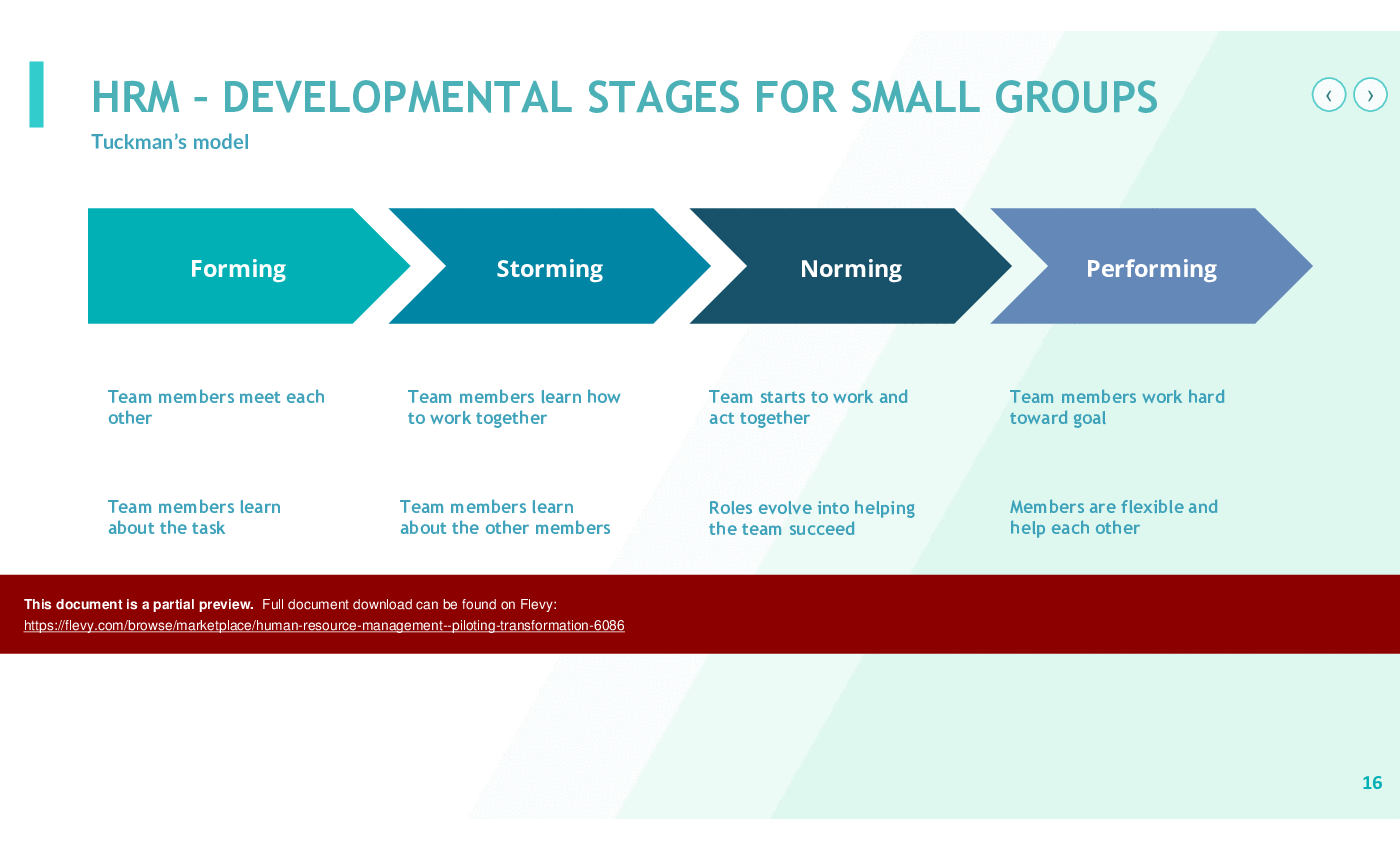
• Establish effective team dynamics using models like Tuckman’s Team Development Model
• Apply compensation strategies to enhance employee performance
• Develop actionable plans for implementing HR initiatives aligned with business goals
• Utilize HR analytics to measure and improve organizational performance
Table of Contents
• Introduction to HR and Organizational Transformation (page 2)
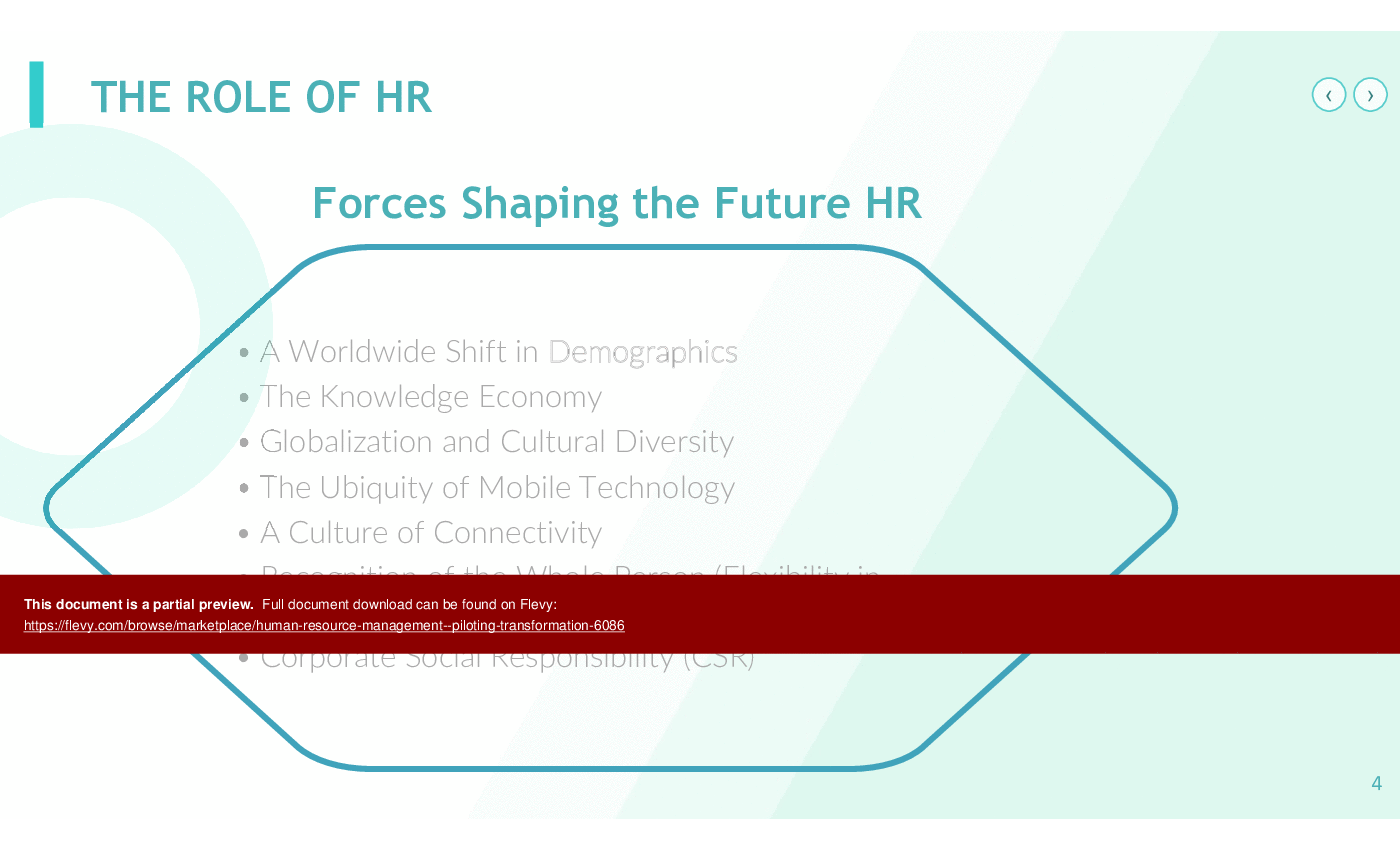
• Forces Shaping the Future of HR (page 4)
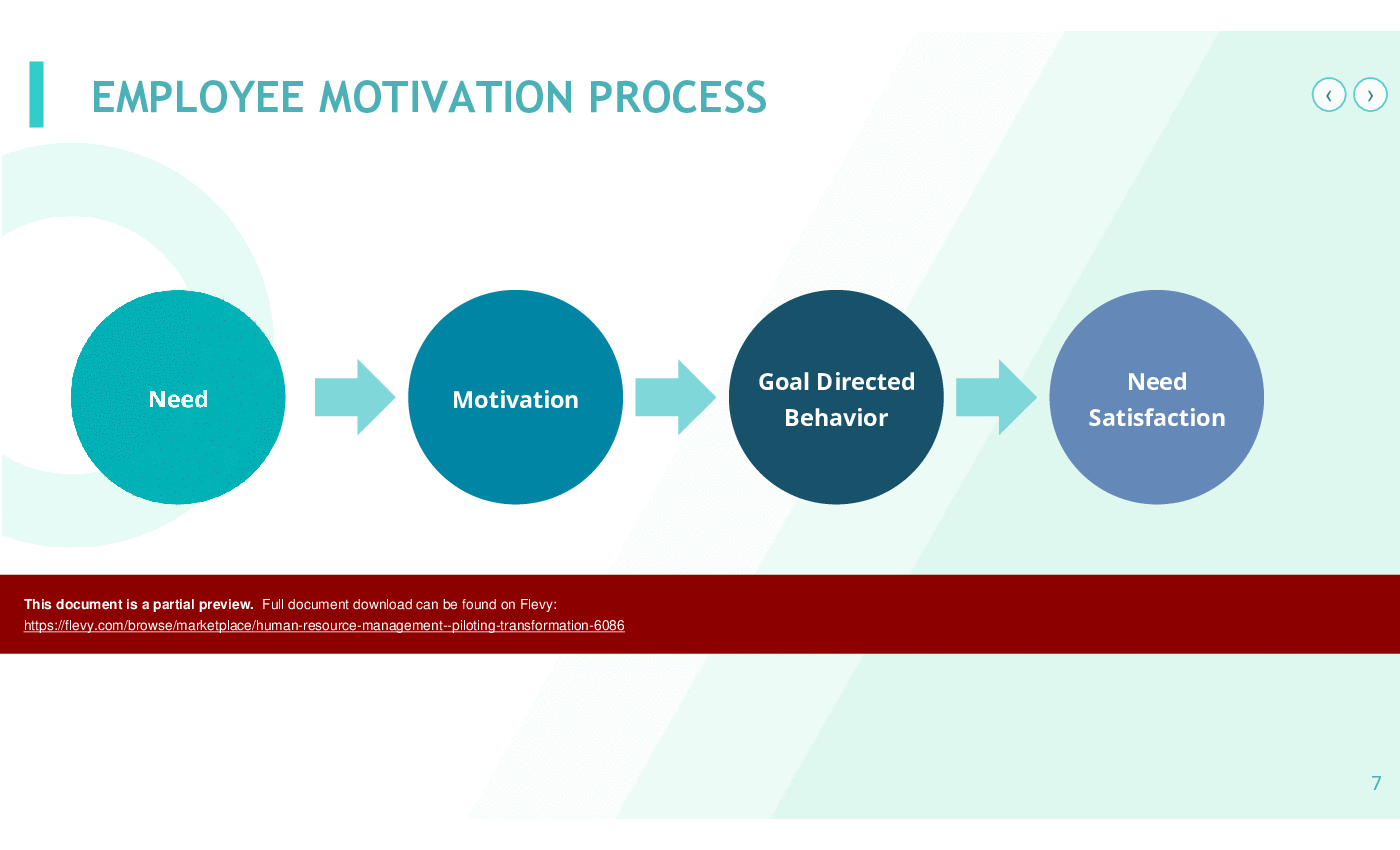
• Employee Motivation Process (page 7)
• Expectancy Theory (Vroom’s) (page 8)
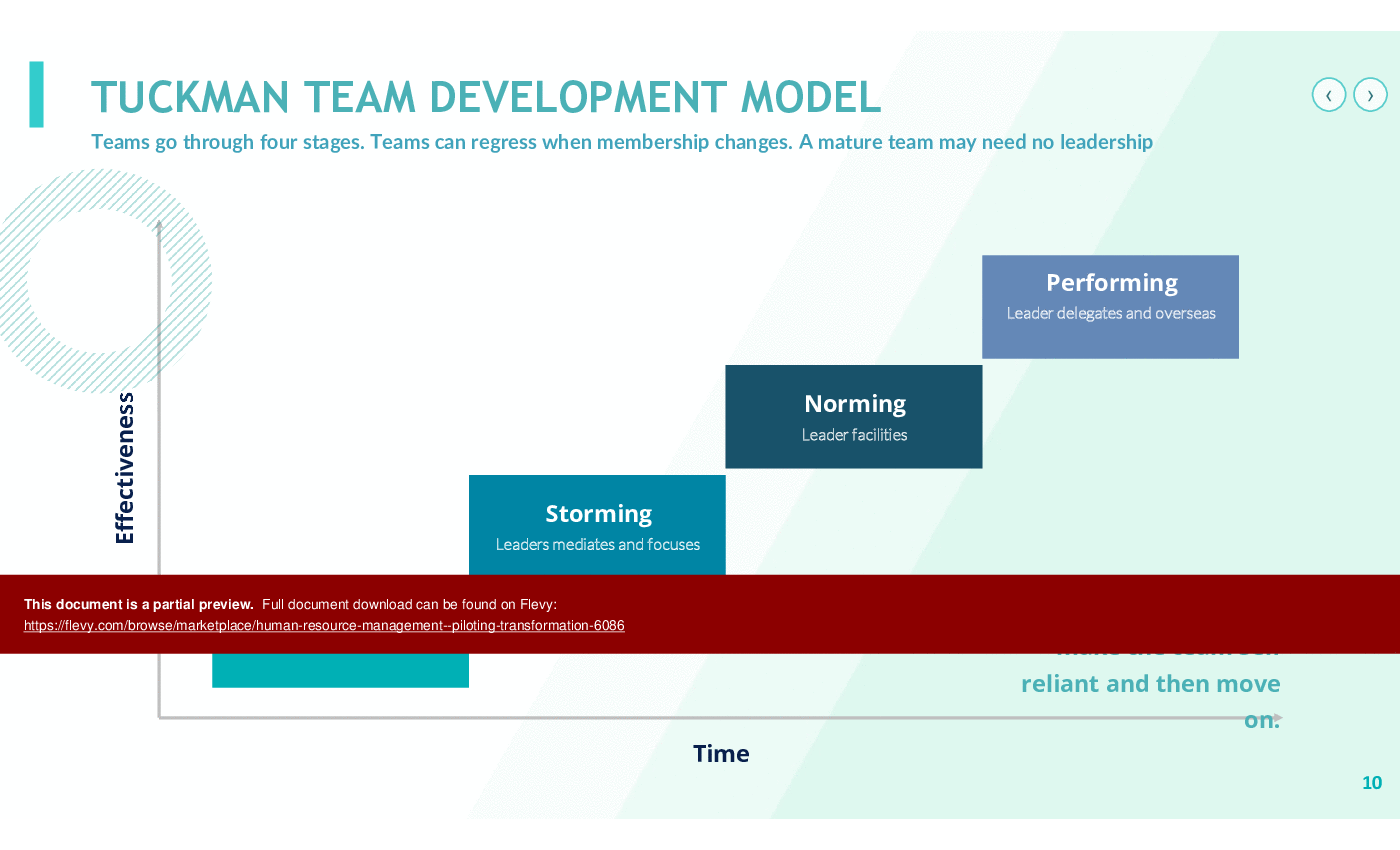
• Tuckman Team Development Model (page 10)
• Compensation Types (page 12)
• Maslow’s Hierarchy of Needs Theory (page 14)
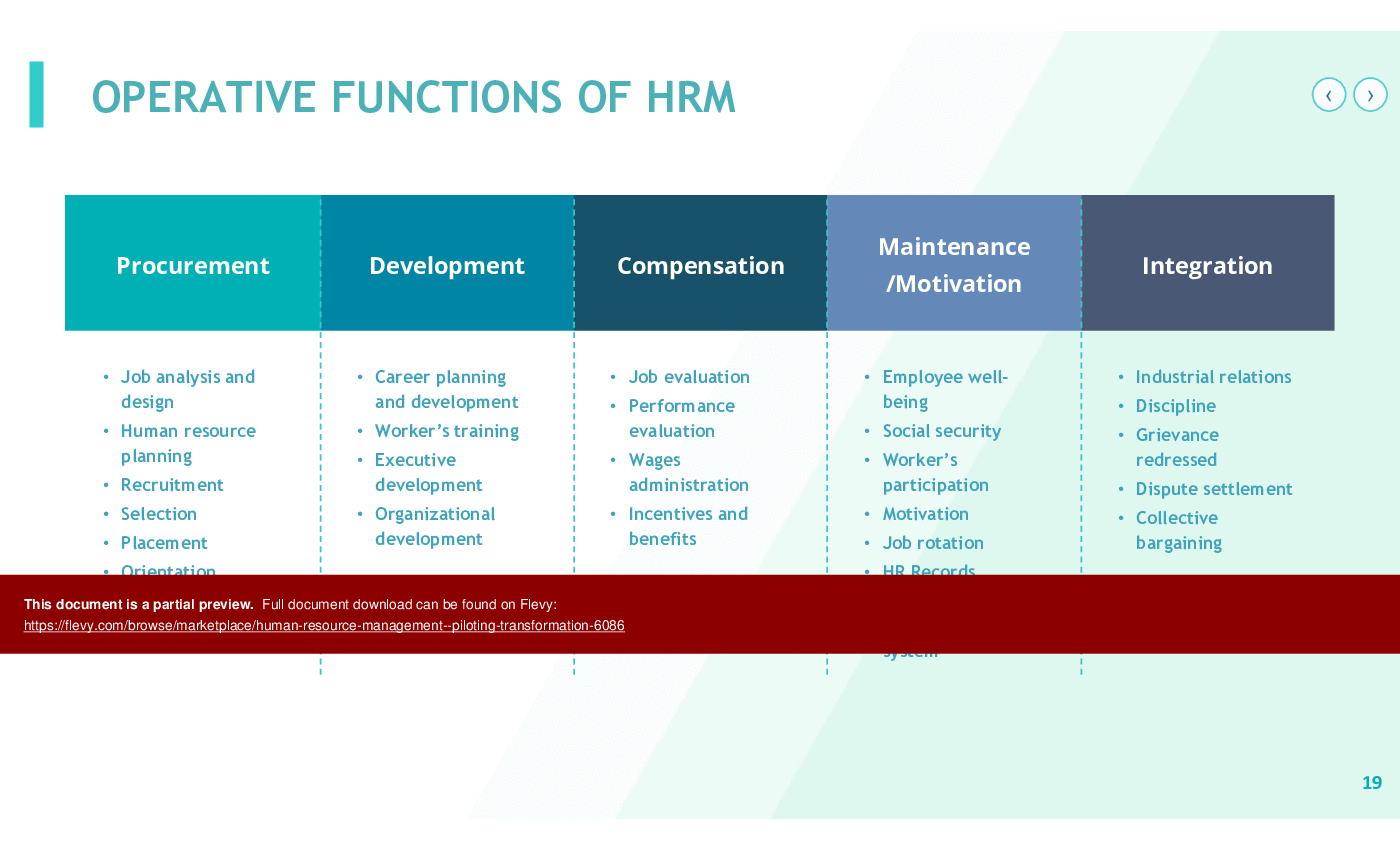
• Core Responsibilities of HRM (page 15)
• Ulrich’s HR Competency Model (page 17)
• HR Strategy Map (page 47)
• High Impact Talent Management Framework (page 48)
• Evolution of HR Manager Roles (page 49)
Primary Topics Covered
• Forces Shaping HR - Key trends impacting HR include demographic shifts, globalization, and technological advancements.
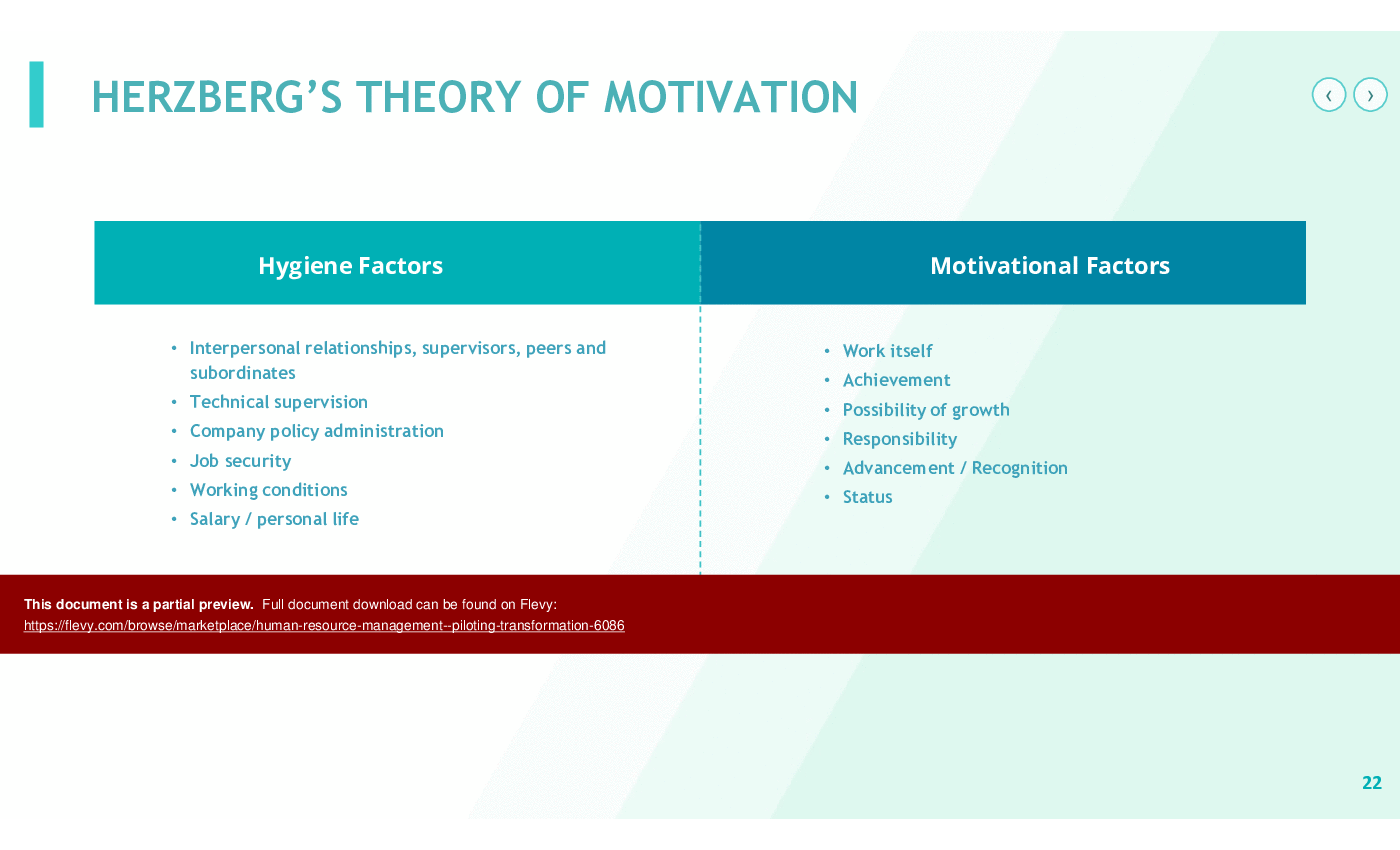
• Employee Motivation - Understanding the motivation process and applying theories like Expectancy Theory to enhance engagement.
• Team Development - Utilizing Tuckman’s model to guide teams through stages of development for improved effectiveness.
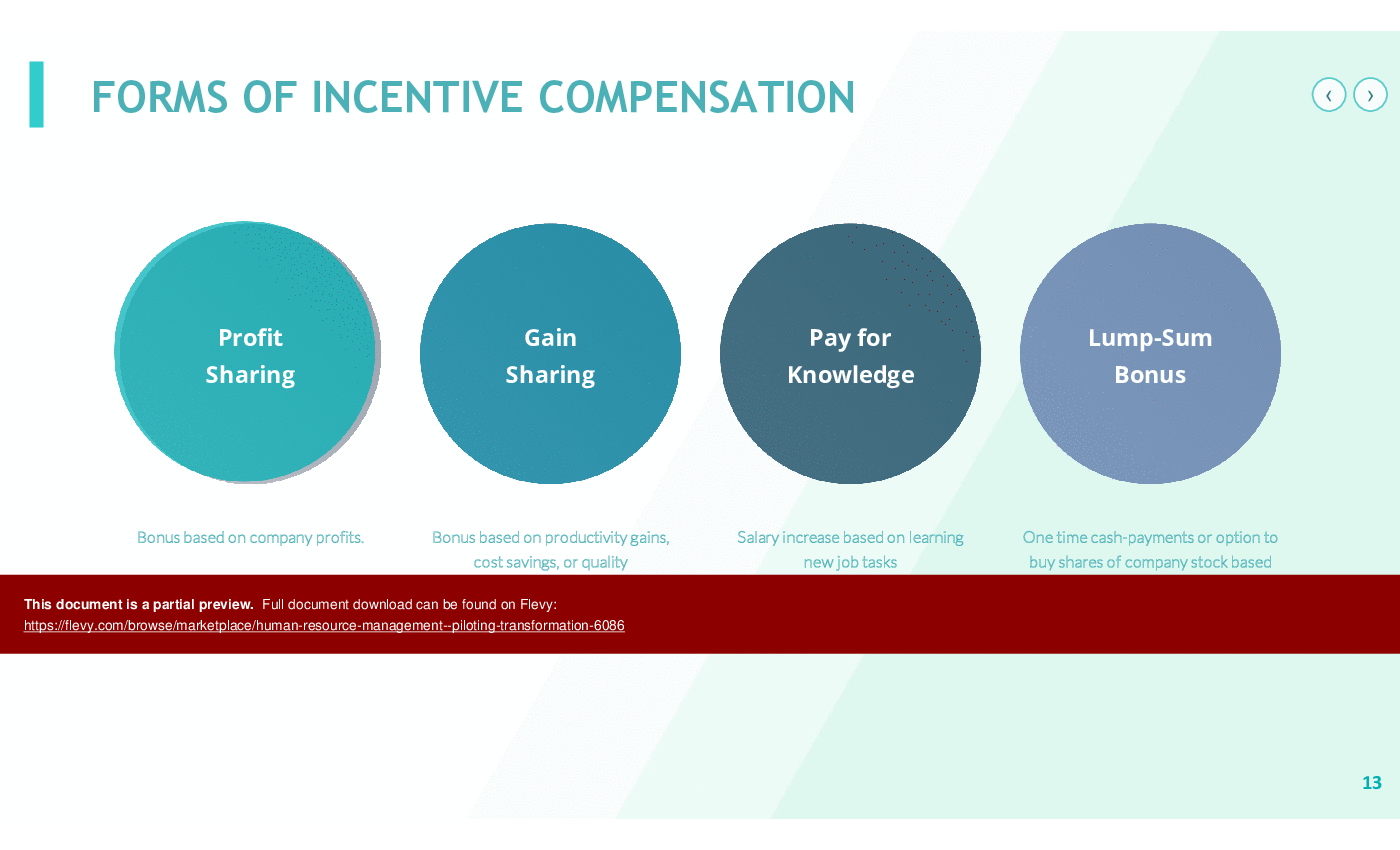
• Compensation Strategies - Exploring various types of compensation and their impact on employee motivation and performance.
• HR Competency Models - Implementing Ulrich’s model to define HR roles as strategic partners and change agents.
• Talent Management Framework - Developing a structured approach to talent acquisition, development, and retention aligned with business objectives.
Deliverables, Templates, and Tools
• Framework for assessing organizational readiness for transformation
• Templates for employee motivation and engagement strategies
• Models for team development and performance evaluation
• Guidelines for implementing compensation and benefits programs
• Tools for measuring HR effectiveness and alignment with business goals
• Action plans for strategic HR initiatives
Slide Highlights
• Insightful quotes on leadership from Lao Tzu emphasizing the role of HR in enabling self-sufficient teams
• Visual representations of the Employee Motivation Process and Expectancy Theory
• Clear diagrams illustrating Tuckman’s Team Development Model and its application in team dynamics
• Comprehensive overview of Maslow’s Hierarchy of Needs and its relevance to employee engagement
• Detailed breakdown of Ulrich’s HR Competency Model showcasing the multifaceted role of HR professionals
Potential Workshop Agenda
Introduction to HR Transformation (60 minutes)
• Overview of the role of HR in organizational change
• Discussion on forces shaping the future of HR
• Group activity on identifying organizational readiness
Employee Engagement Strategies (90 minutes)
• Presentation on motivation theories and their application
• Interactive session on developing engagement initiatives
• Case studies on successful HR transformations
Team Dynamics and Development (60 minutes)
• Workshop on Tuckman’s Team Development Model
• Role-playing exercises to enhance team effectiveness
• Feedback session on team dynamics and leadership styles
Customization Guidance
• Tailor the presentation to reflect specific organizational goals and challenges
• Update case studies and examples to align with current industry trends
• Modify templates to fit the unique culture and values of your organization
• Incorporate specific metrics and KPIs relevant to your HR initiatives
Secondary Topics Covered
• The impact of globalization on HR practices
• Strategies for fostering a culture of connectivity and collaboration
• The importance of corporate social responsibility in HR
• Best practices for managing a multigenerational workforce
• Techniques for effective change management in HR
Topic FAQ
Document FAQ
These are questions addressed within this presentation.
What is the main focus of this presentation?
The presentation focuses on the role of HR in driving organizational transformation through effective strategies, frameworks, and models.
Who can benefit from this deck?
HR leaders, change management professionals, and organizational development consultants can all benefit from the insights and frameworks provided.
How can I customize the presentation for my organization?
You can tailor the content to reflect your organization's specific goals, challenges, and culture, as well as update examples and case studies.
What frameworks are included in the presentation?
The presentation includes frameworks such as Tuckman’s Team Development Model, Maslow’s Hierarchy of Needs, and Ulrich’s HR Competency Model.
How does this presentation address employee motivation?
It explores various motivation theories and provides actionable strategies for enhancing employee engagement and performance.
What tools are provided for implementation?
The deck includes templates, action plans, and guidelines for assessing organizational readiness and implementing HR initiatives.
Can this presentation be used for training sessions?
Yes, it is designed to facilitate training sessions on HR transformation, employee engagement, and team development.
What are the expected outcomes of using this presentation?
Participants will gain insights into effective HR strategies, frameworks for transformation, and tools for measuring success in their initiatives.
Glossary
• Employee Engagement - The emotional commitment an employee has to their organization.
• Expectancy Theory - A motivation theory that suggests individuals are motivated to act based on expected outcomes.
• Tuckman’s Model - A framework outlining the stages of team development: Forming, Storming, Norming, and Performing.
• Ulrich’s HR Competency Model - A model defining the roles and competencies required for effective HR management.
• Maslow’s Hierarchy of Needs - A motivational theory proposing that human needs are arranged in a hierarchy.
• Compensation - The total amount of monetary and non-monetary rewards provided to employees.
• Talent Management - The strategic approach to attracting, developing, and retaining skilled employees.
• Organizational Transformation - A comprehensive change process that aligns an organization’s structure, culture, and strategy.
• Corporate Social Responsibility (CSR) - A business model that helps a company be socially accountable to itself, its stakeholders, and the public.
• Change Management - A structured approach to transitioning individuals, teams, and organizations to a desired future state.
• HR Analytics - The application of data analysis techniques to human resources data to improve decision-making.
• Workforce Planning - The process of analyzing and forecasting the needs of an organization to ensure it has the right people in place.
• Leadership Development - Programs and practices aimed at enhancing the skills and capabilities of current and future leaders.
• Cultural Competence - The ability to understand, communicate with, and effectively interact with people across cultures.
• Diversity and Inclusion - Strategies and practices aimed at creating a diverse workforce and an inclusive workplace environment.
• Performance Management - The continuous process of identifying, measuring, and developing the performance of individuals and teams.
• Organizational Development - A systematic approach to improving organizational effectiveness through planned change.
• Employee Relations - The management of the relationship between employers and employees, focusing on communication and conflict resolution.
• HR Strategy - A plan that outlines how HR will support the organization’s overall strategy and objectives.
• Learning Organization - An organization that facilitates the learning of its members and continuously transforms itself.
• High Impact Talent Management - A strategic approach to managing talent that aligns with business goals and drives performance.
Source: Best Practices in Human Resources PowerPoint Slides: Human Resource Management - Piloting Transformation PowerPoint (PPTX) Presentation Slide Deck, RadVector Consulting
|
Download our FREE Organization, Change, & Culture, Templates
Download our free compilation of 50+ slides and templates on Organizational Design, Change Management, and Corporate Culture. Methodologies include ADKAR, Burke-Litwin Change Model, McKinsey 7-S, Competing Values Framework, etc. |










