
This presentation is created by former McKinsey, BCG, Deloitte, EY, and Capgemini consultants. It explains the framework of Service 4.0 Transformation utilized by global strategy consulting firms.
Understand the benefits and opportunities enabled through Service 4.0 Transformation.
Become familiar with the 9 core Digital Technologies which power Service 4.0 Transformation.
Learn how Service organizations have evolved and what distinguishes Service 4.0 from previous generations.
SERVICE TRANSFORMATION PPT DESCRIPTION
Editor Summary
Service 4.0 Transformation is a 52-slide PowerPoint presentation by LearnPPT Consulting, developed by former McKinsey, BCG, Deloitte, EY, and Capgemini consultants, that explains a Service 4.0 framework and its ten implementation dimensions.
Read moreIt covers nine core technologies (including Big Data, Cloud Computing, and RPA), includes templates such as a Service 4.0 framework template, customer journey mapping, operational efficiency assessment, RPA implementation guide, and a technology evaluation checklist, and is sold as a digital download on Flevy.
Use this deck when a service organization is planning or executing digital transformation initiatives—such as strategic planning, technology selection, or team alignment workshops—aimed at modernizing service delivery.
Executives running strategic planning sessions to define ambition, governance, and rollout plans using the 10-dimension framework.
Digital transformation teams evaluating vendor and technology fit by applying the technology evaluation checklist and deep-dive on nine core technologies.
Customer experience managers mapping and redesigning touchpoints with the included customer journey mapping templates.
Operations managers quantifying efficiency gains with operational efficiency assessment tools and the RPA implementation guide.
The structured 10-dimension diagnostic and template-driven roadmap follows consulting-style diagnostic and implementation practices used at firms such as McKinsey and BCG.
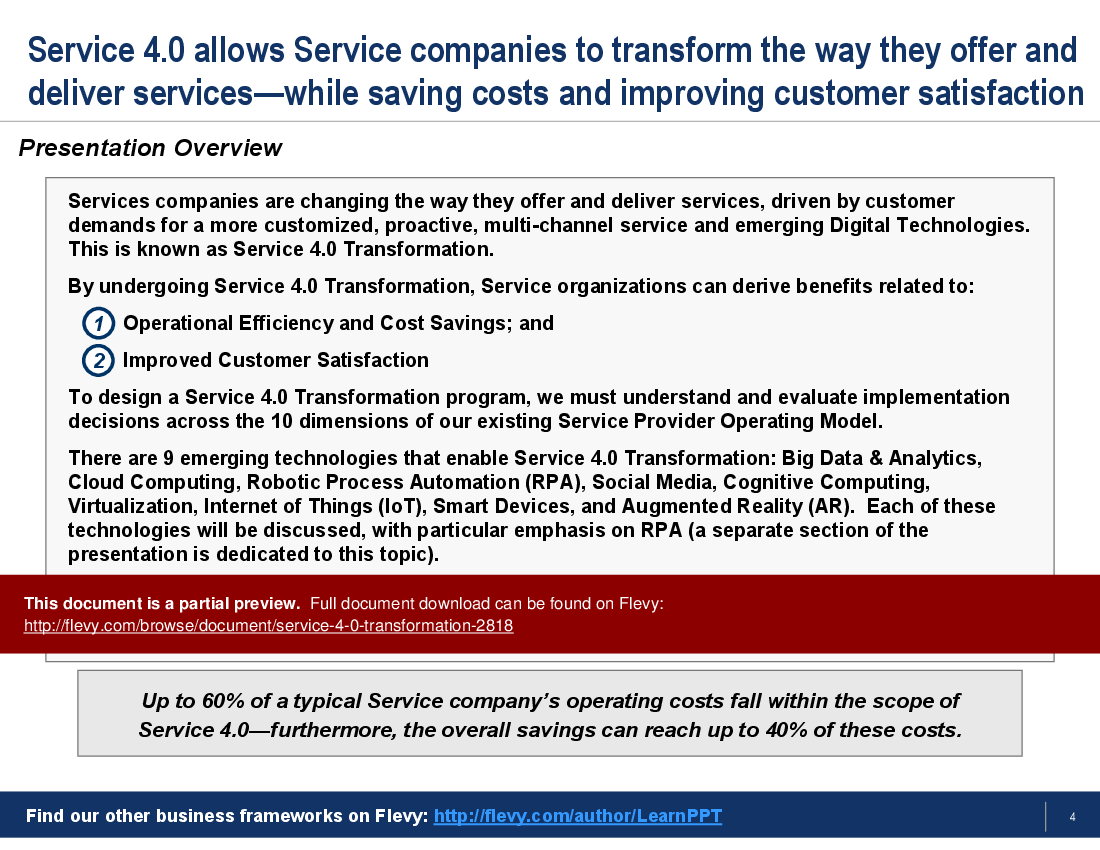
Services companies are changing the way they offer and deliver services, driven by customer demands for a more customized, proactive, omnichannel, integrated, and data-driven service and enabled by emerging Digital Technologies. This is known as Service 4.0 Transformation.
By undergoing Service 4.0 Transformation, Service organizations can derive innumerable and impactful benefits related to:
1. Operational Efficiency and Cost Savings; and
2. Improved Customer Satisfaction
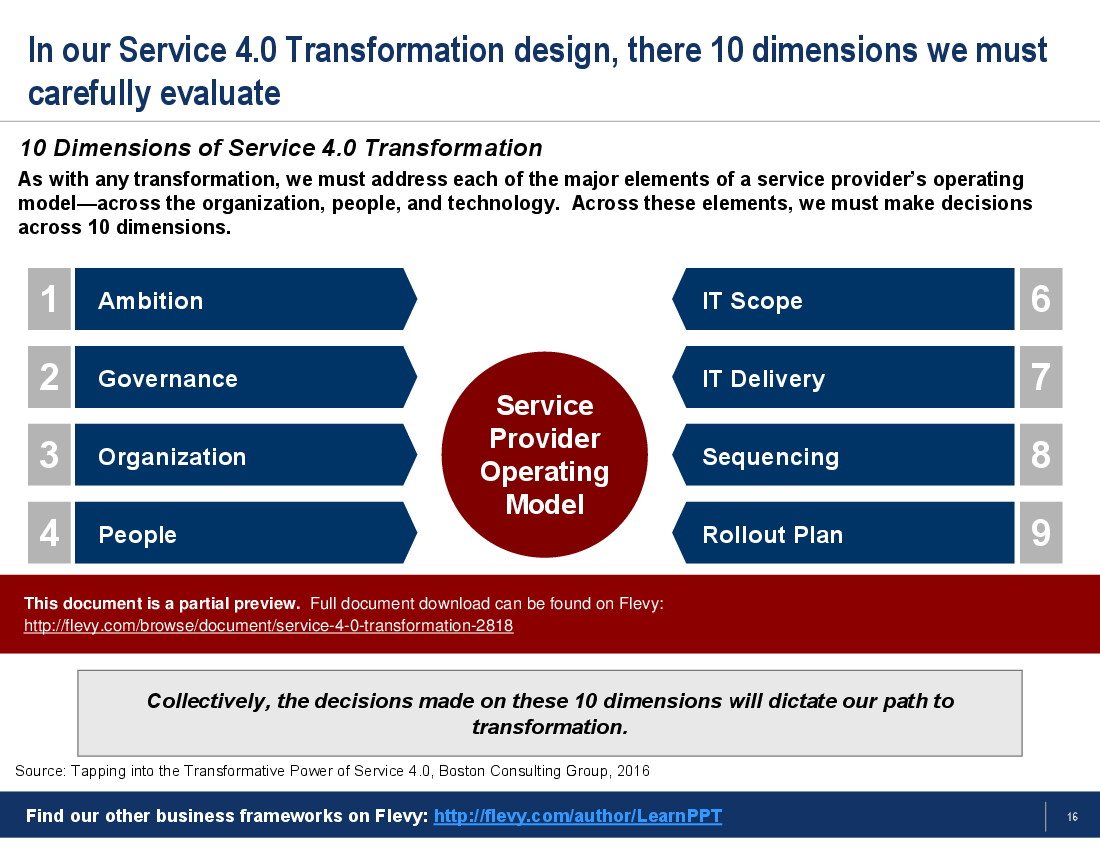
To design a Service 4.0 Transformation program, we must understand and evaluate implementation decisions across the 10 dimensions of our existing Service Provider Operating Model.
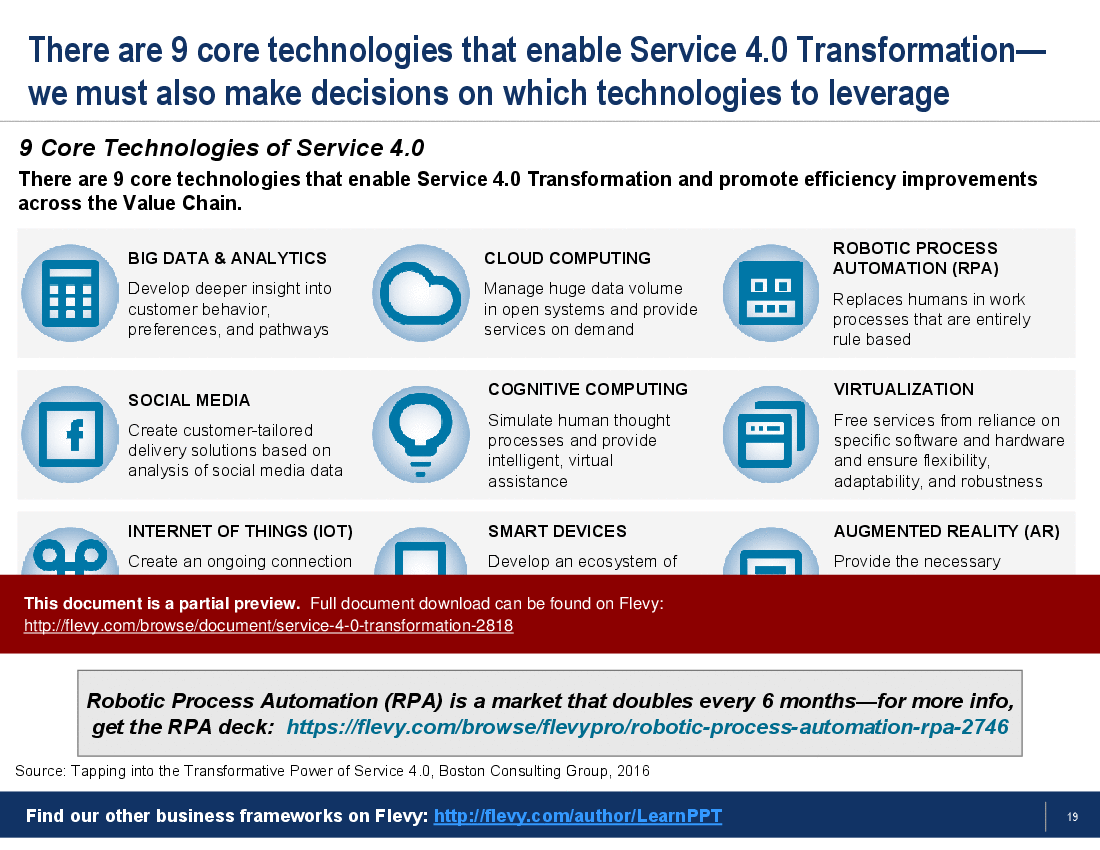
There are 9 emerging Digital Technologies that enable Service 4.0 Transformation:
1. Big Data & Analytics
2. Cloud Computing
3. Robotic Process Automation (RPA)
4. Social Media
5. Cognitive Computing
6. Virtualization
7. Internet of Things (IoT)
8. Smart Devices,
9. Augmented Reality (AR).
Each of these technologies will be discussed, with particular emphasis on RPA (a separate section of the presentation is dedicated to this topic). Additional topics discussed in the Evolution of Service Organizations, Service 2.0/3.0 vs. Service 4.0, Customer Journey, and Fourth Industrial Revolution.
This document will also include additional templates for you to use in your own business presentations.
Service 4.0 Transformation is not just a buzzword; it’s a comprehensive overhaul of service delivery models. This PPT delves into the 10 critical dimensions that must be evaluated to successfully implement Service 4.0. From Ambition to Rollout Plan, each dimension is meticulously analyzed to ensure a seamless transition. The presentation also highlights the pivotal role of emerging technologies like Big Data, Cloud Computing, and IoT in driving this transformation.
The document goes beyond theory, providing actionable insights and real-world examples to illustrate the shift from reactive to proactive service models. It emphasizes the importance of integrating customer touchpoints for a seamless, omnichannel experience. With templates included for your business presentations, this document is a must-have for any service organization aiming to stay ahead in the digital age.
Got a question about the product? Email us at support@flevy.com or ask the author directly by using the "Ask the Author a Question" form. If you cannot view the preview above this document description, go here to view the large preview instead.
MARCUS OVERVIEW
This synopsis was written by Marcus [?] based on the analysis of the full 52-slide presentation.
Executive Summary
This presentation on Service 4.0 Transformation is crafted by former consultants from top-tier firms such as McKinsey, BCG, Deloitte, EY, and Capgemini, ensuring a consulting-grade quality. It outlines how service organizations can leverage digital technologies to enhance operational efficiency and customer satisfaction. By implementing the Service 4.0 framework, organizations will be equipped to deliver integrated, customized, and proactive services, ultimately transforming their service delivery models.
Who This Is For and When to Use
• Executives and leaders in service organizations seeking to modernize service delivery.
• Digital transformation teams responsible for implementing new technologies.
• Customer experience managers aiming to improve service quality and satisfaction.
• Operations managers focused on enhancing efficiency and reducing costs.
Best-fit moments to use this deck:
• During strategic planning sessions for digital transformation initiatives.
• When evaluating new technologies for service delivery improvements.
• In workshops aimed at aligning teams on customer experience enhancements.
Learning Objectives
• Define the principles of Service 4.0 and its significance in modern service delivery.
• Identify core technologies that enable Service 4.0 Transformation.
• Assess the operational efficiency and cost-saving opportunities through Service 4.0.
• Develop strategies to enhance customer satisfaction using data-driven insights.
• Explore the ten dimensions of Service 4.0 Transformation and their implementation.
• Evaluate the impact of the Fourth Industrial Revolution on service organizations.
Primary Topics Covered
• Service 4.0 Overview - An introduction to how digital technologies are reshaping service delivery through integration and customization.
• Opportunities and Benefits - Insights into operational efficiency and customer satisfaction improvements achievable through Service 4.0.
• Key Considerations - Factors influencing the successful implementation of Service 4.0 Transformation.
• Core Technologies - Overview of nine technologies, including Big Data, Cloud Computing, and RPA, that enable Service 4.0.
• Fourth Industrial Revolution - Contextualizing Service 4.0 within the broader trends of the 4IR.
• Implementation Dimensions - Discussion on ten dimensions critical for Service 4.0 Transformation.
Deliverables, Templates, and Tools
• Service 4.0 Transformation framework template for strategic planning.
• Operational efficiency assessment tools to identify cost-saving opportunities.
• Customer journey mapping templates to enhance customer experience.
• RPA implementation guide for automating service processes.
• Technology evaluation checklist to assess readiness for Service 4.0.
• Change management toolkit for transitioning to new service models.
Slide Highlights
• Overview of Service 4.0 and its transformative impact on service delivery.
• Visual representation of the evolution from Service 2.0/3.0 to Service 4.0.
• Key performance benefits of adopting Service 4.0 technologies.
• Comparative analysis of customer expectations versus experiences in service delivery.
• Framework for evaluating the ten dimensions of Service 4.0 Transformation.
Potential Workshop Agenda
Introduction to Service 4.0 (60 minutes)
• Overview of Service 4.0 principles and benefits.
• Discussion on the impact of digital technologies on service delivery.
Core Technologies Deep Dive (90 minutes)
• Exploration of nine core technologies enabling Service 4.0.
• Group activity to assess technology readiness and alignment with business goals.
Implementation Strategy Session (120 minutes)
• Identify key dimensions for Service 4.0 Transformation.
• Develop a roadmap for implementing changes across the organization.
Customization Guidance
• Tailor the framework to align with specific organizational goals and customer needs.
• Adjust the technology evaluation criteria based on existing infrastructure and capabilities.
• Incorporate industry-specific examples to enhance relevance and applicability.
Secondary Topics Covered
• The role of Big Data and Analytics in understanding customer behavior.

• Strategies for leveraging Cloud Computing for service delivery.
• The importance of Social Media in enhancing customer engagement.
• Insights into Cognitive Computing and its applications in service automation.
• Overview of Augmented Reality and its potential in customer interactions.
Topic FAQ
What are the core technologies that enable Service 4.0?
Service 4.0 is enabled by nine core technologies explicitly identified in the presentation: Big Data & Analytics, Cloud Computing, Robotic Process Automation (RPA), Social Media, Cognitive Computing, Virtualization, Internet of Things (IoT), Smart Devices, and Augmented Reality (AR), totaling nine technologies.
What dimensions should we evaluate when planning a Service 4.0 program?
The presentation recommends assessing ten implementation dimensions: Ambition, Governance, Organization, People, Partnership Model, IT Scope, IT Delivery, Sequencing, Rollout Plan, and Cultural Change, covering strategic, organizational, and delivery aspects across ten dimensions.
How does Service 4.0 typically improve customer satisfaction?
Service 4.0 improves satisfaction by enabling more integrated, customized, and proactive services through data-driven insights and omnichannel touchpoint integration; practical support for this includes customer journey mapping templates and analytics-focused guidance in the deck.
What should I look for when buying a Service 4.0 implementation toolkit or deck?
Prioritize toolkits that document core technologies, include practical templates (technology evaluation checklist, operational efficiency assessment), offer implementation guidance (RPA implementation guide), and present governance and rollout dimensions; the presence of these items and structured templates is a useful indicator.
I need to evaluate new technologies for service delivery—how should I structure that assessment?
Begin with a capabilities assessment, map business objectives to technology enablers, use a technology evaluation checklist and operational efficiency assessment tools to quantify impact, and prioritize based on sequencing and rollout readiness; the presentation includes a technology evaluation checklist for this purpose.

How can I judge the cost/value of Service 4.0 templates for my team?
Value is indicated by whether templates enable measurable outcomes—such as tools to assess operational efficiency and customer satisfaction—and provide implementation guidance and change management support; check for operational efficiency assessment tools and a change management toolkit as concrete value drivers.
How should I structure a workshop to align teams on Service 4.0 transformation?
The presentation proposes a three-part agenda: an Introduction to Service 4.0 (60 minutes), a Core Technologies Deep Dive with group readiness assessment (90 minutes), and an Implementation Strategy Session to identify dimensions and build a roadmap (120 minutes), with those exact time blocks.
What role does RPA play in a Service 4.0 transformation?
RPA is presented as a means to automate routine service tasks, freeing employees for higher-value activities and improving productivity and service quality; the deck dedicates a separate section to RPA and provides an RPA implementation guide as a concrete resource.
Document FAQ
These are questions addressed within this presentation.
What is Service 4.0?
Service 4.0 refers to the transformation of service delivery through digital technologies, enabling more integrated, customized, and proactive services.
How can Service 4.0 improve operational efficiency?
By leveraging technologies like RPA and Big Data, organizations can streamline processes, reduce costs, and enhance service quality.
What are the core technologies involved in Service 4.0?
Key technologies include Big Data, Cloud Computing, RPA, Social Media, Cognitive Computing, Virtualization, IoT, Smart Devices, and Augmented Reality.
How does Service 4.0 enhance customer satisfaction?
Service 4.0 allows for a more personalized and proactive customer experience, bridging the gap between customer expectations and actual service delivery.
What are the ten dimensions of Service 4.0 Transformation?
These dimensions include Ambition, Governance, Organization, People, Partnership Model, IT Scope, IT Delivery, Sequencing, Rollout Plan, and Cultural Change.
What challenges might organizations face during Service 4.0 implementation?
Organizations may encounter legacy IT systems, resistance to change, and the need for new skill sets among employees.
How can organizations measure the success of Service 4.0 Transformation?
Success can be measured through key performance indicators related to operational efficiency, customer satisfaction, and technology adoption rates.
What role does RPA play in Service 4.0?
RPA automates routine tasks, freeing employees to focus on higher-value activities, thus improving productivity and customer service.
How can organizations begin their Service 4.0 journey?
Organizations should start by assessing their current capabilities, identifying areas for improvement, and developing a clear strategy for digital transformation.
Glossary
• Service 4.0 - The transformation of service delivery through digital technologies.
• RPA - Robotic Process Automation, a technology for automating routine tasks.
• Big Data - Large and complex data sets that require advanced analytics for insights.
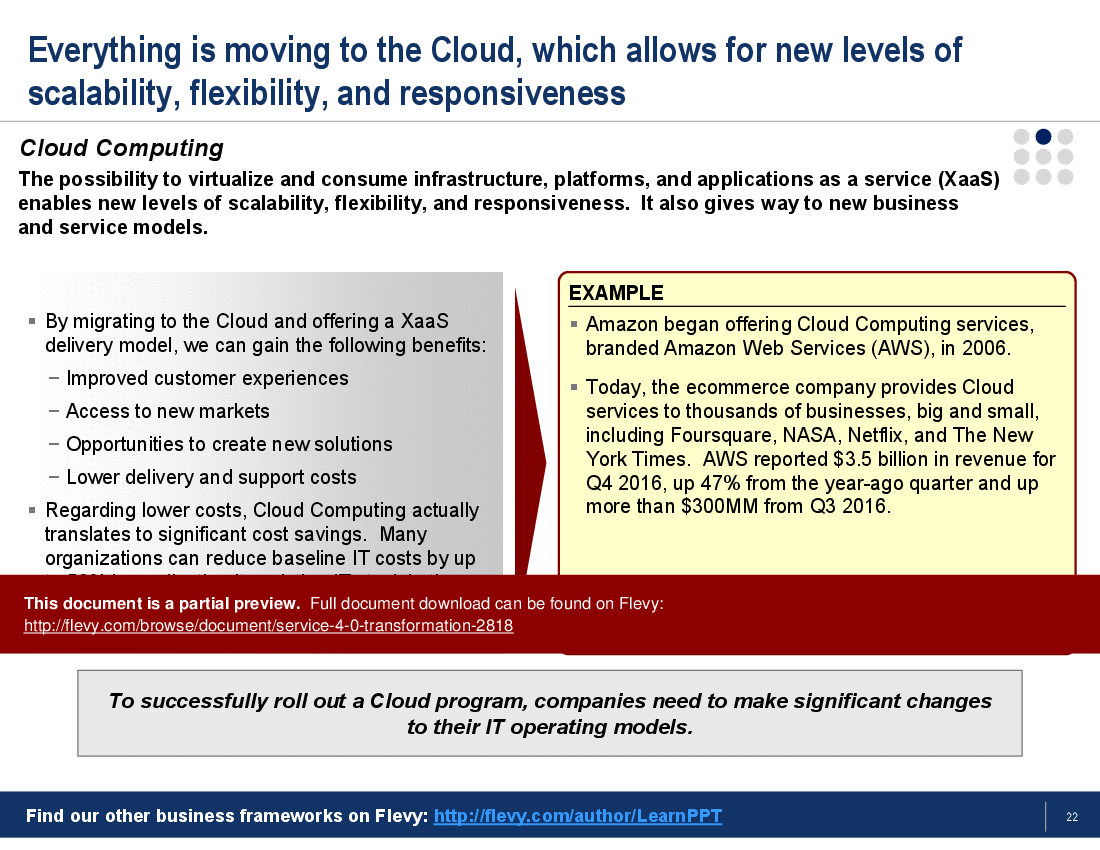
• Cloud Computing - Delivery of computing services over the internet.
• Cognitive Computing - Technology that simulates human thought processes in a computerized model.
• IoT - Internet of Things, a network of interconnected devices that collect and exchange data.
• Augmented Reality (AR) - Technology that overlays digital information onto the real world.
• Fourth Industrial Revolution (4IR) - The current era characterized by digital transformation across industries.
• Customer Journey - The complete experience a customer has with a service provider.
• Operational Efficiency - The ability to deliver services in a cost-effective manner.
• Customer Satisfaction - A measure of how products or services meet customer expectations.
• Digital Transformation - The integration of digital technology into all areas of a business.
The evolution of service provision is categorized into 4 stages: Service 1.0 to Service 4.0. Service 1.0, originating in the 19th century, represents a manual, non-standardized approach to service delivery, exemplified by traditional bookkeeping. Service 2.0, emerging in the early 20th century, introduced standardization and industrialization, highlighted by the adoption of postal services and scientific management, along with the establishment of call centers. Service 3.0, arising in the late 20th century, integrated automation and self-service options, facilitated by personal computers and the Internet, empowering customers through self-service terminals. Currently, Service 4.0 focuses on proactive, customized services across integrated channels, driven by digital transformation and technologies of the Fourth Industrial Revolution, utilizing Big Data and Analytics to anticipate customer needs in real-time.
This PPT slide contrasts customer expectations with actual service experiences, highlighting a significant gap in service delivery. Customers expect simplicity, intuitiveness, proactivity, personalization, real-time interactions, and seamless experiences across devices. However, they often encounter long wait times, inconsistencies between in-store and online interactions, and a reactive service approach, leading to low customer satisfaction. Leading digital players bridge this gap by leveraging digital technologies and utilizing external and internal data to create comprehensive customer profiles, enabling personalized, real-time solutions. The rise of interactive customer service tools reflects a shift towards proactive engagement strategies that enhance satisfaction. Service 4.0 is essential for aligning expectations with experiences, improving customer satisfaction, loyalty, and long-term relationships.
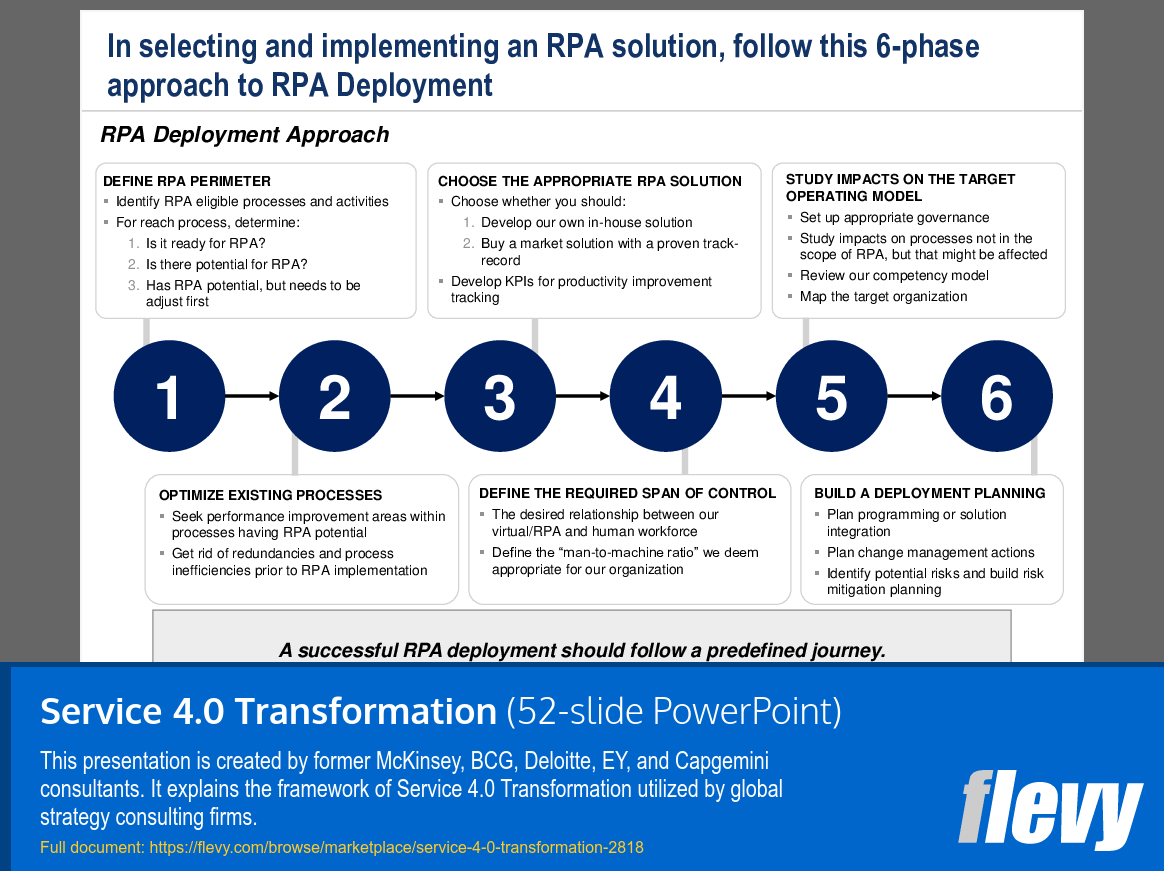
This PPT slide outlines a six-phase approach to deploying a Robotic Process Automation (RPA) solution. The first phase involves defining the RPA perimeter by identifying eligible processes and assessing their readiness for automation. The second phase focuses on optimizing existing processes to eliminate redundancies and enhance efficiency. The third phase requires selecting the appropriate RPA solution, either in-house development or purchasing a market option, along with establishing key performance indicators (KPIs) for productivity tracking. The fourth phase defines the optimal "man-to-machine" ratio to align with operational goals. The fifth phase studies the impacts on the target operating model, including governance structures and broader implications. Finally, the sixth phase builds a deployment plan that includes programming, solution integration, change management strategies, and risk mitigation. This structured approach ensures comprehensive consideration for effective RPA implementation.
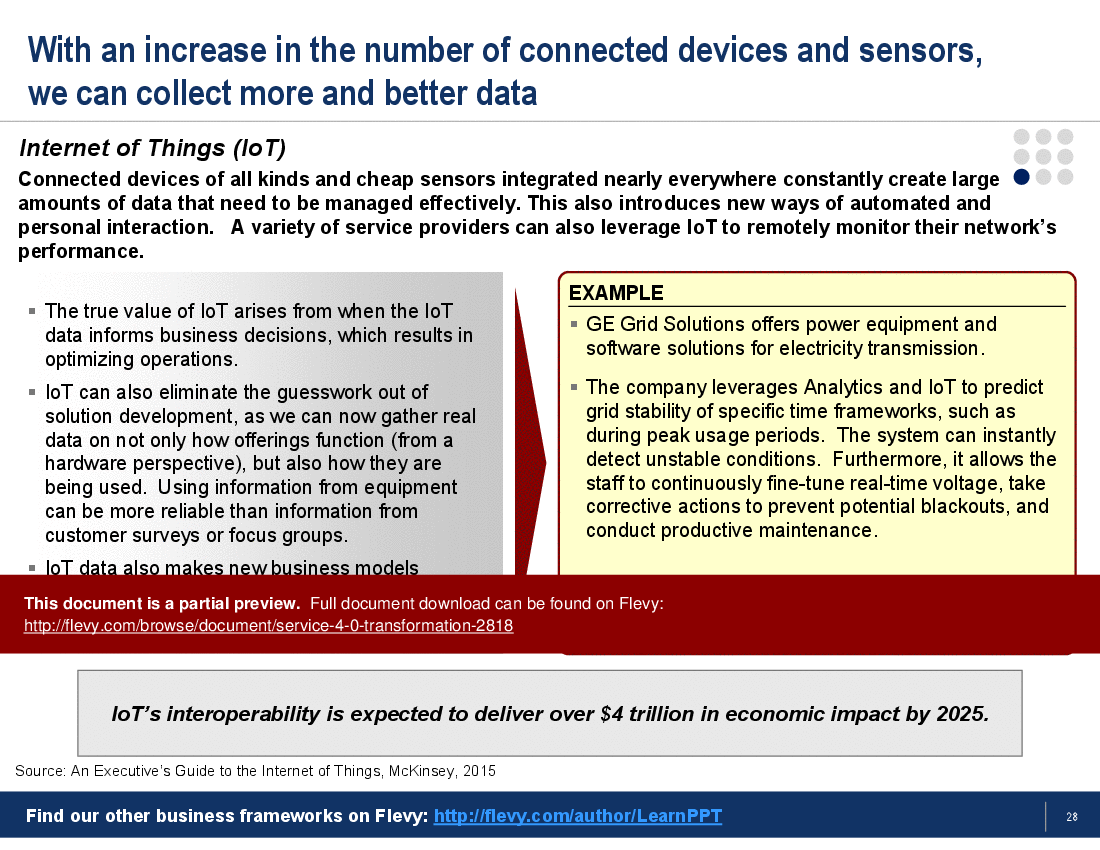
This PPT slide outlines nine essential technologies for Service 4.0 Transformation, enhancing efficiency across the value chain. Big Data & Analytics provide insights into customer behaviors for tailored service offerings. Cloud Computing manages large data volumes, enabling on-demand services. Social Media creates customized delivery solutions from user-generated data, boosting customer engagement. Cognitive Computing simulates human thought processes, offering intelligent virtual assistance for improved interactions. The Internet of Things (IoT) facilitates real-time service provision and remote monitoring. Smart Devices develop an ecosystem of applications leveraging high-performance technology. Robotic Process Automation (RPA) increases operational efficiency by automating rule-based processes. Virtualization promotes flexibility by decoupling services from specific hardware. Augmented Reality (AR) enhances user experience by providing essential information in various contexts.
This PPT slide outlines the ten critical dimensions of Service 4.0 Transformation, categorized into 3 areas: organization, people, and technology. Key dimensions include "Ambition," addressing transformation goals; "Governance," which establishes decision-making frameworks; and "Organization," focusing on structural efficiency. The "People" dimension highlights the need for skilled personnel and change management. The "Partnership Model" emphasizes collaboration with external entities to enhance capabilities. Technology dimensions like "IT Scope" and "IT Delivery" cover technological requirements and delivery mechanisms. "Sequencing" refers to the implementation order of initiatives, while the "Rollout Plan" details the deployment strategy. "Cultural Change" underscores the necessity of shifting organizational culture to support new operational methods. Decisions across these dimensions significantly influence transformation success.
This PPT slide categorizes various sources of waste in service industries, highlighting operational inefficiencies. Types of waste include:
- Overprocessing: unnecessary use of costly systems leading to complexity without added value.
- Overproduction: excessive service levels not aligned with customer needs.
- Transport waste: unnecessary physical activities complicating processes and increasing costs.
- Motion waste: manual tasks that could be automated, indicating efficiency improvement opportunities.
- Inventory waste: excessive stockpiling tying up resources and creating bottlenecks.
- Defects and rework: quality issues causing workflow disruptions and additional costs.
- Waiting waste: inefficiencies from process delays.
- Improper utilization of skills: mismatch between employee capabilities and task requirements.
The slide advocates for digital transformation to mitigate these waste sources and suggests adopting Service 4.0 methodologies to enhance operational efficiency.
This PPT slide provides an overview of Robotic Process Automation (RPA), defined as a technology that employs software robots and AI to automate routine tasks traditionally performed by humans. RPA executes rule-based functions such as data extraction, document generation, and customer complaint processing, enabling human workers to focus on exceptions and enhancing operational efficiency. Key benefits of RPA include improved employee and customer satisfaction, accelerated productivity gains, and enhanced compliance, with organizations expecting quick returns on RPA investments. The RPA market is projected to double every 6 months, reaching $5 billion by 2020, indicating a strong trend towards automation in sectors like finance, customer service, and compliance.
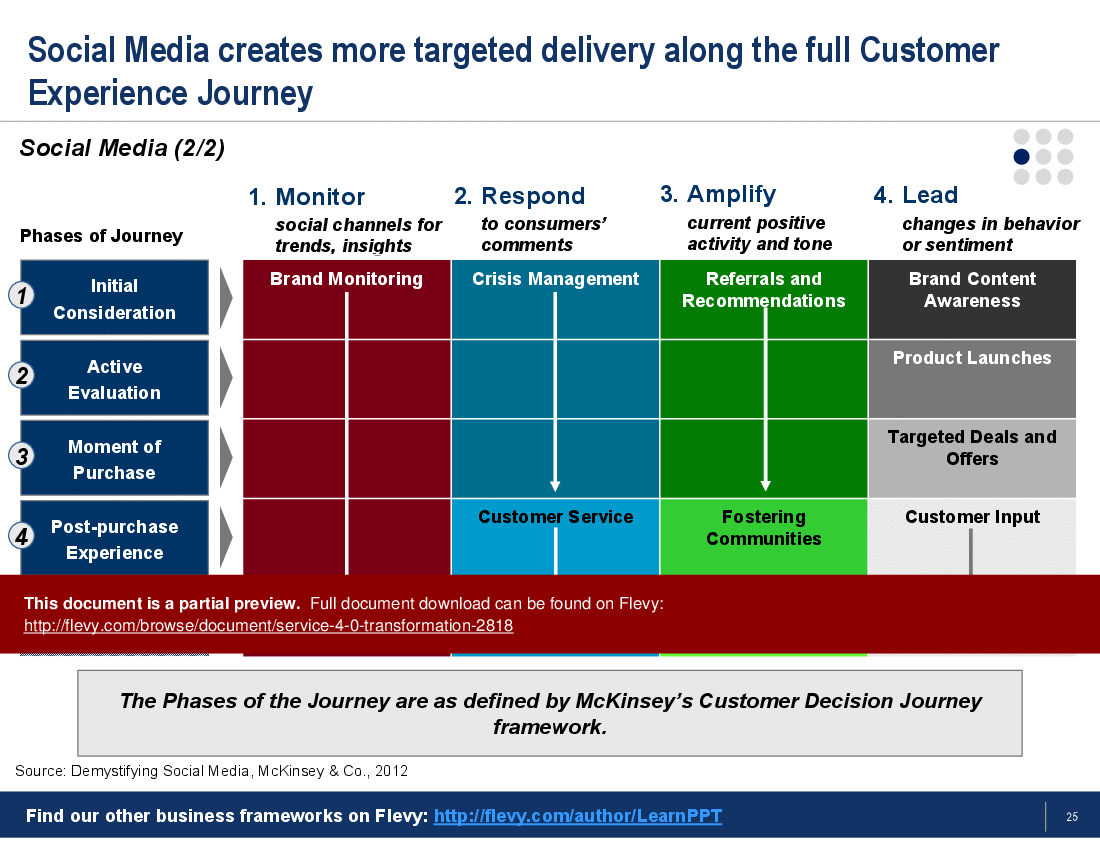
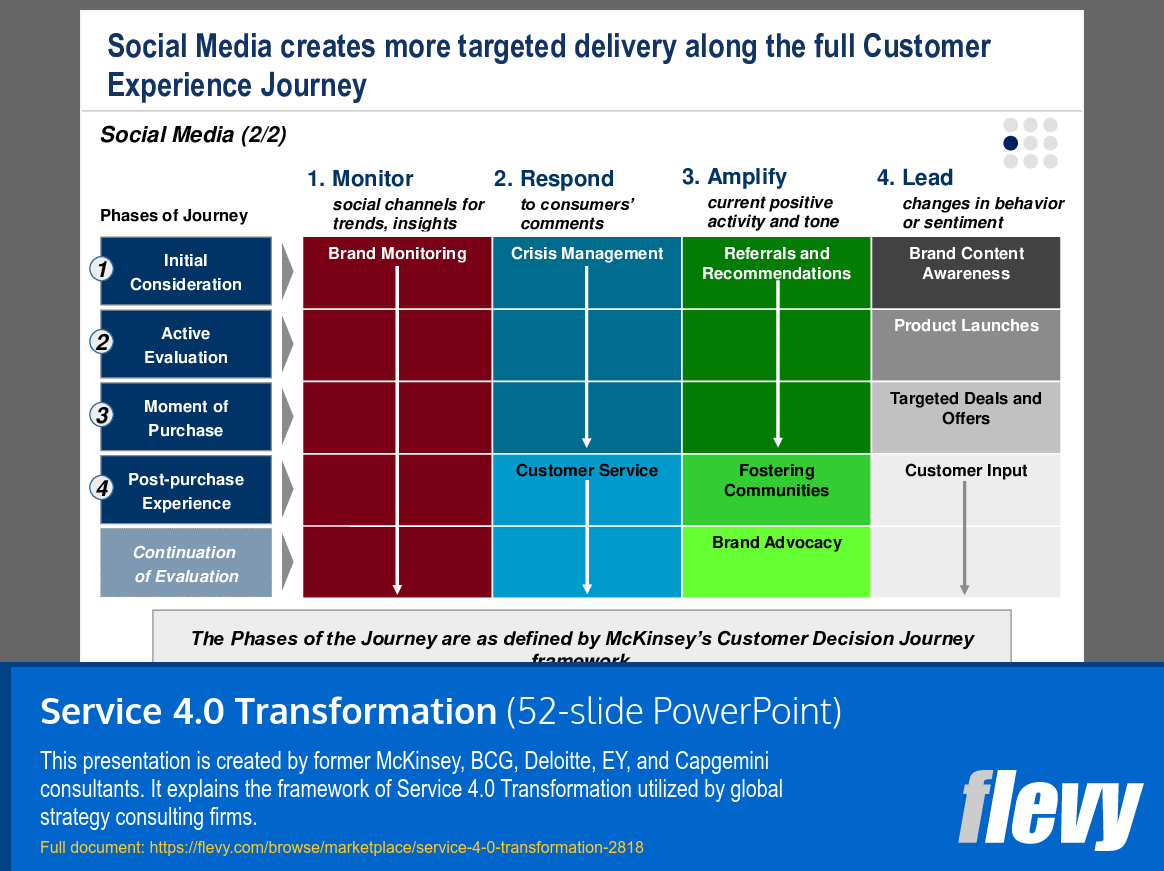
This PPT slide outlines the role of social media in enhancing the Customer Experience Journey, structured into 4 phases: Initial Consideration, Active Evaluation, Moment of Purchase, and Post-purchase Experience. In the "Monitor" phase, brands track social channels for trends and public perception. The "Respond" phase focuses on engaging consumers through crisis management and customer service to build positive relationships. The "Amplify" phase promotes positive sentiments via referrals and community building, elevating brand visibility. Finally, the "Lead" phase influences consumer behavior through targeted deals and product launches. These interconnected phases demonstrate how social media can optimize customer engagement throughout the journey, enhancing loyalty and driving growth.
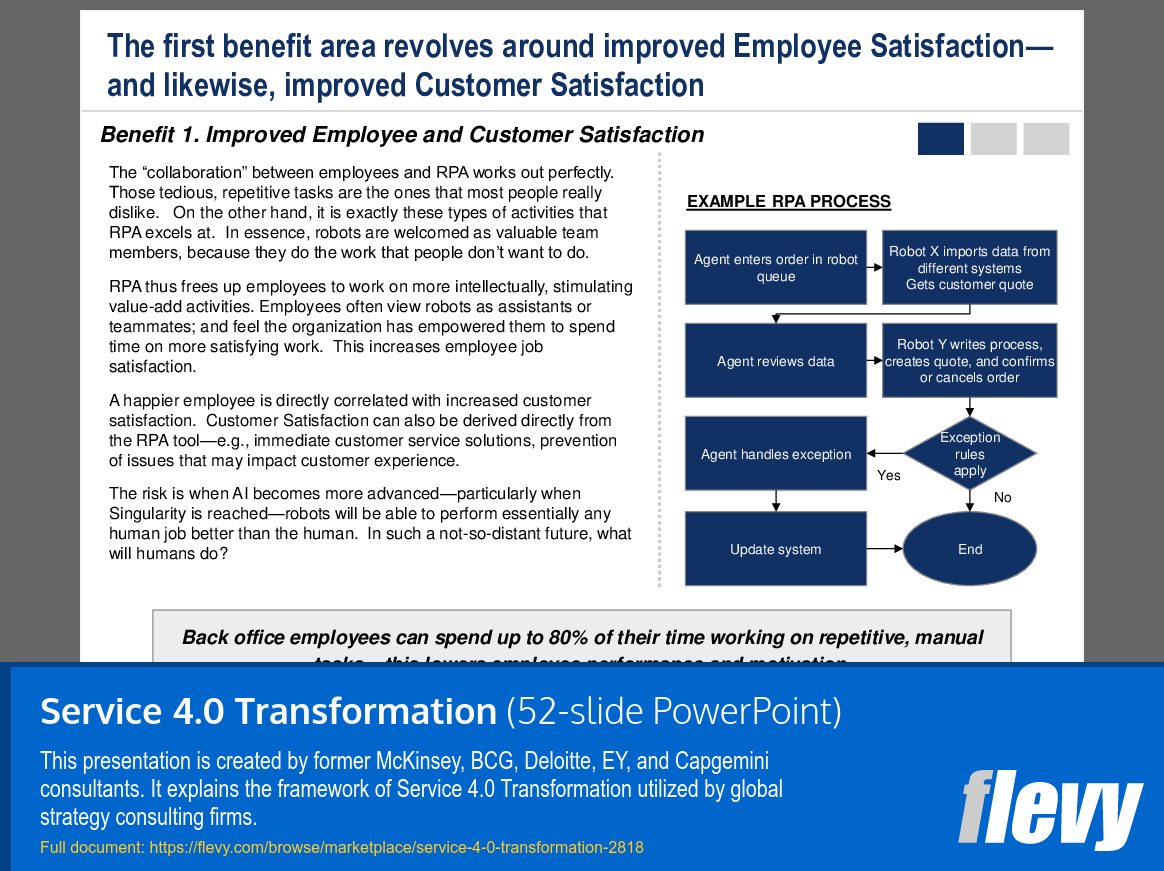
This PPT slide highlights the benefits of Robotic Process Automation (RPA) in enhancing employee and customer satisfaction. RPA allows employees to delegate repetitive tasks to robots, enabling them to focus on more rewarding activities and increasing job satisfaction. Employees view robots as valuable collaborators, fostering a sense of empowerment. The correlation between employee satisfaction and improved customer service is noted, with RPA tools facilitating quicker issue resolution and enhancing customer experience. An example workflow illustrates how RPA manages data processing and system updates. Additionally, it raises concerns about AI's evolving capabilities and its potential impact on traditional employee roles. A statistic indicates that back-office employees spend up to 80% of their time on repetitive tasks, emphasizing the need for RPA to boost performance and motivation.
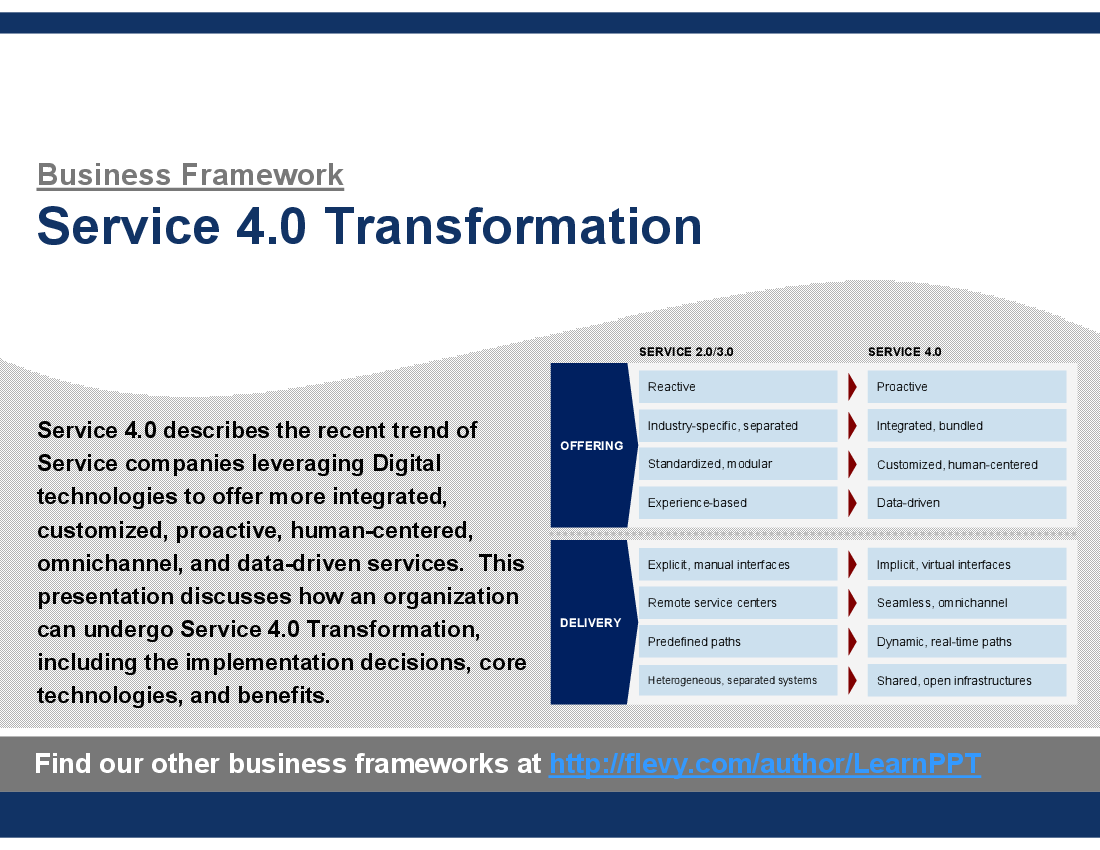
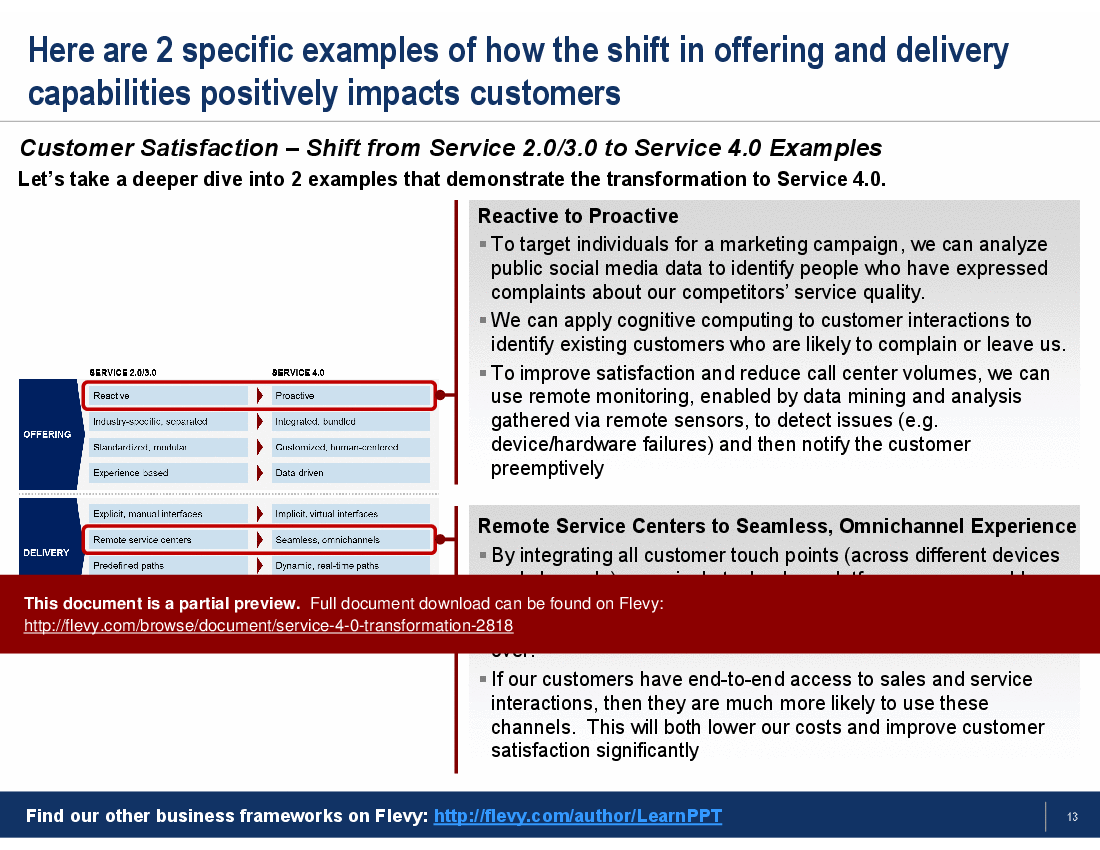
This PPT slide outlines the transition from Service 2.0/3.0 to Service 4.0, highlighting changes in service offerings and delivery methods. Service 2.0/3.0 is characterized as reactive, industry-specific, standardized, and experience-based, indicating a traditional approach with limited flexibility. In contrast, Service 4.0 is proactive, integrated, customized, and data-driven, focusing on anticipating customer needs and utilizing data analytics for service delivery. The delivery methods also evolve; Service 2.0/3.0 relies on manual interfaces and remote service centers, leading to delays, while Service 4.0 employs virtual interfaces and omnichannel delivery for real-time adjustments and personalized experiences. Adopting Service 4.0 principles can enhance customer satisfaction and operational efficiency.
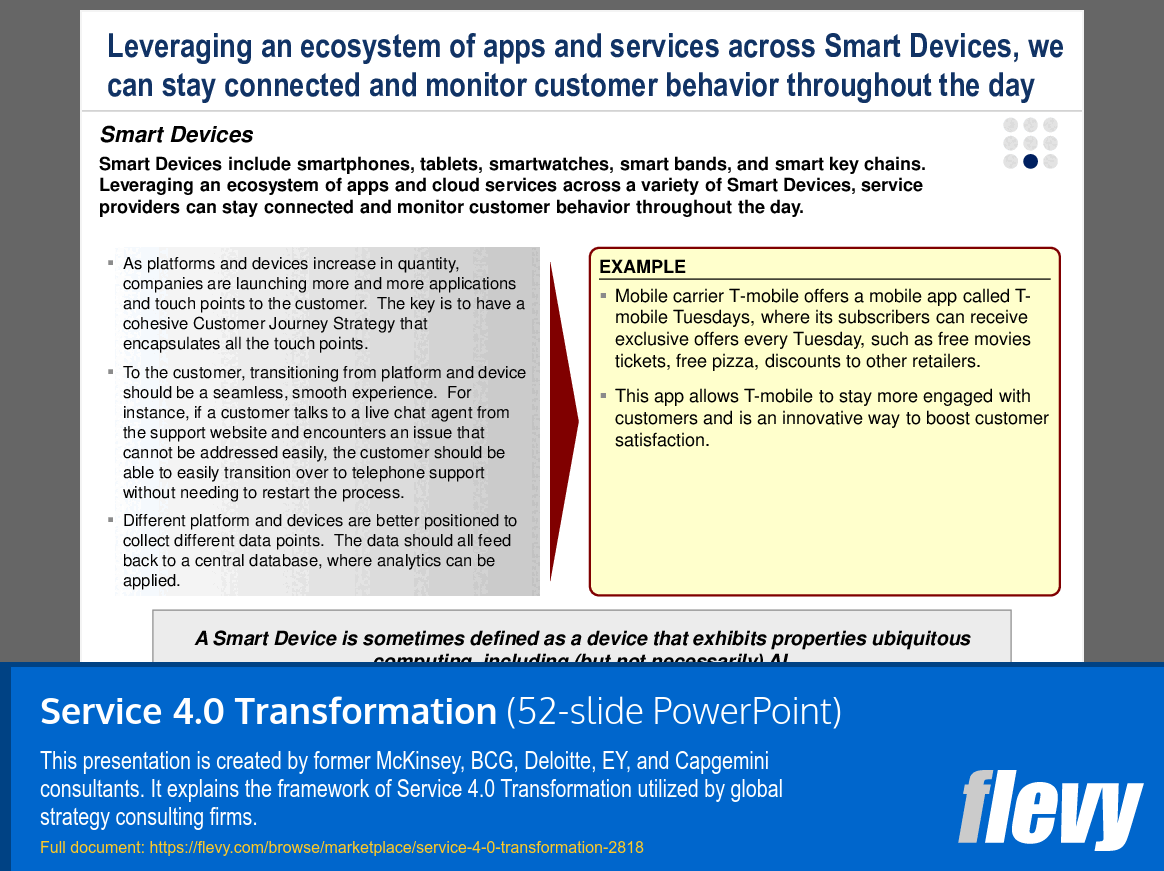
This PPT slide focuses on integrating smart devices into a cohesive customer engagement strategy, emphasizing a unified Customer Journey Strategy across all touchpoints. A smooth customer experience is essential; for example, if a customer switches from live chat to telephone support, they should not have to repeat their issue. Various smart devices collect distinct data points that should be consolidated into a central database for effective analysis. Leveraging analytics provides insights into customer behavior, enabling tailored engagement strategies. T-Mobile's mobile app, T-Mobile Tuesdays, exemplifies this strategy by offering exclusive deals to enhance customer satisfaction and engagement. A well-integrated approach to customer interactions across smart devices can significantly improve customer experiences through strategic data collection and analysis.
Source: Best Practices in Service Transformation, Industry 4.0, Augmented Reality PowerPoint Slides: Service 4.0 Transformation PowerPoint (PPT) Presentation Slide Deck, LearnPPT Consulting
This presentation is created by former McKinsey, BCG, Deloitte, EY, and Capgemini consultants. It explains the framework of Service 4.0 Transformation utilized by global strategy consulting firms.
We are a team of management consultants trained by top tier global consulting firms (including McKinsey, BCG, Deloitte, EY, Capgemini) with a collective experience of several decades. We specialize in business frameworks based on real-life consulting engagements.
We have served 100s of clients that range from Fortune 500 companies to tech startups to
... [read more] $1B+ private companies.
Utilize our consulting frameworks to apply structured thinking & analysis to address your business challenges, uncover strategic insights, and implement workable solutions. Our PowerPoint presentations follow traditional consulting slide design formats, starting with a clear slide headline. Easily customize and repurpose our slides for your own business presentations.
Beyond business frameworks & methodologies, we also offer PowerPoint templates and other business templates. Our templates are professionally designed and have been used in thousands of deliverables & work products across hundreds of clients.
The average daily rate of a McKinsey consultant is $6,625 (not including expenses). The average price of a Flevy document is $65.
Trusted by over 10,000+ Client Organizations
Since 2012, we have provided business templates to over 10,000 businesses and organizations of all sizes, from startups and small businesses to the Fortune 100, in over 130 countries.
"As a niche strategic consulting firm, Flevy and FlevyPro frameworks and documents are an on-going reference to help us structure our findings and recommendations to our clients as well as improve their clarity, strength, and visual power. For us, it is an invaluable resource to increase our impact and value."
– David Coloma, Consulting Area Manager at Cynertia Consulting
"[Flevy] produces some great work that has been/continues to be of immense help not only to myself, but as I seek to provide professional services to my clients, it gives me a large "tool box" of resources that are critical to provide them with the quality of service and outcomes they are expecting."
– Royston Knowles, Executive with 50+ Years of Board Level Experience
"I like your product. I'm frequently designing PowerPoint presentations for my company and your product has given me so many great ideas on the use of charts, layouts, tools, and frameworks. I really think the templates are a valuable asset to the job."
– Roberto Fuentes Martinez, Senior Executive Director at Technology Transformation Advisory
"Flevy is now a part of my business routine. I visit Flevy at least 3 times each month.
Flevy has become my preferred learning source, because what it provides is practical, current, and useful in this era where the business world is being rewritten.
many challenges and there is the need to make the right decisions in a short time, with so much scattered information, we are fortunate to have Flevy. Flevy investigates, selects, and puts at our disposal the best of the best to help us be successful in our work.
"
– Omar Hernán Montes Parra, CEO at Quantum SFE
"Flevy.com has proven to be an invaluable resource library to our Independent Management Consultancy, supporting and enabling us to better serve our enterprise clients.
The value derived from our [FlevyPro] subscription in terms of the business it has helped to gain far exceeds the investment made, making a subscription a no-brainer for any growing consultancy – or in-house strategy team."
– Dean Carlton, Chief Transformation Officer, Global Village Transformations Pty Ltd.
"My FlevyPro subscription provides me with the most popular frameworks and decks in demand in today’s market. They not only augment my existing consulting and coaching offerings and delivery, but also keep me abreast of the latest trends, inspire new products and service offerings for my practice, and educate me
in a fraction of the time and money of other solutions. I strongly recommend FlevyPro to any consultant serious about success.
"
– Bill Branson, Founder at Strategic Business Architects
"As a small business owner, the resource material available from FlevyPro has proven to be invaluable. The ability to search for material on demand based our project events and client requirements was great for me and proved very beneficial to my clients. Importantly, being able to easily edit and tailor
the material for specific purposes helped us to make presentations, knowledge sharing, and toolkit development, which formed part of the overall program collateral. While FlevyPro contains resource material that any consultancy, project or delivery firm must have, it is an essential part of a small firm or independent consultant's toolbox.
"
– Michael Duff, Managing Director at Change Strategy (UK)
"If you are looking for great resources to save time with your business presentations, Flevy is truly a value-added resource. Flevy has done all the work for you and we will continue to utilize Flevy as a source to extract up-to-date information and data for our virtual and onsite presentations!"
Download our free compilation of 50+ Strategy & Transformation slides and templates. Frameworks include McKinsey 7-S, Balanced Scorecard, Disruptive Innovation, BCG Curve, and many more.