Editor Summary
Designing and Delivering Focus Interviews is a 13-slide PowerPoint presentation by Process Consulting that outlines a structured approach to conducting confidential, one-on-one 90-minute focus interviews.
Read moreIncludes deliverables and templates: Focus Interview Guide, standardized question sets, preparation checklist, trust-building techniques, post-interview summary template, and a Plan-Do-Review checklist. Target users include corporate executives, project managers, consultants, and team leaders. Used to gather qualitative insights early in projects to validate hypotheses, identify improvement areas, and build stakeholder support; sold as a digital download on Flevy.
This deck is used when teams need to gather qualitative insights and validate initial hypotheses at project start, during planning, or when building stakeholder commitment.
Corporate executives conducting a climate check to surface organizational strengths, weaknesses, and improvement opportunities through structured one-on-one interviews.
Project managers validating early hypotheses and capturing domain-specific knowledge to inform project scoping and priorities using standardized question sets.
Management consultants establishing rapport and credibility with stakeholders by following a formal interview guide and trust-building techniques.
Team leaders expanding their stakeholder network by systematically collecting candid feedback and summarizing themes with a post-interview template.
The methodology’s structured, hypothesis-driven one-on-one interviews and Plan-Do-Review cadence mirror practices used at McKinsey, Bain, and BCG.
This document teaches the proper way to design and deliver focus interviews. A focus interview is a confidential, one-on-one 90 minute structured interview.
Focus interviews delve into the interviewee's technical / domain knowledge. They may have some "quiz" types of questions (e.g. exploring a technical subject), or it might be more free form discussion of the interviewee's experience and knowledge for his or her area and level.
Focus interviews are necessary tool used by management consultants when in the data / information collection phase of the project. In addition to merely gathering information, it is used to foster credibility with clients, build rapport / relationships with clients, and build commitment / support for the project.
This presentation covers the following topics:
• Purpose of focus interviews
• Focus interview questions (objectives and standard question areas)
• Focus interview results storyboard
• Designing a focus interview guide
• Preparing a focus interview
• Conducting a focus interview
• Building trust during the focus interview
• Introducing the focus interview
• Handling difficult situations
• Plan-Do-Review checklist
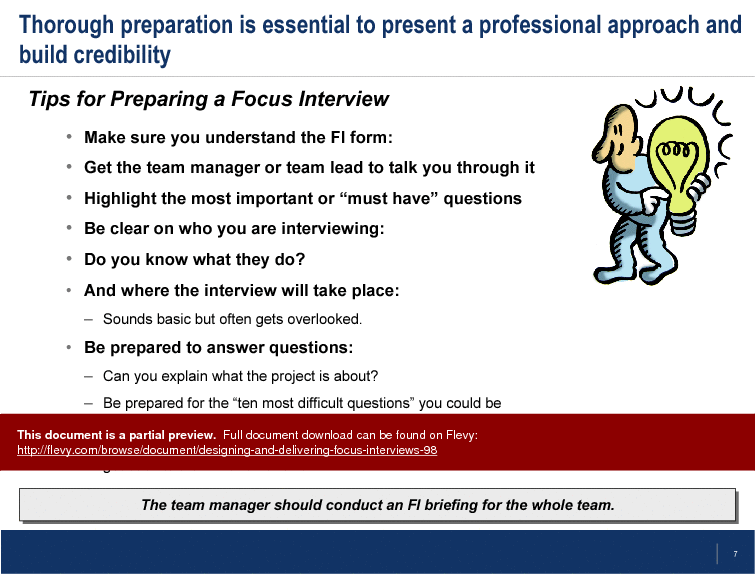
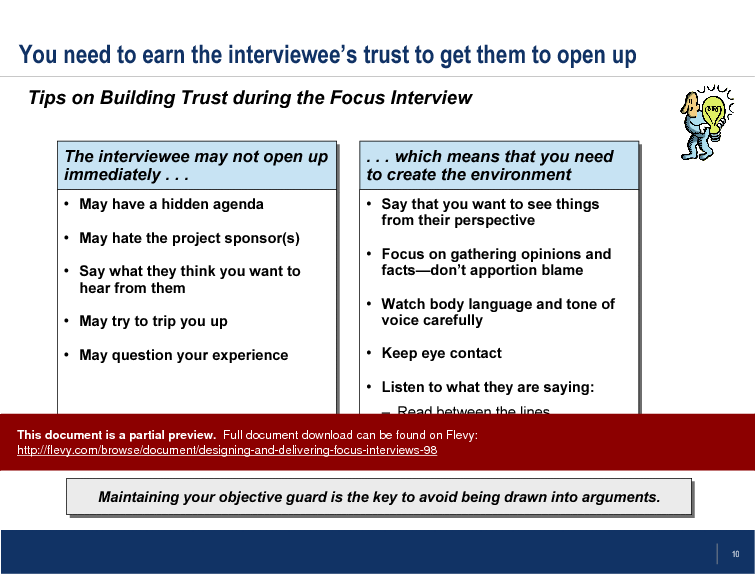
This document also emphasizes the importance of thorough preparation and building trust during focus interviews. It provides actionable tips for preparing, such as understanding the focus interview form, highlighting key questions, and being clear on the interviewee's role and location. The guide stresses the need to be prepared to answer questions about the project and to handle difficult questions effectively.
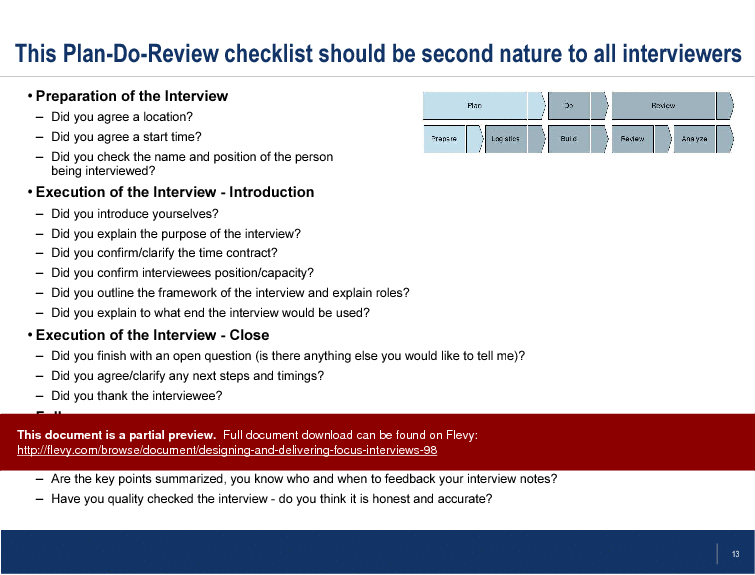
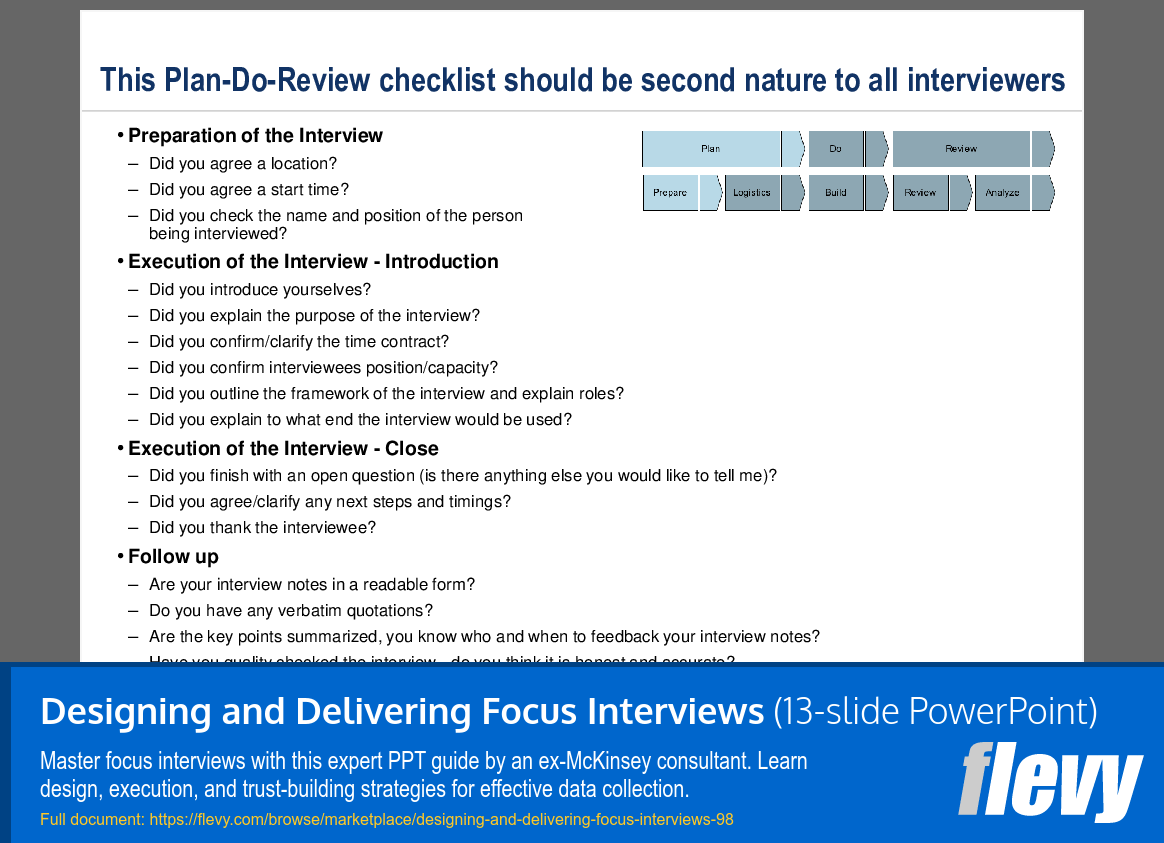
To build trust, the document advises on creating a conducive environment by focusing on gathering opinions and facts without assigning blame, maintaining eye contact, and reading between the lines. It also includes a comprehensive Plan-Do-Review checklist to ensure all aspects of the interview are covered, from preparation and execution to follow-up. This checklist serves as a vital tool for interviewers to ensure they conduct thorough and effective focus interviews.
Got a question about the product? Email us at support@flevy.com or ask the author directly by using the "Ask the Author a Question" form. If you cannot view the preview above this document description, go here to view the large preview instead.
MARCUS OVERVIEW
This synopsis was written by Marcus [?] based on the analysis of the full 13-slide presentation.
Executive Summary
This presentation, "Designing and Delivering Focus Interviews," provides a structured approach to conducting focus interviews, essential for gathering qualitative insights early in a project. Crafted in a consulting-grade format akin to McKinsey, Bain, or BCG-quality, this guide equips professionals with the necessary tools to validate hypotheses, identify areas for improvement, and build relationships within the organization. Users will learn to design effective interviews, prepare thoroughly, and create an environment conducive to open dialogue, ultimately enhancing project credibility and support.
Who This Is For and When to Use
• Corporate executives seeking to understand organizational strengths and weaknesses
• Project managers needing to validate initial hypotheses and gather qualitative data
• Consultants aiming to build relationships and support for their projects
• Team leaders looking to enhance their network and gain insights from stakeholders
Best-fit moments to use this deck:
• At the beginning of a project to establish credibility and gather initial insights
• During project planning phases to identify areas for improvement
• When building commitment and support from key stakeholders
Learning Objectives
• Define the purpose and structure of a focus interview
• Develop effective focus interview questions to gather relevant data
• Build trust with interviewees to facilitate open communication
• Identify key themes and insights from focus interview results
• Create a professional environment that encourages candid feedback
• Prepare thoroughly for interviews to enhance credibility and effectiveness
Table of Contents
• Introduction to Focus Interviews (page 2)
• Purpose of Focus Interviews (page 3)
• Standard Focus Interview Format (page 4)
• Focus Interview Objectives (page 4)
• Key Elements of Focus Interviews (page 5)
• Tips for Designing a Focus Interview Guide (page 6)
• Preparation for Focus Interviews (page 7)
• Conducting Focus Interviews (page 8)
• Building Trust with Interviewees (page 9)
• Handling Difficult Situations (page 10)
• Summary of Key Takeaways (page 12)
• Plan-Do-Review Checklist (page 13)
Primary Topics Covered
• Purpose of Focus Interviews - Focus interviews serve to validate hypotheses, identify strengths and weaknesses, and build relationships within the organization.
• Standard Format - A focus interview is a structured, confidential one-on-one session lasting approximately 90 minutes, designed to gather qualitative insights.
• Interview Objectives - Objectives include validating hypotheses, gaining insights into the current business situation, and identifying areas for improvement.
• Key Elements - Essential elements include a structured approach, open-ended questions, and a focus on building trust with interviewees.
• Designing Interview Questions - Effective questions should be clear, non-threatening, and aimed at eliciting detailed responses.
• Preparation and Execution - Thorough preparation is crucial for success, including understanding the interview format and the interviewee's background.
Deliverables, Templates, and Tools
• Focus Interview Guide template for structuring interviews
• Standardized question sets to ensure comprehensive coverage of topics
• Preparation checklist to ensure all logistical aspects are addressed
• Trust-building techniques to enhance interviewee openness
• Post-interview summary template for capturing insights and key points
• Plan-Do-Review checklist for evaluating interview effectiveness
Slide Highlights
• Overview of focus interview objectives and structure
• Key elements of a successful focus interview
• Tips for building trust and handling difficult situations
• Summary slide emphasizing the importance of preparation and insights
• Plan-Do-Review checklist for interviewers to ensure thorough follow-up
Potential Workshop Agenda
Introduction to Focus Interviews (60 minutes)
• Overview of focus interview purpose and structure
• Discussion on the importance of qualitative data
Designing Effective Interview Questions (90 minutes)
• Workshop on crafting open-ended questions
• Role-playing to practice trust-building techniques
Conducting Focus Interviews (60 minutes)
• Tips for setting the scene and managing interviews
• Strategies for handling difficult situations
Customization Guidance
• Tailor the focus interview questions to align with specific project objectives
• Adjust the interview format based on the organizational culture and interviewee preferences
• Incorporate company-specific terminology and context into the interview guide
Secondary Topics Covered
• Techniques for analyzing focus interview results
• Strategies for expanding the interviewee network
• Importance of confidentiality and trust in interviews
• Methods for generating actionable insights from qualitative data
• Follow-up strategies to maintain engagement with interviewees
Topic FAQ
What are the core components of a focus interview and how long should it take?
A focus interview is a structured, confidential one-on-one session designed to gather qualitative insights. Core components include a clear interview format, open-ended questions, trust-building, thorough preparation, and follow-up via a Plan-Do-Review process. The standard duration described is approximately 90 minutes and includes a Plan-Do-Review checklist.
How do you design effective focus interview questions?
Effective questions are clear, non-threatening, and open-ended to elicit detailed responses about strengths, weaknesses, and improvement opportunities. Design involves aligning questions to interview objectives and coverage areas; using standardized question sets helps ensure consistency. This approach is illustrated with standardized question sets in the Flevy's Designing and Delivering Focus Interviews presentation.
How should interviewers prepare to build credibility before a focus interview?
Preparation includes understanding the interview format, researching the interviewee’s role and background, highlighting key questions, and being ready to answer project-related queries. Logistical readiness and clarity on objectives improve credibility. The presentation provides a preparation checklist to guide these steps.
What techniques help build trust and manage difficult interviewees?
Recommended techniques include creating a non-threatening environment, active listening, focusing on opinions and facts without assigning blame, maintaining eye contact, and allowing concerns to be expressed before redirecting to constructive topics. The deck contains guidance on handling difficult situations and specific trust-building techniques.
What should I look for when choosing a focus-interview template or toolkit?
Choose a toolkit that provides a structured interview guide, standardized question sets, a preparation checklist, post-interview summary templates, and a Plan-Do-Review checklist. Also look for customization guidance to adapt questions to your context; Flevy's Designing and Delivering Focus Interviews includes these specific templates and guidance.
How can I assess the cost versus value of buying a focus-interview deck or templates?
Evaluate whether included deliverables save time and improve consistency: look for a Focus Interview Guide template, standardized questions, a preparation checklist, trust-building techniques, and post-interview summary templates. Compare those included items against internal effort and timelines to determine value, for example the Focus Interview Guide template.
I need to validate initial project hypotheses during kickoff—what interview format should I use?
Use a structured, confidential one-on-one focus interview of about 90 minutes that emphasizes hypothesis validation through open-ended questioning and trust-building. The format should include preparation steps and a Plan-Do-Review follow-up; Flevy's Designing and Delivering Focus Interviews explains the standard focus interview format and objectives.
How can I turn qualitative notes from focus interviews into actionable insights?
Identify recurring themes, map strengths and weaknesses, summarize key points in a post-interview summary, and use a Plan-Do-Review checklist to prioritize follow-up actions and validate findings. The presentation covers a results storyboard and post-interview summary template to support this synthesis process.
Document FAQ
These are questions addressed within this presentation.
What is the primary purpose of a focus interview?
The primary purpose is to validate hypotheses, identify strengths and weaknesses, and gather qualitative insights to guide project direction.
How long does a focus interview typically last?
A focus interview is structured to last approximately 90 minutes, allowing for in-depth discussion.
What types of questions should be included in a focus interview?
Questions should be open-ended, designed to elicit detailed responses, and cover areas such as organizational strengths, weaknesses, and improvement opportunities.
How can I build trust with interviewees?
Building trust involves creating a non-threatening environment, actively listening, and demonstrating genuine interest in the interviewee's perspective.
What should I do if an interviewee becomes hostile?
Maintain composure, allow them to express their concerns, and redirect the conversation to focus on constructive feedback.
What is the significance of the Plan-Do-Review checklist?
The checklist ensures that interviewers prepare adequately, execute effectively, and follow up on insights gathered during the interview.
How can I ensure the confidentiality of interviewee responses?
Assure interviewees that their comments will remain confidential and will not be attributed to them personally.
What types of insights should I look for during focus interviews?
Focus on qualitative insights that reveal organizational culture, potential areas for improvement, and the overall climate regarding the project.
Glossary
• Focus Interview - A structured, confidential one-on-one interview designed to gather qualitative insights.
• Qualitative Data - Non-numerical information that provides insights into opinions, motivations, and experiences.
• Trust-Building - Techniques used to establish rapport and encourage open communication with interviewees.
• Plan-Do-Review - A structured approach to preparing, executing, and evaluating interviews.
• Open-Ended Questions - Questions designed to elicit detailed responses rather than simple yes/no answers.
• Interview Objectives - Specific goals that guide the focus interview process.
• Confidentiality - Assurance that interviewee responses will not be disclosed or attributed to them.
• Interview Preparation - The process of organizing and planning for effective focus interviews.
• Stakeholder Engagement - The involvement of individuals or groups who have an interest in the project.
• Organizational Culture - The values, beliefs, and behaviors that shape how work is done within an organization.
• Improvement Opportunities - Areas identified during interviews where enhancements can be made.
• Climate Check - An assessment of the current organizational environment and readiness for change.
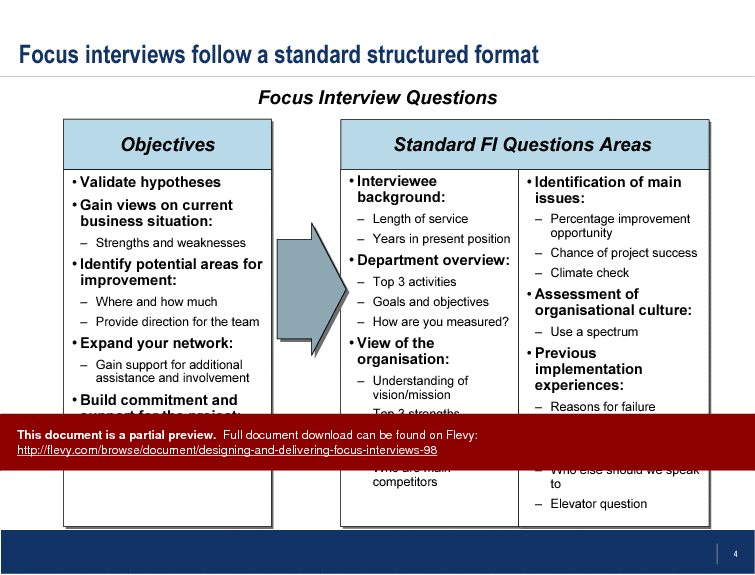
This PPT slide outlines the structured format of focus interviews, detailing objectives and standard questions. Key objectives include validating hypotheses, gathering insights on strengths and weaknesses, identifying areas for improvement, expanding the network for support, and building commitment for the project through temperature checks and shared experiences. Standard focus interview questions cover the interviewee's background, department overview, key activities, goals, performance metrics, and understanding of the organization’s vision and mission. The interview also addresses main issues, assesses organizational culture, and reviews previous implementation experiences. Finally, it prompts interviewees to suggest additional contacts for further insights, ensuring comprehensive data collection for informed decision-making and strategic planning.
This PPT slide outlines strategies for managing challenging interview scenarios, categorized into 5 types. For inattentiveness, ask targeted questions about the interviewee's role to re-engage them. In the case of a hostile interviewee, maintain composure and encourage them to express concerns to defuse tension. When interviewees ramble, steer the conversation with directed questions to keep it focused. If the interviewer dominates, use silence strategically to allow the interviewee time to think, and employ open-ended questions for deeper responses. To clarify vague answers, paraphrase the interviewee's statements to confirm understanding and invite elaboration.
This PPT slide outlines a comprehensive checklist for effective interviews, structured into 3 sections: Preparation, Execution, and Follow-up. The Preparation section emphasizes confirming logistics such as location, start time, and interviewee identity. The Execution section includes 2 parts: Introduction, where rapport is established and the interview framework is clarified, and Close, which stresses concluding with an open-ended question and thanking the interviewee. The Follow-up section focuses on ensuring clear notes and summarizing key points, highlighting the importance of feedback mechanisms for continuous improvement in the interviewing process. This checklist serves as a practical tool for interviewers to enhance their interview effectiveness.
This PPT slide presents a comprehensive overview of focus interview results, structured as a storyboard. The "Approach" section details participant demographics and focus interview methodology, establishing a foundation for insights. The "Strengths" section highlights positive feedback on facilities and location, identifying key elements that resonate with stakeholders. The "Card Sort Results" visually represent respondent priorities, indicating aspects deemed most important for strategic focus. The "Improvement Opportunity" and "Probability of Success" sections quantify enhancement areas and assess the likelihood of success, essential for informed decision-making. The "Climate Right" section evaluates stakeholder readiness for change, vital for timing strategic initiatives. The "Elevator Quotes" section captures direct participant feedback, providing qualitative data that enriches understanding of stakeholder sentiments. This combination of quantitative and qualitative insights equips decision-makers with a well-rounded view of the organization’s standing and development areas.
Focus Interviews are structured, 90-minute discussions aimed at generating rapid insights into an organization’s strengths and weaknesses while validating initial hypotheses. They identify potential areas for improvement and guide project teams in decision-making. These interviews also facilitate network expansion, fostering collaboration and visibility within the organization. High-touch interactions enhance stakeholder engagement and commitment, allowing for the identification of support pockets and sentiment gauging. Compelling narratives or "war stories" illustrate the project’s relevance and urgency. Focus Interviews provide a structured approach to leverage insights, build relationships, and secure stakeholder commitment effectively.
Source: Best Practices in Interviewing, Focus Interviewing PowerPoint Slides: Designing and Delivering Focus Interviews PowerPoint (PPT) Presentation Slide Deck, Process Consulting
Process Consulting specializes in consulting training presentations focused on core consulting skills, from structured problem solving to presentation development to process mapping. Our materials are based on the frameworks utilized by global consulting firms.
The firm is managed by a seasoned professional with over 15 years of experience at Capgemini and Deloitte, followed by a decade
... [read more] of industry experience.
The firm's commitment to excellence is rooted in its manager's rich experience, where they honed skills in process improvement, stakeholder collaboration, and high-impact communication. This expertise enables Process Consulting to create resources that are not only theoretically robust, but also practically applicable, making them a trusted resource for consultants worldwide.
The average daily rate of a McKinsey consultant is $6,625 (not including expenses). The average price of a Flevy document is $65.
Trusted by over 10,000+ Client Organizations
Since 2012, we have provided business templates to over 10,000 businesses and organizations of all sizes, from startups and small businesses to the Fortune 100, in over 130 countries.
"I am extremely grateful for the proactiveness and eagerness to help and I would gladly recommend the Flevy team if you are looking for data and toolkits to help you work through business solutions."
– Trevor Booth, Partner, Fast Forward Consulting
"[Flevy] produces some great work that has been/continues to be of immense help not only to myself, but as I seek to provide professional services to my clients, it gives me a large "tool box" of resources that are critical to provide them with the quality of service and outcomes they are expecting."
– Royston Knowles, Executive with 50+ Years of Board Level Experience
"I have used Flevy services for a number of years and have never, ever been disappointed. As a matter of fact, David and his team continue, time after time, to impress me with their willingness to assist and in the real sense of the word. I have concluded in fact
that it is not at all just a repository of documents/resources but, in the way that David and his team manage the firm, it is like dealing with consultants always ready to assist, advise and direct you to what you really need, and they always get it right.
I am an international hospitality accomplished senior executive who has worked and lived during the past 35 years in 23 countries in 5 continents and I can humbly say that I know what customer service is, trust me.
Aside from the great and professional service that Flevy's team provide, their wide variety of material is of utmost great quality, professionally put together and most current.
Well done Flevy, keep up the great work and I look forward to continue working with you in the future and to recommend you to a variety of colleagues around the world.
"
– Roberto Pelliccia, Senior Executive in International Hospitality
"As a young consulting firm, requests for input from clients vary and it's sometimes impossible to provide expert solutions across a broad spectrum of requirements. That was before I discovered Flevy.com.
Through subscription to this invaluable site of a plethora of topics that are key and crucial to consulting, I
have been able to exceed expectations and deliver quality advice and solutions to my clients. The quality and expertise of the authors are exemplary and gives me great confidence to use as part of my service offerings.
I highly recommend this company for any consultant wanting to apply international best practice standards in their service offerings.
"
– Nishi Singh, Strategist and MD at NSP Consultants
"The wide selection of frameworks is very useful to me as an independent consultant. In fact, it rivals what I had at my disposal at Big 4 Consulting firms in terms of efficacy and organization."
– Julia T., Consulting Firm Owner (Former Manager at Deloitte and Capgemini)
"I have used FlevyPro for several business applications. It is a great complement to working with expensive consultants. The quality and effectiveness of the tools are of the highest standards."
– Moritz Bernhoerster, Global Sourcing Director at Fortune 500
"If you are looking for great resources to save time with your business presentations, Flevy is truly a value-added resource. Flevy has done all the work for you and we will continue to utilize Flevy as a source to extract up-to-date information and data for our virtual and onsite presentations!"
– Debbi Saffo, President at The NiKhar Group
"As a niche strategic consulting firm, Flevy and FlevyPro frameworks and documents are an on-going reference to help us structure our findings and recommendations to our clients as well as improve their clarity, strength, and visual power. For us, it is an invaluable resource to increase our impact and value."
– David Coloma, Consulting Area Manager at Cynertia Consulting
Download our free compilation of 50+ slides and templates on Organizational Design, Change Management, and Corporate Culture. Methodologies include ADKAR, Burke-Litwin Change Model, McKinsey 7-S, Competing Values Framework, etc.