
Best practices in delivering world-class customer care
Example performance of top performers
Industry case examples
CUSTOMER SERVICE PPT DESCRIPTION
This product (Guide to Delivering Best-in-Class Customer Care) is a 78-slide PPT PowerPoint presentation slide deck (PPT), which you can download immediately upon purchase.
This document is a collection of best practices in delivering world-class customer care. The document is organized across the four performance dimensions: cost, revenue, customer satisfaction infrastructure, and frontline performance. It includes example performance of top performers , as well as supporting industry case examples.
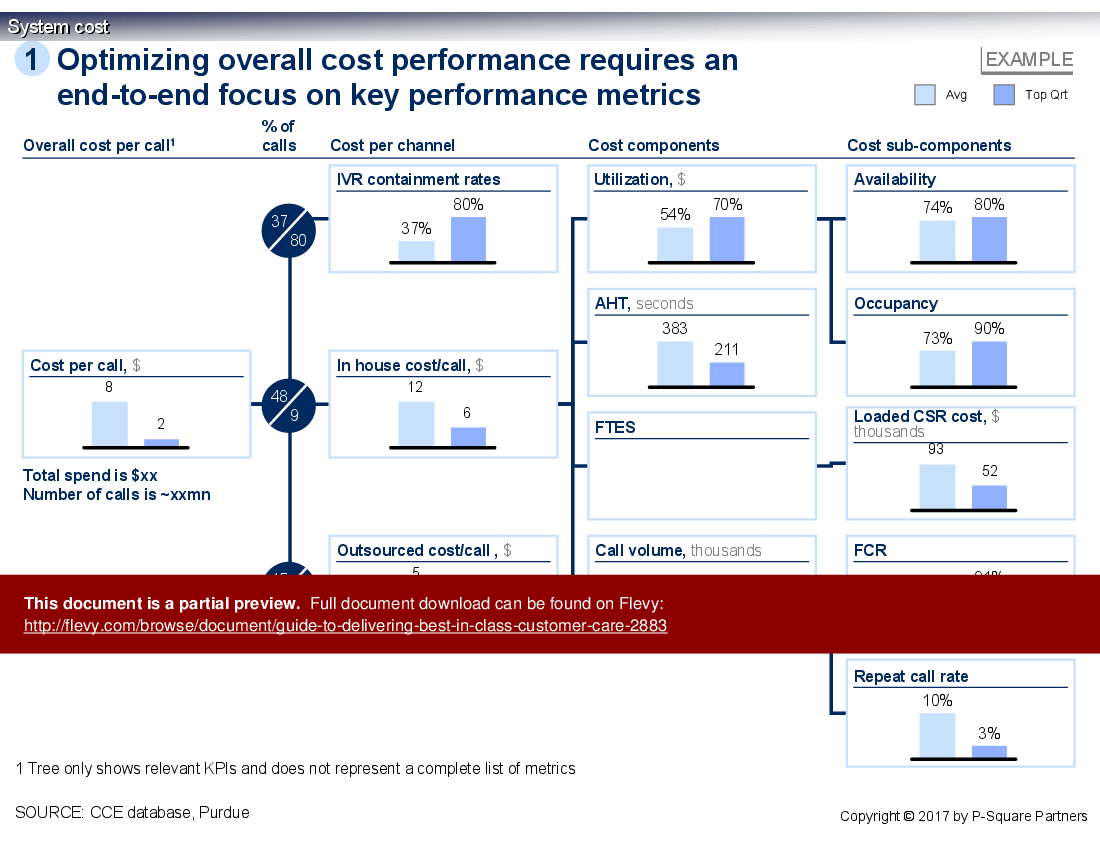
The guide emphasizes the importance of optimizing overall cost performance through a meticulous focus on key performance metrics. It provides detailed insights into cost per call, IVR containment rates, and utilization metrics. By benchmarking against top performers, your organization can identify gaps and implement targeted strategies to enhance efficiency and reduce operational costs. This approach ensures that every dollar spent is maximized for value.
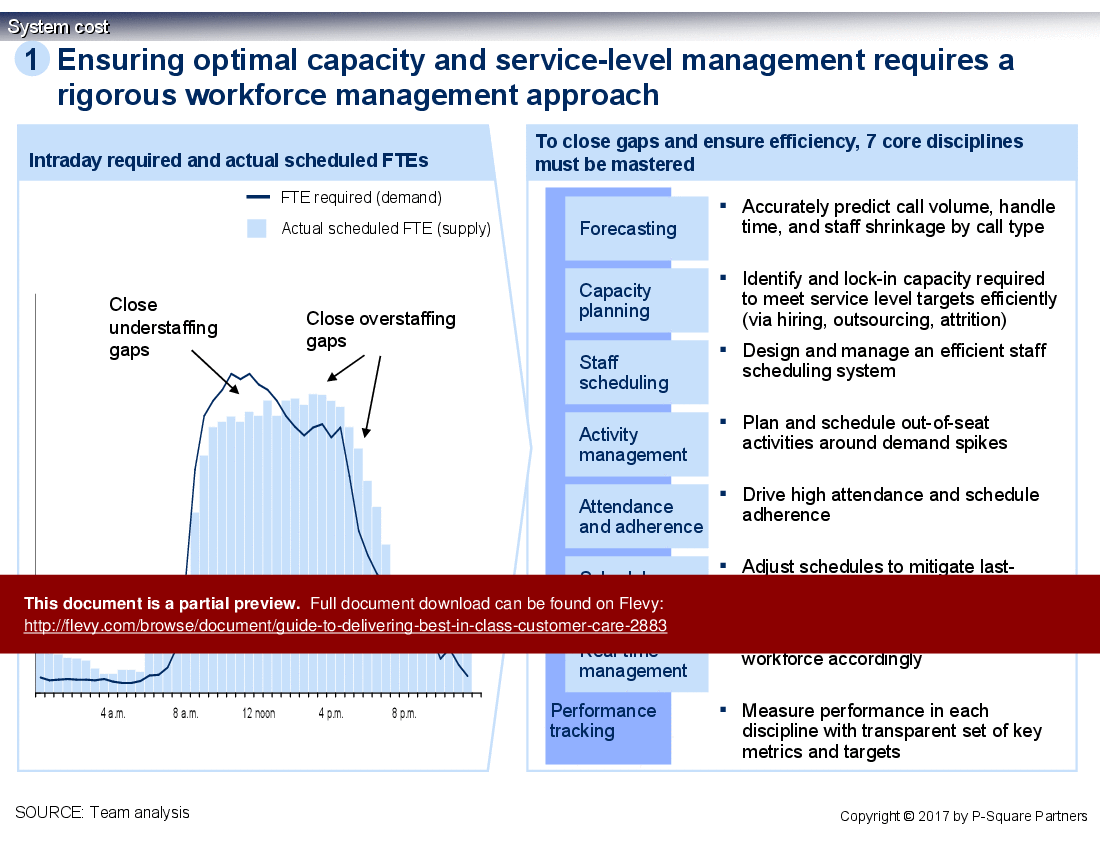
Ensuring optimal capacity and service-level management is another critical aspect covered in the document. The guide outlines seven core disciplines, including forecasting, capacity planning, and real-time management, that must be mastered to close understaffing and overstaffing gaps. This rigorous workforce management approach helps in maintaining service levels while controlling costs, ensuring that your customer care operations are both effective and efficient.
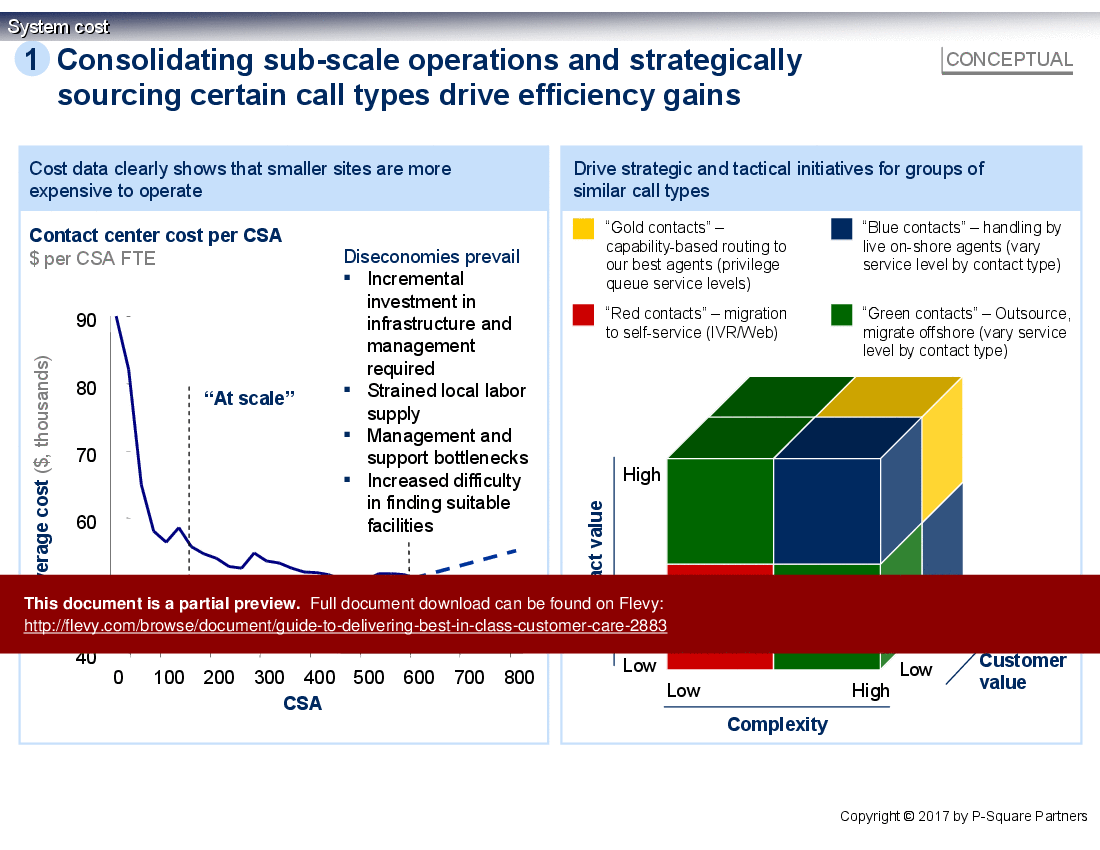
The PPT also delves into the strategic consolidation of sub-scale operations and the tactical sourcing of certain call types to drive efficiency gains. It highlights the cost implications of operating smaller sites and provides a framework for categorizing call types to optimize routing and handling. By leveraging these insights, your organization can achieve significant cost savings and improve overall service delivery, positioning itself as a leader in customer care excellence.
Got a question about the product? Email us at support@flevy.com or ask the author directly by using the "Ask the Author a Question" form. If you cannot view the preview above this document description, go here to view the large preview instead.
MARCUS OVERVIEW
This synopsis was written by Marcus [?] based on the analysis of the full 78-slide presentation.
Executive Summary
The "Guide to Delivering Best-in-Class Customer Care" is a comprehensive presentation designed to equip organizations with the strategies and frameworks necessary for exceptional customer service. Crafted by P-Square Partners, this consulting-grade resource embodies the quality and rigor of McKinsey, Bain, or BCG (not affiliated). It focuses on optimizing customer care through strategic alignment, performance management, and technology integration, enabling organizations to enhance customer satisfaction, reduce costs, and drive revenue growth.
Who This Is For and When to Use
• Customer service executives aiming to elevate their organization's customer care standards
• Call center managers seeking to implement best practices in performance management
• Business leaders focused on aligning customer care with overall business strategy
• Consultants and advisors working with organizations to improve customer experience
Best-fit moments to use this deck:
• During strategic planning sessions to align customer care initiatives with business objectives
• When implementing new performance metrics or technology in customer service operations
• For training sessions aimed at enhancing frontline staff capabilities and engagement
• In workshops focused on integrating customer feedback into service improvements
Learning Objectives
• Define best-in-class customer care principles and their impact on business outcomes
• Build a framework for aligning customer service strategy with overall business goals
• Establish key performance metrics for measuring customer satisfaction and operational efficiency
• Implement effective coaching and training programs for frontline staff
• Optimize technology use to enhance customer interactions and streamline service processes
• Develop a robust vendor management strategy to ensure service level agreements are met
Table of Contents
• Introduction to Best-in-Class Customer Care (page 1)
• Strategic Alignment in Customer Care (page 5)
• Performance Management Framework (page 12)
• Technology Integration for Enhanced Customer Experience (page 20)
• Training and Coaching Best Practices (page 30)
• Vendor Management Strategies (page 40)
• Metrics and KPIs for Customer Care (page 50)
• Case Studies of Excellence (page 60)
Primary Topics Covered
• Strategic Alignment - Ensuring customer care initiatives reflect and support overall business strategy.
• Performance Management - Implementing key metrics to drive accountability and improve service quality.
• Technology Utilization - Leveraging technology to enhance customer interactions and operational efficiency.
• Training and Development - Establishing effective training programs to empower frontline staff.
• Vendor Management - Creating structured processes for managing vendor relationships and service agreements.
• Customer Feedback Integration - Utilizing customer insights to inform service improvements and product development.
Deliverables, Templates, and Tools
• Customer care strategy template for aligning initiatives with business goals
• Performance management scorecard to track key metrics and KPIs
• Training program outline incorporating adult learning principles
• Vendor management framework for establishing SLAs and performance monitoring
• Technology integration checklist for optimizing customer service platforms
• Customer feedback loop model to incorporate insights into service enhancements
Slide Highlights
• Overview of best-in-class customer care principles and their business impact
• Visual representation of the performance management framework
• Case studies showcasing successful customer care transformations
• Metrics dashboard example for tracking customer satisfaction and operational efficiency
• Training program flowchart illustrating the onboarding process for new agents
Potential Workshop Agenda
Customer Care Strategy Alignment Workshop (90 minutes)
• Discuss current customer care strategies and identify alignment gaps
• Brainstorm initiatives to enhance customer experience and satisfaction
• Develop action plans for implementing new strategies
Performance Management Implementation Session (60 minutes)
• Review key performance metrics and their relevance to customer care
• Create a performance management scorecard tailored to organizational needs
• Establish accountability measures for tracking performance
Technology Integration Planning (90 minutes)
• Assess current technology tools and their effectiveness in customer interactions
• Identify opportunities for technology enhancements to streamline processes
• Develop an implementation roadmap for new technology solutions
Customization Guidance
• Tailor the customer care strategy template to reflect specific organizational goals and customer needs
• Adjust performance metrics to align with industry benchmarks and organizational priorities
• Incorporate specific training modules that address unique challenges faced by frontline staff
• Modify vendor management frameworks to suit existing relationships and service agreements
Secondary Topics Covered
• The role of customer feedback in shaping service improvements
• Best practices for integrating self-service options in customer care
• Strategies for reducing call transfer rates and improving first call resolution
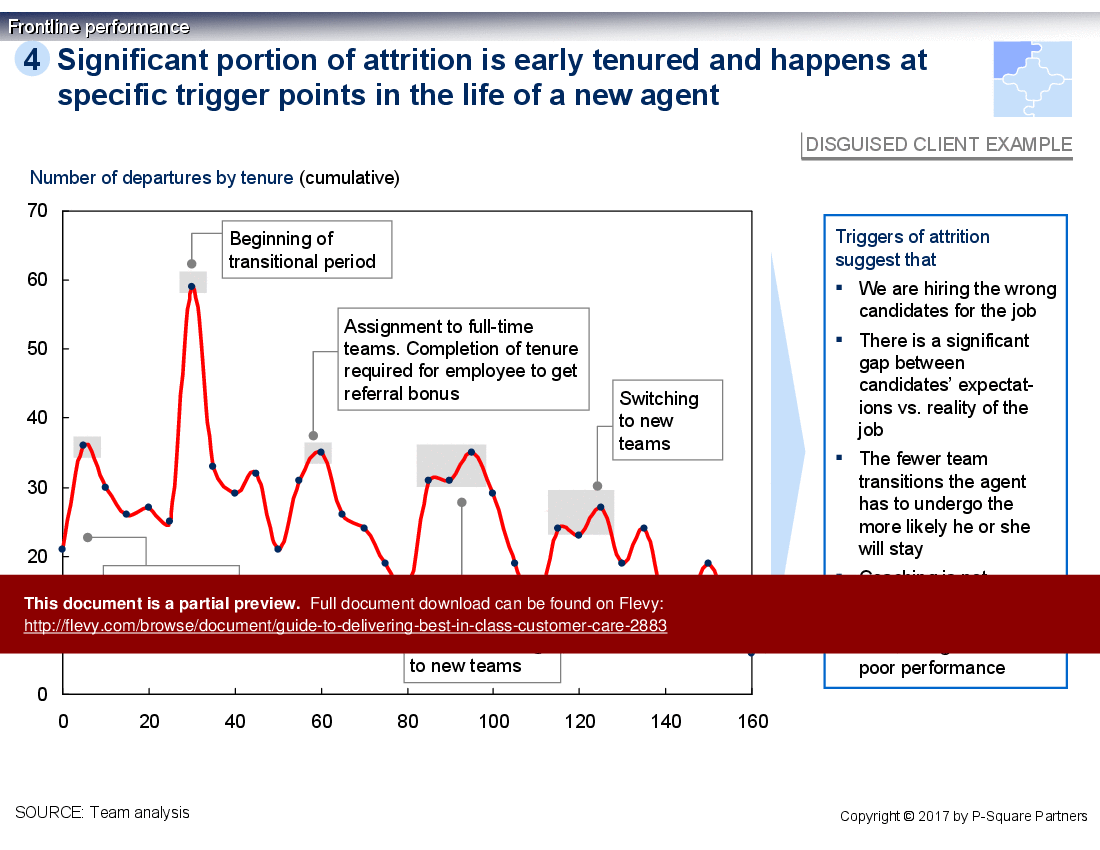
• Techniques for enhancing agent engagement and reducing attrition
• Insights into effective communication strategies for customer interactions
FAQ What are the key components of a best-in-class customer care strategy?
A best-in-class customer care strategy includes strategic alignment with business goals, effective performance management, technology integration, and continuous training and development for staff.
How can organizations measure customer satisfaction effectively?
Organizations can measure customer satisfaction through key performance metrics such as First Call Resolution (FCR), customer satisfaction scores (CSAT), and Net Promoter Scores (NPS).
What role does technology play in enhancing customer care?
Technology enhances customer care by streamlining processes, providing agents with real-time customer data, and enabling self-service options for customers.
How can training programs be optimized for frontline staff?
Training programs can be optimized by incorporating adult learning principles, focusing on practical skills, and providing ongoing coaching and feedback.
What are the best practices for vendor management in customer care?
Best practices include establishing clear service level agreements (SLAs), regularly reviewing vendor performance, and ensuring accountability for service delivery.
How can organizations reduce call transfer rates?
Organizations can reduce call transfer rates by implementing effective call routing strategies, training agents to handle a wider range of inquiries, and enhancing knowledge management systems.
What are the benefits of integrating customer feedback into service improvements?
Integrating customer feedback helps organizations identify pain points, enhance service quality, and develop products that better meet customer needs.
How can performance management frameworks drive accountability in customer care?
Performance management frameworks establish clear metrics, set expectations for staff, and provide regular feedback, fostering a culture of accountability and continuous improvement.
Glossary
• Customer Satisfaction (CSAT) - A measure of how products and services meet customer expectations.
• First Call Resolution (FCR) - The percentage of customer inquiries resolved on the first contact.
• Net Promoter Score (NPS) - A metric used to gauge customer loyalty and satisfaction.
• Service Level Agreement (SLA) - A contract that outlines the expected level of service between a service provider and a customer.
• Key Performance Indicators (KPIs) - Metrics used to evaluate the success of an organization in achieving its objectives.
• Workforce Management (WFM) - The process of ensuring that the right number of staff with the right skills are in the right place at the right time.
• Self-Service - Options allowing customers to resolve issues or complete transactions without direct assistance from agents.
• Call Routing - The process of directing incoming calls to the appropriate agent or department based on predefined criteria.
• Training and Development - Programs designed to enhance the skills and knowledge of employees.
• Customer Feedback Loop - A process for collecting, analyzing, and acting on customer feedback to improve service delivery.
• Performance Management - A systematic approach to improving organizational performance by developing the performance of individuals and teams.
• Agent Engagement - The level of commitment and involvement an agent has towards their organization and its goals.
• Attrition Rate - The percentage of employees who leave an organization over a specific period.
• Call Transfer Rate - The percentage of calls that are transferred to another agent or department.
• Knowledge Management - The process of capturing, distributing, and effectively using knowledge within an organization.
• Customer Experience (CX) - The overall perception a customer has of a brand based on their interactions across various touchpoints.
• Operational Efficiency - The ability to deliver products or services in the most cost-effective manner without compromising quality.
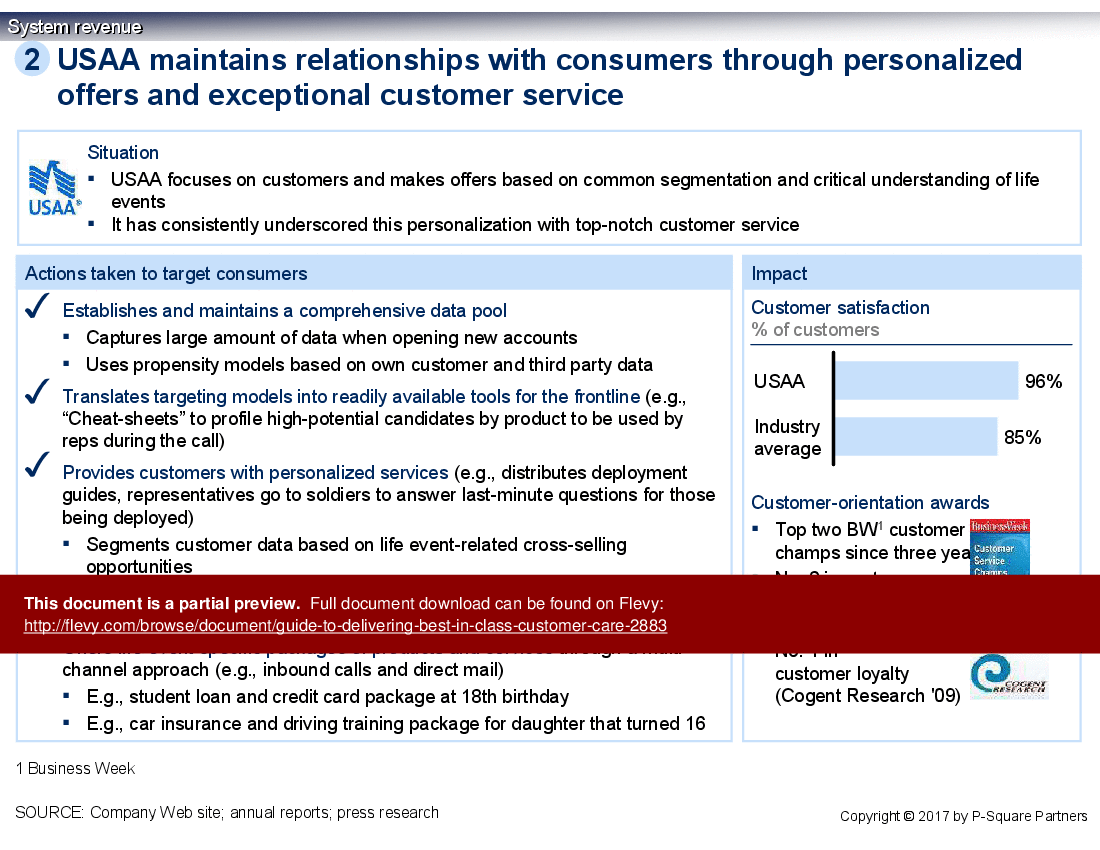
• Cross-Selling - The practice of selling additional products or services to existing customers.
• Upselling - The practice of encouraging customers to purchase a higher-end product or service than originally intended.
• Customer Journey - The complete experience a customer has with a brand, from initial contact through to post-purchase interactions.
• Performance Transparency - The practice of openly sharing performance metrics and results with all stakeholders.
• Coaching - The process of guiding and supporting employees to improve their performance and develop their skills.
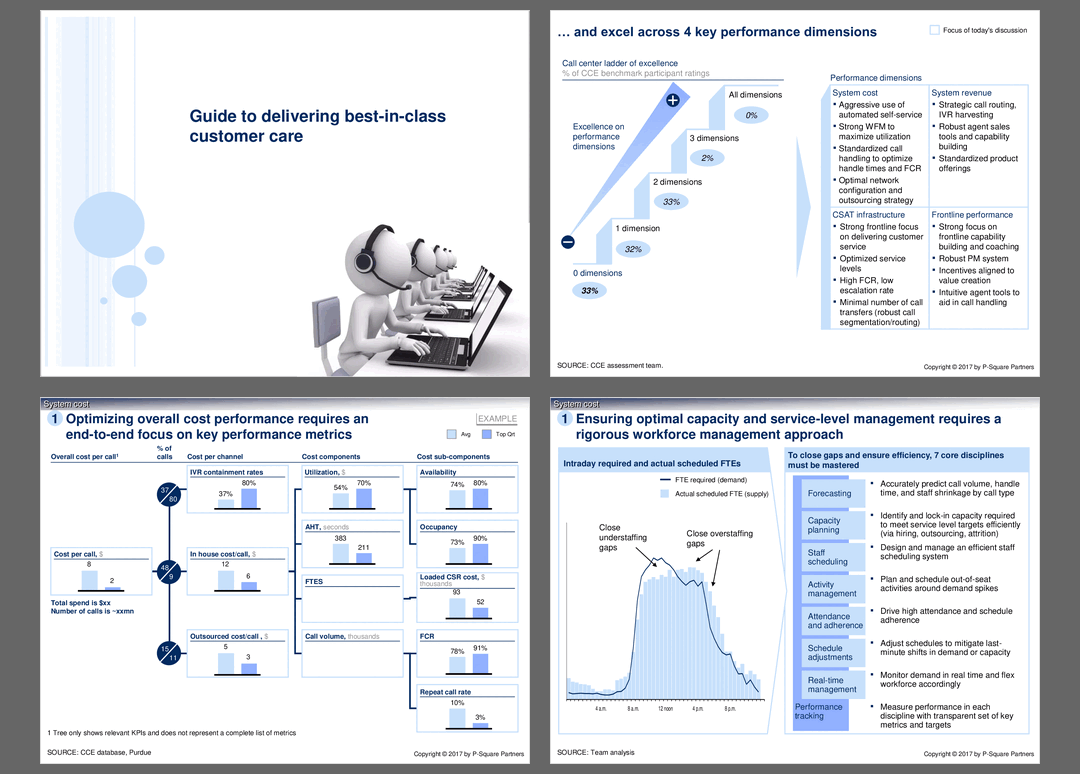
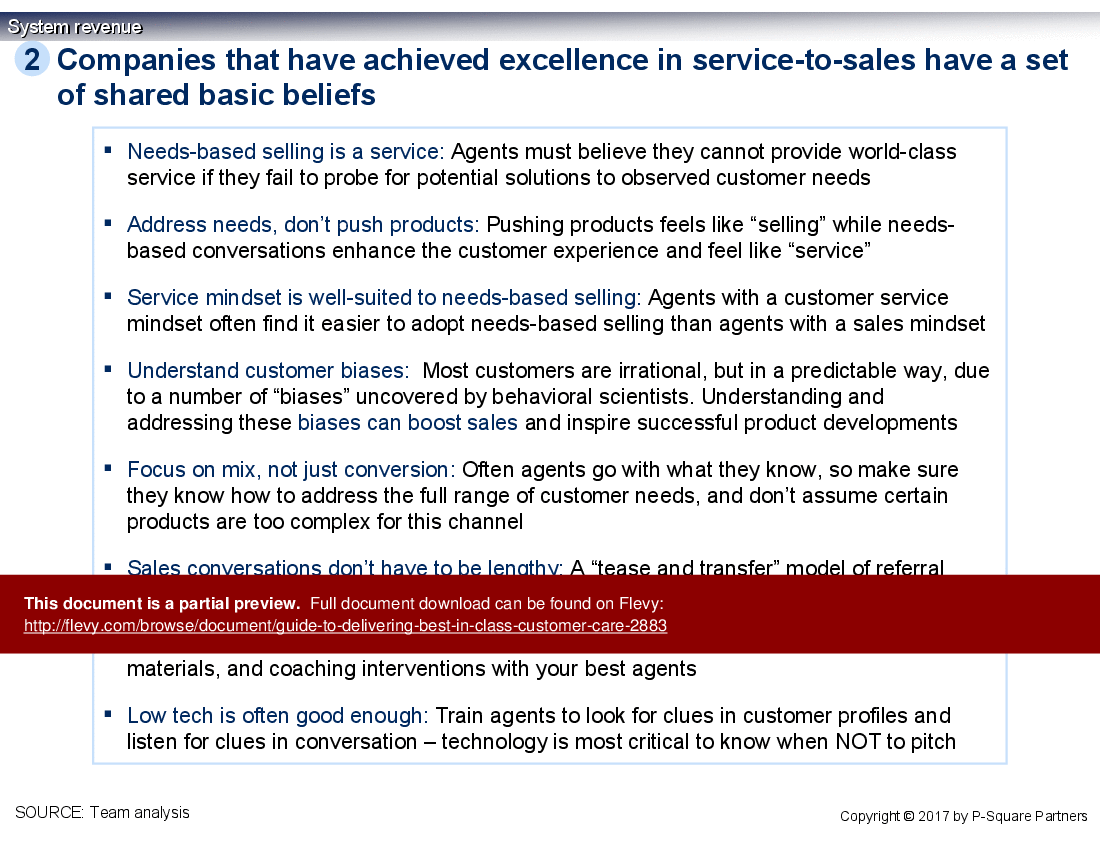
This slide presents a framework for assessing call center performance through a "ladder of excellence," detailing benchmark participants' achievement levels across 4 key dimensions. Notably, 33% of participants report no excellence in any dimension, indicating significant improvement opportunities. Only 2% excel in 3 dimensions, while 33% excel in two, and 32% in one, revealing widespread challenges in achieving comprehensive excellence. The performance dimensions include system cost, system revenue, CSAT infrastructure, and frontline performance. Optimizing system costs involves automated self-service and effective workforce management, while revenue enhancement focuses on strategic call routing and robust sales tools. CSAT infrastructure emphasizes frontline capabilities, and frontline performance highlights coaching and incentives aligned with value creation. This structured approach provides actionable insights for organizations to elevate call center performance and enhance customer care operations.
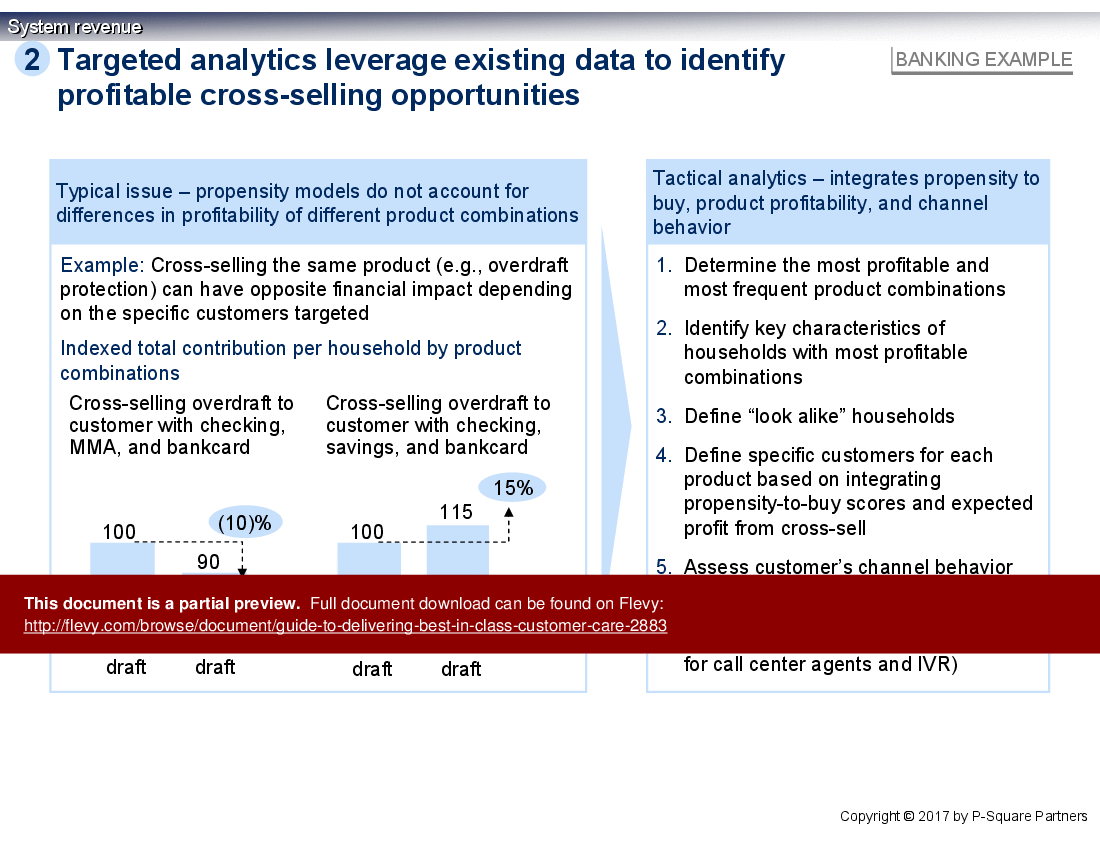
The slide presents a sales-product offer matrix that enhances product attractiveness while maximizing company value. It categorizes mobile product usage into "None," "Prepaid," and "Post-paid" segments on the horizontal axis, while the vertical axis delineates fixed offerings from "None" to various fixed and mobile bundles. Each matrix cell identifies tailored product offerings for customer segments, such as Subsegment A with a fixed-mobile bundle and Subsegment B with a single fixed product. Certain products are marked as leading offers or fallback options, with numerical indicators to guide sales agents in promoting high-value products. Some offerings are flagged against active promotion due to potential cannibalization, emphasizing strategic product positioning. This matrix is critical for prioritizing valuable products and optimizing sales strategies, informing decision-making for product development and sales strategies.
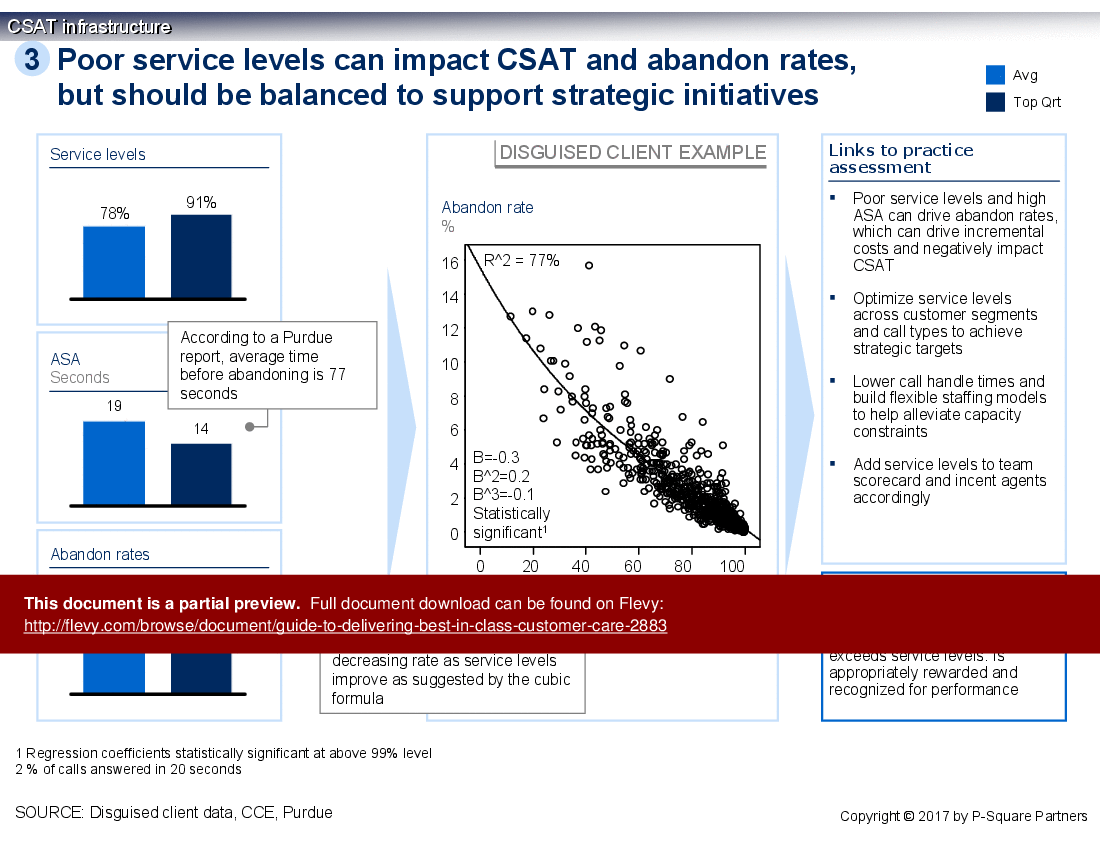
This slide analyzes the impact of service levels on customer satisfaction (CSAT) and abandonment rates. Current service levels are at 78%, targeting 91%. The average speed of answer (ASA) is 19 seconds, with an optimal goal of 14 seconds, indicating that reducing ASA is vital for customer retention. The abandonment rate stands at 4%, aiming for 2%. A scatter plot illustrates the inverse relationship between service levels and abandonment rates, showing that improved service levels lead to decreased abandonment, albeit with diminishing returns. Actionable insights include optimizing service levels across customer segments, lowering call handle times, developing flexible staffing models, and incorporating service levels into team scorecards to incentivize agents. Enhancing service levels is essential for reducing abandonment rates and improving CSAT while aligning with operational capabilities and organizational goals.
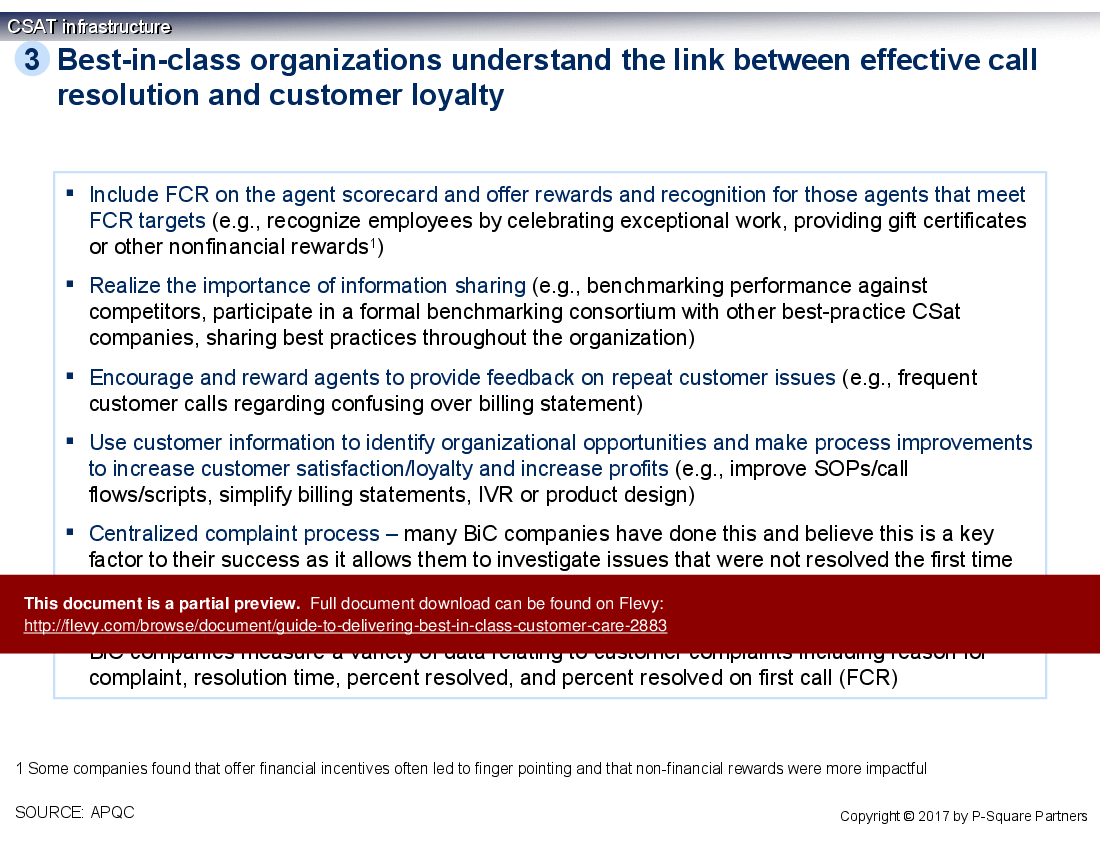
This slide analyzes factors influencing customer satisfaction, emphasizing First Call Resolution (FCR). Data shows a 90% resolution rate for top quartile performers versus 68% for average performers, highlighting the need to prioritize FCR in customer service strategies. Repeat call rates differ significantly, with average performers at 10% and top quartile at 3%, indicating that effective first-call resolution enhances satisfaction and reduces costly repeat contacts. The Customer Satisfaction Index (CSI) scores are 8.5 for average and 9.6 for top quartile firms, reinforcing the correlation between higher FCR and improved customer perceptions. FCR is 3 times more influential than wait time in driving satisfaction, underscoring the importance of prompt issue resolution over connection time. Organizations should enhance FCR capabilities to boost customer satisfaction and loyalty.
This slide presents a framework for evaluating key performance metrics in customer service operations across organizational levels. The "Overall cost/demand" section includes metrics like cost per call, IVR completion rate, and agent turnover, with a target of 15% for turnover to ensure workforce stability. The "Productivity" section outlines metrics such as utilization (65%-70% range), occupancy (90%), and average handling time (AHT), which varies by operational demands. The "Revenue" section lists variable metrics like EBITDA per call and revenue per call, highlighting the need for customized financial measures. The "Quality" metrics include service level (80/20), average speed of answer (ASA of 20 seconds), first call resolution (FCR), repeat calls, and abandonment rate, emphasizing the importance of efficiency in customer interactions.
This slide outlines a structured approach to workforce management, focusing on optimal capacity and service-level management. It features a graph of required versus actual Full-Time Equivalents (FTEs), identifying periods of understaffing and overstaffing that can lead to service gaps and inflated costs. Seven core disciplines are essential for aligning workforce supply with demand: forecasting for call volumes and staff shrinkage, capacity planning for securing adequate staffing, and staff scheduling to meet demand spikes. Activity management and attendance adherence are necessary for productivity, while real-time management allows for adjustments based on demand fluctuations. Performance measurement is crucial for assessing effectiveness and ensuring continuous improvement, ultimately enhancing service delivery and cost efficiency.
This slide presents a framework for optimizing cost performance in customer service operations, focusing on key performance metrics. The overall cost per call is analyzed, with in-house costs averaging $12 per call and outsourced costs averaging $5, indicating potential savings through outsourcing. Performance metrics include IVR containment rates, utilization, average handling time (AHT), and first call resolution (FCR), with top quartile IVR containment rates at 80% and utilization rates at 70%. The cost components section details metrics like availability and occupancy, essential for assessing workforce efficiency. Data on call volume and full-time equivalent staff (FTES) provides insights into operational capacity and resource allocation.
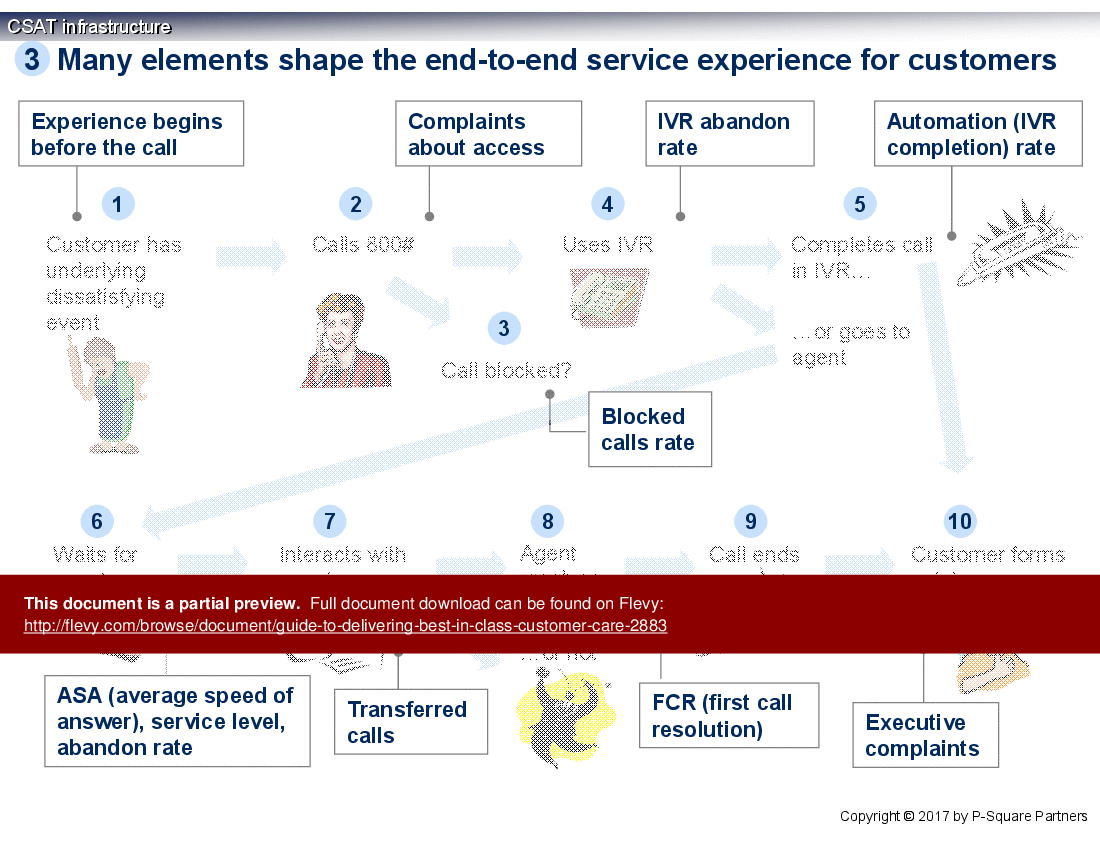
This slide outlines factors influencing the customer service experience, beginning with a customer's initial dissatisfaction that prompts them to call an 800 number. Key metrics include complaints about access, indicating barriers before connection, and the IVR (Interactive Voice Response) system's performance, measured by IVR abandon rate and blocked calls rate, which directly impact customer satisfaction. After navigating the IVR, customers either complete their call or are transferred to an agent. Metrics such as average speed of answer (ASA) and service level affect wait times. The agent's effectiveness is measured by the first call resolution (FCR) rate. Each interaction shapes customer loyalty and satisfaction over time, highlighting critical areas for improvement in the customer service process.
This slide presents a strategic overview of optimizing contact center operations through consolidation of smaller sites and targeted sourcing of call types. Operating smaller contact centers incurs higher expenses per Customer Service Agent (CSA), while larger centers benefit from economies of scale, as illustrated by the trend showing decreasing average costs per CSA with increased scale. Key cost drivers at smaller sites include infrastructure investment, local labor supply challenges, management bottlenecks, and facility acquisition difficulties. The slide categorizes call types into 4 groups: "Gold," "Red," "Blue," and "Green." "Gold contacts" are routed to top agents for high service levels, "Red contacts" are shifted to self-service, "Blue contacts" involve live onshore handling, and "Green contacts" are outsourced or offshored. This framework enables organizations to enhance efficiency and service delivery by understanding cost dynamics and implementing targeted strategies.
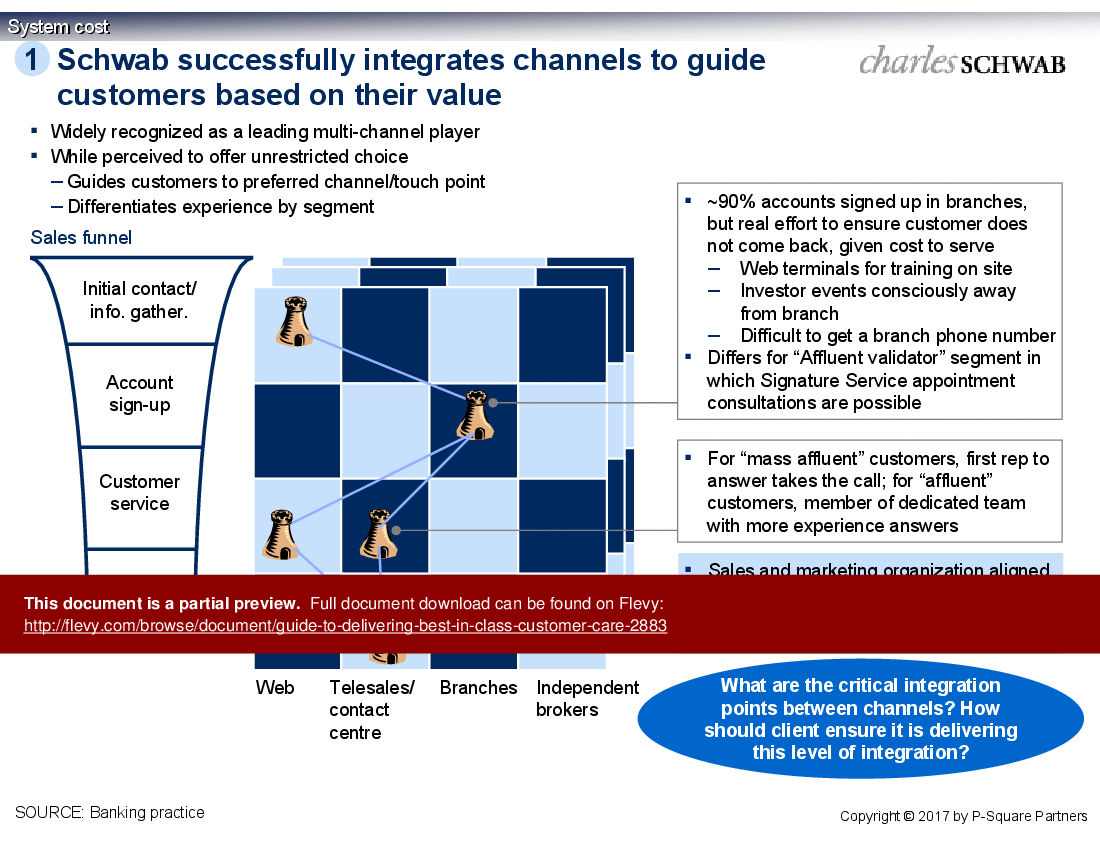
Schwab's approach to integrating customer channels focuses on value, positioning it as a leading multi-channel player. The company provides unrestricted choices while guiding customers to preferred interaction points, tailoring services to different customer segments. The sales funnel illustrates stages from initial contact to account sign-up, revealing that approximately 90% of branch accounts do not return, highlighting the need for improved follow-up strategies for customer retention. Schwab differentiates service for "mass affluent" customers, who receive immediate assistance, versus "affluent" customers, who are directed to specialized teams. This personalization is crucial for retaining high-value clients. Additionally, aligning sales and marketing with segment owners optimizes the service experience and complements channel strategies.
This slide focuses on structured incentive plans to drive desired behaviors among frontline employees, emphasizing key components that foster a performance-driven culture. It discusses contests and noncash awards to boost morale and suggests refreshing incentive plans periodically to maintain engagement, particularly for middle performers crucial to organizational success. The concept of payout tiers is outlined, recommending that organizations determine the steepness of the payout curve based on employee value, rewarding top performers accordingly. Stable, objective metrics for determining payouts are stressed, as they enhance employee satisfaction and control, while judgment-based metrics can create perceptions of unfairness. Lastly, it advocates for rigorous consequence management to address underperformance, ensuring clear plans for consistently poor performers.
The slide outlines 5 levels of scorecards for evaluating performance in a contact center. The "Contact Center Business Scorecard" targets the supervisory board, aggregating total business activity and providing insights into operationalized strategies, reported quarterly or monthly. The "Division Scorecard" serves management, summarizing individual segments and tracking performance trends monthly. The "Scorecard per Location/Site" is for site directors, focusing on operational performance with weekly reporting to identify improvement areas. The "Team Leader/Supervisor Scorecard" provides insights into team performance weekly, assessing coaching effectiveness. Lastly, the "Agent Scorecard" focuses on individual performance metrics, offering agents timely feedback for continuous improvement. This structured performance measurement aligns all organizational levels, enhancing customer care outcomes.
This slide presents various incentive structures to enhance frontline performance through effective compensation strategies. The current linear compensation system ties pay directly to performance points, lacking motivation for exceeding targets. Option A introduces a minimum performance threshold for incentive eligibility, ensuring basic standards are met, but potentially excluding lower performers. Option B, progressive motivation, increases payouts as sales rise, rewarding top performers, but risking team tensions due to reward disparities. The recommended option combines progressive motivation with a minimum performance requirement, motivating all employees while recognizing excellence. This balanced approach drives proactive sales efforts and informs compensation strategy adjustments.
The slide analyzes how agents asking for the sale can enhance presentation rates and revenue generation, illustrated through a flowchart tracking inbound service calls to revenue per conversion. Company X has a 100% engagement rate for inbound calls,, but only 85% result in a pitch, indicating a need for improvement. The overall conversion rate for Company X is 18%, while top sellers achieve 42%. External benchmarks show a conversion rate of 35-40%, highlighting a significant performance gap. Company X's revenue per conversion is approximately 120, compared to the external range of 150-200. Training agents to consistently ask for the sale could increase both presentation rates and overall revenue.
This slide outlines a framework for enhancing customer service interactions by integrating sales into call flow. It describes 3 states of call handling: starting state, intermediate state, and desired state. In the starting state, calls average 8 minutes, focusing solely on service, with representatives addressing customer issues without sales proposals. The intermediate state increases call length to 10 minutes, where representatives incorporate sales elements by suggesting accessories, enhancing conversation value. The desired state aims for seamless sales integration, reducing call length to 8.5 minutes while addressing customer needs and including targeted product offers. Key takeaways emphasize training agents to balance service and sales, the potential for increased revenue through effective call flows, and the importance of understanding customer behavior to optimize interactions.
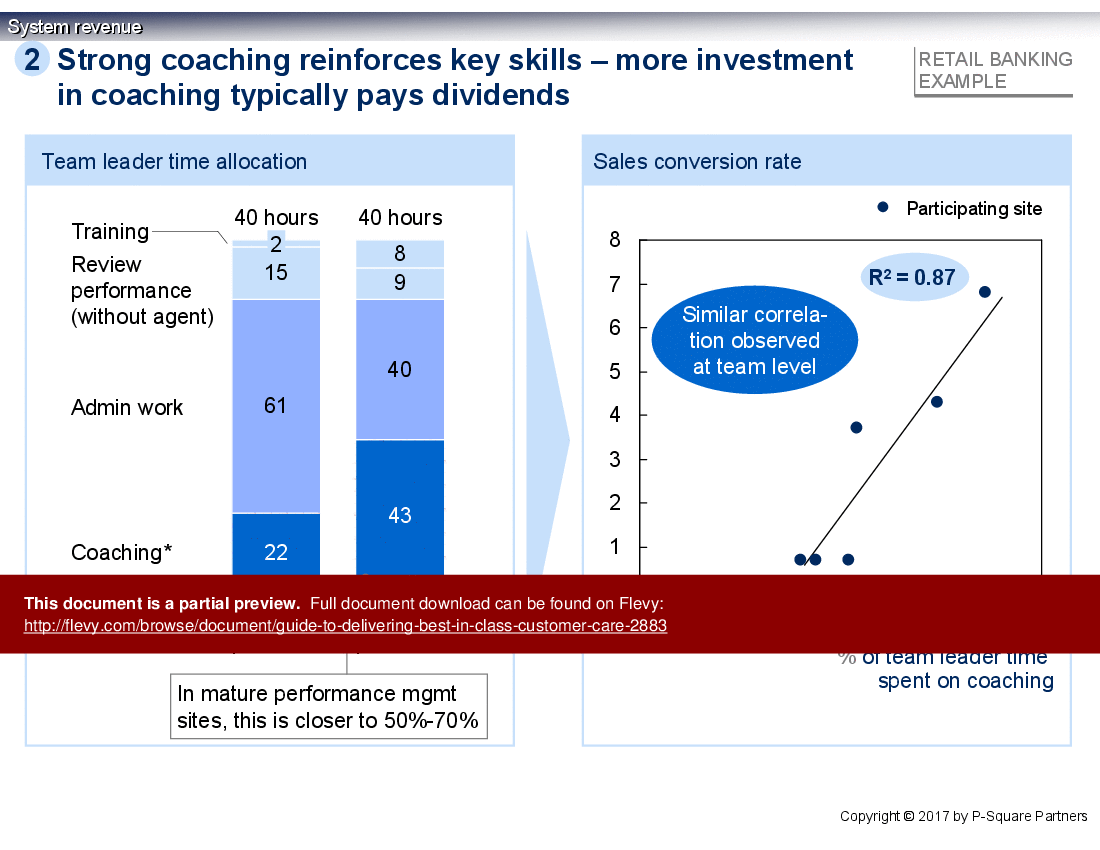
This slide analyzes supervisor time allocation and its impact on employee retention in customer service environments. It compares actual time distribution with a "Best in class" benchmark across 4 categories: administrative tasks, customer escalations, coaching to process, and coaching to service/sales. Supervisors spend 50% of their time on coaching to process and only 10% on coaching for service and sales, indicating a potential imbalance. In contrast, the "Best in class" allocation dedicates 60% to coaching for service and sales, promoting performance-oriented coaching. Coaches who spend over 60% of their time with teams achieve retention rates double those of peers with less engagement. Re-evaluating supervisor time allocation can enhance employee satisfaction and reduce turnover rates.
Source: Best Practices in Customer Service, Customer Care PowerPoint Slides: Guide to Delivering Best-in-Class Customer Care PowerPoint (PPT) Presentation Slide Deck, P-Square Partners
Since 2012, we have provided best practices to over 10,000 businesses and organizations of all sizes, from startups and small businesses to the Fortune 100, in over 130 countries.
"As a consultant requiring up to date and professional material that will be of value and use to my clients, I find Flevy a very reliable resource.
The variety and quality of material available through Flevy offers a very useful and commanding source for information. Using Flevy saves me time, enhances my expertise and ends up being a good decision."

– Dennis Gershowitz, Principal at DG Associates
"FlevyPro provides business frameworks from many of the global giants in management consulting that allow you to provide best in class solutions for your clients."
– David Harris, Managing Director at Futures Strategy
"My FlevyPro subscription provides me with the most popular frameworks and decks in demand in today’s market. They not only augment my existing consulting and coaching offerings and delivery, but also keep me abreast of the latest trends, inspire new products and service offerings for my practice, and educate me
in a fraction of the time and money of other solutions. I strongly recommend FlevyPro to any consultant serious about success.
"
– Bill Branson, Founder at Strategic Business Architects
"I have used Flevy services for a number of years and have never, ever been disappointed. As a matter of fact, David and his team continue, time after time, to impress me with their willingness to assist and in the real sense of the word. I have concluded in fact

that it is not at all just a repository of documents/resources but, in the way that David and his team manage the firm, it is like dealing with consultants always ready to assist, advise and direct you to what you really need, and they always get it right.
I am an international hospitality accomplished senior executive who has worked and lived during the past 35 years in 23 countries in 5 continents and I can humbly say that I know what customer service is, trust me.
Aside from the great and professional service that Flevy's team provide, their wide variety of material is of utmost great quality, professionally put together and most current.
Well done Flevy, keep up the great work and I look forward to continue working with you in the future and to recommend you to a variety of colleagues around the world.
"
– Roberto Pelliccia, Senior Executive in International Hospitality
"[Flevy] produces some great work that has been/continues to be of immense help not only to myself, but as I seek to provide professional services to my clients, it gives me a large "tool box" of resources that are critical to provide them with the quality of service and outcomes they are expecting."
– Royston Knowles, Executive with 50+ Years of Board Level Experience
"As a small business owner, the resource material available from FlevyPro has proven to be invaluable. The ability to search for material on demand based our project events and client requirements was great for me and proved very beneficial to my clients. Importantly, being able to easily edit and tailor
the material for specific purposes helped us to make presentations, knowledge sharing, and toolkit development, which formed part of the overall program collateral. While FlevyPro contains resource material that any consultancy, project or delivery firm must have, it is an essential part of a small firm or independent consultant's toolbox.
"
– Michael Duff, Managing Director at Change Strategy (UK)
"I like your product. I'm frequently designing PowerPoint presentations for my company and your product has given me so many great ideas on the use of charts, layouts, tools, and frameworks. I really think the templates are a valuable asset to the job."
– Roberto Fuentes Martinez, Senior Executive Director at Technology Transformation Advisory
"I am extremely grateful for the proactiveness and eagerness to help and I would gladly recommend the Flevy team if you are looking for data and toolkits to help you work through business solutions."
– Trevor Booth, Partner, Fast Forward Consulting
Save with Bundles
This document is available as part of the following discounted bundle(s):
Receive our FREE presentation on Operational Excellence
This 50-slide presentation provides a high-level introduction to the 4 Building Blocks of Operational Excellence. Achieving OpEx requires the implementation of a Business Execution System that integrates these 4 building blocks.
Receive our FREE presentation on Operational Excellence
Get Our FREE Product.
This 50-slide presentation provides a high-level introduction to the 4 Building Blocks of Operational Excellence. Achieving OpEx requires the implementation of a Business Execution System that integrates these 4 building blocks.