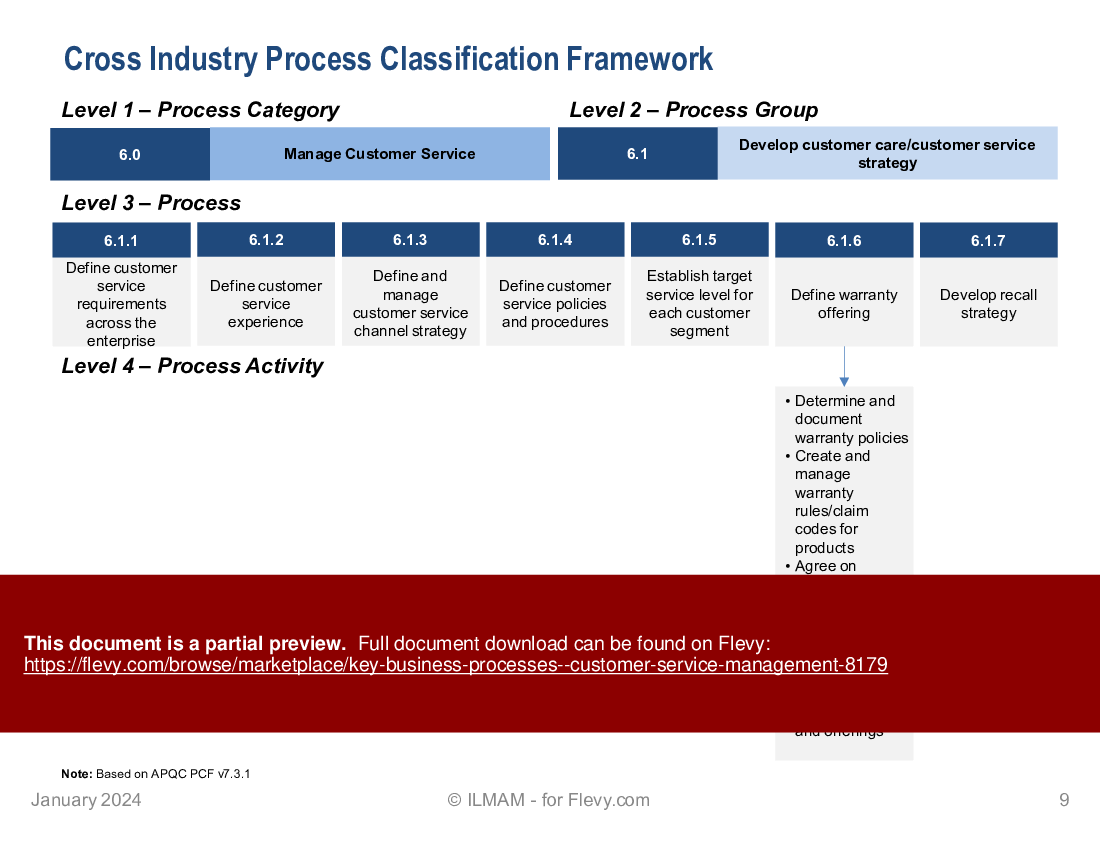
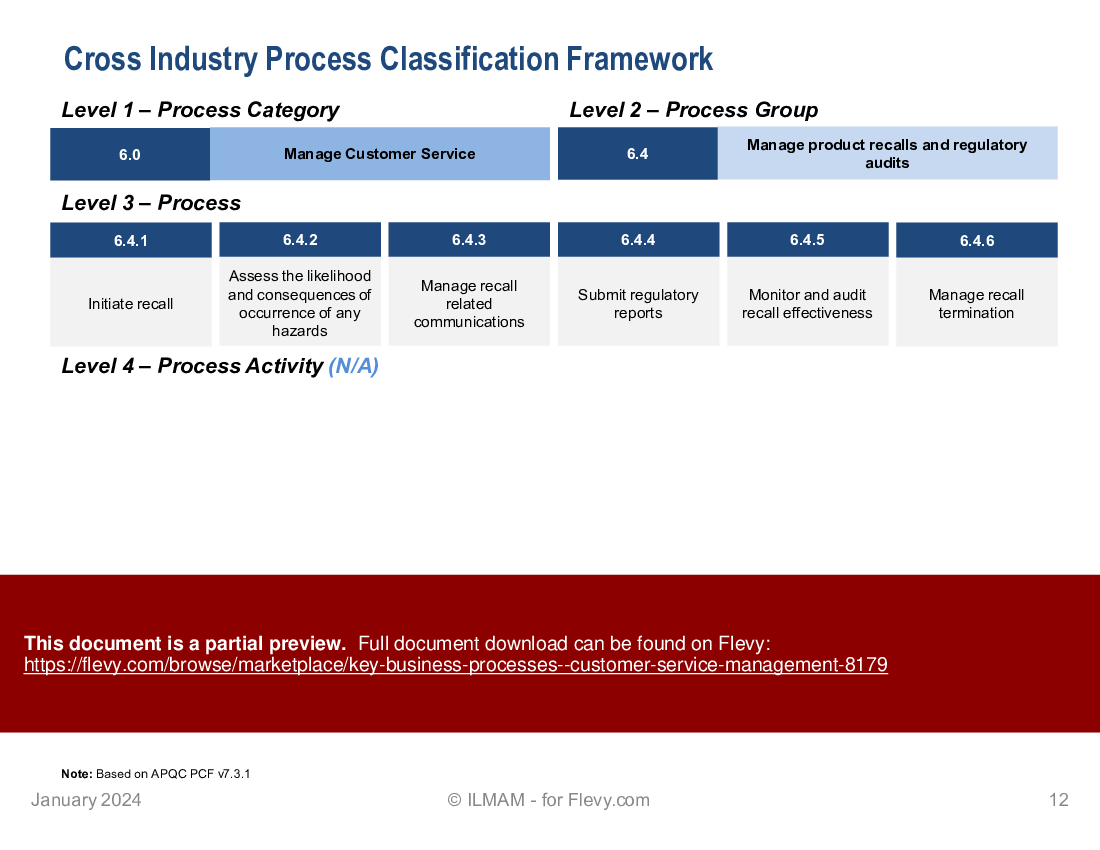
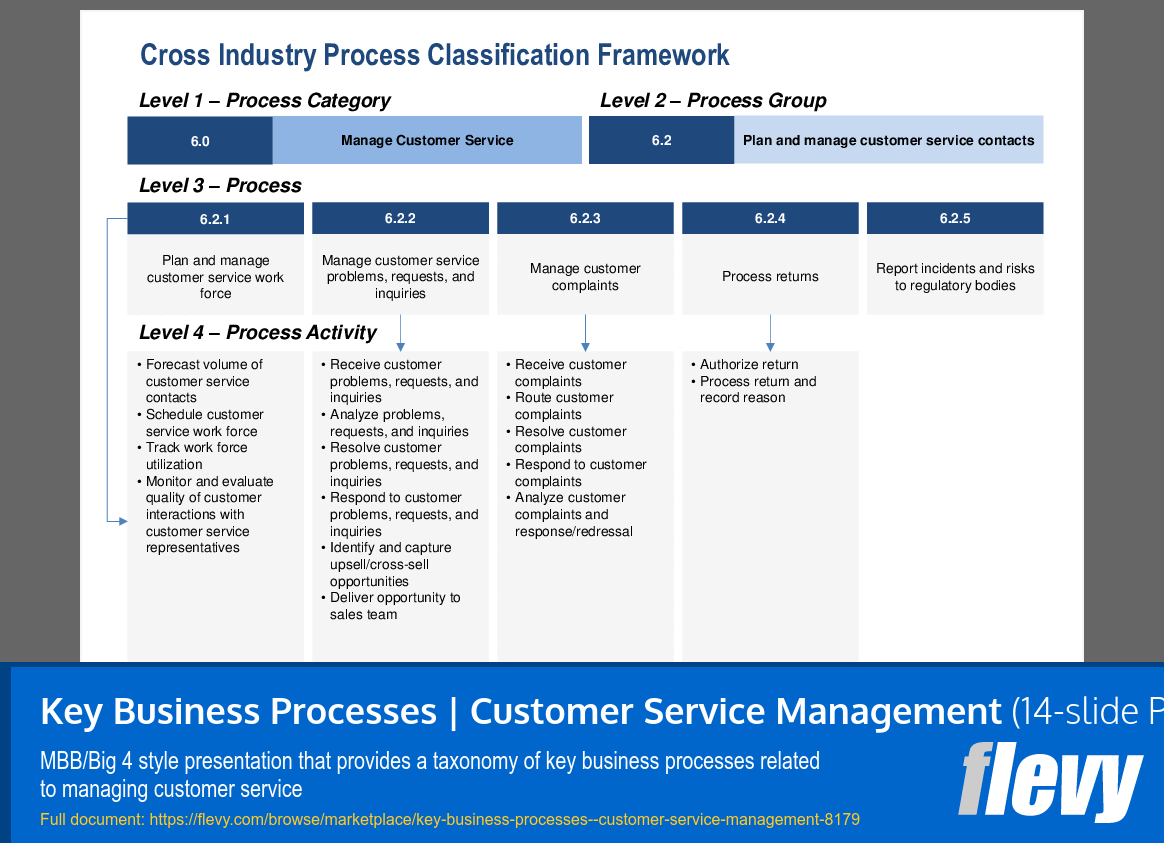
This document provides a thorough visual taxonomy of key business processes related to managing customer service based on APQC's cross-industry process classification system (PCF), the most used process framework globally.
A process classification framework can be utilized in many practical ways. For example, it can provide a:
1. framework and checklist of processes when scoping process-related projects
2. starting point for a process documentation, offering a detailed list of processes to use in process flows, maps, and/or models
3. basis for structuring a process repository, whether using a sophisticated software or simple folders
4. foundation for undertaking process-related benchmarking and generating business analytics
This document follows the structure, and facilitates the usage, of APQC's PCF v7.3.1. It includes 5 process groups, 27 processes, and 54 process activities related 1o managing customer service.
Contents
1. PCF Levels
2. PCF Overall Structure
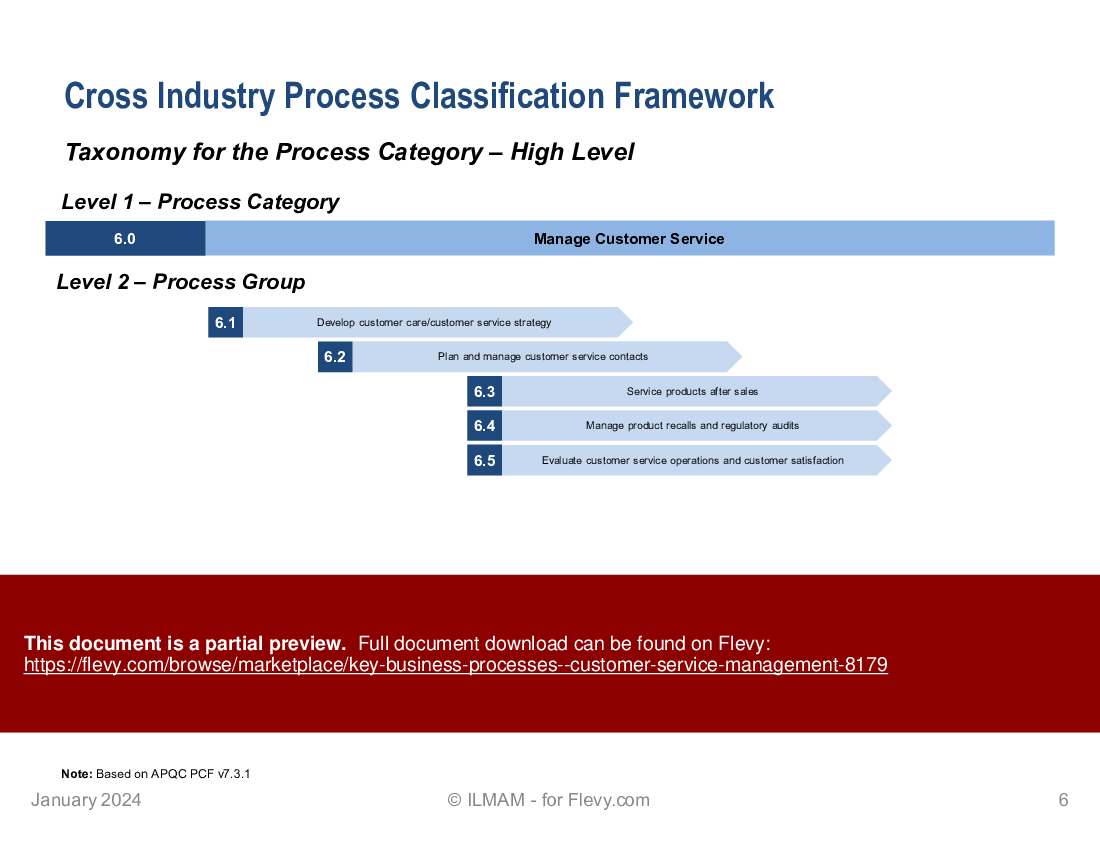
3. Taxonomy for the Process Category – High Level
4. Taxonomy for the Process Category – Detailed
5. Taxonomy by Process Group – Detailed
Got a question about the product? Email us at support@flevy.com or ask the author directly by using the "Ask the Author a Question" form. If you cannot view the preview above this document description, go here to view the large preview instead.
Executive Summary
This presentation, titled "Key Business Processes | Customer Service Management," offers a structured overview of essential processes for managing customer service, based on the APQC Process Classification Framework (PCF). It serves as a valuable resource for organizations aiming to enhance their customer service operations through process optimization and benchmarking. The presentation provides a clear taxonomy of customer service processes, enabling teams to efficiently scope projects, document processes, and evaluate performance metrics.
Who This Is For and When to Use
• Customer Service Managers seeking to improve operational efficiency
• Process Improvement Teams focused on enhancing customer interactions
• Quality Assurance Teams aiming to measure and improve customer satisfaction
• Business Analysts tasked with documenting and analyzing customer service processes
Best-fit moments to use this deck:
• During process mapping and documentation initiatives
• When establishing benchmarks for customer service performance
• For training sessions focused on customer service best practices
• In strategy meetings aimed at enhancing customer experience
Learning Objectives
• Define the key components of customer service management processes
• Develop a comprehensive customer service strategy aligned with organizational goals
• Establish metrics for evaluating customer satisfaction and service effectiveness
• Implement a structured approach to managing customer service operations
• Identify opportunities for process improvement within customer service functions
• Analyze customer feedback to drive service enhancements
Table of Contents
• PCF Levels (page 3)
• PCF Overall Structure (page 4)
• Taxonomy for the Process Category – High Level (page 5)
• Taxonomy for the Process Category - Detailed (page 6)
• Taxonomy by Process Group - Detailed (page 7)
Primary Topics Covered
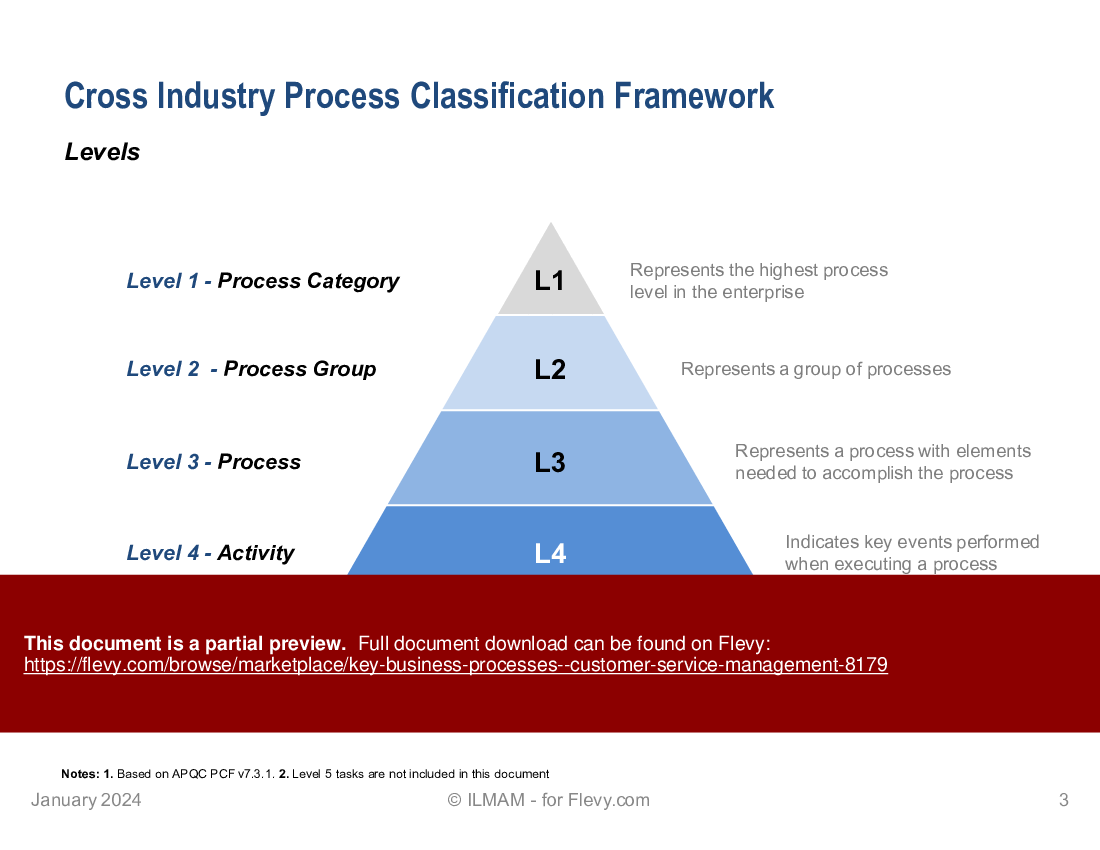
• PCF Levels - The presentation outlines the hierarchical structure of the APQC PCF, detailing levels from process categories to tasks.
• PCF Overall Structure - An overview of the operating and management processes, including customer service management as a key category.
• Customer Service Strategy Development - Steps to create a customer service strategy that aligns with business objectives and customer needs.
• Customer Service Operations Management - Guidelines for planning and managing customer service contacts, ensuring effective service delivery.
• Product Service Management - Processes for servicing products after sales, including warranty claims and customer support.
• Recall Management - Procedures for managing product recalls and regulatory audits effectively.
• Customer Satisfaction Evaluation - Techniques for measuring customer satisfaction and evaluating service performance.
Deliverables, Templates, and Tools
• Customer service strategy development template
• Customer service contact management plan
• Customer satisfaction measurement framework
• Process documentation templates for customer service workflows
• Recall management checklist
• Performance evaluation metrics for customer service
Slide Highlights
• Overview of the APQC Process Classification Framework and its relevance to customer service
• Detailed taxonomy of customer service processes, illustrating the hierarchy from strategy to execution
• Visual representation of customer service operations and their interconnections
• Key metrics for evaluating customer satisfaction and service effectiveness
• Framework for managing product recalls and compliance with regulatory standards
Potential Workshop Agenda
Customer Service Strategy Session (90 minutes)
• Discuss the current state of customer service operations
• Identify gaps in existing processes and areas for improvement
• Develop a draft customer service strategy aligned with business goals
Process Mapping Workshop (60 minutes)
• Review the taxonomy of customer service processes
• Map existing customer service workflows against the PCF framework
• Identify opportunities for process optimization
Customer Satisfaction Metrics Review (45 minutes)
• Analyze current customer satisfaction data
• Discuss methods for measuring and improving customer service performance
• Establish a plan for ongoing evaluation and feedback collection
Customization Guidance
• Tailor the customer service strategy template to reflect specific organizational goals and customer needs
• Adjust the performance evaluation metrics to align with industry standards and benchmarks
• Incorporate organizational terminology and branding into process documentation templates
Secondary Topics Covered
• Best practices for managing customer service inquiries and complaints
• Strategies for enhancing customer engagement through service channels
• Techniques for analyzing customer feedback and implementing improvements
• Compliance considerations for product recalls and regulatory reporting
Topic FAQ
Document FAQ
These are questions addressed within this presentation.
What is the APQC Process Classification Framework?
The APQC Process Classification Framework (PCF) is an open standard that provides a structured approach to process management and benchmarking across various industries.
How can this presentation help improve customer service operations?
The presentation offers a comprehensive overview of customer service processes, enabling organizations to identify areas for improvement and implement best practices.
What are the key components of a customer service strategy?
A customer service strategy should include defining service requirements, establishing service levels, and creating policies and procedures to guide service delivery.
How can organizations measure customer satisfaction effectively?
Organizations can measure customer satisfaction through surveys, feedback forms, and performance metrics that track service interactions and outcomes.
What processes are involved in managing product recalls?
Managing product recalls involves initiating recalls, assessing risks, communicating with stakeholders, and monitoring the effectiveness of recall actions.
How does this presentation support process documentation efforts?
The presentation provides templates and frameworks that organizations can use to document their customer service processes systematically.
Can the content be customized for specific industries?
Yes, the presentation can be tailored to reflect industry-specific requirements and terminology, ensuring relevance to the organization's context.
What tools can be used to implement the strategies outlined in the presentation?
Organizations can utilize process mapping software, customer feedback tools, and performance tracking systems to implement the strategies effectively.
Glossary
• APQC - American Productivity & Quality Center, a nonprofit organization focused on benchmarking and best practices.
• PCF - Process Classification Framework, a structured approach to process management.
• Customer Satisfaction - A measure of how products and services meet or exceed customer expectations.
• Recall Management - The process of retrieving defective or unsafe products from consumers.
• Service Level - The expected performance level of a service, often defined in terms of response times and resolution rates.
• Process Documentation - The practice of recording the steps and procedures involved in a business process.
• Customer Engagement - The interaction between a customer and a company, aimed at building a relationship.
• Performance Metrics - Quantitative measures used to assess the effectiveness and efficiency of a process.
• Feedback Loop - A system where outputs of a process are used as inputs for future actions, enhancing continuous improvement.
• Benchmarking - The practice of comparing business processes and performance metrics to industry bests or best practices from other companies.
• Quality Assurance - The systematic process of ensuring that products and services meet specified requirements and standards.
• Process Optimization - The act of improving a process to enhance efficiency and effectiveness.
• Customer Service Policies - Guidelines that dictate how customer service representatives should handle various situations.
• Service Recovery - Actions taken by a company to rectify a service failure and restore customer satisfaction.
• Warranty Management - The process of handling warranty claims and ensuring compliance with warranty policies.
• Customer Service Channels - Various platforms through which customers can interact with a company, such as phone, email, or chat.
• Regulatory Compliance - Adherence to laws and regulations governing business operations and product safety.
• Incident Reporting - The process of documenting and reporting incidents that may affect customer service or product safety.
• Customer Experience - The overall perception a customer has of a brand based on their interactions throughout the customer journey.
• Service Recovery - The actions taken to rectify a service failure and restore customer satisfaction.
• Customer Feedback - Information provided by customers regarding their experience with a product or service.
Source: Best Practices in Customer Service, Process Maps PowerPoint Slides: Key Business Processes | Customer Service Management PowerPoint (PPTX) Presentation Slide Deck, ILMAM - Strategy & Management Consulting
This document is available as part of the following discounted bundle(s):
Save %!
Key Business Processes | Operating Processes
This bundle contains 6 total documents. See all the documents to the right.
|
Receive our FREE presentation on Operational Excellence
This 50-slide presentation provides a high-level introduction to the 4 Building Blocks of Operational Excellence. Achieving OpEx requires the implementation of a Business Execution System that integrates these 4 building blocks. |