
This product (Digital Strategy in Higher Education) is a 76-slide PPT PowerPoint presentation slide deck (PPTX), which you can download immediately upon purchase.
This deck is a generic version of a digital transformation for a world-leading university. It is a generic template that other higher education institutions can use in crafting their strategies.
This deck outlines the need o have digital business leadership in research, learning, and teaching and that this required the University to be data-driven and customer-experience focused.
Transformative and lasting cultural and behavioural changes are central to the journey, and delivery needs to be beyond just technology to effect significant, sustained performance improvement.
This generic digital strategy for higher education describes the vision, principles, and capabilities that a university needs to flourish within and adapt to a rapidly changing environment. The document is built around principles that emphasise the importance of customer experience and that content is enhanced by creation, discovery, sharing, and preservation practices.
The plan does not displace physical delivery for higher education with digital delivery. Instead, it outlines creating a combined suite of digital services to complement its built environment and physical service delivery to create compelling and valued experiences for all constituents. Students, staff, teachers, researchers, and alumni will enjoy greater flexibility and broader choices of when, where, and how they engage with University services.
Got a question about the product? Email us at support@flevy.com or ask the author directly by using the "Ask the Author a Question" form. If you cannot view the preview above this document description, go here to view the large preview instead.
MARCUS OVERVIEW
This synopsis was written by Marcus [?] based on the analysis of the full 76-slide presentation.
Executive Summary
The "Digital Strategy in Higher Education" presentation by the Affinity Consulting Partnership outlines a robust framework for Education Institution X to develop an enterprise-wide digital strategy within 3 years. This McKinsey, Bain, or BCG-quality (consulting-grade; not affiliated) document emphasizes the necessity of a cohesive digital architecture that aligns with strategic KPIs, enhances user experience, and fosters digital literacy among staff. By implementing this strategy, Education Institution X will be equipped to digitize key processes, improve engagement across user segments, and ultimately drive operational efficiency and growth.
Who This Is For and When to Use
• Senior Executives and Board Members overseeing strategic initiatives
• Digital Transformation Leaders responsible for implementing technology solutions
• Marketing and Admissions Teams focused on enhancing user engagement
• IT and Operations Managers tasked with optimizing digital processes
Best-fit moments to use this deck:
• During strategic planning sessions to align digital initiatives with institutional goals
• When assessing current digital capabilities and identifying gaps
• For stakeholder presentations to secure buy-in for digital transformation efforts
Learning Objectives
• Define the components of a comprehensive digital strategy tailored for higher education
• Build a roadmap for implementing digital initiatives across user segments
• Establish key performance indicators (KPIs) to measure digital engagement and effectiveness
• Identify opportunities for digitizing high-volume, transactional processes
• Develop a change management plan to foster digital literacy among staff
• Create a governance framework to oversee digital strategy execution
Table of Contents
• Summary of Key Findings (page 3)
• Introduction (page 5)
• The Digital Challenge (page 7)
• Current State of Digital at Education Institution X (page 14)
• The Digital Opportunity (page 21)
• Key User Segments (page 33)
• Next Steps (page 51)
• Appendices (page 53)
• Current State Assessment (page 54)
• Digital Enterprise Framework (page 60)
• Opportunity Descriptions (page 62)
• User Segment Assessment Rating of Opportunities (page 70)
• Digital KPIs (page 75)
• Digital Capability Definitions (page 81)
Primary Topics Covered
• Digital Strategy Framework - A structured approach to developing an enterprise-wide digital strategy that aligns with institutional goals and enhances user engagement.
• Current State Assessment - An evaluation of existing digital capabilities and identification of gaps that need addressing to improve overall digital maturity.
• User Segmentation - Analysis of key user segments, including prospective students, current students, alumni, staff, and industry partners, to tailor digital initiatives effectively.
• Digital Opportunities - Identification of tactical and strategic opportunities for digitizing processes and enhancing user experience across various channels.
• Governance and Change Management - Establishing a governance framework to oversee digital initiatives and a change management plan to promote digital literacy among staff.
Deliverables, Templates, and Tools
• Digital strategy framework template for aligning initiatives with institutional goals
• Current state assessment toolkit for evaluating digital capabilities
• User segmentation analysis template for identifying key user needs
• Digital opportunity identification matrix to prioritize initiatives
• Governance framework outline for overseeing digital strategy execution
• Change management plan template for fostering digital literacy
Slide Highlights
• Overview of the digital maturity assessment and identified gaps
• Key findings on the necessity of a cohesive digital strategy
• Visual representation of the digital opportunity landscape
• Detailed user segmentation analysis and corresponding opportunities
• Proposed governance structure for digital initiatives
Potential Workshop Agenda
Digital Strategy Kickoff Session (90 minutes)
• Review current digital capabilities and identify gaps
• Discuss strategic goals and align on digital initiatives
• Establish roles and responsibilities for digital governance
User Segmentation Deep Dive (60 minutes)
• Analyze key user segments and their specific needs
• Identify tailored digital opportunities for each segment
• Develop a user engagement strategy based on insights
Change Management Planning Session (60 minutes)
• Outline the change management approach for digital literacy
• Identify key stakeholders and communication strategies
• Develop a timeline for implementing digital training programs
Customization Guidance
• Tailor the digital strategy framework to align with specific institutional goals and user needs
• Adjust user segmentation analysis based on local demographics and market conditions
• Modify governance structures to fit existing organizational hierarchies and decision-making processes
Secondary Topics Covered
• Digital engagement metrics and KPIs for measuring success
• Best practices for implementing digital initiatives in higher education
• Case studies of successful digital transformations in similar institutions
• Strategies for fostering a culture of digital innovation and collaboration
FAQ What is the primary goal of the digital strategy?
The primary goal is to develop a cohesive digital strategy that enhances user engagement, improves operational efficiency, and aligns with strategic institutional goals.
How will the digital strategy impact student engagement?
The strategy aims to improve student engagement by digitizing key processes, enhancing communication channels, and providing tailored experiences based on user needs.
What are the key performance indicators for measuring success?
Key performance indicators include user engagement metrics, completion rates of online applications, and overall satisfaction scores from user surveys.
How will staff be supported during the digital transformation?
A change management plan will be implemented, including training programs to enhance digital literacy and support staff in adapting to new technologies.
What is the timeline for implementing the digital strategy?
The strategy is designed to be executed within 3 years, with specific milestones and deliverables outlined in the accompanying roadmap.
How will user feedback be incorporated into the strategy?
User feedback will be collected through surveys and engagement metrics, which will inform ongoing adjustments to the digital strategy and initiatives.
What resources will be allocated for digital initiatives?
A dedicated budget will be established for digital initiatives, along with a governance framework to prioritize and allocate resources effectively.
How will success be evaluated?
Success will be evaluated through regular assessments of key performance indicators, user feedback, and alignment with strategic institutional goals.
Glossary
• Digital Strategy - A comprehensive plan that outlines how digital initiatives will support institutional goals and enhance user experience.
• User Segmentation - The process of dividing users into distinct groups based on shared characteristics to tailor digital initiatives effectively.
• Governance Framework - A structured approach to overseeing digital initiatives, ensuring alignment with strategic goals and accountability.
• Digital Literacy - The ability to effectively use digital technologies and tools to communicate, collaborate, and access information.
• Change Management - The process of guiding individuals and organizations through transitions to new technologies and processes.
• Key Performance Indicators (KPIs) - Metrics used to measure the success of digital initiatives and overall engagement.
• Digital Maturity - The level of sophistication and effectiveness of an organization's digital capabilities and initiatives.
• Stakeholder Engagement - The process of involving key individuals and groups in the development and implementation of digital strategies.
• Tactical Quick Wins - Immediate, actionable opportunities that can generate value and momentum for digital initiatives.
• Content Management System (CMS) - A software application used to create, manage, and modify digital content on websites.
• Customer Relationship Management (CRM) - A system for managing a company's interactions with current and potential customers.
• User Experience (UX) - The overall experience a user has when interacting with a digital product or service, encompassing usability and satisfaction.
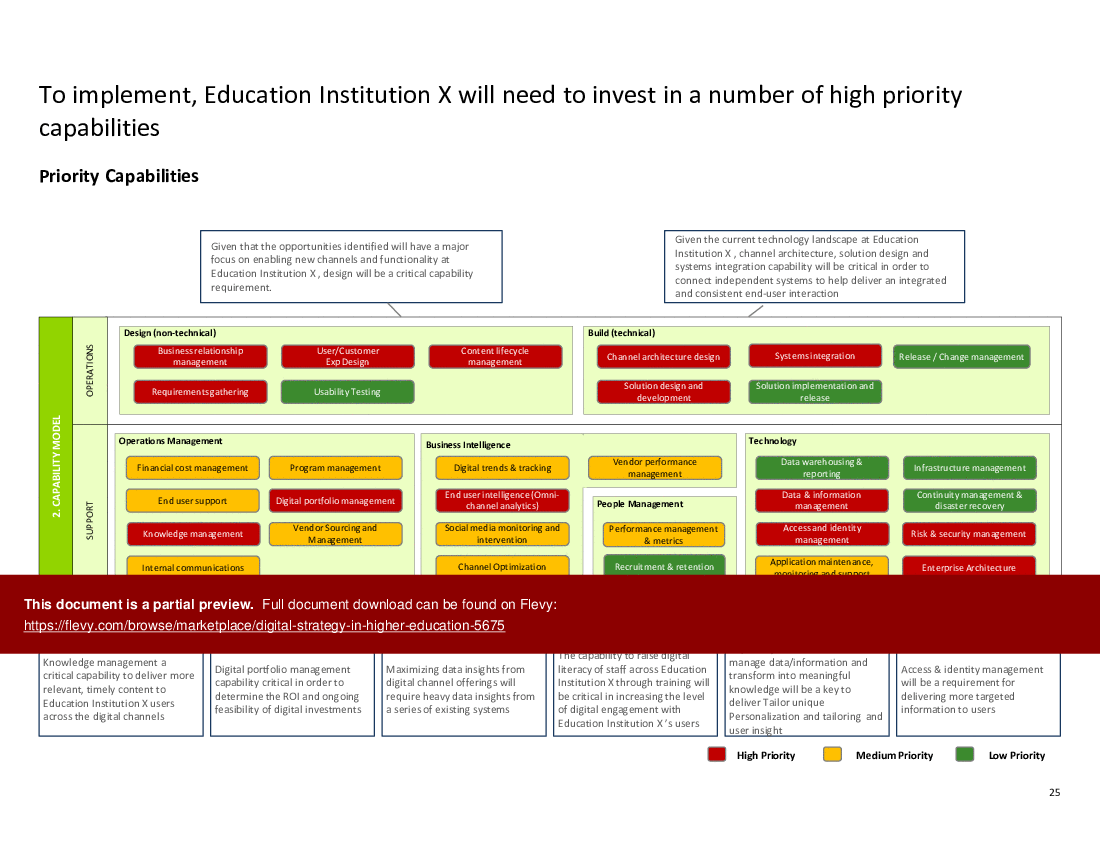
The slide outlines digital transformation opportunities in higher education, focusing on enhancing interaction channels. Key areas include the digitization of business processes, which enhances digital capabilities through self-service tools for stakeholders, streamlining operations and improving efficiency. Online application and enrollment processes can be digitized and automated to create a smoother experience for prospective students, increasing engagement. Automated marketing allows for tailored outreach, boosting productivity and communication. Developing predictive analytics capabilities enables institutions to identify trends and proactively engage with students. Finally, personalizing student experiences through digital interactions can increase enrollment conversion rates. Each opportunity is linked to specific projects and high-priority digital capabilities, providing a roadmap for implementation.
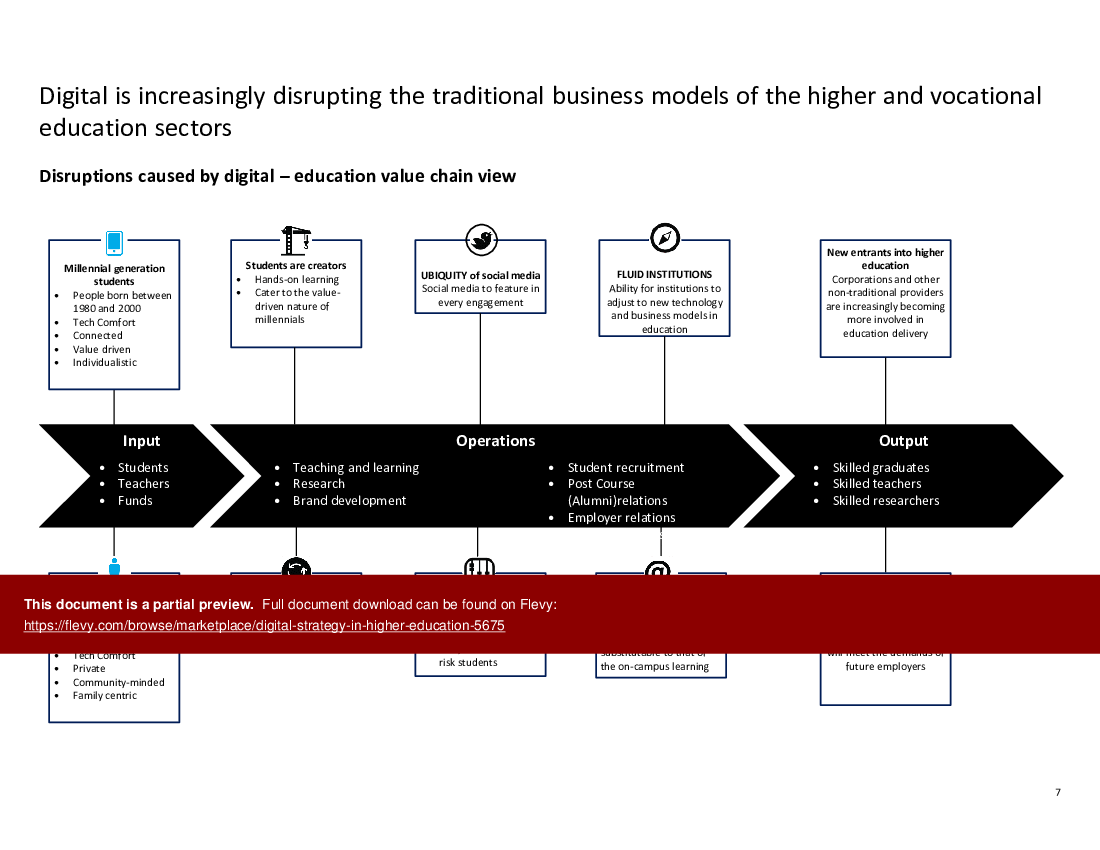
This slide outlines the evolving expectations of modern students, focusing on millennials and Generation Z. Millennials exhibit 4 key traits: Tech Comfort, with over 85% owning smartphones; Connectedness, as 80% engage with social media daily; a Value-Driven mindset, emphasizing entrepreneurship and activism; and Individualism, exploring personal identities. Generation Z, or "digital natives," shares tech comfort, but is more privacy-conscious, prioritizing personal information protection. They are also community-minded, showing greater concern for social issues and family well-being. These characteristics are vital for educational institutions to tailor offerings and engagement strategies effectively.
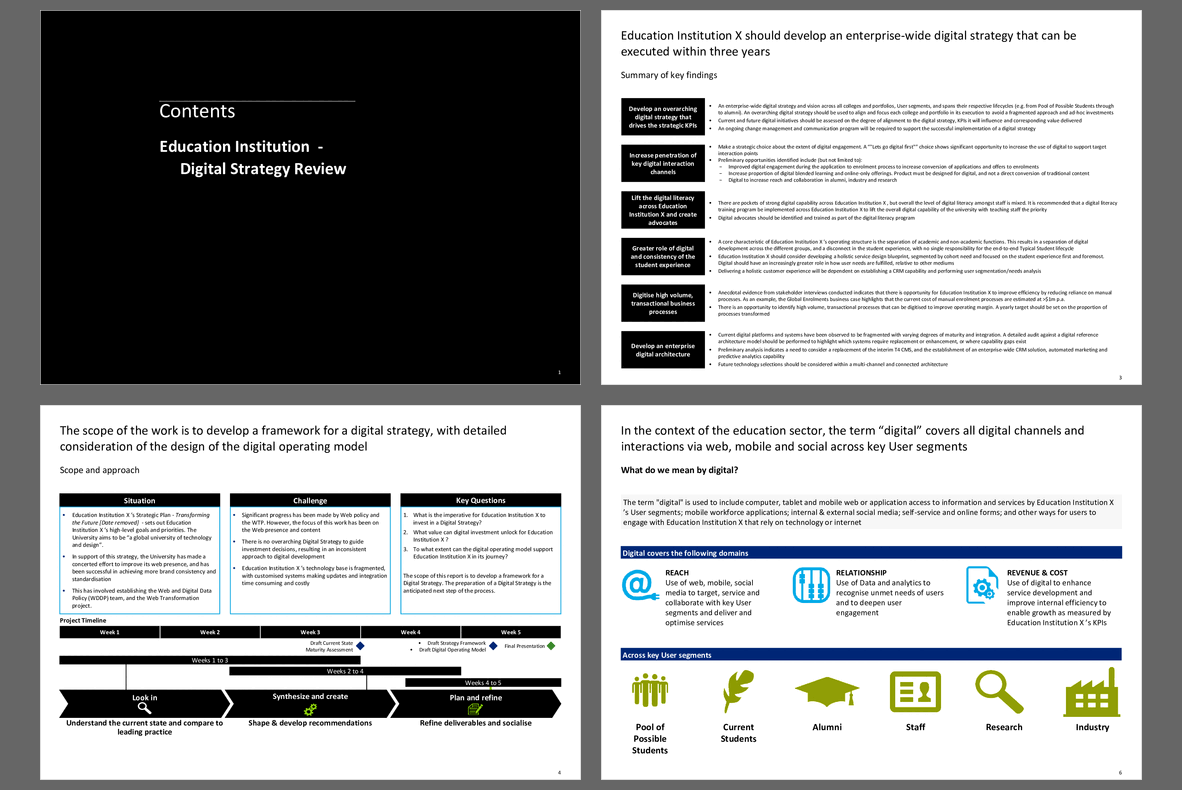
This slide outlines a strategic framework for Education Institution X to develop a comprehensive digital strategy over the next 3 years, emphasizing an overarching digital vision aligned with key performance indicators (KPIs) for alumni engagement and student recruitment. It highlights the need to assess current and future digital initiatives to avoid fragmented approaches. A focus is placed on enhancing key digital interaction channels, particularly during application and enrollment processes, and increasing digital learning offerings. The necessity of lifting digital literacy across the institution is addressed, recommending a digital literacy training program for staff. Additionally, it advocates for a cohesive student experience through a holistic service blueprint that incorporates user segmentation and needs analysis, aiming to digitize operational processes to enhance efficiency and reduce manual tasks.
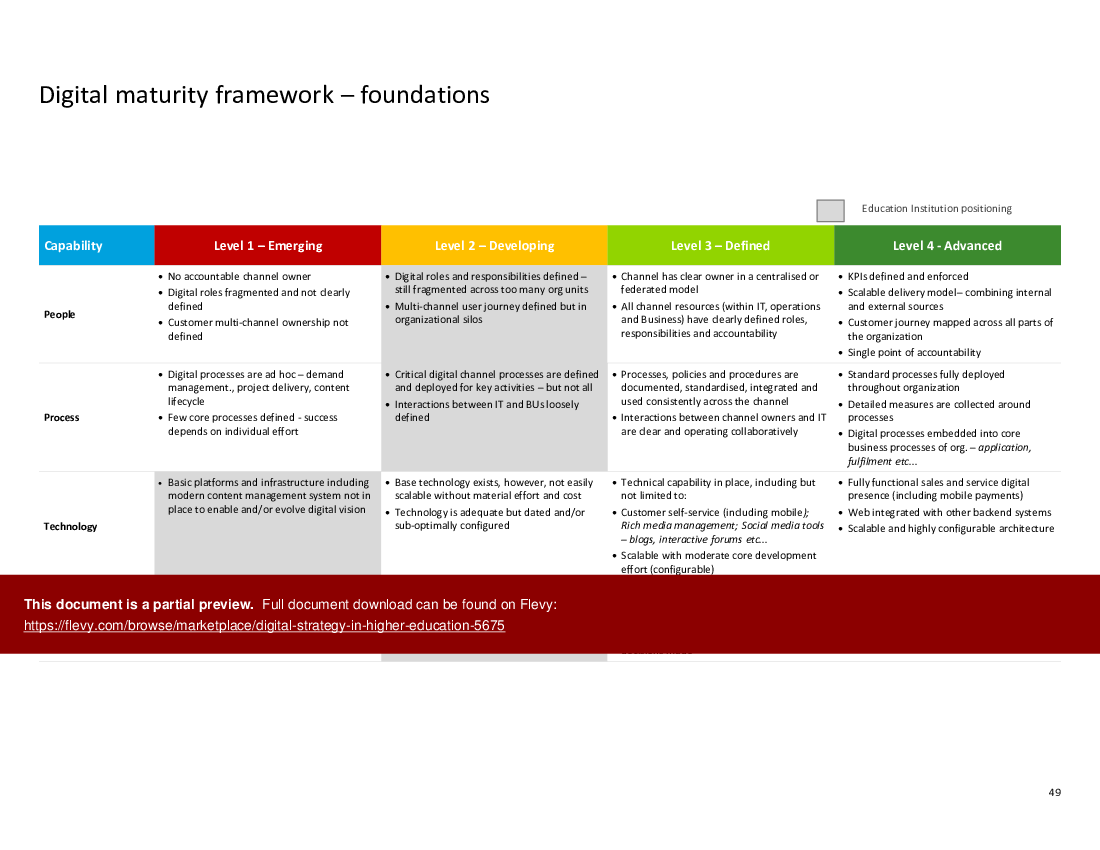
This slide presents a digital maturity framework assessing capabilities across 4 levels: Emerging, Developing, Defined, and Advanced. For CRM, the transition from no formal system in the Emerging stage to an enterprise solution in the Advanced stage highlights the importance of structured customer interactions, leveraging CRM data for personalization and strategic leadership. User Experience evolves from a lack of formal strategy to alignment with enterprise goals, emphasizing consistent tone and user-driven design. Content capabilities progress from unstructured creation to tailored, integrated content, featuring multi-lingual support and dynamic generation based on user behavior and CRM insights. This framework guides organizations in enhancing digital maturity through strategic alignment, user-centric design, and data-driven content development.
The slide outlines the digital capabilities of Education Institution X, categorizing digital channels into 4 stages: Emerging, Developing, Defined, and Advanced. Key findings reveal that the mobile public website requires improved responsiveness for better user experience. Social media marketing lacks integration, limiting effectiveness. Data analytics capabilities struggle with managing disparate sources, complicating insight generation. Inadequate search functionalities hinder content discovery, and a low percentage of students utilize self-service options, indicating engagement gaps. The absence of a robust enterprise CRM system complicates student behavior analysis. Inconsistencies in content quality exist across websites, and reliance on manual processes for data management is significant. Inefficient manual admissions processes suggest that automation could yield substantial time and cost savings, highlighting the need for a strategic approach to enhance digital capabilities and streamline operations.
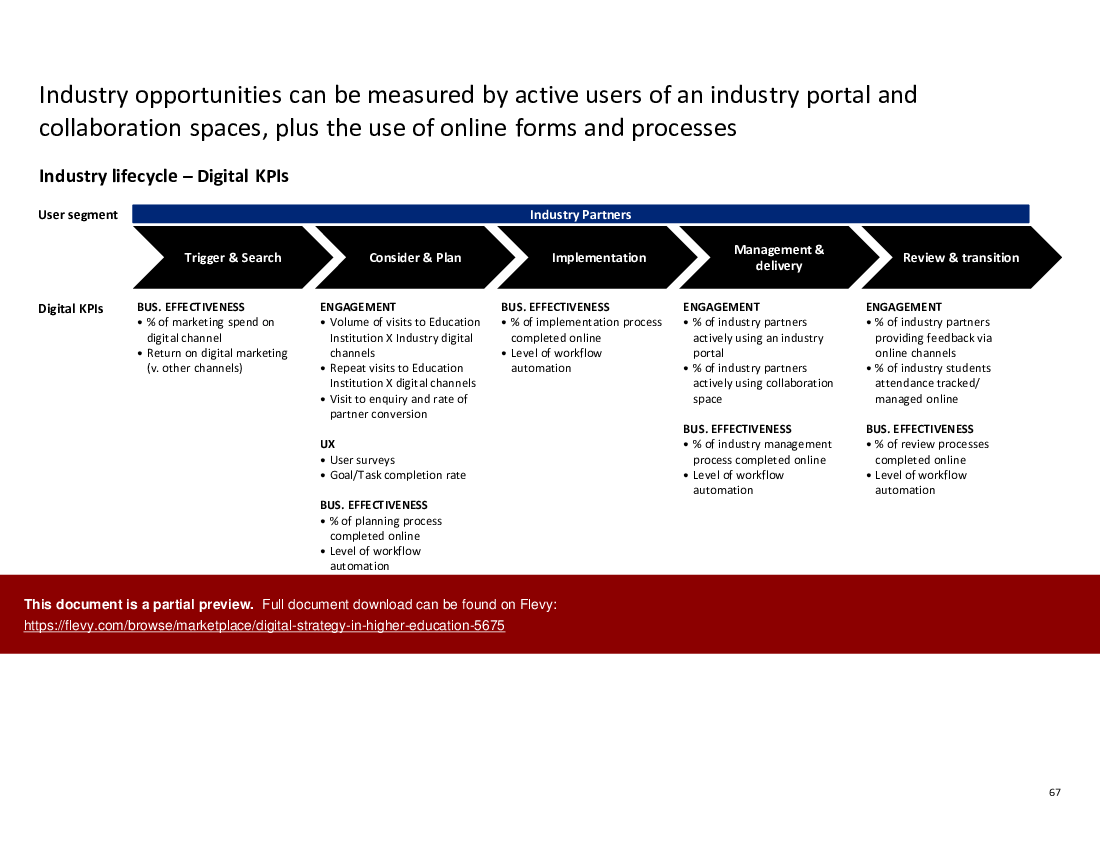
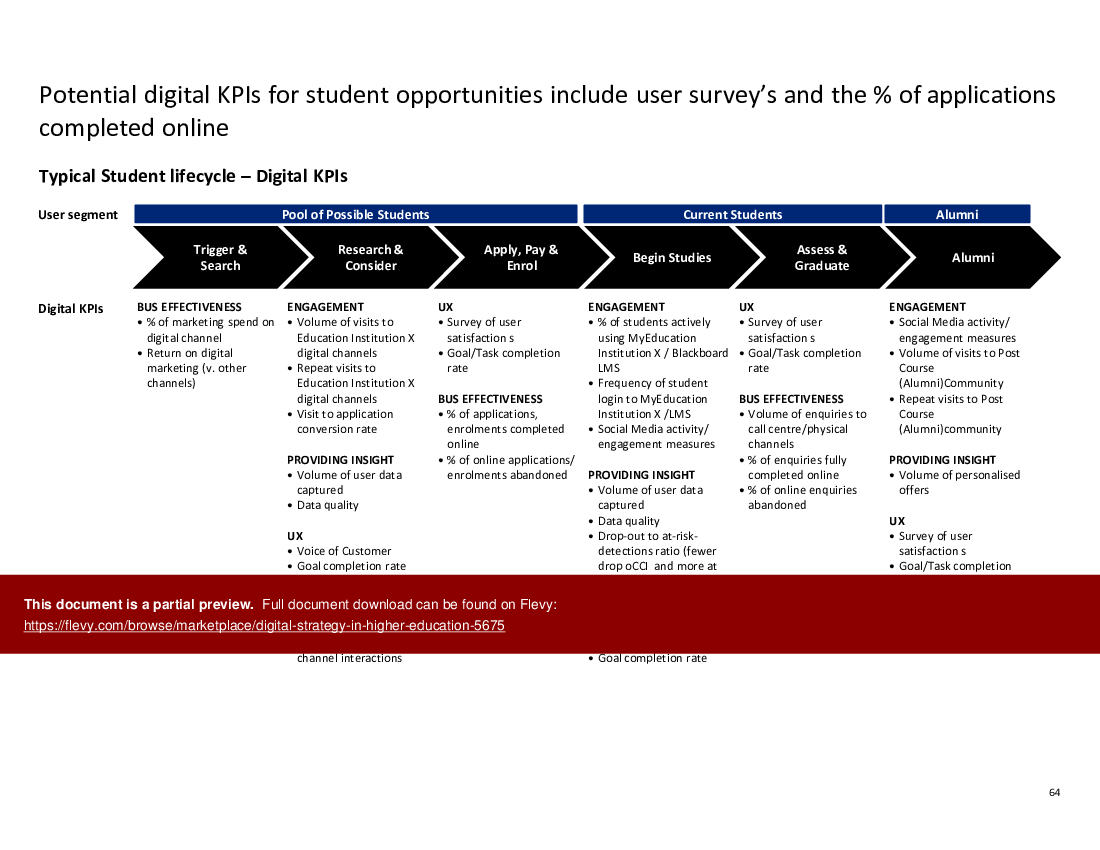
This slide outlines digital key performance indicators (KPIs) for higher education user segments across the student lifecycle: Pool of Possible Students, Current Students, Assess & Graduate, and Alumni. In the "Trigger & Search" phase, metrics include marketing spend on digital channels and return on investment, assessing digital marketing effectiveness. The "Research & Consider" phase emphasizes engagement metrics like digital channel visits and application conversion rates, alongside user experience (UX) metrics such as user satisfaction surveys. For "Current Students," key metrics track logins to educational platforms and social media activity, highlighting the importance of data quality. The "Assess & Graduate" phase evaluates communication channel effectiveness and online process completion. Alumni engagement metrics include social media activity and personalized offers, maintaining connections with graduates. This framework supports institutions in measuring and enhancing digital engagement throughout the student lifecycle.
The staff experience lifecycle within educational institutions includes phases: Recruitment & Selection, Onboarding & Orientation, Perform, Develop & Manage Performance, Retain, and Transition. Each phase is rated for operational efficiency opportunities: L (Low), M (Medium), and H (High). Digital channels can broaden the candidate pool, though rated low for prospective staff. Self-service orientation in onboarding is rated medium, allowing staff to engage in value-adding activities. The performance phase shows high opportunity ratings, highlighting the role of digital training and collaboration tools in enhancing productivity and retention. Improved collaboration spaces can significantly impact productivity across teams. Transitioning staff is rated low, indicating challenges in external recruitment versus internal mobility, suggesting a strategic focus on optimizing resource allocation.
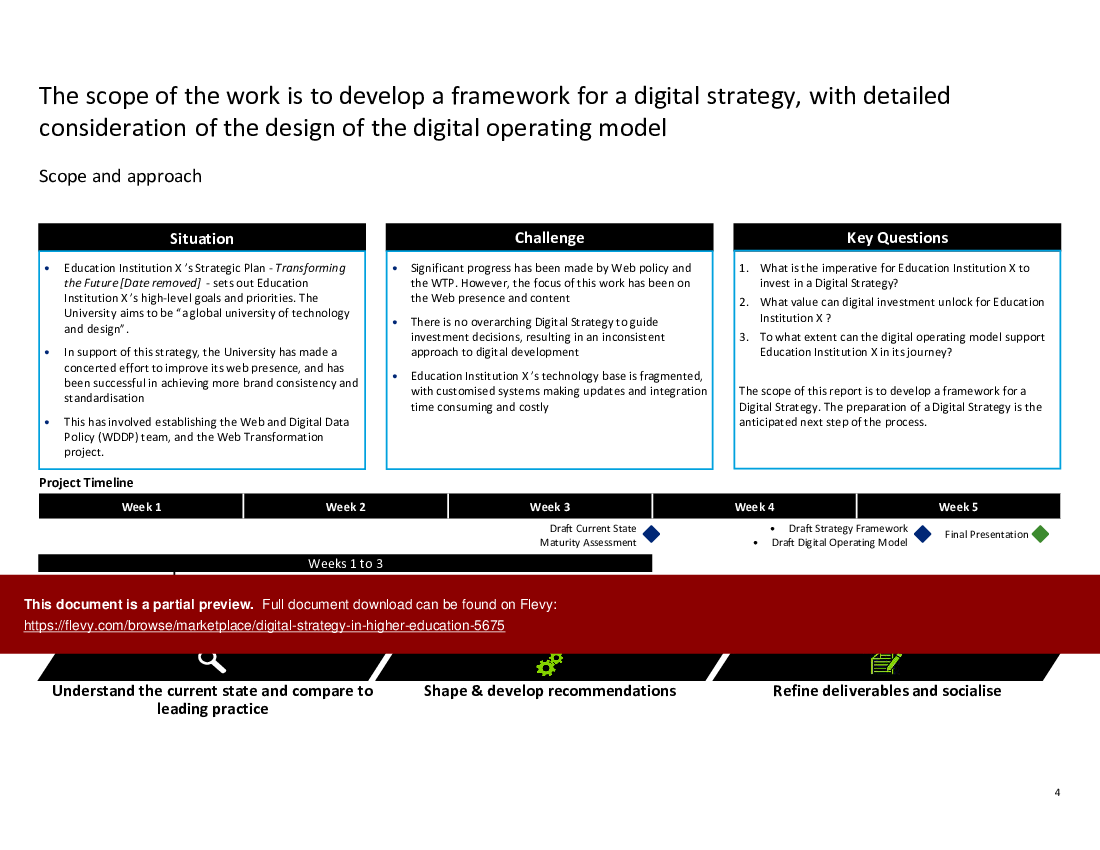
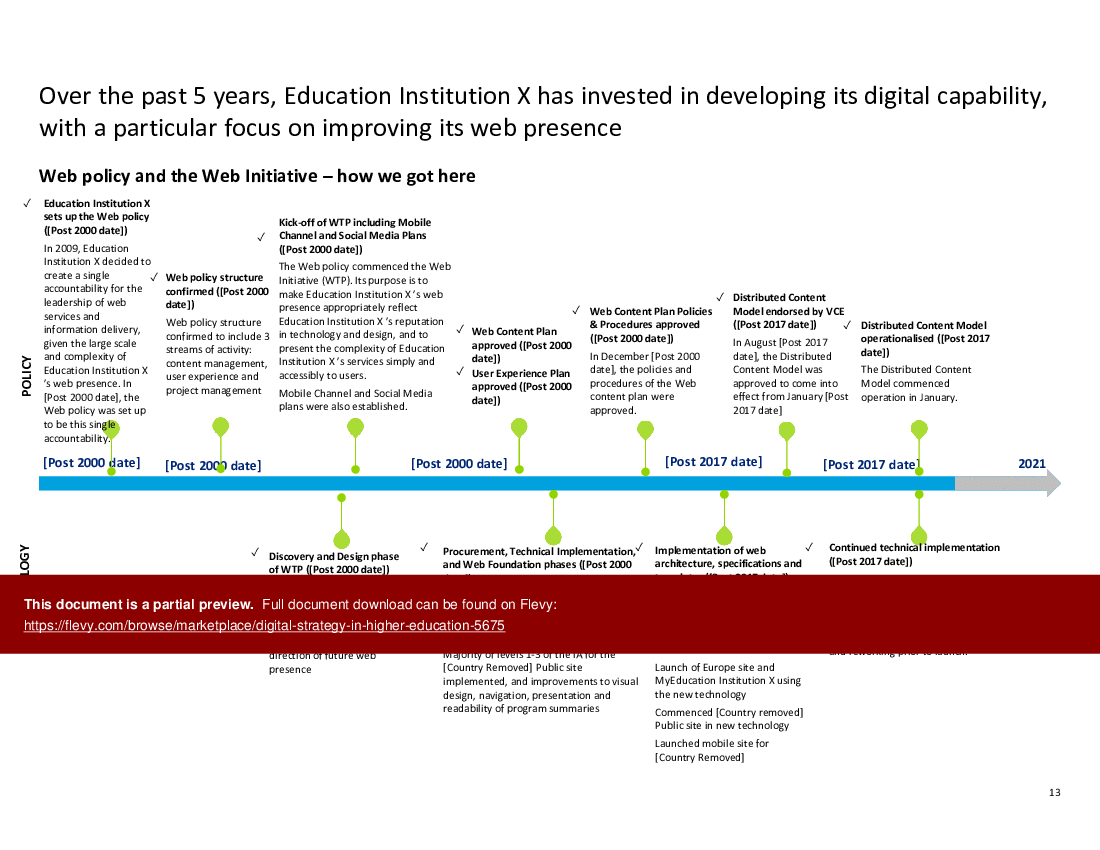
This slide outlines a structured approach for developing a digital strategy for Education Institution X, focusing on enhancing web presence and achieving brand consistency to support its goal of becoming a global university in technology and design. The institution faces challenges, including a lack of a cohesive digital strategy to guide investment decisions, leading to inconsistencies in digital development and a fragmented technology landscape that complicates updates and integrations. Key questions guide the strategy development, addressing the need for investment in a digital strategy, the potential value of such investments, and how a digital operating model can align with institutional objectives. The project timeline spans 5 weeks, beginning with an assessment of the current state and culminating in a final presentation of the strategy framework and operating model.
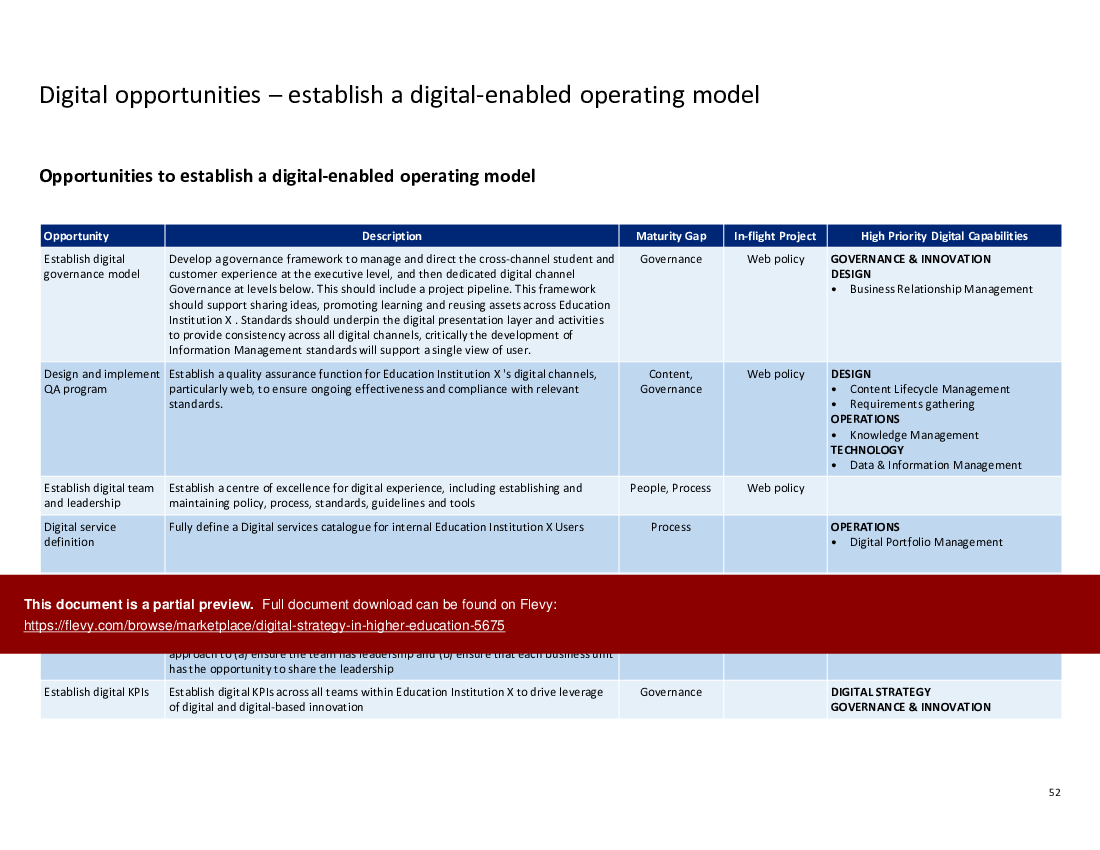
The slide outlines opportunities for establishing a digital-enabled operating model in educational institutions. Key opportunities include creating a digital governance model to manage cross-channel student experiences and ensure consistency through established standards. A quality assurance program for digital channels is essential for compliance and effectiveness, emphasizing content governance. Establishing a digital team and leadership involves creating a center of excellence for digital experience, setting policies, and defining a digital services catalog. Seamless content delivery across multiple channels enhances user experience. Finally, implementing digital KPIs across teams leverages data to align digital strategies institution-wide. This structured approach emphasizes governance, quality assurance, leadership, and performance metrics.
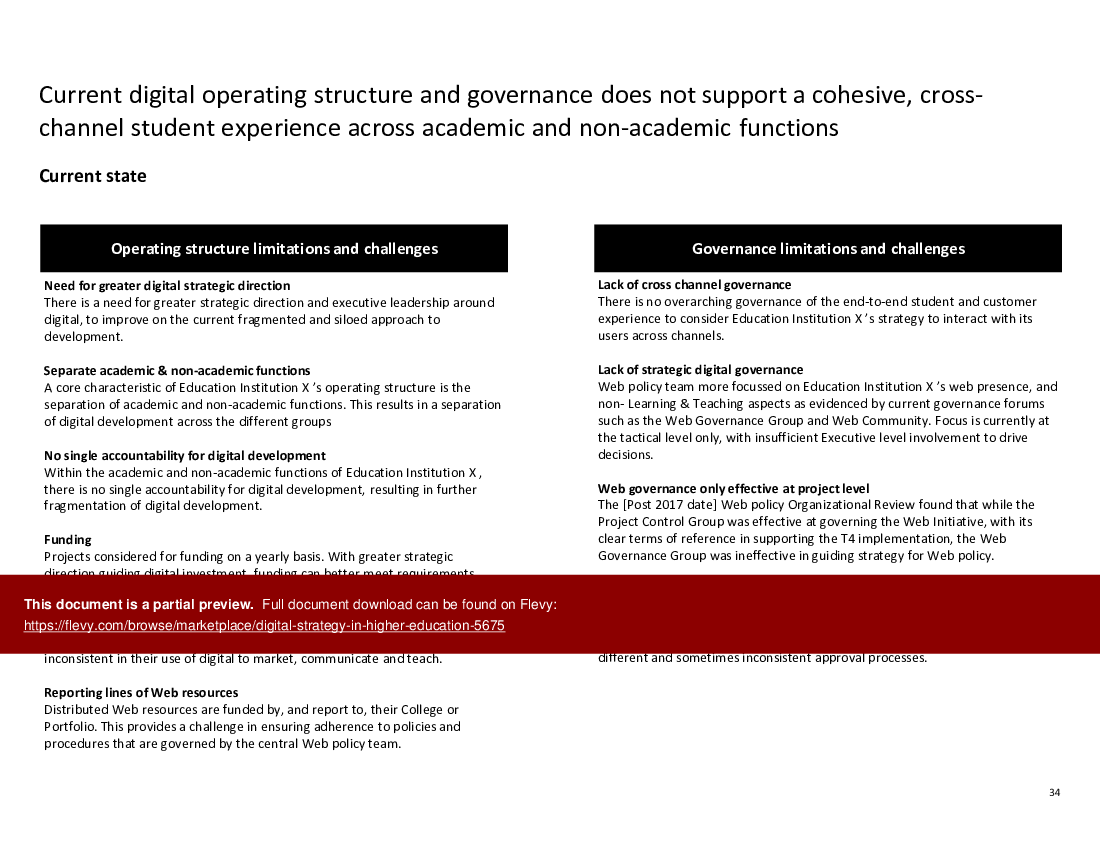
This slide outlines design principles for shaping the digital operating model of an educational institution. The first principle, "Support Education Institution X’s strategic direction," emphasizes a digital structure that aligns with the vision of becoming a global leader in technology and design. "Clearly defined digital roles, responsibilities, and accountabilities" ensures efficient governance and a single point of accountability for digital initiatives. The principle of "Consistent execution of digital channel" advocates for standardized management of digital initiatives, including prioritization and maintenance. "Separate funding" recommends independent budgeting for digital initiatives, covering marketing, operations, and integration costs. The "Efficiency of organizational structure" aims to eliminate redundancy and streamline processes for enhanced collaboration. Lastly, "Effectiveness of the Devolved Content" focuses on accountability in digital content management, proposing a reporting structure to ensure adherence to content policies and improve quality.
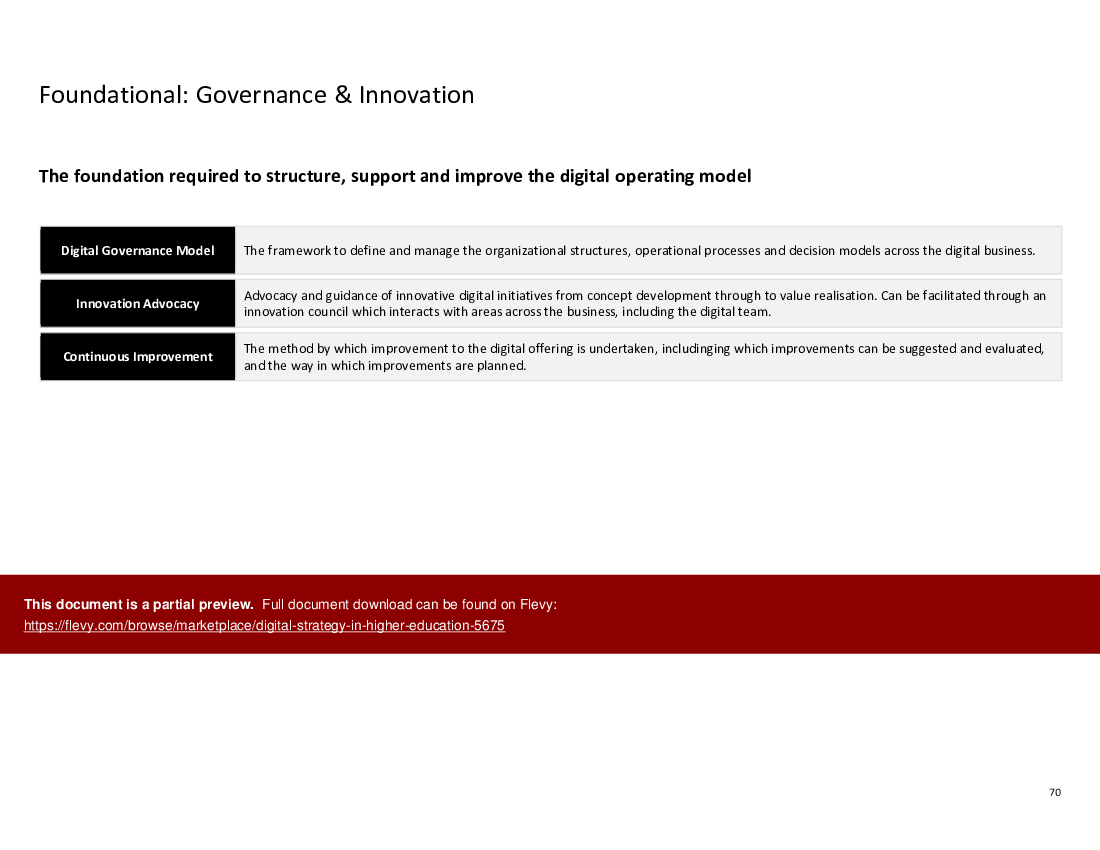
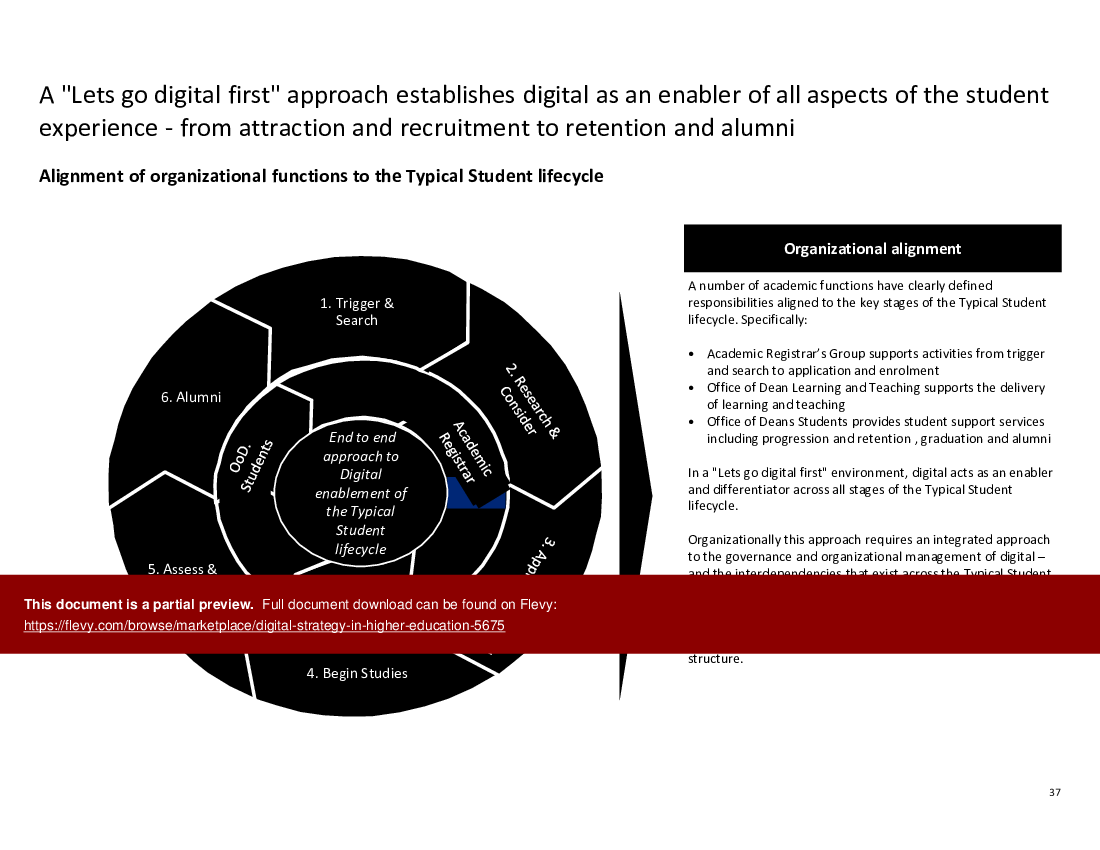
The framework for digital governance enhances the student experience across academic and support functions through an integrated approach. Central to this strategy is the Digital Governance Committee, overseeing initiatives aligned with institutional goals. Three governance categories are defined: Student Experience, Digital Portfolio Governance, and Digital Operational Governance.
The Student Experience category focuses on cohesive strategies that improve interactions between students and employers, securing approvals and aligning funding with the digital agenda. Digital Portfolio Governance manages digital initiatives, coordinating a roadmap that addresses dependencies and meets business and technology requirements while tracking performance. Digital Operational Governance ensures adherence to standards, managing project delivery and funding reporting.
Collaboration with groups like the Academic Registrar's Group and Dean's Offices is essential for leveraging digital tools to enhance traditional learning and support services, fostering a holistic digital environment for all stakeholders.
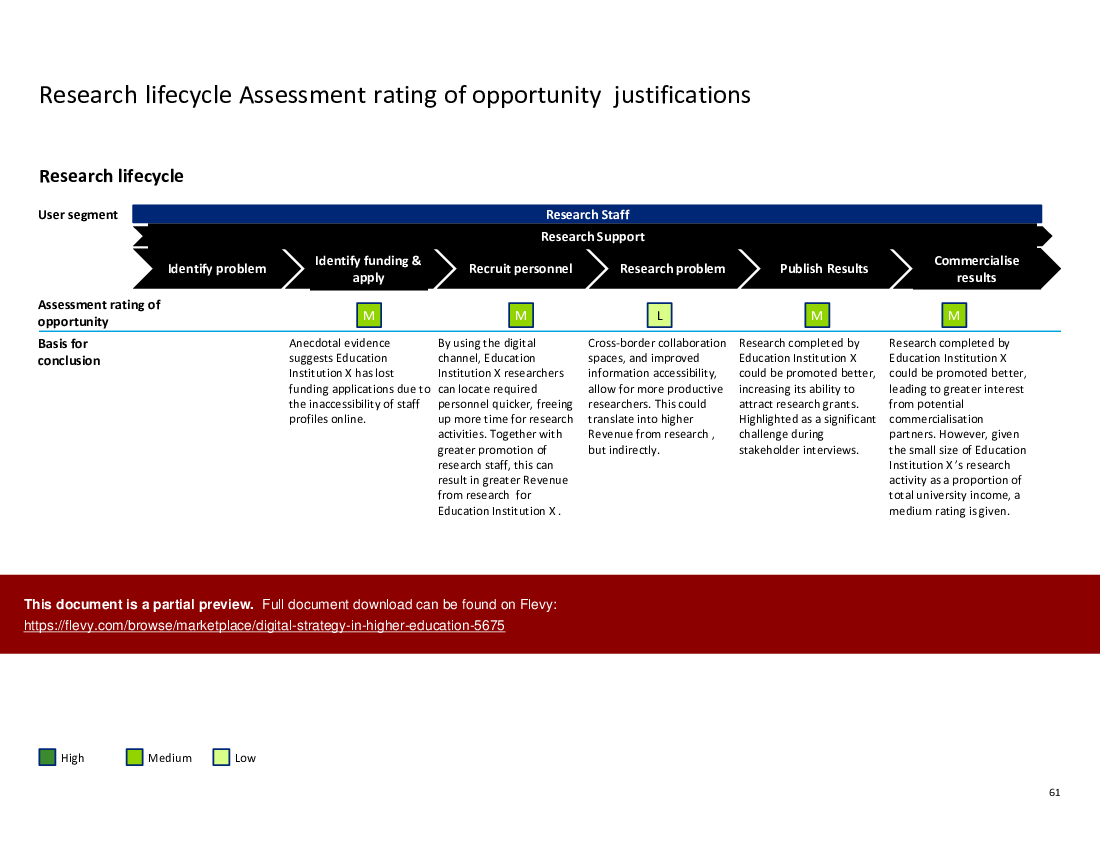
The slide outlines strategic opportunities to enhance the digital profile of university researchers through a structured approach to the research lifecycle. Key phases include identifying problems, securing funding, recruiting personnel, addressing research issues, publishing results, and commercializing outcomes. Opportunities focus on improving online visibility and profiling of research staff, integrating the Research Master system for consistency and accuracy. Streamlining manual processes increases staff efficiency, allowing more focus on research activities. Targeted digital marketing strategies promote research outcomes and improve communication, enhancing visibility and attracting interested parties. Improved online search capabilities help users find relevant experts. Each opportunity is assessed with a rating system based on potential revenue impact, with strategic KPIs emphasizing revenue generation. Digital KPI opportunity groups are categorized into engagement, providing insight, and user experience, critical for measuring the effectiveness of proposed digital strategies.
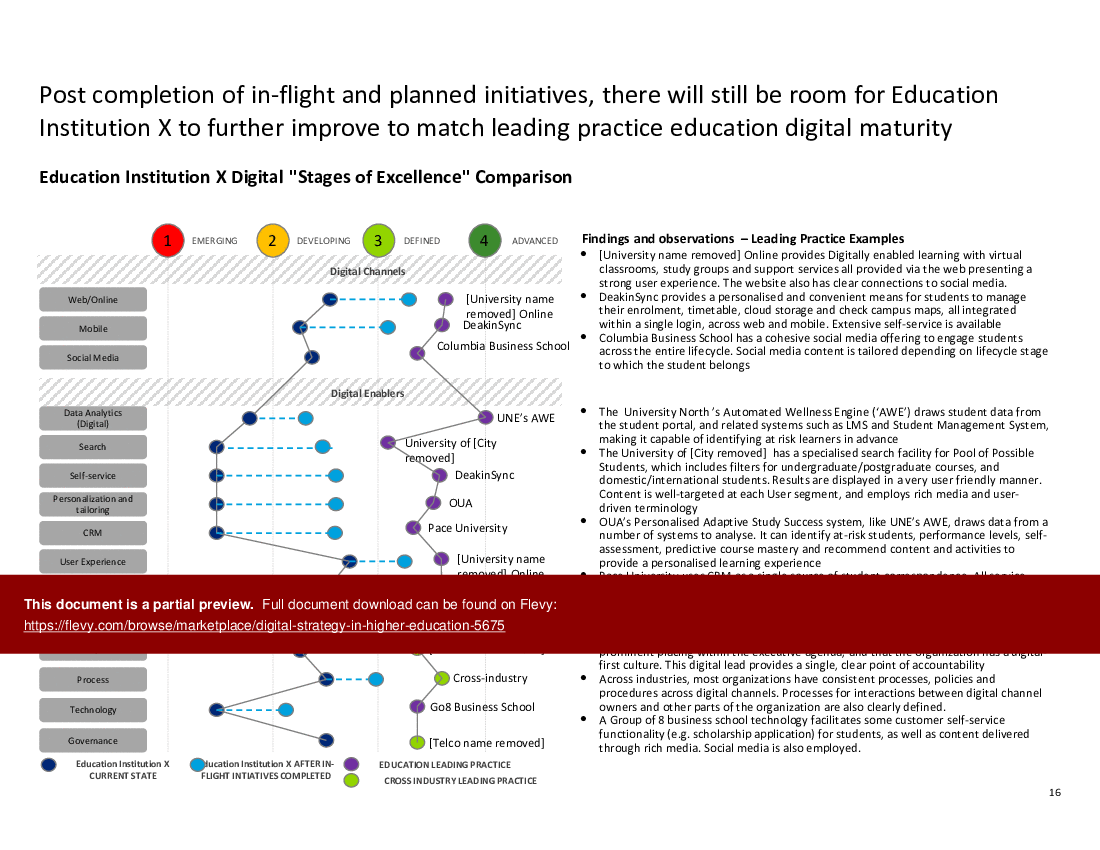
This slide analyzes the digital maturity of Education Institution X compared to leading practices in higher education. It categorizes digital capabilities into 4 stages: Emerging, Developing, Defined, and Advanced. Digital channels assessed include Web/Online, Mobile, and Social Media, alongside enablers like Data Analytics, Search, and CRM. Peer institutions demonstrate advanced implementations, such as personalized student experiences and integrated systems for user engagement. Notable examples include University North's Automated Wellness Engine for identifying at-risk students and Columbia Business School's tailored social media strategy. The analysis indicates significant opportunities for Education Institution X to enhance digital maturity by adopting best practices from leading institutions, guiding improvements toward higher digital excellence.
The proposed digital team structure for an educational institution includes key areas: Strategy & Planning, Channel Initiatives, Channel Management, Domestic Marketing, and International Marketing. The Strategy & Planning segment focuses on formulating a digital channel strategy and emphasizes ongoing market intelligence and collaboration with the Learning & Teaching side. Channel Initiatives prioritize the execution of approved digital initiatives, adhering to documented objectives for structured project management. Channel Management covers operational aspects of digital assets, including platform standards and data integration for accessibility. The Domestic Marketing team engages users and monitors digital effectiveness, while the International Marketing team targets international students, reflecting a strategic approach to market segmentation.
This slide outlines a structured six-month timeline for developing a digital strategy. Month 1 focuses on obtaining approvals for the strategy framework and identifying gaps. Month 2 involves formulating strategic choices and mapping user journeys, essential for understanding user interactions with digital platforms. Month 3 shifts to planning and scoping the digital strategy by refining capability gaps and prioritizing capabilities. Month 4 designs the operational model to execute the digital strategy. The final months focus on developing digital enterprise architecture and converting gaps into actionable initiatives. This methodical approach ensures all critical components of digital transformation are systematically addressed.
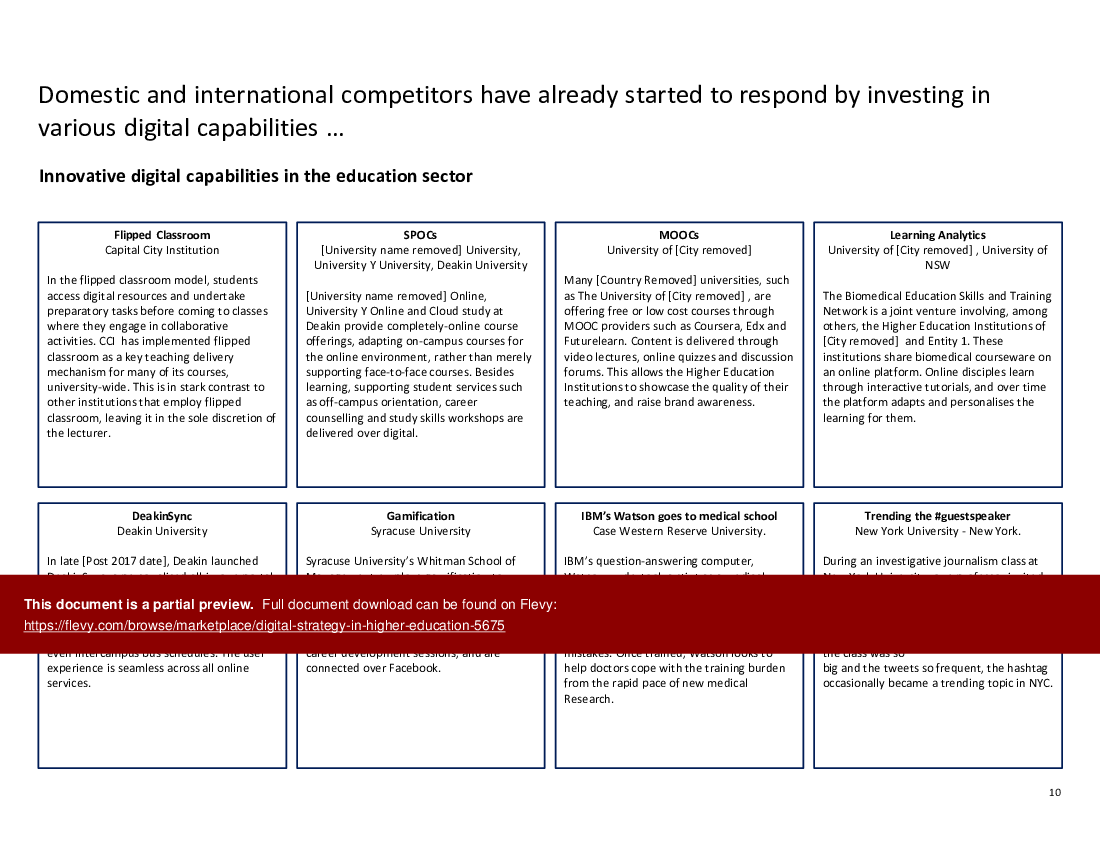
Educational institutions are adopting innovative digital capabilities to enhance offerings amid competition. The "Flipped Classroom" model at Capital City Institution encourages students to engage with digital resources before collaborative classes, fostering interactive learning. "SPOCs" (Small Private Online Courses) at Deakin University provide fully online courses for students unable to attend traditional classes, addressing diverse needs. "MOOCs" (Massive Open Online Courses) expand access to education through partnerships with platforms like Coursera and EdX, enhancing institutional visibility. "Learning Analytics" at the University of NSW personalizes learning experiences based on student interactions, improving engagement. Syracuse University employs "Gamification" to motivate students through competitive extracurricular activities. IBM's Watson aids medical education by offering real-time feedback. "Trending the #guestSpeaker" at New York University integrates social media into education, promoting interaction with industry professionals.
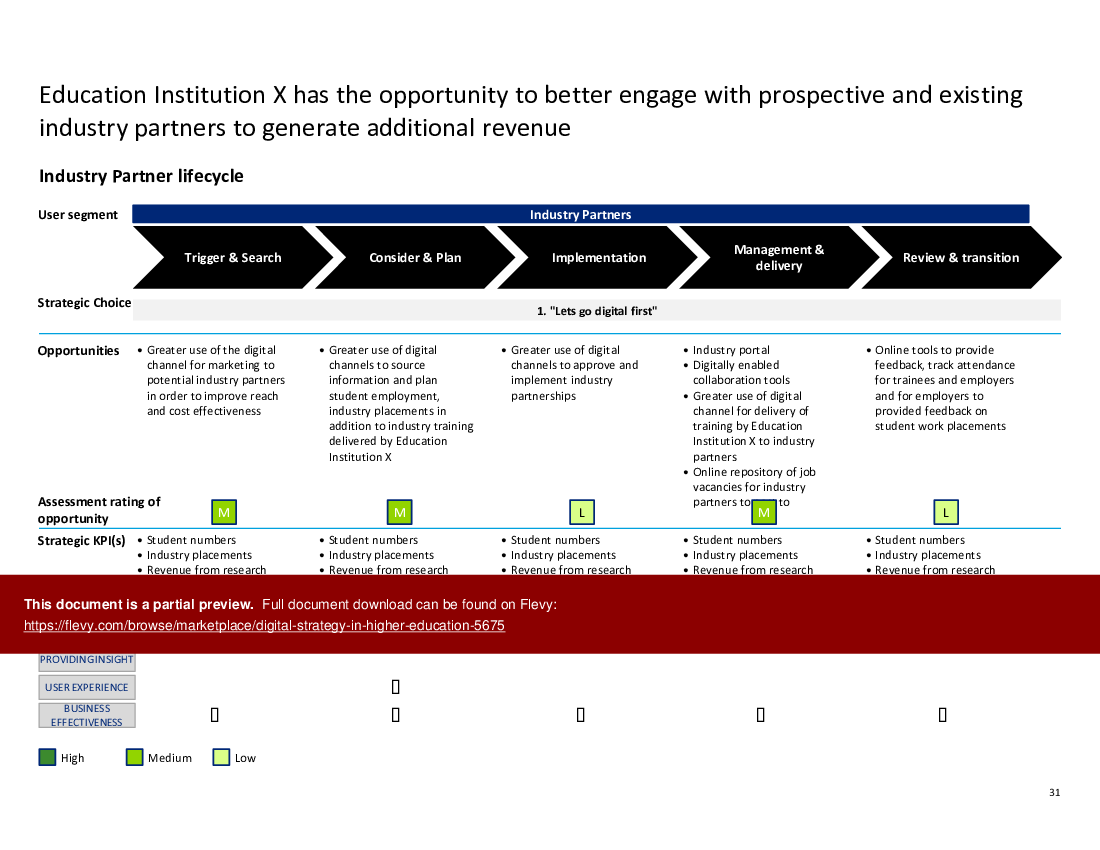
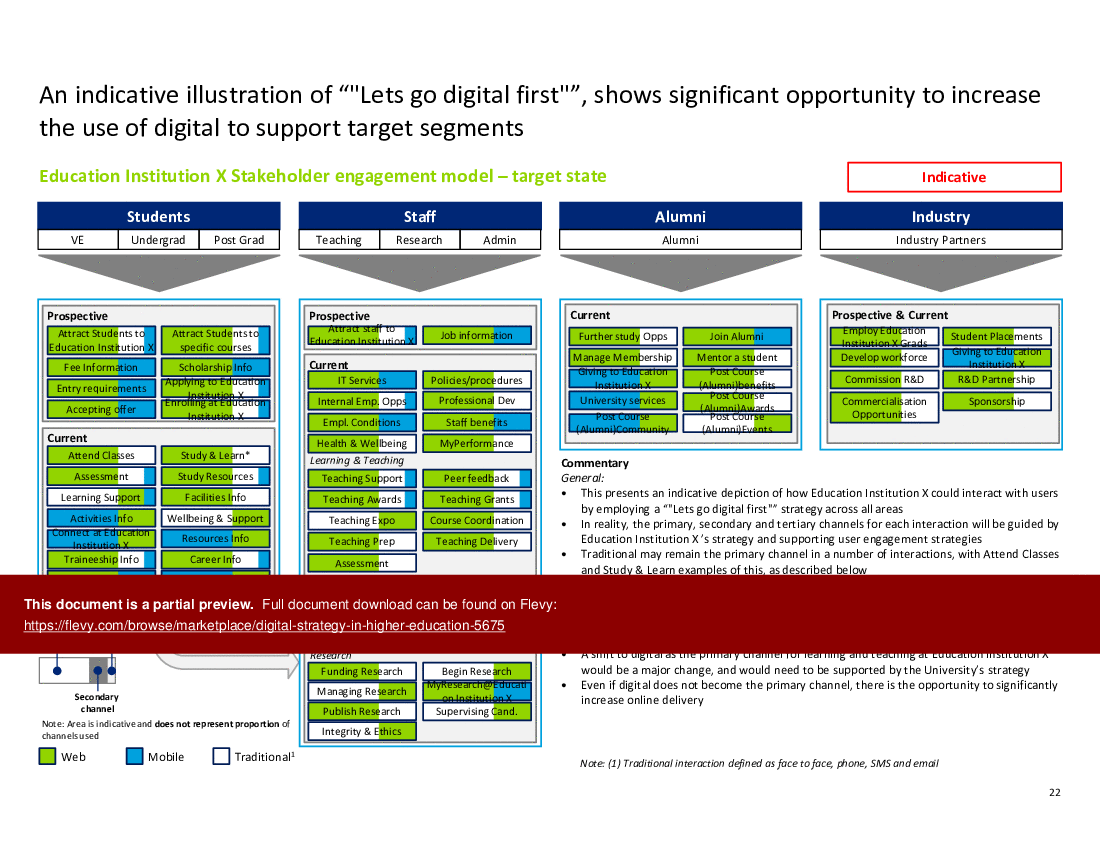
The slide analyzes the stakeholder engagement model for Education Institution X, focusing on interactions among students, staff, alumni, and industry partners. Engagement channels are categorized into prospective and current, with a primary reliance on internet-based communication and limited mobile integration. For students, prospective engagement includes attracting individuals, providing scholarship information, and facilitating applications, while current engagement involves attending classes and accessing study resources. Staff engagement mirrors this structure, with prospective interactions covering job information and internal policies, and current interactions focusing on support services and performance metrics. Alumni engagement emphasizes further studies and mentorship, while industry partners are engaged through student placements and commercial opportunities. The underutilization of mobile channels indicates a growth opportunity for enhancing mobile responsiveness and overall stakeholder engagement effectiveness.
This slide outlines a strategic framework for enhancing digital engagement at Education Institution X, targeting students, staff, alumni, and industry partners. For prospective students, it emphasizes providing essential information on fees, scholarships, and entry requirements. Current students are encouraged to engage through classes and assessment resources, utilizing both primary and secondary channels for maximum outreach. Staff interactions focus on teaching, research, and administration, highlighting professional development opportunities like teaching grants and research funding. Alumni engagement strategies include maintaining connections and encouraging participation in events, with alumni contributing through mentorship. Industry partnerships are vital for collaboration on workforce development and research initiatives, underscoring the importance of a digital-first approach to improve engagement and streamline interactions across all stakeholder groups.
Education Institution X must enhance its digital strategy to address ongoing disruptions, aligning initiatives with strategic goals across global, urban, and connected dimensions. The global focus emphasizes providing a comprehensive learning experience, while urban initiatives leverage creativity to tackle sustainable city development challenges. Connected efforts aim to foster industry partnerships to improve educational quality and research impact. Key performance indicators (KPIs) include increasing student acceptance and retention rates, generating research revenue, and optimizing operating margins, serving as benchmarks for digital initiative success. Engagement is crucial for enhancing interactions among students, staff, and alumni, focusing on online transactions and user experience. Capturing detailed user data is essential for refining experiences and ensuring quality service delivery. Digitizing processes will streamline operations and reduce costs associated with traditional methods, integrating digital strategies into the institution's broader mission.
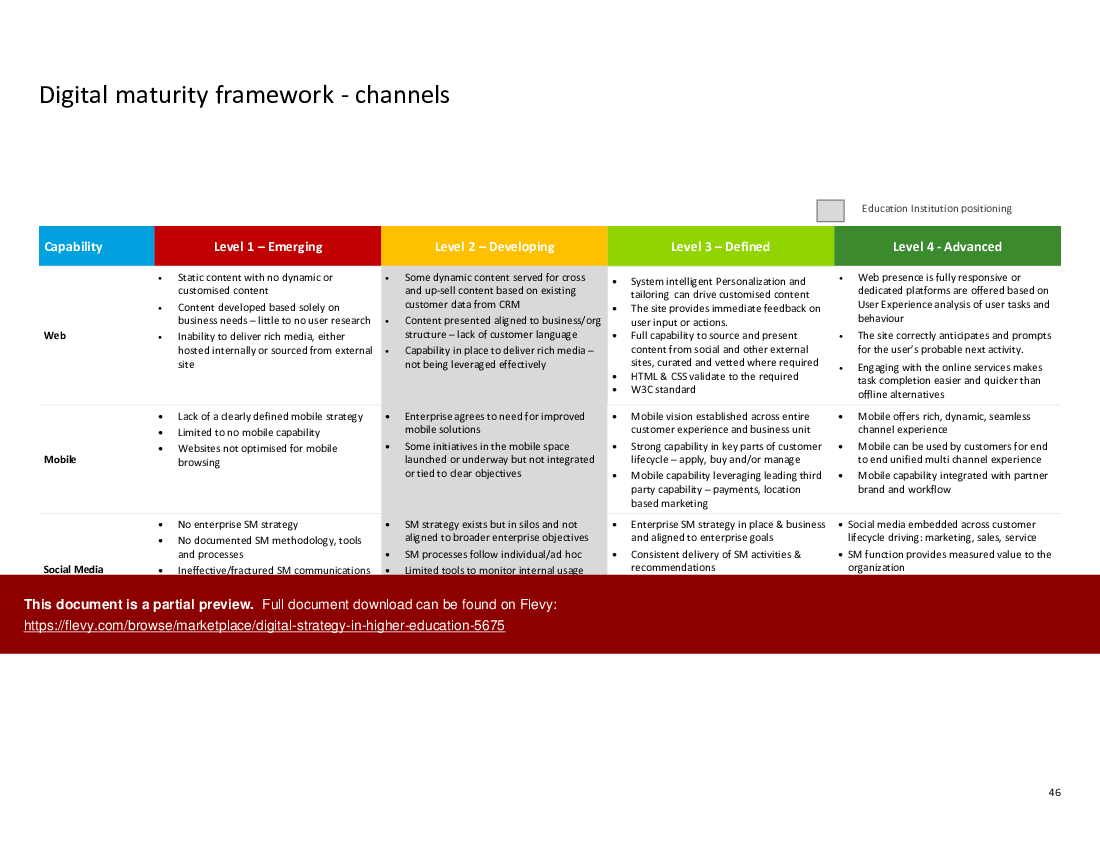
The digital maturity framework assesses capabilities across web, mobile, and social media, categorizing them into 4 levels: Emerging, Developing, Defined, and Advanced. For web capabilities, Level 1 indicates a static presence with minimal engagement, while Level 2 introduces dynamic content based on customer data. By Level 3, organizations can personalize content and source information externally, with the Advanced level emphasizing a fully responsive web presence. In mobile, Level 1 lacks strategy, progressing to an integrated vision by Level 4, highlighting mobile solutions that enhance customer experience. Social media capabilities evolve from no formal strategy at Level 1 to a fully integrated approach by Level 4, embedding social media within the customer lifecycle. This framework serves as a diagnostic tool for assessing digital maturity and guiding strategic focus in digital transformation initiatives.
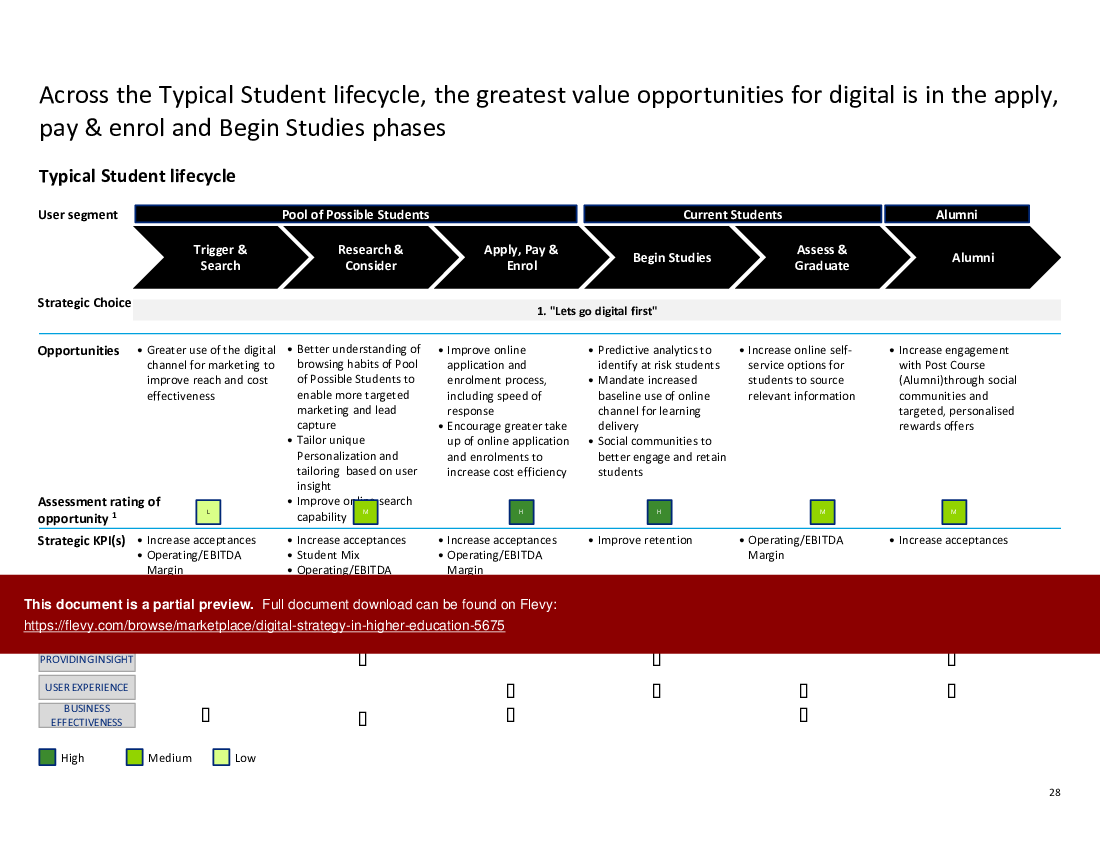
The slide outlines key opportunities for digital engagement in higher education across the student lifecycle: applying, paying, enrolling, and beginning studies. It identifies user segments—prospective students, current students, and alumni—and highlights strategic choices at each stage. Enhancing digital marketing efforts through targeted strategies based on user insights can improve reach and effectiveness. Assessment ratings indicate the perceived value of these opportunities, with strategic KPIs suggesting metrics like increasing acceptances and improving operating margins. Predictive analytics are essential for identifying at-risk students and enhancing the online application process. Institutions should encourage online learning platforms and foster social communities for current students, while increasing alumni engagement through personalized rewards and self-service options. This roadmap helps institutions leverage digital strategies to enhance student recruitment, retention, and alumni engagement, aligning initiatives with strategic goals for improved performance.
Digital in education encompasses all interactions through web, mobile, and social channels, crucial for engaging users of Education Institution X. It includes access via computers, tablets, and mobile devices, as well as applications for communication and service delivery.
Digital is categorized into 3 domains: "REACH," which utilizes web, mobile, and social media to target key user segments and enhance engagement; "RELATIONSHIP," focusing on data and analytics to identify unmet user needs and tailor interactions; and "REVENUE & COST," which examines how digital strategies improve service development and operational efficiency, linked to growth metrics and key performance indicators for Education Institution X.
Source: Best Practices in Digital Transformation, Education PowerPoint Slides: Digital Strategy in Higher Education PowerPoint (PPTX) Presentation Slide Deck, Affinity Consulting Partners
The Affinity Consulting Partnership is a global powerhouse of experienced consultants, specializing in technology and digital-driven change.
Our team is comprised of individuals across the globe who have extensive expertise and a proven track record in guiding large corporations across the globe through complex business transformations. Our partners were all at some stage senior consulting
... [read more] professionals at tier 1 global consulting firms over half our staff have been equity partners in the past at these firms.
With a combined experience of over 120 years, our partners bring a wealth of knowledge and insights to the table. Each member of our team has a distinguished background, having served as a top-level executive and trusted advisor to the C-suite of major corporations. Our partners have honed their skills and expertise through years of hands-on experience, leading successful consulting engagements across a wide range of industries, including finance, healthcare, retail, manufacturing, and more.
Our partners have a keen eye for identifying emerging trends and disruptions in the business landscape and are adept at developing innovative strategies to help our clients stay ahead of the curve.

As a team, we are dedicated to driving meaningful results for our clients, helping them navigate the complexities of technology and digital-driven change, and unlocking new opportunities for growth and success. Our partners are trusted advisors and thought leaders in the industry, and we are committed to providing exceptional service and creating lasting partnerships with our clients.

Since 2012, we have provided best practices to over 10,000 businesses and organizations of all sizes, from startups and small businesses to the Fortune 100, in over 130 countries.
"I have used Flevy services for a number of years and have never, ever been disappointed. As a matter of fact, David and his team continue, time after time, to impress me with their willingness to assist and in the real sense of the word. I have concluded in fact
that it is not at all just a repository of documents/resources but, in the way that David and his team manage the firm, it is like dealing with consultants always ready to assist, advise and direct you to what you really need, and they always get it right.
I am an international hospitality accomplished senior executive who has worked and lived during the past 35 years in 23 countries in 5 continents and I can humbly say that I know what customer service is, trust me.
Aside from the great and professional service that Flevy's team provide, their wide variety of material is of utmost great quality, professionally put together and most current.
Well done Flevy, keep up the great work and I look forward to continue working with you in the future and to recommend you to a variety of colleagues around the world.
"
– Roberto Pelliccia, Senior Executive in International Hospitality
"FlevyPro has been a brilliant resource for me, as an independent growth consultant, to access a vast knowledge bank of presentations to support my work with clients. In terms of RoI, the value I received from the very first presentation I downloaded paid for my subscription many times over! The
quality of the decks available allows me to punch way above my weight – it's like having the resources of a Big 4 consultancy at your fingertips at a microscopic fraction of the overhead.
"
– Roderick Cameron, Founding Partner at SGFE Ltd
"Flevy is our 'go to' resource for management material, at an affordable cost. The Flevy library is comprehensive and the content deep, and typically provides a great foundation for us to further develop and tailor our own service offer."
– Chris McCann, Founder at Resilient.World
"One of the great discoveries that I have made for my business is the Flevy library of training materials.
As a Lean Transformation Expert, I am always making presentations to clients on a variety of topics: Training, Transformation, Total Productive Maintenance, Culture, Coaching, Tools, Leadership Behavior, etc. Flevy
It is well worth the money to purchase these presentations. Sure, I have the knowledge and information to make my point. It is another thing to create a presentation that captures what I want to say. Flevy has saved me countless hours of preparation time that is much better spent with implementation that will actually save money for my clients.
"
– Ed Kemmerling, Senior Lean Transformation Expert at PMG
"If you are looking for great resources to save time with your business presentations, Flevy is truly a value-added resource. Flevy has done all the work for you and we will continue to utilize Flevy as a source to extract up-to-date information and data for our virtual and onsite presentations!"
– Debbi Saffo, President at The NiKhar Group
"Flevy.com has proven to be an invaluable resource library to our Independent Management Consultancy, supporting and enabling us to better serve our enterprise clients.
The value derived from our [FlevyPro] subscription in terms of the business it has helped to gain far exceeds the investment made, making a subscription a no-brainer for any growing consultancy – or in-house strategy team."
– Dean Carlton, Chief Transformation Officer, Global Village Transformations Pty Ltd.
"I have used FlevyPro for several business applications. It is a great complement to working with expensive consultants. The quality and effectiveness of the tools are of the highest standards."
– Moritz Bernhoerster, Global Sourcing Director at Fortune 500
"The wide selection of frameworks is very useful to me as an independent consultant. In fact, it rivals what I had at my disposal at Big 4 Consulting firms in terms of efficacy and organization."
– Julia T., Consulting Firm Owner (Former Manager at Deloitte and Capgemini)
Save with Bundles
This document is available as part of the following discounted bundle(s):
Download our FREE Digital Transformation Templates
Download our free compilation of 50+ Digital Transformation slides and templates. DX concepts covered include Digital Leadership, Digital Maturity, Digital Value Chain, Customer Experience, Customer Journey, RPA, etc.