Editor Summary
Complete Toolkit for Improving Meetings is a 30-slide PowerPoint framework with supplemental Excel templates, embodying a McKinsey, Bain, or BCG-quality approach (consulting-grade; not affiliated).
Read moreThe kit includes one PPT and 3 Excel templates — Terms of Reference (TOR), detailed agenda, action log/meeting log, and meeting scorecard — plus pre-reading and scheduling guidelines. Targeted at corporate executives, integration leaders, consultants, and project managers, it is used to improve meeting efficiency in recurring, departmental, or ad hoc meetings and is sold as a digital download on Flevy.
Use this toolkit when organizations need to reduce time spent in meetings and increase decision follow-through — for recurring governance meetings, cross-functional integrations, or frequent ad hoc sessions where structure is lacking.
Corporate executives redesigning recurring meeting cadence by drafting TORs and enforcing agenda timeboxes.
Integration leaders coordinating cross-functional teams by assigning roles (Meeting Owner, Chairperson, Scribe) and tracking follow-ups in action logs.
Consultants facilitating client workshops by circulating pre-reading and using the detailed agenda template.
Project managers maintaining accountability with meeting scorecards and meeting logs.
The approach applies a structured, template-driven method with defined roles, TORs, and scorecards consistent with the disciplined practices associated with McKinsey, Bain, and BCG.
Wasting valuable resources in unproductive and inefficient meetings can be one of the biggest avoidable costs for any business.
This Meetings Toolkit has been complied to improve the efficiency and effectiveness of Meetings with tools and templates designed using direct feedback from many different businesses about the structure and culture of meetings.
The kit contains:
1. Powerpoint presentation on the why and how to improve meetings
2. Three Excel templates to assist:
1. Agenda Template
2. Meeting Log
3. Meeting Scorecard
These will help deliver better desired outcomes, making meetings work harder for you and more efficient meetings translates into less time spent in meetings.
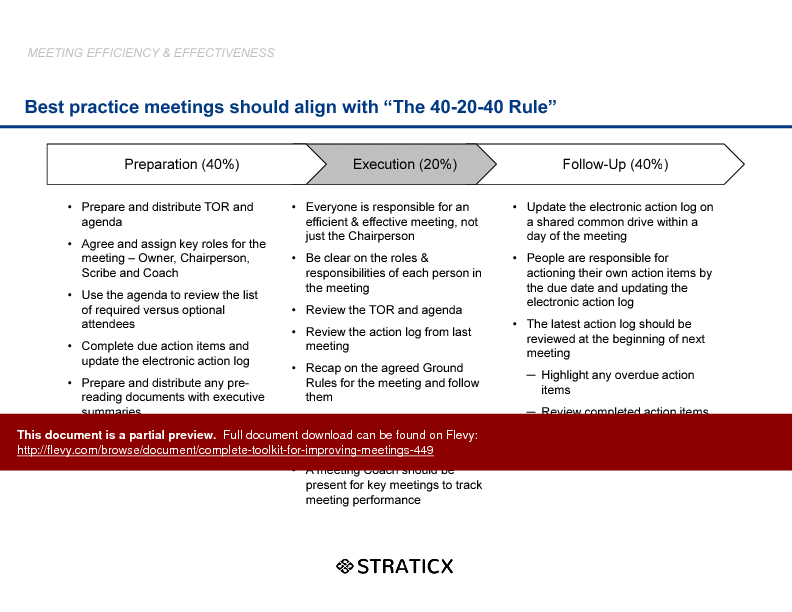
The toolkit emphasizes the importance of aligning meetings with the "40-20-40 Rule," ensuring thorough preparation, efficient execution, and diligent follow-up. This structured approach guarantees that all participants are well-prepared, roles and responsibilities are clear, and action items are tracked and completed. The detailed agenda template included in the toolkit helps in setting clear expectations and outcomes for each meeting segment, ensuring that time is managed effectively and objectives are met.
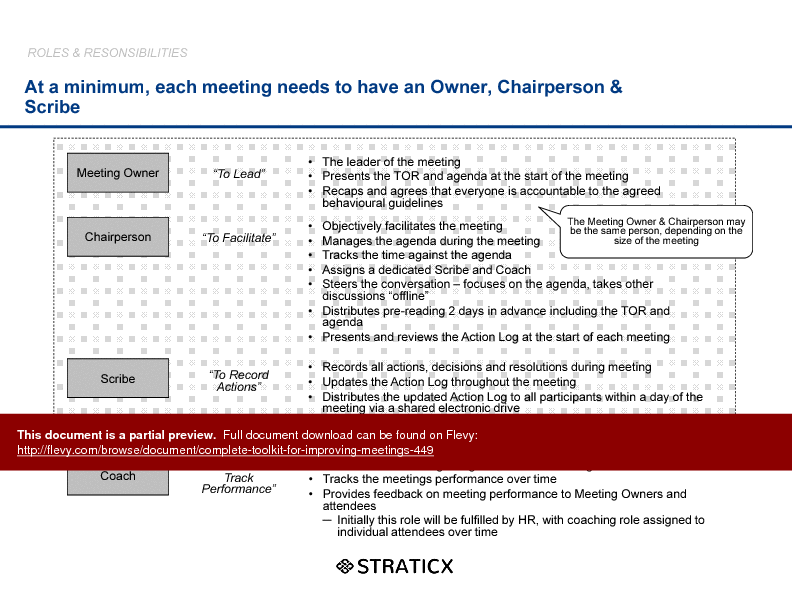
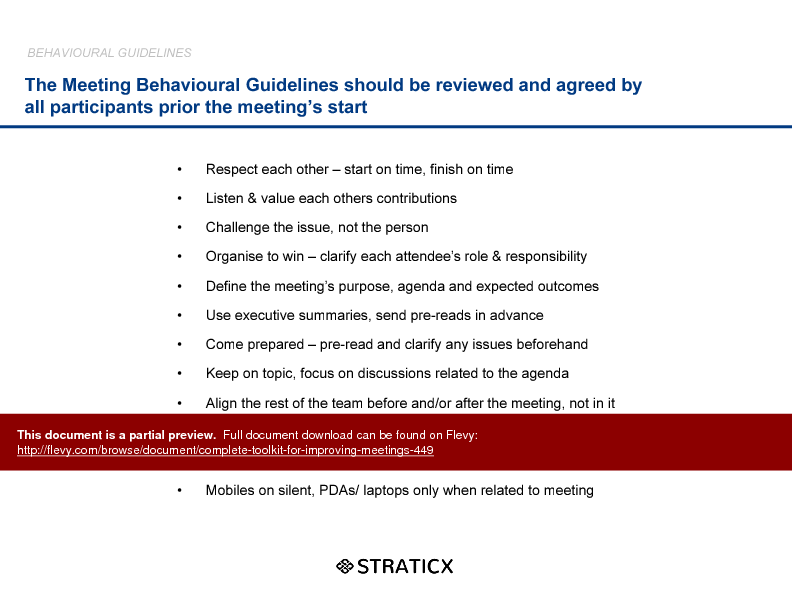
Roles such as Meeting Owner, Chairperson, and Scribe are clearly defined to ensure accountability and smooth facilitation. The toolkit also introduces the role of a Meeting Coach to track performance and provide feedback, fostering continuous improvement in meeting quality. Behavioral guidelines are outlined to promote respect, active listening, and focused discussions, which are crucial for productive meetings.
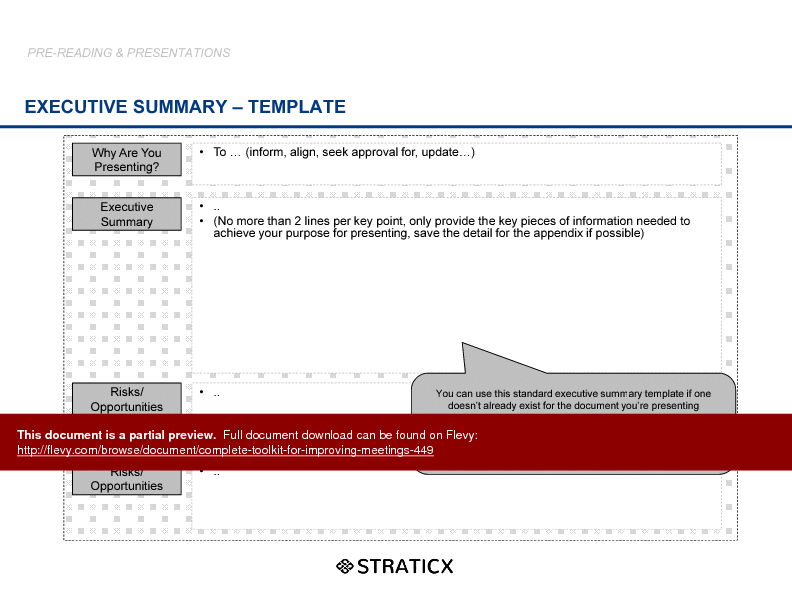
The toolkit includes a Meeting Scorecard to identify efficiency and effectiveness issues, provide recommendations, and track performance. This scorecard helps in evaluating meeting outcomes and identifying areas for improvement. The inclusion of guidelines for pre-reading and presentation ensures that all participants are well-informed and prepared, leading to more meaningful and productive discussions.
Got a question about the product? Email us at support@flevy.com or ask the author directly by using the "Ask the Author a Question" form. If you cannot view the preview above this document description, go here to view the large preview instead.
MARCUS OVERVIEW
This synopsis was written by Marcus [?] based on the analysis of the full 30-slide presentation.
Executive Summary
The Complete Toolkit for Improving Meetings is designed to enhance meeting efficiency and effectiveness, embodying a McKinsey, Bain, or BCG-quality approach (consulting-grade; not affiliated). This toolkit equips corporate executives, integration leaders, and consultants with practical templates and guidelines to streamline meeting processes. Users will learn to establish clear objectives, manage agendas, and assign roles effectively, ultimately leading to better outcomes and reduced time spent in meetings.
Who This Is For and When to Use
• Corporate executives seeking to optimize meeting structures
• Integration leaders managing cross-functional teams
• Consultants facilitating client meetings and workshops
• Project managers coordinating team efforts and deliverables
Best-fit moments to use this deck:
• For larger, recurring meetings requiring structured agendas and clear objectives
• During departmental meetings to ensure alignment and accountability
• In ad hoc meetings where efficiency is paramount
Learning Objectives
• Define the purpose and expected outcomes of meetings
• Build effective Terms of Reference (TOR) and agendas
• Establish roles and responsibilities for meeting participants
• Implement behavioral guidelines to foster respectful communication
• Utilize action logs to track decisions and follow-ups
• Create meeting scorecards to evaluate efficiency and effectiveness
Primary Topics Covered
• Purpose, Use & Benefits - This toolkit aims to improve meeting efficiency and effectiveness through structured templates and guidelines based on feedback from various businesses.
• Meeting Efficiency & Effectiveness - Key elements for conducting efficient and effective meetings include sticking to the agenda, managing time, and ensuring preparation.
• Terms of Reference & Agendas - Establishing clear TOR and agendas is crucial for defining meeting objectives and expected outcomes.
• Roles & Responsibilities - Assigning specific roles such as Meeting Owner, Chairperson, Scribe, and Coach ensures accountability and clarity during meetings.
• Behavioural Guidelines - Guidelines promote respectful communication, punctuality, and focus on agenda items to enhance meeting culture.
• Action Logs - Action logs capture issues, actions, and resolutions, ensuring accountability for follow-up items.
Deliverables, Templates, and Tools
• Terms of Reference (TOR) template for defining meeting objectives
• Detailed agenda template for structuring meeting discussions
• Action log template for tracking decisions and responsibilities
• Meeting scorecard template for evaluating meeting performance
• Pre-reading guidelines to ensure participants are prepared
• Scheduling guidelines to optimize meeting times and attendance
Slide Highlights
• Overview of meeting efficiency and effectiveness, emphasizing the importance of preparation and execution
• Best practices for creating effective agendas and TORs
• Guidelines for assigning roles and responsibilities to enhance accountability
• Behavioral guidelines that foster a positive meeting environment
• Length of meeting times recommendations to avoid back-to-back scheduling issues
Potential Workshop Agenda
Meeting Preparation Session (60 minutes)
• Discuss the purpose and expected outcomes of upcoming meetings
• Review and assign roles for the next meeting
• Draft and finalize the agenda with input from participants
Meeting Evaluation Session (30 minutes)
• Analyze the effectiveness of previous meetings using scorecards
• Identify areas for improvement based on feedback
• Set action items for enhancing future meeting performance
Customization Guidance
• Tailor the TOR and agenda templates to reflect specific meeting objectives and participant roles
• Adjust the length of meetings based on team preferences and scheduling constraints
• Incorporate organizational terminology and branding into templates for consistency
Secondary Topics Covered
• Strategies for managing meeting interruptions and conflicts
• Techniques for ensuring all voices are heard during discussions
• Methods for aligning team objectives before and after meetings
• Tools for tracking overdue action items and ensuring accountability
• Best practices for virtual meetings and remote participation
Topic FAQ
What should be included in a Terms of Reference (TOR) to make recurring meetings effective?
A TOR should define the meeting’s purpose, expected outcomes, required attendees, and any necessary pre-reading materials. It helps set expectations and scope before meetings begin and is a core deliverable in meeting preparation, often captured using a Terms of Reference (TOR) template.
How do action logs help improve accountability after meetings?
Action logs capture issues, assigned actions, due dates, and resolutions so responsibility is clear and follow-up can be tracked. Using a single owner per action item reduces ambiguity; Flevy’s Complete Toolkit for Improving Meetings includes an action log template to record these details.
Which behavioral guidelines typically improve meeting culture and participation?
Recommended guidelines include respecting contributions, starting and finishing on time, keeping discussion focused on agenda items, encouraging active listening, and ensuring all voices are heard. These behaviors are documented as part of meeting norms and summarized in the toolkit’s behavioural guidelines.
What features should I prioritize when buying a meetings improvement toolkit for a mid-sized company?
Prioritize ready-to-use TOR and agenda templates, an action log or meeting log, a meeting scorecard for evaluation, pre-reading and scheduling guidelines, and editable PPT/XLS formats for customization. Flevy’s Complete Toolkit for Improving Meetings provides a PowerPoint plus 3 Excel templates for these needs.
How can I measure the value of meeting templates for senior leadership teams?
Measure changes in time spent in meetings, rate of completed action items, and improvements on meeting scorecard metrics comparing before/after usage. Regular scorecard reviews can quantify efficiency and effectiveness, using a Meeting Scorecard to capture those metrics.
What practical scheduling rules reduce back-to-back meetings and improve attention?
Apply scheduling guidelines that stagger meetings, avoid consecutive blocks, and plan to finish meetings at least 5 minutes early to allow transitions. Adjust meeting lengths based on content and participant availability and follow documented scheduling guidelines.
As a consultant, how should I prepare clients to get the most from a workshop?
Define the workshop TOR and agenda, assign roles (owner, chair, scribe), and distribute pre-reading materials at least 2 days before the session so participants arrive prepared. These steps are reflected in the toolkit’s pre-reading and agenda templates and the recommendation to send pre-reading at least 2 days in advance.
Which templates are essential for tracking meeting performance and who typically uses them?
Essential templates are a meeting scorecard to evaluate outcomes, an action log or meeting log to track follow-ups, and an agenda/TOR template to set objectives. These are typically used by Meeting Owners, Meeting Coaches, project managers, and executives and are provided as scorecard, action log, and agenda templates.
Document FAQ
These are questions addressed within this presentation.
What is the purpose of the Meetings Toolkit?
The toolkit aims to enhance meeting efficiency and effectiveness by providing structured templates and guidelines based on feedback from various organizations.
How can I ensure meetings are effective?
Focus on clear objectives, stick to the agenda, prepare in advance, and assign specific roles to participants to ensure accountability.
What should be included in a Terms of Reference (TOR)?
A TOR should define the meeting's purpose, expected outcomes, required attendees, and any necessary pre-reading materials.
How do I manage time effectively during meetings?
Allocate specific time slots for each agenda item and ensure that meetings are scheduled to finish at least 5 minutes early to allow for transitions.
What is the role of the Meeting Coach?
The Meeting Coach is responsible for evaluating meeting performance using scorecards and providing feedback for improvement.
How can I track action items from meetings?
Use an action log template to capture issues, actions, and resolutions, assigning a single person responsible for each action item.
What are the behavioral guidelines for meetings?
Guidelines include respecting each other's contributions, starting and finishing on time, and keeping discussions focused on the agenda.
How should I prepare for a meeting?
Send out pre-reading materials at least 2 days in advance and ensure all participants understand the agenda and expected outcomes.
Glossary
• Terms of Reference (TOR) - A document outlining the purpose, objectives, and structure of a meeting.
• Action Log - A record of decisions made, actions assigned, and their respective due dates.
• Meeting Scorecard - A tool for evaluating the efficiency and effectiveness of meetings.
• Behavioural Guidelines - A set of rules promoting respectful and productive communication during meetings.
• Pre-Reading - Materials distributed before a meeting to ensure participants are prepared for discussions.
• Agenda - A structured outline of topics to be discussed during a meeting.
• Meeting Owner - The individual responsible for organizing and leading a meeting.
• Chairperson - The person who facilitates the meeting and ensures adherence to the agenda.
• Scribe - The individual responsible for recording minutes and action items during a meeting.
• Coach - A designated participant who evaluates meeting performance and provides feedback.
• Meeting Efficiency - The effectiveness of a meeting in achieving its objectives within the allocated time.
• Meeting Effectiveness - The degree to which a meeting meets its intended goals and outcomes.
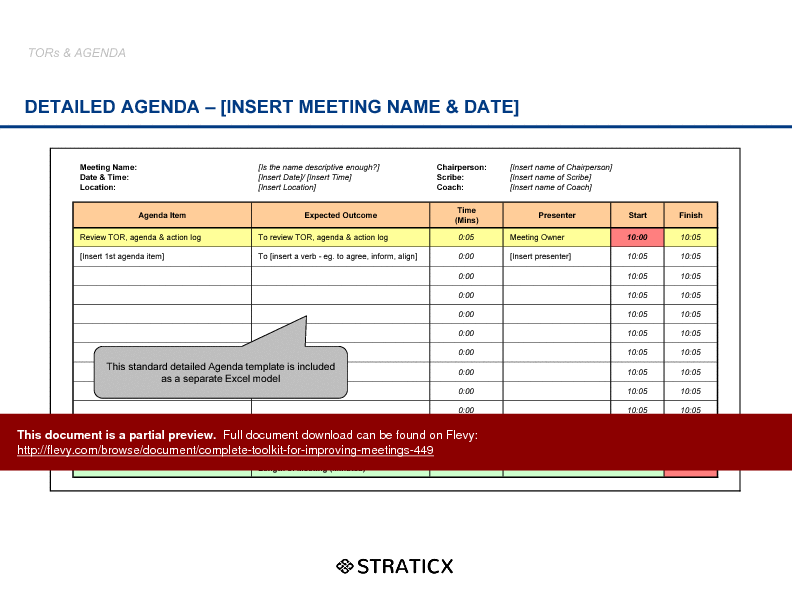
This PPT slide presents a structured agenda template for effective meeting management, including sections for meeting name, date, time, location, and roles such as chairperson, scribe, and coach, which enhance accountability and facilitation. Agenda items include expected outcomes, time allocations, presenters, and start and finish times. The first item focuses on reviewing the Terms of Reference (TOR) and action log to align participants on prior discussions. A standard detailed agenda template is available as a separate Excel model to facilitate preparation and follow-up, aiding in tracking discussions and decisions. The slide specifies the total meeting length and finish time, crucial for managing participants' time effectively.
This PPT slide outlines a 12-step process for completing an Action Log to enhance meeting efficiency. Initial steps include naming the meeting, listing attendees, and inserting the meeting date and next scheduled meeting for chronological context. Users document issues raised, describe corresponding actions, and identify responsible individuals to ensure accountability. The resolution section summarizes actions to resolve issues and highlights due dates for each action, establishing timelines. Finally, users update the status of each action with specific options to indicate progress or completion. This structured approach improves accountability, communication, and overall meeting productivity.
This PPT slide outlines best practices for effective meetings using "The 40-20-40 Rule," which allocates focus to preparation (40%), execution (20%), and follow-up (40%). Preparation includes distributing the Terms of Reference (TOR) and agenda, assigning roles (Owner, Chairperson, Scribe, Coach), and ensuring the right attendees are present. Completing action items and sharing pre-reading materials, including executive summaries, is vital for informed participation. Execution emphasizes shared responsibility, clear role definitions, reviewing the TOR and agenda, and adhering to Ground Rules, with a Coach monitoring performance. Follow-up involves promptly updating the electronic action log, ensuring participants own their action items, and reviewing the latest action log at the next meeting to enhance accountability and actionable outcomes.
This PPT slide outlines essential roles for effective meeting management: Meeting Owner, Chairperson, Scribe, and Coach. The Meeting Owner leads the meeting, presents the Terms of Reference (TOR), and ensures participants understand their responsibilities and behavioral guidelines. The Chairperson facilitates the meeting, manages the agenda, tracks time, and assigns the Scribe and Coach, while keeping discussions focused. The Scribe records actions, decisions, and updates the Action Log, distributing it post-meeting to align participants on outcomes. The Coach evaluates meeting effectiveness using a Meeting Scorecard, tracking performance and providing feedback for continuous improvement. Clearly delineating these roles promotes accountability and structured communication, enhancing meeting efficiency and effectiveness.
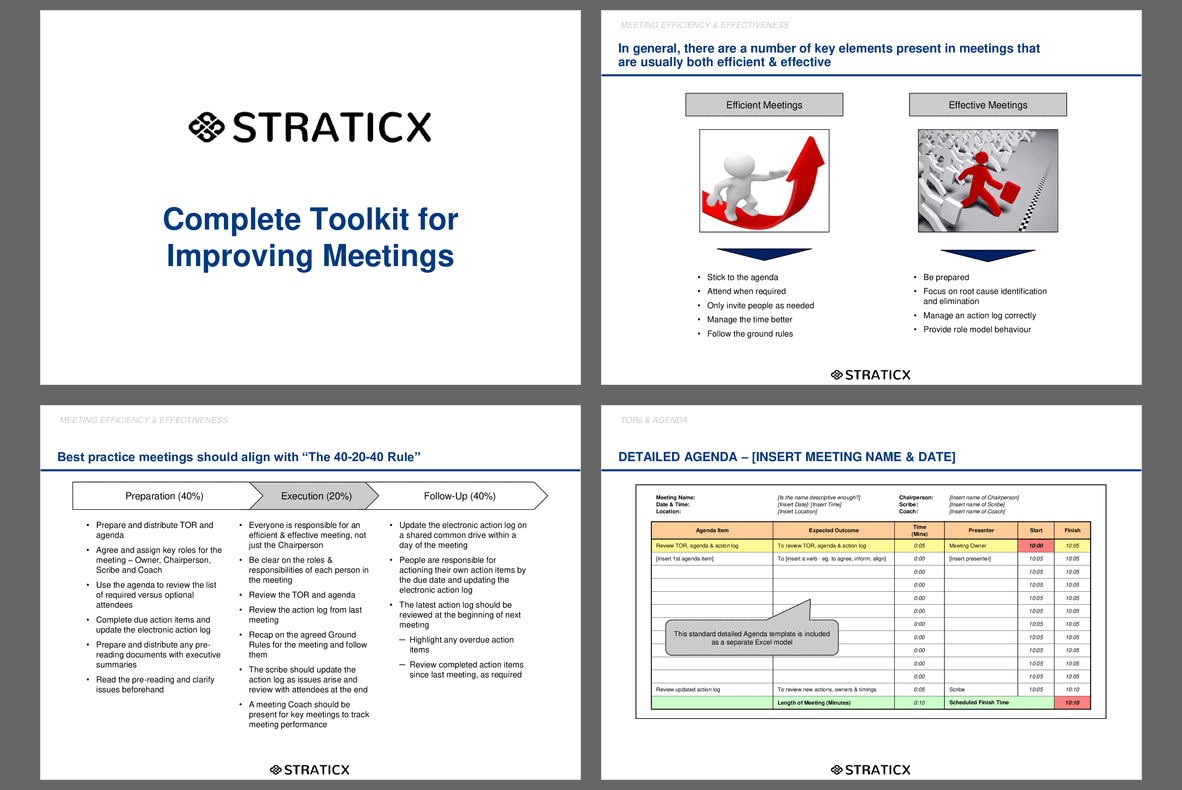
This PPT slide compares 2 types of meetings: efficient and effective. Efficient meetings focus on essential practices such as sticking to the agenda, selective attendance, inviting only necessary participants, managing time effectively, and adhering to ground rules for orderly discussions. Effective meetings emphasize preparation, root cause identification and elimination, proper management of an action log for accountability, and leaders modeling expected behaviors to foster engagement. Implementing these practices enhances meeting efficiency and effectiveness, leading to improved decision-making and outcomes.
Source: Best Practices in Meeting Facilitation, Feedback PowerPoint Slides: Complete Toolkit for Improving Meetings PowerPoint (PPTX) Presentation Slide Deck, STRATICX
Straticx is redefining strategy and innovation consulting through online access to high value consulting partners, who work with senior executives and boards of corporations to frame key business issues, develop hypothesis, apply structured problem solving and commercial acumen to drive development of solutions. The partners all have 10+ consulting experience covering a broad range of sectors and
... [read more] have delivered a range of engagements such as corporate and business unit strategy, business transformation, business case development, M&A, and operational improvement.
Since 2012, we have provided business templates to over 10,000 businesses and organizations of all sizes, from startups and small businesses to the Fortune 100, in over 130 countries.
Read Customer Testimonials
"If you are looking for great resources to save time with your business presentations, Flevy is truly a value-added resource. Flevy has done all the work for you and we will continue to utilize Flevy as a source to extract up-to-date information and data for our virtual and onsite presentations!"
– Debbi Saffo, President at The NiKhar Group
"I have found Flevy to be an amazing resource and library of useful presentations for lean sigma, change management and so many other topics. This has reduced the time I need to spend on preparing for my performance consultation. The library is easily accessible and updates are regularly provided. A wealth of great information."
– Cynthia Howard RN, PhD, Executive Coach at Ei Leadership
"My FlevyPro subscription provides me with the most popular frameworks and decks in demand in today’s market. They not only augment my existing consulting and coaching offerings and delivery, but also keep me abreast of the latest trends, inspire new products and service offerings for my practice, and educate me
in a fraction of the time and money of other solutions. I strongly recommend FlevyPro to any consultant serious about success.
"
– Bill Branson, Founder at Strategic Business Architects
"One of the great discoveries that I have made for my business is the Flevy library of training materials.
As a Lean Transformation Expert, I am always making presentations to clients on a variety of topics: Training, Transformation, Total Productive Maintenance, Culture, Coaching, Tools, Leadership Behavior, etc. Flevy
It is well worth the money to purchase these presentations. Sure, I have the knowledge and information to make my point. It is another thing to create a presentation that captures what I want to say. Flevy has saved me countless hours of preparation time that is much better spent with implementation that will actually save money for my clients.
"
– Ed Kemmerling, Senior Lean Transformation Expert at PMG
"[Flevy] produces some great work that has been/continues to be of immense help not only to myself, but as I seek to provide professional services to my clients, it gives me a large "tool box" of resources that are critical to provide them with the quality of service and outcomes they are expecting."
– Royston Knowles, Executive with 50+ Years of Board Level Experience
"Last Sunday morning, I was diligently working on an important presentation for a client and found myself in need of additional content and suitable templates for various types of graphics. Flevy.com proved to be a treasure trove for both content and design at a reasonable price, considering the time I
saved. I encountered a download issue during the ordering process. However, a quick email to Flevy's support team, even on a Sunday (!!!), resulted in assistance within less than an hour, allowing me to download the content I needed. Fantastic job, Flevy! I give 5 stars for both content/price and customer service. Thank you!
"
– M. E., Chief Commercial Officer, International Logistics Service Provider
"Flevy.com has proven to be an invaluable resource library to our Independent Management Consultancy, supporting and enabling us to better serve our enterprise clients.
The value derived from our [FlevyPro] subscription in terms of the business it has helped to gain far exceeds the investment made, making a subscription a no-brainer for any growing consultancy – or in-house strategy team."
– Dean Carlton, Chief Transformation Officer, Global Village Transformations Pty Ltd.
"The wide selection of frameworks is very useful to me as an independent consultant. In fact, it rivals what I had at my disposal at Big 4 Consulting firms in terms of efficacy and organization."
– Julia T., Consulting Firm Owner (Former Manager at Deloitte and Capgemini)
Save with Bundles
This document is available as part of the following discounted bundle(s):
Download our free compilation of 50+ slides and templates on Organizational Design, Change Management, and Corporate Culture. Methodologies include ADKAR, Burke-Litwin Change Model, McKinsey 7-S, Competing Values Framework, etc.










