
Stages of Team Development   24-slide PPT PowerPoint presentation slide deck (PPT)
$29.00

Stages of Team Development (24-slide PPT PowerPoint presentation slide deck (PPT)) Preview Image
Log in to unlock full preview.
Stages of Team Development (24-slide PPT PowerPoint presentation slide deck (PPT)) Preview Image
Arrow   Click main image to view in full screen.

Stages of Team Development (PowerPoint PPT Slide Deck)

PowerPoint (PPT) 24 Slides FlevyPro Document

Top 1,000 Best Practice $29.00
FlevyPro price: FREE (included in subscription)
This framework is developed by a team of former McKinsey and Big 4 consultants. The presentation follows the headline-body-bumper slide format used by global consulting firms.
Add to Cart


Immediate download
Free lifetime updates

TEAM MANAGEMENT PPT DESCRIPTION

Editor Summary The Stages of Team Development is a 24-slide PowerPoint presentation by LearnPPT Consulting that explains Tuckman’s Forming–Storming–Norming–Performing model and the added Adjourning stage, plus alternative TPR simplification. Read more

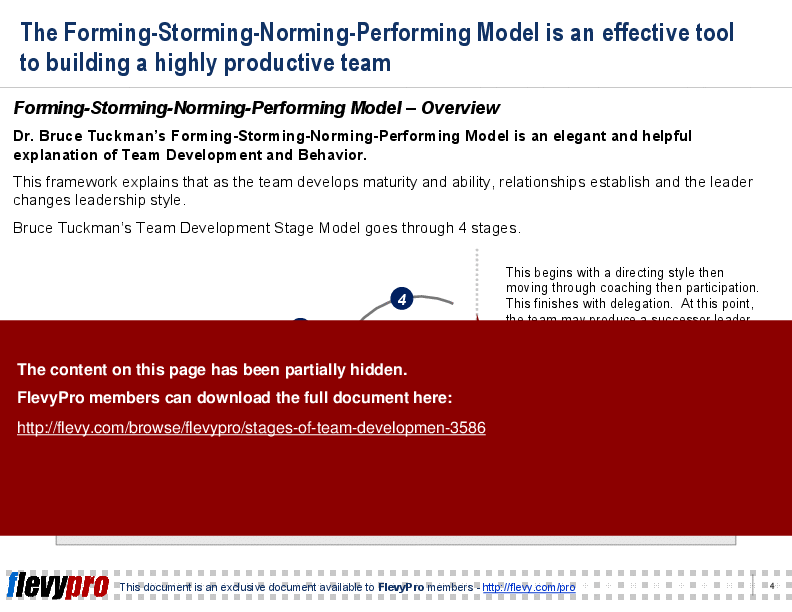
Forming a team takes time. Companies cannot expect a new team to perform well when it first comes together. Members often go through stages as they change from being a collection of strangers to a united group with common goals.

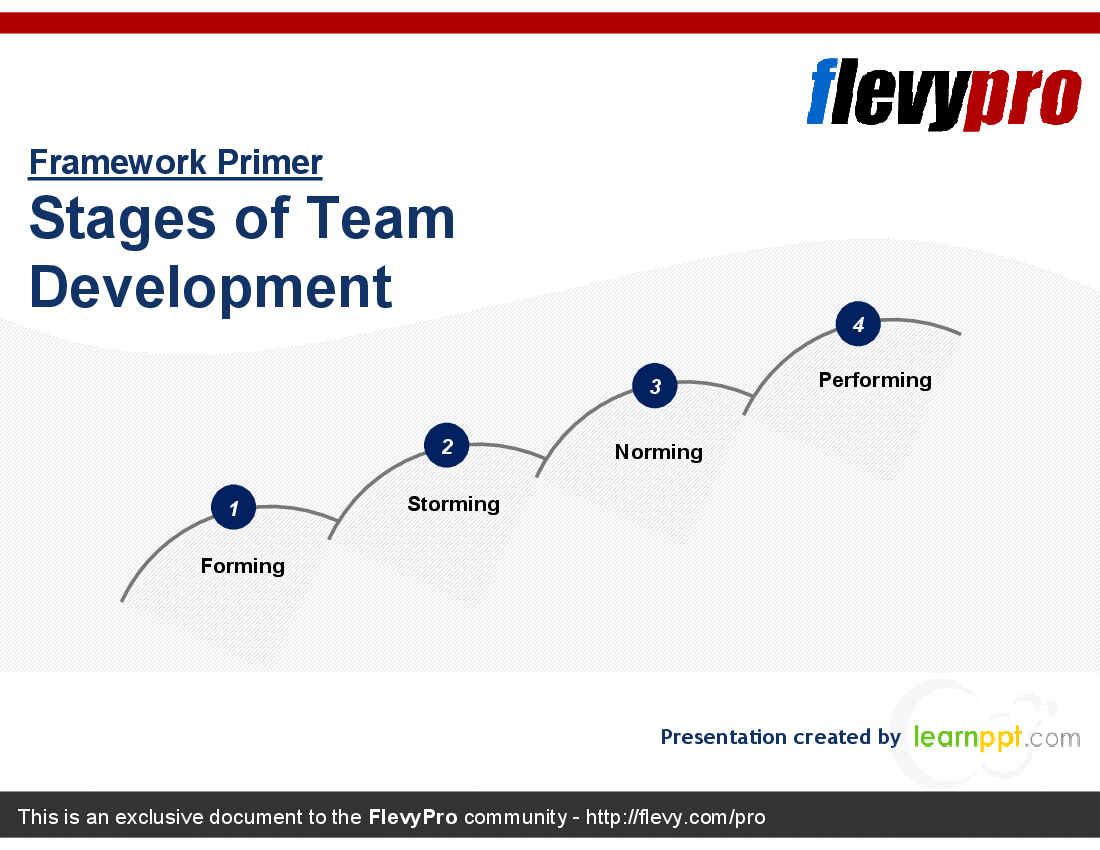
Team formation usually follows recognizable stages, known as "Forming-Storming-Norming-Performing." Dr. Bruck Tuckman, who created the memorable phrase, later added a 5th stage, "Adjourning (or Mourning)."

Using the Tuckman's Model will help teams reach their Performing stage as quickly as possible. In this stage, teams are now achieving their team's goals through hard work without friction.

The Stages of Team Development is the focus of this Presentation. This provides the tools in building teams through strategic stages. Specific topics discussed include:

•  The Forming-Storming-Norming-Performing Model
•  Adjourning and Mourning as an Adjunct
•  Additional Stages in Team Development

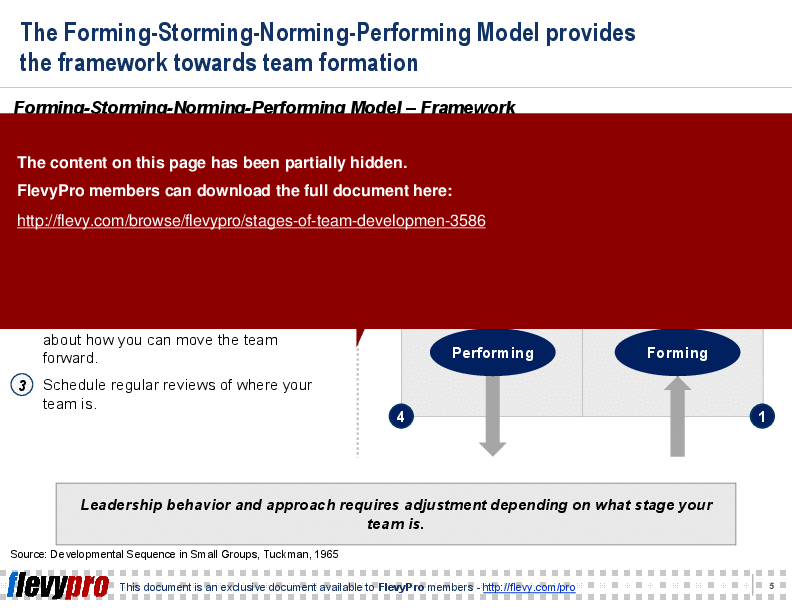
The Forming-Storming-Norming-Performing Model allows teams to grow, face up to challenges, tackle problems, find solutions, plan work, and deliver results.

This deck also includes slide templates for you to use in your own business presentations.

This presentation delves into the intricacies of each stage, providing actionable insights and practical activities for leaders to guide their teams effectively. The Forming stage emphasizes the leader's dominant role in setting the tone and direction, while the Storming stage addresses common pitfalls and strategies to overcome conflicts and power struggles. The Norming stage highlights the importance of fostering mutual respect and shared leadership within the team.

The Performing stage showcases how teams can achieve high levels of autonomy and strategic awareness. The deck also covers additional stages like Adjourning and Mourning, which focus on the emotional aspects of team dissolution, and the TPR Model, which simplifies the traditional stages into three key phases. This comprehensive guide is essential for any executive looking to optimize team performance and navigate the complexities of team dynamics.

Got a question about this document? Email us at flevypro@flevy.com.

MARCUS OVERVIEW

This synopsis was written by Marcus [?] based on the analysis of the full 24-slide presentation.


Executive Summary
The "Stages of Team Development" presentation provides a comprehensive overview of the Forming-Storming-Norming-Performing model, developed by Dr. Bruce Tuckman. This framework is essential for understanding team dynamics and enhancing team performance. It outlines the sequential stages teams undergo as they evolve from a collection of individuals into a cohesive unit capable of achieving shared goals. The presentation also introduces the Adjourning stage, emphasizing the importance of recognizing team achievements and facilitating transitions. By leveraging this model, leaders can effectively guide their teams through challenges and foster a productive environment.

Who This Is For and When to Use
•  Team leaders and managers aiming to enhance team dynamics and performance
•  HR professionals involved in team development and training
•  Consultants focusing on organizational behavior and team effectiveness
•  Project managers overseeing cross-functional teams

Best-fit moments to use this deck:
•  During team formation to set expectations and objectives
•  In workshops aimed at resolving team conflicts or enhancing collaboration
•  When assessing team performance and planning for future development

Learning Objectives
•  Define the stages of team development and their significance
•  Identify the characteristics and challenges of each stage
•  Develop strategies to facilitate team progression through each stage
•  Recognize the importance of the Adjourning stage in team dynamics
•  Apply the Tuckman model to real-world team scenarios
•  Enhance leadership skills to support team development

Table of Contents
•  Overview (page 3)
•  Stages of Team Development (page 4)
•  Additional Stages (page 12)
•  Templates (page 17)

Primary Topics Covered
•  Forming Stage - This initial stage involves high dependence on the leader, unclear roles, and the establishment of team objectives.
•  Storming Stage - Characterized by conflict and competition among team members as they establish their positions and roles.
•  Norming Stage - Team members begin to resolve differences, leading to clearer roles and stronger commitment to team goals.
•  Performing Stage - The team operates autonomously, achieving goals with minimal friction and high strategic awareness.
•  Adjourning Stage - Focuses on the dissolution of the team after achieving its objectives, emphasizing the need for reflection and celebration of accomplishments.
•  Norming and Re-norming - An additional stage highlighting the gradual improvement of team performance post-Forming.

Deliverables, Templates, and Tools
•  Team development framework template for visualizing the stages
•  Action plan template for addressing challenges in each stage
•  Assessment tools for evaluating team dynamics and performance
•  Communication guidelines for facilitating discussions during team transitions
•  Reflection and feedback templates for the Adjourning stage
•  Psychometric indicators to understand team member strengths and work styles

Slide Highlights
•  Overview of the Forming-Storming-Norming-Performing model
•  Detailed breakdown of each stage with features and activities
•  Visual representations of the team development process
•  Templates for practical application in team settings

Potential Workshop Agenda
Introduction to Team Development (30 minutes)
•  Overview of Tuckman's model and its relevance
•  Discussion on the importance of understanding team dynamics

Stage Analysis and Application (60 minutes)
•  Breakout sessions to analyze team experiences in each stage
•  Develop strategies to address challenges in the Storming stage

Reflection and Next Steps (30 minutes)
•  Share insights from breakout sessions
•  Plan actionable steps for team development moving forward

Customization Guidance
•  Adapt the framework to reflect specific team dynamics and organizational context
•  Incorporate team-specific goals and objectives into the templates
•  Modify language and examples to resonate with your team's culture and experiences
•  Schedule regular reviews to assess team progress through the stages

Secondary Topics Covered
•  Leadership styles and their impact on team development
•  The role of conflict resolution in the Storming stage
•  Strategies for fostering collaboration and trust among team members
•  The significance of celebrating achievements during the Adjourning stage

Topic FAQ

What are the stages of team development in Tuckman’s model?

Tuckman’s model describes teams progressing through Forming (dependence on leader), Storming (conflict and role negotiation), Norming (consensus and clearer roles), Performing (autonomous, goal-focused work), and Adjourning (dissolution and reflection), totaling 5 stages.

What challenges typically appear in the Storming stage and how should leaders respond?

The Storming stage often features conflict, competition for roles, and power struggles; leaders are advised to build trust, establish clear processes, and resolve conflicts promptly using structured interventions and facilitation techniques focused on role clarity and communication.

How can the Adjourning stage be managed effectively?

Manage Adjourning by creating opportunities for reflection, recognizing achievements, facilitating closure conversations, and capturing lessons learned; this can be supported with reflection and feedback templates and a planned wrap-up agenda to mark the transition.

How are psychometric indicators used to assess team dynamics?

Psychometric indicators are used to reveal individual work styles, strengths, and interaction preferences so teams can align roles and communication; these indicators are intended to complement assessment tools and inform targeted interventions such as role adjustments and development plans.

What should I look for when buying a team development slide deck?

Prioritize decks that explain the stage model clearly, offer stage-specific activities, include ready-to-use templates (action plans, assessments, feedback), provide a sample workshop agenda, and give customization guidance—such as a packaged set with templates and assessment tools across 24 slides.

Are paid team development templates worth the investment compared to free resources?

Paid templates centralize stage descriptions, facilitation steps, and ready-to-run artifacts—like action plan templates, communication guidelines, and reflection forms—reducing preparation time and ensuring consistent workshop structure; examples include action plan and feedback templates.

I need to resolve conflict in a cross-functional project team — which stage should I focus on and what activities help?

Focus on the Storming stage: use structured conflict-resolution exercises, role clarification, trust-building activities, and facilitated breakout discussions; materials such as Storming-stage guidance and recommended workshop activities can be used to design the session.

How can I use the Tuckman model to speed a new team's path to Performing?

Accelerate progression by setting clear objectives and leader direction in Forming, addressing conflicts promptly in Storming, institutionalizing norms through collaborative decision-making in Norming, and measuring outcomes with assessment tools and action plans to reach Performing.

Document FAQ
These are questions addressed within this presentation.

What is the Forming-Storming-Norming-Performing model?
The model describes the stages teams go through as they develop, from initial formation to high performance.

Why is the Adjourning stage important?
It allows teams to reflect on their achievements and facilitates a smooth transition after project completion.

How can leaders support teams in the Storming stage?
Leaders should focus on building trust, establishing clear processes, and resolving conflicts swiftly.

What activities are recommended during the Norming stage?
Team-building events and collaborative decision-making processes are effective during this stage.

How can the Tuckman model be applied in real-world scenarios?
It can guide leaders in assessing team dynamics and implementing strategies to enhance performance.

What tools can help evaluate team performance?
Psychometric assessments and feedback templates can provide insights into team dynamics and individual contributions.

How can teams ensure they progress through each stage?
Regular reviews and open communication about challenges and successes are crucial for progression.

What are common pitfalls in the Storming stage?
Power struggles and unresolved conflicts can hinder team progress if not addressed promptly.

How does the Norming stage contribute to team success?
It fosters commitment and unity, enabling teams to work collaboratively towards shared goals.

Glossary
•  Forming - The initial stage of team development characterized by dependence on the leader.
•  Storming - The stage where conflict arises as team members establish their roles.
•  Norming - The stage where team members resolve differences and build consensus.
•  Performing - The stage where the team operates autonomously and achieves goals effectively.
•  Adjourning - The final stage where the team disbands after completing its objectives.
•  Re-norming - A phase of gradual performance improvement following the initial Norming stage.
•  Psychometric Indicators - Tools used to assess individual work styles and strengths within a team context.
•  Team Dynamics - The behavioral relationships and interactions among team members.
•  Leadership Styles - Different approaches leaders use to guide and support their teams.
•  Conflict Resolution - Strategies employed to address and resolve disputes within a team.
•  Team Building - Activities designed to enhance collaboration and trust among team members.
•  Feedback Templates - Tools for gathering reflections and insights from team members post-project.

TEAM MANAGEMENT PPT SLIDES

Leadership Dynamics in Team Formation Stage

Understanding Team Dynamics: TPR Model Insights

Understanding the Norming Stage in Team Development

Navigating Challenges in the Storming Stage

Source: Best Practices in Leadership, Team Building PowerPoint Slides: Stages of Team Development PowerPoint (PPT) Presentation Slide Deck, LearnPPT Consulting


$29.00
FlevyPro price: FREE (included in subscription)
This framework is developed by a team of former McKinsey and Big 4 consultants. The presentation follows the headline-body-bumper slide format used by global consulting firms.
Add to Cart
  

Did you need more documents?

Consider a FlevyPro subscription from $39/month. View plans here.

For $10.00 more, you can download this document plus 2 more FlevyPro documents. That's just $13 each.

ABOUT FLEVYPRO

This document is part of the FlevyPro Library, a curated knowledge base of documents for our FlevyPro subscribers.

FlevyPro is a subscription service for on-demand business frameworks and analysis tools. FlevyPro subscribers receive access to an exclusive library of curated business documents—business framework primers, presentation templates, Lean Six Sigma tools, and more—among other exclusive benefits.

Click here to learn more about FlevyPro and its benefits.

Did you know?
The average daily rate of a McKinsey consultant is $6,625 (not including expenses). The average price of a Flevy document is $65.


Trusted by over 10,000+ Client Organizations
Since 2012, we have provided business templates to over 10,000 businesses and organizations of all sizes, from startups and small businesses to the Fortune 100, in over 130 countries.
AT&T GE Cisco Intel IBM Coke Dell Toyota HP Nike Samsung Microsoft Astrazeneca JP Morgan KPMG Walgreens Walmart 3M Kaiser Oracle SAP Google E&Y Volvo Bosch Merck Fedex Shell Amgen Eli Lilly Roche AIG Abbott Amazon PwC T-Mobile Broadcom Bayer Pearson Titleist ConEd Pfizer NTT Data Schwab


Read Customer Testimonials

 
"As a consultant requiring up to date and professional material that will be of value and use to my clients, I find Flevy a very reliable resource.

The variety and quality of material available through Flevy offers a very useful and commanding source for information. Using Flevy saves me time, enhances my expertise and ends up being a good decision."

– Dennis Gershowitz, Principal at DG Associates
 
"As a small business owner, the resource material available from FlevyPro has proven to be invaluable. The ability to search for material on demand based our project events and client requirements was great for me and proved very beneficial to my clients. Importantly, being able to easily edit and tailor "

– Michael Duff, Managing Director at Change Strategy (UK)
 
"If you are looking for great resources to save time with your business presentations, Flevy is truly a value-added resource. Flevy has done all the work for you and we will continue to utilize Flevy as a source to extract up-to-date information and data for our virtual and onsite presentations!"

– Debbi Saffo, President at The NiKhar Group
 
"One of the great discoveries that I have made for my business is the Flevy library of training materials.

As a Lean Transformation Expert, I am always making presentations to clients on a variety of topics: Training, Transformation, Total Productive Maintenance, Culture, Coaching, Tools, Leadership Behavior, etc. Flevy "

– Ed Kemmerling, Senior Lean Transformation Expert at PMG
 
"I have used FlevyPro for several business applications. It is a great complement to working with expensive consultants. The quality and effectiveness of the tools are of the highest standards."

– Moritz Bernhoerster, Global Sourcing Director at Fortune 500
 
"FlevyPro provides business frameworks from many of the global giants in management consulting that allow you to provide best in class solutions for your clients."

– David Harris, Managing Director at Futures Strategy
 
"FlevyPro has been a brilliant resource for me, as an independent growth consultant, to access a vast knowledge bank of presentations to support my work with clients. In terms of RoI, the value I received from the very first presentation I downloaded paid for my subscription many times over! The "

– Roderick Cameron, Founding Partner at SGFE Ltd
 
"Last Sunday morning, I was diligently working on an important presentation for a client and found myself in need of additional content and suitable templates for various types of graphics. Flevy.com proved to be a treasure trove for both content and design at a reasonable price, considering the time I "

– M. E., Chief Commercial Officer, International Logistics Service Provider


Customers Also Bought These Documents


Customers Also Like These Documents

Explore Templates on Related Management Topics


Your Recently Viewed Documents
Download our FREE Organization, Change, & Culture, Templates

Download our free compilation of 50+ slides and templates on Organizational Design, Change Management, and Corporate Culture. Methodologies include ADKAR, Burke-Litwin Change Model, McKinsey 7-S, Competing Values Framework, etc.