
Today's customers are better informed, better connected, and more demanding that ever before. CEOs are now concerned about Customer Loyalty and they recognize that mastery of the customer agenda is essential. In fact, global leaders of successful organizations recognize that creating a customer-centric, digitally-transformed business is a top priority. In fact, Customer-centricity ceases to be a differentiator. It has become necessary for survival.
In this age of digital disruption, how can organizations engage customers, increase Customer Loyalty, and achieve profitable growth?
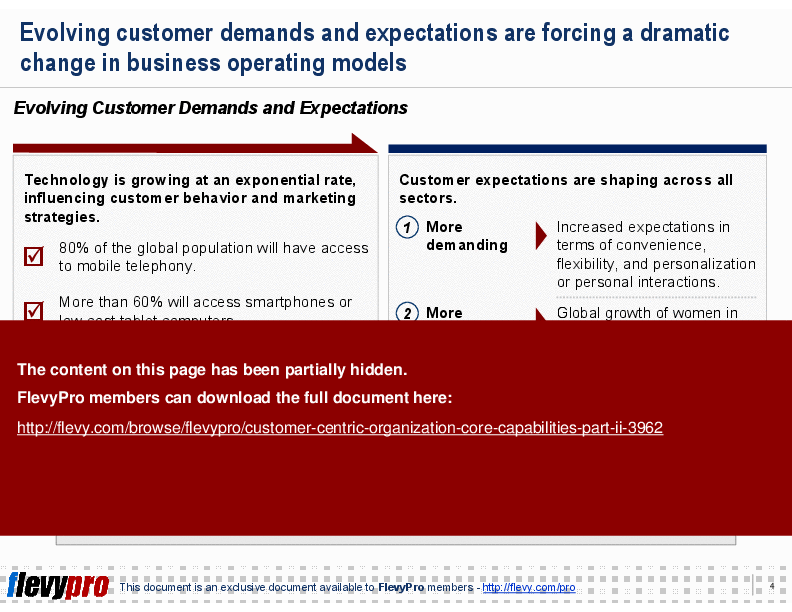
Almost every market is experiencing fundamental change. Consumer expectations have shifted and digital technologies are making the biggest impact on businesses large and small since the start of the information age. Ultimately, businesses need to navigate the challenges of digital disruption and find new ways to create economic value and drive growth.
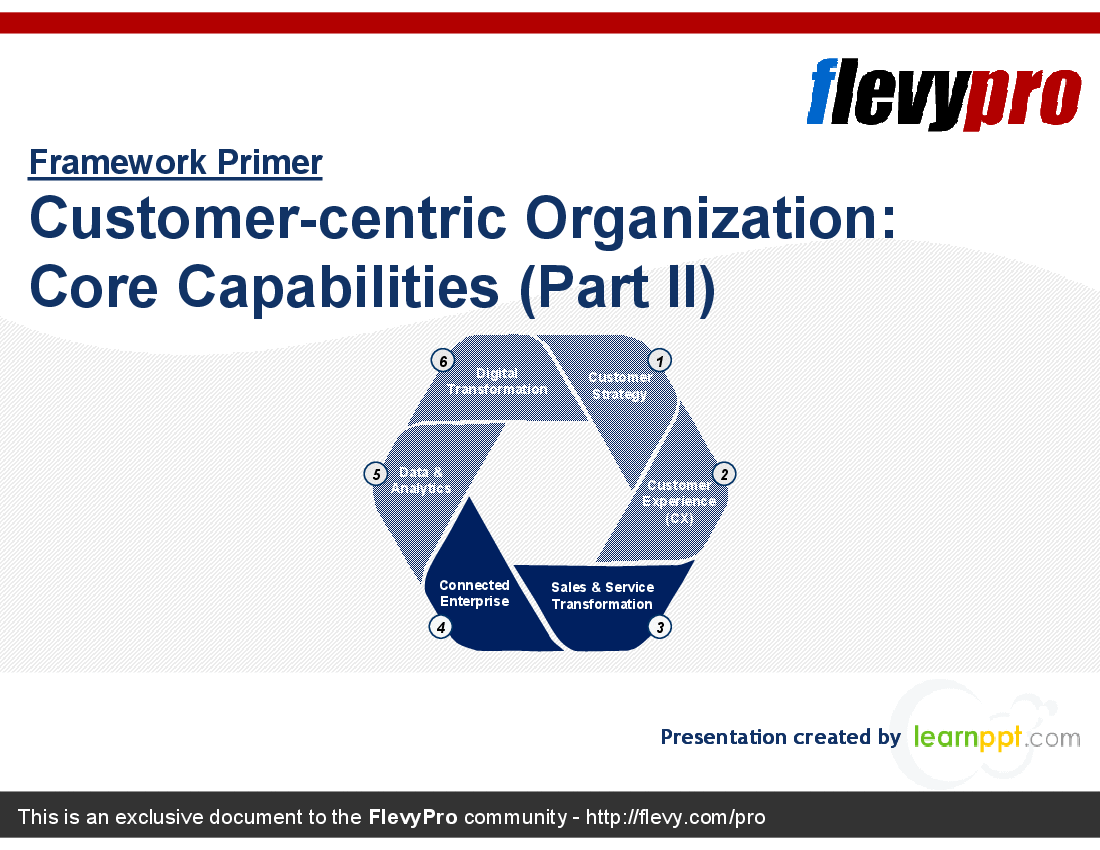
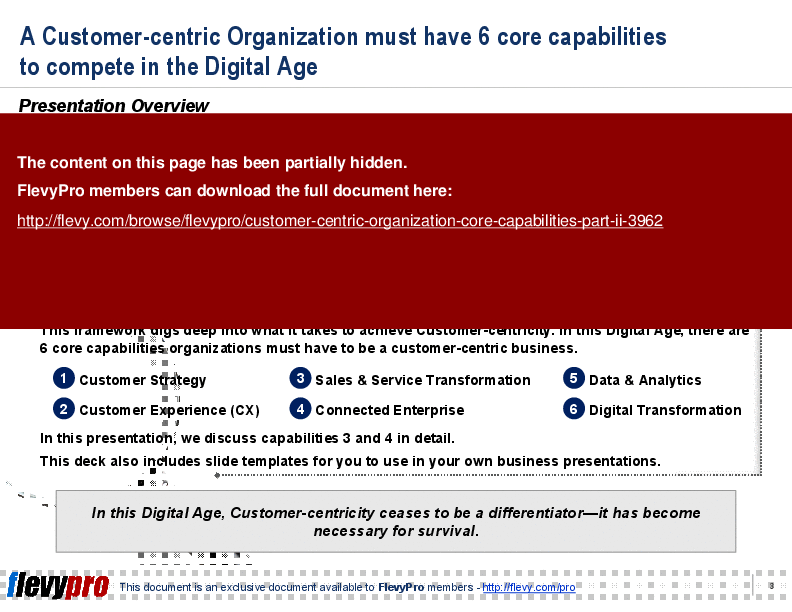
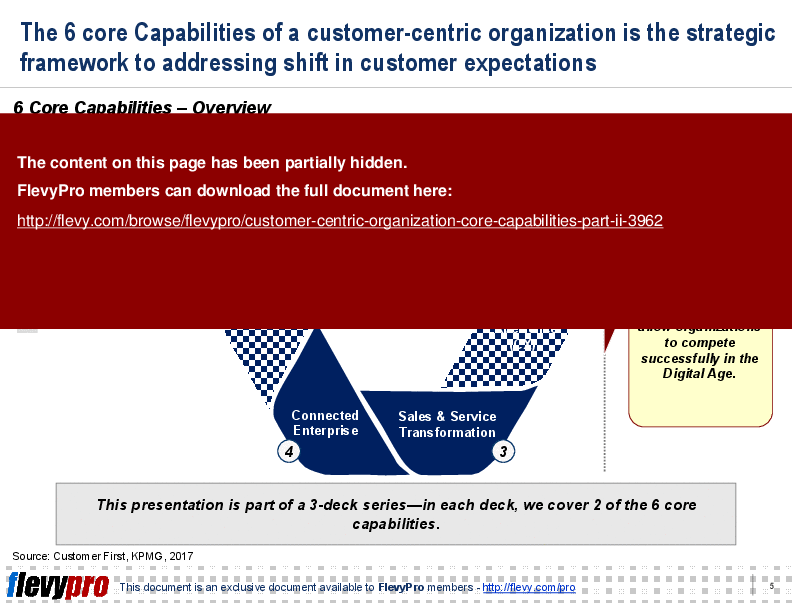
This framework digs deep into what it takes to achieve Customer-centricity. In this Digital Age, there are 6 core capabilities organizations must have to be a customer-centric business.
1. Customer Strategy
2. Customer Experience (CX)
3. Sales & Service Transformation
4. Connected Enterprise
5. Data & Analytics
6. Digital Transformation
In this presentation, we discuss capabilities 3 and 4 in detail.
This deck also includes slide templates for you to use in your own business presentations.
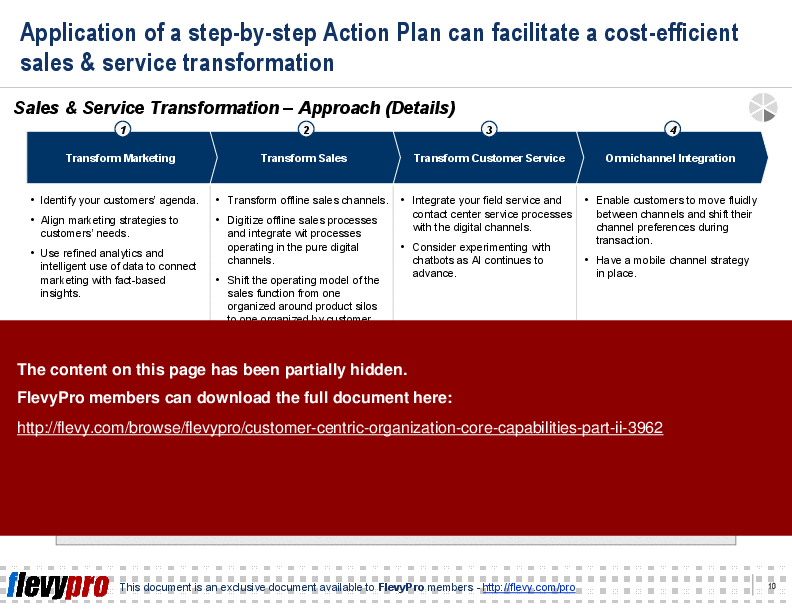
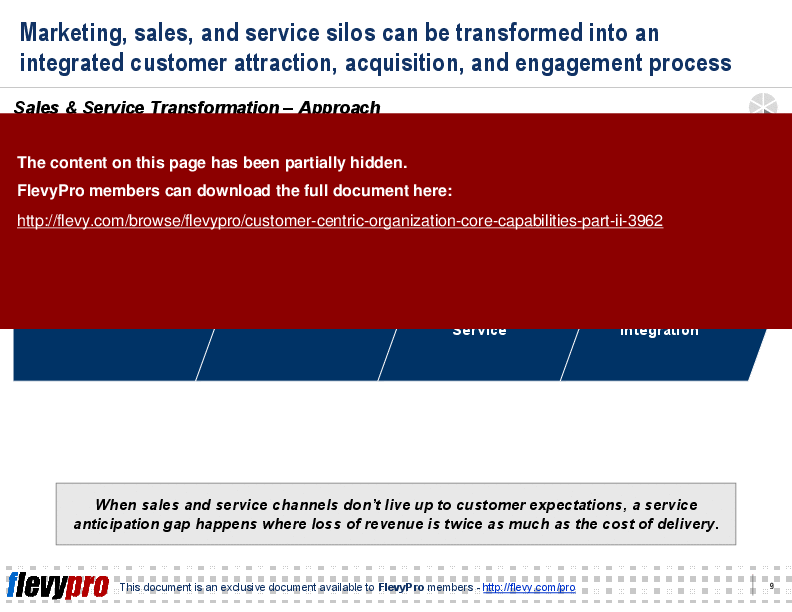
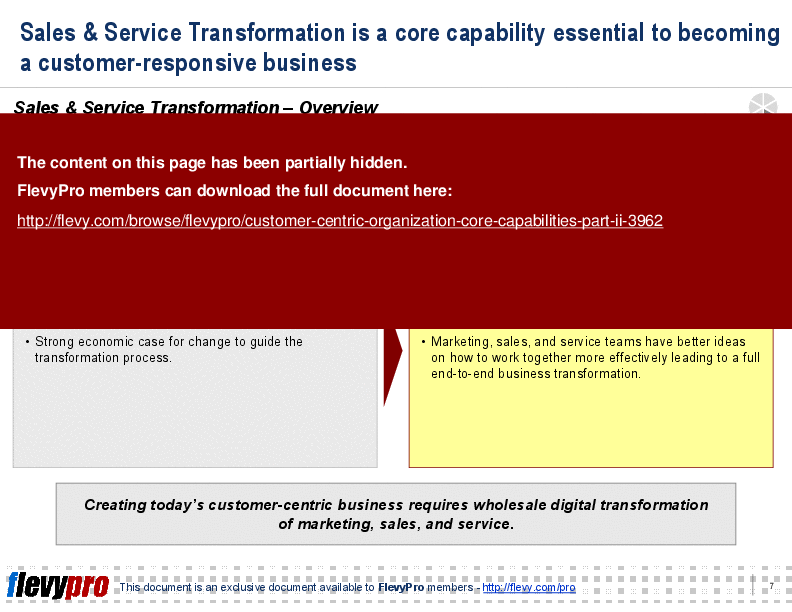
Sales & Service Transformation is critical for a customer-responsive business. This PPT delves into the intricacies of transforming marketing, sales, and service functions to align with customer expectations. It outlines the key challenges organizations face, such as improving sales effectiveness and integrating sales and service. The presentation also covers the evolution of service provision to Service 4.0, highlighting the opportunities for operational efficiency and customer satisfaction. The Connected Enterprise capability focuses on delivering differentiated customer experiences by leveraging advanced data analytics and seamless interactions across all touchpoints.
Got a question about this document? Email us at flevypro@flevy.com.
Executive Summary
The "Customer-centric Organization: Core Capabilities (Part II)" presentation provides a strategic framework essential for businesses aiming to thrive in the Digital Age. Developed by former McKinsey and Big 4 consultants, this deck focuses on 2 critical capabilities: Sales & Service Transformation and Connected Enterprise. It equips organizations with the insights needed to enhance customer engagement, loyalty, and overall experience through digital transformation. By leveraging this framework, executives can implement actionable strategies to drive profitable growth and navigate the complexities of evolving customer expectations.
Who This Is For and When to Use
• Corporate executives focused on customer strategy and digital transformation
• Sales and marketing leaders aiming to enhance customer engagement
• Service managers looking to improve service delivery and customer satisfaction
• Consultants assisting organizations in developing customer-centric strategies
Best-fit moments to use this deck:
• During strategic planning sessions for digital transformation initiatives
• When assessing current sales and service capabilities
• In workshops aimed at aligning teams around customer-centric goals
• For training sessions focused on enhancing customer experience strategies
Learning Objectives
• Define the core capabilities necessary for a customer-centric organization
• Build a comprehensive Sales & Service Transformation strategy
• Establish a Connected Enterprise framework to enhance customer interactions
• Identify key challenges in integrating sales and service functions
• Develop actionable plans to improve customer engagement and loyalty
• Leverage data analytics to inform customer strategy and decision-making
Table of Contents
• Overview (page 3)
• Capability 3: Sales & Service Transformation (page 4)
• Capability 4: Connected Enterprise (page 18)
• Templates (page 22)
Primary Topics Covered
• Sales & Service Transformation - A core capability that modernizes front office functions to enhance customer engagement and streamline operations.
• Connected Enterprise - An integrated approach that aligns back office operations with customer-facing interactions to deliver superior customer experiences.
• Digital Transformation - The process of leveraging technology to fundamentally change how businesses operate and deliver value to customers.
• Customer Experience (CX) - Strategies focused on enhancing the overall experience customers have with a brand across all touchpoints.
• Data & Analytics - Utilizing data-driven insights to inform customer strategies and improve decision-making processes.
• Customer Strategy - Developing a comprehensive plan that prioritizes customer needs and expectations in business operations.
Deliverables, Templates, and Tools
• Sales & Service Transformation framework template for strategic planning
• Connected Enterprise assessment tool for evaluating current capabilities
• Customer engagement strategy checklist for implementation
• Data analytics dashboard template for tracking customer insights
• Workshop agenda template for aligning teams on customer-centric initiatives
• Case study examples illustrating successful customer-centric transformations
Slide Highlights
• Overview of the 6 core capabilities essential for customer-centricity
• Detailed exploration of Sales & Service Transformation strategies and challenges
• Insights into the benefits of a Connected Enterprise for enhancing customer experiences
• Visual representation of the Customer Experience journey and touchpoints
• Framework for integrating data analytics into customer strategy
Potential Workshop Agenda
Sales & Service Transformation Overview (90 minutes)
• Discuss the importance of Sales & Service Transformation
• Identify key challenges and opportunities in current operations
• Develop action plans for integrating sales and service functions
Connected Enterprise Strategy Session (90 minutes)
• Explore the principles of a Connected Enterprise
• Align teams on customer experience vision and objectives
• Create a roadmap for implementing connected strategies
Customization Guidance
• Tailor the Sales & Service Transformation framework to specific industry needs
• Adjust the Connected Enterprise model to reflect organizational structure and capabilities
• Incorporate company-specific metrics and KPIs into the templates provided
• Modify case studies and examples to align with the organization's customer base
Secondary Topics Covered
• Omnichannel strategies for seamless customer interactions
• The role of technology in enhancing customer experience
• Best practices for leveraging data analytics in customer strategy
• Techniques for fostering a customer-centric culture within organizations
Topic FAQ
Document FAQ
These are questions addressed within this presentation.
What are the core capabilities of a customer-centric organization?
The core capabilities include Customer Strategy, Customer Experience (CX), Sales & Service Transformation, Connected Enterprise, Data & Analytics, and Digital Transformation.
How can this presentation help in digital transformation?
This presentation provides a structured framework to guide organizations through the digital transformation process, focusing on enhancing customer engagement and loyalty.
What challenges are associated with Sales & Service Transformation?
Key challenges include integrating sales and service functions, improving sales effectiveness, and maintaining a customer-centric strategy.
What is the significance of a Connected Enterprise?
A Connected Enterprise aligns all aspects of the organization around customer needs, leading to improved customer experiences and increased revenue.
How can data analytics improve customer engagement?
Data analytics provides insights into customer behavior and preferences, enabling organizations to tailor their strategies and enhance customer interactions.
What are the expected outcomes of implementing these capabilities?
Organizations can expect improved customer loyalty, increased revenue, and enhanced operational efficiency.
Can this framework be adapted for different industries?
Yes, the framework is designed to be flexible and can be customized to fit the specific needs of various industries.
What tools are included in this presentation?
The presentation includes templates for strategic planning, assessment tools, and checklists for implementing customer-centric initiatives.
Glossary
• Customer-centricity - A business approach that prioritizes the needs and experiences of customers.
• Sales & Service Transformation - The process of modernizing sales and service functions to enhance customer engagement.
• Connected Enterprise - An organizational model that integrates all functions to deliver a seamless customer experience.
• Digital Transformation - The integration of digital technology into all areas of a business, fundamentally changing how it operates.
• Customer Experience (CX) - The overall perception customers have of a brand based on their interactions.
• Data & Analytics - The use of data to gain insights and inform business decisions.
• Customer Strategy - A plan that outlines how a business will engage and retain customers.
• Omnichannel - A multichannel approach that provides customers with a seamless shopping experience across all platforms.
• Customer Loyalty - The tendency of customers to continue buying from a specific brand.
• Engagement - The emotional connection between a customer and a brand.
• Service Optimization - The process of improving service delivery while controlling costs.
• Brand Experience - The perception of a brand based on all interactions with it.
• Sales Optimization - The process of enhancing sales strategies to increase revenue.
• Agile Services - Services that can quickly adapt to changing customer needs and market conditions.
• Customer Lifetime Value (CLV) - The total worth of a customer to a business over the entirety of their relationship.
• Silos - Departments or functions within an organization that operate independently of one another.
• Customer Journey - The complete experience a customer has with a brand, from awareness to purchase and beyond.
• Touchpoints - Any interaction between a customer and a brand.
• Customer Engagement - The process of building a relationship with customers through meaningful interactions.
• Service Anticipation Gap - The difference between customer expectations and the actual service delivered.
Source: Best Practices in Customer Experience, Customer-centric Organization, Service 4.0 PowerPoint Slides: Customer-centric Organization: Core Capabilities (Part II) PowerPoint (PPT) Presentation Slide Deck, LearnPPT Consulting
Did you need more documents?
Consider a FlevyPro subscription from $39/month. View plans here.
For $10.00 more, you can download this document plus 2 more FlevyPro documents. That's just $13 each.
This document is available as part of the following discounted bundle(s):
Save %!
Customer-centric Organization: Core Capabilities - Full Series
This bundle contains 3 total documents. See all the documents to the right.

|
Download our FREE Digital Transformation Templates
Download our free compilation of 50+ Digital Transformation slides and templates. DX concepts covered include Digital Leadership, Digital Maturity, Digital Value Chain, Customer Experience, Customer Journey, RPA, etc. |