
Customer-centricity Primer   33-slide PPT PowerPoint presentation slide deck (PPT)
$29.00

Customer-centricity Primer (33-slide PPT PowerPoint presentation slide deck (PPT)) Preview Image
Log in to unlock full preview.
Customer-centricity Primer (33-slide PPT PowerPoint presentation slide deck (PPT)) Preview Image
Arrow   Click main image to view in full screen.

Customer-centricity Primer (PowerPoint PPT Slide Deck)

PowerPoint (PPT) 33 Slides FlevyPro Document

$29.00
FlevyPro price: FREE (included in subscription)
This framework is developed by a team of former McKinsey and Big 4 consultants. The presentation follows the headline-body-bumper slide format used by global consulting firms.
Add to Cart


Immediate download
Free lifetime updates

CUSTOMER-CENTRICITY PPT DESCRIPTION

Editor Summary The Customer-centricity Primer is a 33-slide PowerPoint presentation developed by former McKinsey and Big 4 consultants that guides organizations in adopting a customer-centric approach. Read more

Advances in technology and communication, combine with the explosive growth in data information, have given rise to a more empowered global consumer. Recent economic and political events highlight the need for companies to understand how consumers view the world and the most important attributes for their purchasing decisions.

Responding effectively to rapidly changing consumer needs has become one of the top strategic agenda items of organizations, alongside regulatory change and talent management. The value of Customer-centricity has become direly important today. Customer attitudes and behavior can determine how customers view and interact with the industry, as well as their expectation for the future. Organizations who respond best to what customers want now are most likely to succeed. A clear understanding of customer needs and behaviors across the organization will help drive profitable growth strategies and provide the confidence to invest in opportunities at a time when staying within budget is extremely difficult.

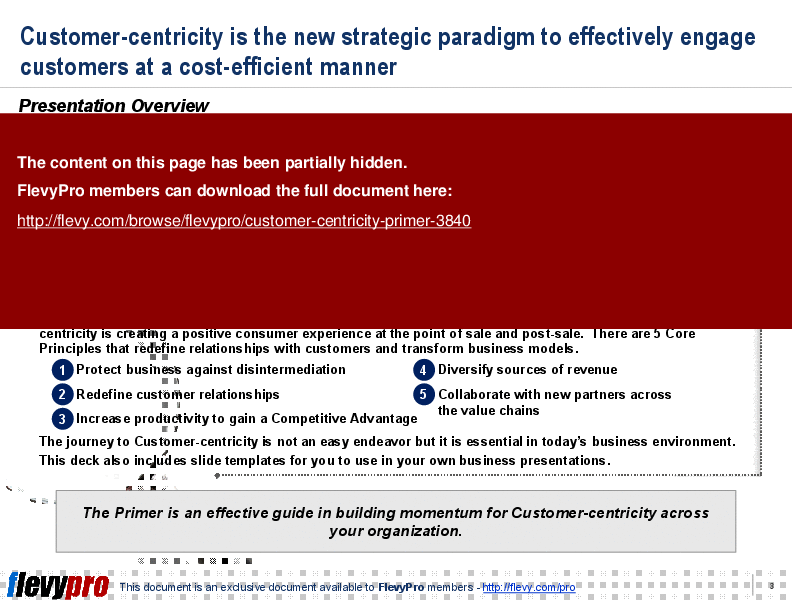
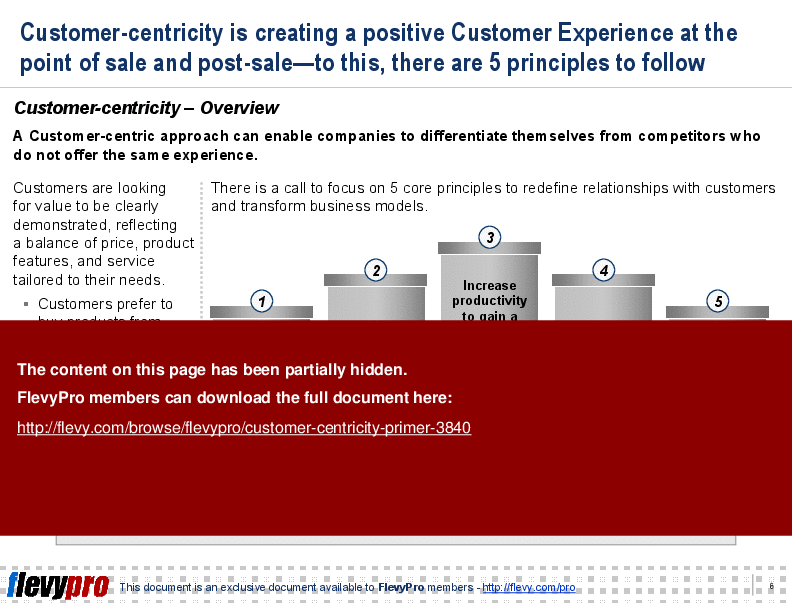
This framework serves as a guide for organizations in their journey towards Customer-centricity. Customer-centricity is creating a positive consumer experience at the point of sale and post-sale. There are 5 Core Principles that redefine relationships with customers and transform business models.

1. Protect business against disintermediation
2. Redefine customer relationships
3. Increase productivity to gain a Competitive Advantage
4. Diversify sources of revenue
5. Collaborate with new partners across the Value Chains

The journey to Customer-centricity is not an easy endeavor but it is essential in today's business environment.

This deck also includes slide templates for you to use in your own business presentations.

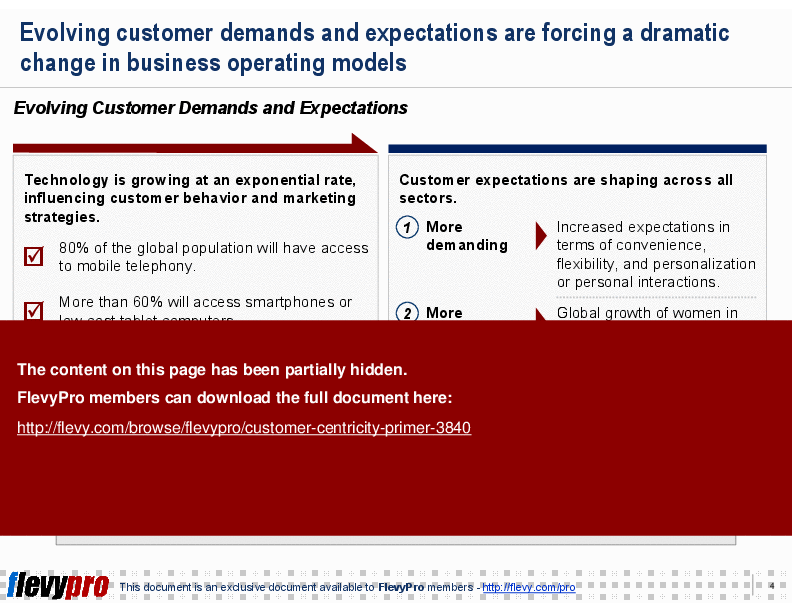
The Primer provides a detailed analysis of evolving customer demands and expectations. It includes practical steps and templates for implementing a Customer-centric Operating Model.

Got a question about this document? Email us at flevypro@flevy.com.

MARCUS OVERVIEW

This synopsis was written by Marcus [?] based on the analysis of the full 33-slide presentation.


Executive Summary
The Customer-centricity Primer is a strategic presentation designed to guide organizations in adopting a customer-centric approach. Developed by former McKinsey and Big 4 consultants, this deck provides insights into evolving consumer demands and actionable strategies for enhancing customer engagement. It outlines the importance of understanding customer needs and behaviors, which are critical for driving profitable growth and successful business transformation. The framework emphasizes 5 core principles that redefine customer relationships and encourage innovation, making it an essential tool for executives aiming to enhance customer experiences and operational efficiency.

Who This Is For and When to Use
•  Corporate executives seeking to implement customer-centric strategies across their organizations
•  Integration leaders focused on transforming business models to meet evolving customer expectations
•  Marketing and sales teams aiming to enhance customer engagement and loyalty
•  Data analysts and business strategists interested in leveraging customer insights for decision-making
•  Change management professionals guiding organizations through customer-centric transformations

Best-fit moments to use this deck:
•  During strategic planning sessions focused on customer engagement initiatives
•  When launching new products or services that require a deep understanding of customer needs
•  In workshops aimed at fostering a customer-centric culture within the organization
•  For training sessions on customer experience best practices and methodologies

Learning Objectives
•  Define customer-centricity and its significance in today’s business landscape
•  Identify and analyze evolving customer demands and expectations
•  Develop strategies to enhance customer engagement throughout the customer lifecycle
•  Implement the 5 core principles of customer-centricity to transform business models
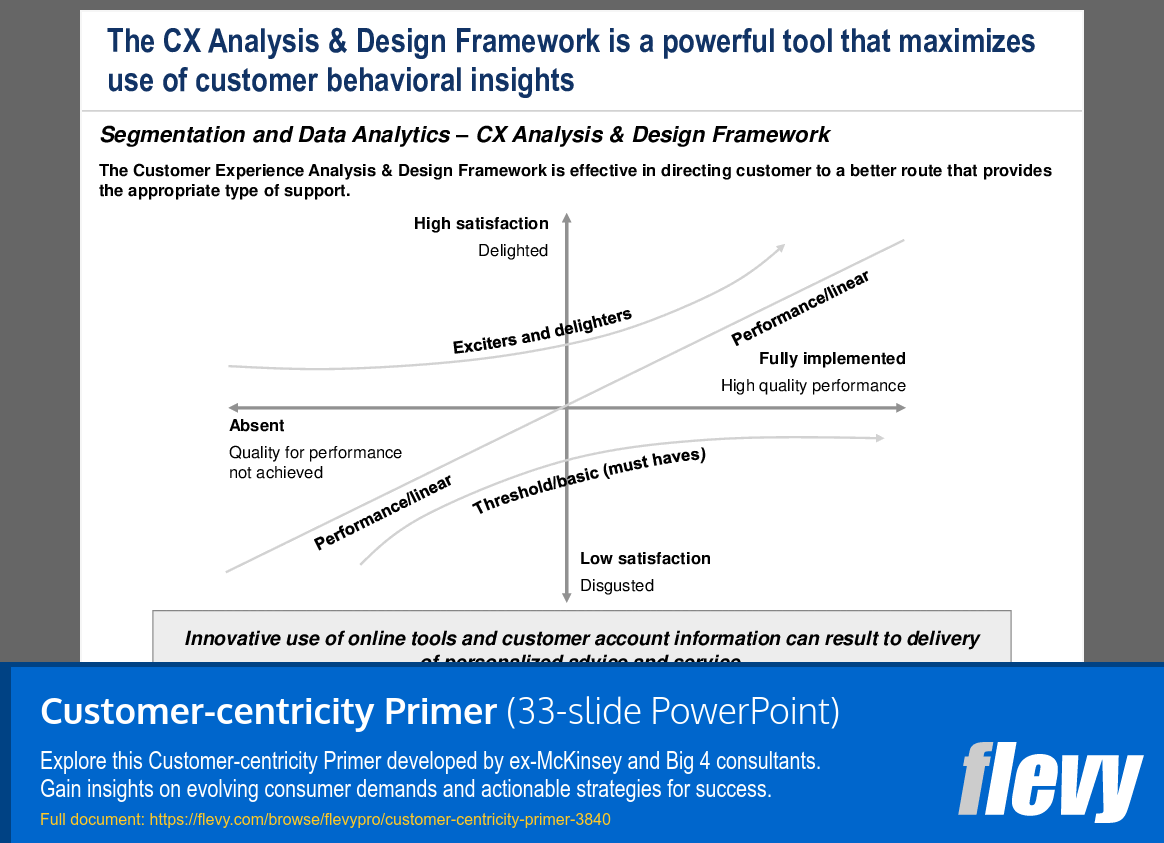
•  Utilize segmentation and data analytics to optimize customer experiences
•  Foster a culture of innovation that prioritizes customer needs and feedback

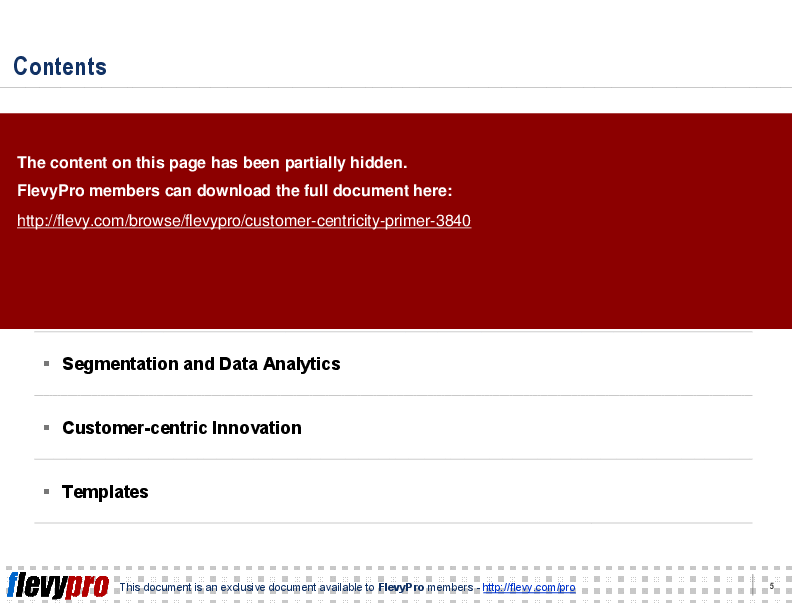
Table of Contents
•  Overview (page 3)
•  Customer-centricity (page 3)
•  Customer-centric Operating Model (page 11)
•  Segmentation and Data Analytics (page 16)
•  Customer-centric Innovation (page 21)
•  Templates (page 24)

Primary Topics Covered
•  Customer-centricity - A strategic approach that emphasizes understanding and responding to customer needs to drive business success.
•  Customer-centric Operating Model - A framework that shifts traditional business practices to prioritize customer engagement and satisfaction.
•  Segmentation and Data Analytics - Techniques for analyzing customer data to tailor experiences and improve satisfaction.
•  Customer-centric Innovation - Strategies for fostering a culture of innovation that aligns with customer expectations and market trends.
•  Five Core Principles - Key tenets that guide organizations in redefining customer relationships and enhancing value delivery.

Deliverables, Templates, and Tools
•  Customer-centricity framework template for strategic planning
•  Segmentation model for analyzing customer demographics and behaviors
•  Customer experience analysis and design framework for optimizing interactions
•  Innovation roadmap template for guiding customer-centric initiatives
•  Practical steps checklist for implementing customer-centric strategies
•  Data analytics toolkit for measuring customer satisfaction and engagement

Slide Highlights
•  Overview of customer-centricity and its relevance in modern business
•  Illustration of evolving customer demands and expectations
•  Framework for the customer-centric operating model
•  Key principles for fostering customer relationships and loyalty
•  Data analytics strategies for enhancing customer experiences

Potential Workshop Agenda
Customer-Centricity Overview Session (60 minutes)
•  Introduce the concept of customer-centricity and its importance
•  Discuss evolving customer demands and expectations
•  Explore the 5 core principles of customer-centricity

Segmentation and Data Analytics Workshop (90 minutes)
•  Analyze customer data to identify key segments
•  Develop strategies for enhancing customer engagement
•  Create actionable plans based on data insights

Innovation and Change Management Session (120 minutes)
•  Discuss the role of innovation in customer-centricity
•  Identify barriers to transformation and strategies to overcome them
•  Develop a roadmap for implementing customer-centric initiatives

Customization Guidance
•  Tailor the customer-centricity framework to align with specific organizational goals and customer segments
•  Adjust the segmentation model to reflect unique customer demographics and behaviors
•  Incorporate company-specific metrics and KPIs into the data analytics toolkit
•  Modify the innovation roadmap to align with existing business strategies and objectives

Secondary Topics Covered
•  The impact of digital transformation on customer engagement
•  Best practices for leveraging customer feedback in decision-making
•  Case studies of successful customer-centric transformations
•  Techniques for measuring and tracking customer satisfaction

Topic FAQ

What are the main principles companies should follow to become more customer-centric?

Customer-centric organizations focus on protecting the business against disintermediation, redefining customer relationships, increasing productivity for competitive advantage, diversifying revenue sources, and collaborating with new partners across value chains, collectively described as 5 core principles.

How does a customer-centric operating model change how a company manages touchpoints?

A customer-centric operating model shifts traditional practices to prioritize delivering value and positive experiences across every touchpoint, aligning structures, processes, and metrics to customer outcomes rather than solely internal efficiency, as described in the customer-centric operating model.

How can segmentation and data analytics be used to improve customer experiences?

Segmentation and data analytics enable organizations to identify distinct customer groups, tailor offers and interactions, and prioritize investments based on behaviors and needs; the Primer provides a segmentation model and data analytics toolkit to support these activities and decision-making.

What should I look for when buying a customer-centricity toolkit for a workshop?

Look for slide templates and frameworks to explain concepts, a segmentation model to analyze audiences, a customer experience design framework, an innovation roadmap for initiatives, practical implementation checklists, and a data analytics toolkit to measure outcomes, such as an innovation roadmap template.

How should organizations assess the value of customer-centric templates before purchase?

Assess whether templates support strategic planning, segmentation, experience design, implementation checklists, and metrics integration. Verify they can be customized with company-specific KPIs and that analytics outputs map to measurable outcomes, for example via a data analytics toolkit.

I need to redesign customer journeys after launching a product—what frameworks are useful?

Use a customer experience analysis and design framework to map moments of truth, apply segmentation to tailor journeys for priority groups, and create an innovation roadmap to sequence changes; Flevy's Customer-centricity Primer includes a customer experience analysis and design framework to support this work.

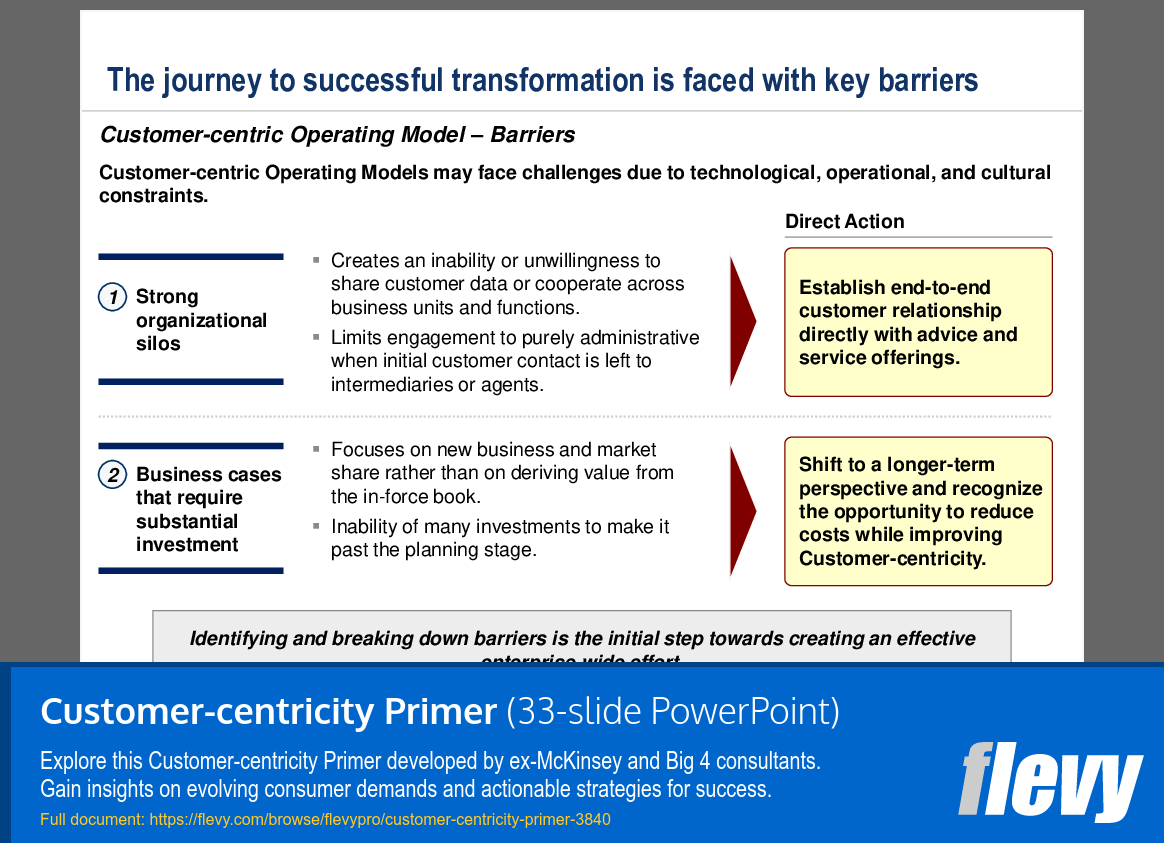
What organizational barriers typically slow a move to customer-centricity and how can they be addressed?

Common barriers are strong organizational silos, resistance to change, and required investment. Address these with structured workshops, change-management activities, cross-functional collaboration, and staged implementation using tools like the Primer’s practical steps checklist.

How can firms foster customer-centric innovation in practice?

Firms encourage cross-sector collaboration, capture customer feedback into formal feedback loops, and make longer-term strategic decisions that prioritize customer needs; the Primer supports this with an innovation roadmap template to guide customer-centric initiatives.

Document FAQ
These are questions addressed within this presentation.

What is customer-centricity?
Customer-centricity is a strategic approach that prioritizes understanding and responding to customer needs to enhance engagement and drive business success.

Why is customer-centricity important?
In today's competitive landscape, organizations that effectively engage with customers are more likely to succeed, as customer attitudes and behaviors significantly influence purchasing decisions.

What are the 5 core principles of customer-centricity?
The 5 core principles are: protect business against disintermediation, redefine customer relationships, increase productivity for competitive advantage, diversify sources of revenue, and collaborate with new partners across value chains.

How can segmentation and data analytics improve customer experiences?
Segmentation and data analytics allow organizations to tailor experiences to specific customer needs, leading to increased satisfaction and loyalty.

What is the customer-centric operating model?
The customer-centric operating model is a framework that shifts traditional business practices to focus on delivering value and positive experiences to customers at every touchpoint.

How can organizations foster a culture of innovation?
Organizations can foster a culture of innovation by encouraging collaboration, leveraging insights from other sectors, and adopting a long-term strategic decision-making mindset.

What challenges might organizations face in becoming customer-centric?
Common challenges include strong organizational silos, resistance to change, and the need for substantial investment in customer-centric initiatives.

How can this primer be used in training sessions?
This primer can serve as a foundational resource for training sessions focused on customer-centric strategies, providing frameworks, templates, and best practices for implementation.

Glossary
•  Customer-centricity - A strategic approach focused on understanding and responding to customer needs.
•  Customer Experience - The overall perception a customer has of a brand based on their interactions.
•  Segmentation - The process of dividing a customer base into distinct groups based on shared characteristics.
•  Data Analytics - The use of data to gain insights and inform decision-making.
•  Innovation - The process of developing new ideas or improving existing products and services.
•  Maturity Model - A framework for assessing the development level of an organization's capabilities.
•  Customer Engagement - The interaction between a customer and a brand throughout the customer lifecycle.
•  Value Proposition - The promise of value to be delivered to customers.
•  Feedback Loop - A system for collecting and analyzing customer feedback to inform improvements.
•  Competitive Advantage - A condition that allows a company to perform better than its competitors.
•  Transformation - A significant change in an organization's structure, strategy, or operations.
•  Operational Efficiency - The ability to deliver products or services in the most cost-effective manner.
•  Customer Lifetime Value - The total revenue a business can expect from a single customer account.
•  Touchpoint - Any interaction between a customer and a brand.
•  Market Trends - Patterns and movements in consumer behavior and preferences.
•  Strategic Planning - The process of defining an organization's direction and making decisions on allocating resources.
•  Collaboration - Working together with others to achieve a common goal.
•  Business Model - The plan implemented by a company to generate revenue and make a profit.
•  Customer Insights - Understanding gained from analyzing customer data and behaviors.
•  Customer Journey - The complete experience a customer has with a brand, from awareness to purchase and beyond.

CUSTOMER-CENTRICITY PPT SLIDES

Seven Essential Steps to Customer-Centricity

Five Principles for Effective Customer-Centric Strategies

Framework for Optimizing Customer Experience Insights

Overcoming Barriers to Customer-Centric Transformation

Source: Best Practices in Competitive Advantage, Customer-centric Organization PowerPoint Slides: Customer-centricity Primer PowerPoint (PPT) Presentation Slide Deck, LearnPPT Consulting


$29.00
FlevyPro price: FREE (included in subscription)
This framework is developed by a team of former McKinsey and Big 4 consultants. The presentation follows the headline-body-bumper slide format used by global consulting firms.
Add to Cart
  

Did you need more documents?

Consider a FlevyPro subscription from $39/month. View plans here.

For $10.00 more, you can download this document plus 2 more FlevyPro documents. That's just $13 each.

ABOUT FLEVYPRO

This document is part of the FlevyPro Library, a curated knowledge base of documents for our FlevyPro subscribers.

FlevyPro is a subscription service for on-demand business frameworks and analysis tools. FlevyPro subscribers receive access to an exclusive library of curated business documents—business framework primers, presentation templates, Lean Six Sigma tools, and more—among other exclusive benefits.

Click here to learn more about FlevyPro and its benefits.

Did you know?
The average daily rate of a McKinsey consultant is $6,625 (not including expenses). The average price of a Flevy document is $65.


Trusted by over 10,000+ Client Organizations
Since 2012, we have provided business templates to over 10,000 businesses and organizations of all sizes, from startups and small businesses to the Fortune 100, in over 130 countries.
AT&T GE Cisco Intel IBM Coke Dell Toyota HP Nike Samsung Microsoft Astrazeneca JP Morgan KPMG Walgreens Walmart 3M Kaiser Oracle SAP Google E&Y Volvo Bosch Merck Fedex Shell Amgen Eli Lilly Roche AIG Abbott Amazon PwC T-Mobile Broadcom Bayer Pearson Titleist ConEd Pfizer NTT Data Schwab


Read Customer Testimonials

 
"I have found Flevy to be an amazing resource and library of useful presentations for lean sigma, change management and so many other topics. This has reduced the time I need to spend on preparing for my performance consultation. The library is easily accessible and updates are regularly provided. A wealth of great information."

– Cynthia Howard RN, PhD, Executive Coach at Ei Leadership
 
"As an Independent Management Consultant, I find Flevy to add great value as a source of best practices, templates and information on new trends. Flevy has matured and the quality and quantity of the library is excellent. Lastly the price charged is reasonable, creating a win-win value for "

– Jim Schoen, Principal at FRC Group
 
"Flevy is now a part of my business routine. I visit Flevy at least 3 times each month.

Flevy has become my preferred learning source, because what it provides is practical, current, and useful in this era where the business world is being rewritten.

In today's environment where there are so "

– Omar Hernán Montes Parra, CEO at Quantum SFE
 
"My FlevyPro subscription provides me with the most popular frameworks and decks in demand in today’s market. They not only augment my existing consulting and coaching offerings and delivery, but also keep me abreast of the latest trends, inspire new products and service offerings for my practice, and educate me "

– Bill Branson, Founder at Strategic Business Architects
 
"The wide selection of frameworks is very useful to me as an independent consultant. In fact, it rivals what I had at my disposal at Big 4 Consulting firms in terms of efficacy and organization."

– Julia T., Consulting Firm Owner (Former Manager at Deloitte and Capgemini)
 
"As a young consulting firm, requests for input from clients vary and it's sometimes impossible to provide expert solutions across a broad spectrum of requirements. That was before I discovered Flevy.com.

Through subscription to this invaluable site of a plethora of topics that are key and crucial to consulting, I "

– Nishi Singh, Strategist and MD at NSP Consultants
 
"As a small business owner, the resource material available from FlevyPro has proven to be invaluable. The ability to search for material on demand based our project events and client requirements was great for me and proved very beneficial to my clients. Importantly, being able to easily edit and tailor "

– Michael Duff, Managing Director at Change Strategy (UK)
 
"I like your product. I'm frequently designing PowerPoint presentations for my company and your product has given me so many great ideas on the use of charts, layouts, tools, and frameworks. I really think the templates are a valuable asset to the job."

– Roberto Fuentes Martinez, Senior Executive Director at Technology Transformation Advisory


Customers Also Bought These Documents


Customers Also Like These Documents

Explore Templates on Related Management Topics


Your Recently Viewed Documents
Download our FREE Digital Transformation Templates

Download our free compilation of 50+ Digital Transformation slides and templates. DX concepts covered include Digital Leadership, Digital Maturity, Digital Value Chain, Customer Experience, Customer Journey, RPA, etc.