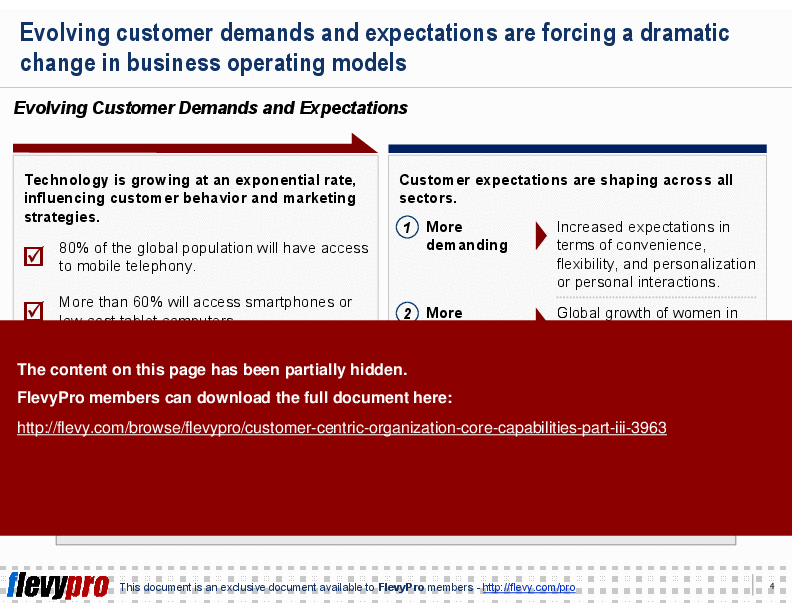

Today's customers are better informed, better connected, and more demanding that ever before. CEOs are now concerned about Customer Loyalty and they recognize that mastery of the customer agenda is essential. In fact, global leaders of successful organizations recognize that creating a customer-centric, digitally-transformed business is a top priority. In fact, Customer-centricity ceases to be a differentiator. It has become necessary for survival.
In this age of digital disruption, how can organizations engage customers, increase Customer Loyalty, and achieve profitable growth?
Almost every market is experiencing fundamental change. Consumer expectations have shifted and digital technologies are making the biggest impact on businesses large and small since the start of the information age. Ultimately, businesses need to navigate the challenges of digital disruption and find new ways to create economic value and drive growth.
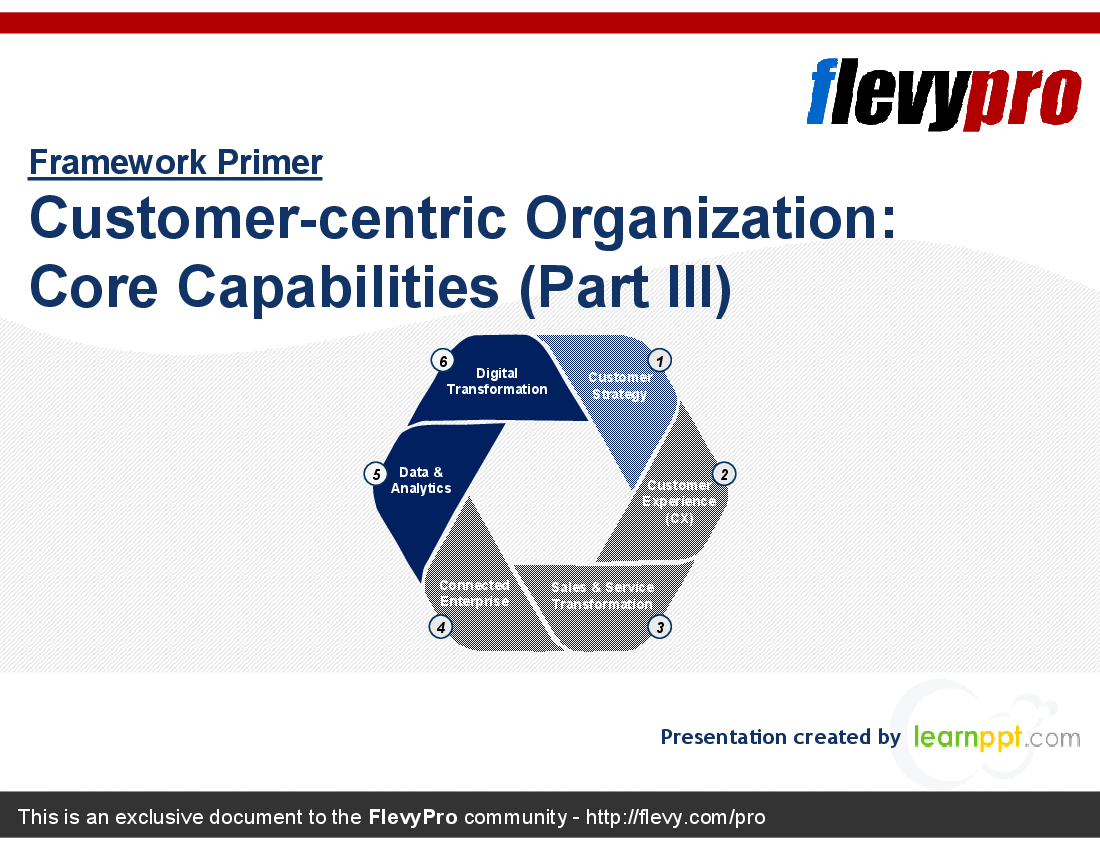
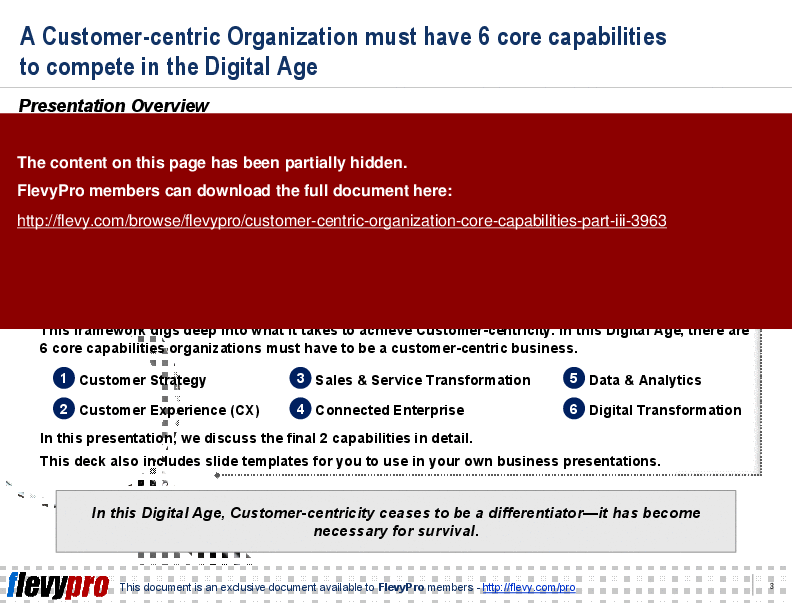
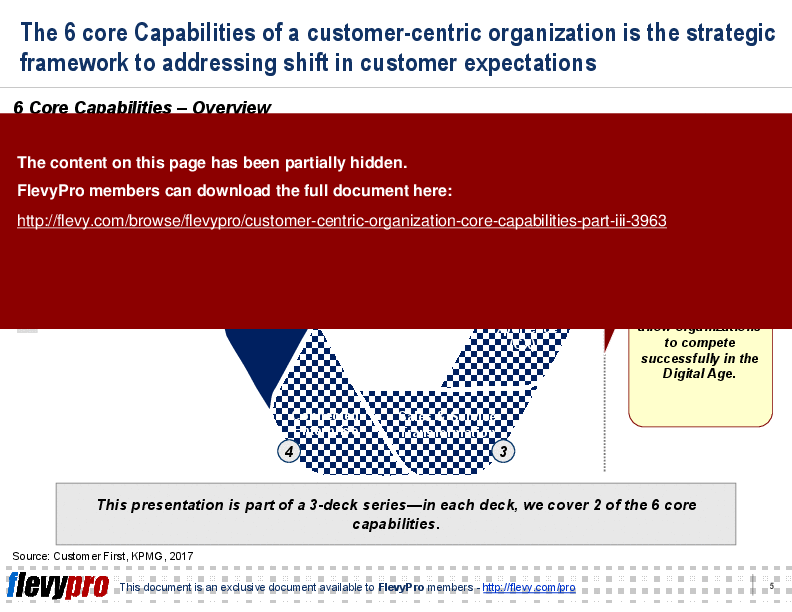
This framework digs deep into what it takes to achieve Customer-centricity. In this Digital Age, there are 6 core capabilities organizations must have to be a customer-centric business.
1. Customer Strategy
2. Customer Experience (CX)
3. Sales & Service Transformation
4. Connected Enterprise
5. Data & Analytics
6. Digital Transformation
In this presentation, we discuss the final 2 capabilities in detail.
This deck also includes slide templates for you to use in your own business presentations.
This presentation delves into the critical components of Data & Analytics and Digital Transformation, providing actionable insights for leveraging data to drive profitable growth and harnessing digital technologies to innovate and optimize operations. It outlines the strategic approaches and key actions necessary to build a robust data management ecosystem and integrate digital solutions across the enterprise. The deck also highlights the importance of predictive analytics, improving data quality, and understanding market signals to stay ahead in a competitive landscape. This resource is essential for executives aiming to transform their organizations into agile, data-driven, and customer-centric enterprises.
Got a question about this document? Email us at flevypro@flevy.com.
Executive Summary
This presentation, "Customer-centric Organization: Core Capabilities (Part III)," is designed to equip organizations with the essential capabilities needed to thrive in the Digital Age. Crafted by former McKinsey and Big 4 consultants, this framework emphasizes the importance of customer-centricity as a critical survival strategy. It delves into 2 of the 6 core capabilities—Data & Analytics and Digital Transformation—highlighting how organizations can leverage these competencies to enhance customer engagement, drive loyalty, and achieve sustainable growth in a rapidly evolving marketplace.
Who This Is For and When to Use
• Corporate executives focused on strategic transformation and customer engagement
• Integration leaders responsible for implementing data-driven decision-making
• Consultants advising organizations on digital transformation initiatives
• Marketing and sales teams aiming to enhance customer experience through analytics
Best-fit moments to use this deck:
• During strategic planning sessions focused on customer engagement initiatives
• When developing a roadmap for digital transformation within the organization
• In workshops aimed at aligning teams around data-driven decision-making processes
Learning Objectives
• Define the core capabilities essential for a customer-centric organization
• Build a framework for leveraging data and analytics to drive customer insights
• Establish a digital transformation strategy that aligns with customer needs
• Identify key performance indicators to measure the effectiveness of customer engagement strategies
• Create actionable plans for implementing data-driven decision-making across teams
• Explore innovative technologies that enhance customer interactions and operational efficiency
Table of Contents
• Overview (page 3)
• Capability 5. Data & Analytics (page 7)
• Capability 6. Digital Transformation (page 12)
• Templates (page 19)
Primary Topics Covered
• Data & Analytics - Focuses on creating actionable insights through advanced analytics to drive profitable growth and enhance customer experiences.
• Digital Transformation - Explores how organizations can leverage technology to engage customers, optimize operations, and innovate products and services.
• Customer Engagement - Highlights strategies for improving customer interactions through data-driven insights and digital tools.
• Performance Measurement - Discusses the importance of establishing key performance indicators to track the success of customer-centric initiatives.
• Innovation in Customer Experience - Examines emerging technologies that can transform customer engagement and operational efficiency.
• Strategic Alignment - Emphasizes the need for aligning digital transformation efforts with overall business objectives and customer needs.
Deliverables, Templates, and Tools
• Data & Analytics strategy template for actionable insights
• Digital transformation roadmap template for strategic planning
• Key performance indicator (KPI) tracking framework for measuring success
• Customer engagement action plan template for aligning teams
• Innovation assessment tool for evaluating emerging technologies
• Workshop facilitation guide for implementing data-driven decision-making
Slide Highlights
• Overview of the 6 core capabilities essential for customer-centric organizations
• Detailed analysis of Data & Analytics as a core capability
• Insights into the challenges and opportunities presented by digital transformation
• Visual representation of the levers of digital transformation and their impact on growth and operations
• Examples of successful customer engagement strategies leveraging data and technology
Potential Workshop Agenda
Data & Analytics Strategy Session (90 minutes)
• Discuss the importance of data-driven insights in customer engagement
• Identify key data sources and analytics tools for implementation
• Develop an action plan for embedding analytics into decision-making processes
Digital Transformation Planning Workshop (120 minutes)
• Explore the role of technology in enhancing customer experiences
• Align digital transformation initiatives with business objectives
• Create a roadmap for implementing digital solutions across the organization
Customization Guidance
• Tailor the data and analytics strategy to reflect specific organizational goals and customer needs
• Adjust the digital transformation roadmap to incorporate relevant technologies and platforms
• Modify templates to align with internal terminology and performance metrics
Secondary Topics Covered
• The impact of evolving customer demands on business operating models
• Strategies for improving data quality and consistency in analytics
• The role of leadership in driving customer-centric initiatives
• Best practices for integrating digital tools into existing workflows
• The importance of cybersecurity in digital transformation efforts
Topic FAQ
Document FAQ
These are questions addressed within this presentation.
What are the 6 core capabilities of a customer-centric organization?
The 6 core capabilities include Customer Strategy, Customer Experience (CX), Sales & Service Transformation, Connected Enterprise, Data & Analytics, and Digital Transformation.
How can data and analytics drive customer engagement?
Data and analytics provide actionable insights that help organizations understand customer behavior, preferences, and needs, enabling tailored interactions that enhance engagement.
What is the significance of digital transformation in today’s business landscape?
Digital transformation is crucial for organizations to remain competitive, as it enables them to leverage technology to improve customer experiences, optimize operations, and innovate products and services.
How can organizations measure the success of their customer-centric initiatives?
Establishing key performance indicators (KPIs) allows organizations to track the effectiveness of their strategies in enhancing customer engagement and achieving business objectives.
What role does leadership play in driving customer-centric initiatives?
Leadership is essential in setting the vision and direction for customer-centric strategies, ensuring alignment across teams, and fostering a culture that prioritizes customer needs.
What are some challenges organizations face in implementing data-driven decision-making?
Common challenges include data quality issues, lack of clarity on how to leverage analytics, and resistance to change within the organization.
How can emerging technologies enhance customer experiences?
Emerging technologies, such as AI and IoT, can provide personalized interactions, streamline processes, and create new avenues for customer engagement, ultimately improving satisfaction and loyalty.
What steps should organizations take to ensure a successful digital transformation?
Organizations should develop a clear strategy, prioritize customer needs, invest in the right technologies, and foster a culture of innovation and agility to navigate the complexities of digital transformation.
Glossary
• Customer-centricity - A business approach that prioritizes the needs and preferences of customers in all aspects of operations.
• Data & Analytics - The process of collecting, analyzing, and interpreting data to drive business insights and decision-making.
• Digital Transformation - The integration of digital technology into all areas of a business, fundamentally changing how it operates and delivers value to customers.
• Customer Experience (CX) - The overall perception and interaction a customer has with a brand throughout their journey.
• Key Performance Indicators (KPIs) - Metrics used to evaluate the success of an organization in achieving its objectives.
• Emerging Technologies - New technologies that have the potential to disrupt existing markets and create new opportunities.
• Innovation - The process of developing new ideas, products, or services that provide value to customers and the organization.
• Customer Engagement - The interaction and relationship between a brand and its customers, aimed at fostering loyalty and satisfaction.
• Predictive Analytics - Techniques that use statistical algorithms and machine learning to identify the likelihood of future outcomes based on historical data.
• Cybersecurity - The practice of protecting systems, networks, and data from digital attacks and unauthorized access.
• Agility - The ability of an organization to respond quickly and effectively to changes in the market or environment.
• Customer Relationship Management (CRM) - Systems and strategies for managing a company’s interactions with current and potential customers.
• Business Model - The plan implemented by a company to generate revenue and make a profit from operations.
• Market Disruption - Significant changes in an industry that alter the competitive landscape, often driven by technological advancements.
• Data Management - The practice of collecting, keeping, and using data securely, efficiently, and cost-effectively.
• User-Centric Design - An approach to product development that prioritizes the needs and experiences of users.
• Cloud Computing - The delivery of computing services over the internet, allowing for flexible resources and economies of scale.
• Social Media - Platforms that enable users to create and share content or participate in social networking.
• Internet of Things (IoT) - The network of physical devices connected to the internet, enabling them to collect and exchange data.
• Big Data - Large and complex data sets that require advanced tools and techniques to analyze and extract meaningful insights.
• Digital Trust - The confidence users have in the security and reliability of digital services and transactions.
Source: Best Practices in Digital Transformation, Analytics, Customer-centric Organization PowerPoint Slides: Customer-centric Organization: Core Capabilities (Part III) PowerPoint (PPT) Presentation Slide Deck, LearnPPT Consulting
Did you need more documents?
Consider a FlevyPro subscription from $39/month. View plans here.
For $10.00 more, you can download this document plus 2 more FlevyPro documents. That's just $13 each.
This document is available as part of the following discounted bundle(s):
Save %!
Customer-centric Organization: Core Capabilities - Full Series
This bundle contains 3 total documents. See all the documents to the right.

|
Download our FREE Digital Transformation Templates
Download our free compilation of 50+ Digital Transformation slides and templates. DX concepts covered include Digital Leadership, Digital Maturity, Digital Value Chain, Customer Experience, Customer Journey, RPA, etc. |









