
Today's customers are better informed, better connected, and more demanding that ever before. CEOs are now concerned about Customer Loyalty and they recognize that mastery of the customer agenda is essential. In fact, global leaders of successful organizations recognize that creating a customer-centric, digitally-transformed business is a top priority. In fact, Customer-centricity ceases to be a differentiator. It has become necessary for survival.
In this age of digital disruption, how can organizations engage customers, increase Customer Loyalty, and achieve profitable growth?
Almost every market is experiencing fundamental change. Consumer expectations have shifted and digital technologies are making the biggest impact on businesses large and small since the start of the information age. Ultimately, businesses need to navigate the challenges of digital disruption and find new ways to create economic value and drive growth.
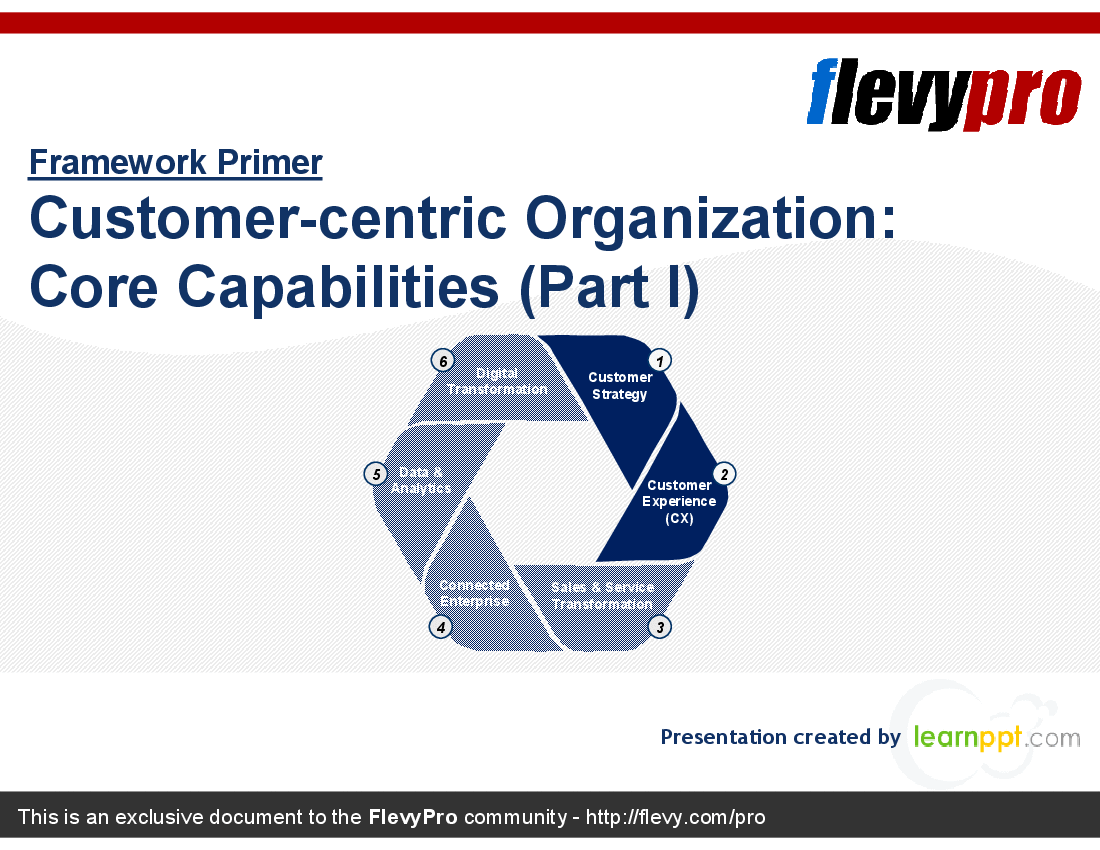
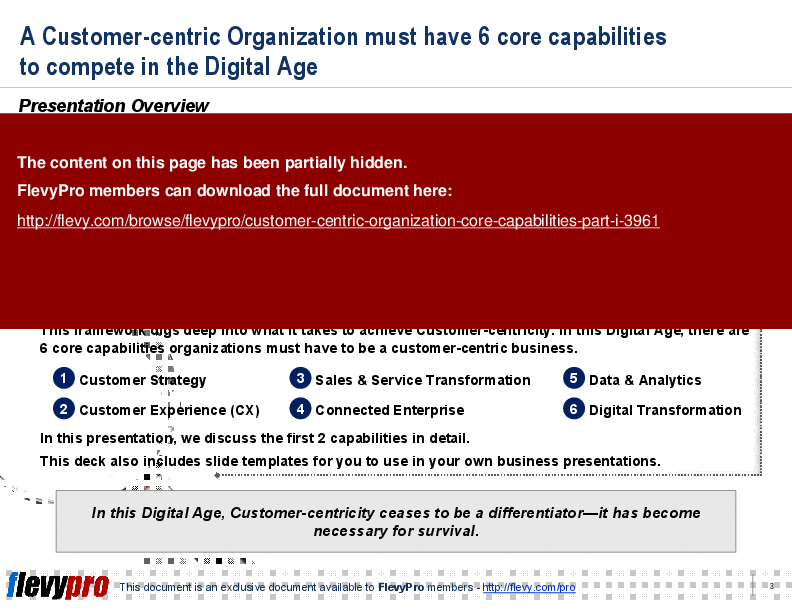
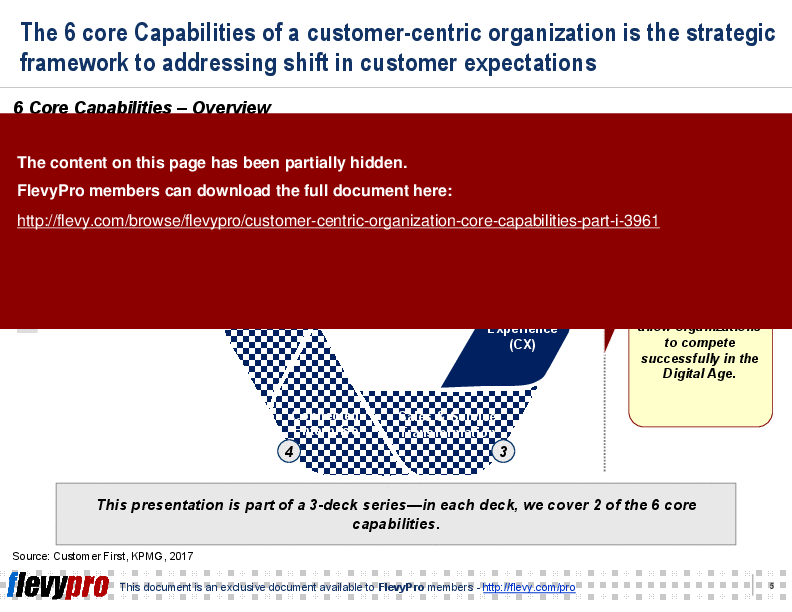
This framework digs deep into what it takes to achieve Customer-centricity. In this Digital Age, there are 6 core capabilities organizations must have to be a customer-centric business.
1. Customer Strategy
2. Customer Experience (CX)
3. Sales & Service Transformation
4. Connected Enterprise
5. Data & Analytics
6. Digital Transformation
In this presentation, we discuss the first 2 capabilities in detail.
This deck also includes slide templates for you to use in your own business presentations.
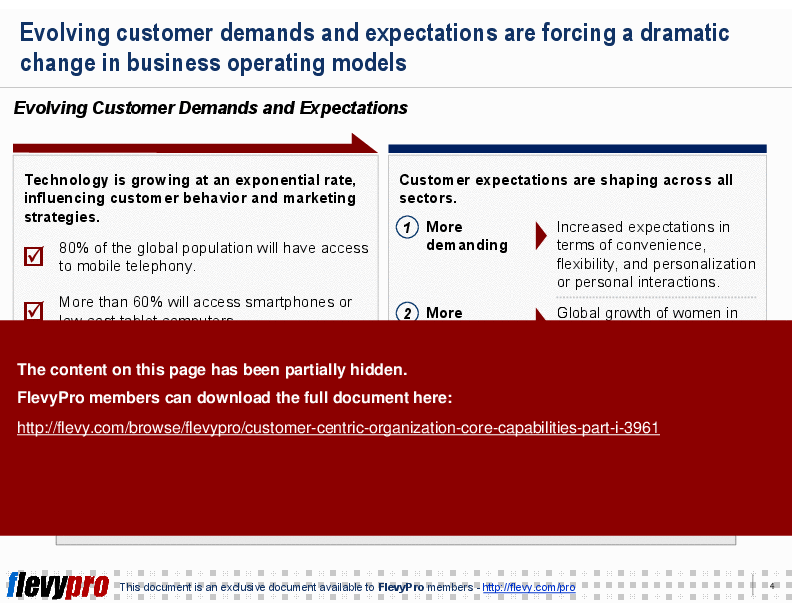
This PPT delves into the evolving customer demands and expectations that are reshaping business operating models. It highlights the exponential growth of technology and its influence on customer behavior and marketing strategies. The presentation outlines a 5-step approach to creating an effective Customer Strategy and a 5-step approach to enhancing Customer Experience, ensuring organizations can meet these new demands. This deck is part of a comprehensive 3-deck series, providing actionable insights and practical templates to drive customer-centric transformation.
Got a question about this document? Email us at flevypro@flevy.com.
Executive Summary
The "Customer-centric Organization: Core Capabilities (Part I)" presentation offers a strategic framework developed by experienced consultants to help organizations achieve customer-centricity in the digital age. It identifies 6 essential capabilities needed to enhance customer loyalty and navigate digital disruption. This deck focuses on the first 2 capabilities: Customer Strategy and Customer Experience (CX). By leveraging this framework, executives can define actionable strategies to engage customers effectively, drive growth, and create economic value.
Who This Is For and When to Use
• Corporate executives focused on customer engagement and loyalty strategies
• Integration leaders responsible for implementing customer-centric initiatives
• Consultants advising organizations on digital transformation and customer experience
• Marketing and sales teams aiming to enhance customer interactions
• Data analysts tasked with leveraging customer insights for strategic decisions
Best-fit moments to use this deck:
• During strategic planning sessions aimed at enhancing customer loyalty
• In workshops focused on developing customer-centric business models
• When assessing current customer engagement strategies and identifying gaps
• For training sessions on implementing effective customer experience initiatives
Learning Objectives
• Define the core components of a customer-centric organization
• Build a comprehensive Customer Strategy that aligns with evolving customer needs
• Establish effective Customer Experience practices that drive loyalty
• Identify key challenges in implementing customer-centric initiatives
• Develop actionable plans to enhance customer engagement through data analytics
• Create a framework for measuring the success of customer-centric strategies
Table of Contents
• Overview (page 3)
• Capability 1. Customer Strategy (page 7)
• Capability 2. Customer Experience (CX) (page 12)
• Templates (page 19)
Primary Topics Covered
• Customer Strategy - Focuses on developing a clear understanding of customer behavior and intentions using data analytics to inform business decisions.
• Customer Experience (CX) - Emphasizes the importance of mapping customer journeys and designing experiences that meet customer needs, enhancing overall satisfaction.
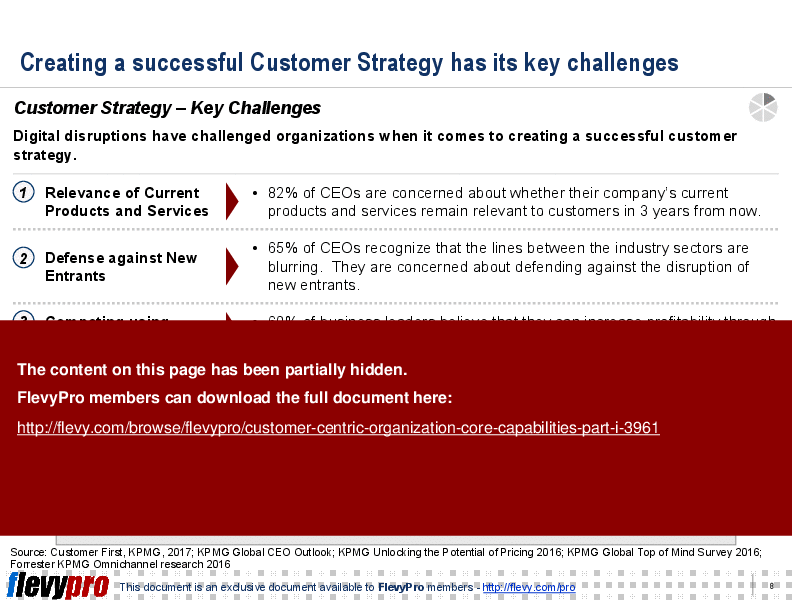
• Key Challenges in Customer Strategy - Identifies obstacles such as maintaining product relevance and defending against new market entrants.
• 5-Step Approach to Customer Strategy - A structured method for identifying customer needs and developing agile propositions.
• Building Blocks of Customer Experience - Outlines essential components for improving customer interactions and satisfaction.
• CX Measurement Pyramid - A framework for assessing customer experience through journey-related KPIs and organizational foundations.
Deliverables, Templates, and Tools
• Customer Strategy framework template for defining customer behavior and intentions
• Customer Experience journey mapping template for visualizing customer interactions
• Key challenges checklist for assessing customer strategy effectiveness
• 5-Step approach guide for developing customer-centric propositions
• Building blocks framework for enhancing customer experience
• CX Measurement Pyramid template for evaluating customer experience metrics
Slide Highlights
• Overview of the 6 core capabilities necessary for customer-centric organizations
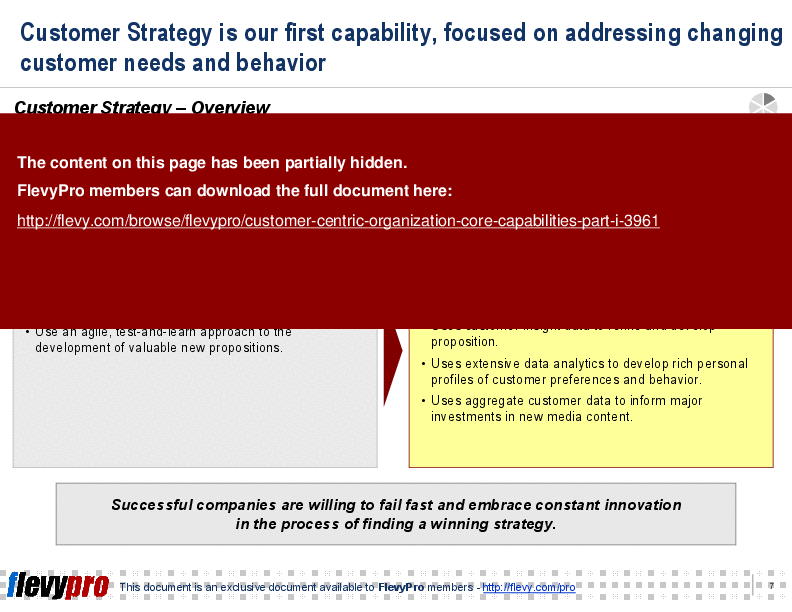
• Detailed breakdown of the Customer Strategy and its application in the digital age
• Insights into the challenges faced by organizations in implementing effective customer strategies
• Visual representation of the Customer Experience Measurement Pyramid
• Templates designed for practical application in business presentations
Potential Workshop Agenda
Customer Strategy Development Session (90 minutes)
• Discuss the importance of customer strategy in the digital age
• Identify key customer segments and their needs
• Develop initial customer journey maps
Customer Experience Enhancement Workshop (60 minutes)
• Review current customer experience practices
• Brainstorm improvements based on customer feedback
• Create action plans for implementing new customer experience initiatives
Customization Guidance
• Tailor the Customer Strategy framework to reflect specific organizational goals and customer segments
• Adapt the Customer Experience templates to align with existing customer touchpoints and interactions
• Modify the key challenges checklist to address unique industry-specific obstacles
• Integrate company-specific data analytics tools into the 5-Step approach for actionable insights
Secondary Topics Covered
• The impact of digital transformation on customer expectations
• Strategies for leveraging data analytics to enhance customer engagement
• Best practices for fostering a customer-centric culture within organizations
• Techniques for measuring and tracking customer loyalty over time
Topic FAQ
Document FAQ
These are questions addressed within this presentation.
What are the 6 core capabilities of a customer-centric organization?
The 6 core capabilities include Customer Strategy, Customer Experience (CX), Sales & Service Transformation, Connected Enterprise, Data & Analytics, and Digital Transformation.
How can organizations measure customer experience effectively?
Organizations can use the CX Measurement Pyramid, which focuses on journey-related KPIs, employee feedback, and organizational culture to assess customer experience.
What challenges do organizations face in implementing a customer strategy?
Key challenges include maintaining product relevance, defending against new entrants, and achieving profitable growth amidst volatile market conditions.
What is the 5-Step Approach to Customer Strategy?
The 5-Step Approach involves identifying customer needs, developing agile propositions, transforming products, and evolving business models to enhance customer lifetime value.
How can data analytics improve customer engagement?
Data analytics can provide insights into customer behavior, preferences, and trends, enabling organizations to tailor their strategies and enhance customer interactions.
What role does customer journey mapping play in CX?
Customer journey mapping helps organizations visualize and understand customer interactions, allowing them to design better experiences that meet customer needs.
How can organizations foster a customer-centric culture?
Organizations can foster a customer-centric culture by instilling a clear customer vision, engaging employees at all levels, and aligning strategies with customer needs.
What are the benefits of a customer-centric organization?
Benefits include increased customer loyalty, improved customer satisfaction, and enhanced competitive advantage in the marketplace.
Glossary
• Customer Strategy - A strategic approach focused on understanding customer behavior and preferences.
• Customer Experience (CX) - The overall perception of a customer’s interactions with a brand.
• Customer Journey - The complete experience a customer has with a brand, from initial contact to post-purchase.
• Data Analytics - The process of examining data sets to draw conclusions about the information they contain.
• Key Performance Indicators (KPIs) - Metrics used to evaluate the success of an organization in achieving its objectives.
• Customer Lifetime Value (LTV) - A prediction of the net profit attributed to the entire future relationship with a customer.
• Digital Transformation - The integration of digital technology into all areas of a business, fundamentally changing how it operates.
• Customer-Centric Culture - An organizational culture that prioritizes the needs and experiences of customers.
• Agile Proposition Development - A flexible approach to creating new offerings based on customer feedback and market changes.
• Voice of the Customer - The process of capturing customers' expectations, preferences, and aversions.
• Customer Loyalty - The tendency of customers to continue buying from a specific brand.
• Competitive Advantage - A condition that allows a company to produce goods or services better or more cheaply than its rivals.
Source: Best Practices in Customer Experience, Customer-centric Organization, Customer Strategy PowerPoint Slides: Customer-centric Organization: Core Capabilities (Part I) PowerPoint (PPT) Presentation Slide Deck, LearnPPT Consulting
Did you need more documents?
Consider a FlevyPro subscription from $39/month. View plans here.
For $10.00 more, you can download this document plus 2 more FlevyPro documents. That's just $13 each.
This document is available as part of the following discounted bundle(s):
Save %!
Customer-centric Organization: Core Capabilities - Full Series
This bundle contains 3 total documents. See all the documents to the right.

|
Download our FREE Digital Transformation Templates
Download our free compilation of 50+ Digital Transformation slides and templates. DX concepts covered include Digital Leadership, Digital Maturity, Digital Value Chain, Customer Experience, Customer Journey, RPA, etc. |