
Zaltman Metaphor Elicitation Technique (ZMET) Framework   31-slide PPT PowerPoint presentation slide deck (PPTX)
$29.00

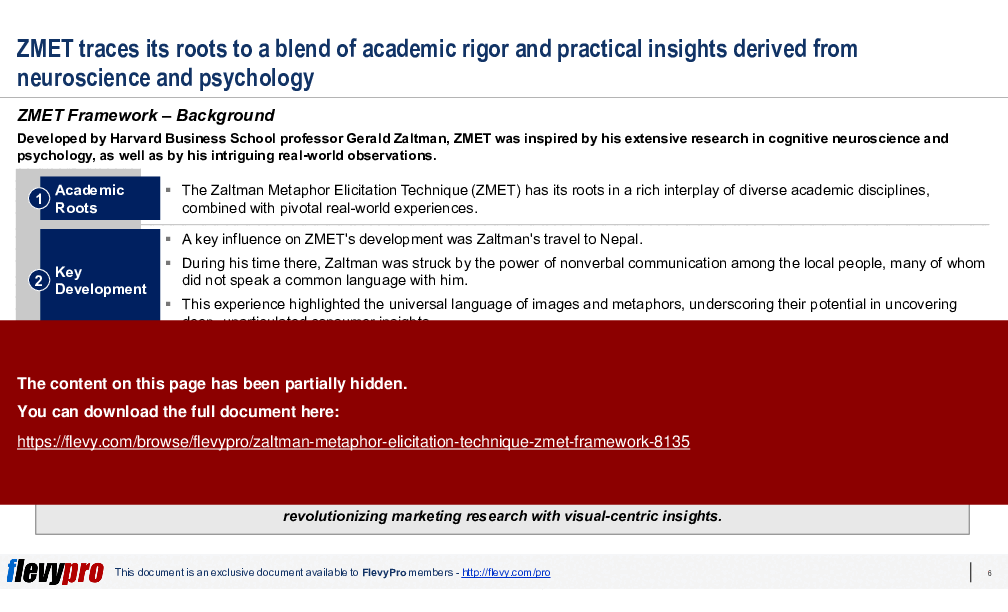
Zaltman Metaphor Elicitation Technique (ZMET) Framework (31-slide PPT PowerPoint presentation slide deck (PPTX)) Preview Image
Log in to unlock full preview.
Zaltman Metaphor Elicitation Technique (ZMET) Framework (31-slide PPT PowerPoint presentation slide deck (PPTX)) Preview Image
Arrow   Click main image to view in full screen.

Zaltman Metaphor Elicitation Technique (ZMET) Framework (PowerPoint PPTX Slide Deck)

PowerPoint (PPTX) 31 Slides FlevyPro Document

$29.00
FlevyPro price: FREE (included in subscription)
This framework is developed by a team of former McKinsey and Big 4 consultants. The presentation follows the headline-body-bumper slide format used by global consulting firms.
Add to Cart


Immediate download
Free lifetime updates

MARKET RESEARCH PPT DESCRIPTION

Editor Summary Zaltman Metaphor Elicitation Technique (ZMET) Framework is a 31-slide PowerPoint that documents the ZMET qualitative research method and its core deliverable: a nine-step process for eliciting consumer metaphors (Picture Collection; Storytelling; Missed Images; Sorting; Construct Elicitation; Metaphor Elaboration; Sensory Images; The Vignette; The Digital Image). Read more

In the field of Market Research and Consumer Behavior Analysis, a significant problem that organizations face is the inability to fully grasp and interpret the subconscious thoughts and emotions of their consumers.

Traditional Market Research methods, such as surveys and focus groups, often capture only the surface-level opinions and preferences of consumers. Such traditional methods frequently fall short in revealing the subconscious drivers of consumer behavior, leading to gaps in understanding and strategy. The Zaltman Metaphor Elicitation Technique (ZMET) framework, developed by Harvard Professor Gerald Zaltman, is a distinctive approach that utilizes metaphors and visual stimuli to tap into the underlying motivations and attitudes of consumers.

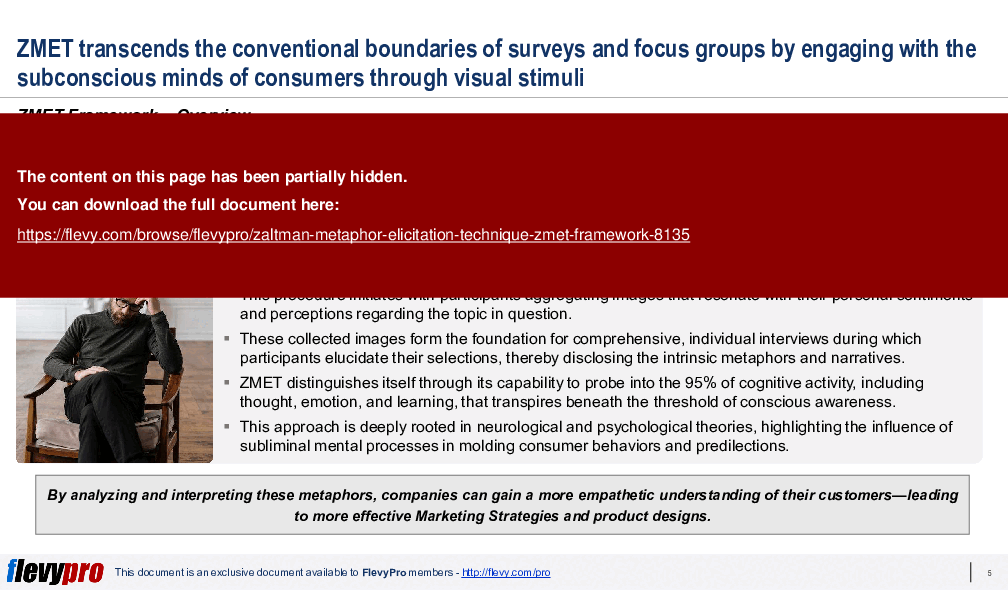
ZMET is based on the concept that human thought is mainly image-driven, not word-based. It surpasses traditional surveys and focus groups by tapping into consumers' subconscious using visual stimuli. Fundamentally, ZMET utilizes a structured sequence of steps to extract and interpret the metaphors consumers employ in articulating their experiences with products, brands, or services.

In this PowerPoint presentation, we will focus on the core concepts underlying the ZMET framework highlighting its unique convergence of marketing insights, psychology, and neuroscience.

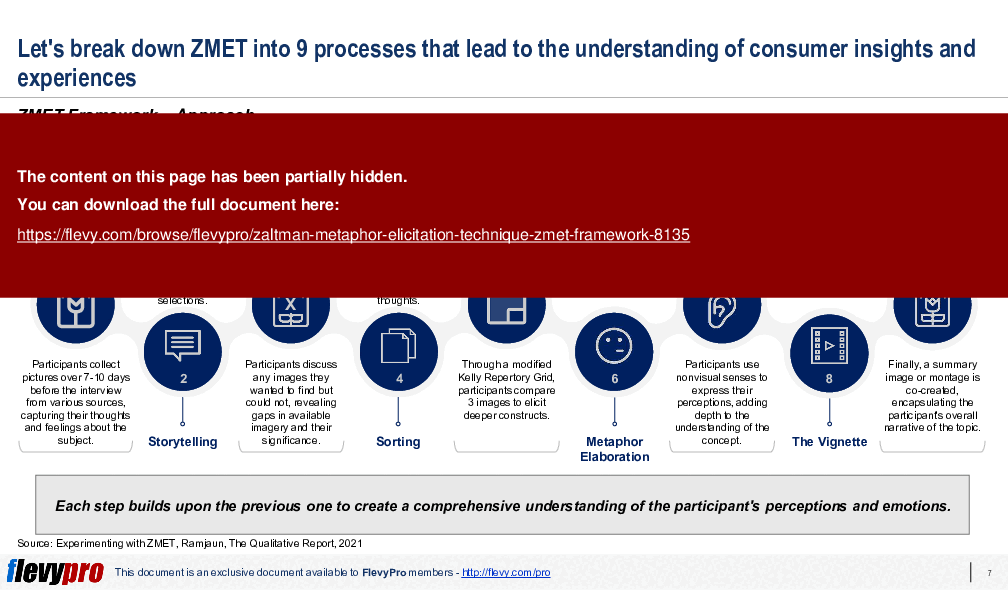
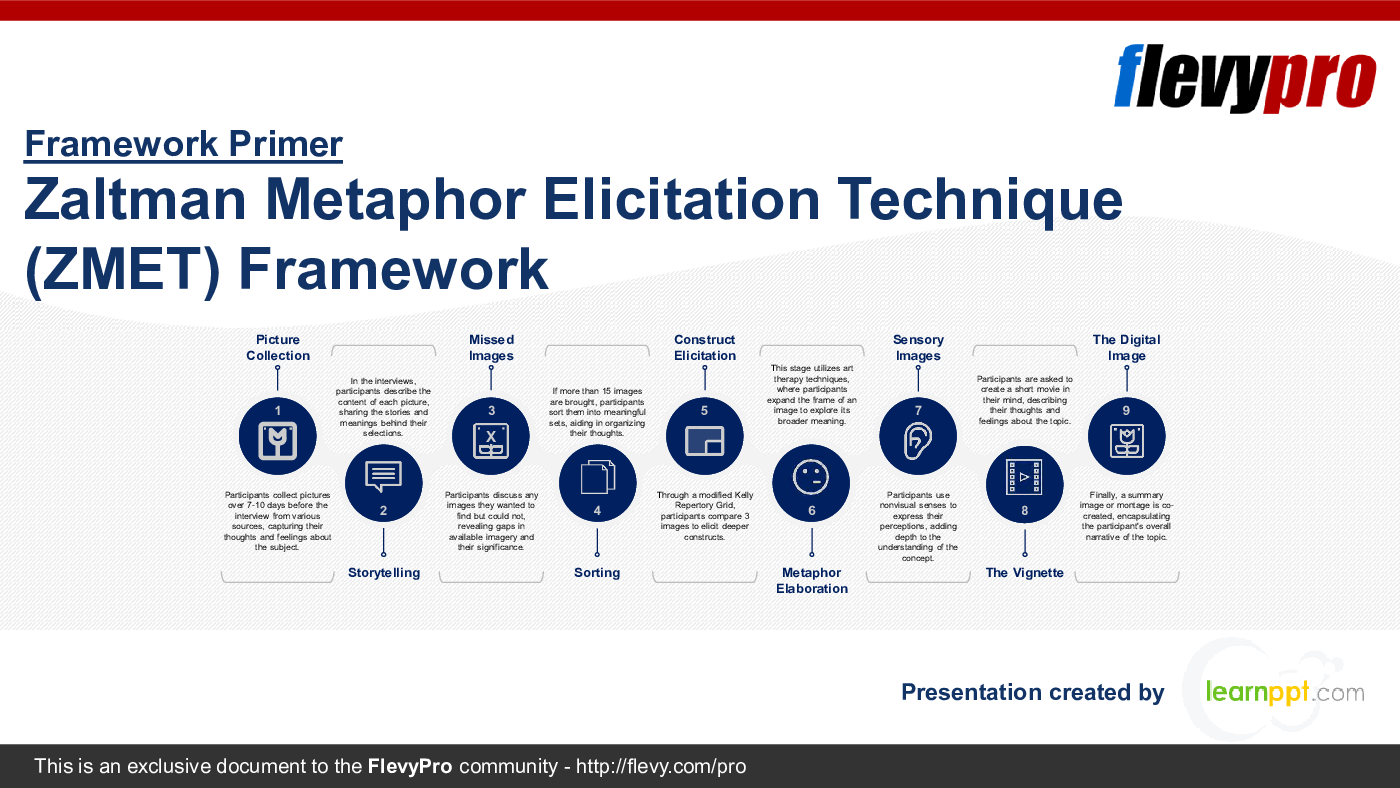
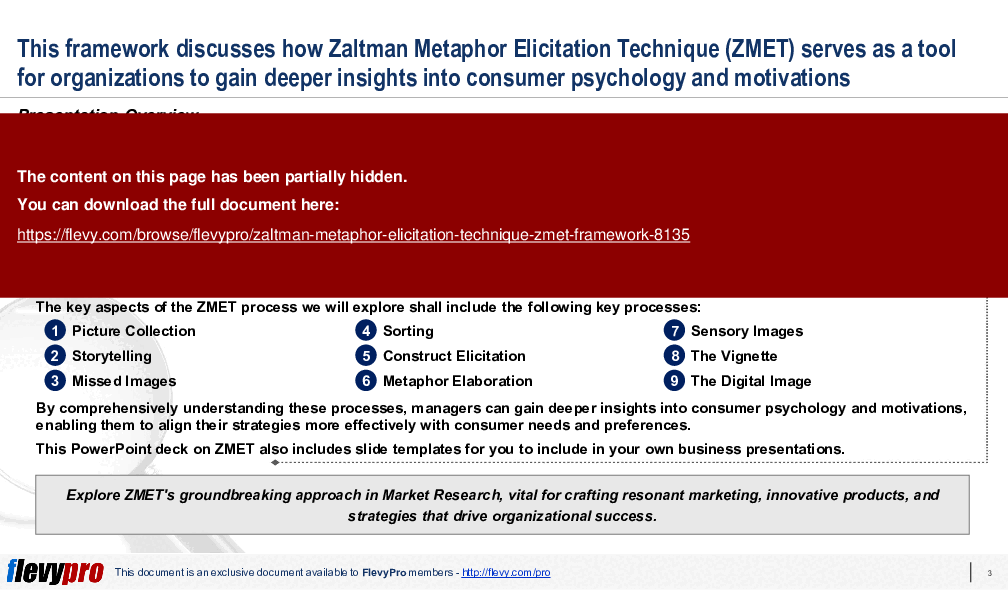
The key aspects of the ZMET process we will explore shall include the following 9 key processes:

1. Picture Collection
2. Storytelling
3. Missed Images
4. Sorting
5. Construct Eliciation
6. Metaphor Elaboration
7. Sensory Images
8. The Vignette
9. The Digital Image

By comprehensively understanding these processes, managers can gain deeper insights into consumer psychology and motivations, enabling them to align their strategies more effectively with consumer needs and preferences.

This presentation also discusses a 5-phase process of ZMET Framework Implementation and includes an in-depth case study.

This PowerPoint deck on ZMET also includes slide templates for you to include in your own business presentations.

Got a question about this document? Email us at flevypro@flevy.com.

MARCUS OVERVIEW

This synopsis was written by Marcus [?] based on the analysis of the full 31-slide presentation.


Executive Summary
The Zaltman Metaphor Elicitation Technique (ZMET) framework is a powerful tool for organizations seeking to uncover deep insights into consumer psychology and motivations. This presentation provides a comprehensive overview of the ZMET process, which transcends traditional market research methods by tapping into the subconscious thoughts and emotions of consumers. By utilizing visual stimuli and metaphors, ZMET enables businesses to craft more resonant marketing strategies and innovative products. The framework includes detailed methodologies for implementation, case studies, and slide templates for practical application.

Who This Is For and When to Use
•  Marketing executives aiming to enhance consumer engagement through deeper insights.
•  Product development teams seeking to align offerings with consumer needs.
•  Market researchers looking for innovative methods to capture consumer emotions.
•  Brand strategists focused on creating compelling narratives around products.

Best-fit moments to use this deck:
•  During the development of new marketing strategies to ensure alignment with consumer psychology.
•  In workshops aimed at understanding consumer perceptions and emotions.
•  When conducting qualitative research to explore deeper insights beyond surface-level data.

Learning Objectives
•  Define the ZMET framework and its significance in consumer research.
•  Build a comprehensive understanding of the ZMET process, including its nine key steps.
•  Establish methods for effectively implementing ZMET in various organizational contexts.
•  Identify the strategic applications of ZMET insights in marketing and product development.
•  Analyze case studies demonstrating the successful application of ZMET.
•  Create visually engaging presentations using ZMET slide templates.

Table of Contents
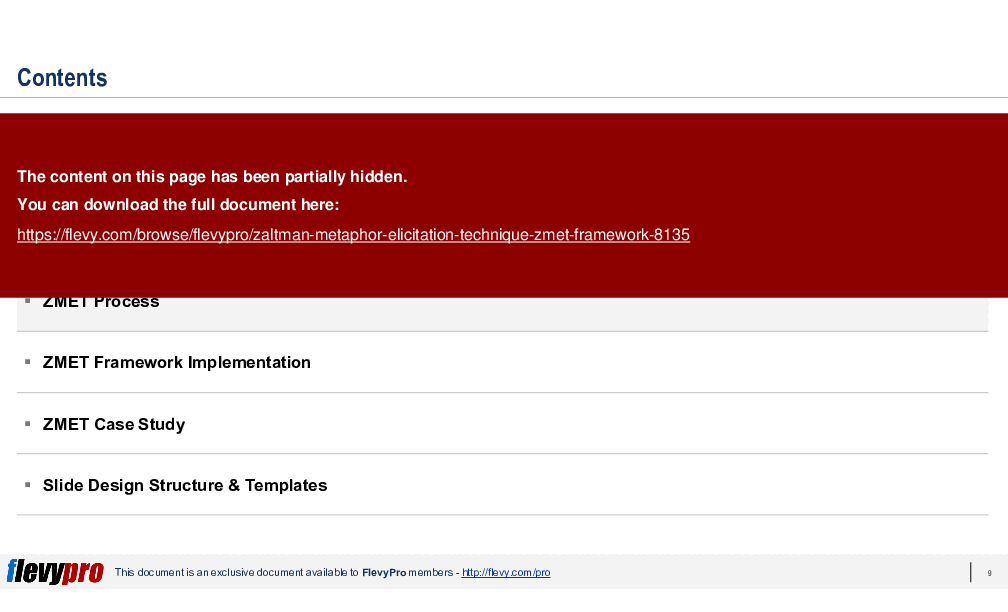
•  Overview (page 3)
•  ZMET Framework (page 5)
•  ZMET Process (page 10)
•  ZMET Framework Implementation (page 15)
•  ZMET Case Study (page 18)
•  Slide Design Structure & Templates (page 23)

Primary Topics Covered
•  ZMET Framework Overview - The ZMET framework integrates artistic and scientific methods to uncover profound insights into consumer psychology through visual stimuli.
•  ZMET Process - A structured sequence of steps that captures consumer perceptions and emotions, enhancing understanding of their experiences.
•  ZMET Implementation - Guidelines for adapting the ZMET framework across various industries, ensuring its relevance and effectiveness.
•  Case Studies - Real-world applications of ZMET, highlighting its impact on marketing strategies and consumer engagement.
•  Slide Design Templates - Ready-to-use templates for presenting ZMET insights effectively in business contexts.

Deliverables, Templates, and Tools
•  ZMET process flowchart template for visual representation of the methodology.
•  Case study analysis template to document insights gained from ZMET applications.
•  Presentation slide templates that adhere to the Headline-Body-Bumper structure.
•  Interview guide template for conducting ZMET sessions with participants.
•  Visual storytelling framework to help synthesize consumer insights into compelling narratives.

Slide Highlights
•  Overview of the ZMET process, illustrating its nine key steps.
•  Case study insights showcasing the application of ZMET in real-world scenarios.
•  Visual templates designed for effective presentation of ZMET findings.
•  Diagrams illustrating the relationship between consumer emotions and marketing strategies.

Potential Workshop Agenda
ZMET Introduction and Overview (60 minutes)
•  Present the ZMET framework and its significance in consumer research.
•  Discuss the nine key steps in the ZMET process.

Hands-On ZMET Application (90 minutes)
•  Conduct a mock ZMET session with participants to gather insights.
•  Analyze collected data and identify key themes and metaphors.

Case Study Review and Discussion (60 minutes)
•  Present a case study demonstrating the successful application of ZMET.
•  Facilitate a discussion on lessons learned and best practices.

Customization Guidance
•  Tailor the ZMET process steps to align with specific organizational goals and consumer segments.
•  Adjust visual templates to reflect brand identity and presentation style.
•  Incorporate industry-specific examples in case studies to enhance relevance.

Secondary Topics Covered
•  Theoretical foundations of ZMET in psychology and neuroscience.
•  Challenges and considerations in implementing ZMET.
•  Adaptation of ZMET for various industries, including healthcare and education.

Topic FAQ

What is ZMET and how does it differ from standard surveys and focus groups?

ZMET is a qualitative method that uses visual stimuli and metaphor elicitation to access subconscious consumer thoughts and emotions. Unlike surveys and typical focus groups that capture surface preferences, ZMET emphasizes image-driven cognition and deep metaphor interpretation, organized across nine key steps.

What are the nine steps of the ZMET process I should plan for?

The nine ZMET steps are: Picture Collection; Storytelling; Missed Images; Sorting; Construct Elicitation; Metaphor Elaboration; Sensory Images; The Vignette; and The Digital Image. These sequential activities guide data collection and synthesis across the full elicitation process, totaling nine distinct steps.

How is data from ZMET sessions typically analyzed and presented?

ZMET analysis focuses on extracting underlying constructs and metaphors from participants’ imagery and narratives, then synthesizing them into sensory images, vignettes, and a digital image for presentation. Visual storytelling techniques are used to convert findings into strategic narratives, often using a visual storytelling framework.

What are common implementation challenges with ZMET projects?

Common challenges include the need for skilled interviewers capable of eliciting and interpreting metaphors, the complexity of coding symbolic data, and the generally time-consuming nature of in-depth interviews and synthesis, which require careful planning and pilot testing.

What should I look for when buying a ZMET toolkit or deck?

Buyers should prioritize materials that include step-by-step process guidance, an interview guide for sessions, templates for synthesizing vignettes and digital images, case study examples, and presentation-ready slide templates—features available in Flevy's Zaltman Metaphor Elicitation Technique (ZMET) Framework.

How much time should I budget for workshops or pilot ZMET sessions?

ZMET workshops and pilot sessions typically allocate focused blocks for introduction, hands-on elicitation, and synthesis; for example, a sample agenda includes a 60-minute ZMET introduction and a 90-minute hands-on application session to conduct mock interviews and initial analysis.

Can ZMET help redesign a product that is underperforming with consumers?

ZMET can surface subconscious associations and unmet needs that influence product adoption, helping teams translate metaphors into design or feature hypotheses. Use the method to capture imagery-led feedback and then map insights to product requirements using a case study analysis template.

Is ZMET adaptable for industries outside consumer-packaged goods, such as healthcare or education?

Yes; the methodology can be tailored across sectors by adjusting image prompts, examples, and interpretation frameworks. The deck provides customization guidance and recommends incorporating industry-specific examples to ensure relevance for fields like healthcare and education.

Document FAQ
These are questions addressed within this presentation.

What is the ZMET framework?
The ZMET framework is a qualitative research method that utilizes visual stimuli and metaphors to uncover deep insights into consumer psychology and motivations.

How does ZMET differ from traditional market research methods?
ZMET transcends traditional methods by tapping into the subconscious thoughts and emotions of consumers, providing richer insights than surveys or focus groups.

What are the key steps in the ZMET process?
The ZMET process includes nine steps: Picture Collection, Storytelling, Missed Images, Sorting, Construct Elicitation, Metaphor Elaboration, Sensory Images, The Vignette, and The Digital Image.

How can ZMET insights be applied in marketing strategies?
Insights derived from ZMET can inform targeted marketing strategies, product development, and brand communication, ensuring alignment with consumer needs.

What industries can benefit from ZMET?
ZMET can be applied across various industries, including marketing, healthcare, education, and non-profits, to enhance understanding of consumer motivations.

What challenges are associated with implementing ZMET?
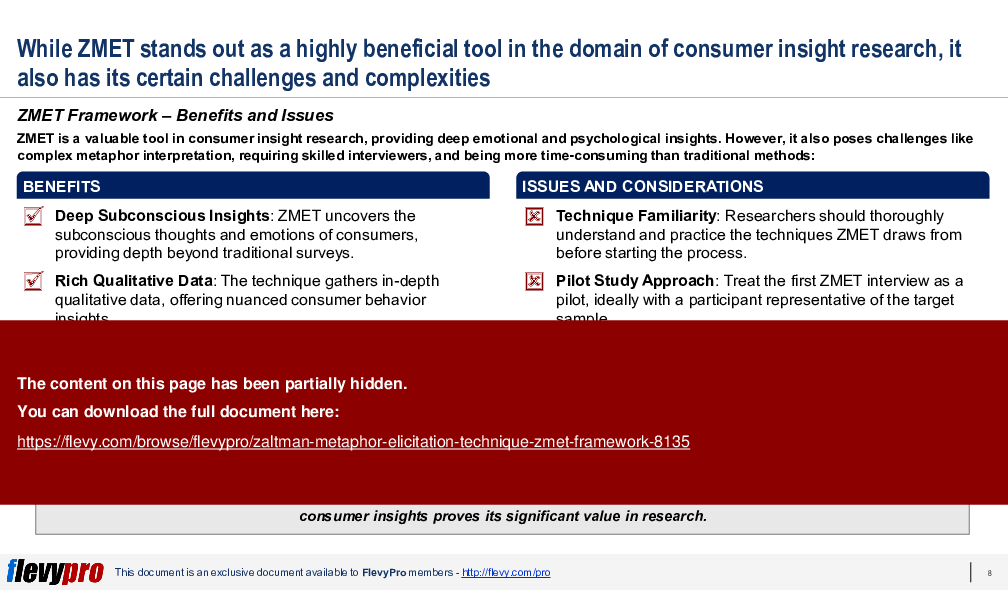
Challenges include the need for skilled interviewers, the complexity of metaphor interpretation, and the time-consuming nature of the process.

How can organizations ensure effective implementation of ZMET?
Organizations should conduct pilot studies, adapt the process based on participant engagement, and ensure researchers are familiar with ZMET techniques.

What resources are available for learning more about ZMET?
The presentation includes slide templates, case studies, and additional resources available through the FlevyPro library.

Glossary
•  ZMET - Zaltman Metaphor Elicitation Technique, a qualitative research method using visual stimuli.
•  Metaphor - A figure of speech that describes an object or action in a way that isn’t literally true, but helps explain an idea or make a comparison.
•  Consumer Psychology - The study of how people's thoughts, beliefs, feelings, and perceptions influence their buying behavior.
•  Visual Stimuli - Images or visuals used to evoke responses from participants in research.
•  Qualitative Research - Research that seeks to understand human behavior by investigating the reasons behind it.
•  Subconscious - The part of the mind that is not currently in focal awareness, influencing thoughts and behaviors.
•  Narrative - A spoken or written account of connected events; a story.
•  Art Therapy Techniques - Therapeutic approaches that use the creative process of making art to improve a person’s physical, mental, and emotional well-being.
•  Construct Elicitation - A method used to draw out the underlying constructs that shape a participant's perceptions.
•  Sensory Experience - The experience derived from the use of the senses, including sight, sound, taste, touch, and smell.
•  Digital Image - A visual representation created or stored in a digital format, often used to summarize insights.
•  Vignette - A brief evocative description, account, or episode that encapsulates a participant's thoughts and feelings.

MARKET RESEARCH PPT SLIDES

ZMET Framework: Structured Steps for Consumer Insights

ZMET Framework: Unpacking Consumer Insight Processes

Unlocking Consumer Insights with ZMET Framework

Visual Synthesis of Consumer Insights in ZMET

Deepening Consumer Insights through Visual Metaphor Analysis

Source: Best Practices in Customer Behavior, Market Research PowerPoint Slides: Zaltman Metaphor Elicitation Technique (ZMET) Framework PowerPoint (PPTX) Presentation Slide Deck, LearnPPT Consulting


$29.00
FlevyPro price: FREE (included in subscription)
This framework is developed by a team of former McKinsey and Big 4 consultants. The presentation follows the headline-body-bumper slide format used by global consulting firms.
Add to Cart
  

Did you need more documents?

Consider a FlevyPro subscription from $39/month. View plans here.

For $10.00 more, you can download this document plus 2 more FlevyPro documents. That's just $13 each.

ABOUT FLEVYPRO

This document is part of the FlevyPro Library, a curated knowledge base of documents for our FlevyPro subscribers.

FlevyPro is a subscription service for on-demand business frameworks and analysis tools. FlevyPro subscribers receive access to an exclusive library of curated business documents—business framework primers, presentation templates, Lean Six Sigma tools, and more—among other exclusive benefits.

Click here to learn more about FlevyPro and its benefits.

Did you know?
The average daily rate of a McKinsey consultant is $6,625 (not including expenses). The average price of a Flevy document is $65.


Trusted by over 10,000+ Client Organizations
Since 2012, we have provided business templates to over 10,000 businesses and organizations of all sizes, from startups and small businesses to the Fortune 100, in over 130 countries.
AT&T GE Cisco Intel IBM Coke Dell Toyota HP Nike Samsung Microsoft Astrazeneca JP Morgan KPMG Walgreens Walmart 3M Kaiser Oracle SAP Google E&Y Volvo Bosch Merck Fedex Shell Amgen Eli Lilly Roche AIG Abbott Amazon PwC T-Mobile Broadcom Bayer Pearson Titleist ConEd Pfizer NTT Data Schwab


Read Customer Testimonials

 
"I am extremely grateful for the proactiveness and eagerness to help and I would gladly recommend the Flevy team if you are looking for data and toolkits to help you work through business solutions."

– Trevor Booth, Partner, Fast Forward Consulting
 
"I have found Flevy to be an amazing resource and library of useful presentations for lean sigma, change management and so many other topics. This has reduced the time I need to spend on preparing for my performance consultation. The library is easily accessible and updates are regularly provided. A wealth of great information."

– Cynthia Howard RN, PhD, Executive Coach at Ei Leadership
 
"FlevyPro has been a brilliant resource for me, as an independent growth consultant, to access a vast knowledge bank of presentations to support my work with clients. In terms of RoI, the value I received from the very first presentation I downloaded paid for my subscription many times over! The "

– Roderick Cameron, Founding Partner at SGFE Ltd
 
"I have used FlevyPro for several business applications. It is a great complement to working with expensive consultants. The quality and effectiveness of the tools are of the highest standards."

– Moritz Bernhoerster, Global Sourcing Director at Fortune 500
 
"FlevyPro provides business frameworks from many of the global giants in management consulting that allow you to provide best in class solutions for your clients."

– David Harris, Managing Director at Futures Strategy
 
"As a niche strategic consulting firm, Flevy and FlevyPro frameworks and documents are an on-going reference to help us structure our findings and recommendations to our clients as well as improve their clarity, strength, and visual power. For us, it is an invaluable resource to increase our impact and value."

– David Coloma, Consulting Area Manager at Cynertia Consulting
 
"Flevy.com has proven to be an invaluable resource library to our Independent Management Consultancy, supporting and enabling us to better serve our enterprise clients.

The value derived from our [FlevyPro] subscription in terms of the business it has helped to gain far exceeds the investment made, making a subscription a no-brainer for any growing consultancy – or in-house strategy team."

– Dean Carlton, Chief Transformation Officer, Global Village Transformations Pty Ltd.
 
"[Flevy] produces some great work that has been/continues to be of immense help not only to myself, but as I seek to provide professional services to my clients, it gives me a large "tool box" of resources that are critical to provide them with the quality of service and outcomes they are expecting."

– Royston Knowles, Executive with 50+ Years of Board Level Experience


Customers Also Bought These Documents


Customers Also Like These Documents

Explore Templates on Related Management Topics


Your Recently Viewed Documents
Download our FREE Strategy & Transformation Framework Templates

Download our free compilation of 50+ Strategy & Transformation slides and templates. Frameworks include McKinsey 7-S, Balanced Scorecard, Disruptive Innovation, BCG Curve, and many more.