
This framework is developed by a team of former McKinsey and Big 4 consultants. The presentation follows the headline-body-bumper slide format used by global consulting firms.
Explore effective Product Innovation Management strategies with insights from ex-McKinsey consultants. Learn about the Innovation Ambition Matrix and organizational models to drive sustainable growth. Product Innovation Management is a 23-slide PPT PowerPoint presentation slide deck (PPT) available for immediate download upon purchase.
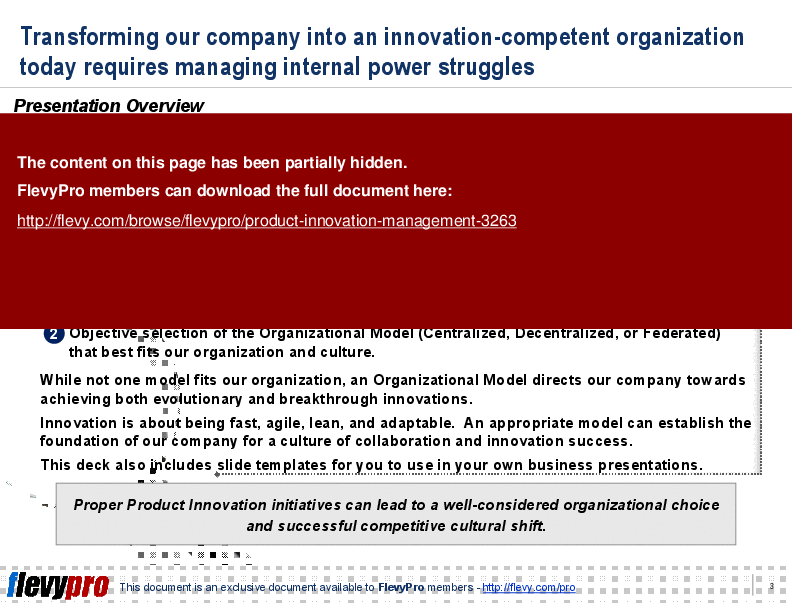
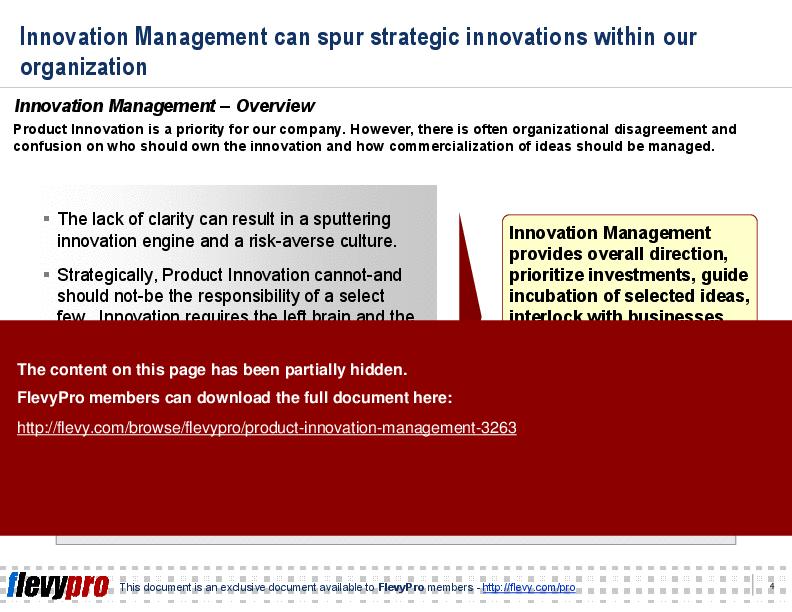
Product Innovation has become everyone's responsibility. But, when everybody owns innovation, nobody owns innovation.
Strategically, Product Innovation now calls for Innovation Management to minimize duplication and confusion. Innovation Management provides clarity and delineation on accountability (authority) versus responsibility (stake) by providing direction and prioritizing investments.
Building an innovation-competent organization required the application of fundamental approaches to achieve evolutionary innovation:
1. Application of Innovation Ambition Matrix as a powerful collaboration framework. This will help our company decide how to analyze different growth initiatives.
2. Objective selection of the Organizational Model (Centralized, Decentralized, or Federated) that best fits our organization and culture.
While not one model fits our organization, an Organizational Model directs our company towards achieving both evolutionary and breakthrough innovations.
Innovation is about being fast, agile, lean, and adaptable. An appropriate model can establish the foundation of our company for a culture of collaboration and innovation success. Proper Product Innovation initiatives can lead to a well-considered organizational choice and successful competitive cultural shift.
This deck also includes slide templates for you to use in your own business presentations.
This presentation dives deep into the intricacies of Innovation Management, offering a comprehensive analysis of three distinct organizational models: Centralized, Decentralized, and Federated. Each model is dissected to reveal its unique advantages and potential pitfalls, providing actionable insights into how they can be leveraged to foster innovation within your organization. The PPT emphasizes the importance of selecting the right model based on your company's specific needs and culture, ensuring that innovation efforts are not only effective, but also sustainable in the long term.
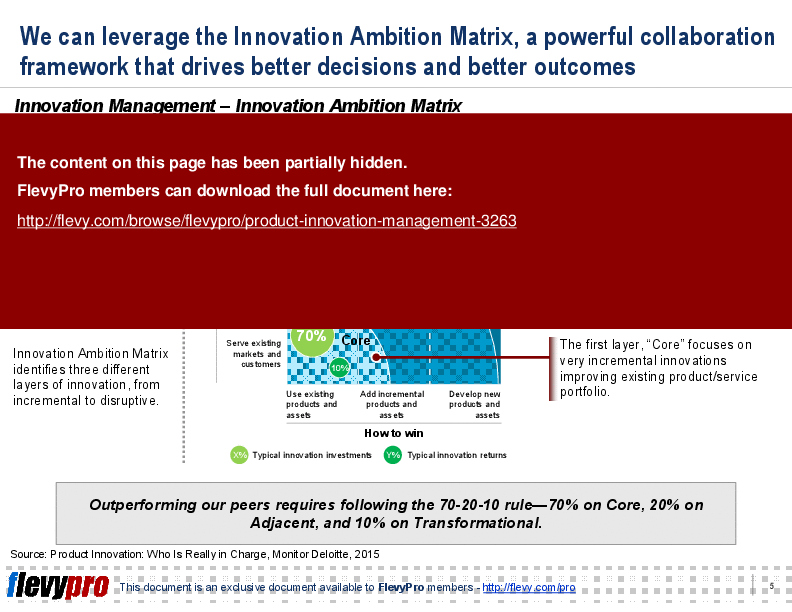
The Innovation Ambition Matrix is another key feature of this deck, serving as a robust framework for categorizing and prioritizing innovation initiatives. By applying the 70-20-10 rule, your organization can strategically allocate resources to core, adjacent, and transformational innovations, driving growth and maintaining a competitive edge. This presentation is an invaluable resource for executives looking to implement a structured approach to innovation, complete with slide templates to facilitate internal presentations and discussions.
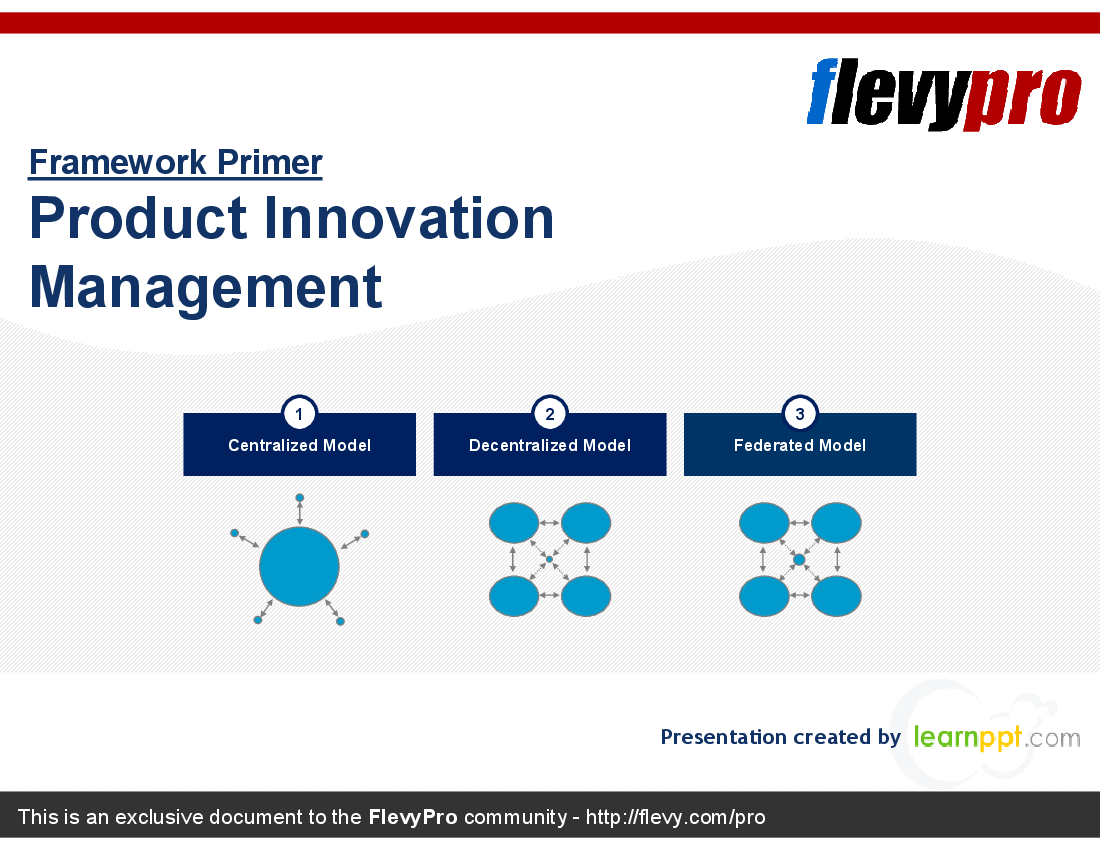
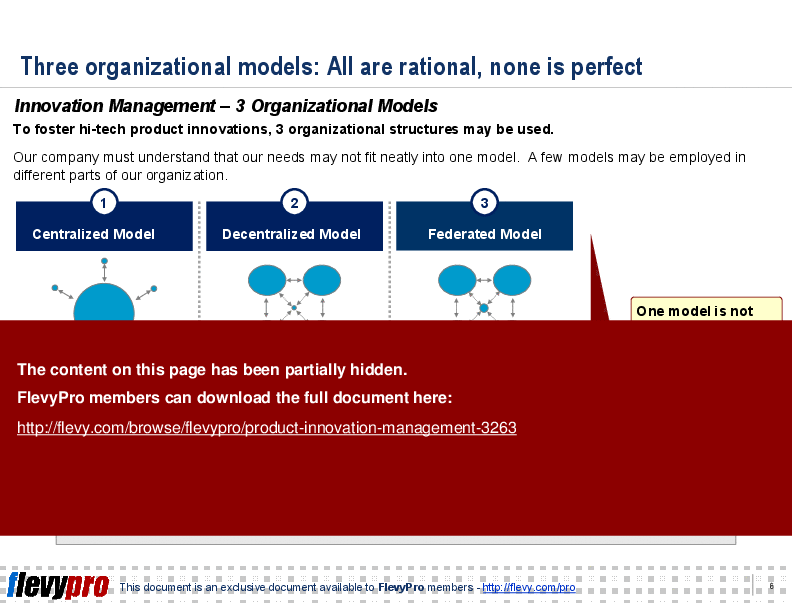
This PPT slide presents 3 organizational models for managing innovation in high-tech product development: Centralized, Decentralized, and Federated. The Centralized Model concentrates innovation responsibilities within a dedicated organization, streamlining decision-making, but potentially limiting flexibility. The Decentralized Model distributes innovation across various units, fostering creativity and responsiveness, though it may lead to inefficiencies and strategic incoherence. The Federated Model combines elements of both, embedding central innovation team members within business units for collaboration while maintaining centralized oversight, which can introduce governance complexities. Organizations must evaluate their unique culture and needs to determine the most effective innovation strategy.
This PPT slide outlines the characteristics and implications of a decentralized organizational model for innovation. In this structure, business units (BUs) are fully responsible for their innovation processes, from ideation to commercialization, fostering ownership and accountability. BU leaders manage core, adjacent, and transformational innovations directly, minimizing the risk of lost focus or investment in promising ideas. This model keeps sunk costs and "dead-on-arrival" projects to a minimum, enhancing overall efficiency. However, if BU leaders prioritize short-term metrics, mid- to long-term innovation efforts may suffer, leading to a culture of risk aversion and reluctance to pursue longer horizon projects. Balanced performance metrics are essential to encourage both short-term success and long-term innovation.
This PPT slide outlines 3 organizational models for innovation: Centralized, Decentralized, and Federated. The Centralized Model emphasizes transformational and disruptive ideas, supported by a protected innovation budget, and fosters cross-business unit collaboration. The Decentralized Model focuses on clear end-to-end ownership to mitigate the "Not Invented Here" syndrome and highlights the importance of streamlined commercialization processes for market-ready products. The Federated Model combines attributes from both Centralized and Decentralized approaches, promoting idea and resource sharing to enhance overall innovation capability. Customization of these models is common,, but essential attributes must be preserved to optimize innovation strategies.
This PPT slide outlines a strategic framework for selecting an organizational model based on 3 critical factors: industry disruption, market demand for co-development, and company culture. A high level of disruption requires a centralized or federated model to maintain a competitive edge, necessitating dedicated resources for long-term challenges. Significant market demand indicates the need for a centralized approach to create cohesive cross-business unit solutions. A collaborative culture supports a centralized model for optimal resource allocation, while a lack of collaboration may necessitate a decentralized model to enhance agility. The risks of imposing a centralized model in a silo mentality culture can exacerbate existing divides.
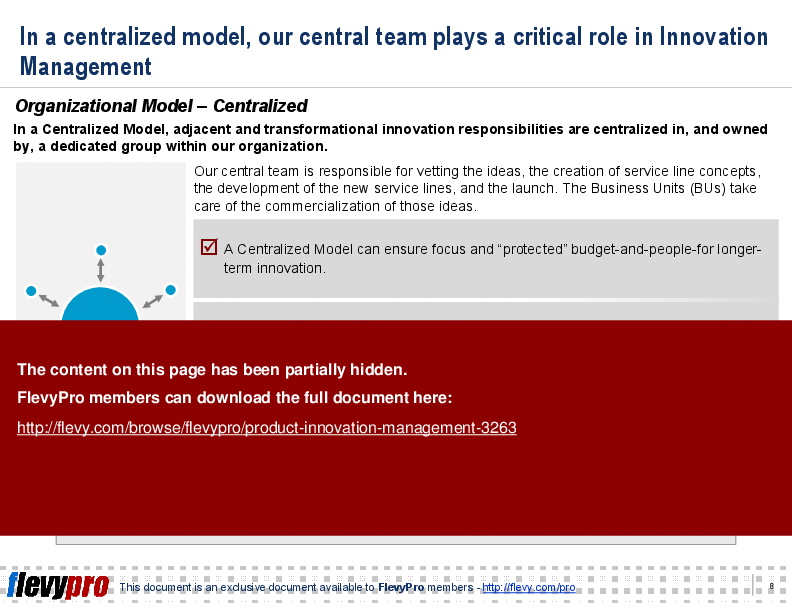
This PPT slide outlines a centralized organizational model for innovation management, highlighting a dedicated central team overseeing the innovation process from idea vetting to service line launch. Key advantages include a "protected" budget and dedicated personnel, leading to more successful innovation outcomes. However, challenges arise during the transition of ideas from the central team to Business Units (BUs), which can create friction and hinder collaboration. Resistance from BUs towards innovations perceived as unsuitable for their roadmaps can further complicate adoption. The central team must demonstrate early and sustained commercial success to maintain credibility and support for the centralized model, emphasizing the need for clear communication and alignment with BUs.
Source: Best Practices in Innovation, Product Strategy PowerPoint Slides: Product Innovation Management PowerPoint (PPT) Presentation Slide Deck, LearnPPT Consulting
This framework is developed by a team of former McKinsey and Big 4 consultants. The presentation follows the headline-body-bumper slide format used by global consulting firms.
For $10.00 more, you can download this document plus 2 more FlevyPro documents. That's just $13 each.
ABOUT FLEVYPRO
This document is part of the FlevyPro Library, a curated knowledge base of documents for our FlevyPro subscribers.

FlevyPro is a subscription service for on-demand business frameworks and analysis tools. FlevyPro subscribers receive access to an exclusive library of curated business documents—business framework primers, presentation templates, Lean Six Sigma tools, and more—among other exclusive benefits.
Since 2012, we have provided business templates to over 10,000 businesses and organizations of all sizes, from startups and small businesses to the Fortune 100, in over 130 countries.
"As a young consulting firm, requests for input from clients vary and it's sometimes impossible to provide expert solutions across a broad spectrum of requirements. That was before I discovered Flevy.com.
Through subscription to this invaluable site of a plethora of topics that are key and crucial to consulting, I
have been able to exceed expectations and deliver quality advice and solutions to my clients. The quality and expertise of the authors are exemplary and gives me great confidence to use as part of my service offerings.
I highly recommend this company for any consultant wanting to apply international best practice standards in their service offerings.
"
– Nishi Singh, Strategist and MD at NSP Consultants
"The wide selection of frameworks is very useful to me as an independent consultant. In fact, it rivals what I had at my disposal at Big 4 Consulting firms in terms of efficacy and organization."
– Julia T., Consulting Firm Owner (Former Manager at Deloitte and Capgemini)
"As a small business owner, the resource material available from FlevyPro has proven to be invaluable. The ability to search for material on demand based our project events and client requirements was great for me and proved very beneficial to my clients. Importantly, being able to easily edit and tailor
the material for specific purposes helped us to make presentations, knowledge sharing, and toolkit development, which formed part of the overall program collateral. While FlevyPro contains resource material that any consultancy, project or delivery firm must have, it is an essential part of a small firm or independent consultant's toolbox.
"
– Michael Duff, Managing Director at Change Strategy (UK)
"I have found Flevy to be an amazing resource and library of useful presentations for lean sigma, change management and so many other topics. This has reduced the time I need to spend on preparing for my performance consultation. The library is easily accessible and updates are regularly provided. A wealth of great information."
– Cynthia Howard RN, PhD, Executive Coach at Ei Leadership
"As a consultant requiring up to date and professional material that will be of value and use to my clients, I find Flevy a very reliable resource.
The variety and quality of material available through Flevy offers a very useful and commanding source for information. Using Flevy saves me time, enhances my expertise and ends up being a good decision."
– Dennis Gershowitz, Principal at DG Associates
"My FlevyPro subscription provides me with the most popular frameworks and decks in demand in today’s market. They not only augment my existing consulting and coaching offerings and delivery, but also keep me abreast of the latest trends, inspire new products and service offerings for my practice, and educate me
in a fraction of the time and money of other solutions. I strongly recommend FlevyPro to any consultant serious about success.
"
– Bill Branson, Founder at Strategic Business Architects
"FlevyPro provides business frameworks from many of the global giants in management consulting that allow you to provide best in class solutions for your clients."
– David Harris, Managing Director at Futures Strategy
"FlevyPro has been a brilliant resource for me, as an independent growth consultant, to access a vast knowledge bank of presentations to support my work with clients. In terms of RoI, the value I received from the very first presentation I downloaded paid for my subscription many times over! The
quality of the decks available allows me to punch way above my weight – it's like having the resources of a Big 4 consultancy at your fingertips at a microscopic fraction of the overhead.
"
– Roderick Cameron, Founding Partner at SGFE Ltd
Save with Bundles
This document is available as part of the following discounted bundle(s):
Download our free compilation of 50+ Strategy & Transformation slides and templates. Frameworks include McKinsey 7-S, Balanced Scorecard, Disruptive Innovation, BCG Curve, and many more.