
Outcome-Driven Innovation (ODI)   35-slide PPT PowerPoint presentation slide deck (PPTX)
$29.00

Outcome-Driven Innovation (ODI) (35-slide PPT PowerPoint presentation slide deck (PPTX)) Preview Image
Log in to unlock full preview.
Outcome-Driven Innovation (ODI) (35-slide PPT PowerPoint presentation slide deck (PPTX)) Preview Image
Arrow   Click main image to view in full screen.

Outcome-Driven Innovation (ODI) (PowerPoint PPTX Slide Deck)

PowerPoint (PPTX) 35 Slides FlevyPro Document

#1 in Value Proposition $29.00
FlevyPro price: FREE (included in subscription)
This framework is developed by a team of former McKinsey and Big 4 consultants. The presentation follows the headline-body-bumper slide format used by global consulting firms.
Add to Cart


Immediate download
Free lifetime updates

INNOVATION MANAGEMENT PPT DESCRIPTION

Editor Summary Outcome-Driven Innovation (ODI) is a 35-slide PowerPoint (PPTX) by LearnPPT Consulting outlining a 10-step ODI process that connects Jobs-to-Be-Done (JTBD) analysis to product and market strategy. Read more

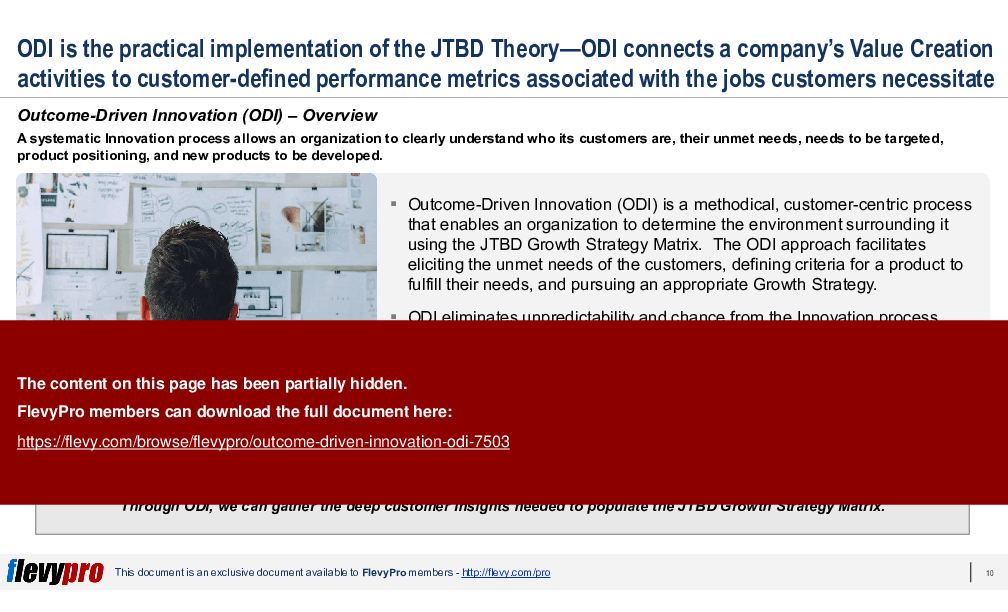
A systematic Innovation process allows an organization to clearly understand who its customers are, their unmet needs, needs to be targeted, product positioning, and new products to be developed.

This presentation highlights the Outcome-Driven Innovation (ODI) approach. ODI is a methodical, customer-centric process that enables an organization to determine the environment surrounding it using the JTBD Growth Strategy Matrix. The ODI process facilitates in eliciting the unmet needs of the customers, criteria for a product to fulfill their needs, and pursue an appropriate Growth Strategy.

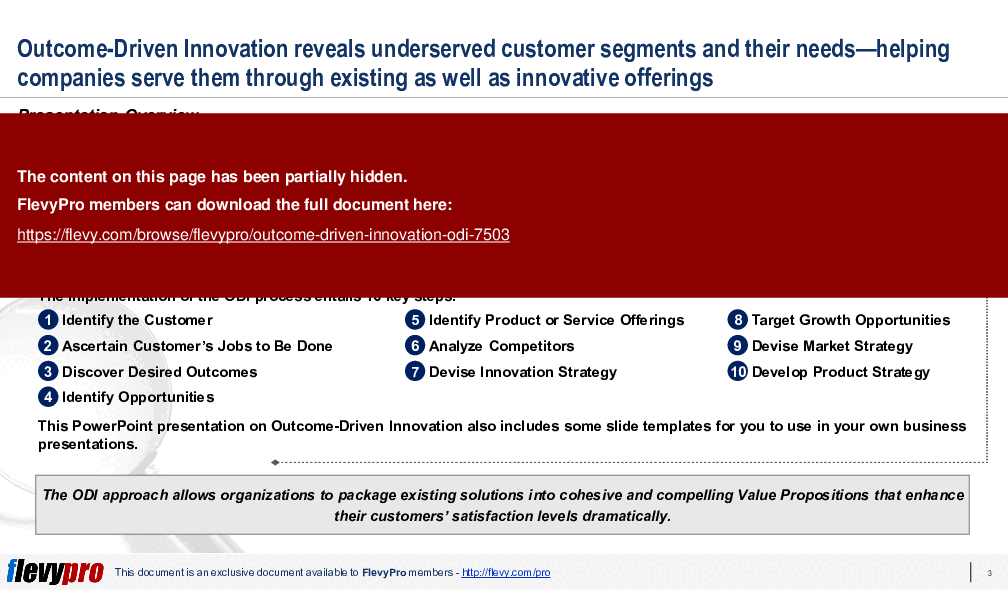
ODI eliminates unpredictability and chance from the Innovation process. Moreover, the ODI approach allows organizations to package existing solutions into cohesive and compelling Value Propositions that enhance their customers' satisfaction levels dramatically.

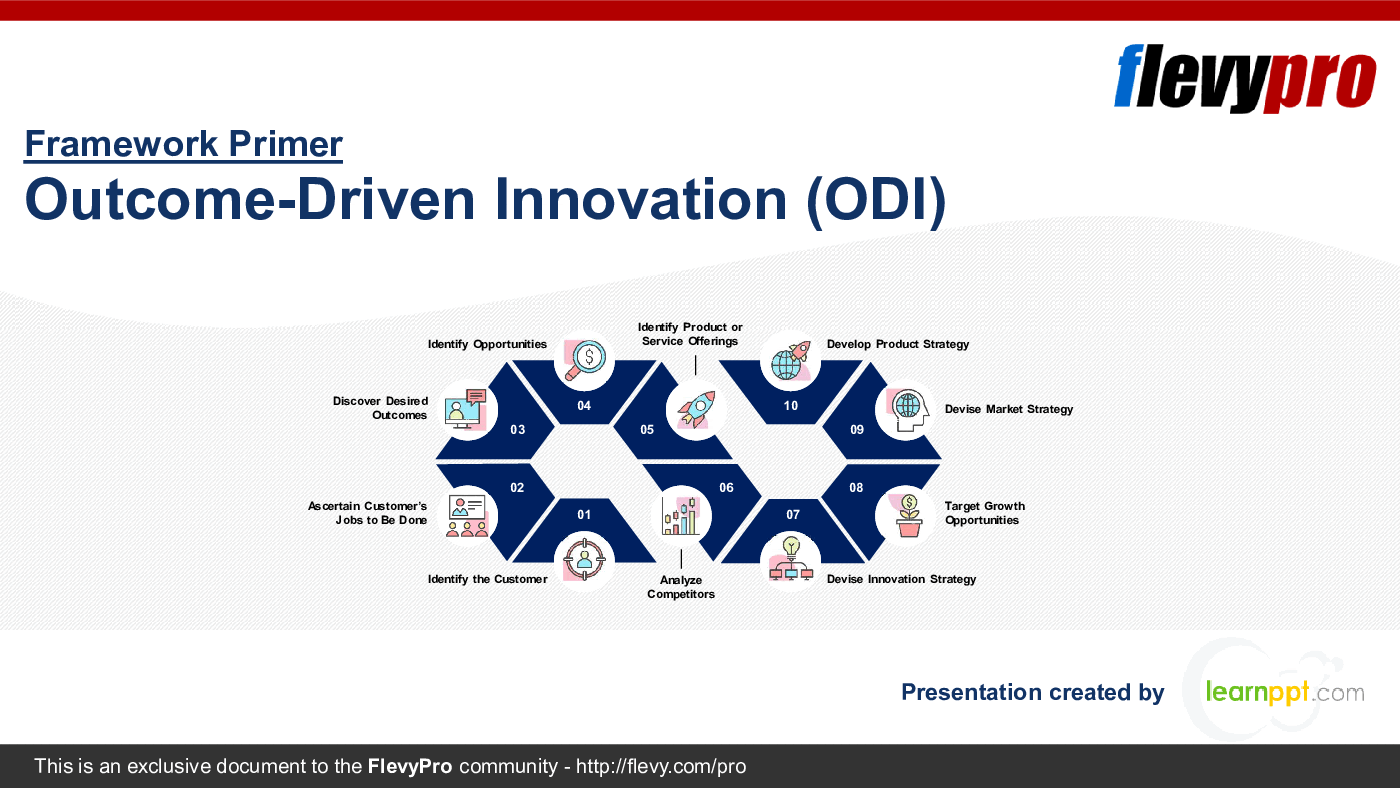
The implementation of the ODI process entails 10 key steps:

1. Identify the Customer
2. Ascertain Customer's Jobs to Be Done
3. Discover Desired Outcomes
4. Identify Opportunities
5. Identify Product or Service Offerings
6. Analyze Competitors
7. Devise Innovation Strategy
8. Target Growth Opportunities
9. Devise Market Strategy
10. Develop Product Strategy

In this presentation, we dig into each of these steps in detail. Additional concepts discussed include the 5 JTBD Growth Strategies, Job Map, Opportunity Algorithm, Opportunity Landscape, Product Strategy, among others.

This PowerPoint presentation on Outcome-Driven Innovation also includes some slide templates for you to use in your own business presentations.

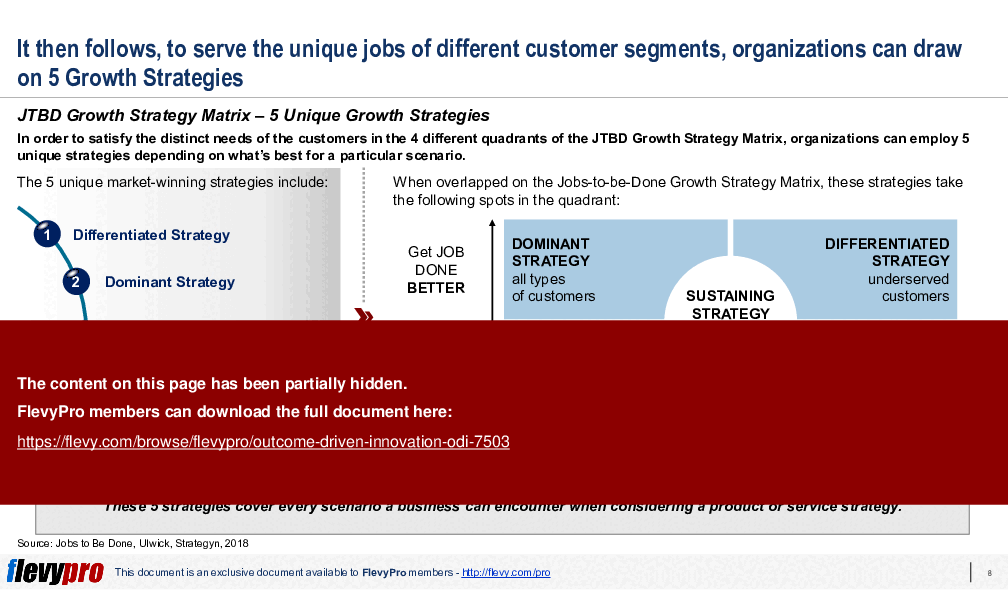
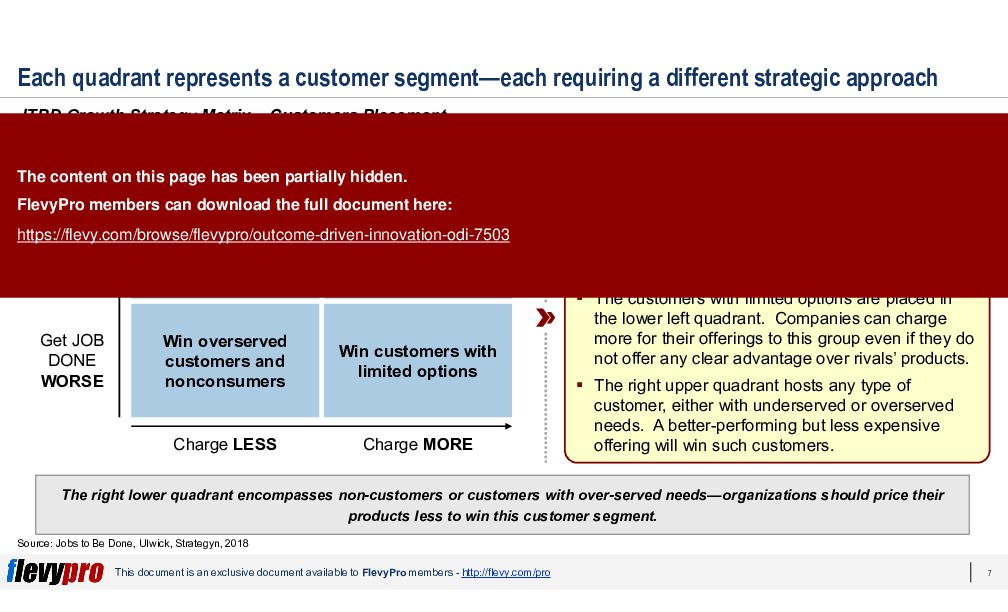
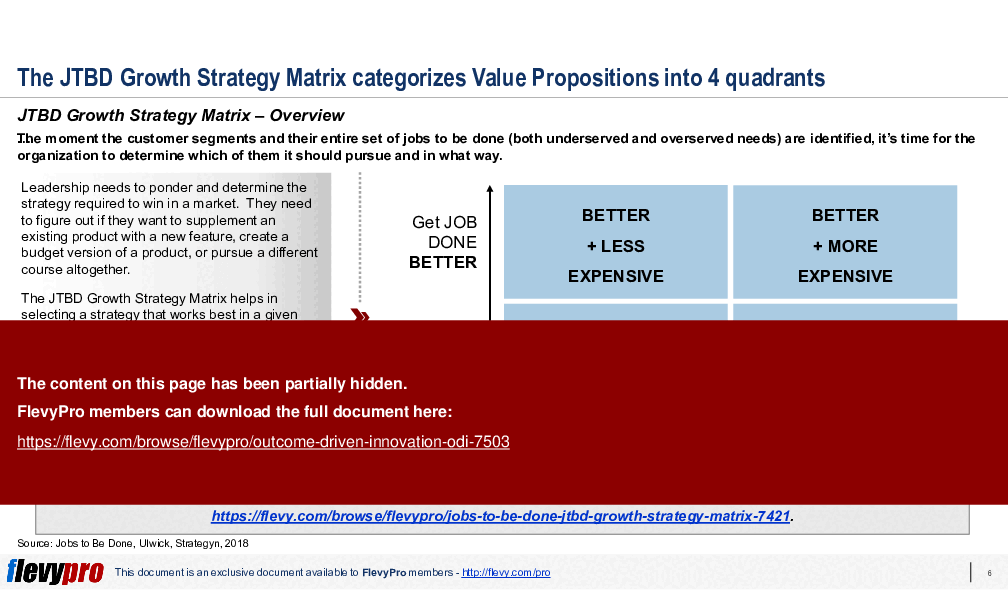
This PPT provides a deep dive into the JTBD Growth Strategy Matrix, offering a robust framework for categorizing value propositions across different customer segments. Leadership can leverage this matrix to determine the optimal strategy for market success, whether it involves enhancing existing products or developing entirely new solutions. The presentation also includes practical templates and detailed guidelines for structuring your slides, ensuring your presentations are both professional and impactful. The ODI methodology has been instrumental for numerous multinational organizations in achieving significant growth by addressing unmet customer needs effectively.

Got a question about this document? Email us at flevypro@flevy.com.

MARCUS OVERVIEW

This synopsis was written by Marcus [?] based on the analysis of the full 35-slide presentation.


Executive Summary
The Outcome-Driven Innovation (ODI) PowerPoint presentation serves as a comprehensive guide for organizations aiming to enhance their innovation processes. This structured framework helps businesses identify customer needs, prioritize growth opportunities, and develop effective product strategies. By leveraging the Jobs-to-Be-Done (JTBD) theory, the ODI approach eliminates uncertainty in innovation, enabling companies to create compelling value propositions that significantly improve customer satisfaction. This presentation includes actionable templates and a clear methodology for implementing ODI in various business contexts.

Who This Is For and When to Use
•  Product Managers seeking to refine their innovation strategies
•  Marketing Teams focused on understanding customer needs and market opportunities
•  Business Executives aiming to align product development with customer expectations
•  Consultants working with organizations to enhance their innovation frameworks

Best-fit moments to use this deck:
•  During strategic planning sessions to align innovation initiatives with customer needs
•  In workshops aimed at developing new product offerings based on customer insights
•  When conducting market analysis to identify underserved customer segments

Learning Objectives
•  Define the Outcome-Driven Innovation framework and its significance
•  Identify customer segments and their specific jobs to be done
•  Discover desired outcomes that measure customer success
•  Analyze competitors to refine value propositions
•  Develop targeted growth strategies based on customer insights
•  Create actionable product strategies that fulfill customer needs

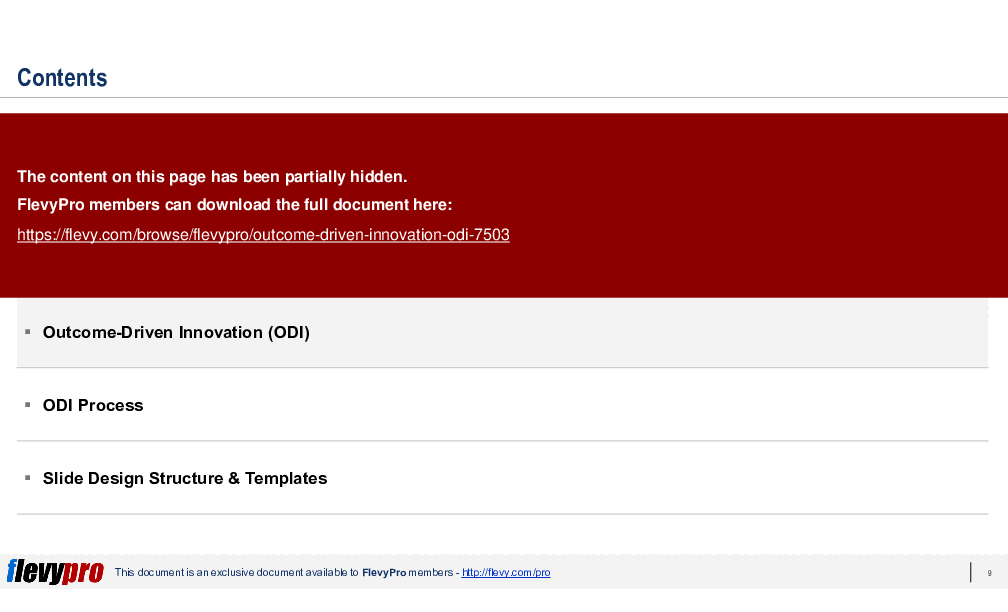
Table of Contents
•  Overview (page 3)
•  Jobs-to-Be-Done (JTBD) Growth Strategy Matrix (page 6)
•  Outcome-Driven Innovation (ODI) (page 10)
•  ODI Process (page 11)
•  Slide Design Structure & Templates (page 24)

Primary Topics Covered
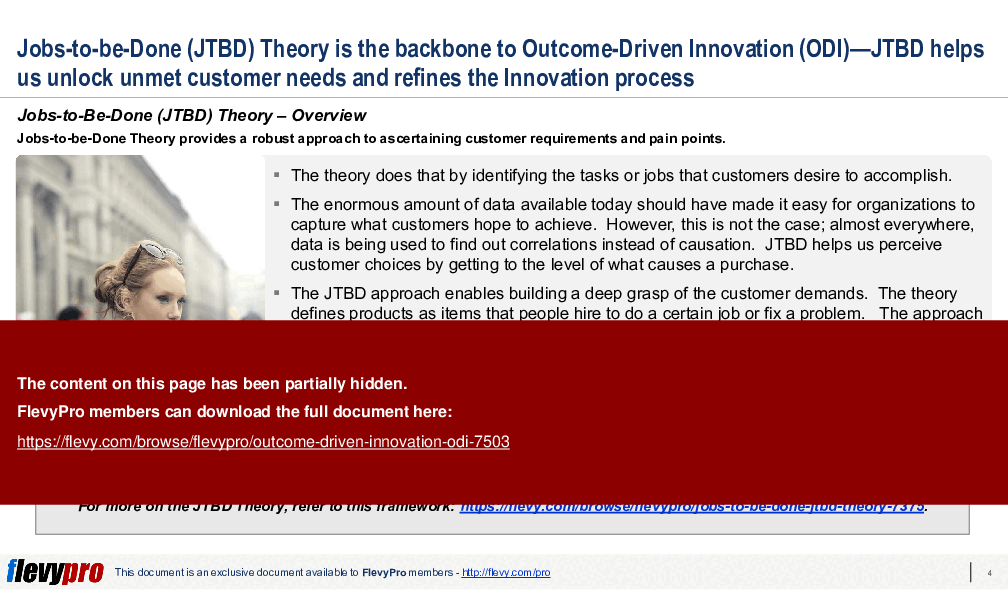
•  Jobs-to-Be-Done Theory - A framework for understanding customer needs by focusing on the tasks they aim to accomplish rather than the products themselves.
•  ODI Framework - A structured approach that connects customer-defined performance metrics with innovation activities.
•  Customer Segmentation - The process of categorizing customers based on their specific jobs to be done and unmet needs.
•  Desired Outcomes - Metrics that define customer success and satisfaction levels in fulfilling their jobs.
•  Market Strategy Development - Techniques for aligning product offerings with customer needs and market demands.
•  Product Strategy Formulation - Steps to create compelling value propositions that address customer jobs effectively.

Deliverables, Templates, and Tools
•  Jobs-to-Be-Done framework template for identifying customer needs
•  ODI process flowchart for visualizing the innovation steps
•  Market strategy development template to align offerings with customer expectations
•  Product strategy template for detailing how to fulfill identified customer needs
•  Competitive analysis framework to assess market positioning
•  Growth opportunity assessment tool for prioritizing customer segments

Slide Highlights
•  Overview of the ODI process illustrating the key steps in innovation
•  JTBD Growth Strategy Matrix categorizing customer segments and strategies
•  Visual representation of the ODI methodology for need-based segmentation
•  Templates for developing market and product strategies
•  Detailed steps for analyzing competitors and identifying growth opportunities

Potential Workshop Agenda
ODI Framework Introduction (60 minutes)
•  Overview of the ODI process and its significance
•  Discussion on the importance of customer-centric innovation

Jobs-to-Be-Done Analysis (90 minutes)
•  Group activity to identify customer jobs to be done
•  Development of Desired Outcome Statements

Market Strategy Development (60 minutes)
•  Workshop on aligning product offerings with customer needs
•  Presentation of market strategy templates and tools

Customization Guidance
•  Tailor the ODI framework to fit specific organizational contexts and customer segments
•  Adjust the Jobs-to-Be-Done statements based on direct customer feedback
•  Modify market strategy templates to reflect unique value propositions and competitive advantages

Secondary Topics Covered
•  Importance of customer insights in driving innovation
•  Techniques for effective market segmentation
•  Role of qualitative and quantitative research in understanding customer needs
•  Strategies for leveraging existing products to meet underserved needs

Topic FAQ

What are the core steps of the Outcome-Driven Innovation (ODI) process?

ODI is organized as a 10-step sequence that begins with identifying the customer and their Jobs-to-Be-Done, proceeds through discovering Desired Outcomes and identifying opportunities, and ends with market and product strategy development. Flevy's Outcome-Driven Innovation (ODI) presentation enumerates these 10 key steps.

How does the Jobs-to-Be-Done (JTBD) theory support an ODI approach?

JTBD reframes customer needs as tasks customers aim to accomplish rather than product features. In ODI, JTBD is used to segment customers, elicit Desired Outcome statements, and inform which value propositions to pursue, typically operationalized via the JTBD Growth Strategy Matrix.

What are Desired Outcome Statements and why do they matter for innovation?

Desired Outcome Statements quantify how customers measure success when completing a job, revealing where performance improvements matter most. In ODI, they form the basis for assessing unmet needs and prioritizing product features, serving as measurable criteria for innovation decisions.

What is the Opportunity Algorithm and how is it used to prioritize growth areas?

The Opportunity Algorithm assesses the significance of specific customer needs against current satisfaction levels to highlight high-potential gaps. Organizations use it to rank unmet outcomes and target segments with the largest opportunity; the algorithm is included in Flevy's Outcome-Driven Innovation (ODI) materials.

What should I look for in an ODI toolkit if I need to run a one-day innovation workshop?

For a one-day workshop, prioritize slide templates and a clear workshop agenda, tools to capture JTBD and Desired Outcome statements, and a method for opportunity ranking such as the Opportunity Algorithm. Look for deliverables that include a Job Map, market strategy templates, and a competitive analysis framework.

How should I assess the value of purchasing ODI slide templates versus building my own materials?

Assess time savings, reproducibility, and whether the templates map directly to ODI activities you need—customer identification, JTBD capture, Opportunity Algorithm scoring, and market/product strategy outputs. Flevy's Outcome-Driven Innovation (ODI) package lists templates for Jobs-to-Be-Done, market strategy, and product strategy as concrete deliverables.

I need to prioritize a product roadmap after low adoption—how can ODI help me reorient development?

Apply ODI by identifying the job customers are hiring your product for, eliciting Desired Outcome statements, and using the Opportunity Algorithm to rank unmet needs. This produces a prioritized set of improvements or new offerings that address the highest-value outcomes, guided by the Opportunity Landscape.

How can I structure a half-day ODI workshop to generate usable Desired Outcome statements?

Use a focused agenda: introduce the ODI framework (about 60 minutes), run a JTBD analysis activity to develop Desired Outcome statements (about 90 minutes), and finish with market strategy alignment (about 60 minutes). The supplied workshop agenda in the materials maps to those 60/90/60 minute segments.

Document FAQ
These are questions addressed within this presentation.

What is Outcome-Driven Innovation?
ODI is a systematic, customer-centric approach that connects innovation activities with customer-defined performance metrics, enabling organizations to fulfill unmet needs effectively.

How does the Jobs-to-Be-Done theory relate to ODI?
JTBD theory serves as the foundation for ODI, helping organizations identify customer tasks and refine their innovation processes to better serve those needs.

What are Desired Outcome Statements?
These statements quantify how customers measure success in completing their jobs, providing insights into what improvements are necessary for satisfaction.

How can I implement the ODI framework in my organization?
Start by identifying customer segments and their jobs to be done, then use the ODI process to develop targeted strategies that align with those needs.

What tools are included in the presentation?
The presentation includes templates for Jobs-to-Be-Done analysis, market strategy development, and product strategy formulation, among others.

How can I analyze competitors effectively?
Utilize the competitive analysis framework provided in the presentation to assess existing offerings against customer desired outcomes and identify gaps.

What is the significance of market segmentation in ODI?
Market segmentation allows organizations to target distinct value propositions to customer groups, ensuring that innovation efforts are focused on those with unmet needs.

How do I prioritize growth opportunities?
Use the Opportunity Algorithm included in the presentation to assess the significance of customer needs and their satisfaction levels to identify the most promising growth areas.

Glossary
•  Outcome-Driven Innovation (ODI) - A structured approach to innovation focused on customer-defined outcomes.
•  Jobs-to-Be-Done (JTBD) - A framework for understanding customer needs by focusing on the tasks they aim to accomplish.
•  Desired Outcome Statements - Metrics that define customer success in fulfilling their jobs.
•  Market Strategy - A plan for aligning product offerings with customer needs and market demands.
•  Product Strategy - A systematic approach to developing offerings that meet customer needs effectively.
•  Customer Segmentation - The process of categorizing customers based on their specific jobs to be done.
•  Opportunity Algorithm - A tool for assessing growth opportunities based on customer needs and satisfaction levels.
•  Value Proposition - A statement that outlines how a product or service meets customer needs better than competitors.
•  Competitive Analysis - The process of evaluating competitors to identify strengths and weaknesses in the market.
•  Growth Opportunities - Areas identified for potential expansion based on customer insights and market analysis.
•  Innovation Strategy - A systematic plan that outlines how to target unmet customer needs effectively.
•  Market Research - The process of gathering data to understand customer needs and market dynamics.

INNOVATION MANAGEMENT PPT SLIDES

Strategic Framework for Effective Market Communication

Mapping Customer Success: Desired Outcomes in ODI

Identifying Customer Segments in the ODI Framework

JTBD Growth Strategy Matrix: Tailored Approaches for Customer Segments

Structured Approach to Outcome-Driven Innovation

Strategic Framework for Customer Value Proposition

Identifying Customer-Centric Product Offerings

Source: Best Practices in Innovation, Value Proposition, Customer-centric Design PowerPoint Slides: Outcome-Driven Innovation (ODI) PowerPoint (PPTX) Presentation Slide Deck, LearnPPT Consulting


$29.00
FlevyPro price: FREE (included in subscription)
This framework is developed by a team of former McKinsey and Big 4 consultants. The presentation follows the headline-body-bumper slide format used by global consulting firms.
Add to Cart
  

Did you need more documents?

Consider a FlevyPro subscription from $39/month. View plans here.

For $10.00 more, you can download this document plus 2 more FlevyPro documents. That's just $13 each.

ABOUT FLEVYPRO

This document is part of the FlevyPro Library, a curated knowledge base of documents for our FlevyPro subscribers.

FlevyPro is a subscription service for on-demand business frameworks and analysis tools. FlevyPro subscribers receive access to an exclusive library of curated business documents—business framework primers, presentation templates, Lean Six Sigma tools, and more—among other exclusive benefits.

Click here to learn more about FlevyPro and its benefits.

Did you know?
The average daily rate of a McKinsey consultant is $6,625 (not including expenses). The average price of a Flevy document is $65.
Bundle and save! You can save up to % with bundles!

View bundle(s)


Trusted by over 10,000+ Client Organizations
Since 2012, we have provided business templates to over 10,000 businesses and organizations of all sizes, from startups and small businesses to the Fortune 100, in over 130 countries.
AT&T GE Cisco Intel IBM Coke Dell Toyota HP Nike Samsung Microsoft Astrazeneca JP Morgan KPMG Walgreens Walmart 3M Kaiser Oracle SAP Google E&Y Volvo Bosch Merck Fedex Shell Amgen Eli Lilly Roche AIG Abbott Amazon PwC T-Mobile Broadcom Bayer Pearson Titleist ConEd Pfizer NTT Data Schwab


Read Customer Testimonials

 
"One of the great discoveries that I have made for my business is the Flevy library of training materials.

As a Lean Transformation Expert, I am always making presentations to clients on a variety of topics: Training, Transformation, Total Productive Maintenance, Culture, Coaching, Tools, Leadership Behavior, etc. Flevy "

– Ed Kemmerling, Senior Lean Transformation Expert at PMG
 
"If you are looking for great resources to save time with your business presentations, Flevy is truly a value-added resource. Flevy has done all the work for you and we will continue to utilize Flevy as a source to extract up-to-date information and data for our virtual and onsite presentations!"

– Debbi Saffo, President at The NiKhar Group
 
"FlevyPro provides business frameworks from many of the global giants in management consulting that allow you to provide best in class solutions for your clients."

– David Harris, Managing Director at Futures Strategy
 
"My FlevyPro subscription provides me with the most popular frameworks and decks in demand in today’s market. They not only augment my existing consulting and coaching offerings and delivery, but also keep me abreast of the latest trends, inspire new products and service offerings for my practice, and educate me "

– Bill Branson, Founder at Strategic Business Architects
 
"I am extremely grateful for the proactiveness and eagerness to help and I would gladly recommend the Flevy team if you are looking for data and toolkits to help you work through business solutions."

– Trevor Booth, Partner, Fast Forward Consulting
 
"As a young consulting firm, requests for input from clients vary and it's sometimes impossible to provide expert solutions across a broad spectrum of requirements. That was before I discovered Flevy.com.

Through subscription to this invaluable site of a plethora of topics that are key and crucial to consulting, I "

– Nishi Singh, Strategist and MD at NSP Consultants
 
"As a niche strategic consulting firm, Flevy and FlevyPro frameworks and documents are an on-going reference to help us structure our findings and recommendations to our clients as well as improve their clarity, strength, and visual power. For us, it is an invaluable resource to increase our impact and value."

– David Coloma, Consulting Area Manager at Cynertia Consulting
 
"As an Independent Management Consultant, I find Flevy to add great value as a source of best practices, templates and information on new trends. Flevy has matured and the quality and quantity of the library is excellent. Lastly the price charged is reasonable, creating a win-win value for "

– Jim Schoen, Principal at FRC Group


Save with Bundles

This document is available as part of the following discounted bundle(s):

Save %!
Product Innovation Frameworks

This bundle contains 3 total documents. See all the documents to the right.

$49.00


Add Bundle & Save


Customers Also Bought These Documents


Customers Also Like These Documents

Explore Templates on Related Management Topics


Your Recently Viewed Documents
Download our FREE Strategy & Transformation Framework Templates

Download our free compilation of 50+ Strategy & Transformation slides and templates. Frameworks include McKinsey 7-S, Balanced Scorecard, Disruptive Innovation, BCG Curve, and many more.