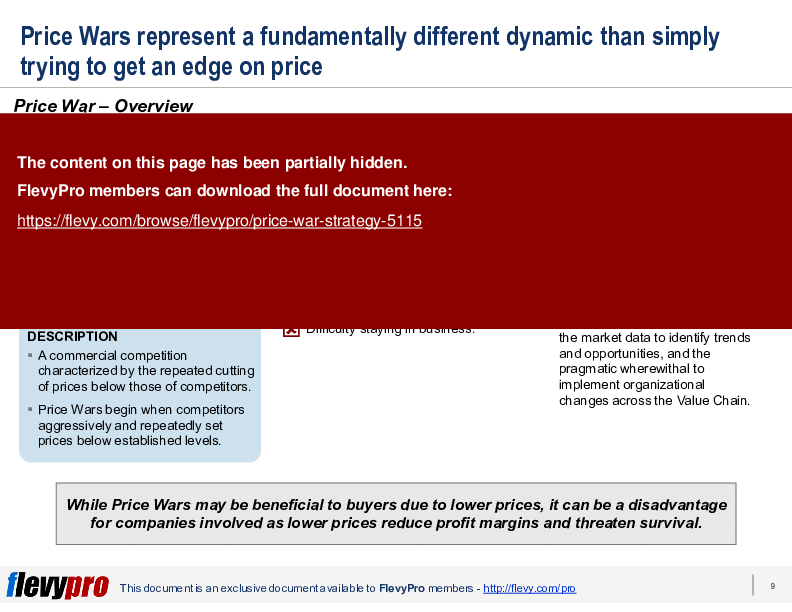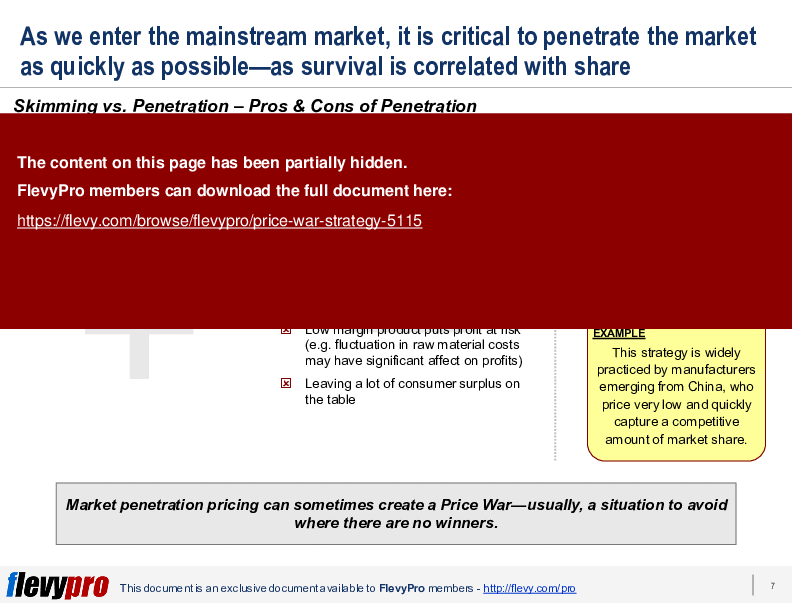

Many companies are competing on the basis of low prices. Yet, Price Wars represent a fundamentally different dynamic than simply trying to get an edge on price. These begin when competitors aggressively and repeatedly set prices below established levels. In many cases, companies that initiate Price Wars engage in self-destructive behavior, which can lead to downward pricing spirals.
Whenever Price Wars erupt, companies find themselves in commodity traps. Profits narrowed considerably and weak competitors had difficulty staying in business. It has been a common view that the way to winning a Price War is to have a superior cost structure. However, further studies showed that this is not the only way to gain the upper hand.
Under the right circumstances, it is possible for a company to win a Price War by leveraging specific set of strategic capabilities.
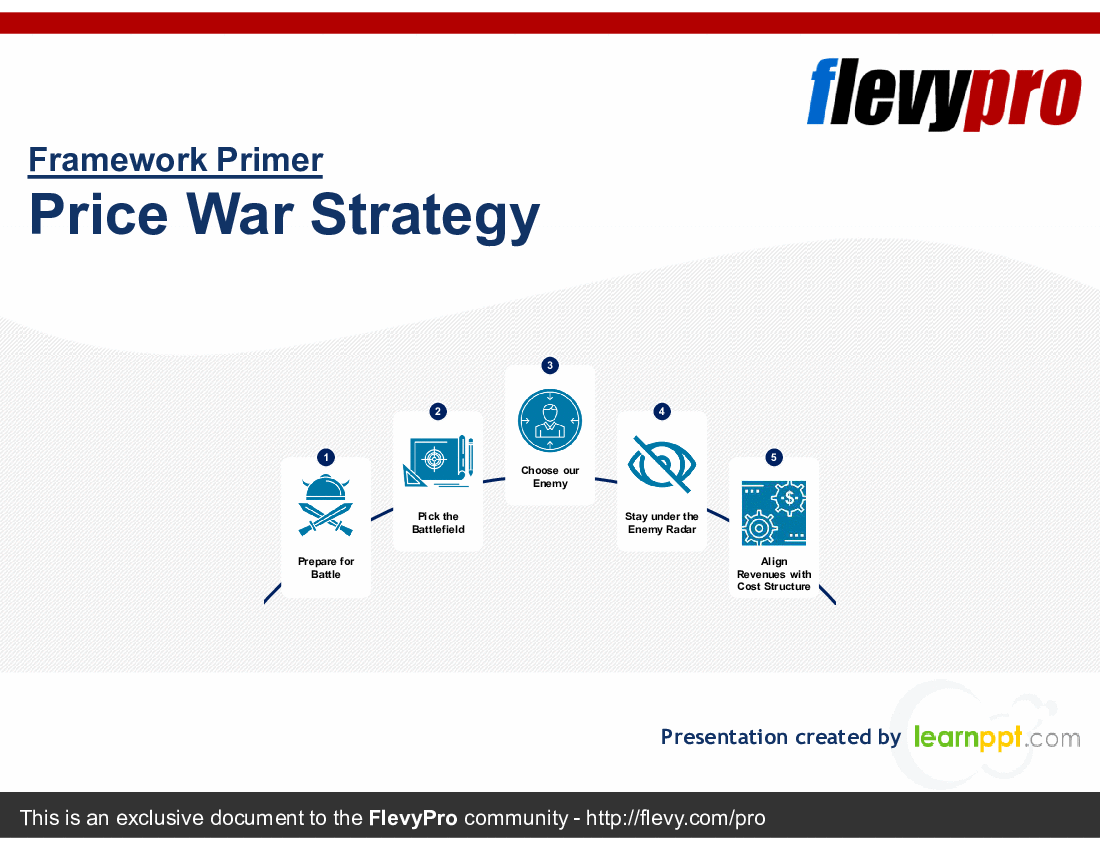
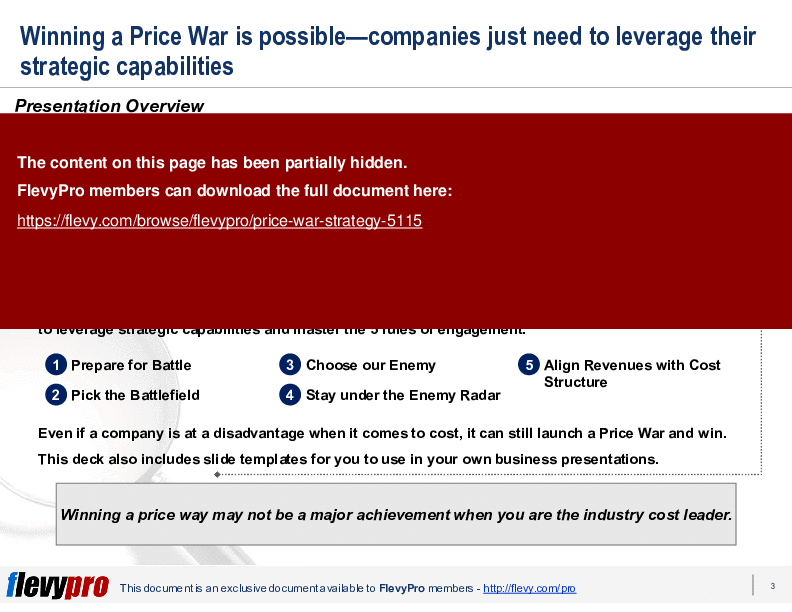
Winning a Price War is possible and even the weakest company can succeed. It just requires the ability to leverage strategic capabilities and master the 5 rules of engagement:
1. Prepare for Battle
2. Pick the Battlefield
3. Choose our Enemy
4. Stay under the Enemy Radar
5. Align Revenues with Cost Structure
Even if a company is at a disadvantage when it comes to cost, it can still launch a Price War and win.
This deck also includes slide templates for you to use in your own business presentations.
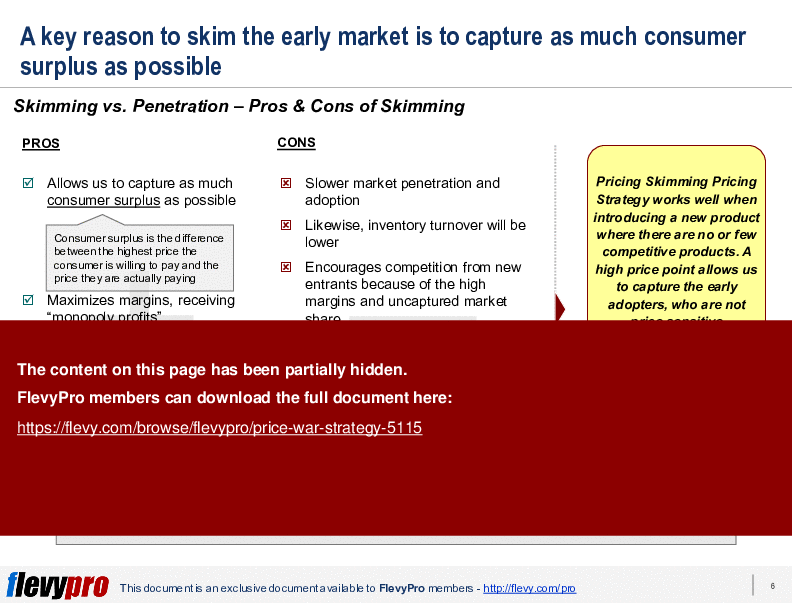
The Price War Strategy PPT delves into the critical decision-making process between skimming and penetration pricing strategies. It provides a detailed analysis of the pros and cons of each approach, helping executives understand how to capture consumer surplus and maximize margins. The deck emphasizes the importance of choosing the right battlefield and targeting specific competitors to gain a strategic advantage. It also highlights the necessity of aligning pricing decisions with the broader value chain and cost structures to ensure sustainable success. This comprehensive guide is essential for any company looking to navigate the complexities of price wars effectively.
Got a question about this document? Email us at flevypro@flevy.com.
Executive Summary
The Price War Strategy presentation provides a comprehensive framework for navigating competitive pricing dynamics. Designed by former consultants from McKinsey and the Big 4, this deck equips corporate executives and consultants with the strategic capabilities necessary to engage in and win price wars. It emphasizes the importance of leveraging specific strategic capabilities rather than solely relying on cost advantages. The presentation outlines 5 essential rules of engagement that guide organizations in preparing for and executing effective pricing strategies, ultimately enhancing profitability and market positioning.
Who This Is For and When to Use
• Pricing strategists and analysts focused on competitive positioning.
• Marketing teams responsible for pricing decisions and market entry strategies.
• Business development leaders aiming to capture market share through pricing tactics.
• Executives in industries prone to price competition, such as retail and consumer goods.
Best-fit moments to use this deck:
• During strategic planning sessions to align pricing strategies with business objectives.
• When entering a new market or launching a new product to establish competitive pricing.
• In response to competitive pressures that necessitate a reevaluation of pricing strategies.
Learning Objectives
• Define the dynamics of price wars and their implications for market competition.
• Build a strategic framework for engaging in price wars effectively.
• Establish actionable steps for preparing an organization for potential price competition.
• Identify and leverage strategic capabilities to navigate pricing challenges.
• Align pricing strategies with overall business objectives and cost structures.
• Develop templates for implementing pricing strategies in real-world scenarios.
Table of Contents
• Overview (page 3)
• Skimming vs. Penetration (page 5)
• Price War (page 9)
• Winning a Price War (page 11)
• Templates (page 19)
Primary Topics Covered
• Overview of Price Wars - Price wars are characterized by aggressive price reductions among competitors, often leading to diminished profits and market instability.
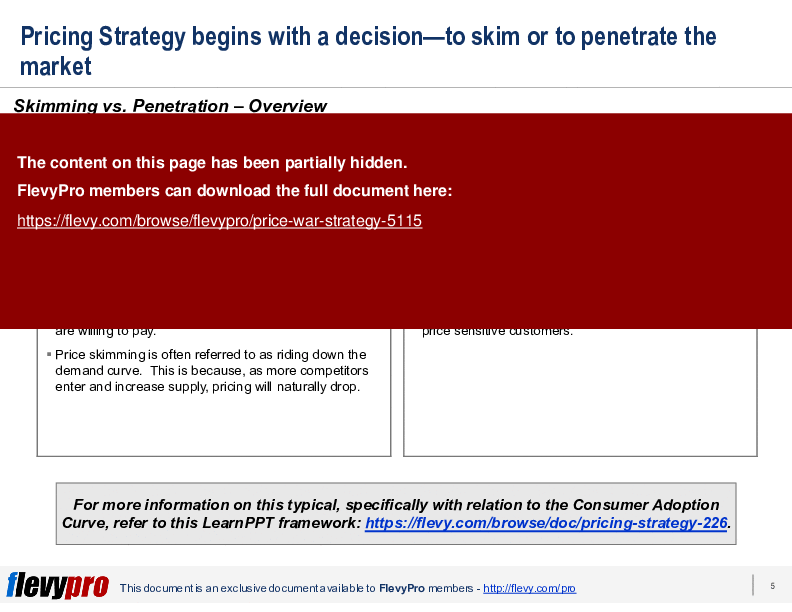
• Skimming vs. Penetration - This section discusses 2 primary pricing strategies: skimming, which maximizes margins by starting with high prices, and penetration, which aims for rapid market share through low initial pricing.
• Causes of Price Wars - Identifies factors that trigger price wars, including market conditions, competitor actions, and pricing strategies.
• Winning a Price War - Outlines 5 rules of engagement that companies can follow to successfully navigate price wars.
• Strategic Capabilities - Emphasizes the importance of leveraging strategic capabilities to maintain competitiveness in price-sensitive markets.
Deliverables, Templates, and Tools
• Pricing strategy templates for skimming and penetration approaches.
• Frameworks for analyzing market conditions and competitor pricing.
• Action plans for preparing an organization for potential price wars.
• Guidelines for aligning pricing strategies with cost structures and business objectives.
Slide Highlights
• Overview of the 5 rules of engagement for winning a price war.
• Comparative analysis of skimming vs. penetration pricing strategies.
• Case study of Albert Heijn's successful price war strategy in the Netherlands.
• Visual frameworks illustrating the dynamics of price wars and strategic responses.
Potential Workshop Agenda
Price War Strategy Overview (60 minutes)
• Introduce the concept of price wars and their implications.
• Discuss the importance of strategic capabilities in pricing decisions.
Skimming vs. Penetration Workshop (45 minutes)
• Analyze the pros and cons of each pricing strategy.
• Develop a pricing strategy based on market conditions.
Winning a Price War Session (90 minutes)
• Review the 5 rules of engagement.
• Create action plans for implementing pricing strategies.
Customization Guidance
• Tailor the pricing strategy templates to reflect specific market conditions and organizational goals.
• Adjust the case studies and examples to align with industry-specific challenges and competitors.
• Incorporate internal data and metrics to enhance the relevance of the frameworks.
Secondary Topics Covered
• The impact of pricing strategies on brand perception and market share.
• The role of market analysis in shaping pricing decisions.
• Strategies for managing customer expectations during price changes.
Topic FAQ
Document FAQ
These are questions addressed within this presentation.
What is a price war?
A price war is a competitive situation where companies repeatedly lower prices to gain market share, often leading to reduced profit margins.
How can a company win a price war without being the cost leader?
By leveraging strategic capabilities such as market analysis, customer insights, and operational efficiencies, a company can effectively compete even without the lowest prices.
What are the 5 rules of engagement for winning a price war?
The rules include preparing for battle, picking the battlefield, choosing the enemy, staying under the enemy radar, and aligning revenues with cost structures.
What is the difference between skimming and penetration pricing?
Skimming involves setting high initial prices to maximize margins, while penetration pricing sets low initial prices to quickly capture market share.
How can this presentation be customized for my organization?
The templates and frameworks can be tailored to reflect your organization's specific market conditions, strategic goals, and competitive landscape.
What tools are included in the presentation?
The presentation includes templates for pricing strategies, frameworks for market analysis, and action plans for implementing pricing decisions.
How can I apply the insights from this presentation?
Use the frameworks and templates to guide your pricing strategy discussions, align your pricing with business objectives, and prepare for potential competitive pressures.
Glossary
• Price War - A competitive scenario characterized by repeated price reductions among competitors.
• Skimming Pricing - A strategy of setting high initial prices to maximize margins.
• Penetration Pricing - A strategy of setting low initial prices to quickly capture market share.
• Strategic Capabilities - The skills and resources that enable a company to effectively compete in the market.
• Market Analysis - The process of assessing market conditions, competitor actions, and customer preferences.
• Revenue Alignment - Ensuring that pricing strategies are consistent with organizational cost structures and financial goals.
• Competitive Landscape - The overall market environment, including competitors, market share, and pricing strategies.
• Customer Insights - Understanding customer preferences and behaviors to inform pricing decisions.
• Operational Efficiency - The ability to deliver products or services in a cost-effective manner.
• Brand Perception - How customers view a brand based on pricing, quality, and market positioning.
• Market Share - The portion of a market controlled by a particular company or product.
• Pricing Strategy - A plan for setting prices based on market conditions, competition, and business objectives.
• Action Plan - A detailed outline of steps to implement a strategy or initiative.
• Framework - A structured approach to analyzing and addressing business challenges.
• Template - A pre-designed document that can be customized for specific needs.
• Competitive Pricing - Setting prices based on the prices of competitors.
• Customer Expectations - The anticipated level of service or quality that customers expect from a brand.
• Cost Structure - The various costs associated with producing and delivering products or services.
• Market Conditions - The economic and competitive factors that influence pricing and sales.
• Strategic Intent - The overarching goals and objectives that guide a company's actions and decisions.
• Value Chain - The series of steps a company takes to deliver a product or service to the market.
Source: Best Practices in Pricing Strategy PowerPoint Slides: Price War Strategy PowerPoint (PPTX) Presentation Slide Deck, LearnPPT Consulting
Did you need more documents?
Consider a FlevyPro subscription from $39/month. View plans here.
For $10.00 more, you can download this document plus 2 more FlevyPro documents. That's just $13 each.
|
Download our FREE Strategy & Transformation Framework Templates
Download our free compilation of 50+ Strategy & Transformation slides and templates. Frameworks include McKinsey 7-S, Balanced Scorecard, Disruptive Innovation, BCG Curve, and many more. |