
This framework is developed by a team of former McKinsey and Big 4 consultants. The presentation follows the headline-body-bumper slide format used by global consulting firms.
Explore the Organizational Forgetting Matrix developed by ex-McKinsey & Big 4 consultants. Understand memory decay, unlearning, and knowledge retention strategies. Organizational Forgetting is a 27-slide PPT PowerPoint presentation slide deck (PPTX) available for immediate download upon purchase.
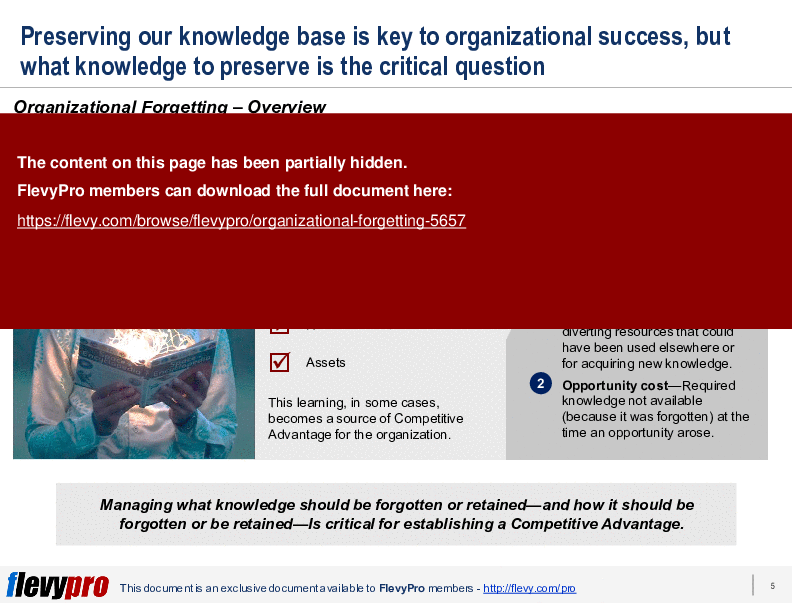
Organizations have, in recent times, become aware of the worth of regulating their Organizational Knowledge. Extensive studies in academia have been conducted on the subject, because of its importance. In fact, Organizational Knowledge can make or break an organization.
Some organizations forget things they should know and incur huge costs to replace lost knowledge. Conversely, there is knowledge that traps the organizations in the past and keeps them reliant on uncompetitive technologies, dysfunctional cultures, and untenable assumptions. Successful organizations make themselves adept at avoiding these pitfalls.
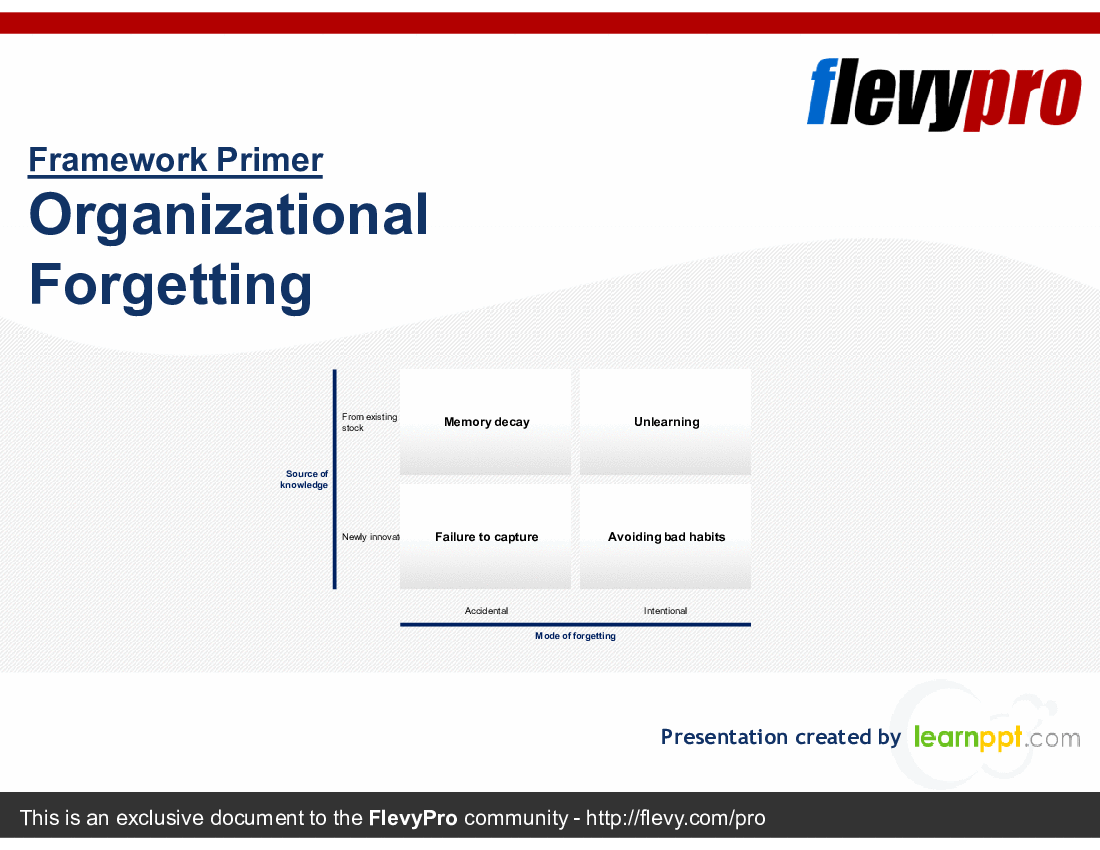
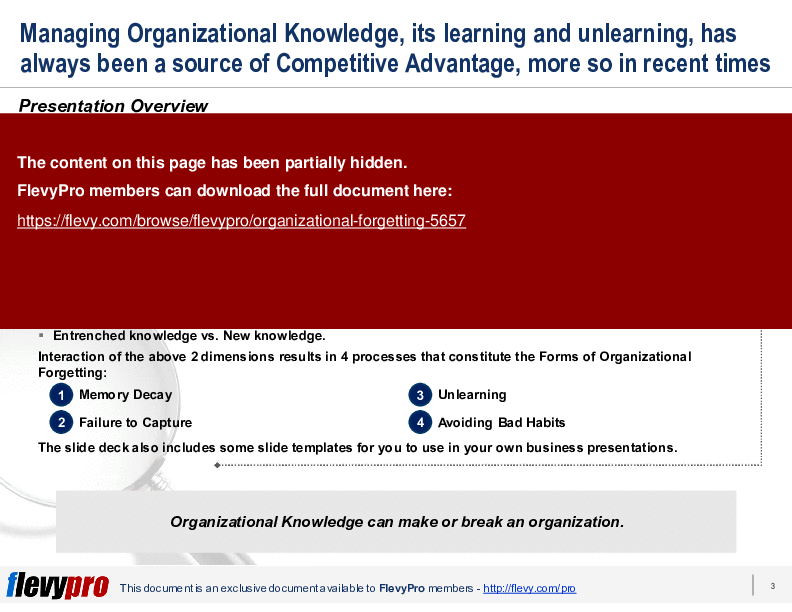
This presentation peers inside the Organizational Forgetting Matrix that highlights the 4 forms of Organizational Forgetting. These forms of Organizational Forgetting are a consequence of interaction of the following 2 dimensions:
1. Accidental Forgetting vs. Intentional Forgetting.
2. Entrenched knowledge vs. New knowledge.
Interaction of the above 2 dimensions results in 4 processes that constitute the Forms of Organizational Forgetting:
1. Memory Decay
2. Failure to Capture
3. Unlearning
4. Avoiding Bad Habits
The slide deck also includes some slide templates for you to use in your own business presentations.
Understanding the nuances of Organizational Forgetting is crucial for maintaining a competitive edge. This PPT delves into the complexities of Memory Decay, highlighting how downsizing and the loss of critical relationships can exacerbate knowledge loss. It emphasizes the importance of identifying the true sources of organizational knowledge, which often reside in employees' minds, informal notes, and dispersed hard drives.
The presentation also covers strategies for avoiding the failure to capture newly innovated knowledge, stressing the need for robust processes to prevent valuable information from slipping through the cracks. It provides actionable insights on how to connect new knowledge with existing expertise, ensuring seamless integration and retention. This resource is indispensable for leaders aiming to safeguard their organization's intellectual assets.
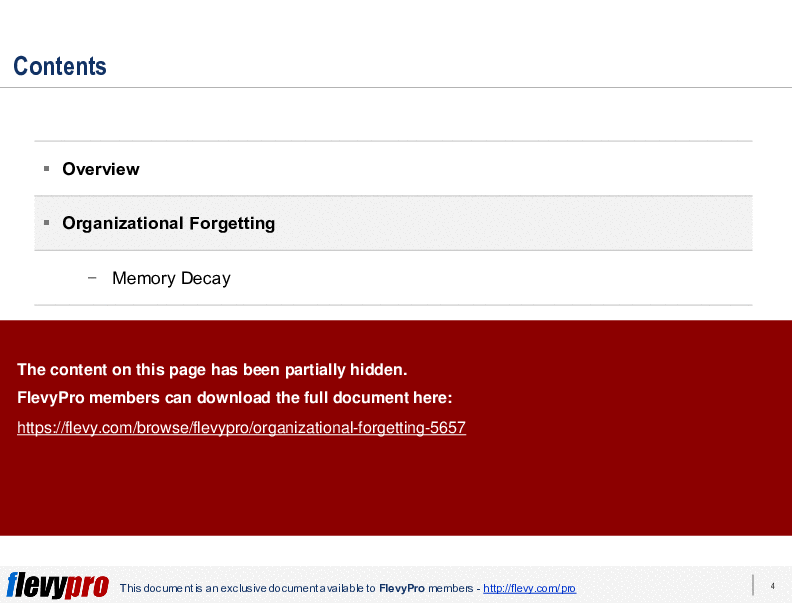
Memory decay refers to the loss of organizational knowledge when concepts, practices, and values are not utilized over time. Key factors contributing to memory decay include extended periods of non-use and the departure of key personnel, leading to forgotten routines, misplaced documentation, and weakened relationships. This phenomenon is particularly risky during downsizing, as valuable knowledge retention becomes precarious. The source of knowledge is categorized as "existing stock," which is at risk of being lost through "accidental" forgetting. Organizations must implement effective knowledge retention measures to prevent the loss of critical skills and information, which can result in wasted time and resources. Prioritizing knowledge management strategies is essential to safeguard organizational assets.
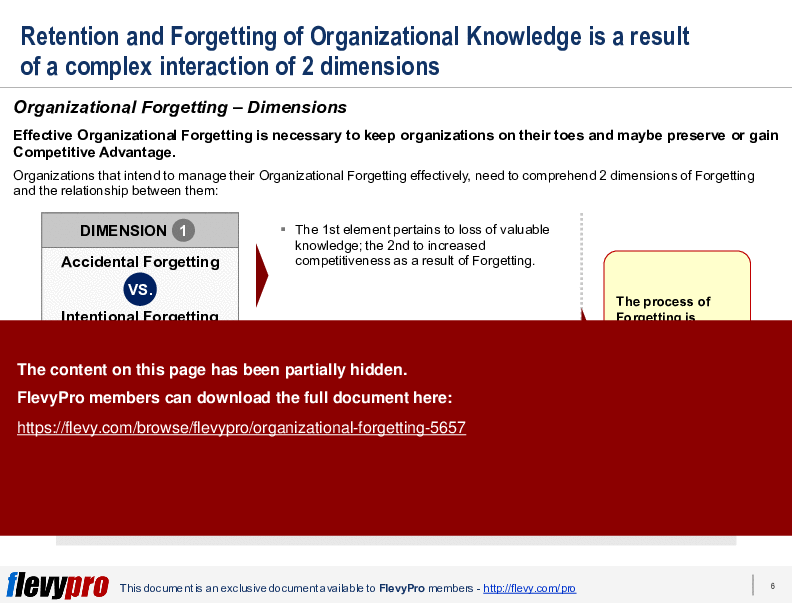
This PPT slide presents a framework for understanding Organizational Forgetting through 2 dimensions: Accidental Forgetting versus Intentional Forgetting and Entrenched Knowledge versus New Knowledge. Accidental Forgetting is the unintentional loss of valuable knowledge that decreases competitiveness, while Intentional Forgetting is a strategic decision to discard outdated information to enhance agility. Entrenched Knowledge is embedded in durable systems and can hinder innovation if unmanaged, whereas New Knowledge is fluid and resides within teams. Balancing these knowledge types is essential for fostering innovation and retaining critical insights. Effective management of knowledge retention and forgetting is crucial for maintaining a competitive edge in a rapidly evolving landscape.
This PPT slide outlines strategies to address the failure to capture essential organizational knowledge, focusing on formal processes and incentives. The first strategy, "Circumvent heroes," addresses the risks of relying on individuals with critical expertise, advocating for structures that promote knowledge sharing across teams. Implementing a bonus incentive system encourages knowledge-sharing behaviors, enhancing collaboration and reducing costs associated with lost knowledge. The second strategy, "Connect the new to the old," emphasizes integrating new knowledge into existing frameworks to ease adoption. Linking new information to familiar concepts helps mitigate resistance to change and highlights the strategic importance of adopting new practices. Structured approaches to knowledge management enhance organizational resilience and adaptability in a rapidly changing landscape.
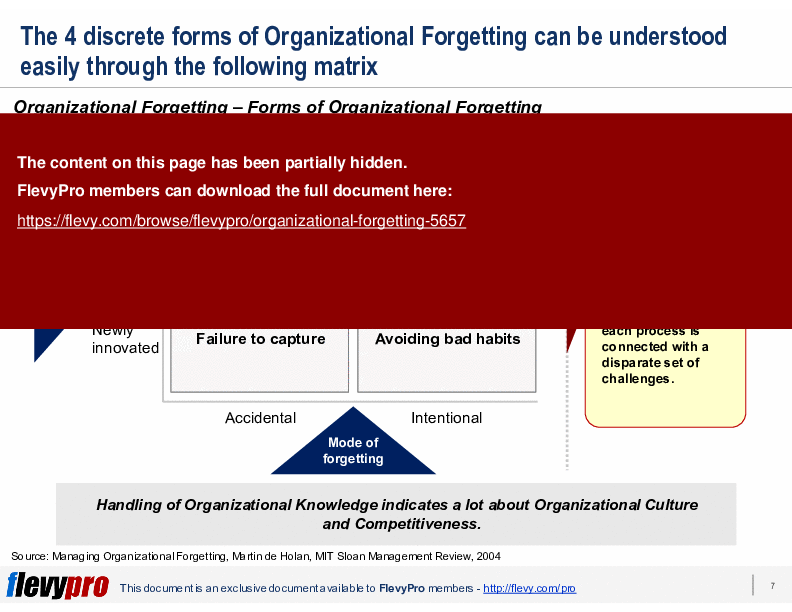
This PPT slide categorizes 4 forms of Organizational Forgetting using a matrix based on the source of knowledge and the mode of forgetting. The sources are "From existing stock" and "Newly innovated," while the modes are "Accidental" and "Intentional." The 4 processes are: Memory decay, which occurs when existing knowledge diminishes over time; Unlearning, the intentional discarding of outdated information; Failure to capture, the inability to document new insights; and Avoiding bad habits, the effort to eliminate ineffective practices. Each process requires distinct management approaches, as the challenges associated with them differ significantly, enabling organizations to develop targeted strategies for knowledge retention and improvement.
Intentional forgetting is a strategic approach to organizational unlearning, involving the removal of outdated or counterproductive knowledge. This process is essential for enhancing organizational capabilities and requires assessing entrenched knowledge that may hinder progress. Unlearning can be executed by "disorganizing" parts of the knowledge base, which includes interrupting established routines and altering organizational structures. Such actions dismantle deeply embedded knowledge that no longer aligns with the organization's goals. Organizations must actively engage in intentional forgetting to adapt and thrive, challenging the notion that knowledge accumulation is always beneficial and positioning unlearning as a critical tool for growth.
Source: Best Practices in Learning Organization, Knowledge Management PowerPoint Slides: Organizational Forgetting PowerPoint (PPTX) Presentation Slide Deck, LearnPPT Consulting
This framework is developed by a team of former McKinsey and Big 4 consultants. The presentation follows the headline-body-bumper slide format used by global consulting firms.
For $10.00 more, you can download this document plus 2 more FlevyPro documents. That's just $13 each.
ABOUT FLEVYPRO
This document is part of the FlevyPro Library, a curated knowledge base of documents for our FlevyPro subscribers.

FlevyPro is a subscription service for on-demand business frameworks and analysis tools. FlevyPro subscribers receive access to an exclusive library of curated business documents—business framework primers, presentation templates, Lean Six Sigma tools, and more—among other exclusive benefits.
Since 2012, we have provided business templates to over 10,000 businesses and organizations of all sizes, from startups and small businesses to the Fortune 100, in over 130 countries.
"As an Independent Management Consultant, I find Flevy to add great value as a source of best practices, templates and information on new trends. Flevy has matured and the quality and quantity of the library is excellent. Lastly the price charged is reasonable, creating a win-win value for
the customer, Flevy and the various authors. This is truly a service that benefits the consulting industry and associated clients. Thanks for providing this service.
"
– Jim Schoen, Principal at FRC Group
"[Flevy] produces some great work that has been/continues to be of immense help not only to myself, but as I seek to provide professional services to my clients, it gives me a large "tool box" of resources that are critical to provide them with the quality of service and outcomes they are expecting."
– Royston Knowles, Executive with 50+ Years of Board Level Experience
"If you are looking for great resources to save time with your business presentations, Flevy is truly a value-added resource. Flevy has done all the work for you and we will continue to utilize Flevy as a source to extract up-to-date information and data for our virtual and onsite presentations!"
– Debbi Saffo, President at The NiKhar Group
"As a niche strategic consulting firm, Flevy and FlevyPro frameworks and documents are an on-going reference to help us structure our findings and recommendations to our clients as well as improve their clarity, strength, and visual power. For us, it is an invaluable resource to increase our impact and value."
– David Coloma, Consulting Area Manager at Cynertia Consulting
"As a consulting firm, we had been creating subject matter training materials for our people and found the excellent materials on Flevy, which saved us 100's of hours of re-creating what already exists on the Flevy materials we purchased."
– Michael Evans, Managing Director at Newport LLC
"I have found Flevy to be an amazing resource and library of useful presentations for lean sigma, change management and so many other topics. This has reduced the time I need to spend on preparing for my performance consultation. The library is easily accessible and updates are regularly provided. A wealth of great information."
– Cynthia Howard RN, PhD, Executive Coach at Ei Leadership
"Flevy.com has proven to be an invaluable resource library to our Independent Management Consultancy, supporting and enabling us to better serve our enterprise clients.
The value derived from our [FlevyPro] subscription in terms of the business it has helped to gain far exceeds the investment made, making a subscription a no-brainer for any growing consultancy – or in-house strategy team."
– Dean Carlton, Chief Transformation Officer, Global Village Transformations Pty Ltd.
"FlevyPro has been a brilliant resource for me, as an independent growth consultant, to access a vast knowledge bank of presentations to support my work with clients. In terms of RoI, the value I received from the very first presentation I downloaded paid for my subscription many times over! The
quality of the decks available allows me to punch way above my weight – it's like having the resources of a Big 4 consultancy at your fingertips at a microscopic fraction of the overhead.
"
– Roderick Cameron, Founding Partner at SGFE Ltd
Save with Bundles
This document is available as part of the following discounted bundle(s):
Download our free compilation of 50+ slides and templates on Organizational Design, Change Management, and Corporate Culture. Methodologies include ADKAR, Burke-Litwin Change Model, McKinsey 7-S, Competing Values Framework, etc.