
This framework is developed by a team of former McKinsey and Big 4 consultants. The presentation follows the headline-body-bumper slide format used by global consulting firms.
Editor Summary
Organizational Elements Model is a 25-slide PowerPoint (PPTX) by LearnPPT Consulting that explains a seven-element diagnostic framework for organizational analysis.
Read moreThe deck presents the 7 elements—People, Structure, Systems, Processes, Culture, Technology, and Strategy—traces its roots to the McKinsey 7-S model, and includes reusable slide templates and guidance on headlines and slide structure. Used by executives, organizational analysts, and business presenters for diagnosing strengths, weaknesses, CSFs, and risks. Sold as a digital download on Flevy.
Use this presentation when you need a structured diagnostic to assess organizational performance, identify critical success factors, and compare an organization against competitors across cross‑functional dimensions.
Executives preparing board-level diagnostic briefings, presenting findings on strengths, weaknesses, CSFs, and recommended mitigations using OEM-organized slides.
Organizational analysts conducting cross-functional assessments by collecting evidence across People, Structure, Systems, Processes, Culture, Technology, and Strategy to surface root causes.
Business presenters building stakeholder-ready decks who need slide templates and guidance on headlines and content structure.
The OEM’s seven-element diagnostic mirrors the McKinsey 7-S approach to organizational alignment.
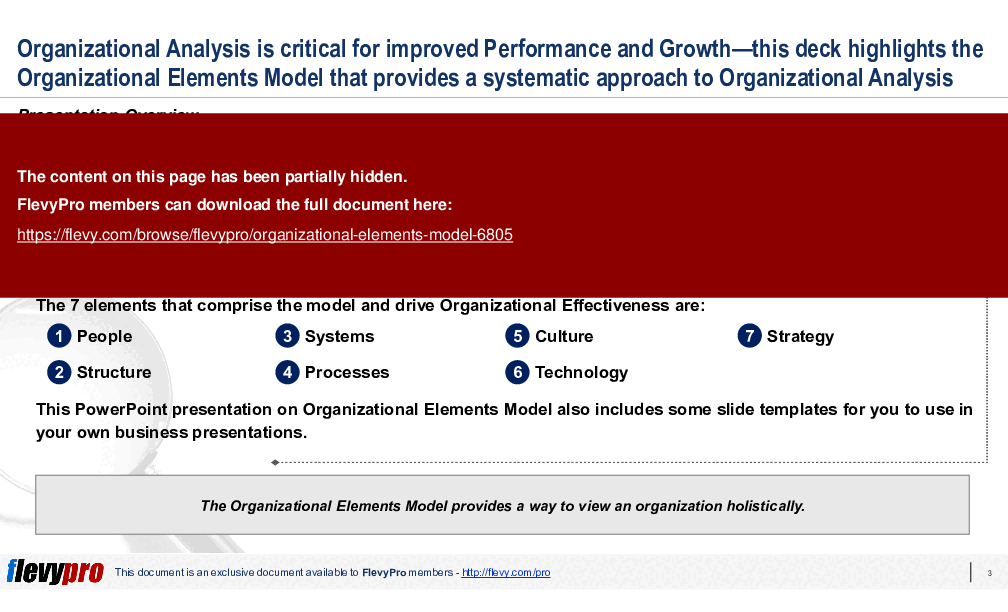
Organizational Analysis is critical for improved Performance and Growth. This PowerPoint presentation focuses on the Organizational Elements Model (OEM), a powerful tool to evaluate and appreciate an organization, as well as its competitors. The framework is employed to comprehend and track problems in an organization.
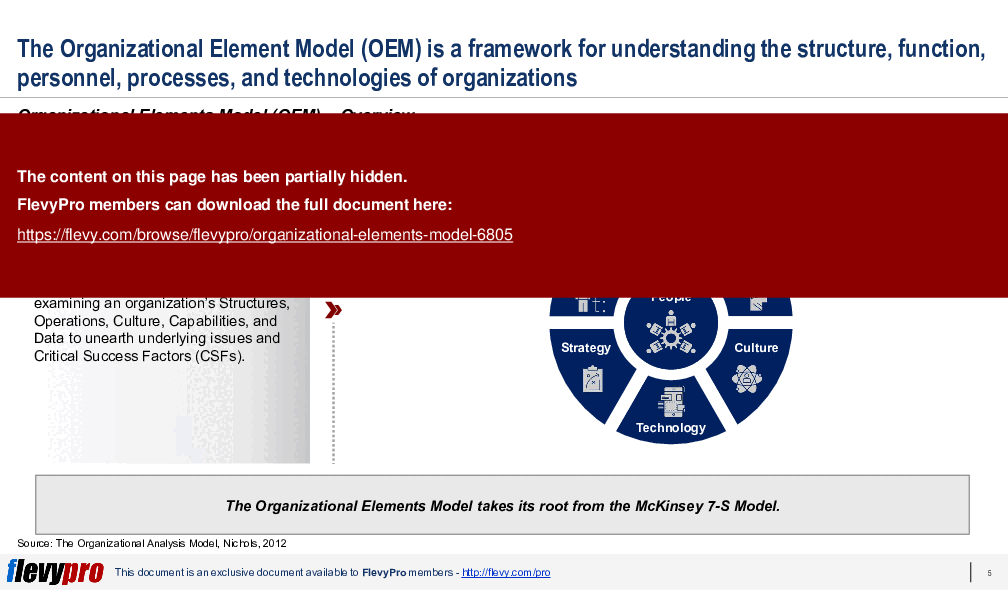
The Organizational Elements Model facilitates in gathering and examining an organization's Structures, Operations, Culture, Capabilities, and Data to unearth underlying issues and Critical Success Factors (CSFs).
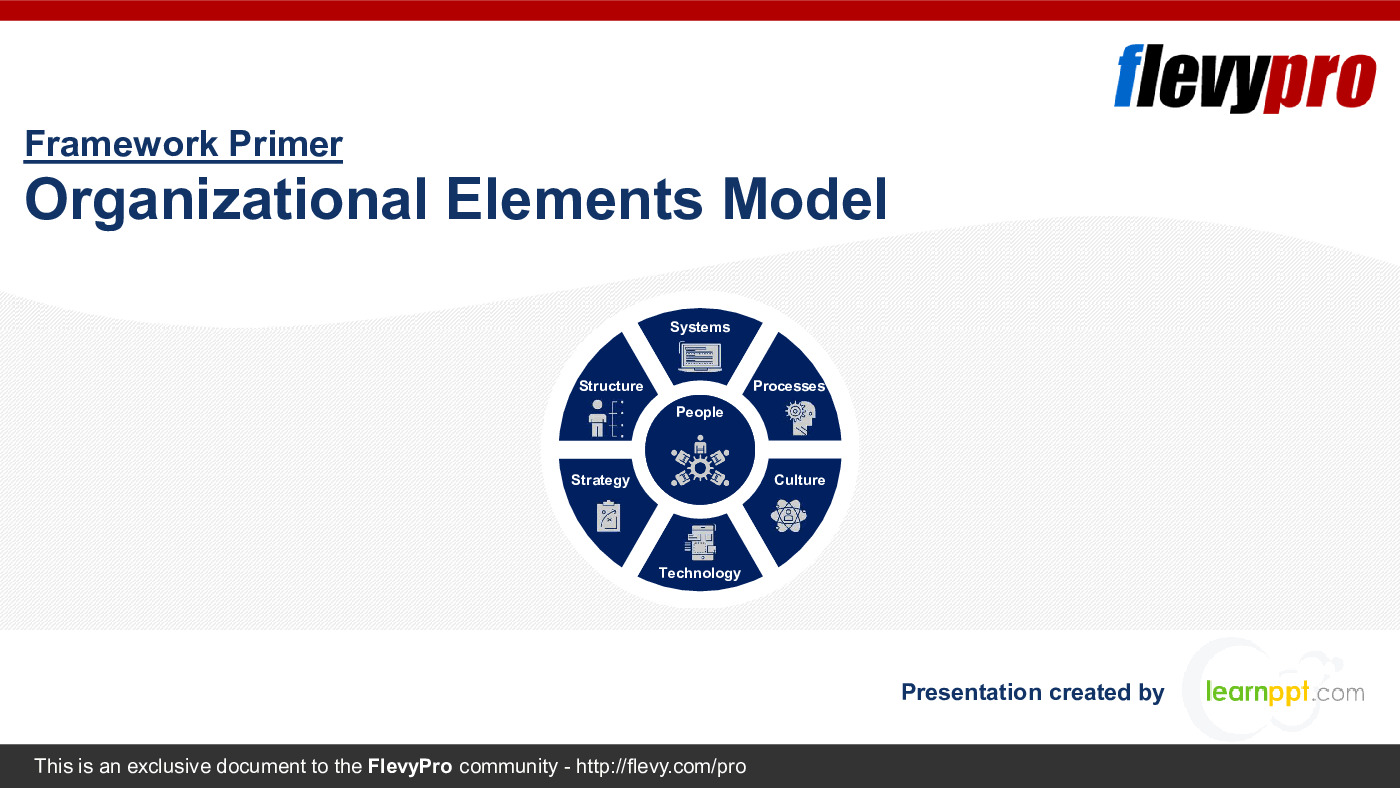
The 7 elements that comprise the model and drive Organizational Effectiveness are:
1. People
2. Structure
3. Systems
4. Processes
5. Culture
6. Technology
7. Strategy
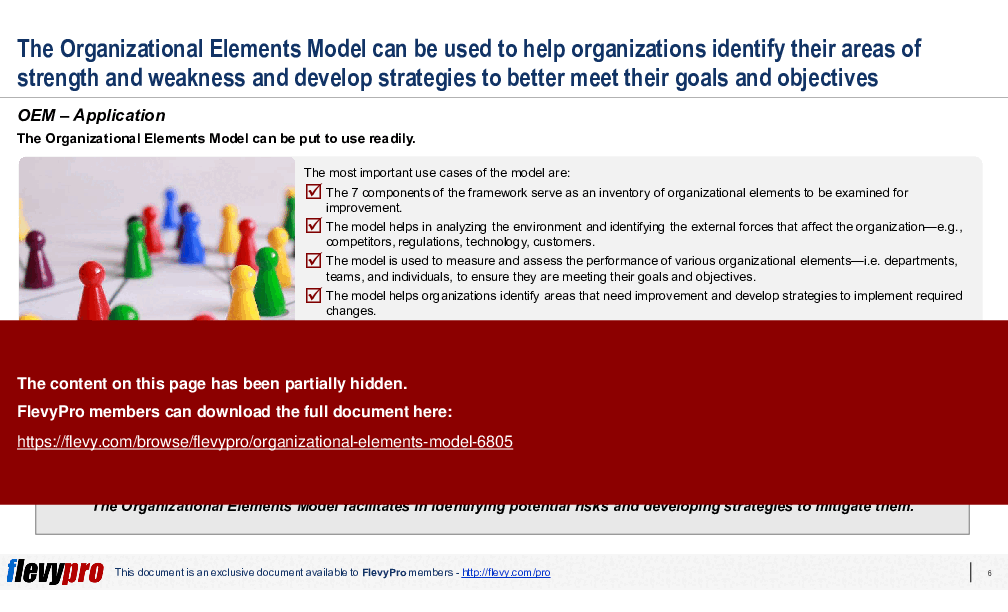
The Organizational Elements Model provides a way to view an organization holistically. It can be used to help organizations identify their areas of strength and weakness and develop strategies to better meet their goals and objectives. The Organizational Elements Model also facilitates in identifying potential risks and developing strategies to mitigate them.
The OEM framework takes its root from the McKinsey 7-S Model.
This PowerPoint presentation on Organizational Elements Model also includes some slide templates for you to use in your own business presentations.
The Organizational Elements Model (OEM) is a comprehensive framework that dissects the core components of an organization, providing a clear lens through which executives can evaluate and enhance their business operations. This presentation delves into each of the seven elements—People, Structure, Systems, Processes, Culture, Technology, and Strategy—offering detailed insights and practical applications for each. The OEM's holistic approach ensures that no aspect of the organization is overlooked, enabling a thorough analysis that drives strategic improvements and operational efficiency.
Included in this PowerPoint are customizable slide templates designed to seamlessly integrate into your own presentations. These templates adhere to a structured format, ensuring clarity and coherence in your communication. The PPT also provides guidelines on crafting effective headlines and structuring content, making it a valuable tool for any executive looking to present their organizational analysis with precision and impact. By leveraging the OEM framework, you can identify critical success factors, mitigate potential risks, and align your organizational strategy with your overarching business objectives.
What are the core components of an Organizational Elements Model?
The Organizational Elements Model dissects an organization into 7 components: People, Structure, Systems, Processes, Culture, Technology, and Strategy. These elements serve as lenses for diagnosing strengths, weaknesses, and alignment issues across the organization, organized around the model’s 7 elements.
How does the OEM relate to the McKinsey 7-S model?
The OEM takes its root from the McKinsey 7-S model and applies a seven-element diagnostic to evaluate organizational alignment. Both approaches use cross-functional elements to surface misalignments and critical success factors, reflecting the same seven-element heritage.
How can the OEM help me identify critical success factors and risks?
OEM guides data gathering and examination across Structures, Operations, Culture, Capabilities, and Data to reveal underlying issues and CSFs, and to surface potential risks so mitigation strategies can be developed, all framed within the 7 OEM elements.
What should I look for in a slide deck that explains an organizational elements framework?
Look for a clear breakdown of each element, guidance on evidence collection, templates for presenting findings, and recommendations linking issues to CSFs and risks. A useful deck will include reusable slide templates and slide-structure guidance, such as a 25-slide PPTX.
What does a structured OEM review typically cover?
A structured OEM review covers data collection and analysis across the model’s 7 areas—People, Structure, Systems, Processes, Culture, Technology, and Strategy—to assess organizational effectiveness, identify strengths and weaknesses, and define critical success factors across those 7 areas.
How should I structure a board presentation of an OEM diagnosis?
Organize the deck by the OEM elements, present key findings and evidence per element, highlight top Critical Success Factors and identified risks, and conclude with prioritized mitigation or action items; use slide templates and headline guidance to keep the narrative consistent across the 7 elements.
Can the Organizational Elements Model be used to benchmark competitors?
Yes. The OEM can be applied to evaluate and compare an organization and its competitors by mapping each party against the same 7 elements to highlight relative strengths, weaknesses, and differentiating Critical Success Factors across the 7 elements.
Are there reusable templates for presenting an OEM analysis?
The Organizational Elements Model PowerPoint includes some slide templates and guidance on crafting effective headlines and structuring content so analysts and presenters can adapt slides directly into their own business presentations, provided in the 25-slide PPTX.
Organizational culture shapes employee behavior and interactions, defined as the collective mindsets, ethics, and principles shared among employees. Attitudes, values, and beliefs develop through formal and informal interactions, consolidating into common behavior patterns that characterize the organization. These entrenched patterns require new employees to adapt,, but significant changes in systems, processes, or technologies can disrupt established culture, leading to culture shock and resistance. A restrictive organizational culture may limit employee capabilities and performance, making it essential for leaders to navigate cultural shifts effectively and align with strategic goals. Understanding organizational culture dynamics is critical for driving change and enhancing overall performance.
This PPT slide provides an overview of the "Systems" element within the Organizational Elements Model, highlighting the critical role of computer-based systems in organizational operations and data analytics. Systems include tools such as email servers, spreadsheets, and complex infrastructures like mainframes, which are foundational for internal interactions. The effectiveness of technology, data, and information systems enhances communication and collaboration, directly impacting an organization’s adaptability to disruptions. Key applications vital for business operations include Customer Relationship Management (CRM) systems, accounting tools, and Human Resource Management systems, which support essential functions. These tools enable the analysis of large datasets, fostering insights and trends crucial for informed decision-making in a data-driven environment. Well-integrated systems are necessary for operational effectiveness and strategic agility.
The Organizational Elements Model highlights the central role of people in driving organizational success. Organizations depend on individuals' unique capabilities, values, and perspectives to enhance performance and achieve objectives. People establish connections with other model elements, including strategy development, organizational structure, and process execution. They are vital sources of motivation, innovation, and creativity, essential for growth and adaptability. Effective leadership from individuals guides organizations through challenges and opportunities in dynamic environments. Ultimately, the effectiveness of an organization hinges on its people, whose skills, relationships, and leadership capabilities determine success. Investing in human capital and fostering a culture that empowers individuals is crucial for informed organizational development and strategy decisions.
Source: Best Practices in Organizational Design PowerPoint Slides: Organizational Elements Model PowerPoint (PPTX) Presentation Slide Deck, LearnPPT Consulting
This framework is developed by a team of former McKinsey and Big 4 consultants. The presentation follows the headline-body-bumper slide format used by global consulting firms.
For $10.00 more, you can download this document plus 2 more FlevyPro documents. That's just $13 each.
ABOUT FLEVYPRO
This document is part of the FlevyPro Library, a curated knowledge base of documents for our FlevyPro subscribers.

FlevyPro is a subscription service for on-demand business frameworks and analysis tools. FlevyPro subscribers receive access to an exclusive library of curated business documents—business framework primers, presentation templates, Lean Six Sigma tools, and more—among other exclusive benefits.
The average daily rate of a McKinsey consultant is $6,625 (not including expenses). The average price of a Flevy document is $65.
Trusted by over 10,000+ Client Organizations
Since 2012, we have provided business templates to over 10,000 businesses and organizations of all sizes, from startups and small businesses to the Fortune 100, in over 130 countries.
"As a young consulting firm, requests for input from clients vary and it's sometimes impossible to provide expert solutions across a broad spectrum of requirements. That was before I discovered Flevy.com.
Through subscription to this invaluable site of a plethora of topics that are key and crucial to consulting, I
have been able to exceed expectations and deliver quality advice and solutions to my clients. The quality and expertise of the authors are exemplary and gives me great confidence to use as part of my service offerings.
I highly recommend this company for any consultant wanting to apply international best practice standards in their service offerings.
"
– Nishi Singh, Strategist and MD at NSP Consultants
"If you are looking for great resources to save time with your business presentations, Flevy is truly a value-added resource. Flevy has done all the work for you and we will continue to utilize Flevy as a source to extract up-to-date information and data for our virtual and onsite presentations!"
– Debbi Saffo, President at The NiKhar Group
"One of the great discoveries that I have made for my business is the Flevy library of training materials.
As a Lean Transformation Expert, I am always making presentations to clients on a variety of topics: Training, Transformation, Total Productive Maintenance, Culture, Coaching, Tools, Leadership Behavior, etc. Flevy
It is well worth the money to purchase these presentations. Sure, I have the knowledge and information to make my point. It is another thing to create a presentation that captures what I want to say. Flevy has saved me countless hours of preparation time that is much better spent with implementation that will actually save money for my clients.
"
– Ed Kemmerling, Senior Lean Transformation Expert at PMG
"I am extremely grateful for the proactiveness and eagerness to help and I would gladly recommend the Flevy team if you are looking for data and toolkits to help you work through business solutions."
– Trevor Booth, Partner, Fast Forward Consulting
"Flevy.com has proven to be an invaluable resource library to our Independent Management Consultancy, supporting and enabling us to better serve our enterprise clients.
The value derived from our [FlevyPro] subscription in terms of the business it has helped to gain far exceeds the investment made, making a subscription a no-brainer for any growing consultancy – or in-house strategy team."
– Dean Carlton, Chief Transformation Officer, Global Village Transformations Pty Ltd.
"My FlevyPro subscription provides me with the most popular frameworks and decks in demand in today’s market. They not only augment my existing consulting and coaching offerings and delivery, but also keep me abreast of the latest trends, inspire new products and service offerings for my practice, and educate me
in a fraction of the time and money of other solutions. I strongly recommend FlevyPro to any consultant serious about success.
"
– Bill Branson, Founder at Strategic Business Architects
"I have used FlevyPro for several business applications. It is a great complement to working with expensive consultants. The quality and effectiveness of the tools are of the highest standards."
– Moritz Bernhoerster, Global Sourcing Director at Fortune 500
"Flevy is our 'go to' resource for management material, at an affordable cost. The Flevy library is comprehensive and the content deep, and typically provides a great foundation for us to further develop and tailor our own service offer."
Download our free compilation of 50+ slides and templates on Organizational Design, Change Management, and Corporate Culture. Methodologies include ADKAR, Burke-Litwin Change Model, McKinsey 7-S, Competing Values Framework, etc.