
Consumer preferences and behaviors, global markets, technology, and environment are changing faster than ever before these days. Organizations need to consistently build new capabilities and plan their future needs to keep pace and stay ahead. Capabilities not only mean the practical and Leadership skills individuals need to do their jobs, but also the overall institutional capabilities (knowledge, processes, proprietary systems, structures, etc.) needed to sustain performance.
This deck emphasizes on the importance of the "Capability for Performance" (C4P) framework in creating sustainable improvements and outpacing competition. The C4P framework is based on Capability Development programs that have worked for companies around the world in various industries.
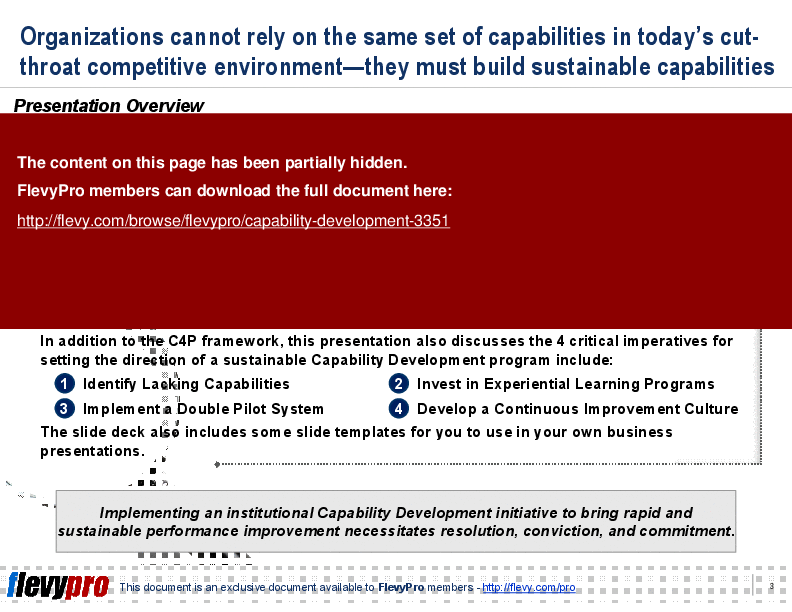
In addition to the C4P framework, this presentation also discusses the 4 critical imperatives for setting the direction of a sustainable Capability Development program include:
1. Identify Lacking Capabilities
2. Invest in Experiential Learning Programs
3. Implement a Double Pilot System
4. Foster a Continuous Improvement Culture
Implementing an institutional Capability Development initiative to bring rapid and sustainable performance improvement necessitates resolution, conviction, and commitment.
The slide deck also includes some slide templates for you to use in your own business presentations.
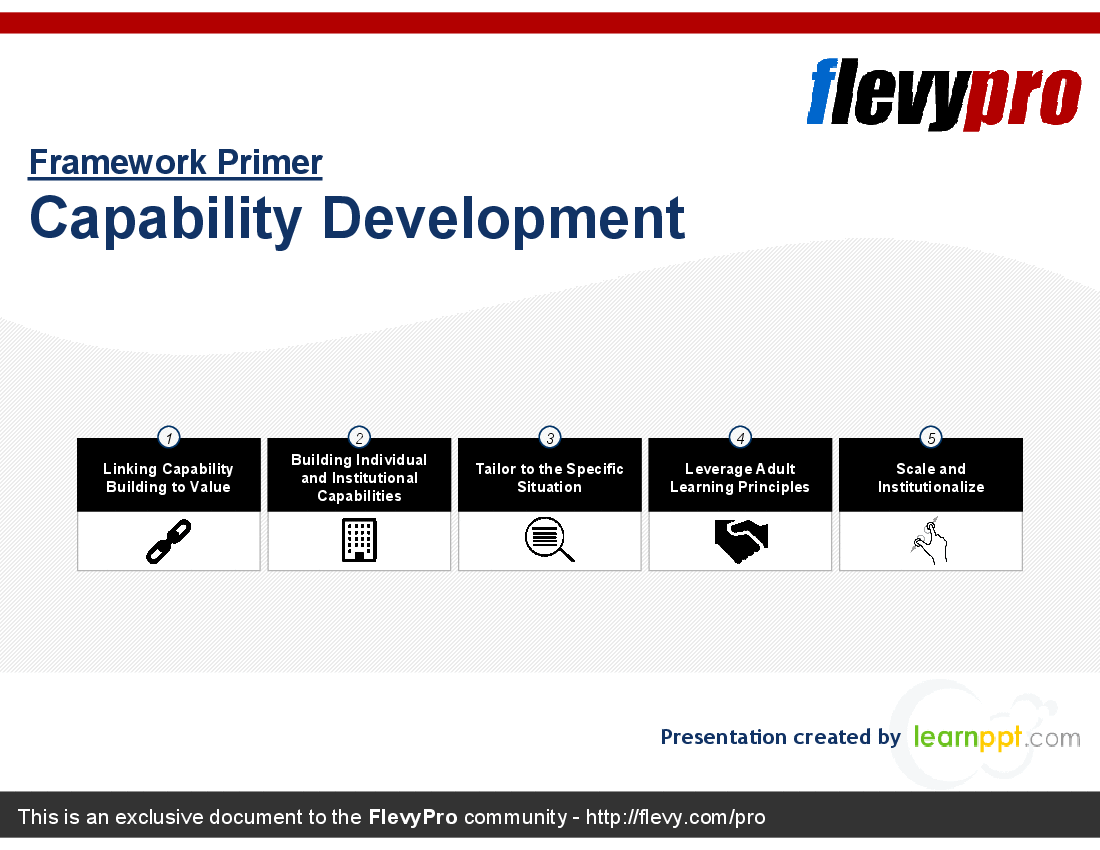
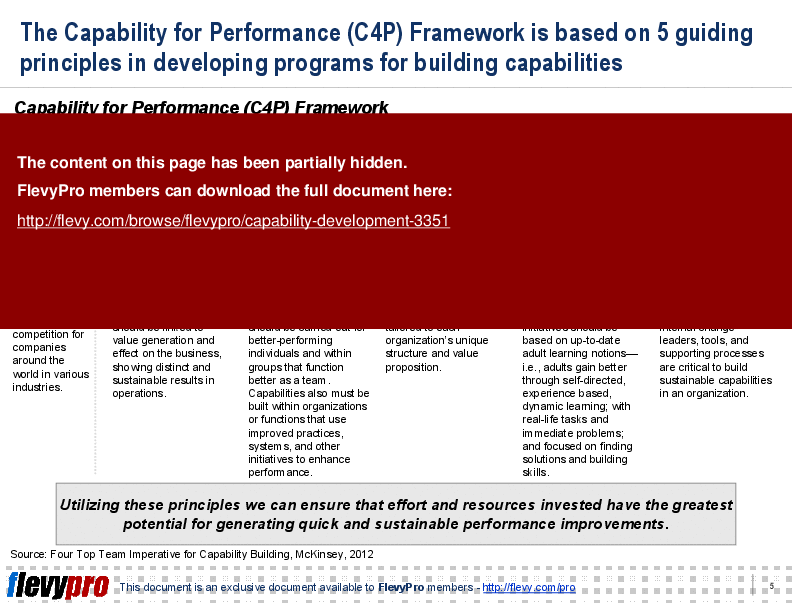
This presentation also delves into the 5 guiding principles of the C4P framework, which are crucial for developing effective capability-building programs. These principles include linking capability building to value, building individual and institutional capabilities, tailoring programs to specific situations, leveraging adult learning principles, and scaling and institutionalizing efforts. Each principle is designed to ensure that the capability development initiatives are aligned with the organization's strategic goals and operational needs.
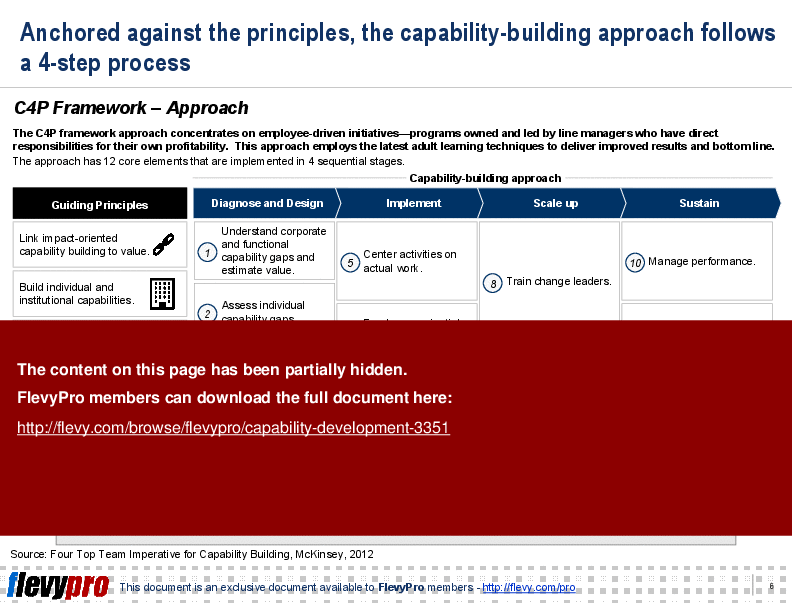
The C4P framework employs a 4-step process: Diagnose and Design, Implement, Scale Up, and Sustain. This structured approach ensures that capability-building efforts are comprehensive and integrated into the organization's fabric. The deck includes detailed templates and tools that can be customized to fit your organization's unique requirements, providing a practical roadmap for implementing and sustaining capability development initiatives.
Got a question about this document? Email us at flevypro@flevy.com.
Executive Summary
The Capability Development presentation focuses on the "Capability for Performance" (C4P) framework, designed to foster sustainable improvements in organizational capabilities. Developed by former consultants from McKinsey and the Big 4, this framework emphasizes the need for organizations to adapt to rapidly changing market conditions by building both individual and institutional capabilities. The presentation outlines critical imperatives for implementing a successful capability development program, including identifying gaps, investing in experiential learning, and fostering a culture of continuous improvement. By leveraging proven strategies, executives can enhance their organization's performance and sustain competitive advantage.
Who This Is For and When to Use
• Corporate executives seeking to enhance organizational capabilities
• Integration leaders responsible for capability development initiatives
• HR and training professionals focused on employee development
• Change management teams implementing new processes and systems
Best-fit moments to use this deck:
• During strategic planning sessions to align capability development with business goals
• When launching new initiatives aimed at improving operational efficiency
• In workshops focused on leadership development and team performance enhancement
Learning Objectives
• Define the C4P framework and its relevance to organizational performance
• Identify capability gaps through benchmarking and performance analysis
• Develop and implement experiential learning programs tailored to specific needs
• Foster a culture of continuous improvement within the organization
• Establish metrics for measuring the impact of capability development initiatives
• Scale and institutionalize capabilities across various functions
Table of Contents
• Overview (page 3)
• Capability for Performance (C4P) Framework (page 5)
• 4 Critical Imperatives (page 8)
• Templates (page 12)
Primary Topics Covered
• Capability for Performance (C4P) Framework - A structured approach to building capabilities that align with organizational goals, emphasizing the need for continuous adaptation.
• Identifying Lacking Capabilities - A systematic process for assessing current capabilities against industry benchmarks to pinpoint areas for improvement.
• Investing in Experiential Learning Programs - Techniques that enable employees to apply new skills in real-world scenarios, enhancing retention and effectiveness.
• Implementing a Double Pilot System - A method that tests new initiatives through pilot projects to ensure scalability and effectiveness before full implementation.
• Fostering a Continuous Improvement Culture - Strategies for embedding a mindset of ongoing development and performance enhancement across the organization.
Deliverables, Templates, and Tools
• Capability assessment templates for identifying gaps in skills and processes
• Framework for designing experiential learning programs tailored to organizational needs
• Guidelines for implementing a double pilot system to test new initiatives
• Metrics and tracking systems for measuring the impact of capability development efforts
• Templates for fostering a culture of continuous improvement within teams
Slide Highlights
• Overview of the C4P framework and its guiding principles
• Steps for identifying lacking capabilities and setting measurable goals
• Examples of experiential learning programs and their benefits
• Framework for implementing a double pilot system to ensure effective change management
• Strategies for fostering a continuous improvement culture across the organization
Potential Workshop Agenda
Capability Assessment Workshop (90 minutes)
• Review current capabilities and identify gaps
• Develop a prioritized list of capabilities to enhance
Experiential Learning Design Session (60 minutes)
• Brainstorm potential experiential learning programs
• Outline implementation steps and required resources
Continuous Improvement Culture Session (90 minutes)
• Discuss strategies for embedding a culture of improvement
• Develop action plans for leadership role modeling and tracking progress
Customization Guidance
• Tailor templates to reflect specific organizational structures and processes
• Adjust metrics and tracking systems to align with business objectives
• Incorporate industry-specific benchmarks for capability assessments
Secondary Topics Covered
• The role of leadership in driving capability development
• Best practices for engaging employees in learning initiatives
• The importance of aligning capability development with business strategy
• Techniques for measuring the ROI of capability development efforts
Topic FAQ
Document FAQ
These are questions addressed within this presentation.
What is the C4P framework?
The C4P framework is a structured approach to building organizational capabilities that emphasizes continuous adaptation and improvement to meet business goals.
How do we identify capability gaps?
Capability gaps can be identified through a combination of benchmarking against industry standards, performance evaluations, and detailed analyses of current practices.
What are experiential learning programs?
Experiential learning programs provide employees with opportunities to apply new skills in real-world scenarios, enhancing their learning and retention.
What is a double pilot system?
A double pilot system involves testing new initiatives through 2 phases: an initial pilot guided by external experts and a second pilot led by internal managers to assess scalability.
How can we foster a culture of continuous improvement?
Fostering a culture of continuous improvement involves aligning organizational structures, processes, and systems with improvement goals, and regularly tracking performance metrics.
What metrics should we use to measure capability development impact?
Metrics may include improvements in productivity, revenue growth, and employee engagement scores, among others, tailored to specific organizational objectives.
How can we ensure the sustainability of capability development initiatives?
Sustainability can be achieved by institutionalizing practices, embedding continuous improvement into the culture, and regularly reviewing and updating capability development strategies.
What role does leadership play in capability development?
Leadership is crucial in setting the vision, providing resources, and modeling behaviors that support capability development initiatives.
How can we customize the templates provided in the deck?
Templates can be customized by incorporating specific organizational data, aligning with strategic goals, and adjusting language and terminology to fit the company culture.
Glossary
• Capability Development - The process of enhancing individual and institutional skills to improve performance.
• C4P Framework - A structured approach to capability development focused on continuous improvement.
• Experiential Learning - Learning through direct experience and application of skills in real-world situations.
• Double Pilot System - A method of testing new initiatives through 2 phases to ensure effectiveness and scalability.
• Continuous Improvement Culture - An organizational mindset focused on ongoing enhancement of processes and performance.
• Capability Assessment - The evaluation of current capabilities against benchmarks to identify gaps.
• Leadership Role Modeling - The practice of leaders demonstrating desired behaviors to influence organizational culture.
• Performance Metrics - Quantitative measures used to assess the effectiveness of capability development initiatives.
• Benchmarking - The process of comparing organizational performance against industry standards.
• Training Programs - Structured learning initiatives designed to enhance employee skills and knowledge.
• Organizational Goals - The strategic objectives that guide an organization's actions and initiatives.
• Employee Engagement - The level of commitment and involvement an employee has towards their organization and its goals.
Source: Best Practices in Organizational Design, Capability Analysis, Core Competences PowerPoint Slides: Capability Development PowerPoint (PPT) Presentation Slide Deck, LearnPPT Consulting
Did you need more documents?
Consider a FlevyPro subscription from $39/month. View plans here.
For $10.00 more, you can download this document plus 2 more FlevyPro documents. That's just $13 each.
|
Download our FREE Strategy & Transformation Framework Templates
Download our free compilation of 50+ Strategy & Transformation slides and templates. Frameworks include McKinsey 7-S, Balanced Scorecard, Disruptive Innovation, BCG Curve, and many more. |