 Click main image to view in full screen.
8 Attributes of Management Excellence – PowerPoint PPT Template
PowerPoint (PPT) 13 Slides FlevyPro Document
Sorry, this document is currently only available to FlevyPro subscribers.
You can join FlevyPro for only $39/month.
ORGANIZATIONAL DESIGN PPT TEMPLATE DESCRIPTION
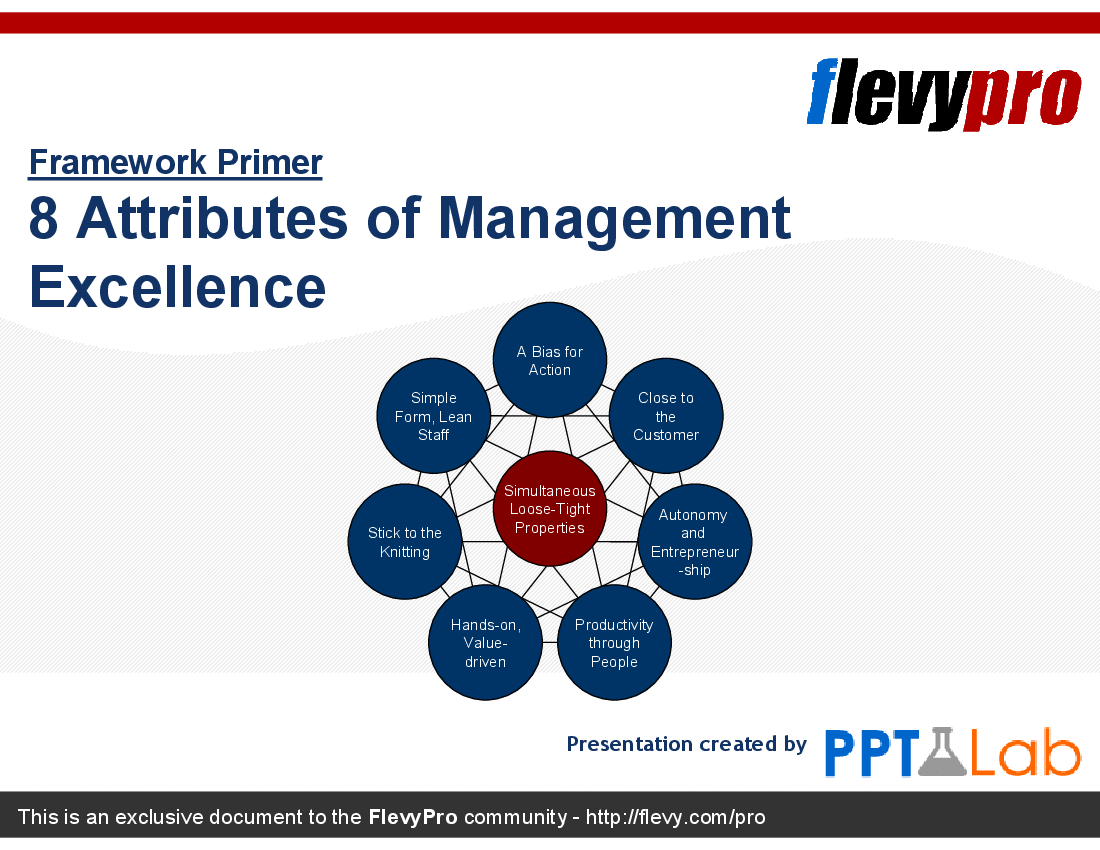
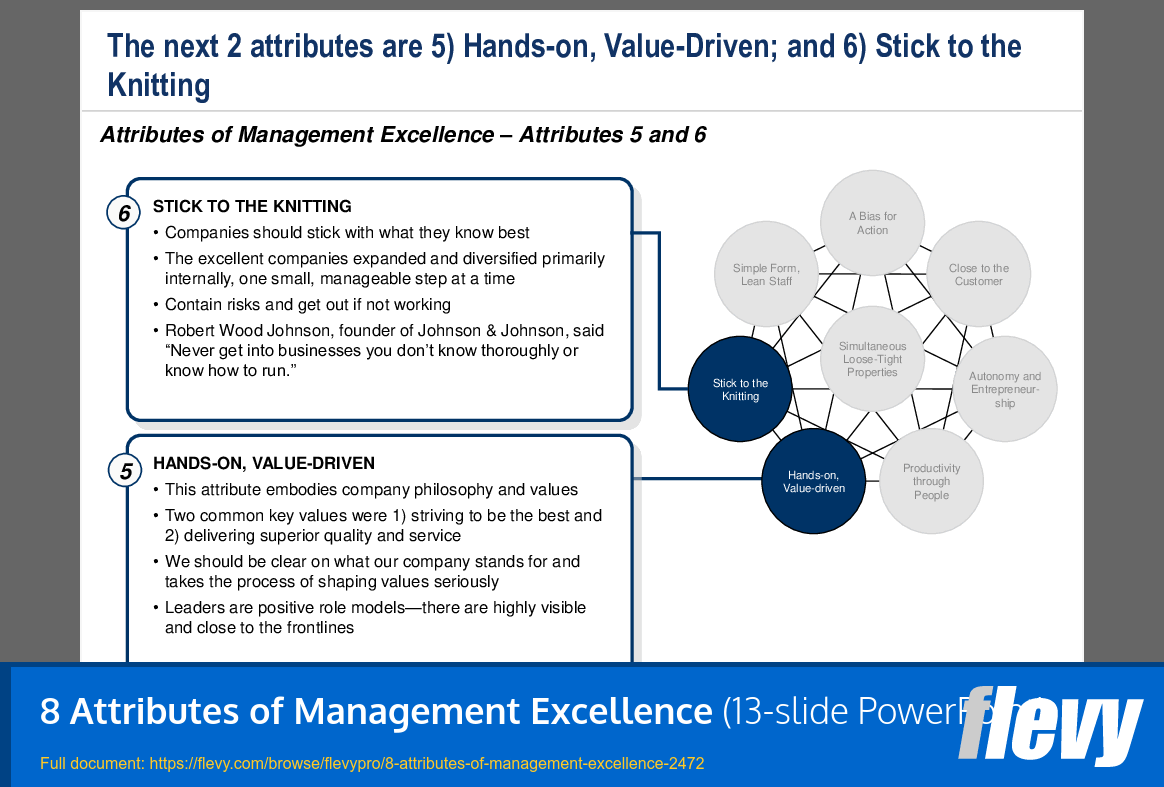
In their book In Search of Excellence, McKinsey consultants Tom Peters and Robert Waterman found 8 common themes which they argued were responsible for the success of 14 identified companies of "excellence." The framework is known as the 8 Attributes of Management Excellence. The research and theorizing of this framework was based on the McKinsey 7-S Model, also authored by Peters and Waterman.
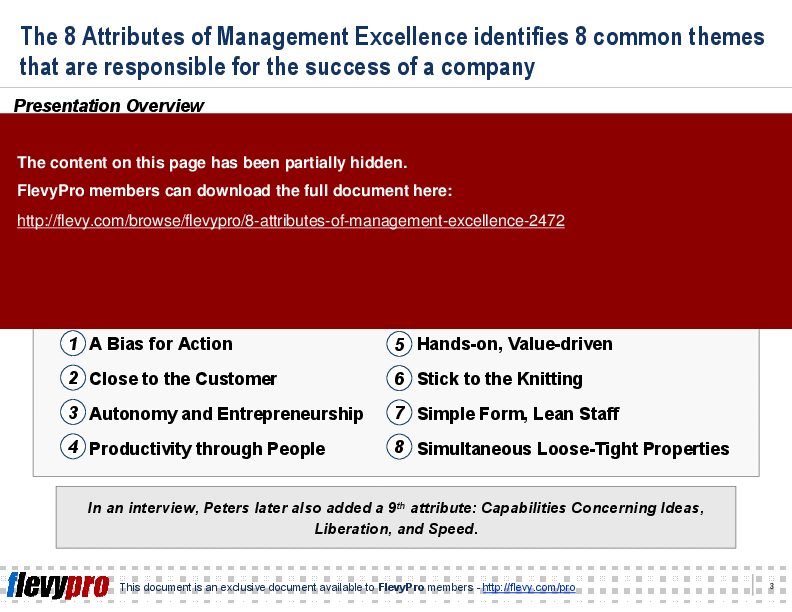
The 8 attributes are:
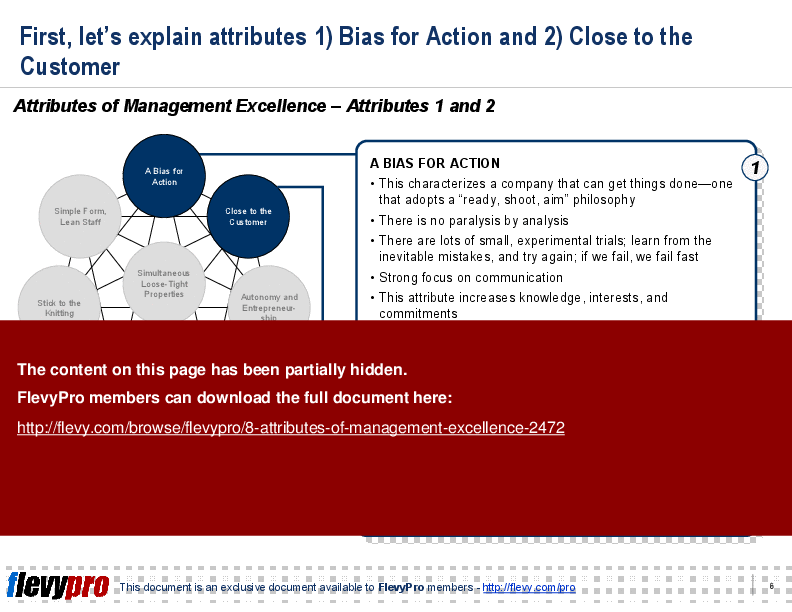
1. A Bias for Action
2. Close to the Customer
3. Autonomy and Entrepreneurship
4. Productivity through People
5. Hands-on, Value-driven
6. Stick to the Knitting
7. Simple Form, Lean Staff
8. Simultaneous Loose-Tight Properties
In an interview, Peters later also added a 9th attribute: Capabilities Concerning Ideas, Liberation, and Speed.
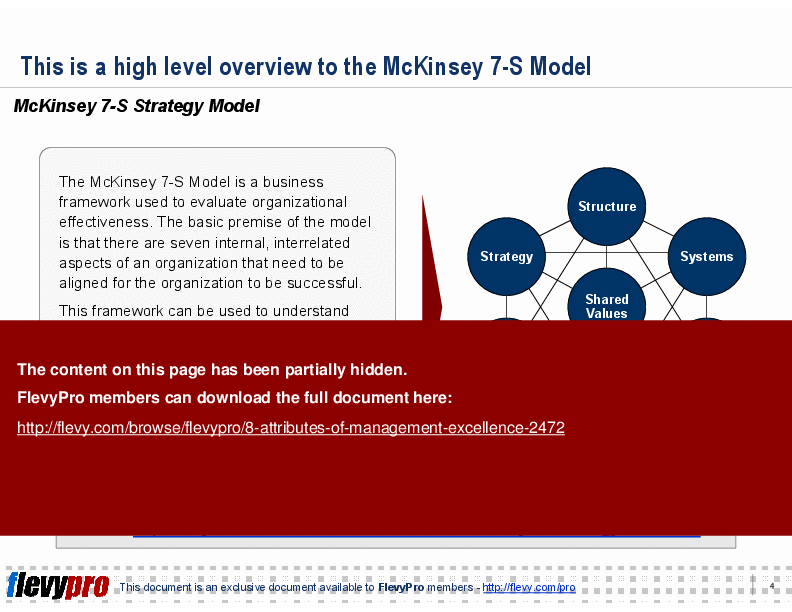
This comprehensive PowerPoint presentation delves into the McKinsey 7-S Model, providing a high-level overview of this essential business framework. It emphasizes the importance of aligning seven internal, interrelated aspects of an organization to achieve optimal effectiveness. The model's visualization aids in understanding how strategy, structure, systems, shared values, skills, style, and staff interconnect to drive organizational success.
The PPT meticulously explains each of the 8 Attributes of Management Excellence, offering actionable insights and practical examples. From fostering a bias for action to maintaining a hands-on, value-driven approach, these attributes are dissected to show their impact on business performance. The presentation also highlights the significance of sticking to core competencies and leveraging simple forms and lean staff for efficiency.
The addition of the 9th attribute, Capabilities Concerning Ideas, Liberation, and Speed, underscores the evolving nature of management excellence. This attribute focuses on fostering innovation, empowering employees, and accelerating processes to stay competitive. The framework visualization with all nine attributes, placing Simultaneous Loose-Tight Properties at the center, provides a holistic view of the interconnected elements driving excellence in management.
Got a question about this document? Email us at flevypro@flevy.com.
TOPIC FAQ
What are the 7 elements of the McKinsey 7-S Model and why do they matter?
The McKinsey 7-S Model comprises Strategy, Structure, Systems, Shared Values, Skills, Style, and Staff. It matters because it presents these elements as interrelated levers for organizational alignment; changes in one area should be assessed against the other 6 to maintain effectiveness across 7 elements.How do Peters and Waterman’s 8 Attributes connect to organizational performance?
Peters and Waterman identified eight recurring management themes—such as A Bias for Action and Close to the Customer—that they linked to the success of 14 firms in In Search of Excellence. These attributes function as behavioral and strategic patterns believed to influence performance, summarized across eight attributes.What is meant by "Simultaneous Loose-Tight Properties" in management frameworks?
Simultaneous Loose-Tight Properties is one of the attributes in Peters and Waterman’s framework and, in the presentation, is placed at the center of the attribute visualization to indicate its integrative role balancing consistency and flexibility within the model’s context and central position in the visualization.What should I look for when choosing a slide deck on management excellence for executive briefings?
Seek a deck that connects a diagnostic model (the McKinsey 7-S elements) to observable managerial attributes, offers clear visualizations, and explains each attribute with examples. Flevy’s "8 Attributes of Management Excellence" is a 13-slide PPT that pairs the 7-S overview with the eight attributes and a visual layout.Are short slide decks useful compared with longer toolkits for introducing management frameworks?
Short slide decks typically provide high-level overviews and visual aids suitable for executive briefings or initial diagnostics; they can efficiently communicate core concepts. The referenced Flevy product is a 13-slide PowerPoint designed to present the 7-S model alongside the eight attributes in a concise format of 13 slides.Which framework helps diagnose whether a company has lost focus on core competencies?
The "Stick to the Knitting" attribute from Peters and Waterman directly addresses focus on core competencies. Combining that attribute with the McKinsey 7-S alignment helps identify gaps between strategy and resources; Flevy’s presentation explains "Stick to the Knitting" within the 8-attribute set.How can the 7-S model be applied during post-merger organizational alignment work?
Use the 7-S model to compare and align Strategy, Structure, Systems, Shared Values, Skills, Style, and Staff across merging entities to reveal mismatches and integration priorities. A visualization-driven overview can guide stakeholder discussions by framing gaps across 7 interrelated aspects.What should leaders present to a board when recommending changes based on In Search of Excellence attributes?
Present a clear visualization of the relevant attributes (for example, Bias for Action, Close to the Customer, Stick to the Knitting) linked to specific gaps in the 7-S elements, plus proposed actions. The Flevy slide deck maps the eight attributes and places Simultaneous Loose-Tight Properties centrally in its visualization.Source: Best Practices in Organizational Design, McKinsey 7-S, Organizational Excellence PowerPoint Slides: 8 Attributes of Management Excellence PowerPoint (PPT) Presentation Slide Deck, PPT Lab
Sorry, this document is currently only available to FlevyPro subscribers.
You can join FlevyPro for only $39/month.
Did you need more documents?
Consider a FlevyPro subscription from $39/month. View plans here.




























