

The MECE Principle Training Presentation is a facilitation-ready deck that introduces the Mutually Exclusive, Collectively Exhaustive (MECE) principle – a cornerstone of structured problem-solving and communication.

Popularized by McKinsey & Company, the MECE principle ensures that ideas are logically organized, non-overlapping, and collectively complete. This deck provides a clear explanation of the principle, practical applications, and exercises to help participants apply MECE in consulting, strategy, and business problem-solving contexts.
It is ideal for consultants, managers, analysts, and teams who need to communicate complex ideas with clarity and precision.
LEARNING OBJECTIVES
1, Understand the MECE principle and its importance in structured thinking.
2. Apply MECE to problem definition, issue trees, and solution design.
3. Improve clarity and logic in communication and presentations.
4. Practice MECE through examples and exercises.
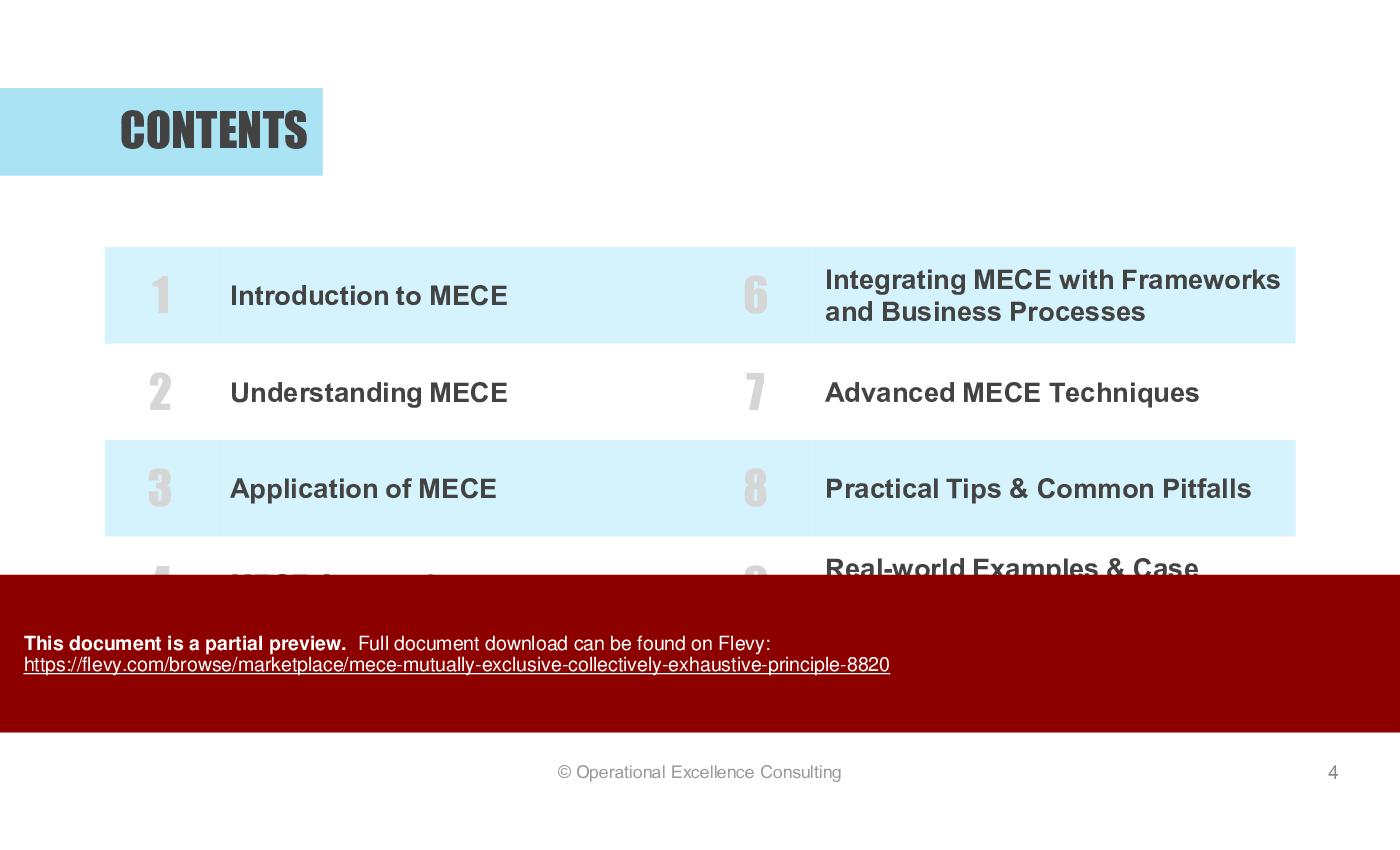
CONTENTS
1. Introduction to MECE Principle
• Definition and origins
• Why MECE matters in consulting and problem-solving
2. Mutually Exclusive
• Ensuring categories do not overlap
• Examples of clear separation
3. Collectively Exhaustive
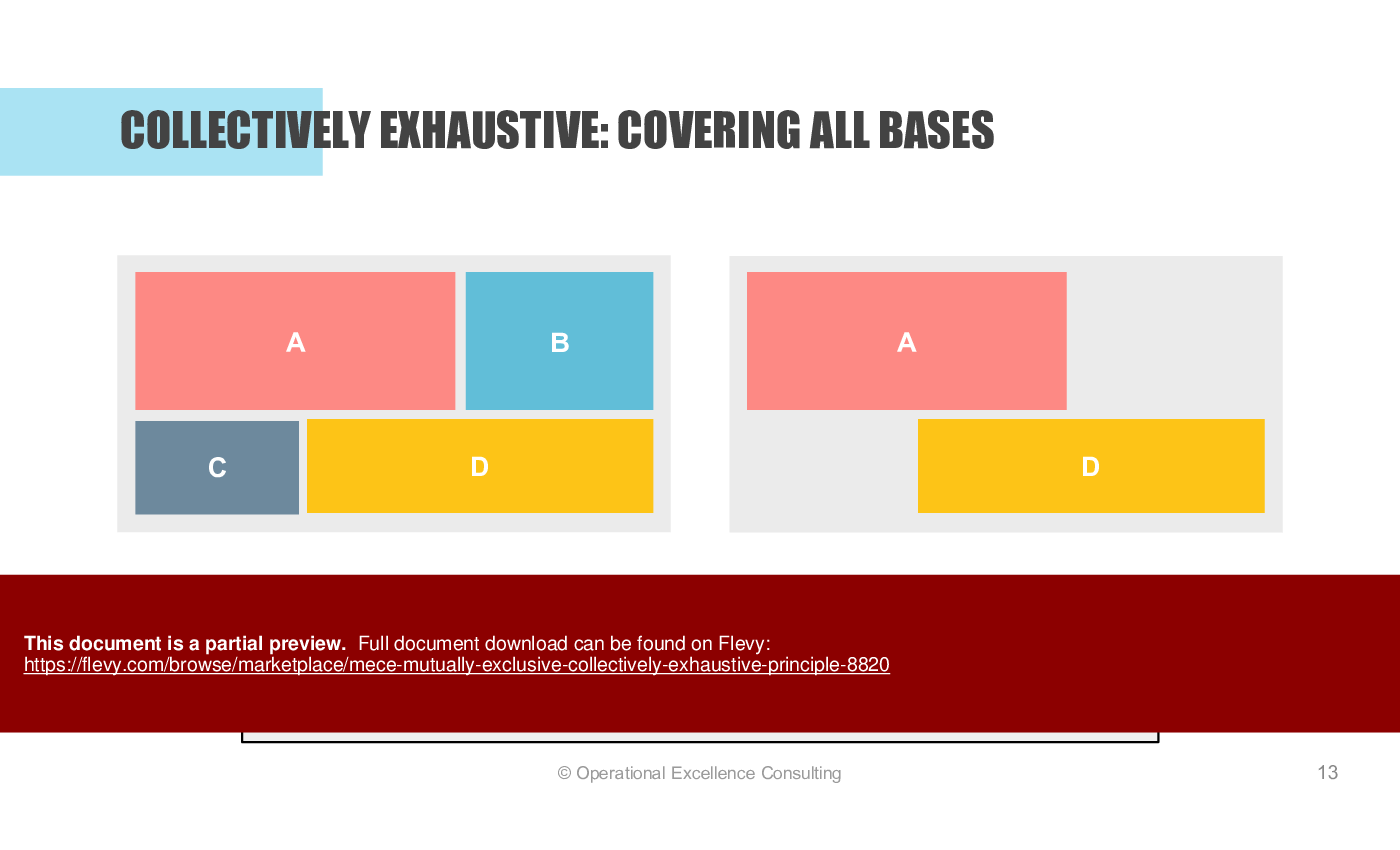
• Covering all possible options without gaps
• Examples of completeness
4. Applications of MECE
• Issue trees and problem structuring
• Communication and presentation logic
• Strategy and decision-making
5. Exercises and Examples
• Practice applying MECE to real-world problems
• Group activities and case illustrations
Got a question about the product? Email us at support@flevy.com or ask the author directly by using the "Ask the Author a Question" form. If you cannot view the preview above this document description, go here to view the large preview instead.
Executive Summary
The MECE (Mutually Exclusive, Collectively Exhaustive) Principle presentation is a comprehensive resource designed to enhance analytical skills and improve decision-making processes. Developed by Operational Excellence Consulting, this presentation equips users with the tools to categorize information clearly and completely, thereby aiding in effective problem-solving. By mastering the MECE framework, users will be able to optimize resource allocation, facilitate strategic planning, and apply structured thinking to real-world business challenges.
Who This Is For and When to Use
• Business analysts seeking to improve analytical frameworks
• Project managers looking to enhance project planning and execution
• Strategy teams involved in market analysis and operational improvements
• Consultants aiming to provide structured insights to clients
• Executives focused on decision-making and resource optimization
Best-fit moments to use this deck:
• During strategic planning sessions to ensure comprehensive goal setting
• In project management meetings to clarify task allocations and dependencies
• When conducting market analysis to segment customer needs effectively
• In training sessions aimed at enhancing team analytical capabilities
Learning Objectives
• Understand the MECE Principle and its significance in analysis
• Improve analytical skills by organizing information without overlap or gaps
• Apply the MECE framework to solve real-world business problems effectively
• Enhance decision-making processes through structured analysis
• Optimize resource allocation by identifying and prioritizing key areas
• Facilitate strategic planning using MECE for thorough goal setting
Table of Contents
• Introduction to MECE (page 6)
• Understanding MECE (page 7)
• Application of MECE (page 8)
• MECE Approaches (page 9)
• Conducting MECE Analysis (page 10)
• Integrating MECE with Frameworks and Business Processes (page 42)
• Advanced MECE Techniques (page 49)
• Practical Tips & Common Pitfalls (page 54)
• Real-world Examples & Case Studies (page 57)
• Summary & Critical Success Factors (page 68)
Primary Topics Covered
• Understanding MECE - The MECE principle ensures that categories do not overlap and that all possible options are covered, facilitating clearer analysis.
• Applications of MECE - Real-world applications across various industries demonstrate the effectiveness of the MECE framework in enhancing decision-making and problem-solving.
• Conducting MECE Analysis - A systematic approach to conducting MECE analysis includes defining the problem, identifying categories, and developing solutions.
• Integrating MECE with Frameworks - MECE can be combined with established frameworks like SWOT and PESTLE for a structured evaluation of strategic positions.
• Advanced MECE Techniques - Techniques such as the 80/20 rule and root cause analysis enhance the application of MECE in data analysis and decision-making.
• Common Pitfalls - Identifying and avoiding common pitfalls in MECE application ensures effective analysis and decision-making.
Deliverables, Templates, and Tools
• MECE hierarchical breakdown template for organizing information
• MECE analysis worksheet for ensuring categories are mutually exclusive and collectively exhaustive
• Practical tips for applying MECE in various business contexts
• Real-world case studies illustrating successful MECE applications
Slide Highlights
• Introduction to the MECE Principle and its importance in structured analysis
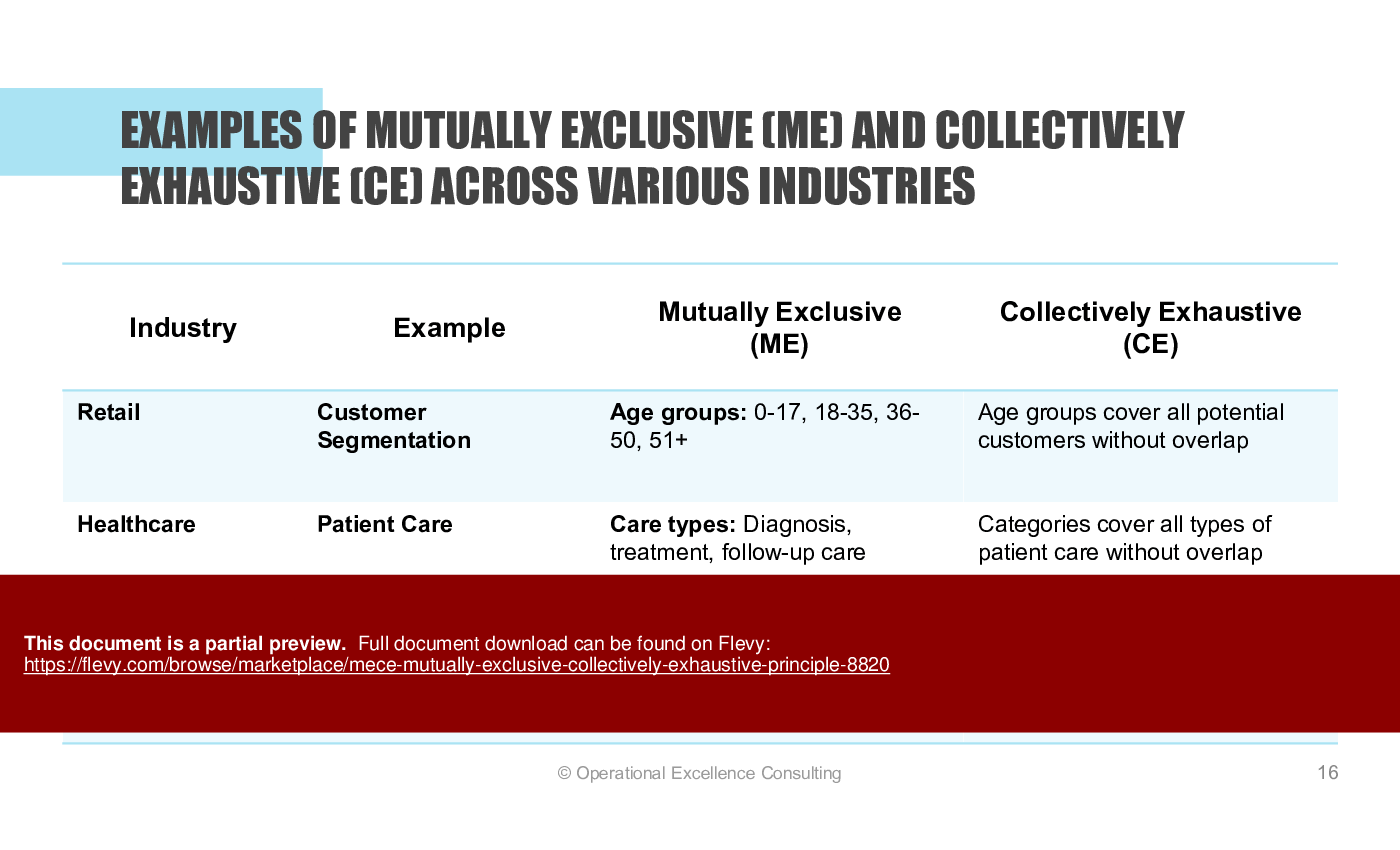
• Examples of MECE applications across industries such as retail, healthcare, and finance
• Step-by-step process for conducting a systematic MECE analysis
• Integration of MECE with frameworks like SWOT and PESTLE for strategic evaluation
• Common pitfalls in MECE application and how to avoid them
Potential Workshop Agenda
Introduction to MECE (30 minutes)
• Overview of the MECE principle and its significance
• Discussion on common misconceptions and applications
Conducting MECE Analysis (60 minutes)
• Step-by-step guide to conducting a MECE analysis
• Group activity to practice applying MECE principles
Integrating MECE with Frameworks (45 minutes)
• Exploring the integration of MECE with SWOT and PESTLE
• Case study discussion on real-world applications
Customization Guidance
• Tailor the MECE categories to fit specific business problems or scenarios
• Adjust examples and case studies to align with industry-specific contexts
• Incorporate organizational terminology and frameworks for relevance
Secondary Topics Covered
• Importance of clear categorization in enhancing analysis
• Techniques for effective decision-making and resource allocation
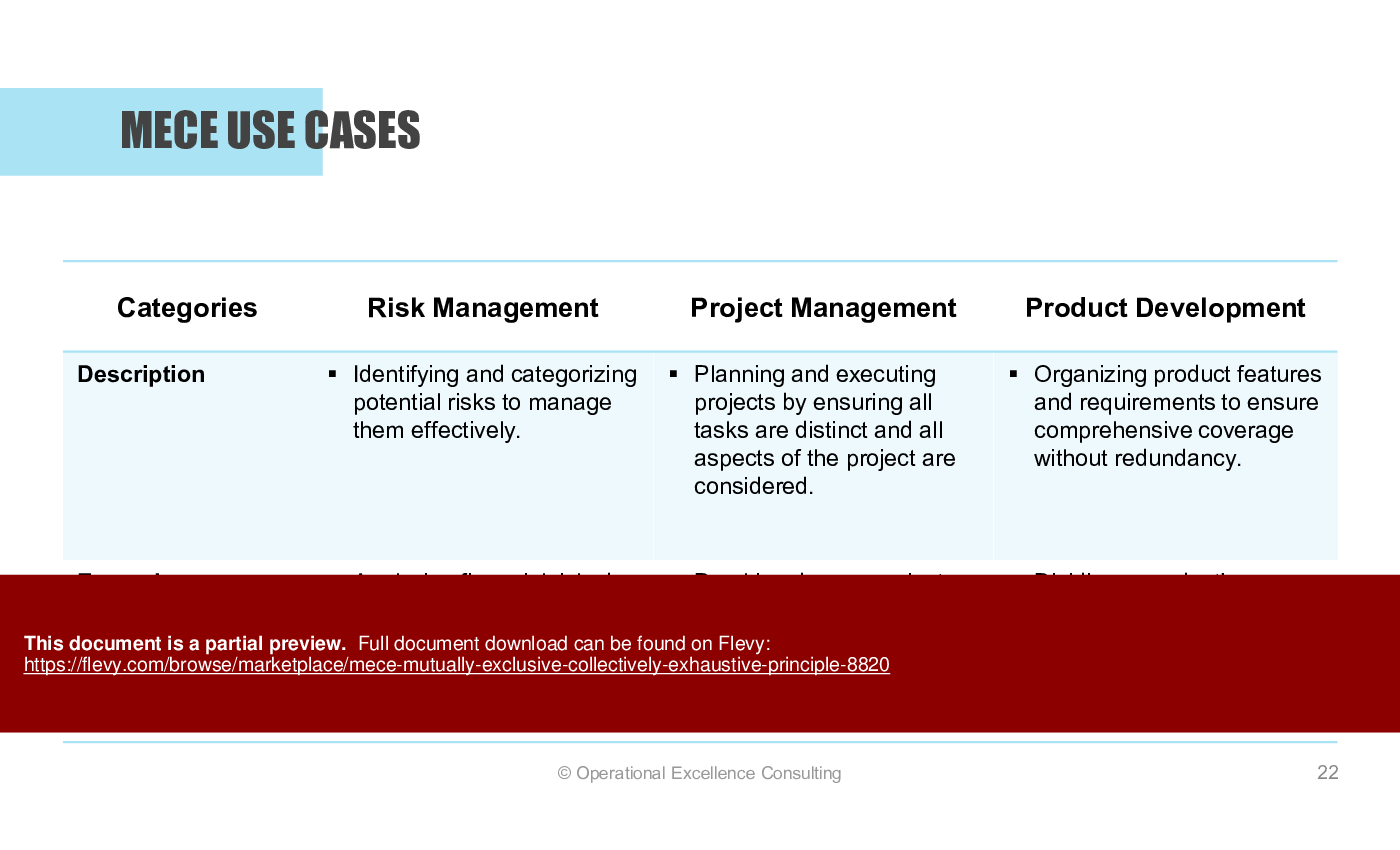
• The role of MECE in project management and operational improvements
• Strategies for continuous refinement and validation of MECE categories
FAQ
What does MECE stand for?
MECE stands for Mutually Exclusive, Collectively Exhaustive, a principle used to ensure clear and comprehensive analysis.
How can I apply the MECE principle in my organization?
You can apply MECE by categorizing information in a way that avoids overlap and covers all necessary aspects of a problem or scenario.
What are the benefits of using MECE?
Using MECE enhances clarity, improves decision-making, optimizes resource allocation, and fosters structured thinking.
Can MECE be used in project management?
Yes, MECE is beneficial in project management for task breakdown, risk management, and ensuring all project components are considered.
What are common pitfalls when applying MECE?
Common pitfalls include overlapping categories, missing critical data, and inconsistent criteria for categorization.
Is MECE applicable in data analysis?
Absolutely, MECE can be applied in data analysis to ensure completeness and accuracy in organizing data sets.
How does MECE improve decision-making?
MECE provides a comprehensive view of options, reducing errors and enabling swift responses to challenges.
What is the 80/20 rule in relation to MECE?
The 80/20 rule suggests that 80% of effects come from 20% of causes, allowing you to focus on high-impact areas while ensuring comprehensive analysis.
Glossary
• MECE - Mutually Exclusive, Collectively Exhaustive; a principle for structured analysis.
• Framework - An established structure for organizing information systematically.
• Segmentation - Dividing data into distinct, non-overlapping groups for analysis.
• Root Cause Analysis - A method for identifying the underlying causes of a problem.
• SWOT Analysis - A strategic planning tool that categorizes strengths, weaknesses, opportunities, and threats.
• PESTLE Analysis - A framework for analyzing external factors affecting an organization: Political, Economic, Social, Technological, Legal, Environmental.
• Project Management - The process of planning, executing, and closing projects effectively.
• Data Analysis - The process of inspecting, cleansing, transforming, and modeling data to discover useful information.
• Risk Management - The identification, assessment, and prioritization of risks followed by coordinated efforts to minimize or control their impact.
• Decision-Making - The process of making choices by identifying a decision, gathering information, and assessing alternative resolutions.
• Categorization - The process of grouping items based on shared characteristics.
• Analysis - The detailed examination of the elements or structure of something.
Source: Best Practices in Problem Solving, MECE PowerPoint Slides: MECE (Mutually Exclusive, Collectively Exhaustive) Principle PowerPoint (PPTX) Presentation Slide Deck, Operational Excellence Consulting
|
Receive our FREE whitepaper on the Top 101 Consulting Frameworks
Download our 200+ page guide summarizing the Top 101 Management Consulting Frameworks. Each framework provides a structured approach to analyzing and solving a common business problem. |