
This framework is developed by a team of former McKinsey and Big 4 consultants. The presentation follows the headline-body-bumper slide format used by global consulting firms.
Editor Summary
Experience Economy is a 34-slide PowerPoint (PPTX) by LearnPPT Consulting that explains the Experience Economy concept popularized by B.
Read moreJoseph Pine II and James H. Gilmore. The deck covers the 4 experience realms (Entertainment, Educational, Escapist, Esthetic), discusses 5 fundamental experience-design principles, and addresses characteristics, implications, and Critical Success Factors, plus reusable slide templates for business use. Used by organizations and business presenters designing customer-facing experiences; sold as a digital download on Flevy.
Use this deck when an organization needs to shift offerings from goods or services toward customer events that generate lasting memories — for example, when defining experience-led product, marketing, or event strategies.
Experience designers mapping customer interactions across the 4 realms (Entertainment, Educational, Escapist, Esthetic) to increase engagement.
Marketing managers building campaigns that combine realms and apply the 5 design principles to create memorable events.
Product or event leads converting a product/service into an experience and using slide templates to present strategy to stakeholders.
The approach — classifying touchpoints into 4 realms and applying 5 design principles — follows structured, framework-driven experience design and customer-journey practices.
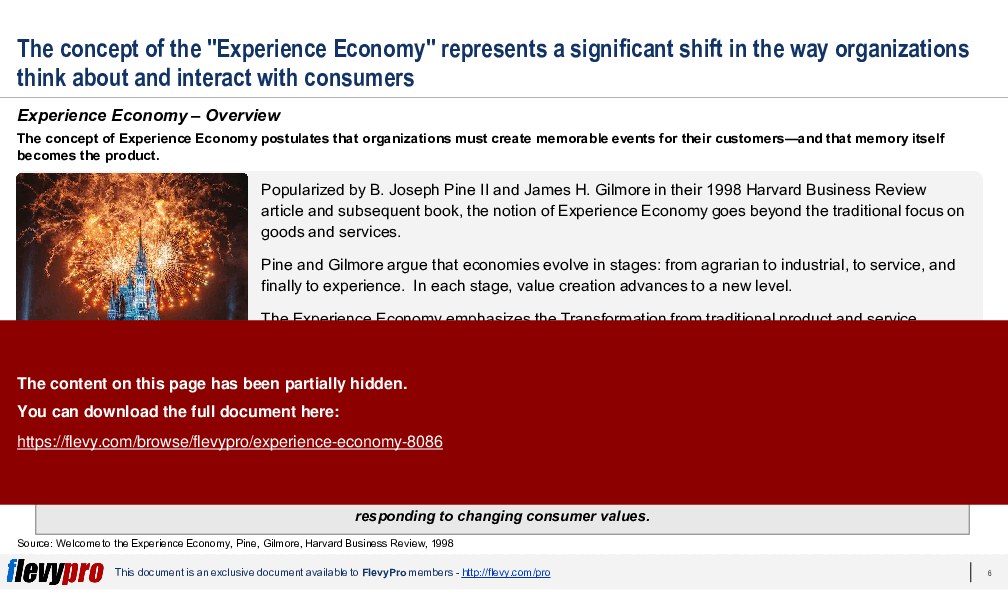
The concept of the "Experience Economy" represents a significant shift in the way organizations think about and interact with consumers. The concept of Experience Economy postulates that organizations must create memorable events for their customers—and that memory itself becomes the product.
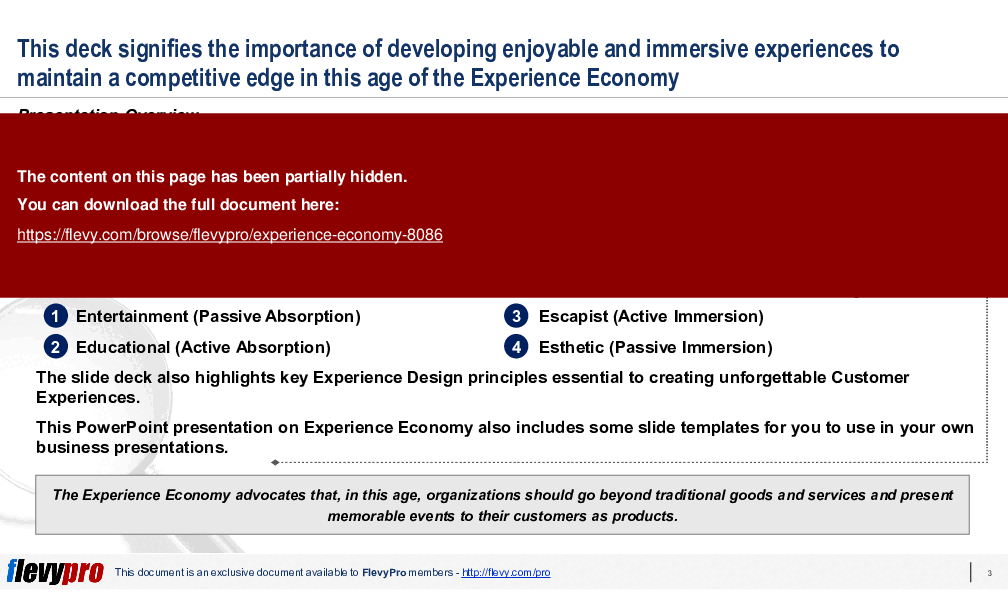
Popularized by B. Joseph Pine II and James H. Gilmore in their 1998 Harvard Business Review article and subsequent book, the notion of Experience Economy goes beyond the traditional focus on goods and services. Pine and Gilmore argue that economies evolve in stages: from agrarian to industrial, to service, and finally to experience. The Experience Economy advocates that, in this age, organizations should go beyond traditional goods and services and present memorable events to their customers as products.
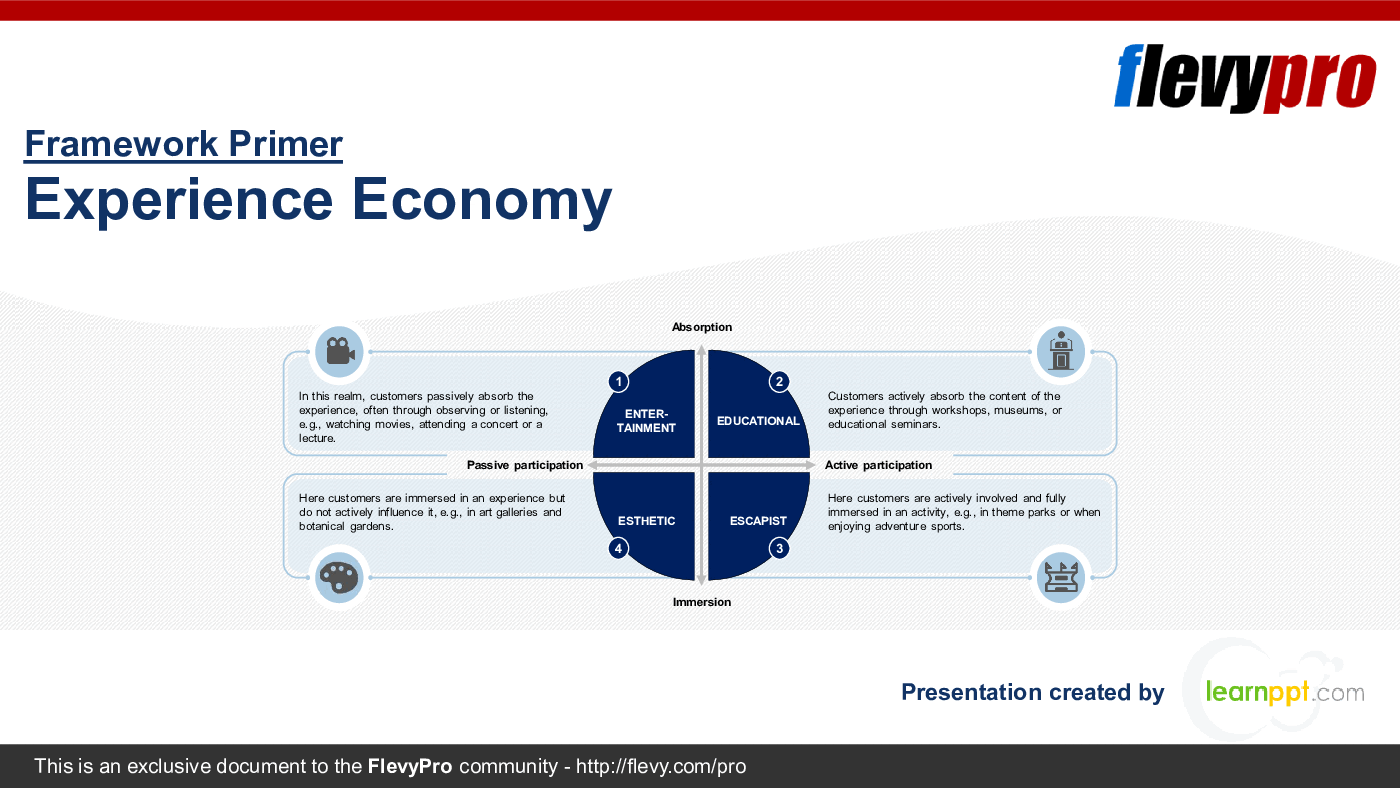
The PowerPoint presentation on the Experience Economy introduces the 4 realms or dimensions of experiences under the Experience Economy:
1. Entertainment – In this realm, customers passively absorb the experience, often through observing or listening, e.g., watching movies, attending a concert or a lecture.
2. Educational – Customers actively absorb the content of the experience through workshops, museums, or educational seminars.
3. Escapist – Here customers are actively involved and fully immersed in an activity, e.g., in theme parks or when enjoying adventure sports.
4. Esthetic – Here customers are immersed in an experience but do not actively influence it, e.g., in art galleries and botanical gardens.
These 4 realms often overlap and are combined to create more actively engaging experiences.
Each of these realms is discussed in depth in this presentation. Additionally, this presentation discusses the 5 fundamental Experience Design principles (essential to creating unforgettable Customer Experiences), characteristics and implications of the Experience Economy, Critical Success Factors, among other topics.
This PowerPoint presentation on Experience Economy also includes some slide templates for you to use in your own business presentations.
What are the 4 realms of the Experience Economy and how do they differ?
The 4 realms are Entertainment (customers passively absorb experiences), Educational (customers actively absorb content), Escapist (customers are actively immersed and influence the activity), and Esthetic (customers are immersed without influencing it). These realms can overlap and be combined to shape customer engagement across 4 realms.
How does the Experience Economy concept describe economic evolution?
Pine and Gilmore describe economies evolving from agrarian to industrial to service and finally to experience, where organizations stage memorable events and memory itself becomes the product. The concept positions experience as a distinct economic offering within these 4 stages.
What should I expect to learn from experience-design principles in this topic area?
Experience-design principles guide how to craft events that create lasting customer memories, addressing engagement, immersion, and interaction. Specific principles vary by framework; the Flevy's Experience Economy presentation summarizes 5 fundamental experience-design principles for practitioners to apply, detailing 5 design principles.
How can businesses combine the 4 realms to enhance customer engagement?
Combining realms lets organizations layer passive and active elements — for example, pairing Educational workshops with Entertainment elements or adding Escapist immersion to Esthetic environments. Intentional combinations increase engagement by mixing absorption and immersion across the 4 realms.
What should I look for when selecting a slide deck or template on the Experience Economy?
Prioritize decks that explain the 4 realms, outline experience-design principles, discuss characteristics and implications, and list Critical Success Factors, plus reusable templates for internal presentations. Flevy's Experience Economy deck matches those criteria and is provided as a 34-slide PPTX.
What role do Critical Success Factors play in executing an experience strategy?
Critical Success Factors define what must be achieved operationally and strategically to deliver staged experiences—covering design, delivery, measurement and alignment with customer expectations. Look for frameworks that identify these execution priorities; the topic is addressed in a dedicated Critical Success Factors slide.
After a merger, how can I reframe products as experiences using this framework?
Map combined offerings against the 4 realms to identify where to add immersion, education, or esthetic value, then apply experience-design principles to sequence and stage events for customers. Visual templates and realm mappings help translate strategy into presentations across 4 realms.
Are pre-built templates and slides worth buying for internal experience-design workshops?
Pre-built templates save preparation time, provide consistent framing for the 4 realms and the 5 design principles, and help structure stakeholder conversations. For teams short on time or looking for a ready structure, decks that include slide templates and content on realms can be reused immediately as slide templates.
This PPT slide provides an overview of the Entertainment realm within the Experience Economy, emphasizing passive engagement where consumers enjoy content without active participation. Key characteristics include storytelling and sensory engagement, which evoke emotions like joy and excitement. Entertainment experiences appeal broadly due to their accessibility and minimal effort required from audiences, creating lasting memories and reflecting cultural themes. The economic value of entertainment is significant, driven by various media, events, and performances. Challenges include maintaining audience interest in a saturated market and short attention spans, necessitating the use of technology and ongoing creativity. Balancing commercial success with artistic integrity is also crucial for organizations.
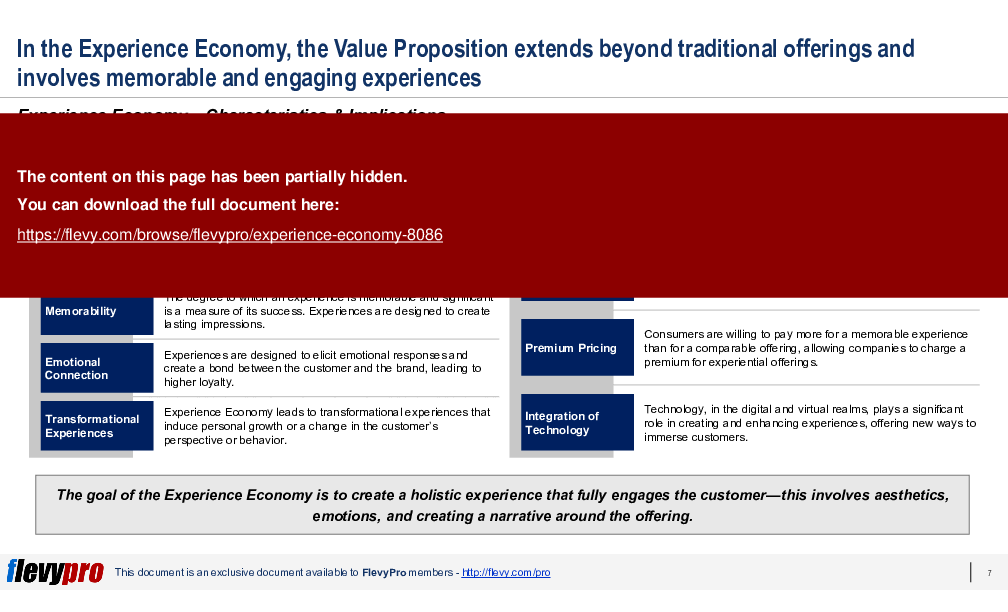
The Experience Economy focuses on enhancing value propositions through customer experiences rather than traditional offerings. Key concepts include customer engagement and immersion, where interactive and emotionally resonant experiences foster deeper brand connections. Personalization tailors experiences to individual preferences, making them more relevant and memorable. Memorable experiences serve as benchmarks for success, leaving lasting impressions that strengthen customer loyalty. Transformational experiences can influence personal growth and behavioral changes. Strategies such as storytelling and theming enhance experience attractiveness, while experiential marketing creates immersive brand interactions. Premium pricing allows businesses to command higher prices for memorable experiences. Technology integration is vital for creating innovative customer engagement, aiming for holistic experiences that emphasize aesthetics and emotional resonance.
A well-defined theme is essential for creating a memorable customer experience. The first principle of experience design emphasizes a cohesive and immersive theme that serves as a narrative framework, providing context and meaning. This theme influences the mood and emotional response of customers and should be reflected in every aspect of the experience, including the physical environment, customer interactions, and marketing materials. A distinctive theme differentiates offerings from competitors and engages multiple senses—sight, sound, touch, and taste. Examples include Disneyland's themed segments, themed restaurants with cohesive décor and menus, and Apple stores' minimalist theme in product presentations and design. Implementing these principles enhances customer interactions and creates engaging, memorable experiences.
Source: Best Practices in Customer Experience, Experience Economy PowerPoint Slides: Experience Economy PowerPoint (PPTX) Presentation Slide Deck, LearnPPT Consulting
This framework is developed by a team of former McKinsey and Big 4 consultants. The presentation follows the headline-body-bumper slide format used by global consulting firms.
For $10.00 more, you can download this document plus 2 more FlevyPro documents. That's just $13 each.
ABOUT FLEVYPRO
This document is part of the FlevyPro Library, a curated knowledge base of documents for our FlevyPro subscribers.
FlevyPro is a subscription service for on-demand business frameworks and analysis tools. FlevyPro subscribers receive access to an exclusive library of curated business documents—business framework primers, presentation templates, Lean Six Sigma tools, and more—among other exclusive benefits.
The average daily rate of a McKinsey consultant is $6,625 (not including expenses). The average price of a Flevy document is $65.
Trusted by over 10,000+ Client Organizations
Since 2012, we have provided business templates to over 10,000 businesses and organizations of all sizes, from startups and small businesses to the Fortune 100, in over 130 countries.
"As an Independent Management Consultant, I find Flevy to add great value as a source of best practices, templates and information on new trends. Flevy has matured and the quality and quantity of the library is excellent. Lastly the price charged is reasonable, creating a win-win value for
the customer, Flevy and the various authors. This is truly a service that benefits the consulting industry and associated clients. Thanks for providing this service.
"
– Jim Schoen, Principal at FRC Group
"I have used Flevy services for a number of years and have never, ever been disappointed. As a matter of fact, David and his team continue, time after time, to impress me with their willingness to assist and in the real sense of the word. I have concluded in fact
that it is not at all just a repository of documents/resources but, in the way that David and his team manage the firm, it is like dealing with consultants always ready to assist, advise and direct you to what you really need, and they always get it right.
I am an international hospitality accomplished senior executive who has worked and lived during the past 35 years in 23 countries in 5 continents and I can humbly say that I know what customer service is, trust me.
Aside from the great and professional service that Flevy's team provide, their wide variety of material is of utmost great quality, professionally put together and most current.
Well done Flevy, keep up the great work and I look forward to continue working with you in the future and to recommend you to a variety of colleagues around the world.
"
– Roberto Pelliccia, Senior Executive in International Hospitality
"Flevy is now a part of my business routine. I visit Flevy at least 3 times each month.
Flevy has become my preferred learning source, because what it provides is practical, current, and useful in this era where the business world is being rewritten.

many challenges and there is the need to make the right decisions in a short time, with so much scattered information, we are fortunate to have Flevy. Flevy investigates, selects, and puts at our disposal the best of the best to help us be successful in our work.
"
– Omar Hernán Montes Parra, CEO at Quantum SFE
"The wide selection of frameworks is very useful to me as an independent consultant. In fact, it rivals what I had at my disposal at Big 4 Consulting firms in terms of efficacy and organization."
– Julia T., Consulting Firm Owner (Former Manager at Deloitte and Capgemini)
"I have found Flevy to be an amazing resource and library of useful presentations for lean sigma, change management and so many other topics. This has reduced the time I need to spend on preparing for my performance consultation. The library is easily accessible and updates are regularly provided. A wealth of great information."
– Cynthia Howard RN, PhD, Executive Coach at Ei Leadership
"As a niche strategic consulting firm, Flevy and FlevyPro frameworks and documents are an on-going reference to help us structure our findings and recommendations to our clients as well as improve their clarity, strength, and visual power. For us, it is an invaluable resource to increase our impact and value."
– David Coloma, Consulting Area Manager at Cynertia Consulting
"As a consulting firm, we had been creating subject matter training materials for our people and found the excellent materials on Flevy, which saved us 100's of hours of re-creating what already exists on the Flevy materials we purchased."
– Michael Evans, Managing Director at Newport LLC
"Flevy.com has proven to be an invaluable resource library to our Independent Management Consultancy, supporting and enabling us to better serve our enterprise clients.
The value derived from our [FlevyPro] subscription in terms of the business it has helped to gain far exceeds the investment made, making a subscription a no-brainer for any growing consultancy – or in-house strategy team."
– Dean Carlton, Chief Transformation Officer, Global Village Transformations Pty Ltd.
Download our FREE Digital Transformation Templates
Download our free compilation of 50+ Digital Transformation slides and templates. DX concepts covered include Digital Leadership, Digital Maturity, Digital Value Chain, Customer Experience, Customer Journey, RPA, etc.
Download our FREE Digital Transformation Templates
Get Our FREE Product.
Download our free compilation of 50+ Digital Transformation slides and templates. DX concepts covered include Digital Leadership, Digital Maturity, Digital Value Chain, Customer Experience, Customer Journey, RPA, etc.