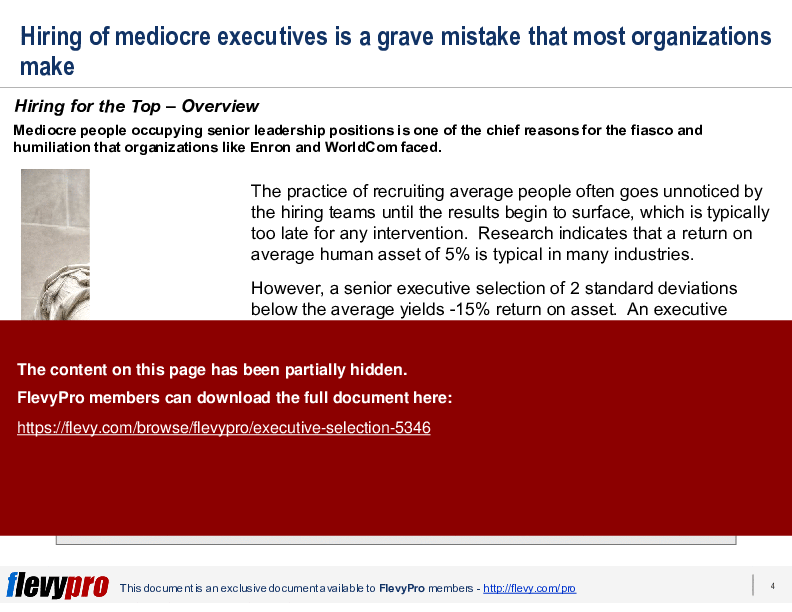


Mediocre people occupying senior leadership positions is one of the chief reasons for the fiasco and humiliation that organizations like Enron and WorldCom faced.
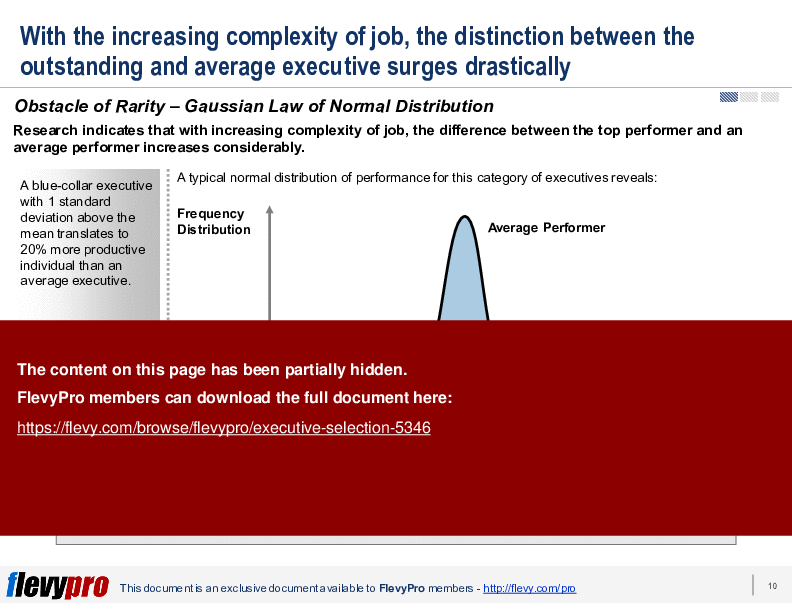
The practice of recruiting average people often goes unnoticed by the hiring teams until the results begin to surface, which is typically too late for any intervention. A senior executive selection of 2 standard deviations below the average yields -15% return on asset; whereas an executive selection with 2 standard deviations above average causes +25% return, which is 5 times the average.
Identification and onboarding of right people at these complex jobs and senior levels can create a substantial competitive advantage for the organizations.
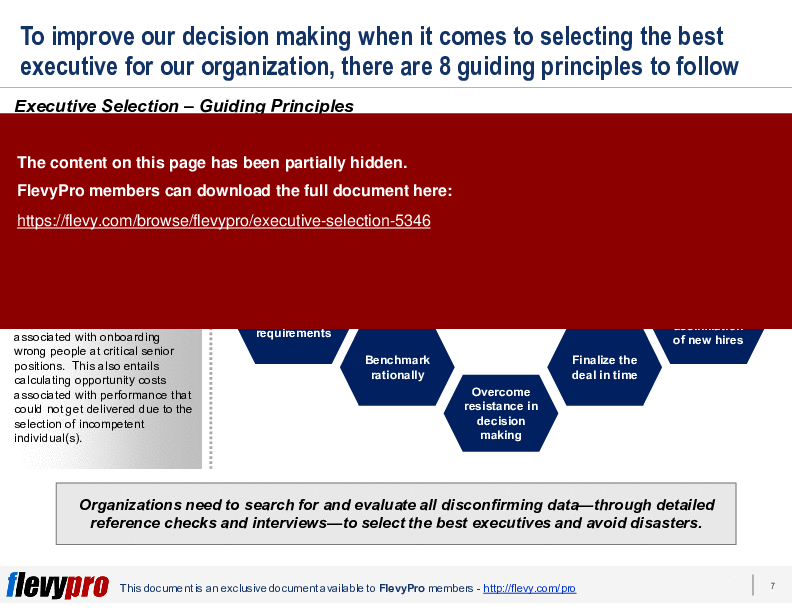
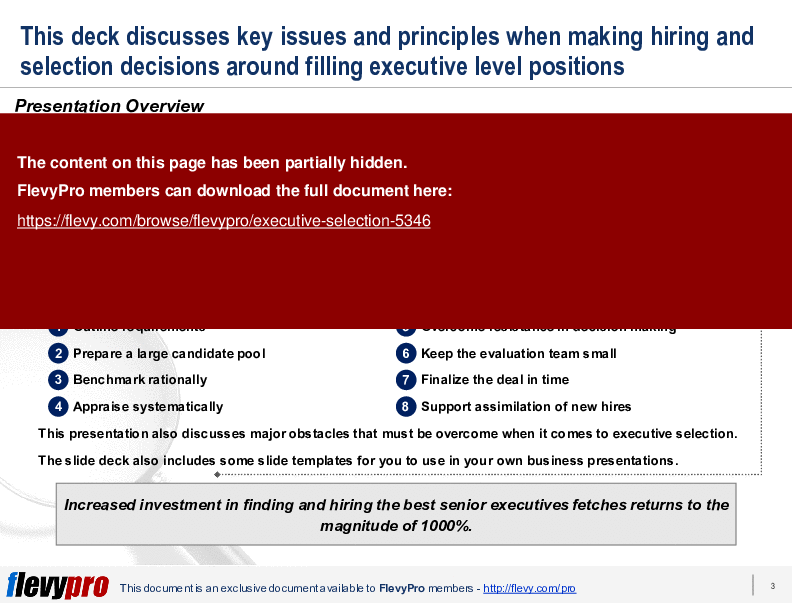
This presentation provides a detailed overview of the 8 guiding principles that organizations need to follow to select competent senior leaders and to prevent losses and closure: It also discusses major obstacles that must be overcome when it comes to executive selection.
The slide deck also includes some slide templates for you to use in your own business presentations.
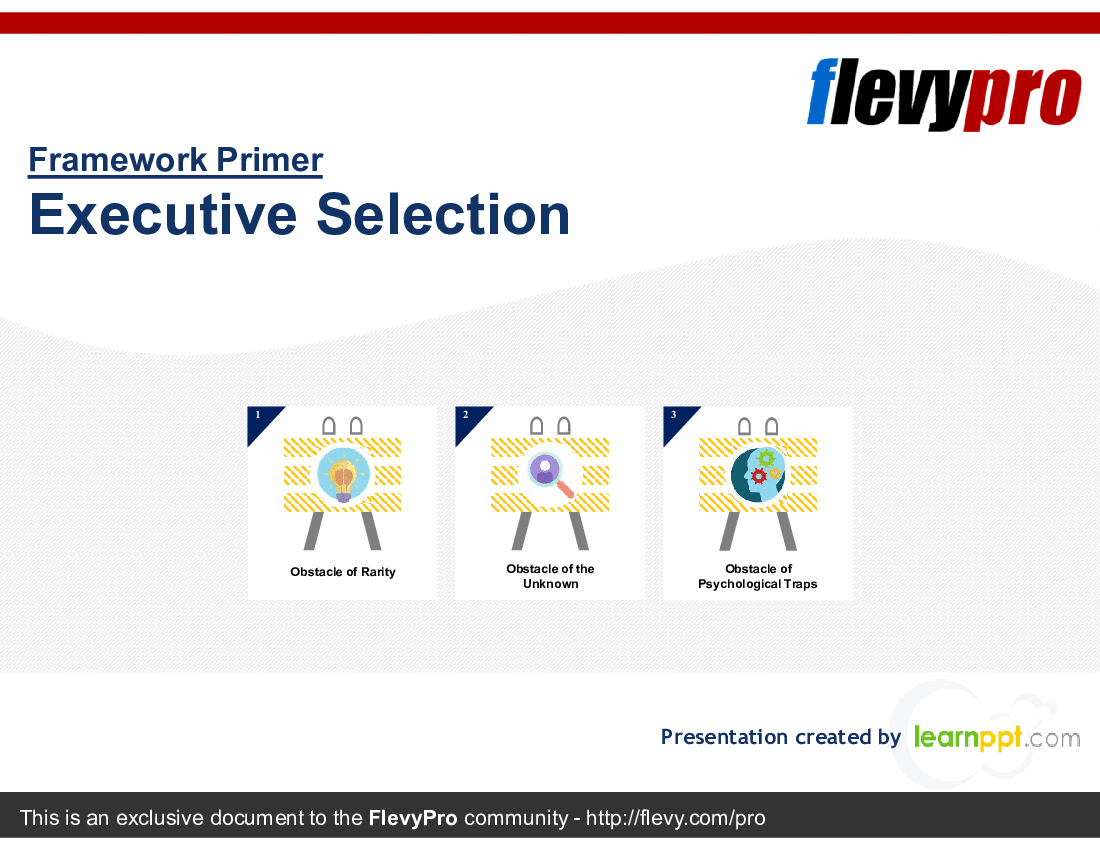
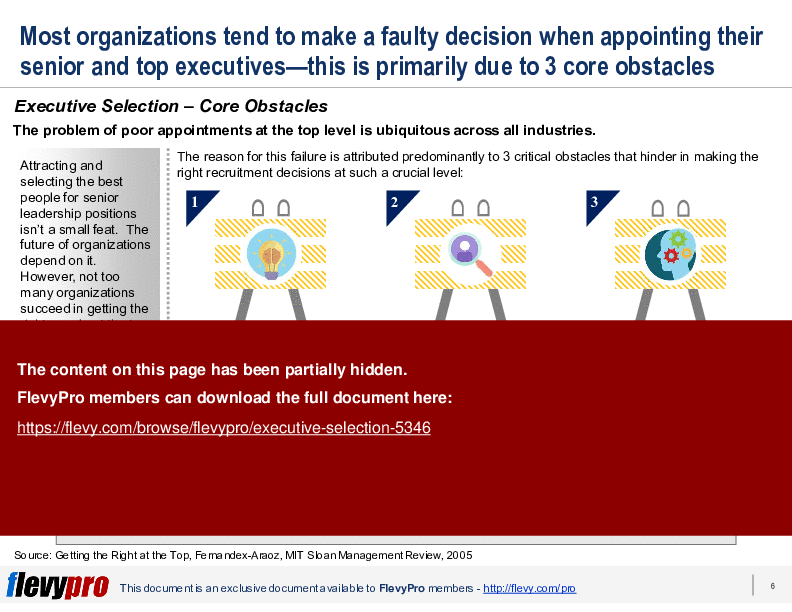
This presentation delves into the core obstacles that organizations face when selecting senior executives. It highlights the scarcity of top-tier candidates, the challenge of accurately assessing unknown competencies, and the psychological traps that can bias decision-making. The deck provides a comprehensive approach to overcoming these barriers, ensuring that the right leaders are chosen to drive organizational success.
The PPT also outlines eight guiding principles essential for improving executive selection processes. These principles include rational benchmarking, systematic appraisal, and supporting the assimilation of new hires. By adhering to these strategies, organizations can significantly enhance their leadership quality and avoid the pitfalls of poor executive appointments.
Got a question about this document? Email us at flevypro@flevy.com.
Executive Summary
The Executive Selection presentation is a critical resource designed to enhance the hiring process for senior executives. It outlines the significant return on investment associated with selecting top-tier leadership, emphasizing that organizations can achieve returns of up to 1000% by hiring the right candidates. The presentation identifies key obstacles in the executive selection process and provides eight guiding principles to improve decision-making. By following these principles, organizations can avoid the pitfalls of hiring mediocre executives, which can lead to substantial financial losses and reputational damage.
Who This Is For and When to Use
• Corporate executives involved in hiring decisions for senior leadership roles
• HR professionals and talent acquisition teams focused on executive recruitment
• Organizational leaders seeking to improve their hiring frameworks
• Consultants advising organizations on leadership selection strategies
Best-fit moments to use this deck:
• During the executive recruitment planning phase
• When assessing and refining existing hiring processes
• In workshops aimed at improving leadership selection practices
• For training sessions on overcoming biases in executive hiring
Learning Objectives
• Define the financial impact of executive selection on organizational performance
• Identify and overcome core obstacles in the executive hiring process
• Implement the eight guiding principles for effective executive selection
• Develop a systematic approach to appraising executive candidates
• Create a robust candidate pool for senior leadership positions
• Establish benchmarks for evaluating executive competencies
• Facilitate the assimilation of new executives into the organization
• Minimize cognitive biases in decision-making during the hiring process
Table of Contents
• Overview (page 1)
• Executive Selection (page 3)
• Core Obstacles (page 5)
• Obstacle of Rarity (page 6)
• Obstacle of the Unknown (page 13)
• Obstacle of Psychological Traps (page 15)
• Guiding Principles (page 20)
• Templates (page 24)
Primary Topics Covered
• Core Obstacles - Identifies 3 main barriers to effective executive selection: rarity of exceptional candidates, the unknown factors in candidate assessment, and psychological biases that affect decision-making.
• Guiding Principles - Outlines eight principles to enhance the executive selection process, including outlining requirements, preparing a large candidate pool, and supporting new hire assimilation.
• Impact of Leadership Quality - Discusses the significant financial implications of hiring decisions, emphasizing the potential for substantial returns on investment.
• Cognitive Biases - Explores various cognitive biases that can impair judgment during the hiring process, such as emotional anchoring and the tendency to follow majority opinions.
• Assessment Techniques - Provides methods for systematically appraising candidates, including the importance of rigorous reference checks and behavioral-based interviews.
Deliverables, Templates, and Tools
• Executive selection framework template for outlining requirements
• Candidate evaluation checklist to benchmark competencies
• Systematic appraisal guide for conducting candidate interviews
• Reference checking template for gathering candid feedback
• Decision-making support tools to mitigate cognitive biases
• Assimilation plan template for onboarding new executives
Slide Highlights
• Overview of the financial impact of executive selection on organizational performance
• Visual representation of the 3 core obstacles in executive hiring
• Detailed breakdown of the eight guiding principles for effective selection
• Insights into cognitive biases that affect hiring decisions
• Templates for practical application in the executive selection process
Potential Workshop Agenda
Executive Selection Overview (60 minutes)
• Discuss the importance of effective executive selection
• Review the financial implications of hiring decisions
• Identify common obstacles in the hiring process
Guiding Principles Session (90 minutes)
• Explore each of the eight guiding principles
• Engage in group discussions on practical applications
• Develop action plans for implementing principles in current practices
Cognitive Bias Workshop (60 minutes)
• Identify common cognitive biases in decision-making
• Conduct exercises to recognize and mitigate biases
• Share strategies for improving judgment in hiring
Customization Guidance
• Tailor the candidate evaluation checklist to reflect specific organizational competencies
• Adjust the assimilation plan template to fit the unique culture and structure of your organization
• Modify the guiding principles to align with your organization’s strategic objectives and values
• Incorporate industry-specific benchmarks into the assessment tools
Secondary Topics Covered
• The role of organizational culture in executive selection
• Strategies for engaging stakeholders in the hiring process
• Techniques for enhancing the candidate experience during recruitment
• Best practices for conducting effective reference checks
• The importance of diversity and inclusion in executive hiring
Topic FAQ
Document FAQ
These are questions addressed within this presentation.
What are the core obstacles in executive selection?
The core obstacles include the rarity of exceptional candidates, the unknown factors in assessing candidates, and psychological biases that can impair decision-making.
How can organizations improve their executive selection process?
Organizations can improve their selection process by following the eight guiding principles outlined in the presentation, which focus on systematic evaluation and overcoming cognitive biases.
What is the financial impact of hiring decisions?
Hiring the right executives can yield returns of up to 1000%, while poor hiring decisions can lead to significant financial losses and reputational damage.
What assessment techniques are recommended for executive candidates?
Recommended techniques include behavioral-based interviews, rigorous reference checks, and systematic evaluation against established benchmarks.
How can cognitive biases affect hiring decisions?
Cognitive biases can lead to flawed judgments, such as favoring familiar candidates or making decisions based on first impressions rather than objective criteria.
What role does organizational culture play in executive selection?
Organizational culture influences the fit of candidates within the company and can affect their long-term success and integration.
Why is it important to support the assimilation of new hires?
Supporting new hires is crucial for their success and helps ensure they can contribute effectively to the organization from the outset.
How can organizations create a large candidate pool?
Organizations can expand their candidate pool by considering diverse sources and not limiting searches to specific geographies or industries.
What is the significance of benchmarking in executive selection?
Benchmarking allows for a fair comparison of candidates based on consistent criteria, ensuring that evaluations are objective and comprehensive.
How can organizations mitigate the impact of cognitive biases?
Organizations can mitigate biases by implementing structured decision-making processes, training evaluators, and fostering an environment that encourages diverse perspectives.
Glossary
• Executive Selection - The process of identifying and hiring candidates for senior leadership roles.
• Cognitive Bias - Systematic patterns of deviation from norm or rationality in judgment.
• Benchmarking - Establishing standards or criteria for evaluating candidates.
• Assimilation - The process of integrating new hires into the organization.
• Behavioral-Based Interviewing - A technique that assesses candidates based on their past behavior in similar situations.
• Reference Checking - The process of contacting previous employers or colleagues to verify a candidate's qualifications and performance.
• Opportunity Cost - The potential benefits lost when choosing one alternative over another.
• Organizational Culture - The shared values, beliefs, and practices that shape the behavior of individuals within an organization.
• Decision-Making Authority - The individuals or groups responsible for making hiring decisions.
• Candidate Pool - The group of potential candidates considered for a position.
• Soft Skills - Interpersonal skills that affect how individuals interact with others.
• Hard Skills - Specific, teachable abilities or knowledge sets.
• Evaluation Team - The group of individuals responsible for assessing candidates.
• Herding - The tendency to follow the majority opinion rather than making independent judgments.
• Emotional Anchoring - The reliance on initial impressions or emotions when making decisions.
• False Assumptions - Misconceptions that can lead to poor hiring decisions.
• Procrastination - Delaying decisions or actions, often leading to missed opportunities.
• Familiarity Bias - The tendency to prefer candidates who are similar to oneself or known to the evaluator.
• Decision Fatigue - The deteriorating quality of decisions made by an individual after a long session of decision making.
• Integration - The process of combining new hires into the existing organizational structure and culture.
Source: Best Practices in Leadership, Hiring, CEO PowerPoint Slides: Executive Selection PowerPoint (PPTX) Presentation Slide Deck, LearnPPT Consulting
Did you need more documents?
Consider a FlevyPro subscription from $39/month. View plans here.
For $10.00 more, you can download this document plus 2 more FlevyPro documents. That's just $13 each.
|
Download our FREE Organization, Change, & Culture, Templates
Download our free compilation of 50+ slides and templates on Organizational Design, Change Management, and Corporate Culture. Methodologies include ADKAR, Burke-Litwin Change Model, McKinsey 7-S, Competing Values Framework, etc. |