
Customer-centric Organization: The Customer Department   23-slide PPT PowerPoint presentation slide deck (PPT)
$29.00

Customer-centric Organization: The Customer Department (23-slide PPT PowerPoint presentation slide deck (PPT)) Preview Image
Log in to unlock full preview.
Customer-centric Organization: The Customer Department (23-slide PPT PowerPoint presentation slide deck (PPT)) Preview Image
Arrow   Click main image to view in full screen.

Customer-centric Organization: The Customer Department (PowerPoint PPT Slide Deck)

PowerPoint (PPT) 23 Slides FlevyPro Document

$29.00
FlevyPro price: FREE (included in subscription)
This framework is developed by a team of former McKinsey and Big 4 consultants. The presentation follows the headline-body-bumper slide format used by global consulting firms.
Add to Cart


Immediate download
Free lifetime updates

CUSTOMER-CENTRICITY PPT DESCRIPTION

Editor Summary Customer-centric Organization: The Customer Department is a 23-slide PowerPoint framework presenting a roadmap to convert product-driven firms into customer-centric enterprises by establishing a dedicated Customer Department. Read more

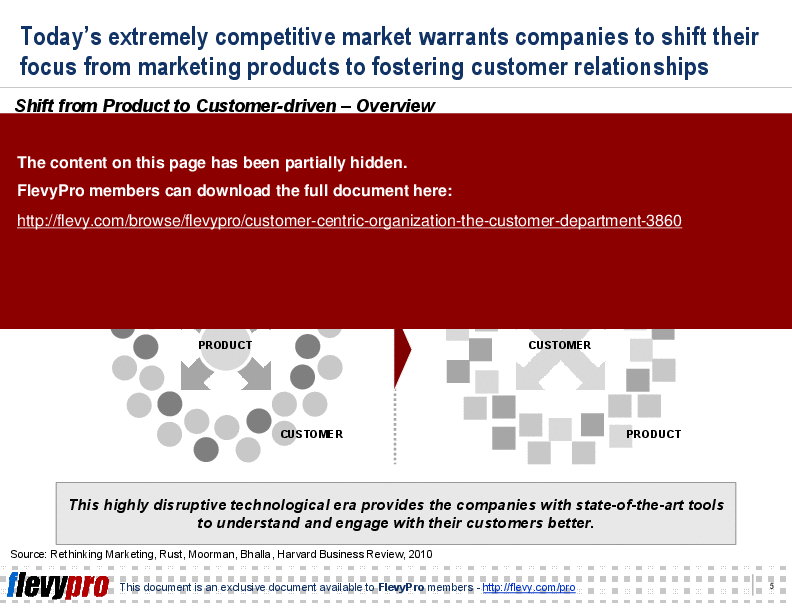
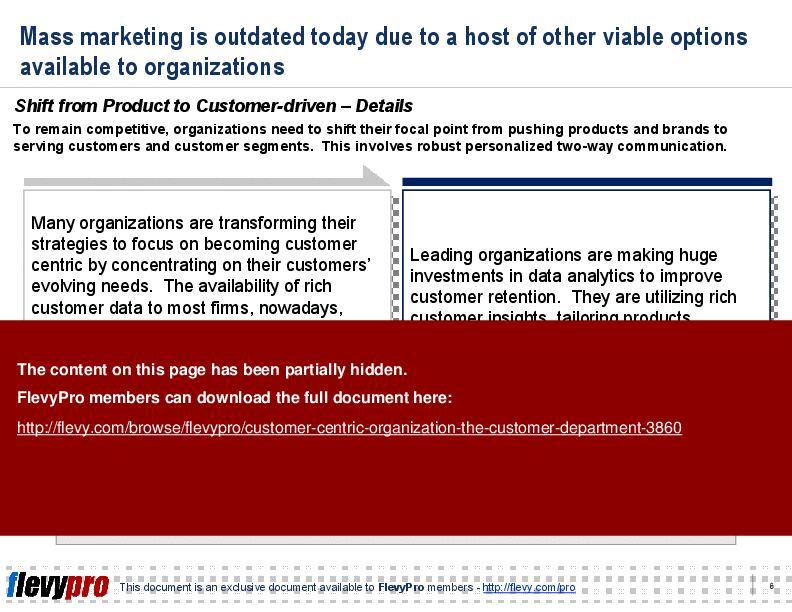
The days of mass markets, mass media communications, and little-to-none direct interface with customers are long gone. This age of disruption offers potent technologies for organizations to utilize in order to engage with the customers directly; gather and mine information; and tailor their products and services appropriately. The emphasis now is on maximizing customer relationships and becoming customer-driven organizations rather than merely selling products.

The sheer advancement in technology today offers sophisticated tools to the organizations to understand and engage with their customers better. To become a Customer-centric Organization, companies need to reinvent their traditional marketing function as a “Customer Department.” The Customer Department should be created to deliver maximum profits to the customers.

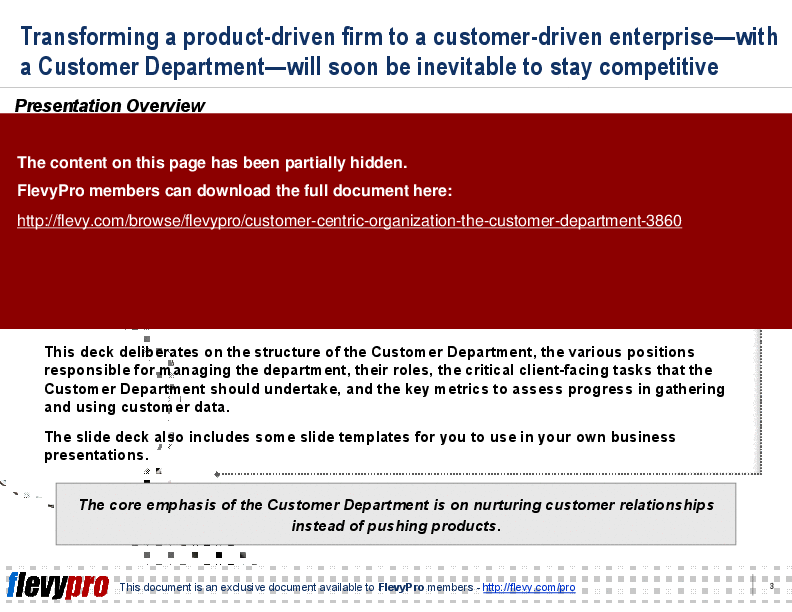
This deck deliberates on the structure of the Customer Department, the various positions responsible for managing the department, their roles, the critical client-facing tasks that the Customer Department should undertake, and the key metrics to assess progress in gathering and using customer data. The core emphasis of the Customer Department is on nurturing customer relationships instead of pushing products.

The slide deck also includes some slide templates for you to use in your own business presentations.

This presentation provides a comprehensive roadmap for transforming your organization into a customer-centric powerhouse. It delves into the strategic realignment required to shift focus from product-centric to customer-driven operations. The deck outlines the roles and responsibilities within the Customer Department, emphasizing the importance of data analytics and customer insights in driving business decisions.

The PPT also includes detailed templates to facilitate the implementation of customer-centric strategies. These templates cover organizational structure, customer metrics, and customer-facing functions, ensuring you have the tools needed to execute a seamless transition. This resource is essential for executives aiming to enhance customer relationships and drive long-term profitability.

Got a question about this document? Email us at flevypro@flevy.com.

MARCUS OVERVIEW

This synopsis was written by Marcus [?] based on the analysis of the full 23-slide presentation.


Executive Summary
The "Customer-centric Organization: The Customer Department" presentation provides a strategic framework for transforming traditional product-driven companies into customer-centric enterprises. This shift emphasizes nurturing customer relationships over merely pushing products. By establishing a dedicated Customer Department, organizations can leverage advanced technologies to engage directly with customers, gather valuable insights, and tailor offerings to meet evolving needs. This deck outlines the structure, roles, and critical tasks of the Customer Department, along with key metrics for assessing progress in customer engagement and satisfaction.

Who This Is For and When to Use
•  Chief Executive Officers (CEOs) looking to implement customer-centric strategies
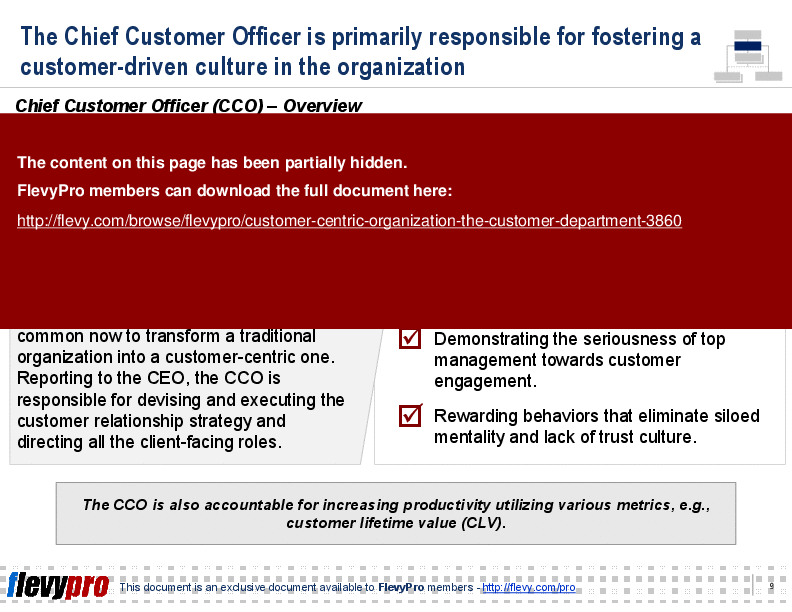
•  Chief Customer Officers (CCOs) responsible for fostering customer-driven cultures
•  Product Managers aiming to align product offerings with customer needs
•  Customer Segment Managers focused on maximizing customer value
•  Market Research teams analyzing customer behavior and feedback
•  Customer Service teams enhancing client interactions and satisfaction

Best-fit moments to use this deck:
•  During strategic planning sessions focused on customer engagement
•  When restructuring marketing functions to prioritize customer relationships
•  In workshops aimed at developing customer-centric metrics and KPIs
•  For training sessions on the roles and responsibilities within the Customer Department

Learning Objectives
•  Define the concept of a Customer-centric Organization and its importance
•  Establish the structure and roles within a Customer Department
•  Identify key customer metrics to evaluate organizational effectiveness
•  Develop strategies for nurturing customer relationships and maximizing value
•  Implement tools and technologies for effective customer engagement
•  Analyze customer data to inform product development and marketing strategies

Table of Contents
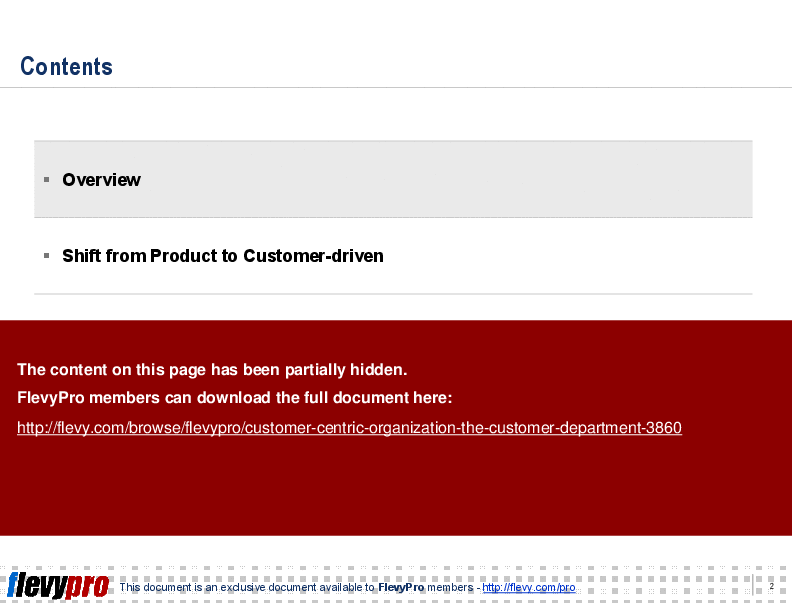
•  Overview (page 3)
•  Shift from Product to Customer-driven (page 5)
•  The Customer Department (page 8)
•  Customer Metrics (page 15)
•  Templates (page 18)

Primary Topics Covered
•  Overview of Customer-centric Organizations - The presentation outlines the necessity of transitioning from product-driven to customer-centric strategies to remain competitive.
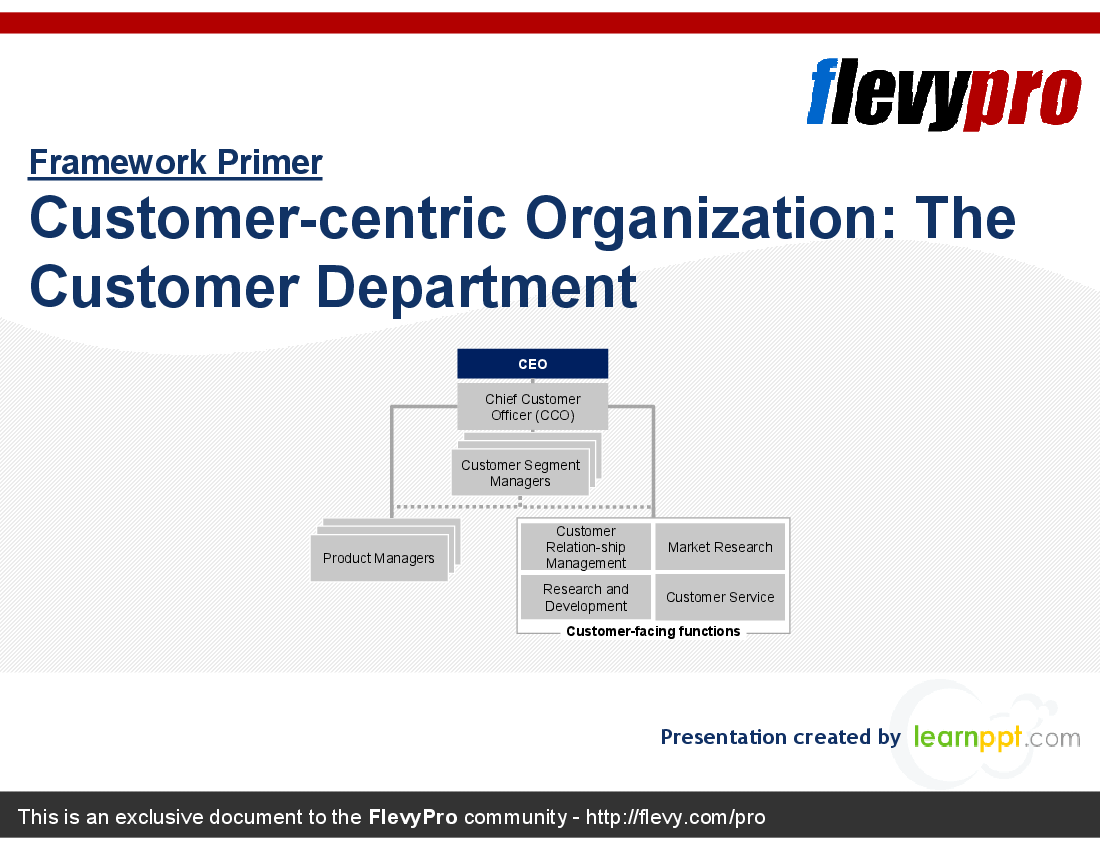
•  Structure of the Customer Department - Details the roles and hierarchy within the Customer Department, emphasizing the importance of a Chief Customer Officer.
•  Customer Relationship Management (CRM) - Discusses the role of CRM in analyzing customer behaviors and managing relationships effectively.
•  Market Research - Highlights the importance of gathering customer feedback to enhance product offerings and customer satisfaction.
•  Customer Lifetime Value (CLV) - Introduces CLV as a critical metric for assessing long-term customer profitability and engagement.
•  Customer Equity - Explains how customer equity serves as a substitute for the value of the firm, linking marketing efforts to shareholder value.

Deliverables, Templates, and Tools
•  Customer Department organizational structure template
•  Customer-centric metrics tracking template
•  Customer feedback collection and analysis framework
•  Customer engagement strategy outline
•  Customer relationship management process guide
•  Market research data analysis template

Slide Highlights
•  Overview slide defining the shift from product-driven to customer-centric strategies
•  Organizational structure of the Customer Department, detailing roles and responsibilities
•  Key metrics slide illustrating the transition from product profitability to customer profitability
•  Customer engagement strategy slide outlining actionable steps for nurturing relationships
•  Template slides for practical application in business presentations

Potential Workshop Agenda
Customer-Centric Strategy Development (90 minutes)
•  Discuss the importance of customer-centricity in today’s market
•  Identify key roles within the Customer Department and their responsibilities
•  Develop actionable strategies for enhancing customer relationships

Metrics and Measurement Workshop (60 minutes)
•  Review key customer metrics and their implications for business strategy
•  Create a framework for tracking customer engagement and satisfaction

Customer Feedback Integration Session (60 minutes)
•  Explore methods for collecting and analyzing customer feedback
•  Develop a plan for incorporating insights into product development and marketing

Customization Guidance
•  Tailor the Customer Department structure to fit your organization’s specific needs and culture
•  Adapt customer metrics to align with your strategic goals and industry standards
•  Modify templates to reflect your company’s branding and operational processes

Secondary Topics Covered
•  The role of technology in enhancing customer engagement
•  Strategies for fostering a customer-centric culture across the organization
•  Importance of cross-functional collaboration in the Customer Department
•  Best practices for leveraging customer insights in decision-making

Topic FAQ

What are the core components of a customer-centric organization?

A customer-centric organization prioritizes customer relationships over product-push strategies, creates a dedicated Customer Department, and uses CRM, market research, and data analytics to inform decisions. Core measurement focuses on Customer Lifetime Value (CLV) and Customer Equity, with defined roles such as Chief Customer Officer and Customer Segment Managers.

How does a Customer Department change the role of marketing?

A Customer Department reframes marketing from product promotion to direct customer engagement, establishing roles for customer relationship management, segmentation, and analytics. It centralizes feedback collection and analysis to inform product and go-to-market choices, supported by an organizational structure template and CRM process guide.

Which metrics best indicate progress toward customer-centricity?

Progress is measured by customer-focused metrics such as Customer Lifetime Value (CLV), Customer Equity, engagement, and satisfaction indicators. These metrics shift reporting from product profitability to customer profitability and are implemented using a customer-centric metrics tracking template.

What is the recommended way to integrate customer feedback into product development?

Feedback should be systematically collected, analyzed, and fed into product design and marketing decisions to align offerings with customer needs. The deck provides a customer feedback collection and analysis framework and workshop agendas to operationalize feedback into product enhancements.

What should I look for when purchasing a customer-centric organization template?

Prioritize templates that include an organizational structure for a Customer Department, role definitions, metrics tracking, CRM process guidance, market research analysis tools, and customization guidance so you can adapt slides and templates to your company—organizational structure and metrics templates are essential.

Are ready-made customer-centric templates useful for small teams with limited budgets?

Ready-made templates can reduce time to build presentations and workshops by supplying slide-ready tools such as organizational structure, customer engagement strategy, and metrics templates that are customizable for different company sizes and can be used without engaging external consultants.

After a merger, which framework helps define customer-facing roles and responsibilities?

Establishing a Customer Department that defines roles like Chief Customer Officer, Customer Segment Managers, and Customer Relationship Managers helps consolidate customer-facing functions, supported by the presentation’s organizational structure template and suggested workshop agendas for role definition.

Which technologies support the shift to a customer-centric model?

Technologies cited include CRM systems, data analytics tools, and customer feedback platforms that enable direct customer engagement, data mining of customer behavior, and tailored offerings—implemented through CRM process guides and analytics-focused templates.

Document FAQ
These are questions addressed within this presentation.

What is a Customer-centric Organization?
A Customer-centric Organization prioritizes customer relationships and satisfaction over traditional product-focused strategies, aiming to maximize customer value and loyalty.

What roles are essential within the Customer Department?
Key roles include the Chief Customer Officer, Customer Segment Managers, and Customer Relationship Managers, each responsible for different aspects of customer engagement and strategy.

How can we measure customer profitability?
Customer profitability can be assessed through metrics like Customer Lifetime Value (CLV) and Customer Equity, which evaluate the long-term value generated from customer relationships.

What is the significance of Customer Lifetime Value (CLV)?
CLV is crucial for understanding the future profitability of customer relationships, allowing organizations to focus on long-term engagement rather than short-term sales.

How should customer feedback be integrated into product development?
Customer feedback should be systematically collected and analyzed to inform product design and enhancements, ensuring offerings align with customer needs and preferences.

What technologies can enhance customer engagement?
Technologies such as CRM systems, data analytics tools, and customer feedback platforms can significantly improve how organizations interact with and understand their customers.

How can we shift from a product-focused to a customer-focused strategy?
This shift involves redefining organizational goals, restructuring teams to prioritize customer engagement, and implementing metrics that reflect customer success rather than just product sales.

What are the challenges in establishing a Customer Department?
Challenges may include resistance to change from traditional product-focused mindsets, the need for cross-departmental collaboration, and the integration of new technologies and processes.

Glossary
•  Customer-centric Organization - An organization that prioritizes customer relationships and satisfaction.
•  Customer Department - A dedicated team focused on managing customer relationships and engagement.
•  Customer Lifetime Value (CLV) - A metric that estimates the total revenue a customer will generate during their relationship with a company.
•  Customer Equity - The total value of a company's customer base, reflecting the sum of the lifetime values of all customers.
•  Customer Relationship Management (CRM) - A system for managing a company's interactions with current and potential customers.
•  Market Research - The process of gathering, analyzing, and interpreting information about a market.
•  Customer Feedback - Insights and opinions provided by customers regarding their experiences with a product or service.
•  Customer Engagement - The emotional connection between a customer and a brand, influencing loyalty and satisfaction.
•  Customer Profitability - A measure of the profit generated from a customer over time.
•  Customer-centric Metrics - Measurements that reflect the effectiveness of customer engagement strategies.
•  Data Analytics - The process of examining data sets to draw conclusions about the information they contain.
•  Customer Segmentation - The practice of dividing a customer base into groups based on shared characteristics.
•  Customer Service - The support and assistance provided to customers before, during, and after purchasing products or services.
•  Behavioral Insights - Information derived from analyzing customer behavior and preferences.
•  Feedback Loop - A process in which the outputs of a system are circled back and used as inputs.
•  Engagement Strategy - A plan for how a company will interact with its customers to foster loyalty and satisfaction.
•  Cross-functional Collaboration - Cooperation between different departments or teams within an organization.
•  Customer Data - Information collected about customers, including demographics, preferences, and behaviors.
•  Customer-facing Functions - Roles and activities that directly interact with customers, such as sales and support.
•  Organizational Culture - The values, beliefs, and behaviors that shape how work gets done in an organization.
•  Strategic Planning - The process of defining an organization's direction and making decisions on allocating resources to pursue that direction.

CUSTOMER-CENTRICITY PPT SLIDES

Transforming Organizational Culture through the CCO Role

Building a Customer-Centric Organization: The Customer Department

Transforming to a Customer-Centric Organizational Structure

Key Functions of a Customer-Centric Organization

Transforming Customer Metrics for Enhanced Value

Transforming Strategies: From Product Focus to Customer-Centric

Source: Best Practices in Customer-centric Organization, Customer Department PowerPoint Slides: Customer-centric Organization: The Customer Department PowerPoint (PPT) Presentation Slide Deck, LearnPPT Consulting


$29.00
FlevyPro price: FREE (included in subscription)
This framework is developed by a team of former McKinsey and Big 4 consultants. The presentation follows the headline-body-bumper slide format used by global consulting firms.
Add to Cart
  

Did you need more documents?

Consider a FlevyPro subscription from $39/month. View plans here.

For $10.00 more, you can download this document plus 2 more FlevyPro documents. That's just $13 each.

ABOUT FLEVYPRO

This document is part of the FlevyPro Library, a curated knowledge base of documents for our FlevyPro subscribers.

FlevyPro is a subscription service for on-demand business frameworks and analysis tools. FlevyPro subscribers receive access to an exclusive library of curated business documents—business framework primers, presentation templates, Lean Six Sigma tools, and more—among other exclusive benefits.

Click here to learn more about FlevyPro and its benefits.

Did you know?
The average daily rate of a McKinsey consultant is $6,625 (not including expenses). The average price of a Flevy document is $65.


Trusted by over 10,000+ Client Organizations
Since 2012, we have provided business templates to over 10,000 businesses and organizations of all sizes, from startups and small businesses to the Fortune 100, in over 130 countries.
AT&T GE Cisco Intel IBM Coke Dell Toyota HP Nike Samsung Microsoft Astrazeneca JP Morgan KPMG Walgreens Walmart 3M Kaiser Oracle SAP Google E&Y Volvo Bosch Merck Fedex Shell Amgen Eli Lilly Roche AIG Abbott Amazon PwC T-Mobile Broadcom Bayer Pearson Titleist ConEd Pfizer NTT Data Schwab


Read Customer Testimonials

 
"I have found Flevy to be an amazing resource and library of useful presentations for lean sigma, change management and so many other topics. This has reduced the time I need to spend on preparing for my performance consultation. The library is easily accessible and updates are regularly provided. A wealth of great information."

– Cynthia Howard RN, PhD, Executive Coach at Ei Leadership
 
"FlevyPro provides business frameworks from many of the global giants in management consulting that allow you to provide best in class solutions for your clients."

– David Harris, Managing Director at Futures Strategy
 
"As a young consulting firm, requests for input from clients vary and it's sometimes impossible to provide expert solutions across a broad spectrum of requirements. That was before I discovered Flevy.com.

Through subscription to this invaluable site of a plethora of topics that are key and crucial to consulting, I "

– Nishi Singh, Strategist and MD at NSP Consultants
 
"I am extremely grateful for the proactiveness and eagerness to help and I would gladly recommend the Flevy team if you are looking for data and toolkits to help you work through business solutions."

– Trevor Booth, Partner, Fast Forward Consulting
 
"I have used Flevy services for a number of years and have never, ever been disappointed. As a matter of fact, David and his team continue, time after time, to impress me with their willingness to assist and in the real sense of the word. I have concluded in fact "

– Roberto Pelliccia, Senior Executive in International Hospitality
 
"I like your product. I'm frequently designing PowerPoint presentations for my company and your product has given me so many great ideas on the use of charts, layouts, tools, and frameworks. I really think the templates are a valuable asset to the job."

– Roberto Fuentes Martinez, Senior Executive Director at Technology Transformation Advisory
 
"FlevyPro has been a brilliant resource for me, as an independent growth consultant, to access a vast knowledge bank of presentations to support my work with clients. In terms of RoI, the value I received from the very first presentation I downloaded paid for my subscription many times over! The "

– Roderick Cameron, Founding Partner at SGFE Ltd
 
"As a consultant requiring up to date and professional material that will be of value and use to my clients, I find Flevy a very reliable resource.

The variety and quality of material available through Flevy offers a very useful and commanding source for information. Using Flevy saves me time, enhances my expertise and ends up being a good decision."

– Dennis Gershowitz, Principal at DG Associates


Customers Also Bought These Documents


Customers Also Like These Documents

Explore Templates on Related Management Topics


Your Recently Viewed Documents
Download our FREE Digital Transformation Templates

Download our free compilation of 50+ Digital Transformation slides and templates. DX concepts covered include Digital Leadership, Digital Maturity, Digital Value Chain, Customer Experience, Customer Journey, RPA, etc.