
This presentation offers a comprehensive exploration of the Challenger Sales Model, a highly effective methodology renowned for driving sales performance and fostering deeper customer relationships across diverse industries.
At its heart, the Challenger Sales framework challenges traditional customer beliefs, encouraging potential buyers to adopt new perspectives. This methodology leverages "insight selling," empowering sales professionals to utilize unique data and insights to showcase the tangible value of their offerings. This approach not only engages customers meaningfully but also lays the foundation for consistent sales success in competitive markets.
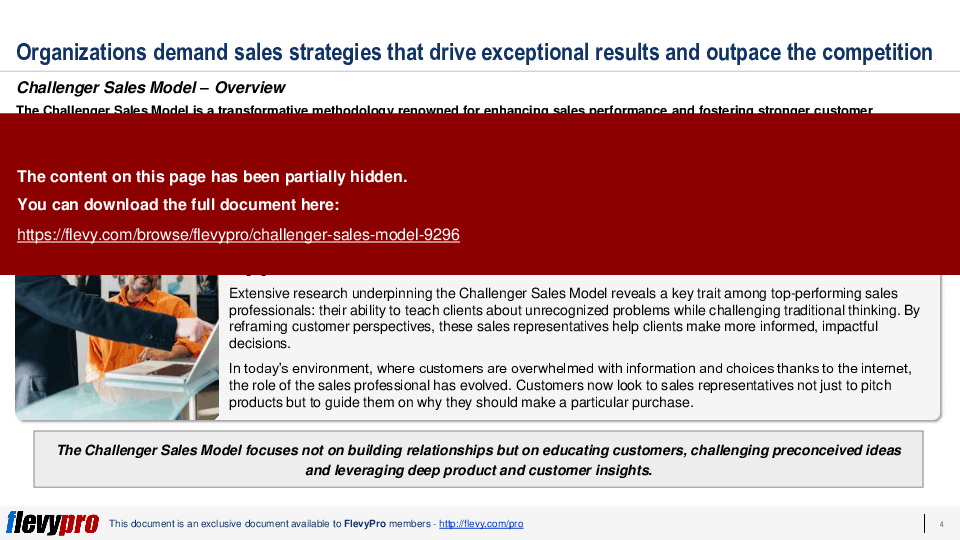
Extensive research underpinning the Challenger Sales Model reveals a key trait among top-performing sales professionals: their ability to teach clients about unrecognized problems while challenging traditional thinking. By reframing customer perspectives, these sales representatives help clients make more informed, impactful decisions. Mastering the Challenger Sales Model equips organizations to excel in complex, insight-driven sales, delivering transformative results for both customers and businesses.
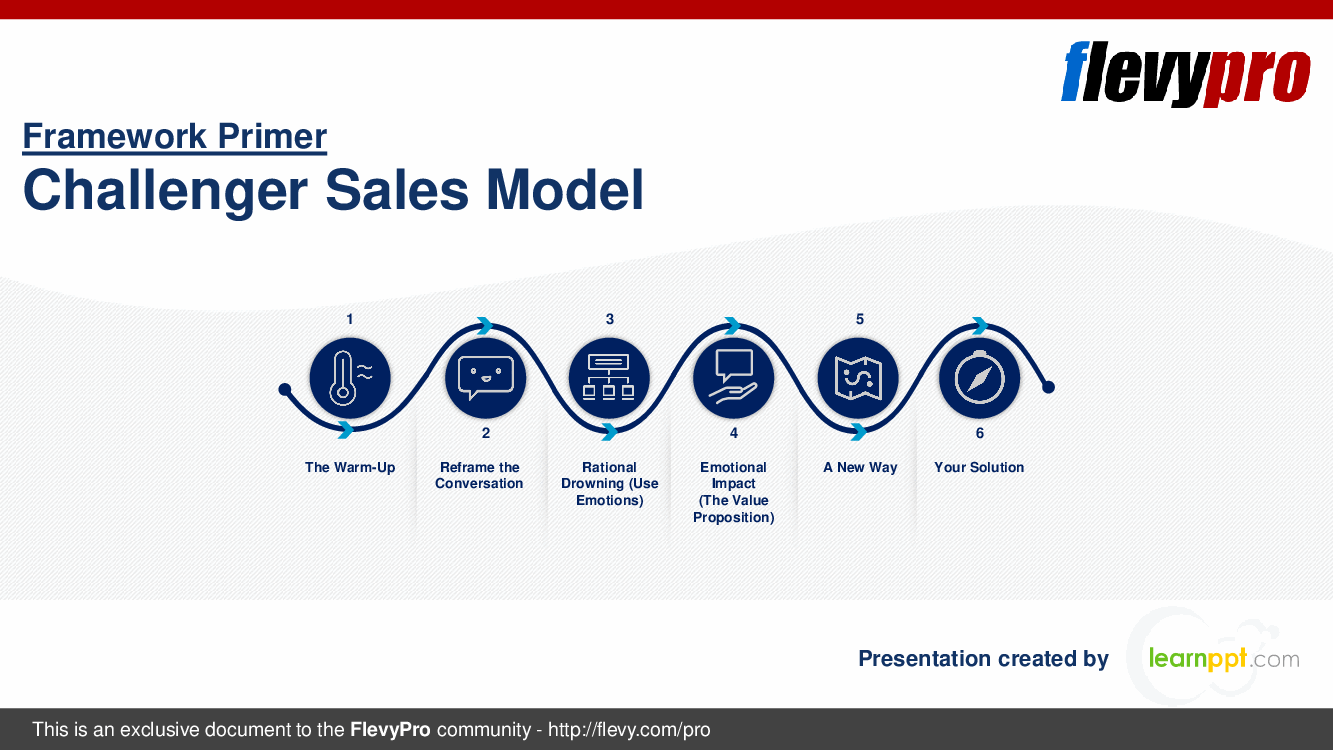
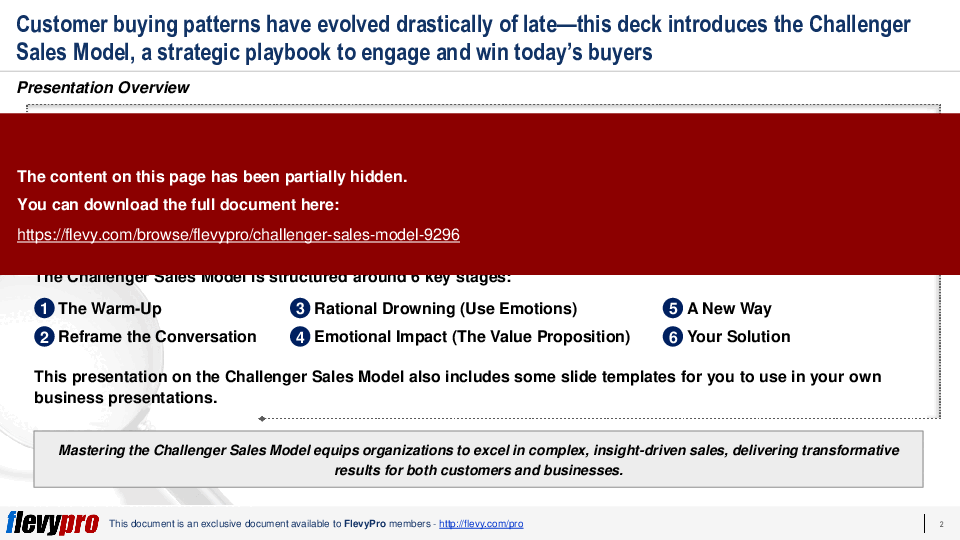
The Challenger Sales Model is structured around 6 key stages:
1. The Warm-Up
2. Reframe the Conversation
3. Rational Drowning (Use Emotions)
4. Emotional Impact (The Value Proposition)
5. A New Way
6. Your Solution
Each of these stages is discussed in depth in this presentation. This presentation also discusses the 5 distinct sales representative profiles, core principles of the Challenge Sales Model, comparisons with other sales models (e.g. Solution Selling, MEDDIC/MEDDPICC, Spin Selling, Consultative Selling, etc.), among other topics.
This PPT presentation on the Challenger Sales Model also includes some slide templates for you to use in your own business presentations.
Got a question about this document? Email us at flevypro@flevy.com.
Executive Summary
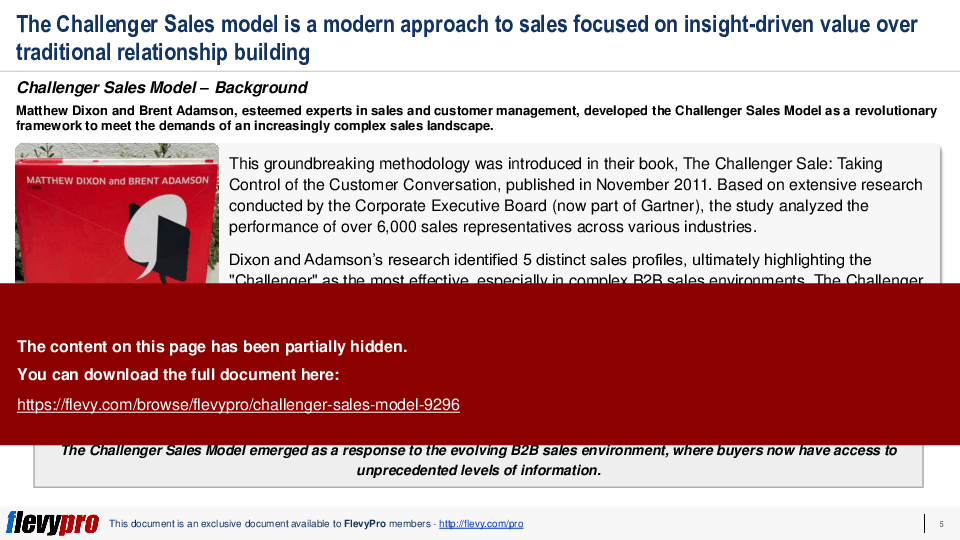
The Challenger Sales Model presentation provides a comprehensive exploration of a transformative sales methodology designed to enhance sales performance and foster deeper customer relationships. Developed by Matthew Dixon and Brent Adamson, this framework emphasizes "insight selling," enabling sales professionals to challenge traditional customer beliefs and engage potential buyers in meaningful ways. The model is structured around 6 key stages: The Warm-Up, Reframe the Conversation, Rational Drowning, Emotional Impact, A New Way, and Your Solution. By mastering this model, organizations can effectively navigate complex sales environments and achieve sustainable success.
Who This Is For and When to Use
• Sales executives and leaders seeking to improve team performance and customer engagement.
• Sales professionals looking to adopt a more strategic, insight-driven approach to selling.
• Organizations aiming to enhance their sales training programs with proven methodologies.
• Consultants and trainers developing workshops focused on modern sales techniques.
Best-fit moments to use this deck:
• During sales training sessions to introduce the Challenger Sales Model.
• In strategy meetings focused on improving sales tactics and customer engagement.
• When preparing for client presentations that require a structured approach to sales conversations.
Learning Objectives
• Define the Challenger Sales Model and its significance in modern sales environments.
• Build a strategic framework for engaging customers through insight-driven conversations.
• Establish effective techniques for reframing customer perspectives and addressing assumptions.
• Identify key metrics to measure the success of implementing the Challenger Sales Model.
• Develop actionable insights to enhance customer relationships and drive sales outcomes.
• Create a tailored approach to presenting solutions that resonate with customer needs.
Table of Contents
• Overview (page 2)
• Challenger Sales Model (page 3)
• Challenger Sales Model Process (page 11)
• Slide Design Structure & Templates (page 20)
Primary Topics Covered
• Overview of the Challenger Sales Model - An introduction to the framework and its significance in enhancing sales performance.
• Challenger Sales Model Process - A systematic six-stage process guiding customer interactions and solution presentations.
• Key Sales Representative Profiles - Insights into different sales representative profiles and their effectiveness in various scenarios.
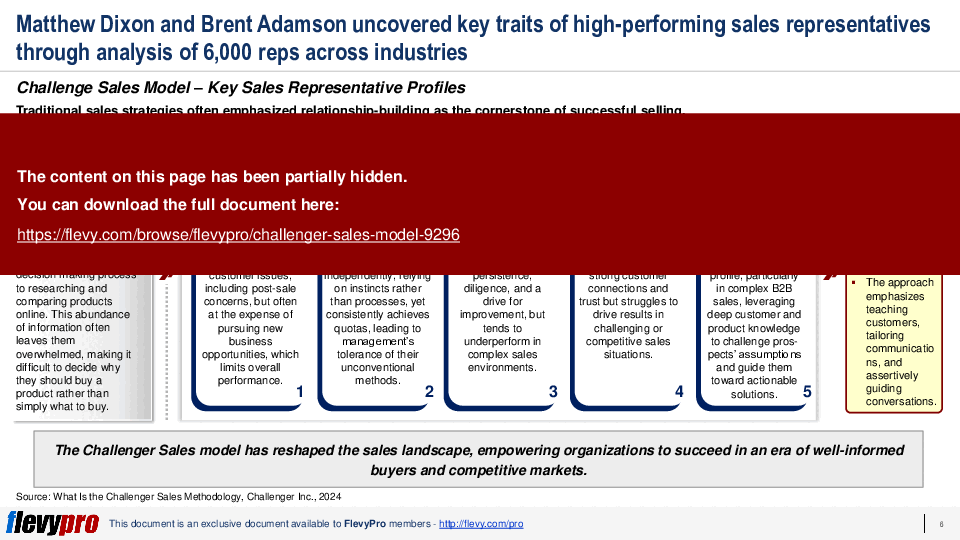
• Core Principles of the Challenger Sales Model - Fundamental principles that redefine traditional sales practices.
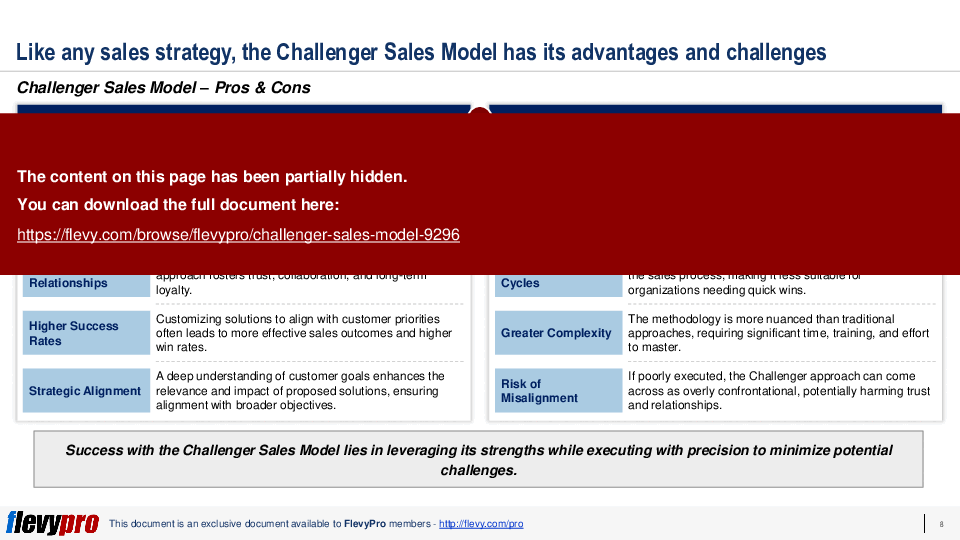
• Pros and Cons of the Challenger Sales Model - An analysis of the advantages and challenges associated with the model.
• Comparison with Other Sales Approaches - A look at how the Challenger Sales Model stands out against traditional sales methodologies.
Deliverables, Templates, and Tools
• Slide templates for each stage of the Challenger Sales Model process.
• Frameworks for developing customer insights and tailoring sales strategies.
• Guidelines for structuring effective sales presentations based on the Challenger methodology.
• Tools for measuring the impact of the Challenger Sales Model on sales performance.
• Resources for ongoing training and development in insight-driven sales techniques.
Slide Highlights
• Overview slide detailing the 6 stages of the Challenger Sales Model.
• Key steps for each stage, providing actionable insights for sales professionals.
• Visual representations of the Challenger Sales Model process for clarity and engagement.
• Comparison charts illustrating the effectiveness of the Challenger approach versus traditional methods.
Potential Workshop Agenda
Challenger Sales Model Overview (60 minutes)
• Introduce the Challenger Sales Model and its relevance in today’s market.
• Discuss the evolution of customer buying patterns and sales strategies.
Interactive Session on Key Sales Profiles (90 minutes)
• Analyze different sales representative profiles and their effectiveness.
• Engage participants in identifying their own sales styles and areas for improvement.
Practical Application of the Challenger Sales Model (120 minutes)
• Break into groups to practice the 6 stages of the Challenger Sales Model.
• Role-play scenarios to reinforce learning and application of insights.
Customization Guidance
• Tailor the presentation to reflect your organization’s specific sales challenges and goals.
• Adjust the examples and case studies to align with your industry and target market.
• Incorporate company-specific metrics to measure the success of the Challenger Sales Model.
Secondary Topics Covered
• The impact of digital transformation on sales strategies.
• Techniques for building rapport and trust with customers.
• Strategies for overcoming resistance to change in sales teams.
• The role of data analytics in enhancing sales performance.
Topic FAQ
Document FAQ
These are questions addressed within this presentation.
What is the Challenger Sales Model?
The Challenger Sales Model is a sales methodology that emphasizes insight-driven selling, where sales professionals challenge customer assumptions and provide unique perspectives to drive engagement and sales success.
How does the Challenger Sales Model differ from traditional sales approaches?
Unlike traditional methods that focus on relationship-building, the Challenger Sales Model prioritizes educating customers and providing insights that challenge their existing beliefs.
What are the key stages of the Challenger Sales Model?
The model consists of 6 stages: The Warm-Up, Reframe the Conversation, Rational Drowning, Emotional Impact, A New Way, and Your Solution.
Who developed the Challenger Sales Model?
The model was developed by Matthew Dixon and Brent Adamson, based on extensive research conducted by the Corporate Executive Board.
What are the benefits of implementing the Challenger Sales Model?
The model enhances sales performance, fosters deeper customer relationships, and equips sales teams with strategies to effectively engage informed buyers.
What challenges might organizations face when adopting the Challenger Sales Model?
Challenges include skill requirements, resistance to change from sales teams, and the need for extensive training and development.
How can organizations measure the success of the Challenger Sales Model?
Success can be measured through sales performance metrics, customer engagement levels, and feedback from sales teams on the effectiveness of the model.
Is the Challenger Sales Model suitable for all industries?
While the model is particularly effective in complex B2B sales environments, its principles can be adapted to various industries and sales contexts.
Glossary
• Challenger Sales Model - A sales methodology focused on insight-driven selling and challenging customer assumptions.
• Insight Selling - A sales approach that leverages unique data and insights to engage customers meaningfully.
• Customer Engagement - The process of building relationships with customers through meaningful interactions.
• Sales Representative Profiles - Different types of sales representatives identified in the Challenger Sales Model.
• Rational Drowning - A stage in the Challenger Sales Model that emphasizes the urgency of addressing customer issues through data and logic.
• Emotional Impact - A stage that connects customer problems to personal and organizational consequences, creating urgency for change.
• Sales Training - Programs designed to enhance the skills and effectiveness of sales professionals.
• Customer Insights - Understanding customer needs, preferences, and behaviors to tailor sales strategies.
• Sales Performance Metrics - Measurements used to evaluate the effectiveness of sales strategies and representatives.
• Resistance to Change - The reluctance of individuals or teams to adopt new methodologies or practices.
• Digital Transformation - The integration of digital technology into all areas of a business, impacting how organizations operate and deliver value to customers.
• Data Analytics - The process of examining data sets to draw conclusions about the information they contain.
• Sales Cycle - The process that a company goes through to sell its products or services, from initial contact to closing the sale.
• Customer Relationships - The ongoing interactions between a business and its customers, which can influence customer loyalty and satisfaction.
• Sales Strategy - A plan that outlines how a company will sell its products or services to achieve its sales goals.
• Consultative Selling - A sales approach that focuses on understanding customer needs and providing tailored solutions.
• Value Proposition - A statement that explains how a product or service meets customer needs and provides value.
• Sales Enablement - The process of providing sales teams with the resources they need to sell effectively.
• Competitive Landscape - The dynamic environment in which businesses compete, including competitors, market trends, and customer preferences.
• Sales Funnel - The visual representation of the customer journey from awareness to purchase.
• Lead Generation - The process of attracting and converting prospects into potential customers.
• Customer Retention - The ability of a company to retain its customers over time, often measured by repeat purchases.
Source: Best Practices in Sales Strategy PowerPoint Slides: Challenger Sales Model PowerPoint (PPTX) Presentation Slide Deck, LearnPPT Consulting
Did you need more documents?
Consider a FlevyPro subscription from $39/month. View plans here.
For $10.00 more, you can download this document plus 2 more FlevyPro documents. That's just $13 each.
|
Download our FREE Strategy & Transformation Framework Templates
Download our free compilation of 50+ Strategy & Transformation slides and templates. Frameworks include McKinsey 7-S, Balanced Scorecard, Disruptive Innovation, BCG Curve, and many more. |