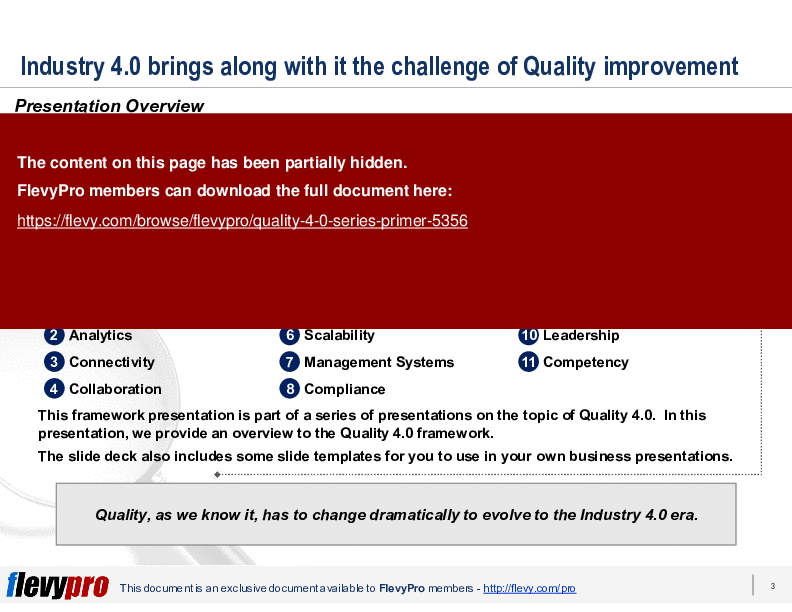
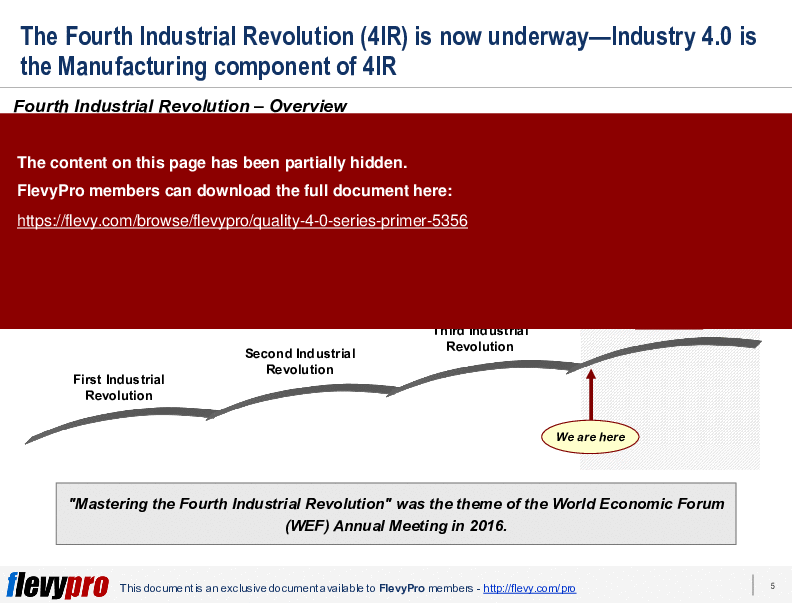

The introduction of emerging, digital technologies has ushered in the Fourth Industrial Revolution. To keep the competitive advantage in this era, leveraging contemporary technology is an absolute necessity.
Using cutting edge tech means not just augmenting, but in fact, revamping the whole Quality outlook. Quality, as we know it, has to change dramatically to evolve to the Industry 4.0 era.
Quality 4.0 is the complementary Quality approach to the Industry 4.0 era. Quality 4.0 is about transforming and improving culture, collaboration, competency, and leadership among other things through application of technology.
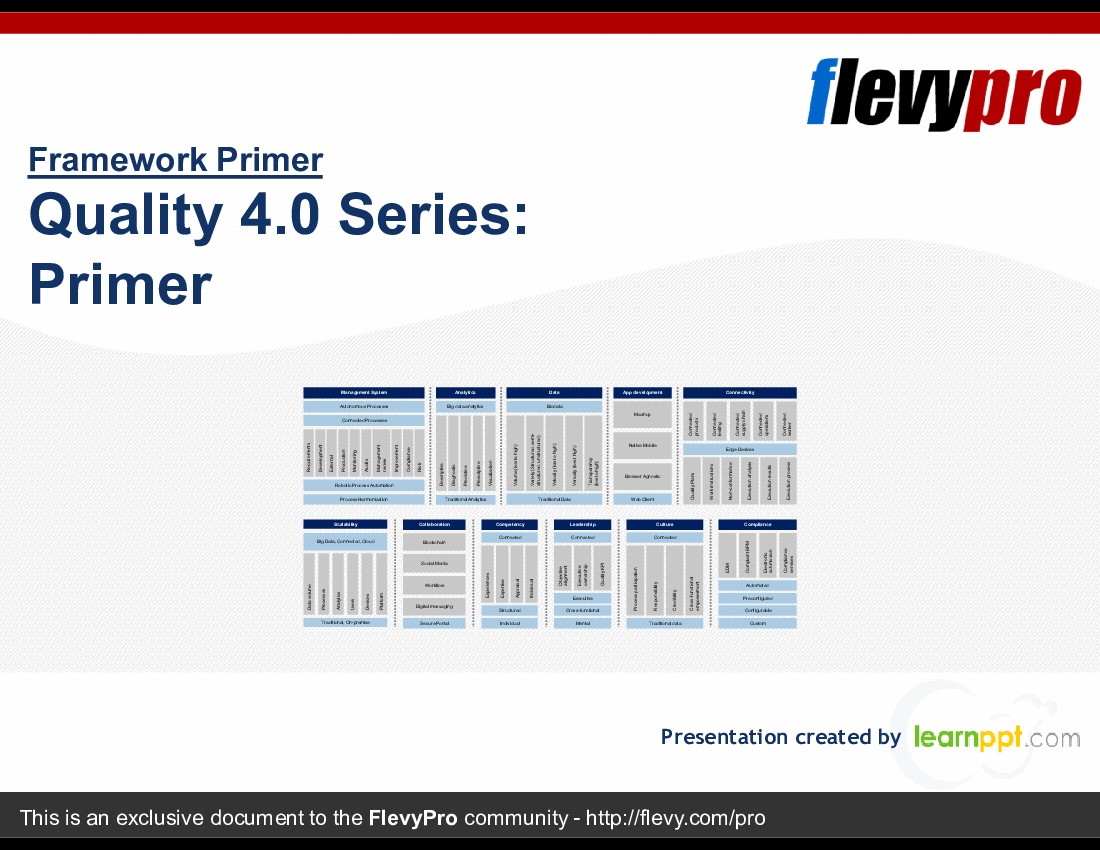
The Quality 4.0 framework introduces 11 pillars to Quality 4.0. This framework presentation is part of a series of presentations on the topic of Quality 4.0. In this presentation, we provide an overview to the Quality 4.0 framework.
The slide deck also includes some slide templates for you to use in your own business presentations.
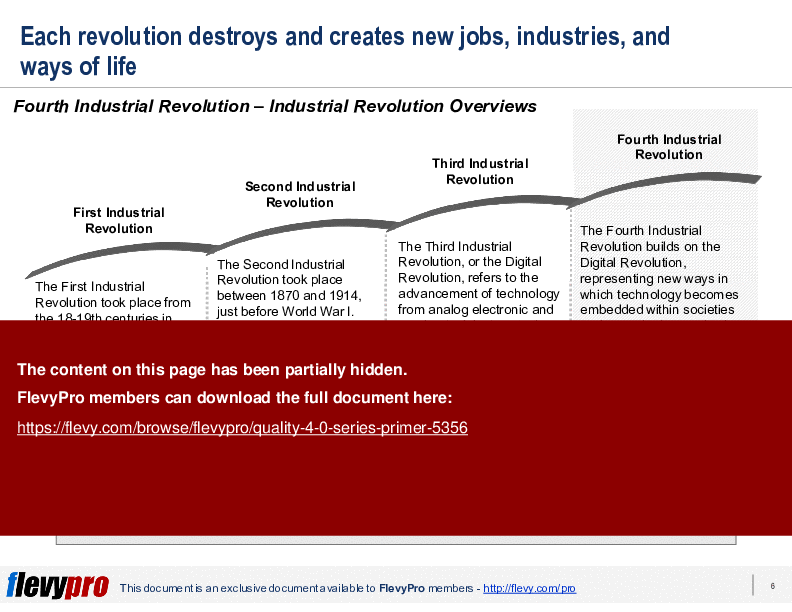
Quality 4.0 is not merely about integrating new technologies, but about fundamentally transforming how organizations approach quality management. This presentation delves into the Fourth Industrial Revolution and its impact on manufacturing, highlighting the critical need for businesses to adapt to stay competitive. The PPT outlines the evolution from the First to the Fourth Industrial Revolution, emphasizing the role of digital technologies in reshaping industries.
The 11 pillars of Quality 4.0 are explored in detail, providing a comprehensive framework for evaluating and enhancing your current quality management processes. Each pillar, from data and analytics to leadership and compliance, is crucial for achieving operational excellence in the Industry 4.0 era. The presentation offers practical insights into how these pillars can be leveraged to drive significant improvements in quality and efficiency.
Real-world case studies illustrate the successful implementation of Quality 4.0 principles, demonstrating tangible benefits such as increased efficiency, reduced downtime, and enhanced product quality. These examples provide a clear roadmap for organizations looking to harness the power of Quality 4.0 to achieve their strategic objectives. This presentation is an invaluable resource for executives seeking to lead their organizations through the complexities of digital transformation.
Got a question about this document? Email us at flevypro@flevy.com.
Executive Summary
The Quality 4.0 Series: Primer presentation provides a comprehensive overview of the Quality 4.0 framework, designed to enhance quality management practices in the context of the Fourth Industrial Revolution. Developed by former consultants from McKinsey and the Big 4, this framework emphasizes the integration of advanced technologies to transform quality processes, culture, and leadership. By adopting Quality 4.0 principles, organizations can leverage data analytics, connectivity, and collaboration to achieve operational excellence and drive innovation.
Who This Is For and When to Use
• Quality Assurance Managers seeking to modernize quality practices
• Operations Leaders aiming to integrate technology into quality management
• Executives focused on driving organizational change through quality initiatives
• Consultants advising clients on quality transformation strategies
Best-fit moments to use this deck:
• During strategic planning sessions for quality improvement initiatives
• In workshops aimed at educating teams about Quality 4.0 principles
• When assessing current quality management practices against modern standards
Learning Objectives
• Define the concept of Quality 4.0 and its relevance to the Fourth Industrial Revolution
• Identify the 11 pillars of Quality 4.0 and their implications for quality management
• Develop a digital transformation strategy that aligns with Quality 4.0 principles
• Assess organizational quality maturity and identify areas for improvement
• Implement data-driven decision-making processes using advanced analytics
• Foster a culture of quality that encourages cross-functional collaboration
Table of Contents
• Overview (page 3)
• Fourth Industrial Revolution (page 5)
• Pillars of Quality 4.0 (page 9)
• Quality 4.0 Implementation (page 15)
• Templates (page 19)
Primary Topics Covered
• Overview of Quality 4.0 - Introduction to the Quality 4.0 framework and its significance in the context of Industry 4.0.
• Fourth Industrial Revolution - Examination of how emerging technologies are reshaping industries and quality management practices.
• Pillars of Quality 4.0 - Detailed exploration of the 11 pillars that form the foundation of the Quality 4.0 framework.
• Quality 4.0 Implementation - Guidance on how organizations can adopt Quality 4.0 principles for effective transformation.
• Case Studies - Real-world examples demonstrating the application of Quality 4.0 in various industries.
• Templates - Ready-to-use templates for implementing Quality 4.0 strategies in organizational practices.
Deliverables, Templates, and Tools
• Quality 4.0 assessment templates for evaluating current practices
• Digital transformation strategy framework aligned with Quality 4.0
• Implementation roadmap for adopting the 11 pillars of Quality 4.0
• Case study examples illustrating successful Quality 4.0 applications
• Presentation slides for internal training on Quality 4.0 principles
• Checklist for assessing organizational readiness for Quality 4.0
Slide Highlights
• Overview slide outlining the significance of Quality 4.0 in the Fourth Industrial Revolution
• Detailed breakdown of the 11 pillars of Quality 4.0 with visual aids
• Case study slides showcasing successful implementations in various organizations
• Implementation roadmap slide providing a step-by-step guide for organizations
• Template slides for assessing quality maturity and developing transformation strategies
Potential Workshop Agenda
Introduction to Quality 4.0 (60 minutes)
• Overview of the Quality 4.0 framework
• Discussion on the importance of quality in the Fourth Industrial Revolution
• Exploration of the 11 pillars of Quality 4.0
Pillar Deep Dive (90 minutes)
• Breakout sessions focused on each pillar
• Group discussions on current practices and areas for improvement
• Sharing of best practices and insights
Implementation Planning (60 minutes)
• Development of a digital transformation strategy
• Assessment of organizational quality maturity
• Creation of an action plan for adopting Quality 4.0 principles
Customization Guidance
• Tailor the assessment templates to reflect specific organizational contexts and challenges
• Adjust the implementation roadmap based on existing quality management practices
• Incorporate industry-specific examples into training materials for relevance
Secondary Topics Covered
• The role of data analytics in quality management
• Strategies for fostering a culture of quality across organizations
• The impact of technology on traditional quality processes
• Best practices for integrating quality management systems with operational technology
• Future trends in quality management and Industry 4.0
Topic FAQ
Document FAQ
These are questions addressed within this presentation.
What is Quality 4.0?
Quality 4.0 refers to the integration of advanced technologies and digital transformation strategies into quality management practices, aligning with the principles of the Fourth Industrial Revolution.
How can organizations assess their quality maturity?
Organizations can use the provided assessment templates to evaluate their current quality management practices against the 11 pillars of Quality 4.0, identifying strengths and areas for improvement.
What are the key pillars of Quality 4.0?
The 11 pillars include Data, Analytics, Connectivity, Collaboration, App Development, Scalability, Management Systems, Compliance, Culture, Leadership, and Competency.
How does Quality 4.0 impact organizational culture?
Quality 4.0 fosters a culture of quality by encouraging cross-functional collaboration, shared responsibility, and active participation in quality initiatives across all levels of the organization.
What role does technology play in Quality 4.0?
Technology serves as an enabler for Quality 4.0, facilitating data-driven decision-making, real-time feedback, and enhanced collaboration through advanced analytics and connectivity.
Can Quality 4.0 principles be applied in all industries?
Yes, Quality 4.0 principles are adaptable and can be implemented across various industries to enhance quality management practices and drive operational excellence.
What are the benefits of adopting Quality 4.0?
Adopting Quality 4.0 can lead to improved efficiency, enhanced productivity, better compliance, and increased innovation, ultimately driving competitive advantage.
How can organizations begin their Quality 4.0 journey?
Organizations can start by assessing their current quality practices, identifying gaps, and developing a digital transformation strategy aligned with the 11 pillars of Quality 4.0.
Glossary
• Quality 4.0 - An approach integrating advanced technologies into quality management practices.
• Fourth Industrial Revolution - The current era characterized by the fusion of physical, digital, and biological technologies.
• Pillars of Quality 4.0 - The foundational elements that guide quality management in the context of Industry 4.0.
• Data Analytics - The process of examining data sets to draw conclusions about the information they contain.
• Digital Transformation - The integration of digital technology into all areas of a business, fundamentally changing how it operates.
• Quality Management System (QMS) - A formalized system that documents processes, procedures, and responsibilities for achieving quality policies and objectives.
• Compliance - Adherence to laws, regulations, and guidelines relevant to quality management.
• Culture of Quality - An organizational culture that prioritizes quality in all aspects of operations.
• Leadership in Quality - The role of leaders in driving quality initiatives and fostering a culture of quality.
• Competency - The ability of individuals to perform tasks effectively and efficiently within the quality management framework.
• Scalability - The capacity to grow and manage increased demand without compromising quality.
• Collaboration - The act of working together across functions to achieve common quality objectives.
• App Development - The creation of applications that facilitate quality management processes.
• Connectivity - The integration of systems and technologies that enable real-time data sharing and communication.
• Compliance Services - Services that ensure adherence to quality standards and regulations.
• Analytics Framework - A structured approach to analyzing data to derive insights and inform decision-making.
• Robotic Process Automation (RPA) - The use of software robots to automate repetitive tasks within quality processes.
• Big Data - Large and complex data sets that traditional data processing software cannot adequately handle.
• Enterprise Resource Planning (ERP) - Integrated management of core business processes, often in real-time and mediated by software and technology.
• Management Systems - Frameworks that help organizations manage their operations and ensure quality across processes.
Source: Best Practices in Fourth Industrial Revolution, Quality Management, Quality 4.0 PowerPoint Slides: Quality 4.0 Series: Primer PowerPoint (PPTX) Presentation Slide Deck, LearnPPT Consulting
Did you need more documents?
Consider a FlevyPro subscription from $39/month. View plans here.
For $10.00 more, you can download this document plus 2 more FlevyPro documents. That's just $13 each.
This document is available as part of the following discounted bundle(s):
Save %!
Quality 4.0 - Full Series
This bundle contains 4 total documents. See all the documents to the right.

|
Receive our FREE presentation on Operational Excellence
This 50-slide presentation provides a high-level introduction to the 4 Building Blocks of Operational Excellence. Achieving OpEx requires the implementation of a Business Execution System that integrates these 4 building blocks. |