
This framework is developed by a team of former McKinsey and Big 4 consultants. The presentation follows the headline-body-bumper slide format used by global consulting firms.
Explore essential Board Governance Models in this expert PPT by an ex-McKinsey consultant. Enhance clarity, optimize roles, and drive corporate excellence. Board Governance Models is a 25-slide PPT PowerPoint presentation slide deck (PPT) available for immediate download upon purchase.
Board Governance is frequently discussed and often misunderstood. Yet, having a good grasp of Board Governance can lead to clarity of purpose and objectives.
Governance is the combination of policies, systems, structures, and a strategic/operational framework which the governing body puts in place. The model of Governance represents an approach to the combination of these policies and systems.
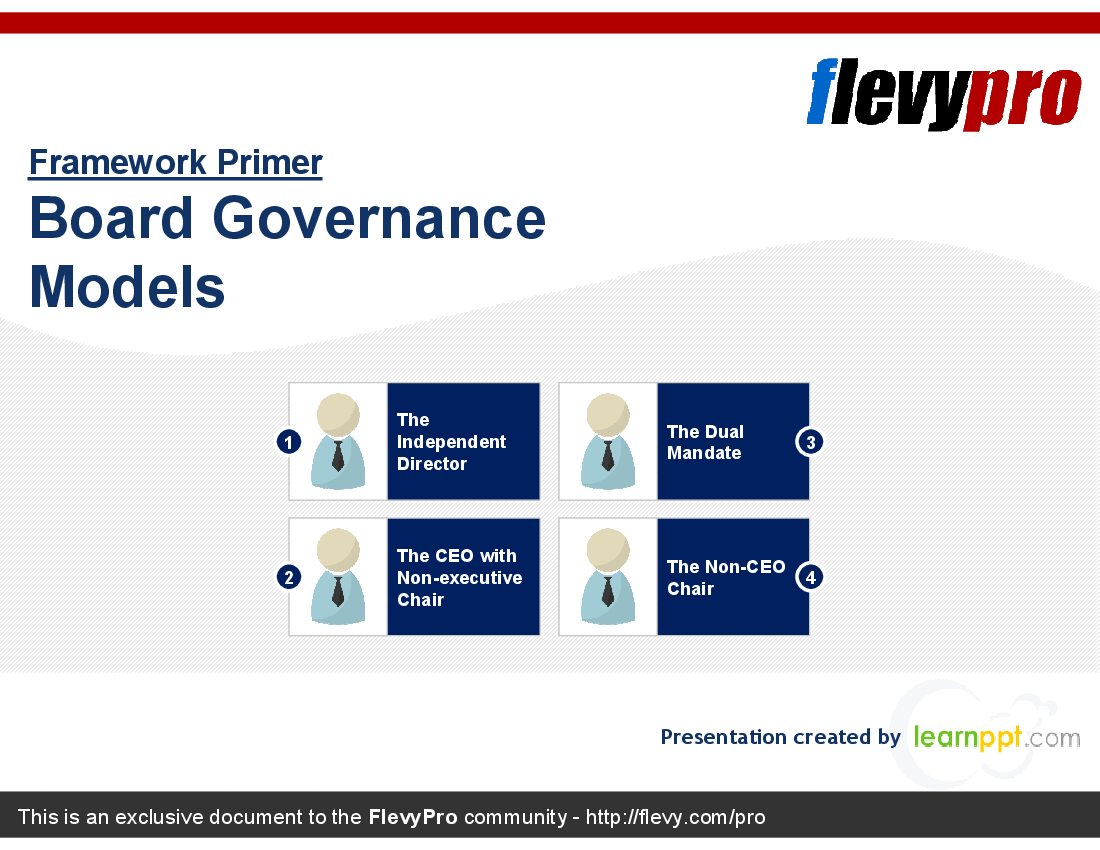
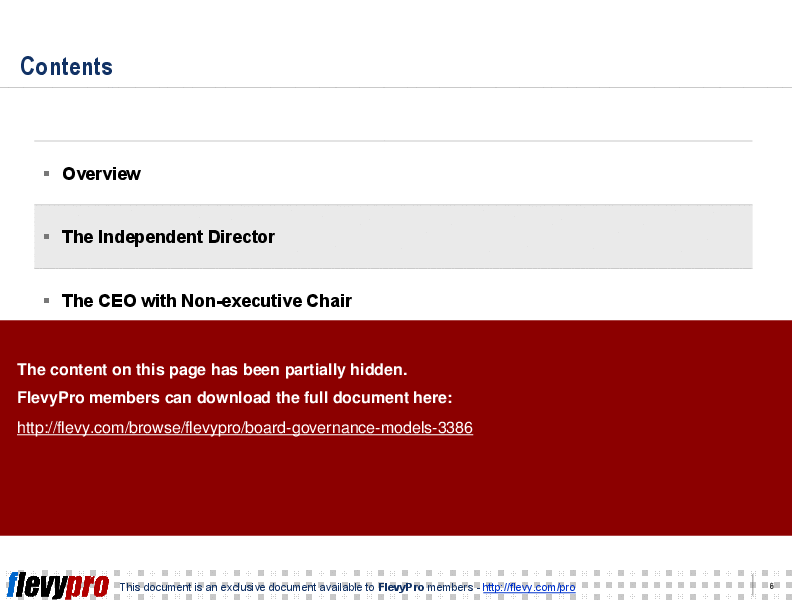
This presentation discusses the 4 types of Board Governance Models:
1. The Independent Director
2. The CEO with Non-executive Chair
3. The Dual Mandate
4. The Non-CEO Chair
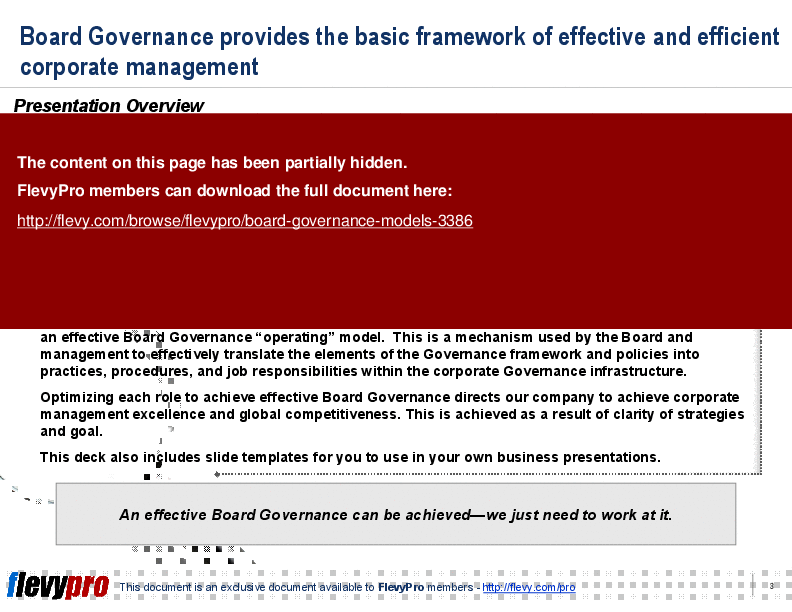
Understanding the 4 Board Governance Models will enable our Board and our company to synchronize an effective Board Governance "operating" model. This is a mechanism used by the Board and management to effectively translate the elements of the Governance framework and policies into practices, procedures, and job responsibilities within the corporate Governance infrastructure.
Optimizing each role to achieve effective Board Governance directs our company to achieve corporate management excellence and global competitiveness. This is achieved as a result of clarity of strategies and goal.
This deck also includes slide templates for you to use in your own business presentations.
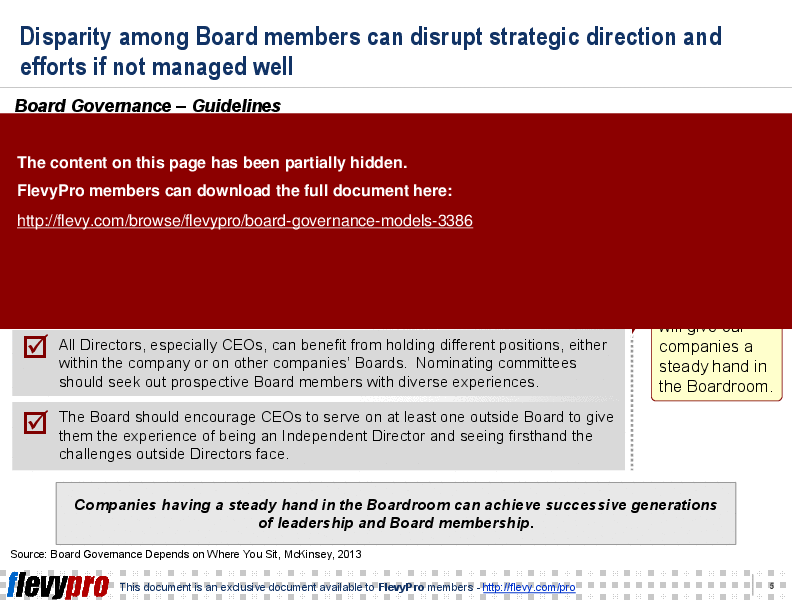
Board members must understand the nuances of each governance model to effectively steer their organizations. This presentation delves into the specific roles and responsibilities of Independent Directors, CEOs with Non-executive Chairs, Dual Mandate holders, and Non-CEO Chairs. Each model is dissected to highlight its unique benefits and challenges, providing actionable insights for optimizing board performance.
The deck also addresses common pitfalls and offers practical guidelines for fostering effective governance. It emphasizes the importance of role clarity, strategic alignment, and leadership succession planning. Templates included in the presentation can be customized to fit your organization's specific needs, ensuring that your board governance framework is both robust and adaptable.
This PPT slide addresses the complexities of a dual leadership structure involving a CEO and a Non-executive Chair. While governance experts endorse this separation, evidence of improved performance or stability is inconclusive. The effectiveness of this model depends on the interpersonal dynamics between the CEO and Non-executive Chair; disagreements can lead to significant Board issues. Potential pitfalls include unhealthy separations within the Board and role confusion, which hinder effective governance. Key concerns are a lack of clear direction, resulting in employee malaise and shareholder dissatisfaction. Friction between leaders can create power struggles that paralyze decision-making. This dual structure risks the company's agility in responding to changes, as misalignment between the Board and Management can impede timely decisions.
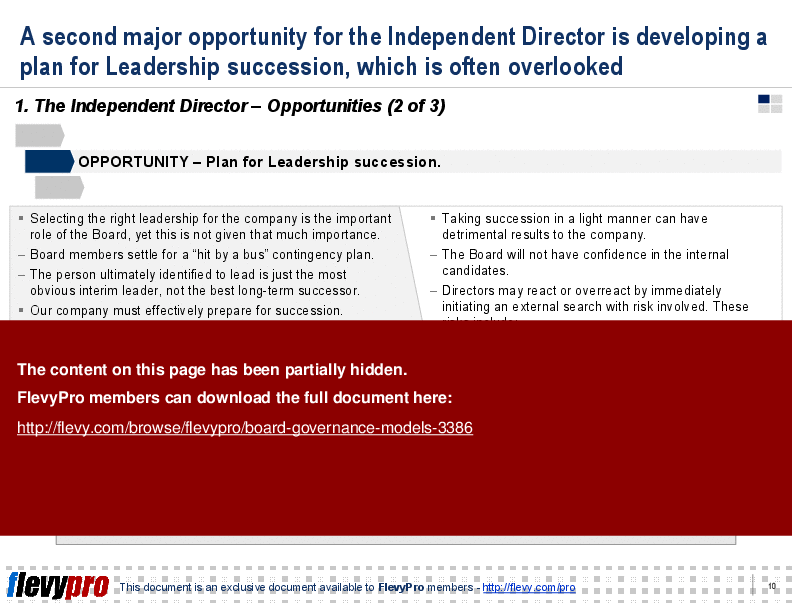
The role of a Non-CEO Chair within a board is complex and heavily influenced by the individual's prior experience. A former CEO can provide valuable insights, but may overshadow new CEOs or dominate discussions, affecting board dynamics. Transitioning to a Chair role requires former CEOs to support successors and allow them to lead. If unsuitable, they should exit the board to prevent overshadowing current operations. Selecting a qualified Chair candidate, whether from existing directors or with relevant experience, is essential. A clear job description, regular evaluations by board members, and a defined term of office are crucial for maintaining accountability and aligning the role with company goals.
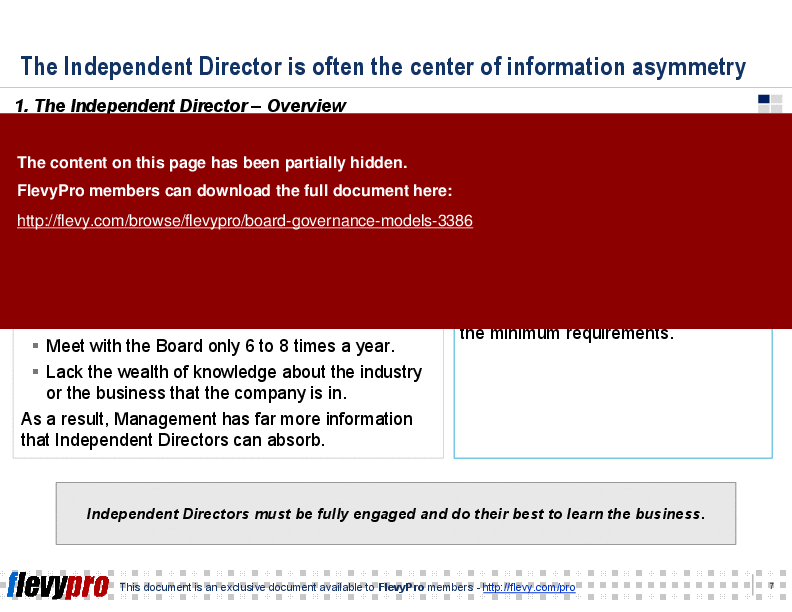
This PPT slide outlines the role of Independent Directors in corporate governance, emphasizing their independence from the companies they serve. Independent Directors typically engage minimally, meeting only 6 to 8 times a year, which creates information asymmetry and limits their understanding of the company's operations. This gap can hinder their ability to fulfill substantial responsibilities and make informed decisions. Management often possesses more information than Independent Directors can absorb, impacting effective oversight. Active participation and continuous learning are essential for Independent Directors to deepen their business understanding and contribute meaningfully to Board discussions and decisions.
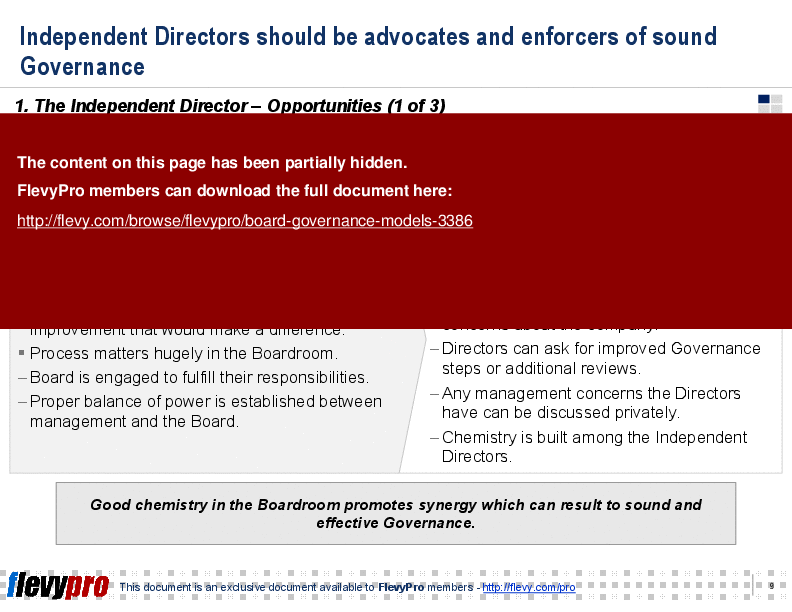
Independent Directors play a critical role in enforcing sound governance principles within organizations, especially during crises. Their responsibilities include actively suggesting improvements in governance processes to drive positive changes. Effective governance relies on established boardroom processes, where maintaining a balance of power between management and the board is essential for making decisions in the best interest of the company and its stakeholders. A key governance rule mandates Independent Directors to meet in executive sessions without the CEO, allowing candid discussions about company concerns, governance measures, and management issues. This fosters collaboration among Independent Directors, enhancing decision-making processes and contributing to organizational resilience and success during turbulent times.
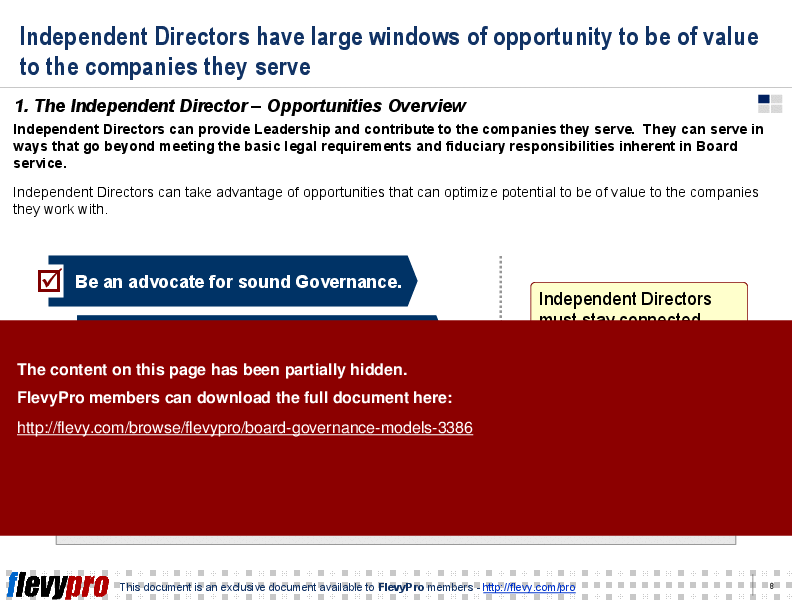
Independent Directors enhance company value through 3 key contributions: advocating for sound governance, planning leadership succession, and leading during crises. Advocating for governance involves promoting best practices and ethical standards, fostering accountability and transparency for improved performance. Planning leadership succession requires Independent Directors to proactively identify and develop future leaders, ensuring continuity and stability. Leading in crises emphasizes the expectation for these directors to provide guidance and support during challenges, influencing organizational resilience and recovery. Ongoing engagement between meetings is essential for effective governance, allowing Independent Directors to stay informed and ready to act.
Independent Directors play a critical role during crises, where their accumulated wisdom and judgment are essential for sound decision-making under pressure. They must fulfill obligations and actively engage with the situation, fostering understanding and trust among Board members to reach consensus through candid conversations. These discussions influence the organization's overall health and decision-making effectiveness. Maintaining connections between meetings, especially during remote discussions, is vital in crisis scenarios where timely communication impacts outcomes. Independent Directors must be fully engaged, invest effort in understanding the business, and remain connected with peers to navigate crises effectively. Their active participation is crucial for the Board's success during turbulent times.
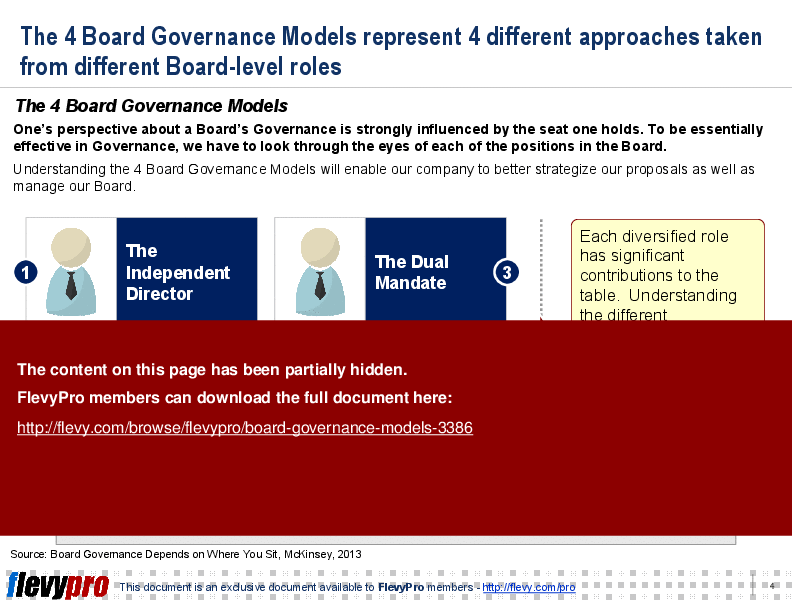
This PPT slide outlines 4 distinct board governance models:
1. The Independent Director emphasizes a director's independence from management, enhancing objectivity in decision-making and accountability.
2. The CEO with Non-executive Chair features a CEO supported by a non-executive chair, balancing strategic leadership with independent oversight.
3. The Dual Mandate involves one individual serving as both CEO and chair, streamlining decision-making, but raising checks and balances concerns.
4. The Non-CEO Chair promotes a separation of powers by having a chairperson who is not the CEO, enhancing the board's ability to challenge management and drive strategic discussions.
Each model presents unique advantages and challenges, necessitating careful consideration of organizational needs and culture.
Source: Best Practices in Leadership, Board, Governance PowerPoint Slides: Board Governance Models PowerPoint (PPT) Presentation Slide Deck, LearnPPT Consulting
This framework is developed by a team of former McKinsey and Big 4 consultants. The presentation follows the headline-body-bumper slide format used by global consulting firms.
For $10.00 more, you can download this document plus 2 more FlevyPro documents. That's just $13 each.
ABOUT FLEVYPRO
This document is part of the FlevyPro Library, a curated knowledge base of documents for our FlevyPro subscribers.

FlevyPro is a subscription service for on-demand business frameworks and analysis tools. FlevyPro subscribers receive access to an exclusive library of curated business documents—business framework primers, presentation templates, Lean Six Sigma tools, and more—among other exclusive benefits.
The average daily rate of a McKinsey consultant is $6,625 (not including expenses). The average price of a Flevy document is $65.
Trusted by over 10,000+ Client Organizations
Since 2012, we have provided business templates to over 10,000 businesses and organizations of all sizes, from startups and small businesses to the Fortune 100, in over 130 countries.
"If you are looking for great resources to save time with your business presentations, Flevy is truly a value-added resource. Flevy has done all the work for you and we will continue to utilize Flevy as a source to extract up-to-date information and data for our virtual and onsite presentations!"
– Debbi Saffo, President at The NiKhar Group
"I have found Flevy to be an amazing resource and library of useful presentations for lean sigma, change management and so many other topics. This has reduced the time I need to spend on preparing for my performance consultation. The library is easily accessible and updates are regularly provided. A wealth of great information."
– Cynthia Howard RN, PhD, Executive Coach at Ei Leadership
"As a consulting firm, we had been creating subject matter training materials for our people and found the excellent materials on Flevy, which saved us 100's of hours of re-creating what already exists on the Flevy materials we purchased."
– Michael Evans, Managing Director at Newport LLC
"Flevy is our 'go to' resource for management material, at an affordable cost. The Flevy library is comprehensive and the content deep, and typically provides a great foundation for us to further develop and tailor our own service offer."
– Chris McCann, Founder at Resilient.World
"I am extremely grateful for the proactiveness and eagerness to help and I would gladly recommend the Flevy team if you are looking for data and toolkits to help you work through business solutions."
– Trevor Booth, Partner, Fast Forward Consulting
"FlevyPro has been a brilliant resource for me, as an independent growth consultant, to access a vast knowledge bank of presentations to support my work with clients. In terms of RoI, the value I received from the very first presentation I downloaded paid for my subscription many times over! The
quality of the decks available allows me to punch way above my weight – it's like having the resources of a Big 4 consultancy at your fingertips at a microscopic fraction of the overhead.
"
– Roderick Cameron, Founding Partner at SGFE Ltd
"The wide selection of frameworks is very useful to me as an independent consultant. In fact, it rivals what I had at my disposal at Big 4 Consulting firms in terms of efficacy and organization."
– Julia T., Consulting Firm Owner (Former Manager at Deloitte and Capgemini)
"I have used FlevyPro for several business applications. It is a great complement to working with expensive consultants. The quality and effectiveness of the tools are of the highest standards."
– Moritz Bernhoerster, Global Sourcing Director at Fortune 500
Download our free compilation of 50+ Strategy & Transformation slides and templates. Frameworks include McKinsey 7-S, Balanced Scorecard, Disruptive Innovation, BCG Curve, and many more.