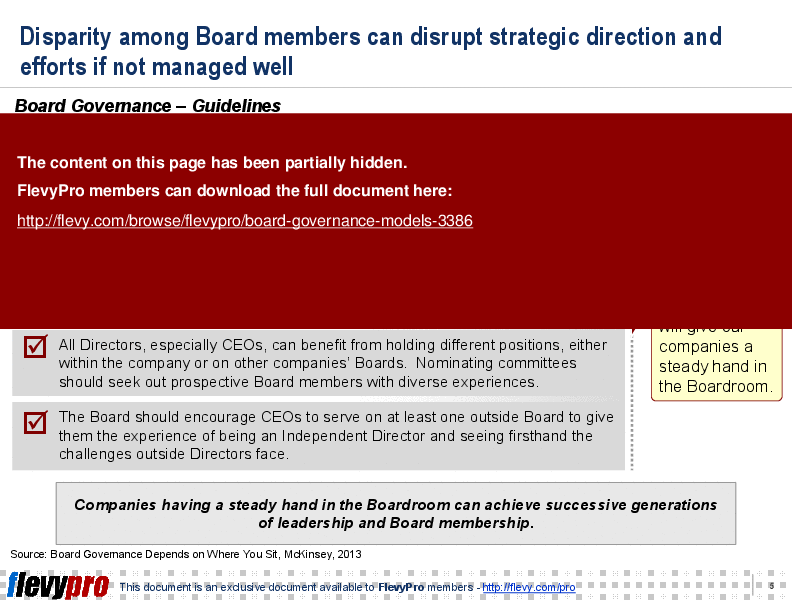

Board Governance is frequently discussed and often misunderstood. Yet, having a good grasp of Board Governance can lead to clarity of purpose and objectives.
Governance is the combination of policies, systems, structures, and a strategic/operational framework which the governing body puts in place. The model of Governance represents an approach to the combination of these policies and systems.
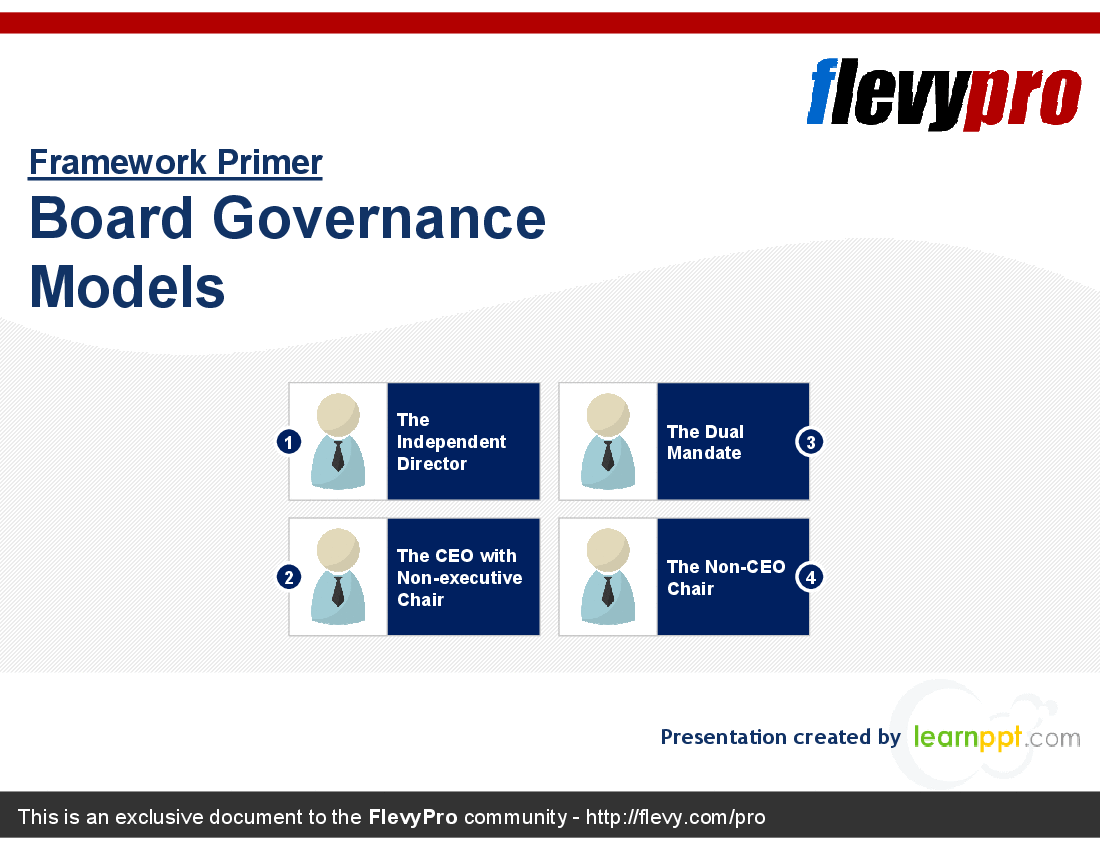
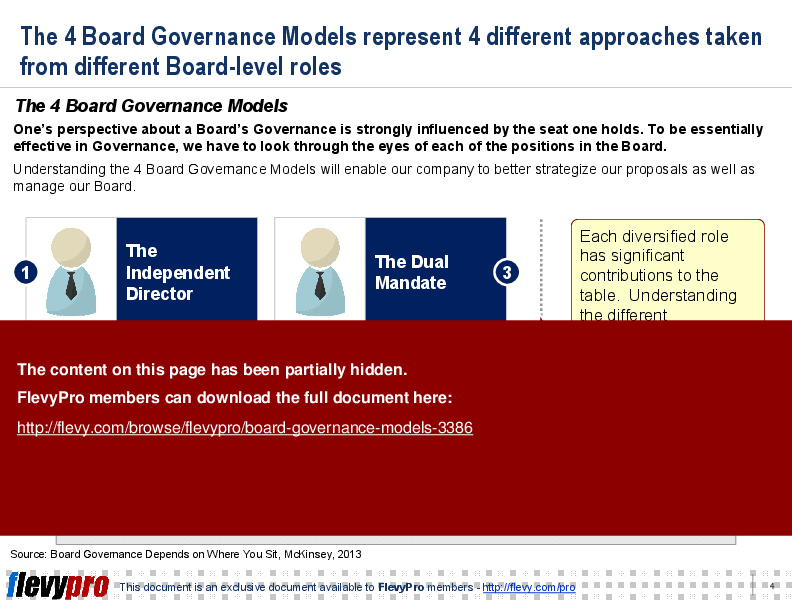
This presentation discusses the 4 types of Board Governance Models:
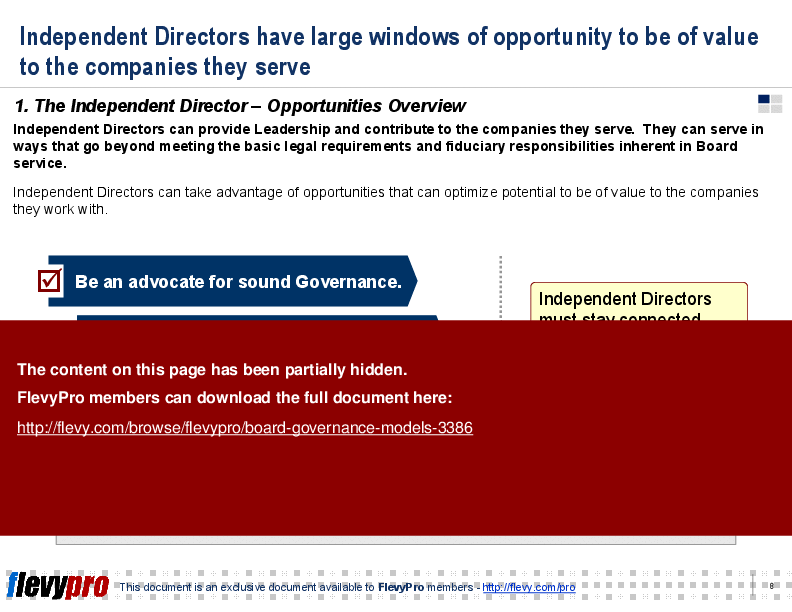
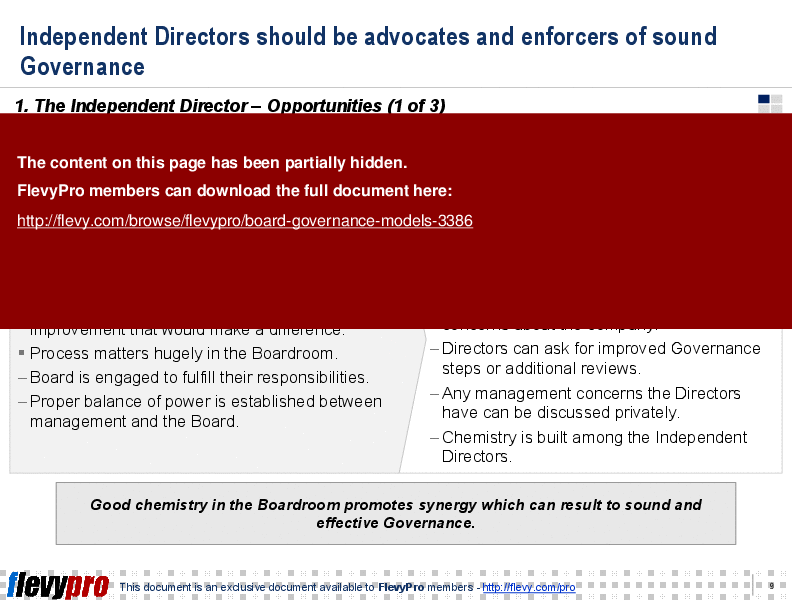
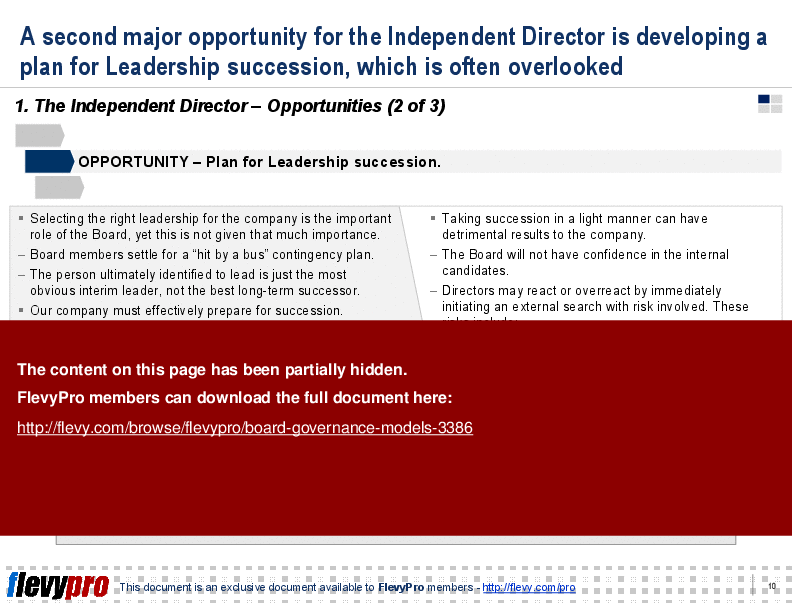
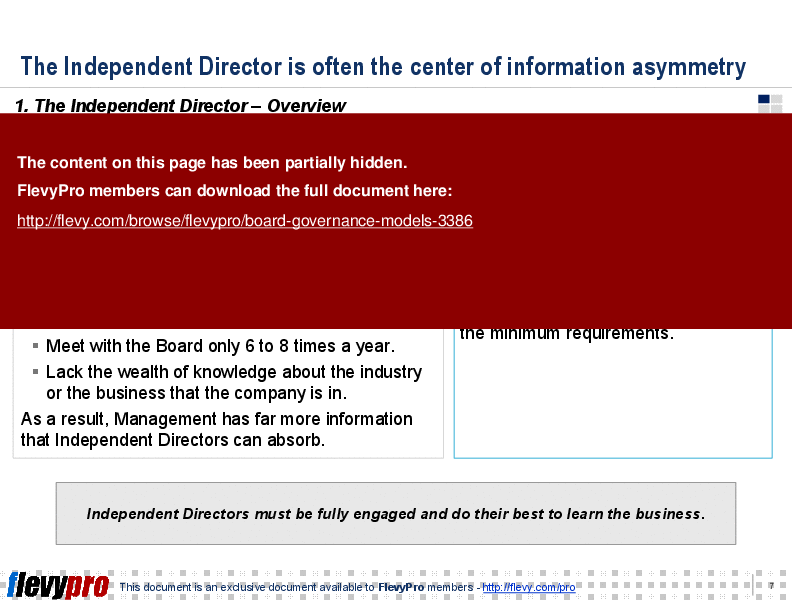
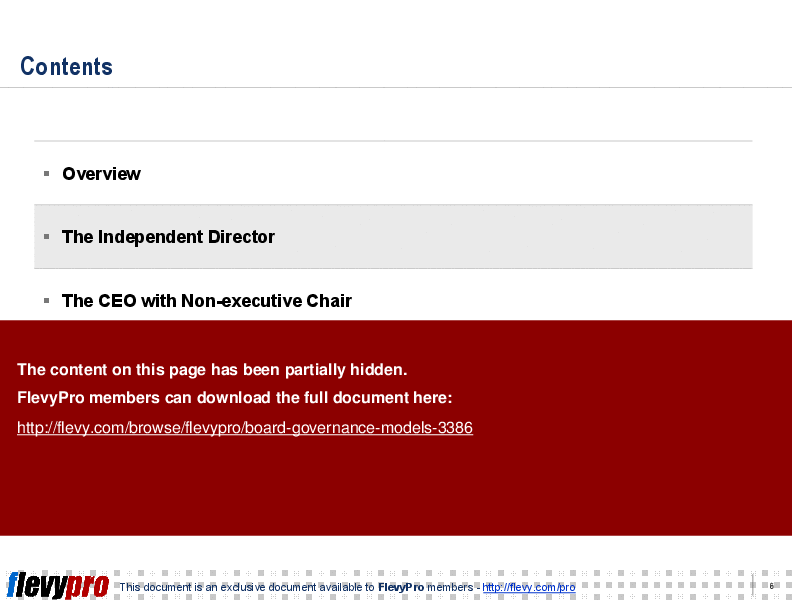
1. The Independent Director
2. The CEO with Non-executive Chair
3. The Dual Mandate
4. The Non-CEO Chair
Understanding the 4 Board Governance Models will enable our Board and our company to synchronize an effective Board Governance "operating" model. This is a mechanism used by the Board and management to effectively translate the elements of the Governance framework and policies into practices, procedures, and job responsibilities within the corporate Governance infrastructure.
Optimizing each role to achieve effective Board Governance directs our company to achieve corporate management excellence and global competitiveness. This is achieved as a result of clarity of strategies and goal.
This deck also includes slide templates for you to use in your own business presentations.
Board members must understand the nuances of each governance model to effectively steer their organizations. This presentation delves into the specific roles and responsibilities of Independent Directors, CEOs with Non-executive Chairs, Dual Mandate holders, and Non-CEO Chairs. Each model is dissected to highlight its unique benefits and challenges, providing actionable insights for optimizing board performance.
The deck also addresses common pitfalls and offers practical guidelines for fostering effective governance. It emphasizes the importance of role clarity, strategic alignment, and leadership succession planning. Templates included in the presentation can be customized to fit your organization's specific needs, ensuring that your board governance framework is both robust and adaptable.
Got a question about this document? Email us at flevypro@flevy.com.
Executive Summary
The "Board Governance Models" presentation provides a detailed exploration of 4 essential governance frameworks that enhance corporate management effectiveness. Developed by an ex-McKinsey consultant, this expert PowerPoint deck offers insights into the roles of Independent Directors, CEOs with Non-executive Chairs, Dual Mandate leaders, and Non-CEO Chairs. By understanding these models, corporate executives can optimize board functions, clarify responsibilities, and drive strategic alignment within their organizations. This presentation also includes customizable templates to facilitate immediate application in business contexts.
Who This Is For and When to Use
• Corporate executives seeking to enhance board effectiveness and governance practices
• Board members aiming to understand their roles and responsibilities better
• Consultants advising organizations on governance structures and frameworks
• Leadership teams preparing for board meetings or strategic planning sessions
Best-fit moments to use this deck:
• During board orientation sessions to familiarize members with governance models
• When evaluating or restructuring board roles and responsibilities
• In strategic planning meetings to align governance with corporate objectives
• For training workshops focused on enhancing board performance and collaboration
Learning Objectives
• Define the 4 Board Governance Models and their significance in corporate management
• Analyze the roles and responsibilities of Independent Directors and their impact on governance
• Evaluate the effectiveness of the CEO with Non-executive Chair model in decision-making
• Understand the implications of a Dual Mandate structure on board dynamics
• Assess the contributions of Non-CEO Chairs to effective governance
• Develop actionable strategies for optimizing board performance and collaboration
Table of Contents
• Overview (page 3)
• The Independent Director (page 7)
• The CEO with Non-executive Chair (page 13)
• The Dual Mandate (page 15)
• The Non-CEO Chair (page 17)
• Templates (page 19)
Primary Topics Covered
• Overview of Board Governance - An introduction to the importance of governance frameworks in corporate management.
• Independent Director Role - Insights into the responsibilities and challenges faced by Independent Directors in governance.
• CEO with Non-executive Chair - Examination of the dual structure and its potential pitfalls in decision-making.
• Dual Mandate Leadership - Analysis of the advantages and disadvantages of a CEO serving as Board Chair.
• Non-CEO Chair Dynamics - Discussion on the role of a Non-CEO Chair and the impact of their experience on governance.
• Governance Templates - Customizable templates for practical application in governance discussions and presentations.
Deliverables, Templates, and Tools
• Governance framework overview template for presenting the 4 models
• Role definition template for Independent Directors and their responsibilities
• Decision-making process template for the CEO with Non-executive Chair model
• Evaluation checklist for assessing Dual Mandate effectiveness
• Guidelines for the Non-CEO Chair role and responsibilities
• Customizable presentation slides for internal governance discussions
Slide Highlights
• Overview slide detailing the 4 Board Governance Models
• Independent Director slide emphasizing the importance of engagement and knowledge
• CEO with Non-executive Chair slide illustrating the challenges of dual leadership
• Dual Mandate slide highlighting the balance of power within the Board
• Non-CEO Chair slide discussing the transition from CEO to Board Chair
• Template slides for practical governance applications
Potential Workshop Agenda
Introduction to Board Governance Models (30 minutes)
• Overview of the 4 governance frameworks
• Discussion on the importance of effective governance
Independent Director Role Workshop (60 minutes)
• Exploration of responsibilities and challenges
• Group discussion on best practices for engagement
CEO with Non-executive Chair Dynamics (45 minutes)
• Analysis of the dual structure
• Case studies on decision-making effectiveness
Dual Mandate Leadership Session (45 minutes)
• Discussion on balancing power within the Board
• Strategies for enhancing collaboration
Customization Guidance
• Tailor the governance framework overview to reflect your organization’s specific needs
• Adjust role definitions and responsibilities based on your board composition
• Incorporate case studies relevant to your industry for practical application
• Modify templates to align with your internal governance processes
Secondary Topics Covered
• Governance best practices for board diversity and inclusion
• Strategies for effective communication among board members
• Risk management considerations in governance
• Evaluation metrics for assessing board performance
• Trends in corporate governance and their implications
Topic FAQ
Document FAQ
These are questions addressed within this presentation.
What are the 4 Board Governance Models?
The 4 models are the Independent Director, CEO with Non-executive Chair, Dual Mandate, and Non-CEO Chair, each representing different governance approaches.
How can this presentation help my organization?
This presentation provides insights into optimizing board roles and responsibilities, enhancing governance practices, and driving corporate performance.
What templates are included in the deck?
The deck includes templates for governance frameworks, role definitions, decision-making processes, and evaluation checklists.
Can I customize the templates for my organization?
Yes, the templates are designed for customization to fit your organization's specific governance needs.
What is the significance of the Independent Director role?
Independent Directors provide unbiased oversight and contribute to effective governance by ensuring diverse perspectives are represented.
How does the CEO with Non-executive Chair model impact decision-making?
This model can create challenges in decision-making due to potential power struggles or unclear roles between the CEO and Chair.
What are the advantages of a Dual Mandate structure?
A Dual Mandate can streamline decision-making by consolidating leadership, but may also lead to complacency within the Board.
What should organizations consider when appointing a Non-CEO Chair?
Organizations should ensure the Chair has a well-defined job description and undergoes annual evaluations to maintain accountability.
How can I implement the insights from this presentation?
Use the provided templates and guidelines to facilitate discussions and workshops focused on enhancing your board’s governance practices.
Glossary
• Board Governance - The framework of policies and structures guiding corporate management.
• Independent Director - A board member who is not part of the company's management and provides unbiased oversight.
• CEO with Non-executive Chair - A governance structure where the CEO leads the company while a non-executive Chair oversees the Board.
• Dual Mandate - A governance model where the CEO also serves as the Board Chair, consolidating leadership roles.
• Non-CEO Chair - A Chair who is not the CEO, often a former CEO or experienced board member, providing oversight.
• Governance Template - A structured format for presenting governance frameworks and roles.
• Board Dynamics - The interactions and relationships among board members that influence decision-making.
• Leadership Succession - The process of planning for future leadership roles within the organization.
• Governance Guidelines - Best practices for effective board governance and management.
• Evaluation Metrics - Criteria used to assess the performance and effectiveness of the Board.
• Stakeholder Engagement - The process of involving stakeholders in governance discussions and decisions.
• Risk Management - Strategies for identifying and mitigating risks within governance frameworks.
• Diversity and Inclusion - The practice of ensuring diverse perspectives are represented in governance.
• Corporate Strategy - The overarching plan guiding an organization's direction and decision-making.
• Performance Metrics - Measures used to evaluate the success of governance practices.
• Accountability - The obligation of board members to fulfill their responsibilities effectively.
• Transparency - The practice of openly sharing information regarding governance decisions and processes.
• Board Composition - The makeup of the Board, including the diversity of skills and experiences.
• Governance Framework - The structure that outlines the roles, responsibilities, and processes of governance.
• Engagement Strategies - Approaches to foster active participation among board members.
• Corporate Governance - The system by which companies are directed and controlled.
• Strategic Alignment - The process of ensuring that governance practices align with organizational goals.
Source: Best Practices in Leadership, Board, Governance PowerPoint Slides: Board Governance Models PowerPoint (PPT) Presentation Slide Deck, LearnPPT Consulting
Did you need more documents?
Consider a FlevyPro subscription from $39/month. View plans here.
For $10.00 more, you can download this document plus 2 more FlevyPro documents. That's just $13 each.
|
Download our FREE Strategy & Transformation Framework Templates
Download our free compilation of 50+ Strategy & Transformation slides and templates. Frameworks include McKinsey 7-S, Balanced Scorecard, Disruptive Innovation, BCG Curve, and many more. |