
This framework is developed by a team of former McKinsey and Big 4 consultants. The presentation follows the headline-body-bumper slide format used by global consulting firms.
Explore a robust Best Practices Transfer Program developed by ex-McKinsey & Big 4 consultants. Enhance productivity, performance, and knowledge sharing. Best Practices Transfer Program is a 30-slide PPT PowerPoint presentation slide deck (PPT) available for immediate download upon purchase.
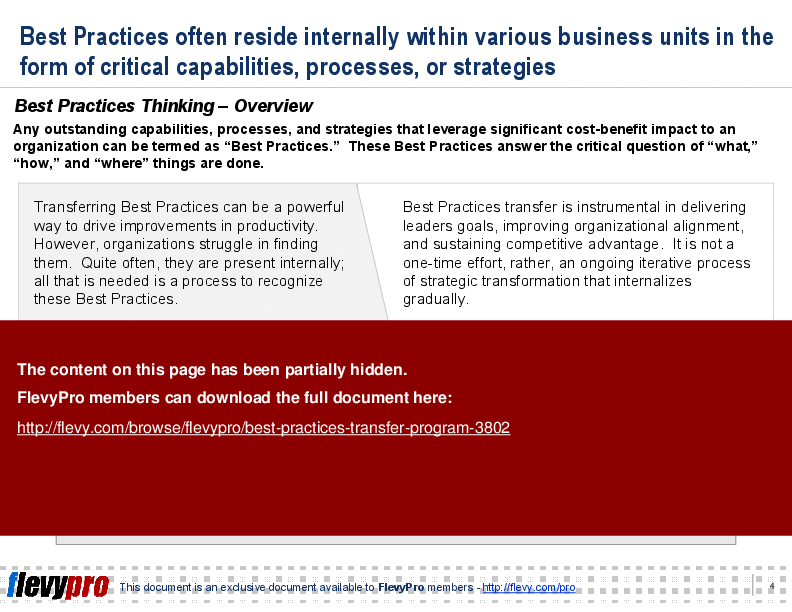
Best Practices can be described as any outstanding capabilities, processes, and strategies that leverage significant cost/benefit impact to an organization. These Best Practices answer the critical question of "what," "how," and "where" things are done.
Transferring Best Practices can be a powerful way to drive improvements in productivity. However, companies often struggle to identify them. These practices have the potential to significantly improve performance, costs, and revenue. Institutionalizing them and exchanging them internally makes a company a Learning Organization, and unleashes tremendous value locked in internal processes, structures, and systems.
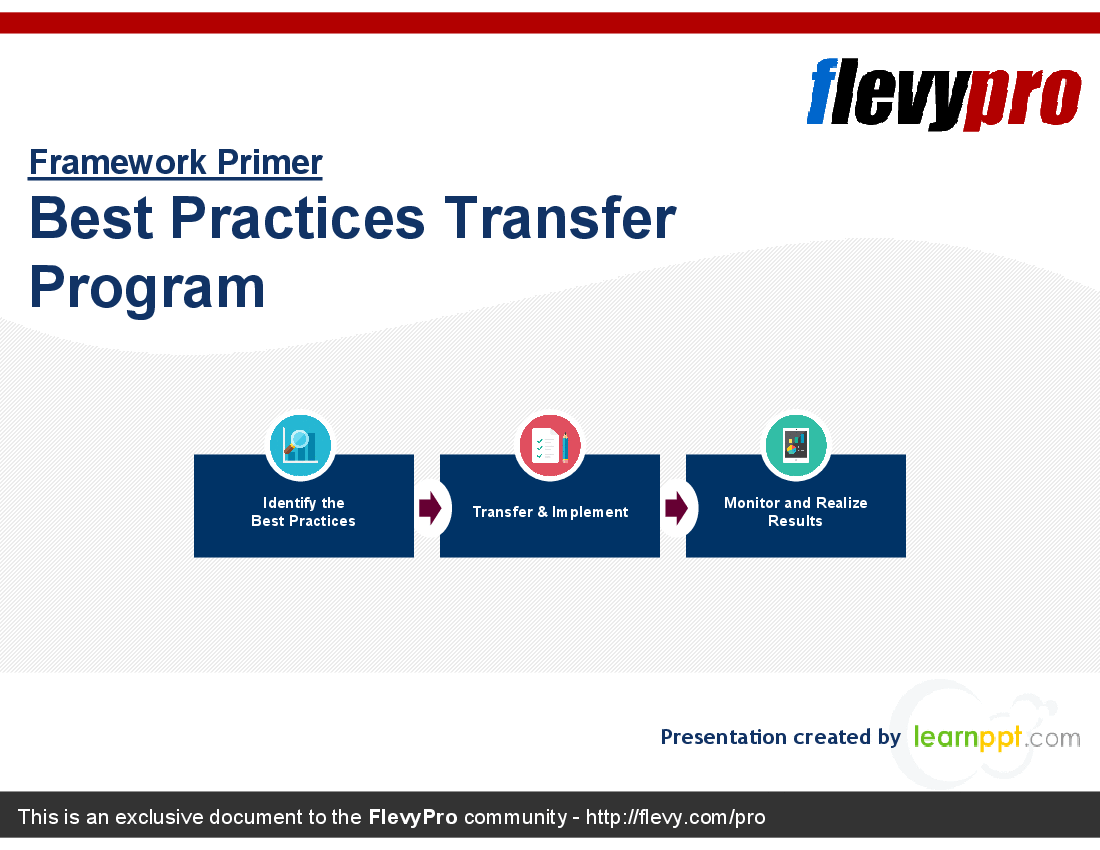
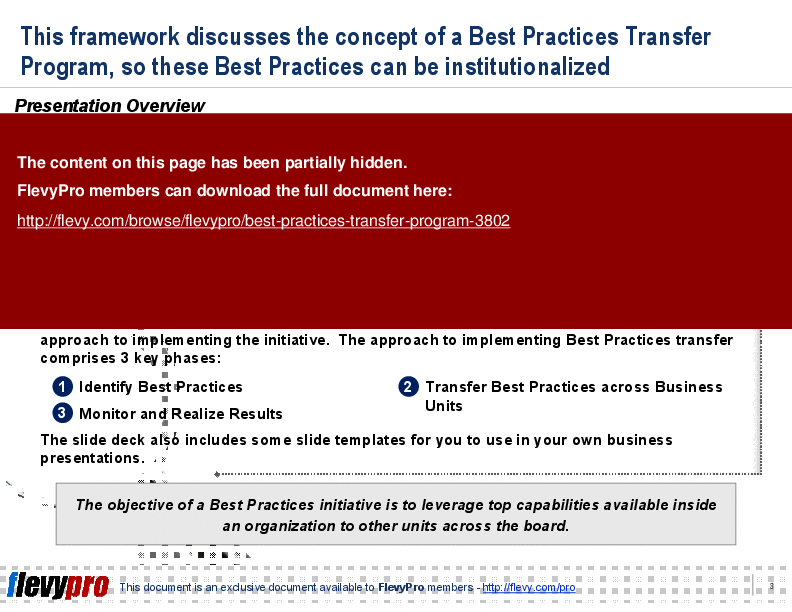
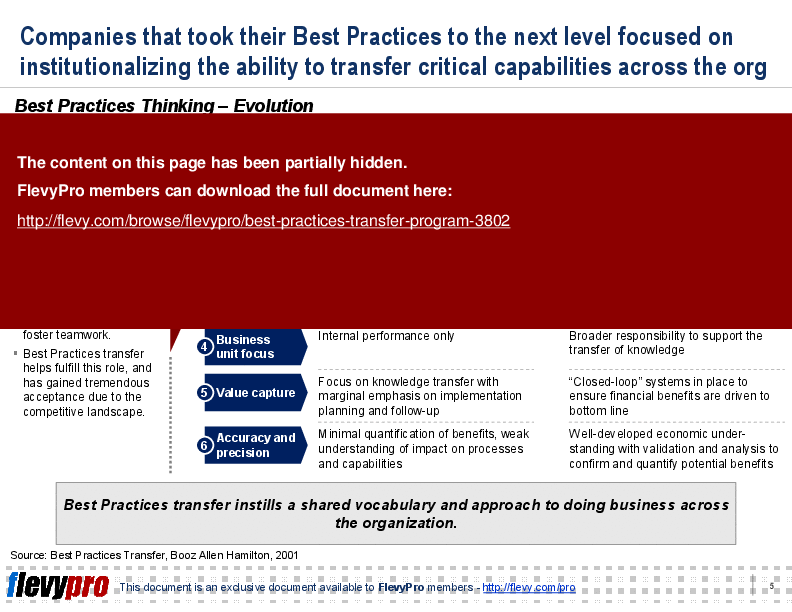
This deck first talks about the evolution of Best Practices Transfer Program. The presentation then provides a detailed account of the key principles involving the Best Practices and the approach to implementing the initiative. The approach to implementing Best Practices transfer comprises 3 key phases:
1. Identify Best Practices
2. Monitor and Realize Results
3. Transfer Best Practices across Business Units
The slide deck also includes some slide templates for you to use in your own business presentations.
The Best Practices Transfer Program is a robust framework designed to systematically identify, evaluate, and disseminate superior practices across business units. This program emphasizes a structured approach to knowledge sharing, ensuring that critical capabilities are leveraged effectively throughout the organization. By focusing on internal strengths, companies can drive significant improvements in performance and maintain a competitive edge.
The PPT also outlines the importance of continuous monitoring and realization of results. It provides detailed methodologies for tracking the implementation and impact of best practices, ensuring that the benefits are quantifiable and sustainable. This approach not only enhances operational efficiency, but also fosters a culture of continuous improvement and learning within the organization.
This PPT slide outlines 4 models for transferring best practices:
1. Simple Pair: Transfers from one source to a single receiver, yielding returns up to 4 times the investment, applicable in specific practices or processes.
2. Simple with Network: Expands transfer from one source to multiple receivers, typically yielding 4 to 1 returns, suitable for multi-plant locations and post-merger integrations.
3. Simple Clusters: Involves multiple sources collaborating to transfer practices to several receivers, with returns ranging from 6 to 8 times, relevant in multi-site operations and post-merger integrations.
4. Composite: Combines elements from sources and receivers for significant improvements, delivering returns as high as 10 to 1, valuable for closing performance gaps and driving business improvements.
These models enhance operational efficiency and highlight financial benefits across various business contexts.
This PPT slide presents a framework for evaluating the Best Practices Transfer Program's effectiveness by comparing current skill implementation against planned benchmarks. It categorizes capabilities into 5 performance levels: Composite World Class, Best in Class, Qualified Participant, Marginal Performer, and Minimal Capability. The horizontal axis lists specific capabilities like Quality Approach, Visuals & Metrics, and Performance Management, illustrated through bar graphs showing current status (gray), benchmarked capability (blue), and target level (dotted line). This visual aids stakeholders in identifying strengths and areas for improvement. Monitoring performance discrepancies enables informed resource allocation and focuses efforts on elevating capabilities to meet target levels, fostering accountability and continuous improvement within teams.
The "Identify" stage of a Best Practices Transfer Program establishes a steering team of process leaders from various business units to manage the initiative. Three core elements are Structure Best Practices, Baseline Best Practices, and Detail the Best Practices. The steering team defines the program's scope and sets performance targets across business units, ensuring alignment with organizational goals. The Baseline Best Practices element benchmarks existing processes and performance to identify gaps and opportunities for improvement. Finally, the Detail the Best Practices component analyzes successful practices from top-performing departments to facilitate knowledge sharing and continuous improvement. This structured approach ensures effective and sustainable practice transfer within the organization.
This PPT slide outlines a structured approach for transferring best practices within organizations, focusing on minimal reengineering. It begins with selecting best practices aligned with strategic and financial goals, ensuring relevance for implementation. Prioritization links these practices to strategic imperatives, identifying those with the most significant impact on desired outcomes. Specific imperatives include achieving the right size and shape, maintaining a low-cost production model, and effective program management. Assessing gaps and prioritizing impacts related to best practice transfer is essential for understanding the cost-benefit ratio and resource allocation. Providing feedback to business units on performance is crucial for continuous improvement and alignment with strategic goals, encapsulating a comprehensive framework for best practice transfer.
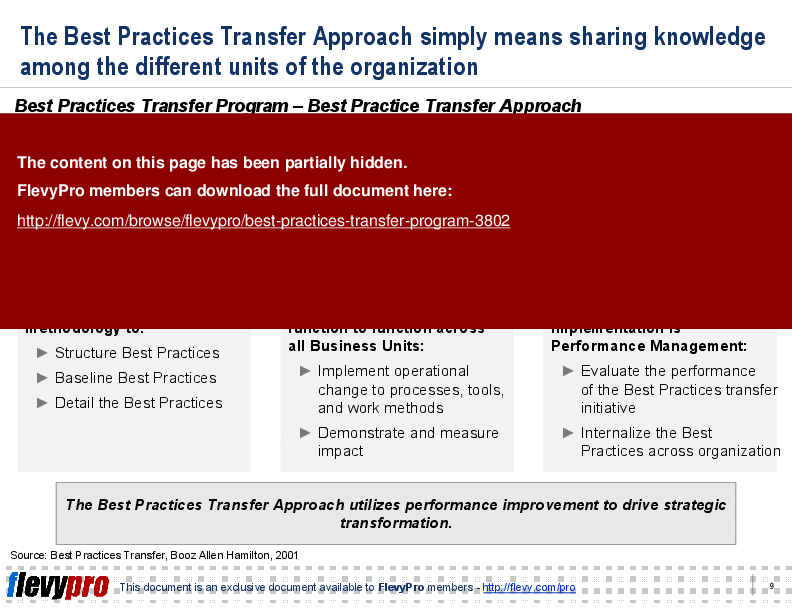
The Best Practices Transfer Approach is a structured method for knowledge sharing within organizations, consisting of 3 phases: Identify, Transfer & Implement, and Monitor and Realize Results.
The "Identify the Best Practices" phase focuses on developing a systematic process to structure best practices, establish baselines, and ensure clarity.
In the "Transfer & Implement" phase, best practices are shared across business units, requiring operational changes to processes and tools, and measuring the impact of these changes to validate effectiveness.
The "Monitor and Realize Results" phase emphasizes performance management, evaluating the success of the best practices transfer initiative to ensure knowledge is embedded in the organization's operations.
This framework enhances productivity and performance through effective knowledge sharing and continuous improvement.
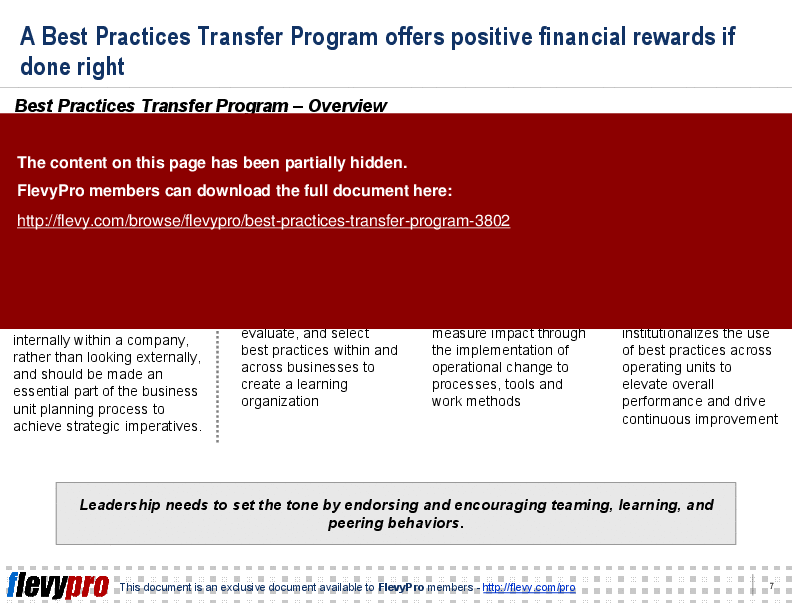
A Best Practices Transfer Program enhances organizational performance through continuous learning. It consists of 3 phases: Identify Best Practices, Transfer & Implement, and Monitor & Realize Benefits.
In the first phase, organizations develop a systematic process for identifying and evaluating internal best practices, creating a learning organization that integrates these practices into business unit planning to align with strategic objectives.
The second phase focuses on transferring and implementing identified best practices, requiring knowledge sharing and demonstrating impact through operational changes. Organizations should measure the effectiveness of changes in processes, tools, and work methods to ensure practical benefits.
The final phase involves monitoring and institutionalizing best practices across operating units to elevate performance and drive continuous improvement, ensuring organizational agility in response to changing conditions.
This PPT slide outlines the significance of a Best Practice Transfer Program for adapting to innovative technologies and sustaining organizational growth. Key components for effective monitoring include 3 essential metrics: the financial impact on the bottom line, the effectiveness of the steering team and business unit leadership in achieving objectives, and behavioral metrics to assess improvements in targeted capabilities. Specific actions for consistent monitoring involve quantifying best practice opportunities, realizing benefits at each step, and determining efficacy through measurable outcomes. This structured approach ensures organizations maintain momentum and effectively respond to changes, providing a clear framework for enhancing operational excellence.
Source: Best Practices in Operational Excellence, Learning Organization, Best Practices PowerPoint Slides: Best Practices Transfer Program PowerPoint (PPT) Presentation Slide Deck, LearnPPT Consulting
This framework is developed by a team of former McKinsey and Big 4 consultants. The presentation follows the headline-body-bumper slide format used by global consulting firms.
For $10.00 more, you can download this document plus 2 more FlevyPro documents. That's just $13 each.
ABOUT FLEVYPRO
This document is part of the FlevyPro Library, a curated knowledge base of documents for our FlevyPro subscribers.

FlevyPro is a subscription service for on-demand business frameworks and analysis tools. FlevyPro subscribers receive access to an exclusive library of curated business documents—business framework primers, presentation templates, Lean Six Sigma tools, and more—among other exclusive benefits.
Since 2012, we have provided business templates to over 10,000 businesses and organizations of all sizes, from startups and small businesses to the Fortune 100, in over 130 countries.
"The wide selection of frameworks is very useful to me as an independent consultant. In fact, it rivals what I had at my disposal at Big 4 Consulting firms in terms of efficacy and organization."
– Julia T., Consulting Firm Owner (Former Manager at Deloitte and Capgemini)
"If you are looking for great resources to save time with your business presentations, Flevy is truly a value-added resource. Flevy has done all the work for you and we will continue to utilize Flevy as a source to extract up-to-date information and data for our virtual and onsite presentations!"
– Debbi Saffo, President at The NiKhar Group
"As a niche strategic consulting firm, Flevy and FlevyPro frameworks and documents are an on-going reference to help us structure our findings and recommendations to our clients as well as improve their clarity, strength, and visual power. For us, it is an invaluable resource to increase our impact and value."
– David Coloma, Consulting Area Manager at Cynertia Consulting
"I have used Flevy services for a number of years and have never, ever been disappointed. As a matter of fact, David and his team continue, time after time, to impress me with their willingness to assist and in the real sense of the word. I have concluded in fact
that it is not at all just a repository of documents/resources but, in the way that David and his team manage the firm, it is like dealing with consultants always ready to assist, advise and direct you to what you really need, and they always get it right.
I am an international hospitality accomplished senior executive who has worked and lived during the past 35 years in 23 countries in 5 continents and I can humbly say that I know what customer service is, trust me.
Aside from the great and professional service that Flevy's team provide, their wide variety of material is of utmost great quality, professionally put together and most current.
Well done Flevy, keep up the great work and I look forward to continue working with you in the future and to recommend you to a variety of colleagues around the world.
"
– Roberto Pelliccia, Senior Executive in International Hospitality
"As a young consulting firm, requests for input from clients vary and it's sometimes impossible to provide expert solutions across a broad spectrum of requirements. That was before I discovered Flevy.com.
Through subscription to this invaluable site of a plethora of topics that are key and crucial to consulting, I
have been able to exceed expectations and deliver quality advice and solutions to my clients. The quality and expertise of the authors are exemplary and gives me great confidence to use as part of my service offerings.
I highly recommend this company for any consultant wanting to apply international best practice standards in their service offerings.
"
– Nishi Singh, Strategist and MD at NSP Consultants
"One of the great discoveries that I have made for my business is the Flevy library of training materials.
As a Lean Transformation Expert, I am always making presentations to clients on a variety of topics: Training, Transformation, Total Productive Maintenance, Culture, Coaching, Tools, Leadership Behavior, etc. Flevy
It is well worth the money to purchase these presentations. Sure, I have the knowledge and information to make my point. It is another thing to create a presentation that captures what I want to say. Flevy has saved me countless hours of preparation time that is much better spent with implementation that will actually save money for my clients.
"
– Ed Kemmerling, Senior Lean Transformation Expert at PMG
"I like your product. I'm frequently designing PowerPoint presentations for my company and your product has given me so many great ideas on the use of charts, layouts, tools, and frameworks. I really think the templates are a valuable asset to the job."
– Roberto Fuentes Martinez, Senior Executive Director at Technology Transformation Advisory
"FlevyPro provides business frameworks from many of the global giants in management consulting that allow you to provide best in class solutions for your clients."
– David Harris, Managing Director at Futures Strategy
Save with Bundles
This document is available as part of the following discounted bundle(s):
Download our free compilation of 50+ Strategy & Transformation slides and templates. Frameworks include McKinsey 7-S, Balanced Scorecard, Disruptive Innovation, BCG Curve, and many more.