
This framework is developed by a team of former McKinsey and Big 4 consultants. The presentation follows the headline-body-bumper slide format used by global consulting firms.
Talent management framework PPT: Learn the 6 Pillars of Talent Management with this strategic PowerPoint. Download to master best practices, models, and challenges. 6 Pillars of Talent Management is a 25-slide PPT PowerPoint presentation slide deck (PPTX) available for immediate download upon purchase.
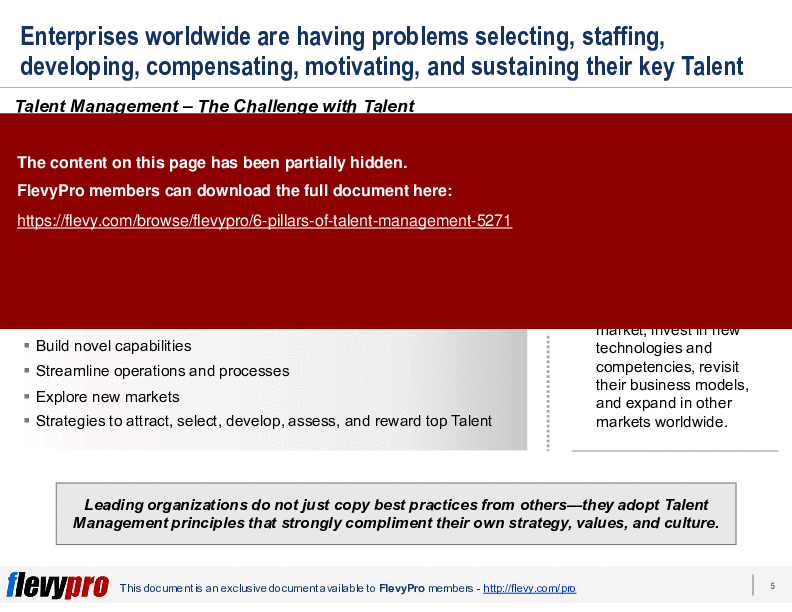
Copying Talent Management best practices from somewhere and applying them alone fall short of enabling organizations to attract, manage, and retain high-potential Talent. This warrants mitigating the challenges associated with this digital age, adapting to the changing requirements, investing in new technologies and competencies, revisiting their business models, and devising
strategies to manage their Talent pool.
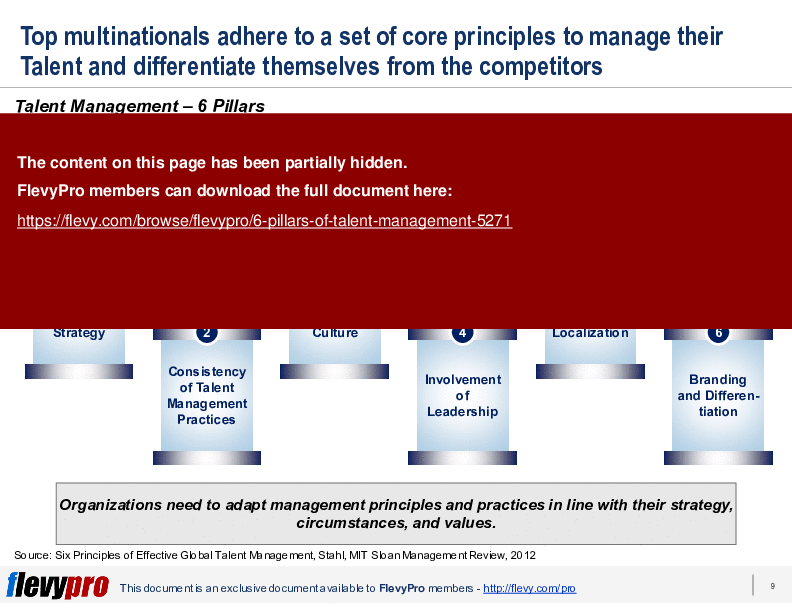
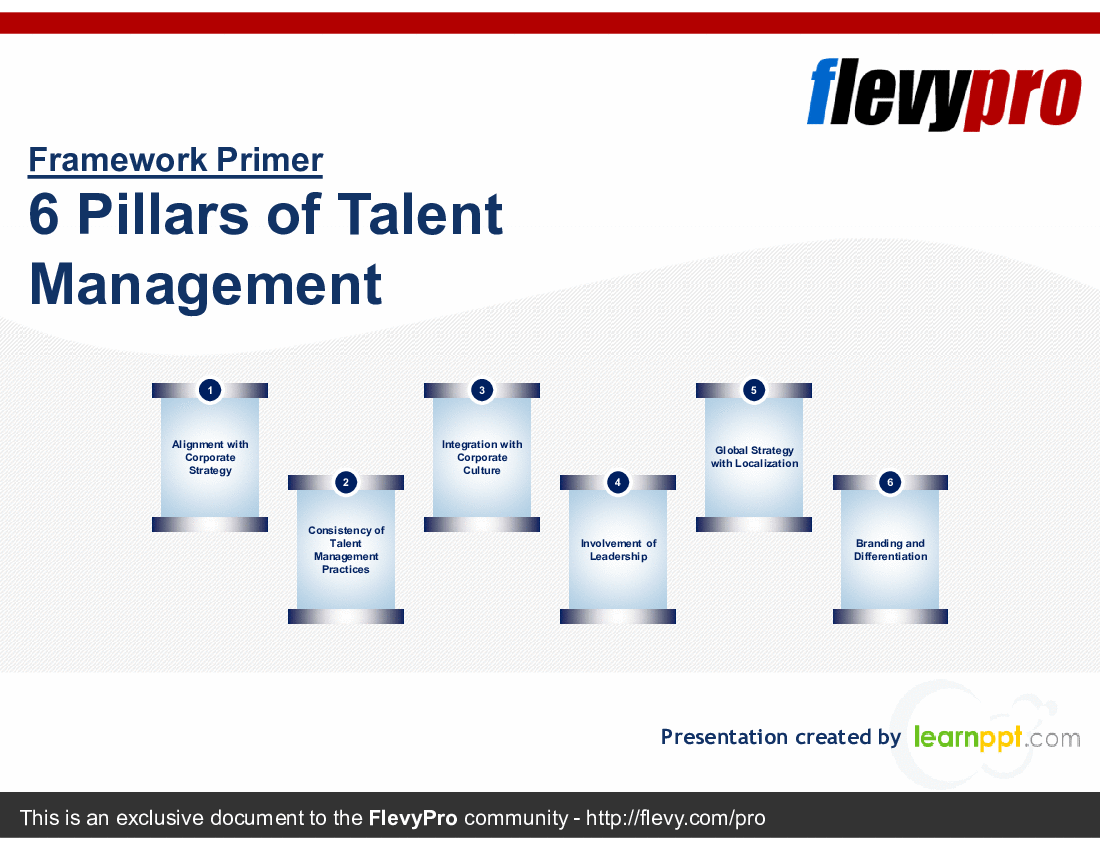
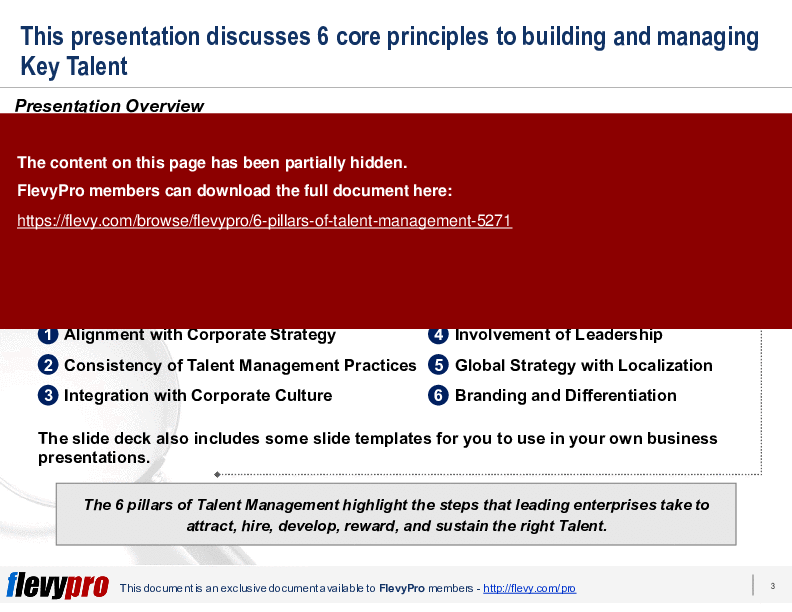
This deck provides a detailed overview of 6 core pillars (or principles) that front-running organizations adhere to, to manage their Talent and differentiate themselves from the competitors. The 6 pillars are:
1. Alignment with Corporate Strategy
2. Consistency of Talent Management Practices
3. Integration with Corporate Culture
4. Involvement of Leadership
5. Global Strategy with Localization
6. Branding and Differentiation
The 6 pillars of Talent Management highlight the steps that leading enterprises take to attract, hire, develop, reward, and sustain the right Talent.
The slide deck also includes some slide templates for you to use in your own business presentations.
This presentation also delves into the Talent Management Wheel, a comprehensive framework that encapsulates key practices for managing Human Capital. It emphasizes the importance of balancing global integration with local implementation, ensuring that strategies are adaptable to various market conditions. The wheel covers essential areas such as recruitment, performance management, and compensation, providing a holistic approach to Talent Management.
Included are practical templates that can be customized for your organization's specific needs. These templates facilitate the implementation of the six pillars, offering a structured approach to align Talent Management with corporate strategy, ensure consistency, and integrate with corporate culture. This resource is indispensable for organizations aiming to refine their Talent Management practices and achieve a competitive edge.
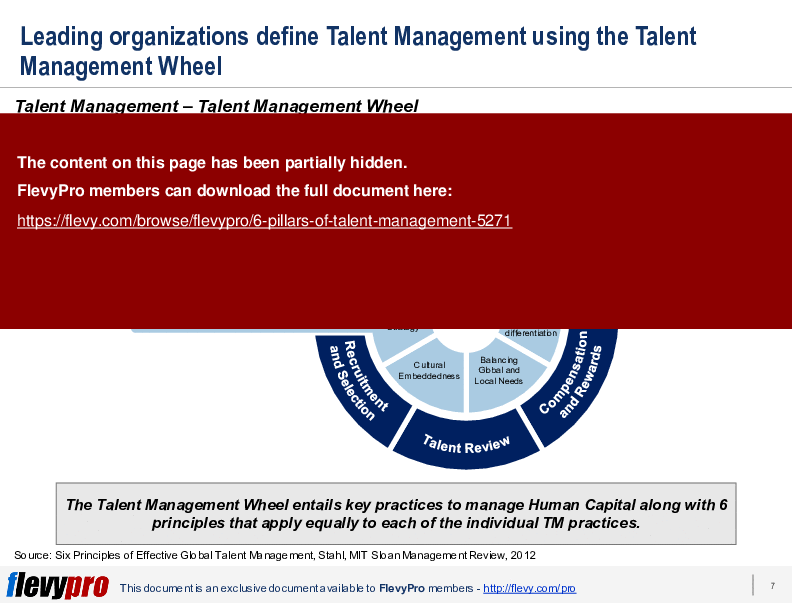
The Talent Management Wheel framework divides Talent Management into 2 components: Talent Management Practices and Guiding Principles. The outer circle includes 6 key practices: Development and Training, Recruitment and Selection, Performance Management, Talent Review, Retention, and Compensation and Rewards. Development and Training enhance employee skills, while Recruitment and Selection focuses on attracting the right talent. The inner circle, Guiding Principles, features Alignment with Strategy, Internal Consistency, Cultural Embeddedness, Management Involvement, Employer Branding through Differentiation, and Balancing Global and Local Needs. These principles ensure Talent Management practices align with strategic objectives and are culturally relevant. This comprehensive framework enhances talent management strategies by integrating practices and principles effectively.
This PPT slide presents a framework for managing talent in multinational corporations, emphasizing the balance between global strategies and local adaptations. Organizations often prefer standardized global performance metrics, leadership profiles, and appraisal tools,, but must remain flexible to local needs. There is no universal strategy; companies tailor approaches based on local conditions and industry specifics, requiring agility and responsiveness to market challenges. Local management plays a critical role in training and compensating staff, suggesting a decentralized approach enhances engagement and effectiveness. Examples include Oracle's centralized model, Matsushita's decentralized strategy, and Rolls-Royce's hybrid approach, which combines global standards with local talent development. Balancing global integration and local implementation is essential for effective talent management.
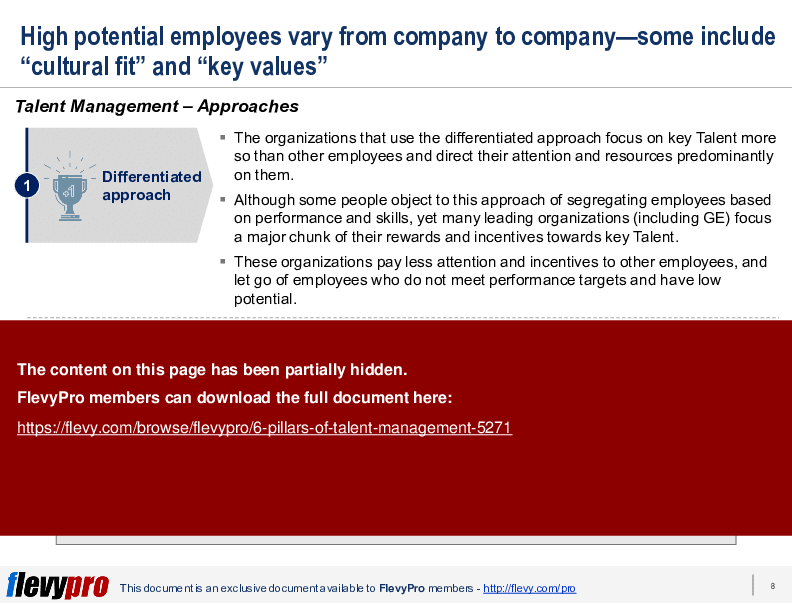
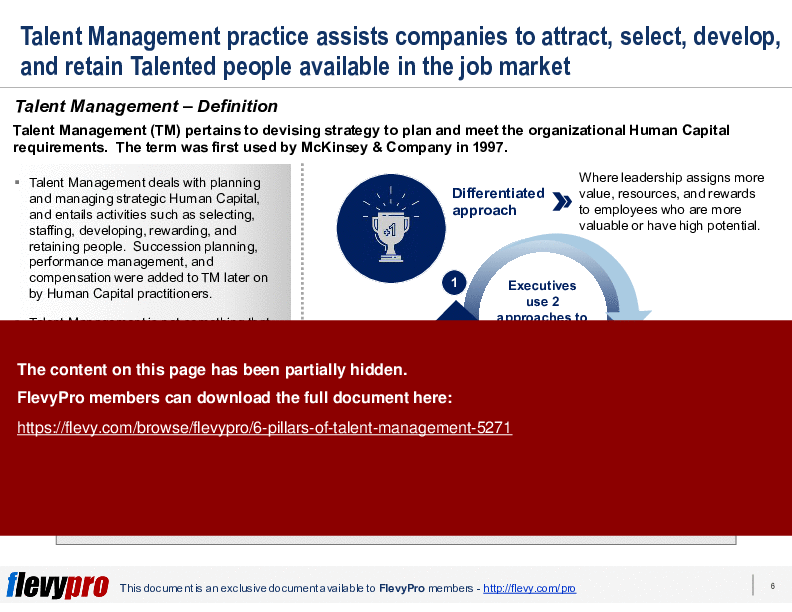
Talent Management (TM) is a comprehensive approach to planning and managing an organization’s human capital, encompassing activities such as selecting, staffing, developing, rewarding, and retaining personnel. Popularized by McKinsey & Company in 1997, TM should be integrated throughout the organization, guided by corporate strategy to enhance team skills. Two distinct approaches to TM are the "differentiated approach," which assigns more value and rewards to high-potential employees, and the "inclusive approach," which cautions against over-focusing on top talent to avoid undermining organizational conviction. The goal of TM is to foster a culture of open information sharing and collaboration, enhancing employee versatility and skill sets for overall organizational benefit.
This PPT slide outlines 6 fundamental principles for effective talent management in multinational corporations, based on research from INSEAD, Cornell, and Tilburg universities across 33 companies in 11 countries. The first principle is alignment with corporate strategy, linking talent management to organizational goals. The second emphasizes consistency in talent practices across departments. The third principle focuses on integration with corporate culture, ensuring talent management reflects organizational values. The fourth highlights leadership involvement in driving talent initiatives. The fifth principle advocates for a global strategy with localization to adapt to local contexts. Finally, the sixth principle stresses the importance of branding and differentiation to attract and retain top talent. Tailoring these principles to specific operational contexts enhances employee engagement and overall performance.
This PPT slide outlines 2 approaches to talent management: differentiated and inclusive. The differentiated approach focuses on identifying and prioritizing high-potential employees, often criticized for neglecting lower-performing staff. Organizations like General Electric allocate significant rewards to top talents, potentially sidelining others. In contrast, the inclusive approach addresses the needs of all employees, promoting a holistic view that values each individual's contribution, which can enhance morale and profitability. A hybrid model blends both strategies, balancing resources while recognizing high-potential employees, aiming for an equitable talent management system that improves overall performance without alienating any workforce segment.
This PPT slide highlights the relationship between corporate strategy and talent management, emphasizing that effective talent identification is crucial for achieving organizational goals. Corporate strategy should dictate talent needs, aligning talent management practices with strategic objectives to mobilize human resources effectively. General Electric (GE) exemplifies this integration, viewing talent management as a vital execution tool within its strategic planning processes. GE prioritizes technical skills during planning, reviewing its innovation pipeline and engineering requirements to meet strategic goals. Promoting engineers into senior management positions further aligns talent development with the company's innovation vision. Organizations must prioritize aligning talent management with corporate strategy to drive long-term success.
Source: Best Practices in HR Strategy, Talent Strategy, Talent Management PowerPoint Slides: 6 Pillars of Talent Management PowerPoint (PPTX) Presentation Slide Deck, LearnPPT Consulting
This framework is developed by a team of former McKinsey and Big 4 consultants. The presentation follows the headline-body-bumper slide format used by global consulting firms.
For $10.00 more, you can download this document plus 2 more FlevyPro documents. That's just $13 each.
ABOUT FLEVYPRO
This document is part of the FlevyPro Library, a curated knowledge base of documents for our FlevyPro subscribers.
FlevyPro is a subscription service for on-demand business frameworks and analysis tools. FlevyPro subscribers receive access to an exclusive library of curated business documents—business framework primers, presentation templates, Lean Six Sigma tools, and more—among other exclusive benefits.
The average daily rate of a McKinsey consultant is $6,625 (not including expenses). The average price of a Flevy document is $65.
Trusted by over 10,000+ Client Organizations
Since 2012, we have provided business templates to over 10,000 businesses and organizations of all sizes, from startups and small businesses to the Fortune 100, in over 130 countries.
"Flevy is now a part of my business routine. I visit Flevy at least 3 times each month.
Flevy has become my preferred learning source, because what it provides is practical, current, and useful in this era where the business world is being rewritten.

many challenges and there is the need to make the right decisions in a short time, with so much scattered information, we are fortunate to have Flevy. Flevy investigates, selects, and puts at our disposal the best of the best to help us be successful in our work.
"
– Omar Hernán Montes Parra, CEO at Quantum SFE
"If you are looking for great resources to save time with your business presentations, Flevy is truly a value-added resource. Flevy has done all the work for you and we will continue to utilize Flevy as a source to extract up-to-date information and data for our virtual and onsite presentations!"
– Debbi Saffo, President at The NiKhar Group
"As a consultant requiring up to date and professional material that will be of value and use to my clients, I find Flevy a very reliable resource.
The variety and quality of material available through Flevy offers a very useful and commanding source for information. Using Flevy saves me time, enhances my expertise and ends up being a good decision."
– Dennis Gershowitz, Principal at DG Associates
"Flevy.com has proven to be an invaluable resource library to our Independent Management Consultancy, supporting and enabling us to better serve our enterprise clients.
The value derived from our [FlevyPro] subscription in terms of the business it has helped to gain far exceeds the investment made, making a subscription a no-brainer for any growing consultancy – or in-house strategy team."
– Dean Carlton, Chief Transformation Officer, Global Village Transformations Pty Ltd.
"The wide selection of frameworks is very useful to me as an independent consultant. In fact, it rivals what I had at my disposal at Big 4 Consulting firms in terms of efficacy and organization."
– Julia T., Consulting Firm Owner (Former Manager at Deloitte and Capgemini)
"As a niche strategic consulting firm, Flevy and FlevyPro frameworks and documents are an on-going reference to help us structure our findings and recommendations to our clients as well as improve their clarity, strength, and visual power. For us, it is an invaluable resource to increase our impact and value."
– David Coloma, Consulting Area Manager at Cynertia Consulting
"[Flevy] produces some great work that has been/continues to be of immense help not only to myself, but as I seek to provide professional services to my clients, it gives me a large "tool box" of resources that are critical to provide them with the quality of service and outcomes they are expecting."
– Royston Knowles, Executive with 50+ Years of Board Level Experience
"I like your product. I'm frequently designing PowerPoint presentations for my company and your product has given me so many great ideas on the use of charts, layouts, tools, and frameworks. I really think the templates are a valuable asset to the job."
– Roberto Fuentes Martinez, Senior Executive Director at Technology Transformation Advisory
Download our free compilation of 50+ slides and templates on Organizational Design, Change Management, and Corporate Culture. Methodologies include ADKAR, Burke-Litwin Change Model, McKinsey 7-S, Competing Values Framework, etc.