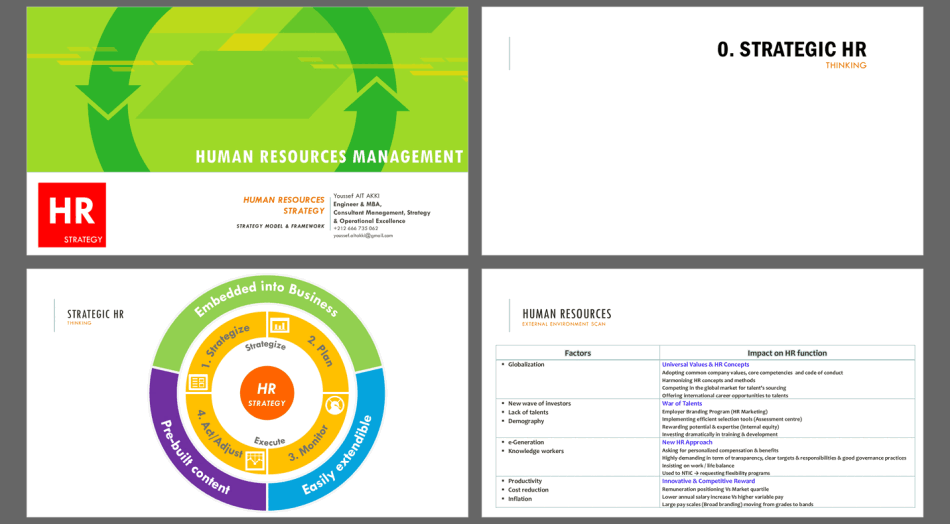
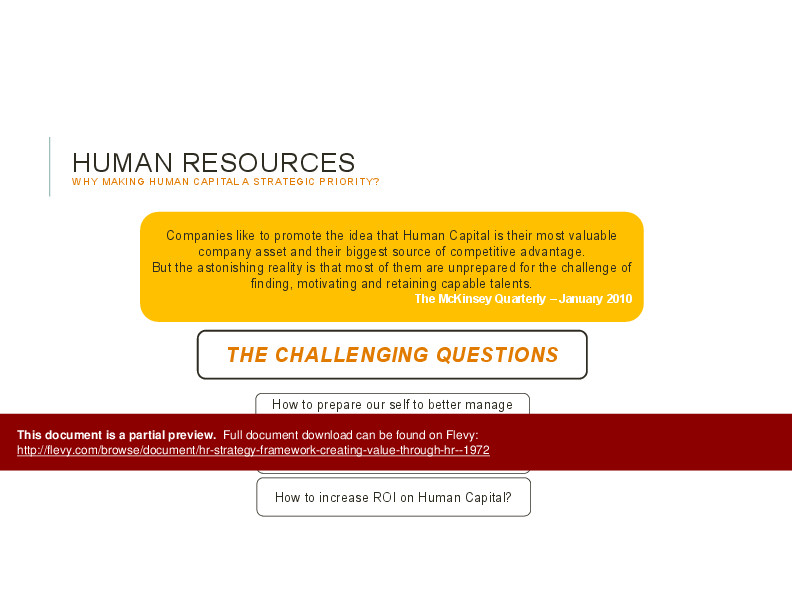

One of the key success factors of high performing organizations is putting their people first. Today HR executives are challenged to develop efficient and effective powerful solutions to the people side of business. However it remains difficult to determine the exact contribution of the HR function to achieve these strategic objectives.
Based on the HR Strategy Framework, our document is uniquely positioned to assist your organization to strengthen its strategic role and contribution of your HR function to ensure the execution of business strategy. Our approach helps organizations to define and execute an effective HR strategy as well as develop and deliver services and capabilities that today's organizations need to survive and grow in a competitive environment.
An ad-hoc (effectiveness + efficiency) HR strategy provides a roadmap to create value through the organization?s workforce. It also includes guidelines for the organization to follow when competing for new talent or retaining existing talent. The guidelines highlited in this document can cover a broad range of issues, such as which skills and competencies are most critical for achieving future goals and objectives, how to source talent (grow or buy), and how to create and maintain a high performance culture.
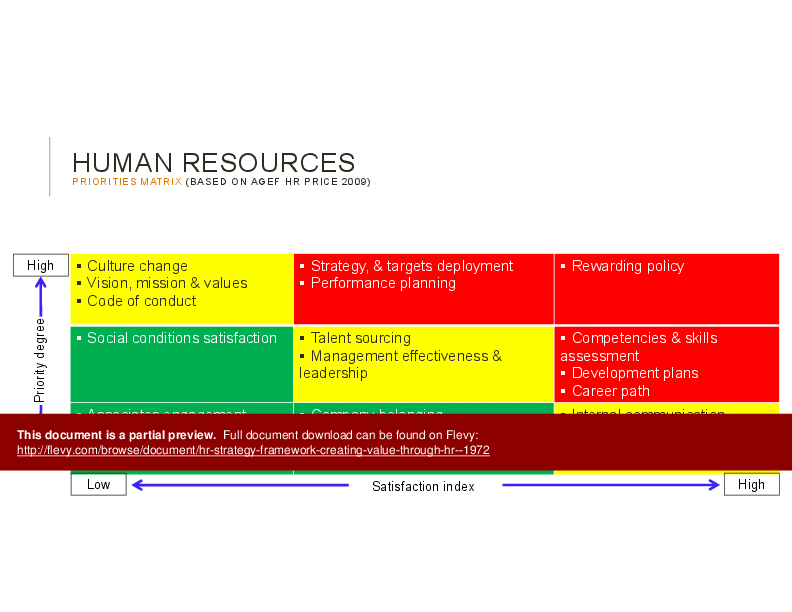
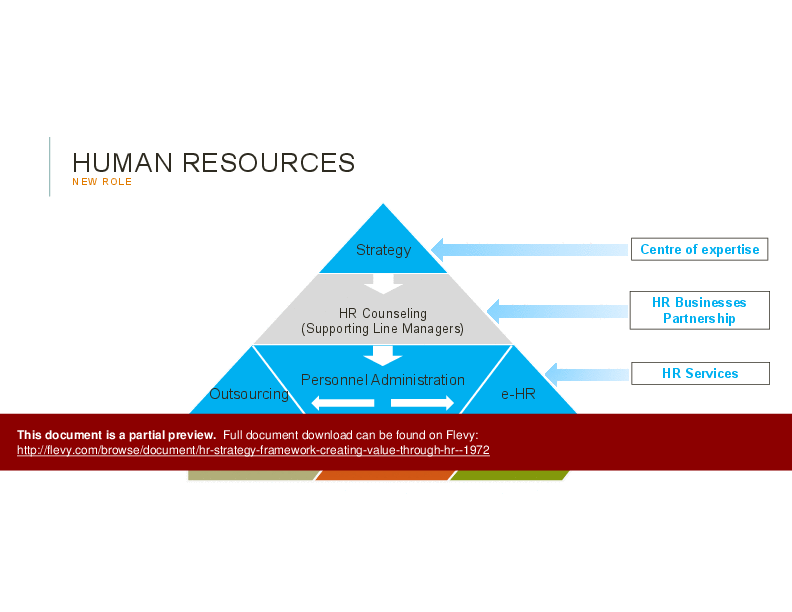
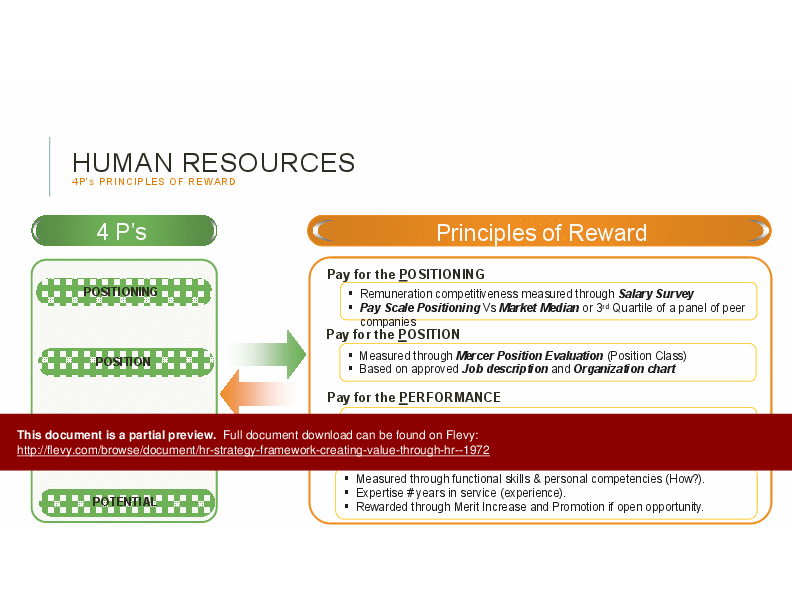
This PPT provides a comprehensive HR strategy framework that integrates seamlessly into business operations. It emphasizes the strategic importance of human capital and offers actionable insights into talent acquisition, performance management, and reward systems. The framework includes a detailed priorities matrix, new role definitions, and a robust integrated approach to HR functions. It also covers the 4 P's of reward principles, positioning, performance, and potential, ensuring a holistic view of HR strategy. This resource is essential for executives aiming to align HR practices with business goals and drive organizational success.
Got a question about the product? Email us at support@flevy.com or ask the author directly by using the "Ask the Author a Question" form. If you cannot view the preview above this document description, go here to view the large preview instead.
Executive Summary
The Human Resources Strategy Framework: Business Value Creation presentation provides a structured approach to aligning human capital with organizational goals. This framework emphasizes strategic HR thinking, focusing on the integration of HR practices into business operations. It equips HR leaders and executives with tools to enhance talent management, performance management, and organizational effectiveness, ultimately driving value creation within their organizations.
Who This Is For and When to Use
• HR Executives and Leaders responsible for strategic planning and talent management
• Organizational Development Specialists focusing on performance improvement
• Change Management Consultants guiding organizations through transitions
• Business Leaders seeking to align HR strategies with overall business objectives
Best-fit moments to use this deck:
• During strategic planning sessions to align HR initiatives with business goals
• When developing or revising talent management strategies
• In workshops aimed at enhancing leadership capabilities and performance management systems
• For training sessions on effective HR practices and frameworks
Learning Objectives
• Define strategic HR thinking and its importance in business value creation
• Build a comprehensive HR strategy model that aligns with organizational goals
• Establish an integrated approach to human resources management
• Identify effective methods for attracting and sourcing talent
• Develop performance management systems that drive employee engagement and accountability
• Apply the 4 P’s principles of reward to enhance employee motivation and retention
Table of Contents
• Strategic HR Thinking (page 3)
• Human Resources Strategy Model (page 6)
• Human Resources New Organizational Model (page 12)
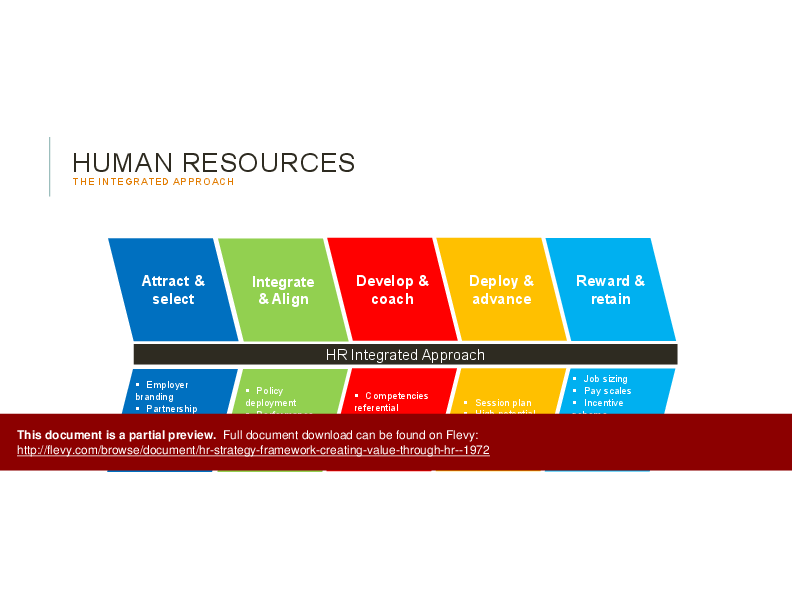
• Human Resources The Integrated Approach (page 15)
• Human Resources 4 P’s Principles of Reward (page 20)
• Attracting & Sourcing Talents (page 90)
• The 4 Styles of Leadership (page 98)
Primary Topics Covered
• Strategic HR Thinking - A framework that integrates HR practices into business strategy, focusing on planning, execution, and monitoring.
• Human Resources Strategy Model - A structured approach to developing HR strategies that align with business objectives and enhance organizational performance.
• Integrated HR Approach - A holistic view of HR that emphasizes collaboration across functions to drive business success.
• 4 P’s Principles of Reward - A framework for designing competitive compensation structures based on positioning, performance, and potential.
• Talent Acquisition Strategies - Effective methods for attracting and retaining top talent in a competitive market.
• Leadership Styles - An overview of different leadership approaches and their impact on employee motivation and performance.
Deliverables, Templates, and Tools
• HR strategy model template for aligning HR initiatives with business objectives
• Performance management framework for tracking employee performance and development
• Talent acquisition toolkit for effective recruitment and onboarding processes
• Compensation structure model based on the 4 P’s principles of reward
• Leadership assessment tools to evaluate and develop leadership capabilities
Slide Highlights
• Overview of strategic HR thinking and its integration into business processes
• Visual representation of the HR strategy model and its components
• Framework for the 4 P’s principles of reward, detailing positioning, performance, and potential
• Insights into effective talent acquisition strategies and their impact on organizational success
• Summary of leadership styles and their relevance to employee engagement
Potential Workshop Agenda
Strategic HR Alignment Session (90 minutes)
• Discuss the importance of aligning HR strategies with business goals
• Identify key HR initiatives that support organizational objectives
• Develop action plans for implementing HR strategies
Talent Management Workshop (60 minutes)
• Explore best practices for attracting and retaining top talent
• Discuss performance management systems and their role in employee engagement
• Share insights on effective leadership styles and their impact on team performance
Customization Guidance
• Tailor the HR strategy model to reflect your organization’s specific goals and objectives
• Adjust the compensation structure template to align with market benchmarks and internal equity
• Modify talent acquisition strategies to fit your organization’s unique culture and values
Secondary Topics Covered
• Change management strategies for effective HR implementation
• Metrics for evaluating HR performance and impact on business outcomes
• Best practices for fostering a culture of continuous improvement in HR processes
Topic FAQ
Document FAQ
These are questions addressed within this presentation.
What is strategic HR thinking?
Strategic HR thinking involves integrating HR practices into the overall business strategy to enhance organizational performance and drive value creation.
How can this framework improve talent management?
The framework provides structured approaches to attracting, developing, and retaining talent, ensuring alignment with business goals and enhancing employee engagement.
What are the 4 P’s principles of reward?
The 4 P’s principles of reward focus on positioning, performance, potential, and pay structures to create competitive compensation packages that motivate employees.
How can I customize the HR strategy model?
You can tailor the model to reflect your organization’s specific goals, industry standards, and internal practices to ensure relevance and effectiveness.
What tools are included in this framework?
The framework includes templates for HR strategy models, performance management systems, talent acquisition toolkits, and compensation structure models.
How do I implement the integrated HR approach?
Implement the integrated HR approach by fostering collaboration across functions, aligning HR initiatives with business objectives, and ensuring consistent communication.
What is the significance of leadership styles in HR?
Understanding leadership styles helps HR professionals develop effective leadership training programs and enhance employee engagement through tailored management approaches.
How does this framework support organizational growth?
The framework aligns HR practices with business strategies, ensuring that human capital contributes effectively to achieving organizational goals and driving growth.
Glossary
• Strategic HR Thinking - Integrating HR practices into business strategy for enhanced performance.
• HR Strategy Model - A structured approach to developing HR strategies aligned with business objectives.
• Integrated HR Approach - A holistic view of HR emphasizing collaboration across functions.
• 4 P’s Principles of Reward - Framework for designing competitive compensation structures.
• Talent Acquisition - Strategies for attracting and retaining top talent.
• Performance Management - Systems for tracking and enhancing employee performance.
• Leadership Styles - Different approaches to leadership and their impact on employee motivation.
• Compensation Structure - Framework for determining employee pay based on market benchmarks.
• Change Management - Strategies for managing transitions in HR practices.
• Employee Engagement - The level of commitment and involvement an employee has towards their organization.
• Organizational Culture - The shared values, beliefs, and behaviors within an organization.
• Continuous Improvement - Ongoing efforts to improve products, services, or processes.
• Succession Planning - Process for identifying and developing new leaders to replace old leaders.
• Job Grading - A system for evaluating and classifying jobs based on their responsibilities and requirements.
• Performance Appraisal - A systematic evaluation of employee performance.
• Competencies - The skills, knowledge, and abilities required to perform a job effectively.
• Employee Development - Programs aimed at enhancing employee skills and knowledge.
• Organizational Effectiveness - The degree to which an organization achieves its goals.
• HR Scorecards - Tools for measuring HR performance and impact on business outcomes.
• Employer Branding - The process of promoting a company as a desirable place to work.
Source: Best Practices in Human Resources PowerPoint Slides: Human Resources Strategy Framework: Business Value Creation PowerPoint (PPTX) Presentation Slide Deck, Youssef AIT AKKI - The Horizon Strategy.
|
Download our FREE Organization, Change, & Culture, Templates
Download our free compilation of 50+ slides and templates on Organizational Design, Change Management, and Corporate Culture. Methodologies include ADKAR, Burke-Litwin Change Model, McKinsey 7-S, Competing Values Framework, etc. |










