IT Access Management Process is a part of ITSM Service Operation.
This Document contains detailed description of the IT Access Management Process, including:
• Key definitions
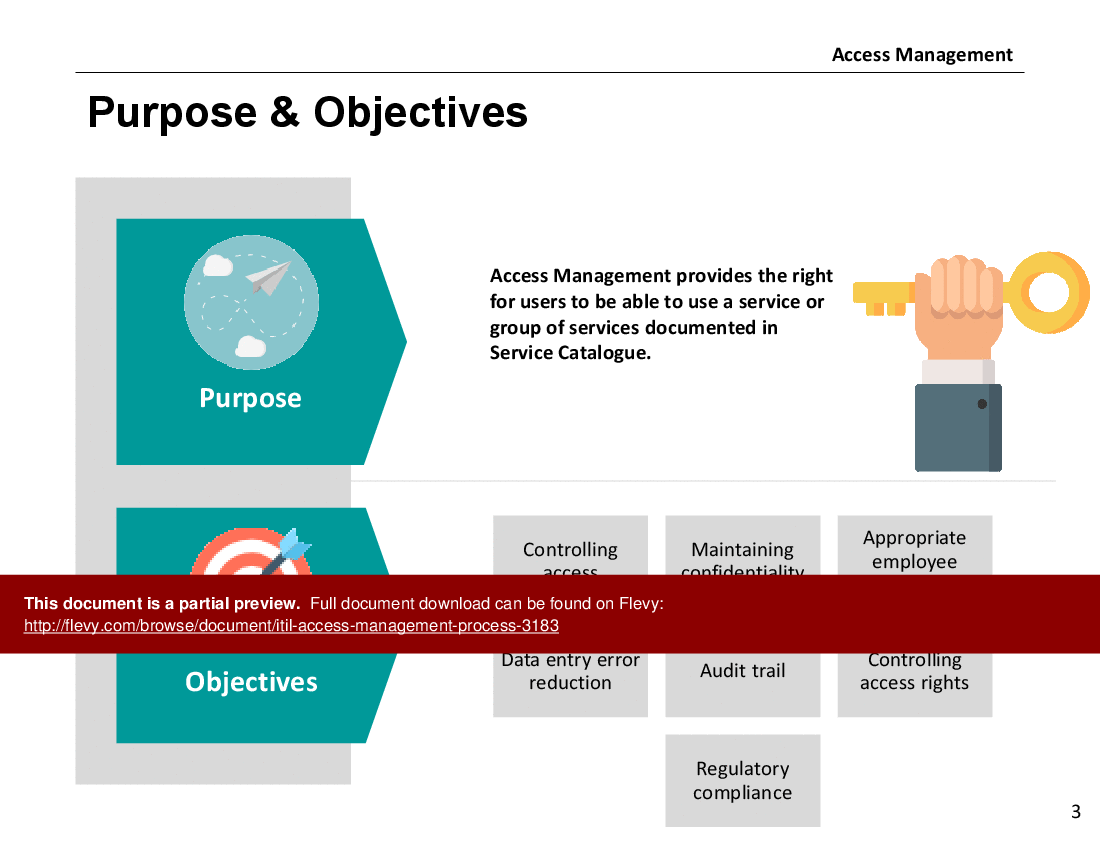
• Purpose and Objectives
• Scope
• Roles
• Value to business
• Basic Concepts
• Process Workflow – step by step
• Triggers
• Process Inputs / Outputs/ Interfaces
• Information Management
• Challenges
• Risks
• Critical success factors (CSF)
• Key Performance Indicators (KPIs)
IT Access Management Process is a part of ITSM Service Operation.
This document contains detailed description of the IT Access Management Process.
This comprehensive PPT delves into the intricacies of Access Management within IT Service Management (ITSM). It outlines the purpose and objectives, emphasizing the importance of controlling access, maintaining confidentiality, and ensuring regulatory compliance. The document provides a clear framework for managing access rights, reducing data entry errors, and maintaining an audit trail, which are critical for any organization aiming to uphold stringent security standards.
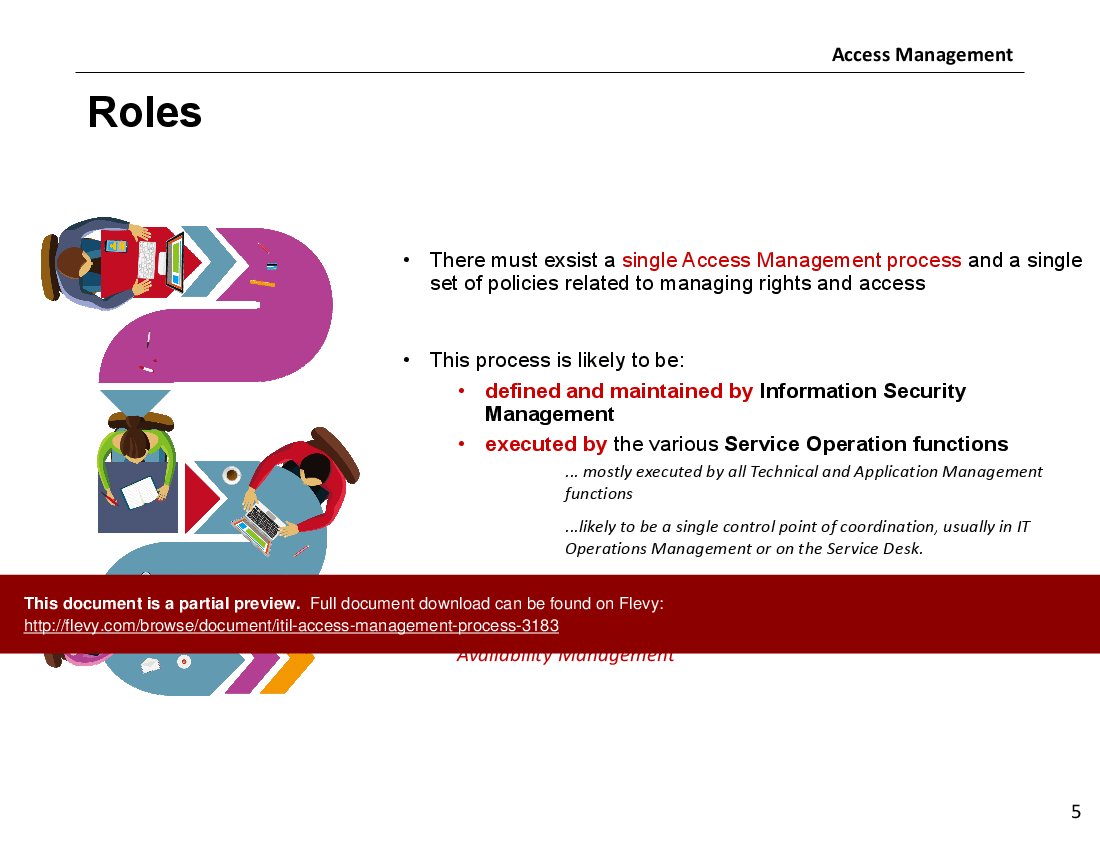
Roles and responsibilities are clearly defined, with a single Access Management process maintained by Information Security Management and executed by various Service Operation functions. The document highlights the necessity of a coordinated approach, often centralized within IT Operations Management or the Service Desk, ensuring consistency and accountability in managing access rights.
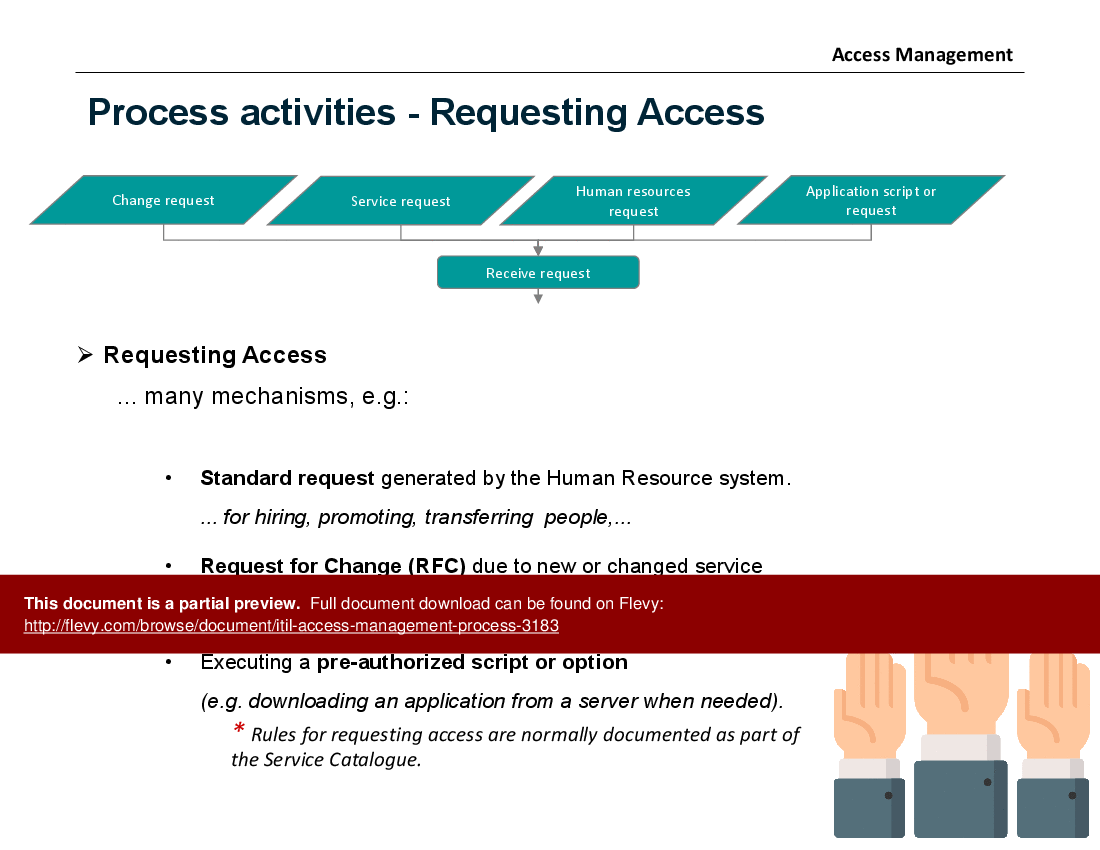
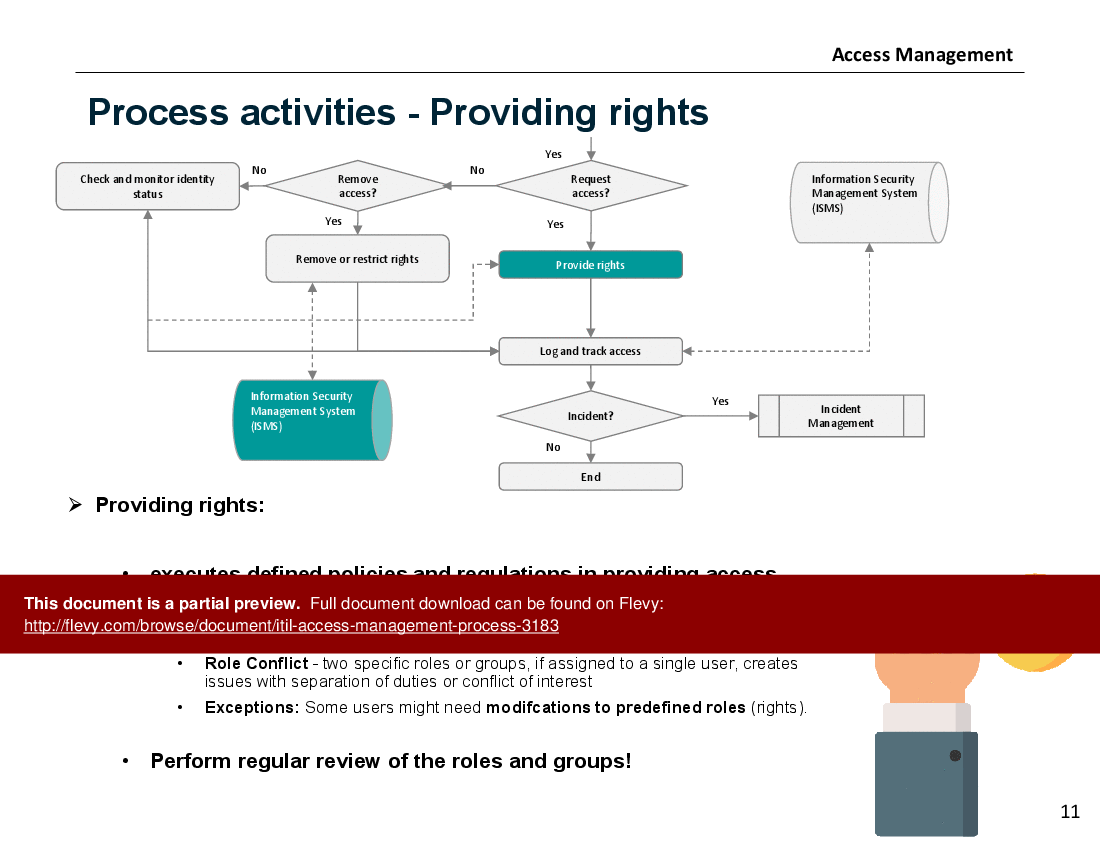
The document also covers essential process activities, including requesting and providing access, and monitoring identity status. It details the mechanisms for requesting access, such as standard requests, RFCs, and pre-authorized scripts, and outlines the procedures for providing rights, including handling role conflicts and exceptions. Regular reviews of roles and groups are recommended to maintain the integrity of the access management process.
Got a question about the product? Email us at support@flevy.com or ask the author directly by using the "Ask the Author a Question" form. If you cannot view the preview above this document description, go here to view the large preview instead.
Executive Summary
The Access Management Process (ITIL v3) presentation provides a comprehensive overview of managing access to IT services, ensuring that users receive the appropriate rights to utilize services documented in the Service Catalogue. This deck outlines the purpose, objectives, and workflow of Access Management, detailing roles, responsibilities, and key performance indicators (KPIs). By leveraging this guide, organizations can enhance their access control mechanisms, maintain regulatory compliance, and improve overall service delivery.
Who This Is For and When to Use
• IT Service Managers overseeing access control processes
• Information Security Officers responsible for policy execution
• HR Managers coordinating user access during onboarding and transitions
• IT Operations teams executing access requests and monitoring compliance
Best-fit moments to use this deck:
• During the implementation of a new access control system
• When conducting training sessions for IT and HR teams
• For audits and reviews of existing access management processes
• In workshops aimed at improving compliance and security measures
Learning Objectives
• Define the Access Management process and its significance within ITIL v3
• Identify roles and responsibilities associated with Access Management
• Establish a clear workflow for processing access requests
• Implement key performance indicators (KPIs) to measure access management effectiveness
• Recognize the importance of compliance and auditability in access control
• Develop strategies to mitigate risks associated with unauthorized access
Table of Contents
• Key Definitions (page 2)
• Purpose and Objectives (page 3)
• Scope (page 4)
• Roles (page 5)
• Value to Business (page 6)
• Basic Concepts (page 7)
• Process Workflow (page 8)
• Triggers (page 15)
• Process Inputs/Outputs/Interfaces (page 16)
• Information Management (page 17)
• Challenges (page 18)
• Risks (page 18)
• Critical Success Factors (CSF) (page 18)
• Key Performance Indicators (KPIs) (page 18)
Primary Topics Covered
• Purpose and Objectives - Access Management provides users the right to utilize services documented in the Service Catalogue while ensuring compliance and security.
• Roles - Defined roles within Access Management are maintained by Information Security Management and executed by various Service Operation functions.
• Process Workflow - The workflow includes receiving requests, verifying user identity, providing rights, and logging access activities.
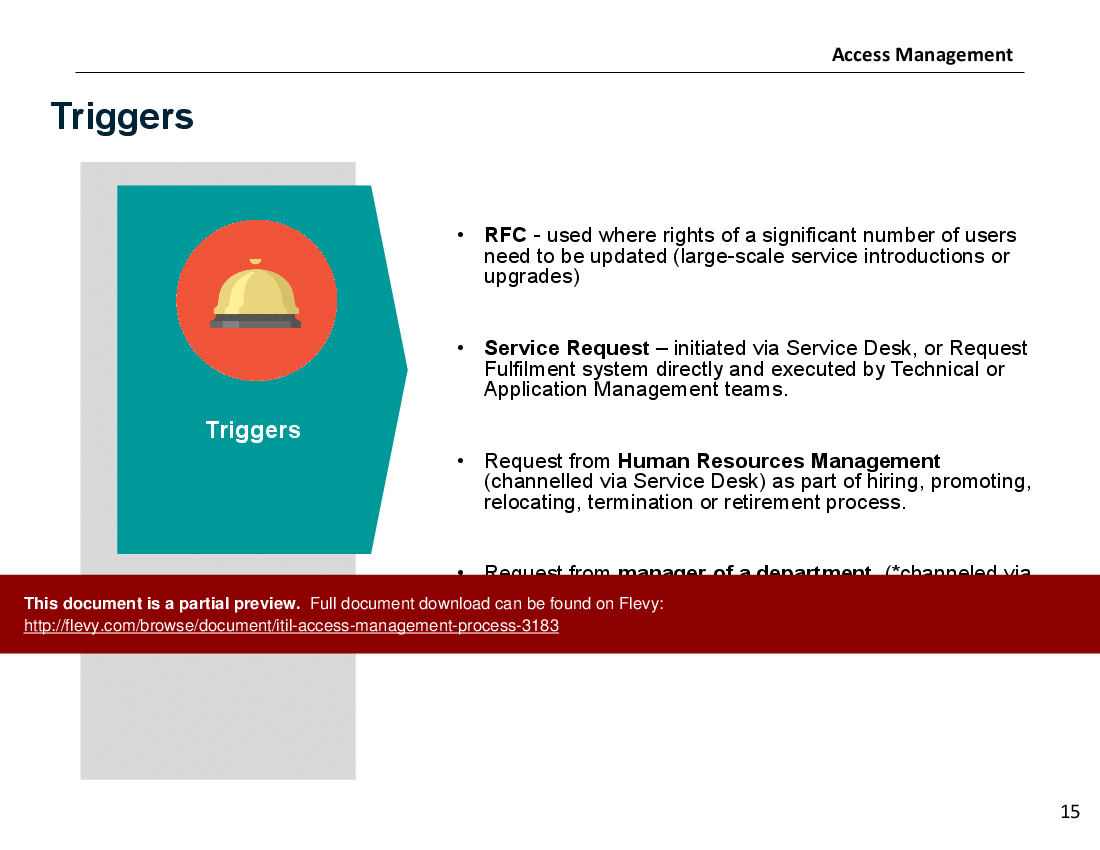
• Triggers - Requests for access can be initiated through various channels, including HR processes and service requests.
• Value to Business - Controlled access enhances confidentiality, reduces errors, and ensures regulatory compliance.
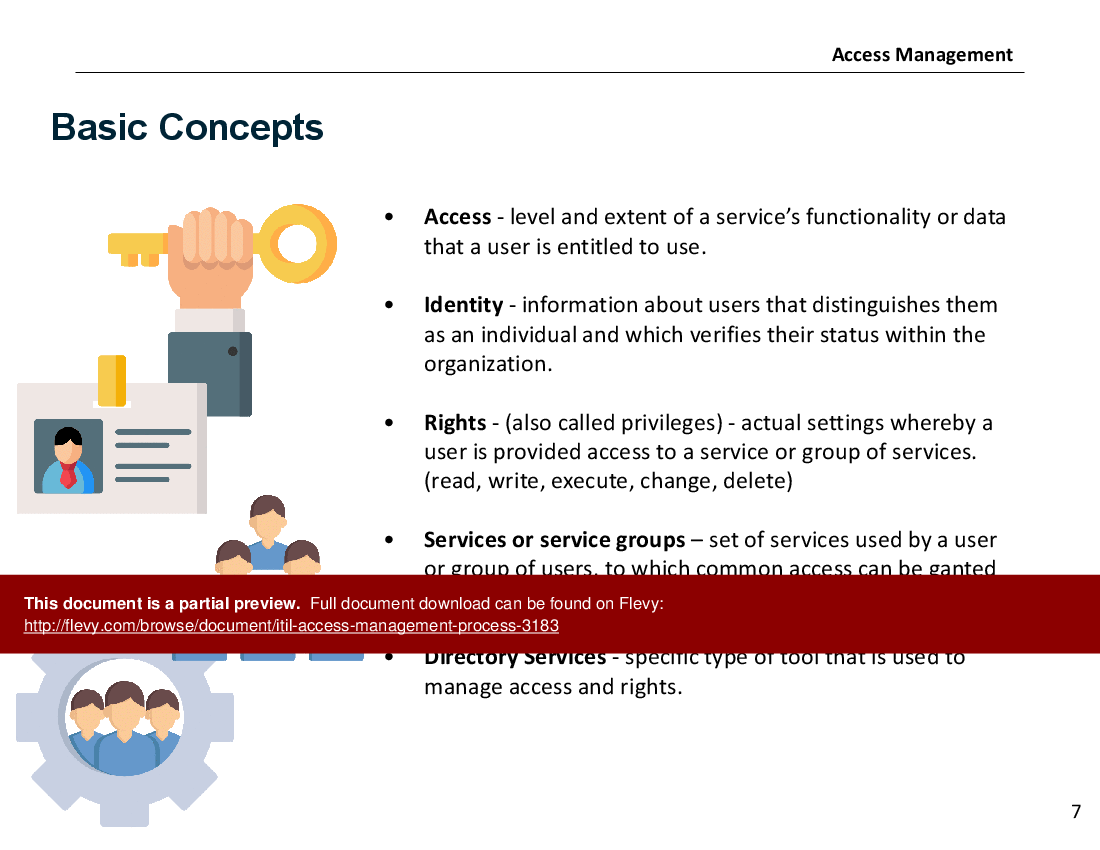
• Basic Concepts - Key terms such as access, identity, and rights are defined to clarify the Access Management framework.
Deliverables, Templates, and Tools
• Access Management workflow diagram template for visualizing the process
• Access request form template for standardizing user requests
• Audit trail log template for tracking access activities
• Role definition template for documenting user roles and privileges
• Compliance checklist for ensuring adherence to regulatory requirements
• KPI dashboard template for monitoring access management performance
Slide Highlights
• Overview of the Access Management process and its significance
• Detailed workflow diagram illustrating the steps in access requests
• Key definitions slide clarifying essential terms in Access Management
• Value proposition slide highlighting the benefits of effective access control
• Challenges and risks associated with Access Management, emphasizing the need for robust processes
Potential Workshop Agenda
Access Management Overview Session (60 minutes)
• Discuss the importance of Access Management in ITIL v3
• Review the roles and responsibilities within the Access Management process
• Explore the workflow for processing access requests
KPI Development Workshop (90 minutes)
• Identify key performance indicators relevant to Access Management
• Develop a monitoring framework for measuring access management effectiveness
• Discuss strategies for continuous improvement in access control processes
Customization Guidance
• Tailor the workflow diagram to reflect your organization’s specific access management processes
• Update role definitions to align with your organizational structure and policies
• Modify the compliance checklist to include industry-specific regulations and standards
• Adjust the KPI dashboard to focus on metrics that matter most to your organization
Secondary Topics Covered
• Integration of Access Management with Human Resources processes
• The role of Information Security Management in access control
• The impact of regulatory compliance on access management practices
• Strategies for managing access during user transitions (e.g., promotions, terminations)
• Best practices for auditing and monitoring access rights
Topic FAQ
Document FAQ
These are questions addressed within this presentation.
What is the purpose of Access Management?
Access Management ensures that users are granted the appropriate rights to access services documented in the Service Catalogue, thereby maintaining security and compliance.
Who is responsible for executing Access Management policies?
The execution of Access Management policies is typically carried out by various Service Operation functions, with oversight from Information Security Management.
What triggers an access request?
Access requests can be triggered by standard HR processes, service requests, or change requests, depending on the nature of the access needed.
How does Access Management ensure compliance?
Access Management maintains compliance by implementing defined policies and procedures, conducting regular audits, and ensuring that access rights are properly logged and tracked.
What are the key performance indicators (KPIs) for Access Management?
KPIs may include metrics such as the number of access requests processed, the time taken to fulfill requests, and the frequency of access violations detected.
How can organizations improve their Access Management processes?
Organizations can enhance their Access Management processes by regularly reviewing workflows, updating role definitions, and investing in training for staff involved in access control.
What challenges are associated with Access Management?
Common challenges include verifying user identities, managing role conflicts, and ensuring that access rights are updated in a timely manner.
How does Access Management relate to Information Security?
Access Management is a critical component of Information Security, as it ensures that only authorized users can access sensitive information and services.
Glossary
• Access - The level and extent of a service’s functionality or data that a user is entitled to use.
• Identity - Information that distinguishes users as individuals and verifies their status within the organization.
• Rights - Settings that provide a user access to a service or group of services.
• Service Catalogue - A document that outlines the services available to users within an organization.
• Role Conflict - A situation where a user is assigned multiple roles that may create issues with separation of duties.
• Audit Trail - A record of access activities used for monitoring and forensic investigations.
• KPI - Key Performance Indicator, a measurable value that demonstrates how effectively an organization is achieving key business objectives.
• RFC - Request for Change, a formal proposal for an alteration to any component of the IT infrastructure.
• ISMS - Information Security Management System, a systematic approach to managing sensitive company information.
• Service Request - A formal request from a user for access to a service.
• Compliance - Adherence to laws, regulations, and policies governing access and data security.
• User Lifecycle - The stages a user goes through in relation to access rights, from onboarding to offboarding.
Source: Best Practices in SLM, ITSM, Access Management PowerPoint Slides: Access Management Process (ITSM, IT Service Management) PowerPoint (PPTX) Presentation Slide Deck, ITSM Consulting
This document is available as part of the following discounted bundle(s):

Save %!
IT Service Operation - 5 Processes
This bundle contains 5 total documents. See all the documents to the right.
|
Download our FREE Strategy & Transformation Framework Templates
Download our free compilation of 50+ Strategy & Transformation slides and templates. Frameworks include McKinsey 7-S Strategy Model, Balanced Scorecard, Disruptive Innovation, BCG Experience Curve, and many more. |









