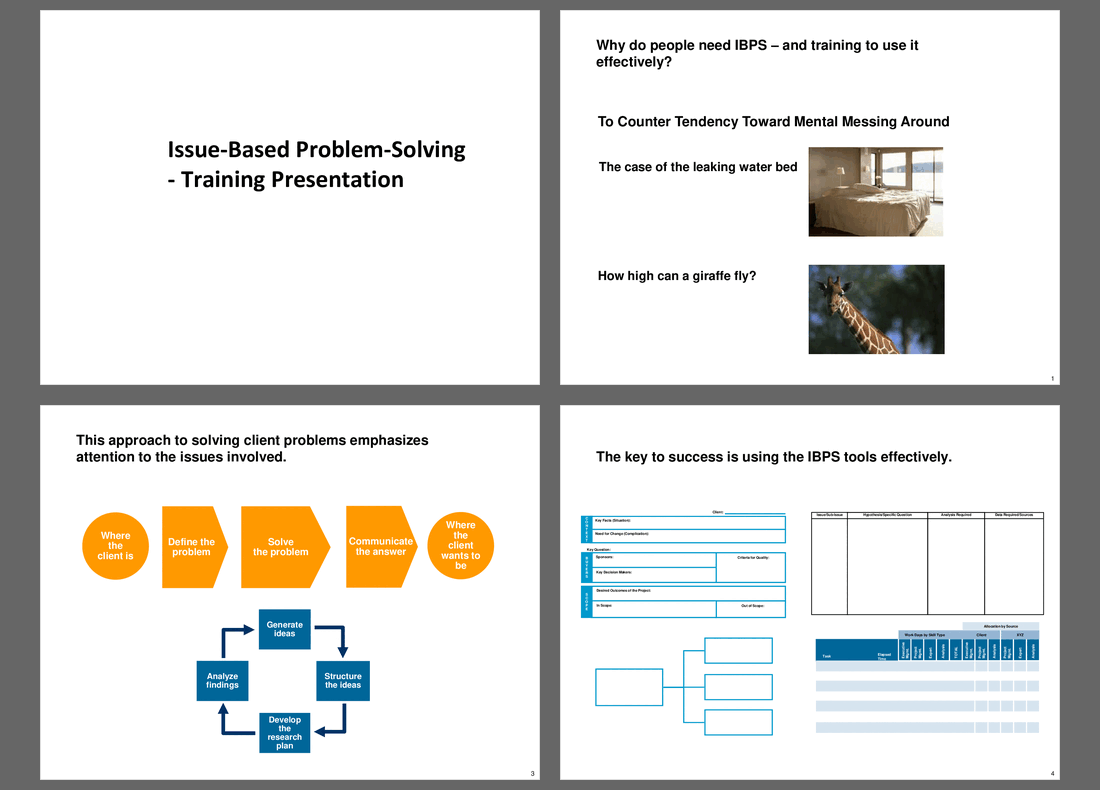
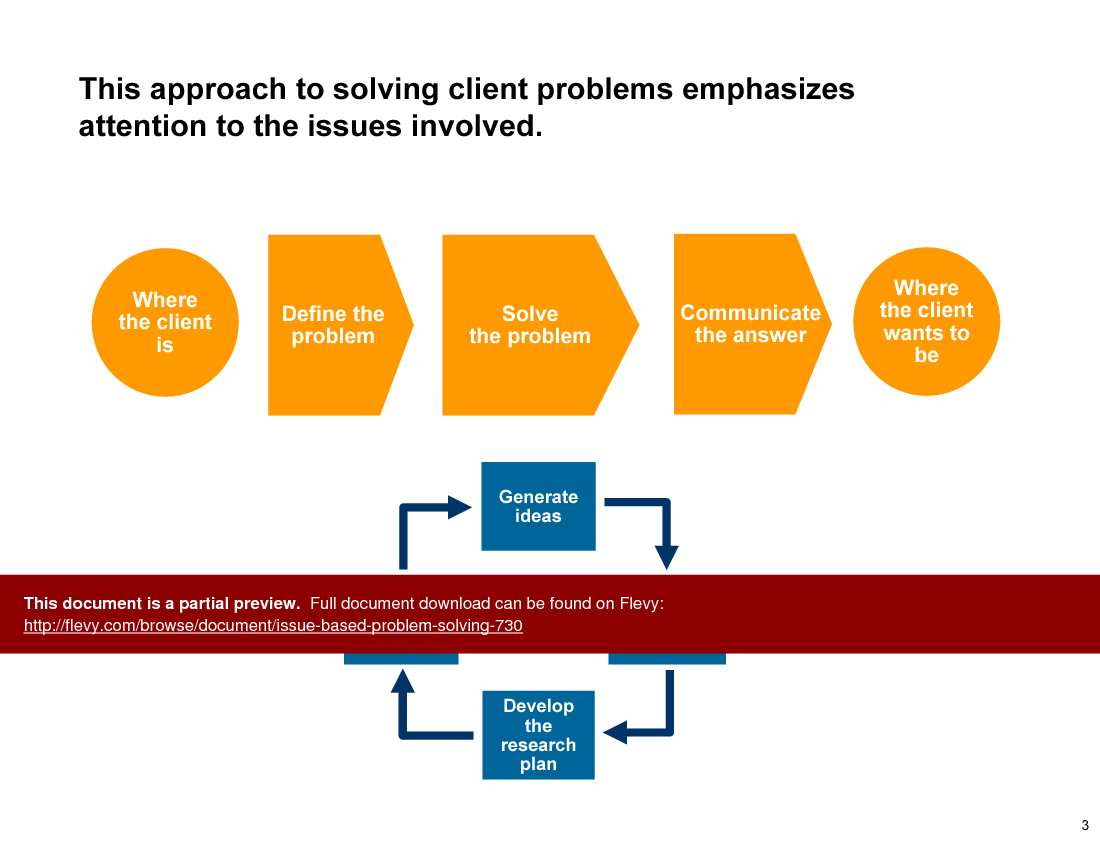
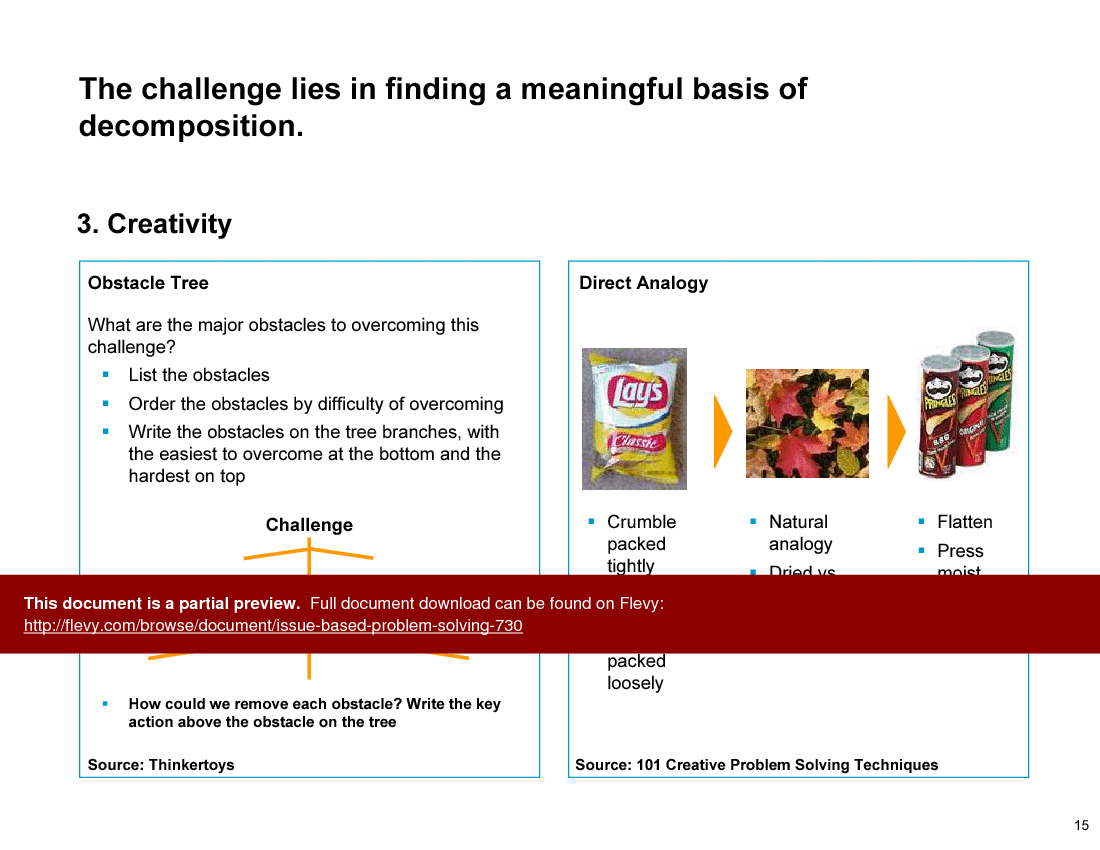

This deck is a training presentation used by a major consulting firm on Issue-based Problem Solving approach. The approach includes:
• Define The Problem
• Solve The Problem
• Generate Ideas
• Structure Ideas
• Develop Research Plan
• Analyze Findings
• Communicate The Answers
It also contains exercises.
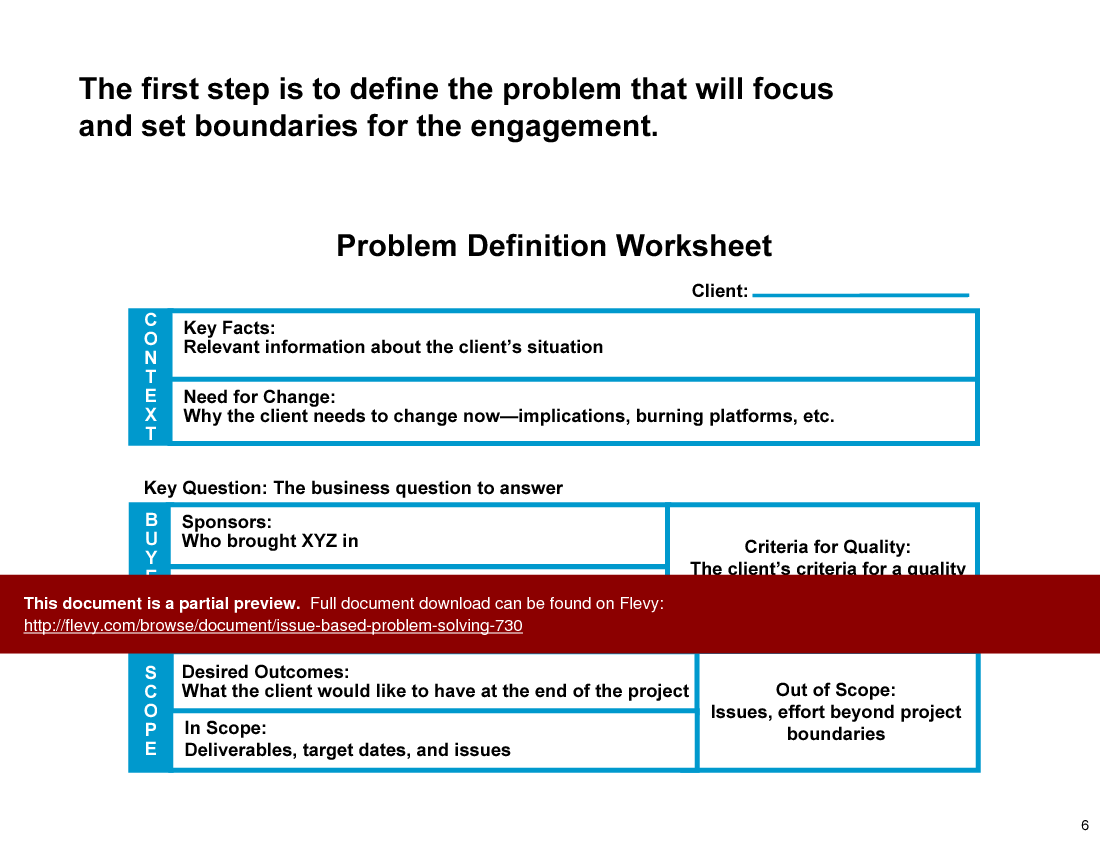
The Issue-Based Problem Solving (IBPS) presentation provides a structured framework to tackle complex client issues. It emphasizes the importance of defining the problem clearly to set the stage for effective solutions. The Problem Definition Worksheet is a key tool in this process, helping teams gather relevant facts, understand the need for change, and outline the scope of the project. This ensures that all stakeholders are aligned from the outset.
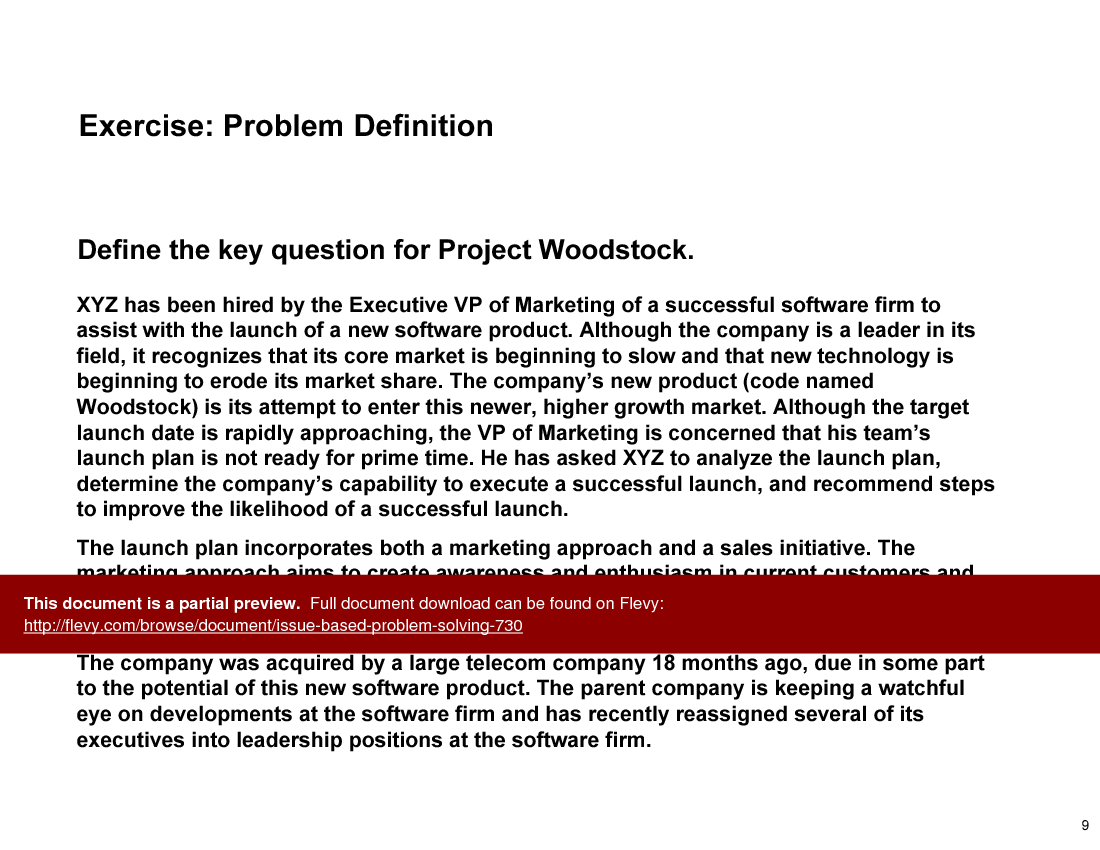
The document includes practical exercises that simulate real-world scenarios. For instance, the Project Woodstock exercise challenges users to define critical questions and assess the readiness of a product launch. This hands-on approach helps teams apply theoretical concepts to tangible business problems, enhancing their problem-solving skills and strategic thinking.
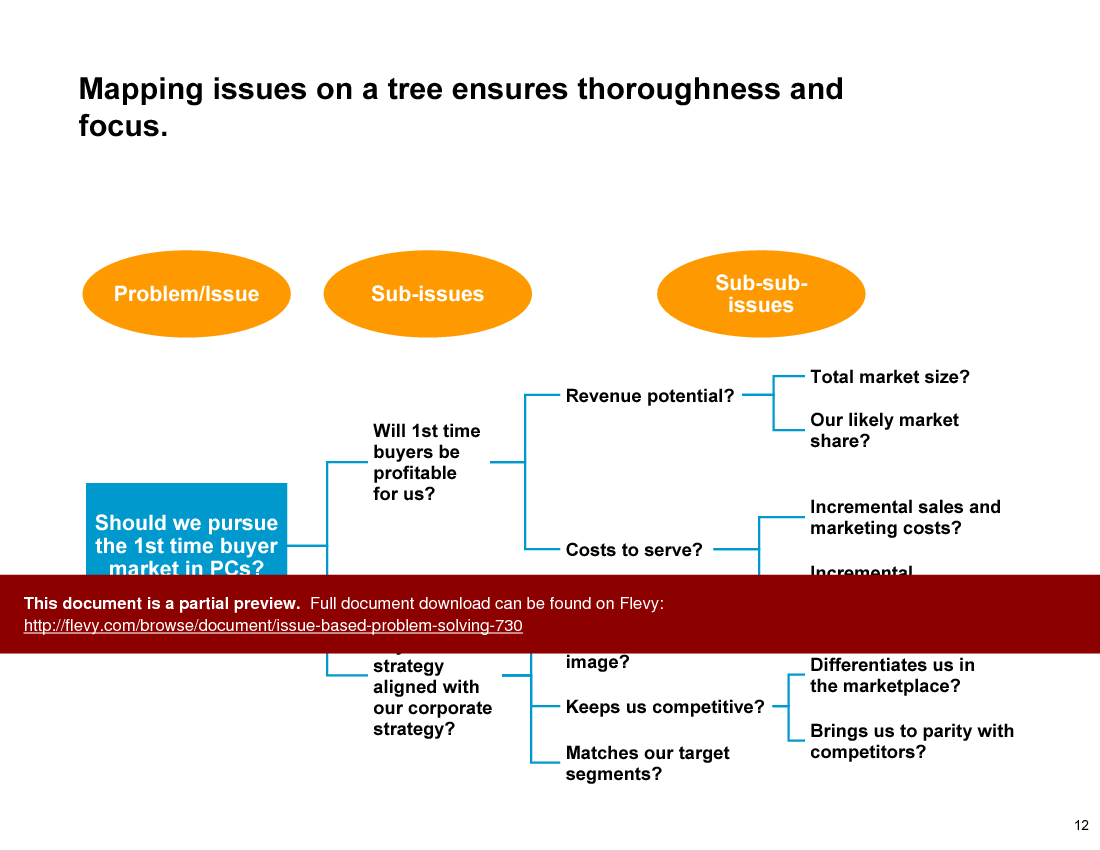
Mapping issues using a tree structure is another highlight of the presentation. This method breaks down the main problem into sub-issues and sub-sub-issues, ensuring thorough analysis and focus. By visualizing the problem in this way, teams can identify root causes and develop more targeted solutions. This approach is particularly useful for complex issues that require a deep dive into various contributing factors.
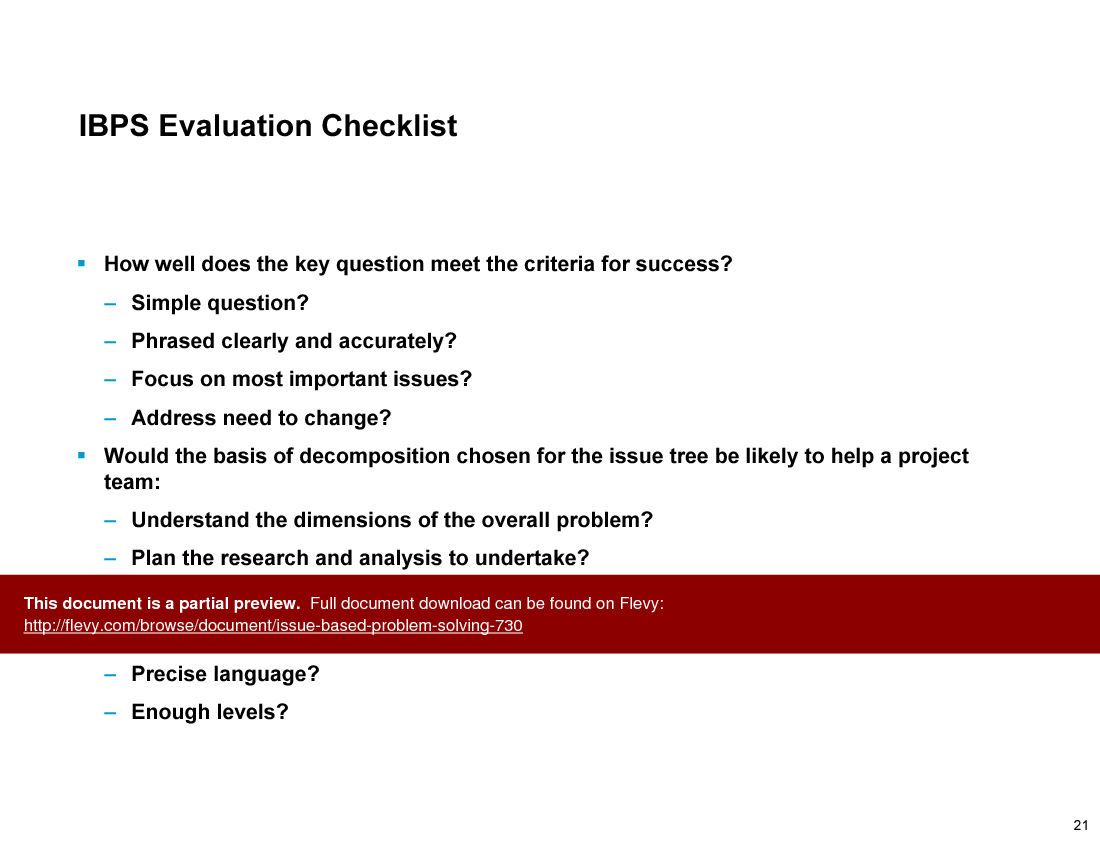
The IBPS Evaluation Checklist is a valuable tool for assessing the effectiveness of the problem-solving process. It prompts teams to consider whether the key question is simple, clear, and focused on the most important issues. It also helps evaluate whether the chosen basis of decomposition will aid in understanding the problem and planning the necessary research and analysis. This ensures that the problem-solving process is both rigorous and efficient.
Got a question about the product? Email us at support@flevy.com or ask the author directly by using the "Ask the Author a Question" form. If you cannot view the preview above this document description, go here to view the large preview instead.
Executive Summary
The Issue-Based Problem Solving (IBPS) presentation provides a structured methodology for tackling complex business challenges. This training deck equips users with essential tools and frameworks to define problems, analyze situations, and generate actionable solutions. By employing the IBPS approach, corporate executives and consultants can enhance their analytical capabilities, streamline decision-making processes, and improve overall project outcomes. This ready-to-use presentation template is designed to facilitate effective problem-solving in various business contexts.
Who This Is For and When to Use
• Corporate executives seeking to enhance problem-solving skills within their teams
• Consultants aiming to implement structured methodologies in client engagements
• Project managers responsible for defining and executing strategic initiatives
• Business analysts focused on thorough investigation and analysis of issues
Best-fit moments to use this deck:
• During strategic planning sessions to define key business challenges
• When launching new products or initiatives that require detailed analysis
• In workshops aimed at improving team collaboration and problem-solving skills
• For training sessions on effective decision-making frameworks
Learning Objectives
• Define the core components of the IBPS methodology
• Build a structured approach to problem identification and analysis
• Establish criteria for formulating strong key questions
• Develop effective issue mapping techniques to decompose complex problems
• Create actionable plans based on thorough analysis and research
• Utilize IBPS tools to enhance team collaboration and communication
Table of Contents
• Introduction to IBPS (page 1)
• Benefits of IBPS (page 3)
• Problem Definition Framework (page 6)
• Criteria for Strong Key Questions (page 8)
• Issue Mapping Techniques (page 11)
• MECE Principle in Problem Solving (page 18)
• Issue Analysis Worksheet (page 22)
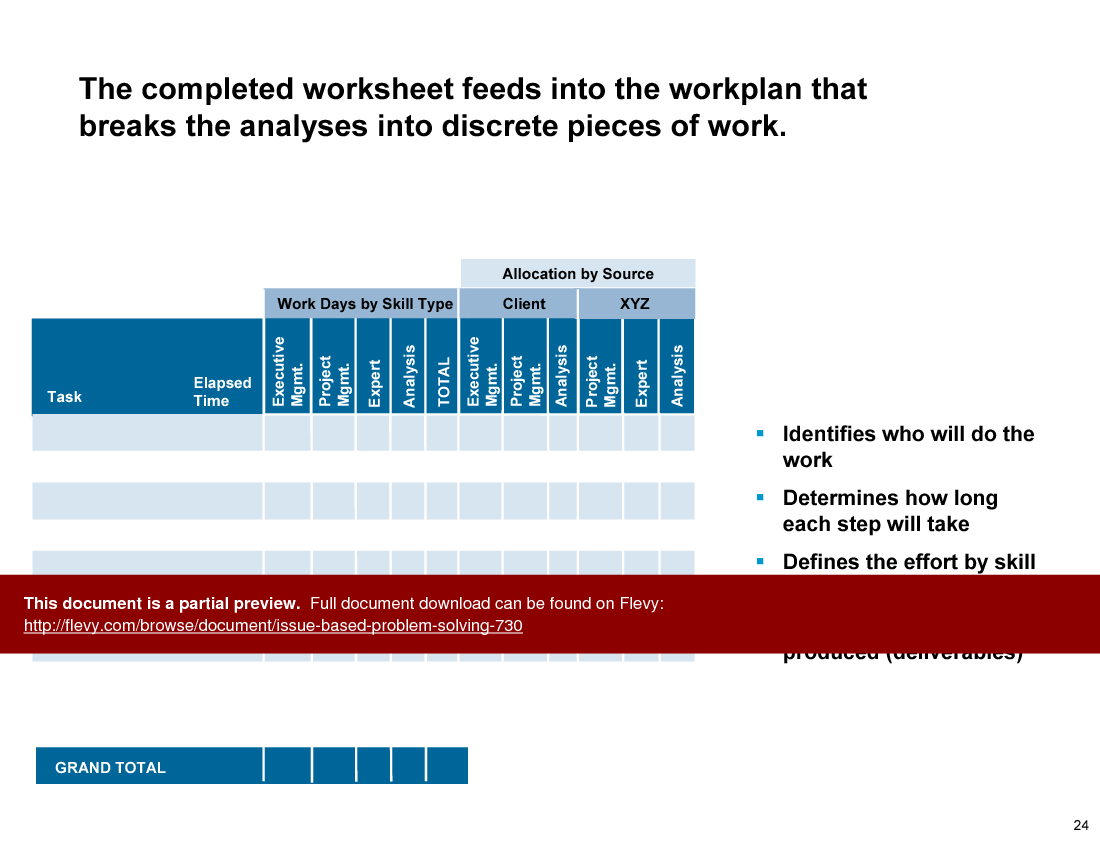
• Planning and Resource Allocation (page 24)
• Additional Resources (page 25)
Primary Topics Covered
• IBPS Methodology - A structured approach to problem-solving that emphasizes thorough investigation and focused analysis.
• Problem Definition - Techniques for accurately defining business challenges to guide project scope and objectives.
• Key Question Formulation - Criteria for developing clear and impactful questions that drive analysis and decision-making.
• Issue Mapping - A method for breaking down complex problems into manageable components to ensure comprehensive understanding.
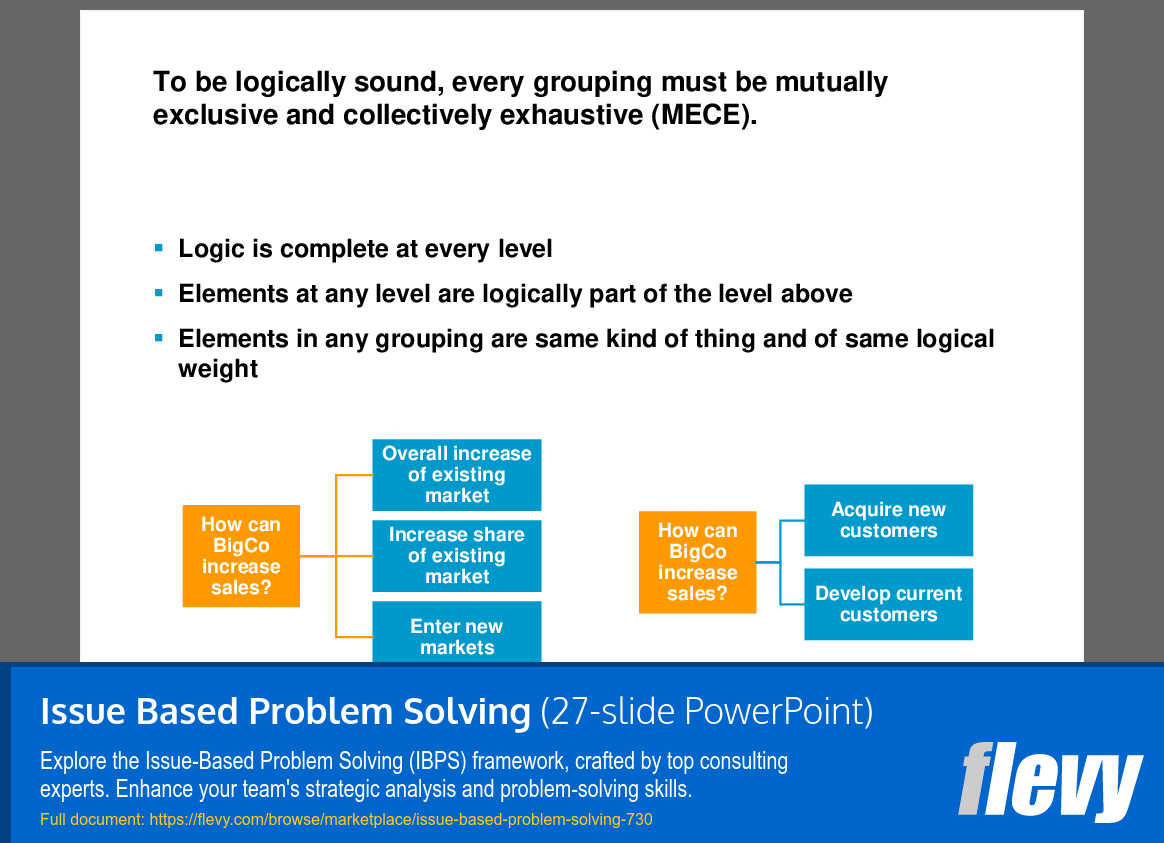
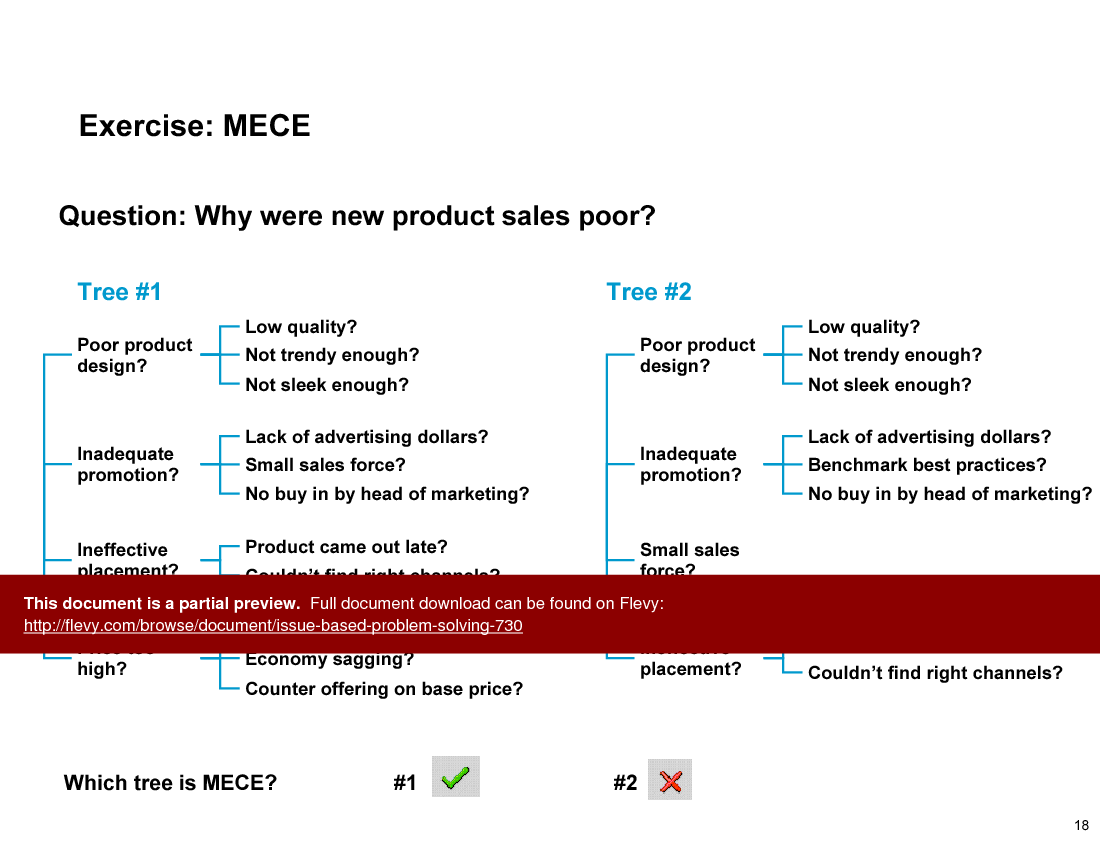
• MECE Principle - Ensuring that issues are mutually exclusive and collectively exhaustive to maintain logical clarity in analysis.
• Resource Allocation - Strategies for effectively assigning tasks and managing time across project teams to enhance productivity.
Deliverables, Templates, and Tools
• Problem Definition Worksheet to clarify project scope and objectives
• Issue Mapping Template for visualizing complex problems and their components
• Key Question Checklist to evaluate the effectiveness of formulated questions
• IBPS Evaluation Checklist for assessing the quality of the problem-solving process
• Issue Analysis Worksheet to document hypotheses and data sources
• Resource Allocation Template to track task assignments and time estimates
Slide Highlights
• Overview of the IBPS methodology and its importance in structured problem-solving
• Visual representation of the Problem Definition Framework for clarity
• Examples of strong key questions and their impact on project outcomes
• Issue Mapping techniques illustrated through practical exercises
• MECE principle explained with examples to enhance understanding
Potential Workshop Agenda
Introduction to IBPS (30 minutes)
• Overview of the methodology and its benefits
• Discussion on real-world applications of IBPS
Problem Definition and Key Questions (60 minutes)
• Group exercise on defining key business challenges
• Review of criteria for strong key questions
Issue Mapping Techniques (90 minutes)
• Interactive session on creating issue maps for complex problems
• Application of the MECE principle in group exercises
Resource Allocation and Planning (30 minutes)
• Strategies for effective task assignment and time management
• Wrap-up and Q&A session
Customization Guidance
• Tailor the Problem Definition Worksheet to reflect specific organizational contexts and challenges
• Adjust the Key Question Checklist to align with industry-specific criteria
• Modify the Issue Mapping Template to include relevant business frameworks or models
• Update resource allocation metrics based on team capabilities and project timelines
Secondary Topics Covered
• Techniques for effective team collaboration in problem-solving
• Importance of stakeholder engagement in the IBPS process
• Strategies for overcoming common pitfalls in problem analysis
• Best practices for presenting findings and recommendations
Topic FAQ
Document FAQ
These are questions addressed within this presentation.
What is the IBPS methodology?
IBPS stands for Issue-Based Problem Solving, a structured approach to identifying and addressing business challenges through thorough analysis and focused questioning.
How can IBPS improve decision-making?
By providing a clear framework for defining problems and generating actionable solutions, IBPS enhances clarity and focus in decision-making processes.
What are the key components of the Problem Definition Framework?
The framework includes identifying key facts, understanding the need for change, defining the key question, and establishing project scope.
What does MECE stand for?
MECE stands for Mutually Exclusive and Collectively Exhaustive, a principle ensuring that issues are clearly defined without overlap and cover all necessary aspects.
How can I apply issue mapping in my organization?
Issue mapping can be applied by breaking down complex problems into smaller, manageable components, allowing teams to focus on specific areas for analysis.
What tools are included in the IBPS presentation?
The presentation includes worksheets for problem definition, issue mapping templates, and checklists for evaluating key questions and resource allocation.
Can this presentation be customized for specific industries?
Yes, the templates and worksheets can be tailored to reflect the unique challenges and contexts of different industries.
How long does the workshop typically last?
The workshop can be structured to last between 2 to 3 hours, depending on the depth of discussion and number of exercises included.
What types of exercises are included in the workshop?
Exercises include group discussions on problem definition, interactive issue mapping, and practical applications of the MECE principle.
Is there a follow-up process after the workshop?
Participants are encouraged to apply the IBPS methodology in their projects, with options for follow-up sessions to discuss outcomes and challenges.
Glossary
• IBPS - Issue-Based Problem Solving, a structured approach to problem-solving.
• MECE - Mutually Exclusive and Collectively Exhaustive, a principle for logical problem decomposition.
• Key Question - A clear and focused question that drives analysis and decision-making.
• Issue Mapping - A technique for breaking down complex problems into manageable components.
• Problem Definition - The process of clarifying the scope and objectives of a project.
• Resource Allocation - The assignment of tasks and management of time across project teams.
• Hypothesis - An educated guess or assumption that needs to be tested through analysis.
• Stakeholder Engagement - Involvement of relevant parties in the problem-solving process.
• Analysis - The process of examining data and information to draw conclusions.
• Deliverables - Tangible outputs produced as part of a project or initiative.
• Collaboration - Working together to achieve common goals.
• Pitfalls - Common mistakes or challenges encountered in problem-solving.
• Framework - A structured approach or model for addressing specific issues.
• Criteria for Quality - Standards used to evaluate the effectiveness of solutions.
• Project Scope - The boundaries and deliverables of a project.
• Situation Analysis - Assessment of the current state of affairs in a business context.
• Change Management - The process of managing transitions within an organization.
• Decision-Making - The process of making choices based on analysis and evaluation.
• Business Challenge - A specific problem or obstacle faced by an organization.
• Analytical Tools - Instruments or methodologies used to analyze data and information.
• Training Presentation - A structured educational session designed to impart knowledge and skills.
Source: Best Practices in Problem Solving PowerPoint Slides: Issue Based Problem Solving PowerPoint (PPT) Presentation Slide Deck, Documents & Files
This document is available as part of the following discounted bundle(s):
Save %!
Essential Consulting Skill Builder
This bundle contains 19 total documents. See all the documents to the right.
|
Receive our FREE whitepaper on the Top 101 Consulting Frameworks
Download our 200+ page guide summarizing the Top 101 Management Consulting Frameworks. Each framework provides a structured approach to analyzing and solving a common business problem. |