
This presentation is created by former McKinsey, BCG, Deloitte, EY, and Capgemini consultants. It teaches a practical consulting framework actively used by tier-1 consulting firms.
Editor Summary
Strategy Framework Canvas is a 44-slide PowerPoint presentation developed by former McKinsey, BCG, Deloitte, EY, and Capgemini consultants that provides a unifying choice tool for selecting and executing strategy.
Read moreIt identifies 5 strategic approaches—Classic, Adaptive, Visionary, Leader, and Renewal—and includes a Strategy Framework Canvas template, analysis and planning templates, leadership role framework, adaptation tracking tools, and case studies. Used by corporate executives, business unit leaders, consultants, change teams, and leadership teams; sold as a digital download on Flevy with immediate digital download.
Use this presentation when an organization must choose or reassess strategic approaches across business units, geographies, or lifecycle stages—such as in strategic planning, post-merger alignment, or leadership workshops.
Corporate strategy directors aligning each business unit to a strategy profile by assessing predictability, malleability, and harshness.
Business unit leaders designing tailored plans for new markets or harsh environments using Visionary or Renewal approaches.
External consultants mapping client strategy portfolios and selecting Classic/Adaptive/Visionary/Leader/Renewal approaches.
Change management leads assigning leadership roles and implementing templates during rollouts.
The five-approach classification and explicit environmental dimensions mirror the analytical, situational choice methods used at McKinsey and BCG.
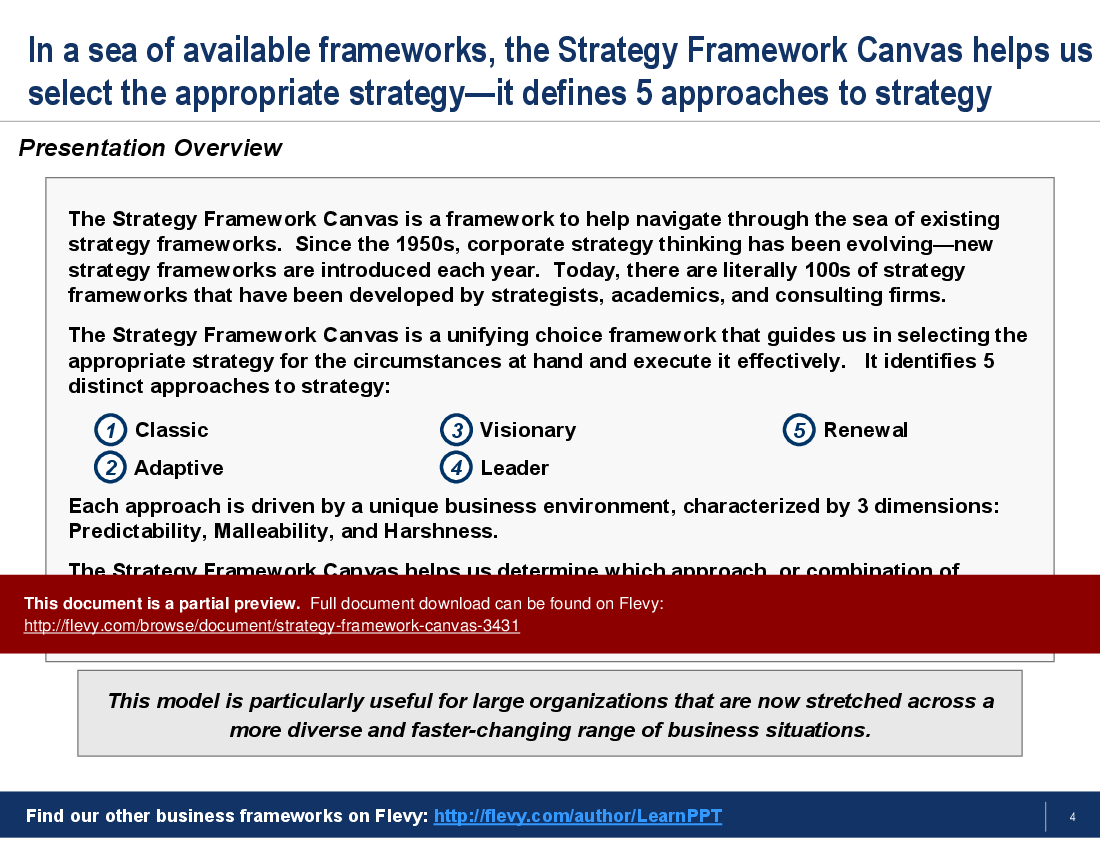
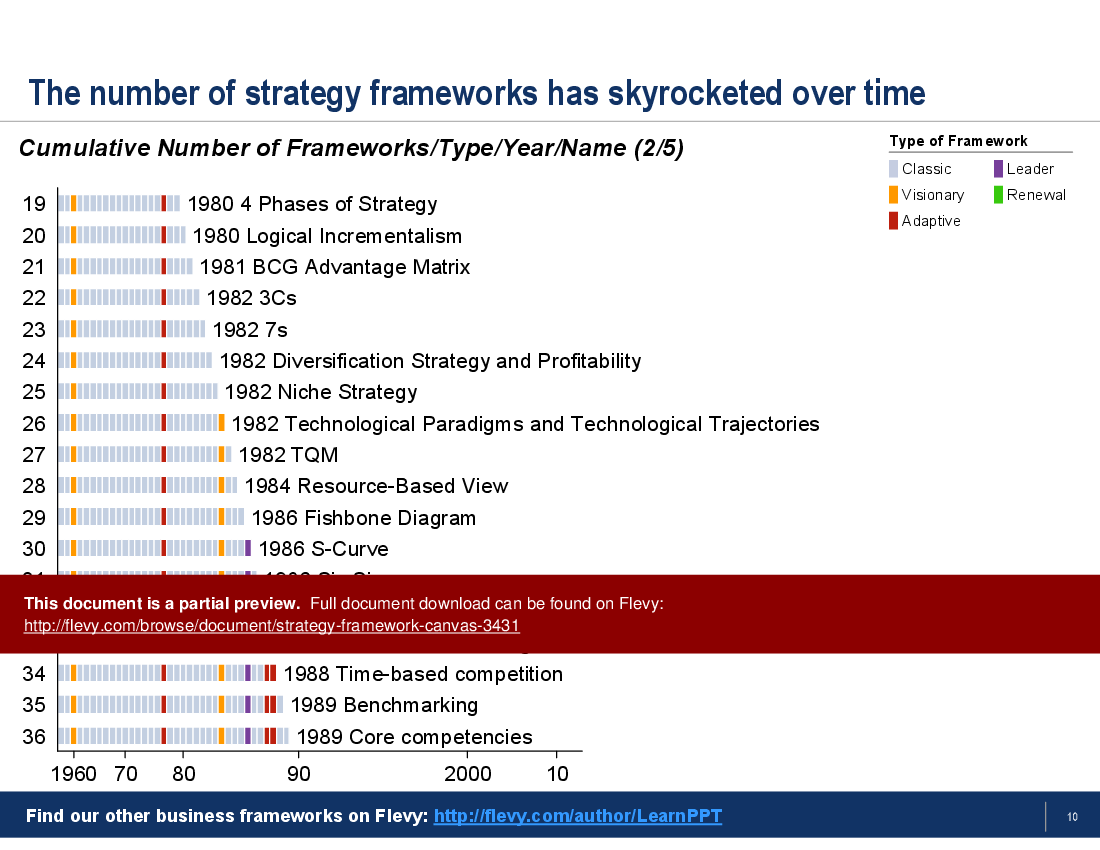
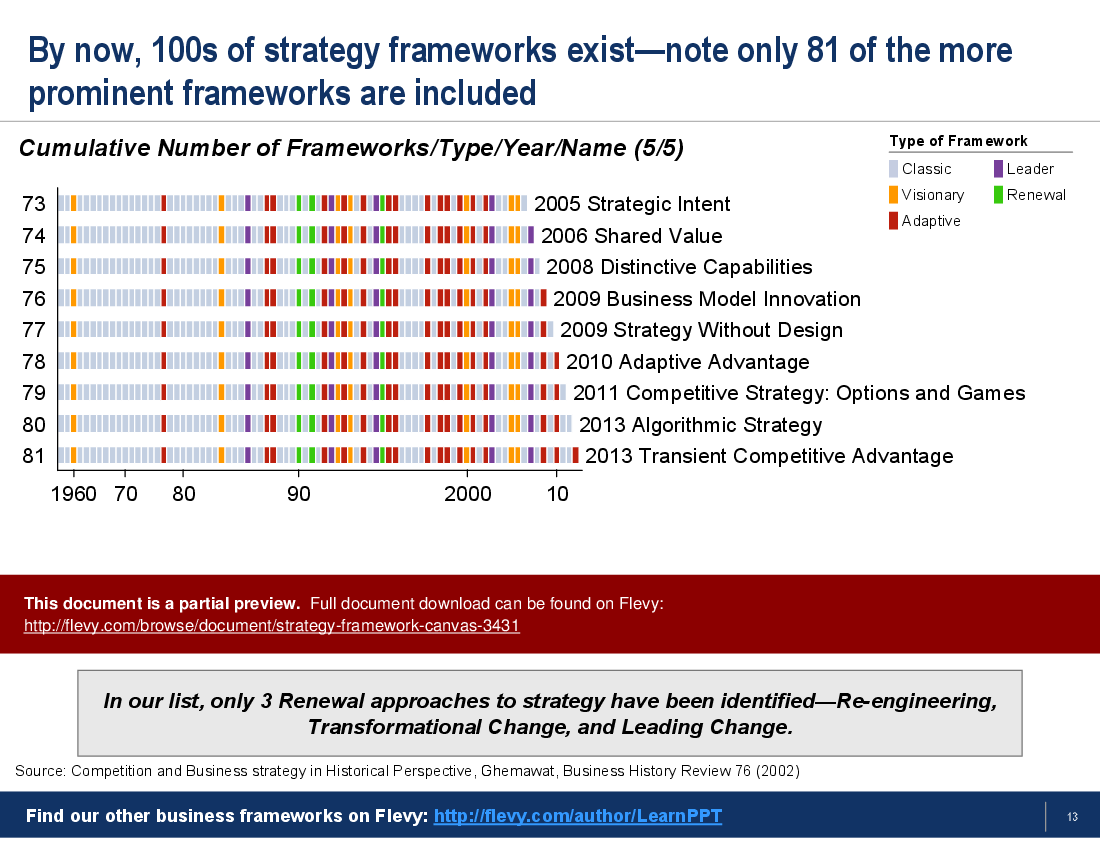
The Strategy Framework Canvas is a tool to help navigate through the sea of existing strategy frameworks. Since the 1950s, corporate strategy thinking has been evolving—new strategy frameworks are introduced each year. Today, there are literally 100s of strategy frameworks that have been developed by strategists, academics, and consulting firms.

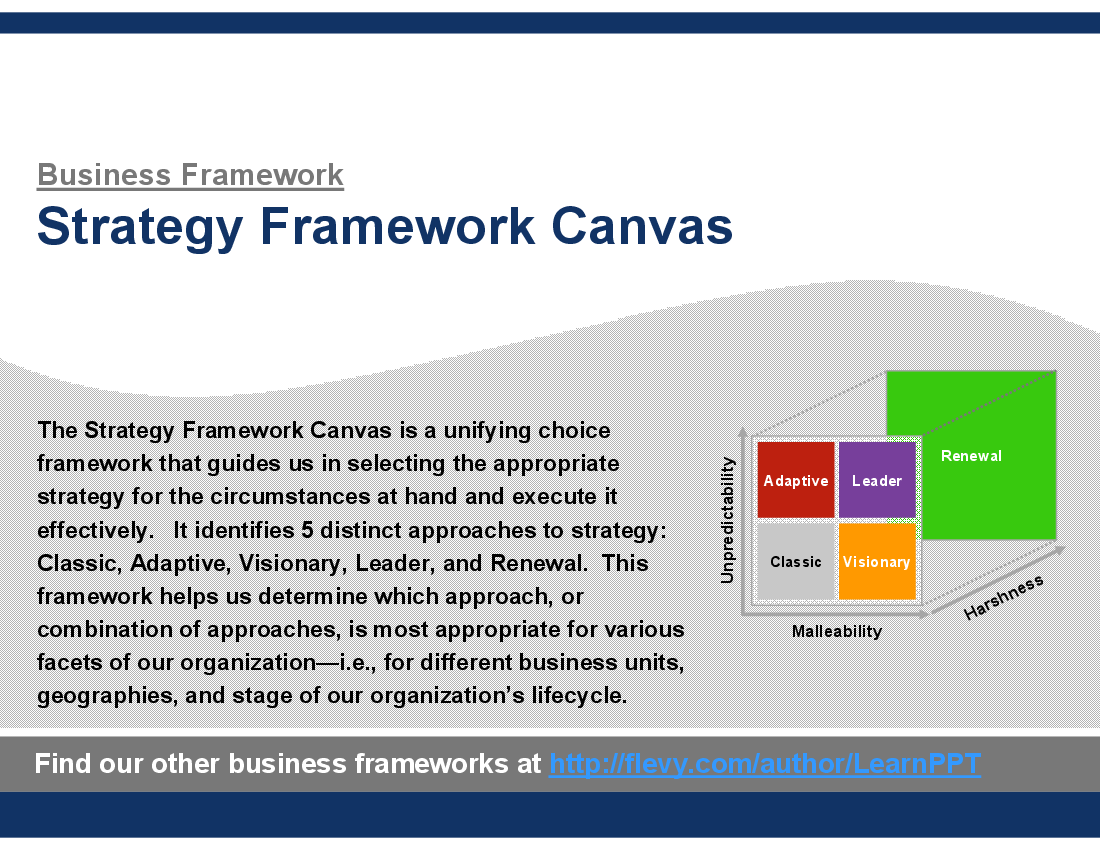
The Strategy Framework Canvas is a unifying choice framework that guides us in selecting the appropriate strategy for the circumstances at hand and execute it effectively. It identifies 5 distinct approaches to strategy:
Each approach is driven by a unique business environment, characterized by 3 dimensions: Predictability, Malleability, and Harshness.
The Strategy Framework Canvas helps us determine which approach, or combination of approaches, is most appropriate for various facets of our organization—i.e., for different business units, geographies, and stage of our organization's lifecycle.
Additional concepts covered include historical chronology of strategy frameworks, pitfalls, case examples, leadership roles, the success trap, ambidexterity, sustainable growth, exploiters vs. explorers, etc.
This deck also slide templates you can use for your own business presentations.
The Strategy Framework Canvas is an indispensable asset for organizations navigating complex strategic landscapes. It provides a structured methodology to align strategy with specific business contexts, ensuring optimal execution. The framework's versatility allows it to be applied across various organizational levels, from individual business units to entire enterprises. It also highlights the evolution of strategy frameworks over decades, offering a comprehensive historical perspective. The inclusion of case examples and industry-specific applications enhances its practical relevance. This tool is particularly valuable for large, diversified organizations facing dynamic market conditions.
Got a question about the product? Email us at support@flevy.com or ask the author directly by using the "Ask the Author a Question" form. If you cannot view the preview above this document description, go here to view the large preview instead.
MARCUS OVERVIEW
This synopsis was written by Marcus [?] based on the analysis of the full 44-slide presentation.
Executive Summary
The Strategy Framework Canvas (PPT) is a consulting-grade presentation designed by former consultants from top-tier firms such as McKinsey, BCG, and Deloitte. This framework serves as a unifying choice tool that guides organizations in selecting and executing the most suitable strategy for varying circumstances. It identifies 5 distinct strategic approaches—Classic, Adaptive, Visionary, Leader, and Renewal—tailored to different business units, geographies, and lifecycle stages. By employing this framework, corporate executives and consultants can effectively navigate complex strategic environments and enhance organizational performance.
Who This Is For and When to Use
• Corporate executives responsible for strategic planning and execution
• Business unit leaders seeking tailored strategies for specific market conditions
• Consultants advising organizations on strategic alignment and execution
• Change management teams implementing new strategic initiatives
• Leadership teams aiming to foster adaptive and innovative cultures
Best-fit moments to use this deck:
• During strategic planning sessions to align on the appropriate approach
• When assessing the effectiveness of current strategies across business units
• In workshops focused on leadership development and strategic agility
• For organizational assessments to identify areas for strategic improvement
Learning Objectives
• Define the 5 strategic approaches and their applicability to various business environments
• Analyze the dimensions of predictability, malleability, and harshness in strategy selection
• Build a tailored strategy portfolio that aligns with organizational goals and market conditions
• Establish a framework for continuous adaptation and innovation in strategy execution
• Identify leadership roles necessary for effective strategy management and execution
• Create templates for implementing the Strategy Framework Canvas across the organization
Primary Topics Covered
• Strategy Framework Canvas - A comprehensive tool for selecting and executing appropriate strategies based on specific organizational contexts.
• Classic Approach - A strategy for predictable environments focusing on sustainable competitive advantage through positioning.
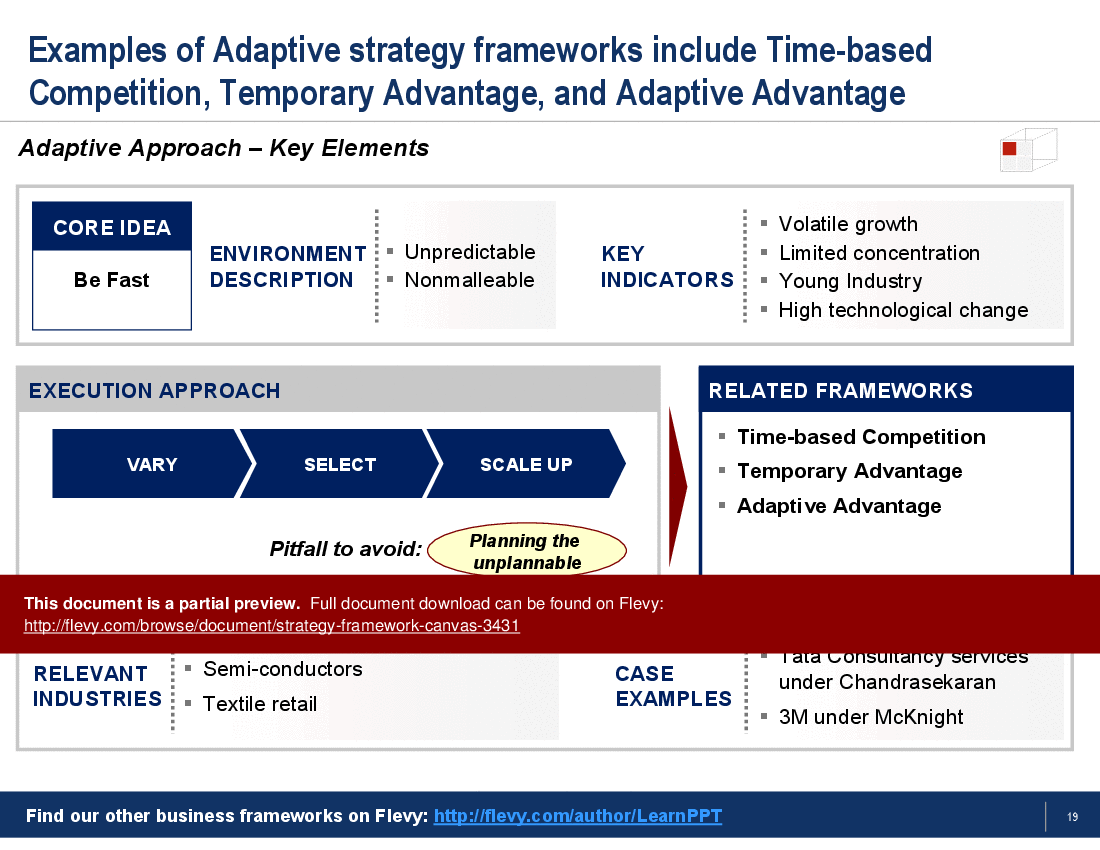
• Adaptive Approach - A strategy for unpredictable environments emphasizing continuous experimentation and real-time adjustments.
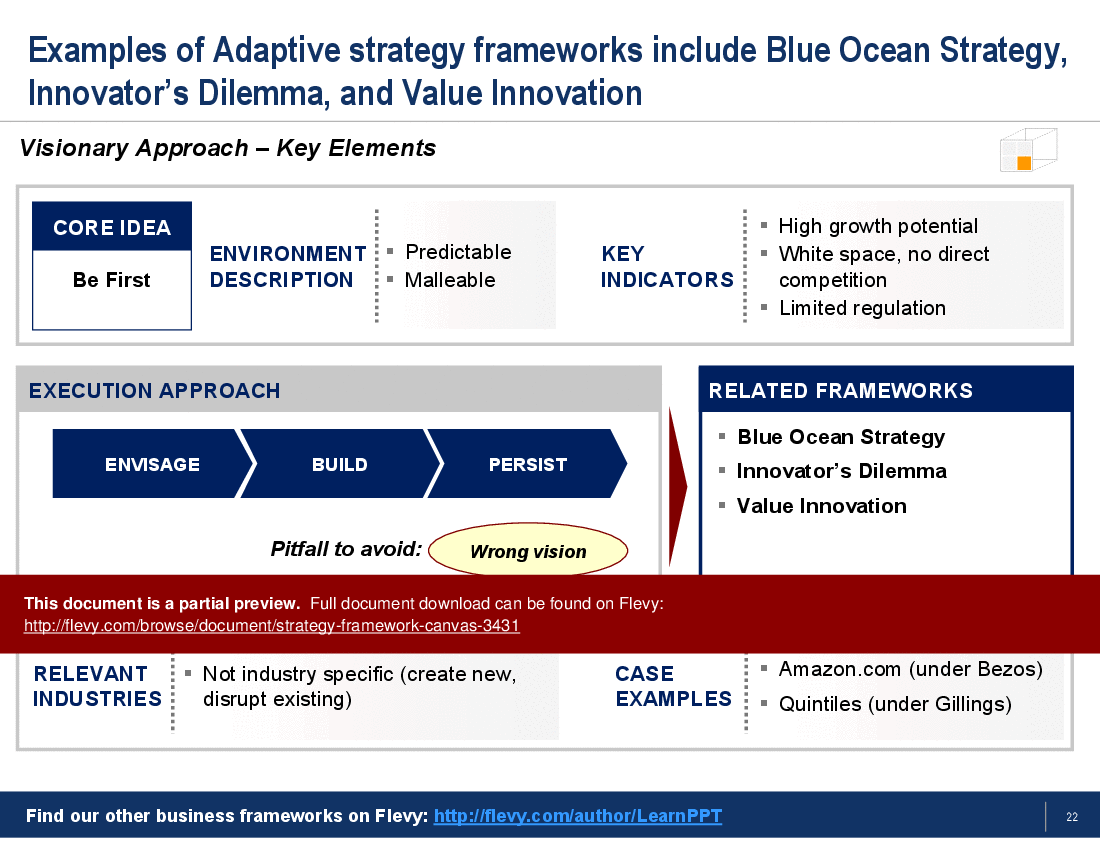
• Visionary Approach - A proactive strategy for creating new markets or reshaping existing ones through innovation.
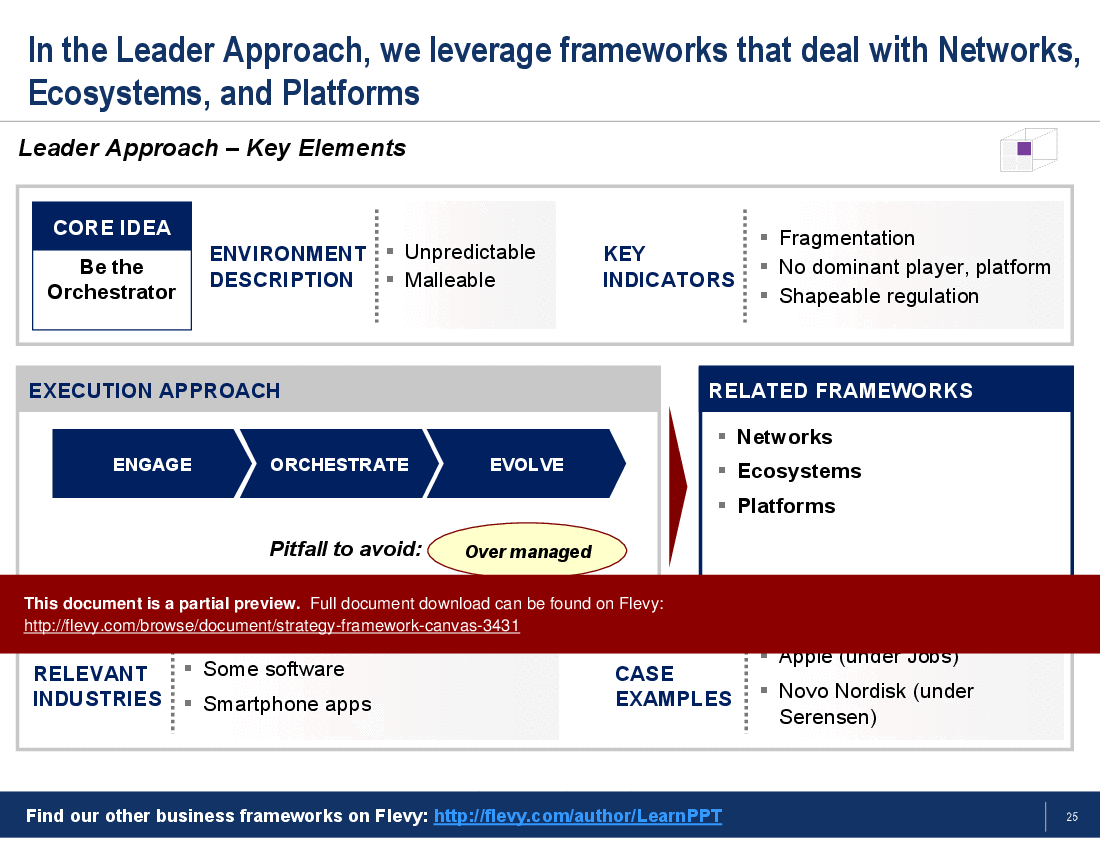
• Leader Approach - A collaborative strategy for influencing industry development by orchestrating stakeholder engagement.
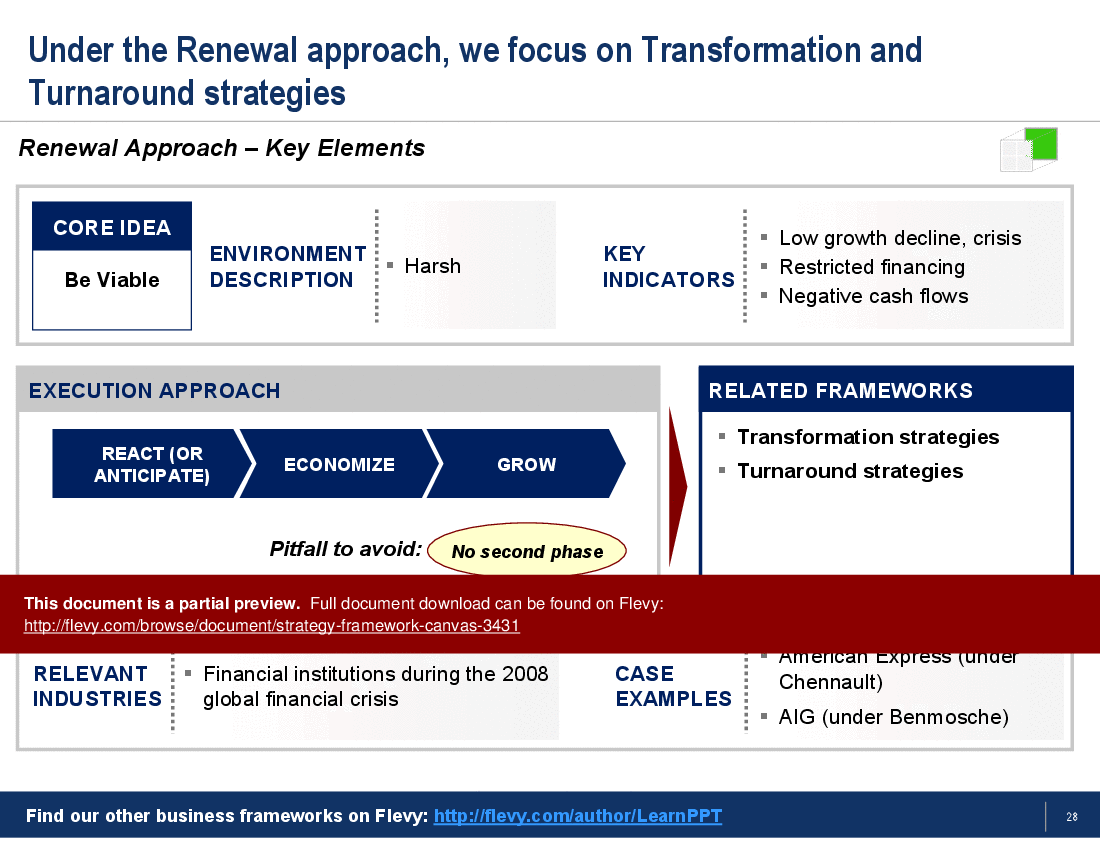
• Renewal Approach - A strategy for harsh environments aimed at restoring organizational viability and competitiveness.
Deliverables, Templates, and Tools
• Strategy Framework Canvas template for visualizing strategic approaches
• Analysis and planning templates for each strategic approach
• Leadership role identification and development framework
• Continuous adaptation and innovation tracking tools
• Case studies illustrating successful application of each approach
• Templates for assessing organizational readiness for strategic shifts
Slide Highlights
• Overview of the Strategy Framework Canvas and its significance in strategic planning
• Detailed breakdown of the 5 strategic approaches with visual representations
• Case examples illustrating the application of each approach in real-world scenarios
• Insights into the "Success Trap" and the importance of ambidexterity in strategy
• Leadership roles necessary for effective strategy management and execution
Potential Workshop Agenda
Introduction to Strategy Framework Canvas (30 minutes)
• Overview of the framework and its importance
• Discussion on the 5 strategic approaches
Breakout Session: Strategy Selection (60 minutes)
• Group analysis of current organizational strategies
• Identification of appropriate strategic approaches for different business units
Leadership Roles in Strategy Execution (45 minutes)
• Overview of key leadership roles
• Interactive discussion on aligning leadership capabilities with strategic needs
Wrap-Up and Next Steps (30 minutes)
• Summary of insights gained
• Action planning for implementing the Strategy Framework Canvas
Customization Guidance
• Tailor the Strategy Framework Canvas to reflect specific organizational contexts and strategic goals
• Adjust templates to align with unique industry characteristics and market conditions
• Incorporate organizational terminology and metrics for clarity and relevance
• Update case examples to reflect current market dynamics and organizational experiences
Secondary Topics Covered
• Historical evolution of strategy frameworks and their relevance today
• The impact of the "Success Trap" on long-term organizational performance
• Strategies for fostering ambidexterity within large organizations
• The role of leadership in navigating complex strategic environments
• Techniques for continuous monitoring and adjustment of strategic approaches
Topic FAQ
What are the main strategic approaches covered by modern strategy canvases?
Contemporary strategy canvases often classify strategic choices into distinct archetypes; the Strategy Framework Canvas defines 5 approaches: Classic, Adaptive, Visionary, Leader, and Renewal, offering a structured set of options for aligning strategy to context and decision-making across 5 distinct strategic approaches.
How do I determine which strategic approach fits a specific business unit?
The recommended method is to evaluate the unit’s operating environment along 3 dimensions—predictability, malleability, and harshness—and map those assessments to the 5 approaches. Flevy's Strategy Framework Canvas operationalizes this by providing the Canvas and analysis templates for mapping decisions across the 3 dimensions.
Which leadership roles are important for executing different strategies?
The framework identifies specific roles that support strategy execution, including Diagnostician, Segmenter, Disruptor, Team Coach, Salesperson, Inquisitor, Antenna, and Accelerator, each aligned to tasks needed for managing and implementing strategic approaches and leadership capability development.
What should I look for when buying a strategy toolkit for running alignment workshops?
Look for slide templates of the core canvas, approach-specific analysis and planning templates, leadership-role identification tools, case studies to ground discussion, and suggested workshop agendas. Flevy's Strategy Framework Canvas includes these elements, such as the Strategy Framework Canvas template and leadership role templates.
How much time should I plan for a workshop using a strategy canvas?
A sample agenda in the materials suggests an introductory segment (30 minutes), a strategy selection breakout (60 minutes), a leadership roles session (45 minutes), and a wrap-up (30 minutes), totaling a 165-minute sample agenda for a full workshop.
How can an organization avoid becoming trapped by past success?
The materials recommend cultivating ambidexterity—balancing exploration and exploitation—and continuously adapting strategy to changing conditions. The deck addresses the "Success Trap" concept explicitly, with content and tools to diagnose and counter it on the Success Trap slide (page 29).
How can startups apply a strategy canvas when entering new markets?
Startups can use the canvas to decide between Visionary approaches (creating or reshaping markets) and Adaptive approaches (continuous experimentation) depending on market predictability and malleability, and follow the templates and case examples to build tailored strategies using the Visionary or Adaptive approaches.
Are paid slide templates materially different from free resources for strategy planning?
Paid templates like the Strategy Framework Canvas consolidate a structured canvas, approach-specific analysis templates, leadership-role frameworks, case studies, and a sample workshop agenda into a single deliverable, provided here as a 44-slide PowerPoint with ready-to-use templates and examples.
Document FAQ
These are questions addressed within this presentation.
What is the Strategy Framework Canvas?
The Strategy Framework Canvas is a tool designed to help organizations select and execute appropriate strategies based on their unique circumstances and market conditions.
How do I determine which strategic approach to use?
Evaluate the dimensions of predictability, malleability, and harshness in your business environment to identify the most suitable strategic approach.
Can this framework be applied to different business units?
Yes, the Strategy Framework Canvas is versatile and can be tailored to different business units, geographies, and lifecycle stages within an organization.
What are the key leadership roles needed for effective strategy execution?
Key roles include Diagnostician, Segmenter, Disruptor, Team Coach, Salesperson, Inquisitor, Antenna, and Accelerator, each contributing to the successful implementation of strategies.
How can organizations avoid the Success Trap?
Organizations can avoid the Success Trap by cultivating ambidexterity, balancing exploration and exploitation, and continuously adapting their strategies to changing market conditions.
What types of templates are included in the presentation?
The presentation includes templates for the Strategy Framework Canvas, analysis and planning, leadership role identification, and continuous adaptation tracking.
Is this framework suitable for startups?
Yes, the Strategy Framework Canvas can be beneficial for startups as it helps in navigating early-stage market dynamics and selecting appropriate strategies for growth.
How often should organizations revisit their strategic approaches?
Organizations should regularly assess their strategic approaches, especially in dynamic environments, to ensure alignment with current market conditions and organizational goals.
Glossary
• Strategy Framework Canvas - A tool for selecting and executing strategies based on specific organizational contexts.
• Classic Approach - A strategy for predictable environments focused on sustainable competitive advantage.
• Adaptive Approach - A strategy emphasizing continuous experimentation in unpredictable environments.
• Visionary Approach - A proactive strategy for creating or reshaping markets.
• Leader Approach - A collaborative strategy for influencing industry development.
• Renewal Approach - A strategy aimed at restoring organizational viability in harsh environments.
• Success Trap - The phenomenon where successful organizations fail to adapt to changing market conditions.
• Ambidexterity - The ability to balance exploration and exploitation in strategy.
• Leadership Roles - Key positions necessary for effective strategy management and execution.
• Predictability - The degree to which market conditions can be forecasted.
• Malleability - The ability to shape or influence market conditions.
• Harshness - The severity of market conditions affecting organizational viability.
• Templates - Pre-designed documents for facilitating strategic planning and execution.
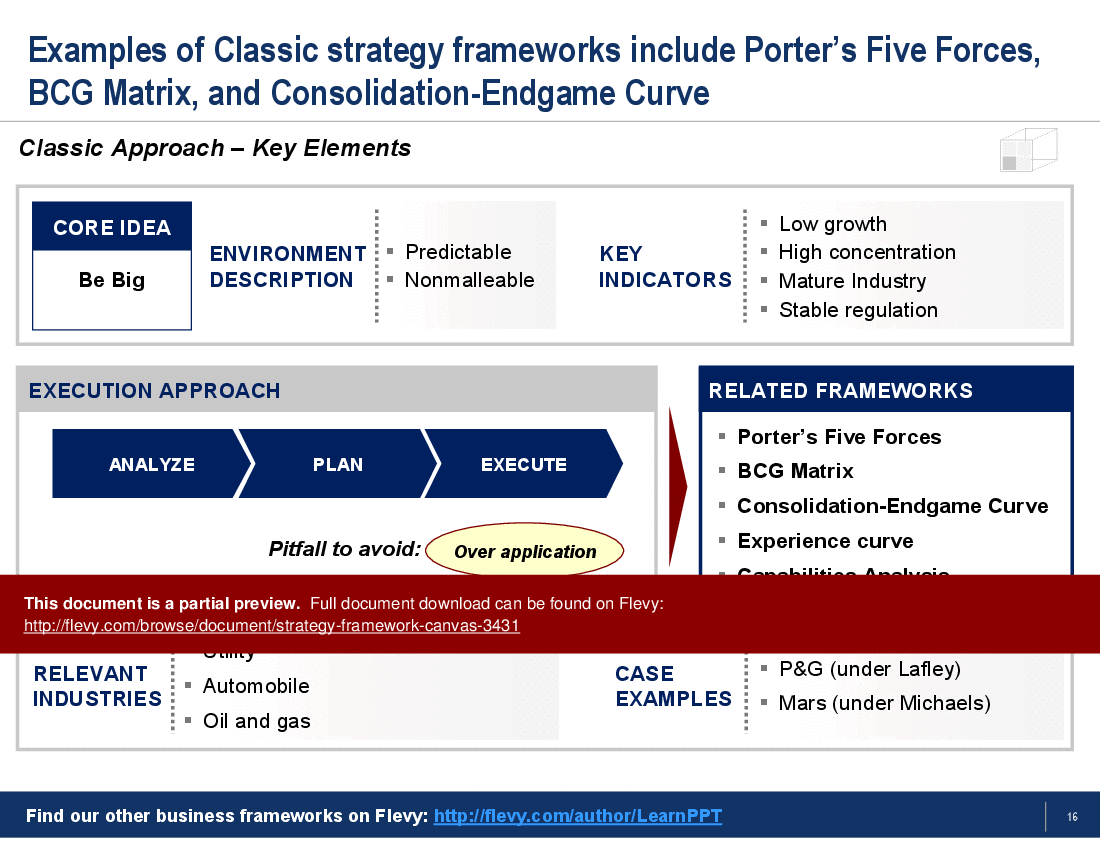
The Classic approach is a strategic framework focused on stable market conditions, leveraging sustainable advantages through optimal positioning. Key advantages arise from factors like superior scale, differentiation, or specialized capabilities. This approach is suitable for established and predictable markets, where competition is stable and the risk of disruption is minimal. Indicators for success include well-established industries with high returns, stable business models, and modest growth rates. Execution follows a structured three-phase process: Analysis and Design, Planning and Strategy Formulation, and Strategy Execution, emphasizing market attractiveness, competitive basis, and firm competitiveness to forecast key factors and articulate a targeted position.
This PPT slide presents a framework categorizing 5 business environments based on 3 dimensions: Predictability, Malleability, and Harshness. The environments—Adaptive, Classic, Renewal, Leader, and Visionary—are illustrated in a matrix with axes for predictability and malleability. The Adaptive environment, marked by unpredictability, requires a "Be Fast" strategy. The Classic environment, predictable, but inflexible, emphasizes "Be Big." Renewal faces resource constraints, focusing on "Be Viable." The Leader environment allows for change amidst unpredictability, summarized as "Be the orchestrator." The Visionary environment, both predictable and malleable, encourages a "Be First" approach. Each environment necessitates a distinct strategic approach, underscoring the importance of adaptability in strategy formulation.
This PPT slide outlines classic strategy frameworks, focusing on the principle "Be Big," which emphasizes scale as a primary strategy. The environment is characterized as predictable and stable, with key indicators such as low growth, high concentration, a mature industry, and stable regulation. The execution approach consists of 3 phases: Analyze, Plan, and Execute, highlighting the necessity of thorough analysis before strategic planning. A critical caution is "Over application," warning against rigidly applying these frameworks. Relevant industries include utility, automobile, and oil and gas. Related frameworks referenced are Porter’s Five Forces, BCG Matrix, and the Consolidation-Endgame Curve. Case examples from Procter & Gamble and Mars illustrate practical applications of these frameworks.
This PPT slide outlines eight critical leadership roles within an organization using the Strategy Framework Canvas. The Diagnostician assesses the predictability and malleability of the business landscape, aligning strategies with organizational needs. The Segmentation role structures the organization to match strategies with environmental granularity, balancing precision and complexity. The Disruptor maintains organizational agility by reviewing diagnosis and segmentation, enabling strategic pivots in response to environmental shifts. The Team Coach selects individuals for various areas and develops their understanding of the Strategy Framework Canvas, fostering intellectual and experiential growth. These roles emphasize the need for a diverse leadership approach to enhance strategic execution and identify leadership capability gaps.
This PPT slide analyzes 2 business strategies: "Explorers" and "Exploiters." Over a decade, explorers outperformed exploiters, achieving an annual sales growth rate of 10.4% and a total shareholder return (TSR) of 11.5%, compared to exploiters' 4.7% sales growth and 9.1% TSR. Explorers outperformed exploiters by 5.7 percentage points in sales growth and 2.4 percentage points in TSR. The data, based on the Present Value of Growth Options (PVGO) from 2004, highlights the difficulty large companies face in transitioning from exploitative to exploratory strategies, often prioritizing short-term shareholder value. Only 1 in 10 companies successfully balance exploration and exploitation, emphasizing the need for strategic agility to innovate while managing current operations.
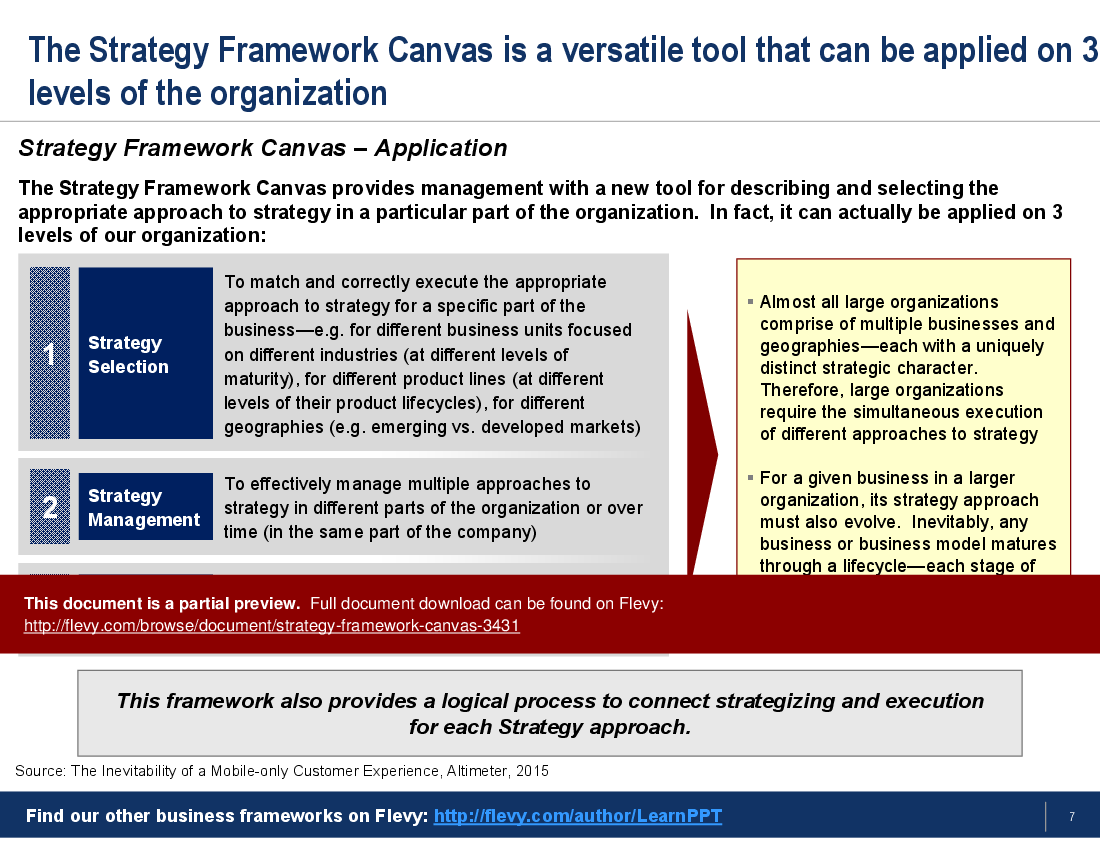
The Strategy Framework Canvas applies across 3 organizational levels: Strategy Selection, Strategy Management, and Strategy Execution. Strategy Selection aligns strategic approaches with business units, emphasizing tailored strategies based on industry maturity, product lifecycle stages, and geographic factors. Strategy Management highlights the need for concurrent management of multiple strategies, adapting to changes in the business environment. Strategy Execution focuses on leadership's role in implementing diverse strategies, stressing the importance of a cohesive strategy portfolio for effective execution. Large organizations often encompass multiple businesses with unique strategic needs, necessitating adaptations in strategic approaches as businesses evolve through their lifecycles.
This presentation is created by former McKinsey, BCG, Deloitte, EY, and Capgemini consultants. It teaches a practical consulting framework actively used by tier-1 consulting firms.
We are a team of management consultants trained by top tier global consulting firms (including McKinsey, BCG, Deloitte, EY, Capgemini) with a collective experience of several decades. We specialize in business frameworks based on real-life consulting engagements.
We have served 100s of clients that range from Fortune 500 companies to tech startups to
... [read more] $1B+ private companies.
Utilize our consulting frameworks to apply structured thinking & analysis to address your business challenges, uncover strategic insights, and implement workable solutions. Our PowerPoint presentations follow traditional consulting slide design formats, starting with a clear slide headline. Easily customize and repurpose our slides for your own business presentations.
Beyond business frameworks & methodologies, we also offer PowerPoint templates and other business templates. Our templates are professionally designed and have been used in thousands of deliverables & work products across hundreds of clients.
The average daily rate of a McKinsey consultant is $6,625 (not including expenses). The average price of a Flevy document is $65.
Trusted by over 10,000+ Client Organizations
Since 2012, we have provided business templates to over 10,000 businesses and organizations of all sizes, from startups and small businesses to the Fortune 100, in over 130 countries.
"The wide selection of frameworks is very useful to me as an independent consultant. In fact, it rivals what I had at my disposal at Big 4 Consulting firms in terms of efficacy and organization."
– Julia T., Consulting Firm Owner (Former Manager at Deloitte and Capgemini)
"Flevy is now a part of my business routine. I visit Flevy at least 3 times each month.
Flevy has become my preferred learning source, because what it provides is practical, current, and useful in this era where the business world is being rewritten.
many challenges and there is the need to make the right decisions in a short time, with so much scattered information, we are fortunate to have Flevy. Flevy investigates, selects, and puts at our disposal the best of the best to help us be successful in our work.
"
– Omar Hernán Montes Parra, CEO at Quantum SFE
"I have found Flevy to be an amazing resource and library of useful presentations for lean sigma, change management and so many other topics. This has reduced the time I need to spend on preparing for my performance consultation. The library is easily accessible and updates are regularly provided. A wealth of great information."
– Cynthia Howard RN, PhD, Executive Coach at Ei Leadership
"As a small business owner, the resource material available from FlevyPro has proven to be invaluable. The ability to search for material on demand based our project events and client requirements was great for me and proved very beneficial to my clients. Importantly, being able to easily edit and tailor
the material for specific purposes helped us to make presentations, knowledge sharing, and toolkit development, which formed part of the overall program collateral. While FlevyPro contains resource material that any consultancy, project or delivery firm must have, it is an essential part of a small firm or independent consultant's toolbox.
"
– Michael Duff, Managing Director at Change Strategy (UK)
"I have used FlevyPro for several business applications. It is a great complement to working with expensive consultants. The quality and effectiveness of the tools are of the highest standards."
– Moritz Bernhoerster, Global Sourcing Director at Fortune 500
"FlevyPro has been a brilliant resource for me, as an independent growth consultant, to access a vast knowledge bank of presentations to support my work with clients. In terms of RoI, the value I received from the very first presentation I downloaded paid for my subscription many times over! The
quality of the decks available allows me to punch way above my weight – it's like having the resources of a Big 4 consultancy at your fingertips at a microscopic fraction of the overhead.
"
– Roderick Cameron, Founding Partner at SGFE Ltd
"FlevyPro provides business frameworks from many of the global giants in management consulting that allow you to provide best in class solutions for your clients."
– David Harris, Managing Director at Futures Strategy
"[Flevy] produces some great work that has been/continues to be of immense help not only to myself, but as I seek to provide professional services to my clients, it gives me a large "tool box" of resources that are critical to provide them with the quality of service and outcomes they are expecting."
– Royston Knowles, Executive with 50+ Years of Board Level Experience
Download our free compilation of 50+ Strategy & Transformation slides and templates. Frameworks include McKinsey 7-S, Balanced Scorecard, Disruptive Innovation, BCG Curve, and many more.