
Lack of efficiency and effectiveness in an organization can have a significant impact on the overall cost of operation.
Organizational Velocity – Improving Speed, Efficiency & Effectiveness of Business provides a framework for diagnosing, assessing and implementing to improve the speed at which the organization operates.
There are two main areas for focus:
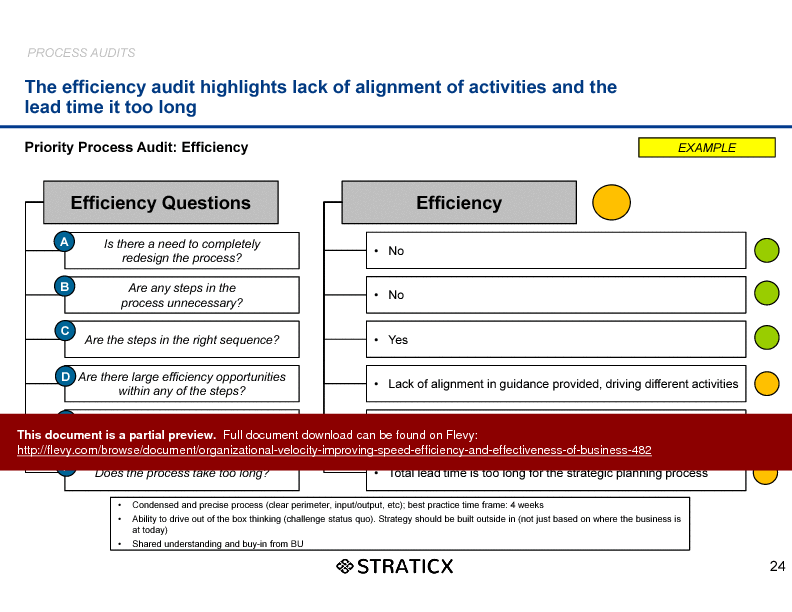
1. Process Audits – a framework for assessing key processes within the different functions of the organization and detailing where improvements are to be had
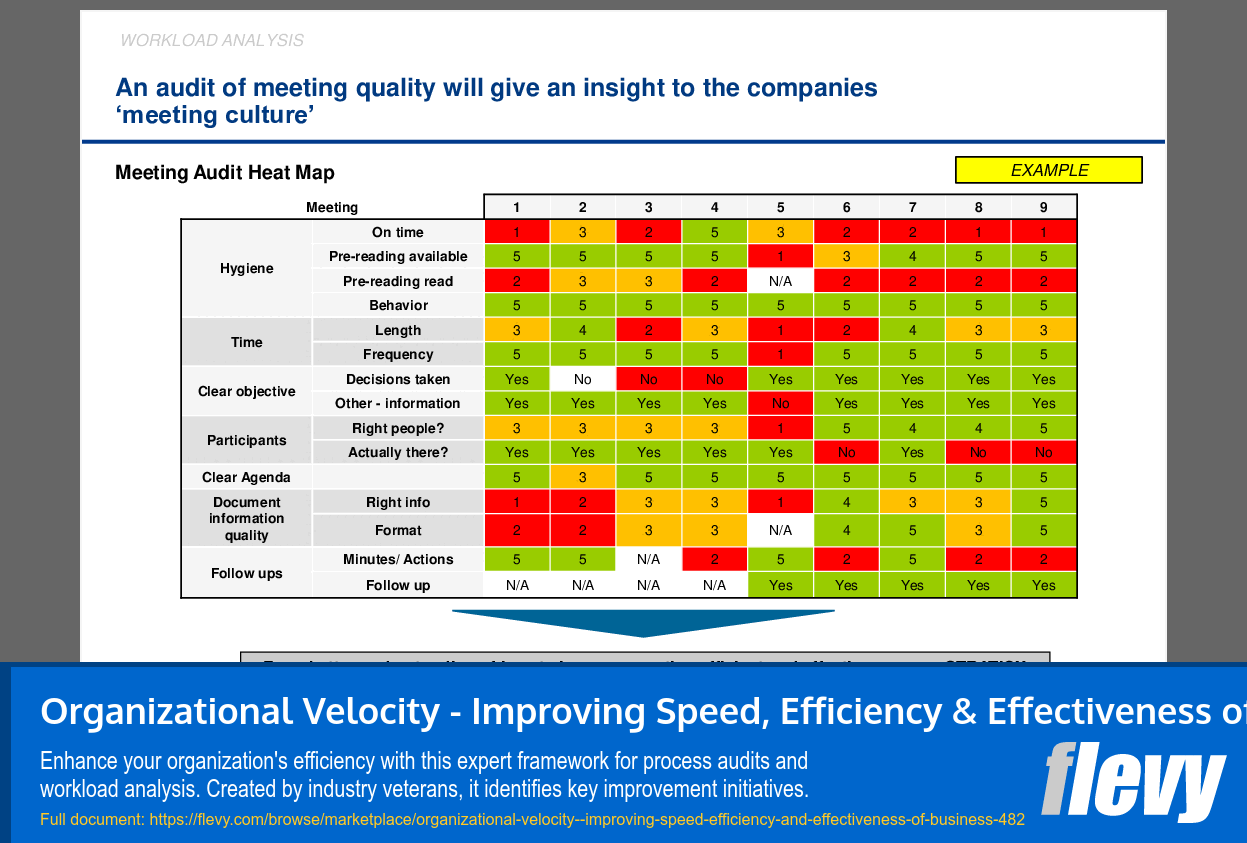
2. Workload Analysis – based on a workforce survey to identity where and what time in the organization is spent doing, including the efficiency and effectiveness of Meetings
The outcome from using the PPT framework will be a prioritised list of initiatives for implementation to increase organizational speed and reduce the cost of operation.
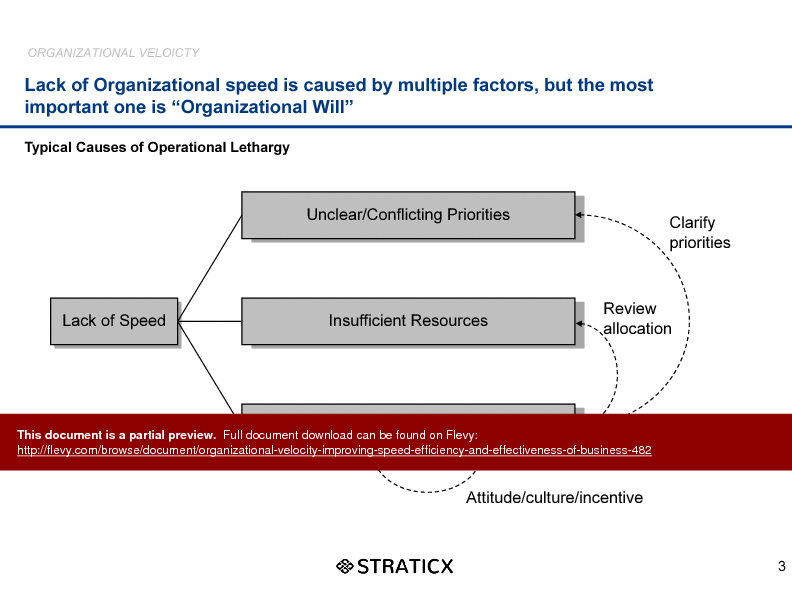
The document delves into the root causes of operational lethargy, emphasizing the critical role of "Organizational Will." It identifies unclear priorities and insufficient resources as key barriers to speed. The framework offers actionable steps to clarify priorities and review resource allocation, ensuring your organization operates at peak efficiency.
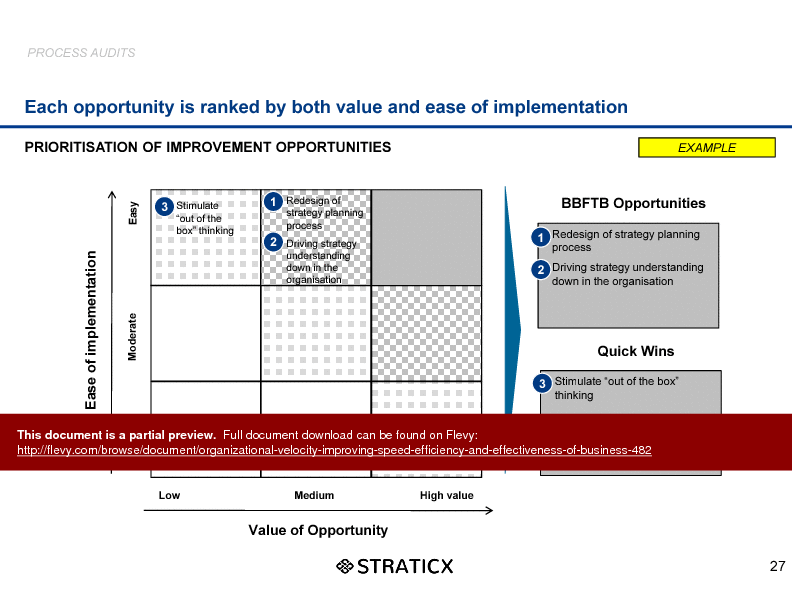
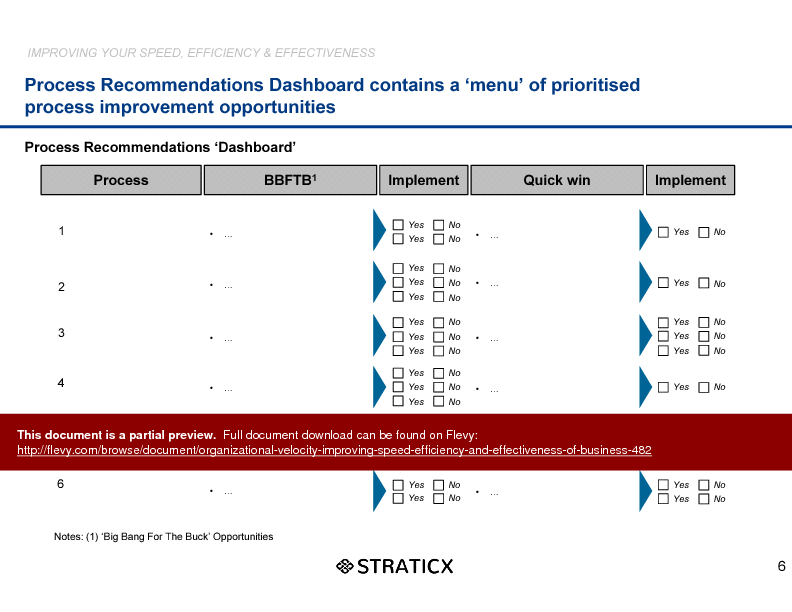
A comprehensive Process Recommendations Dashboard is included, providing a prioritized menu of improvement opportunities. Each process is evaluated for its potential impact and ease of implementation, enabling you to focus on high-value initiatives. The dashboard is designed to streamline decision-making and accelerate the implementation of strategic changes.
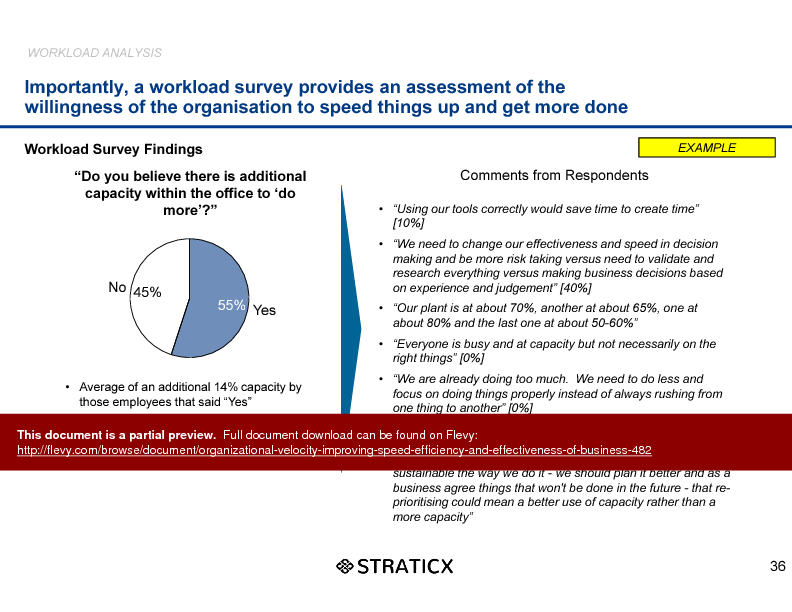
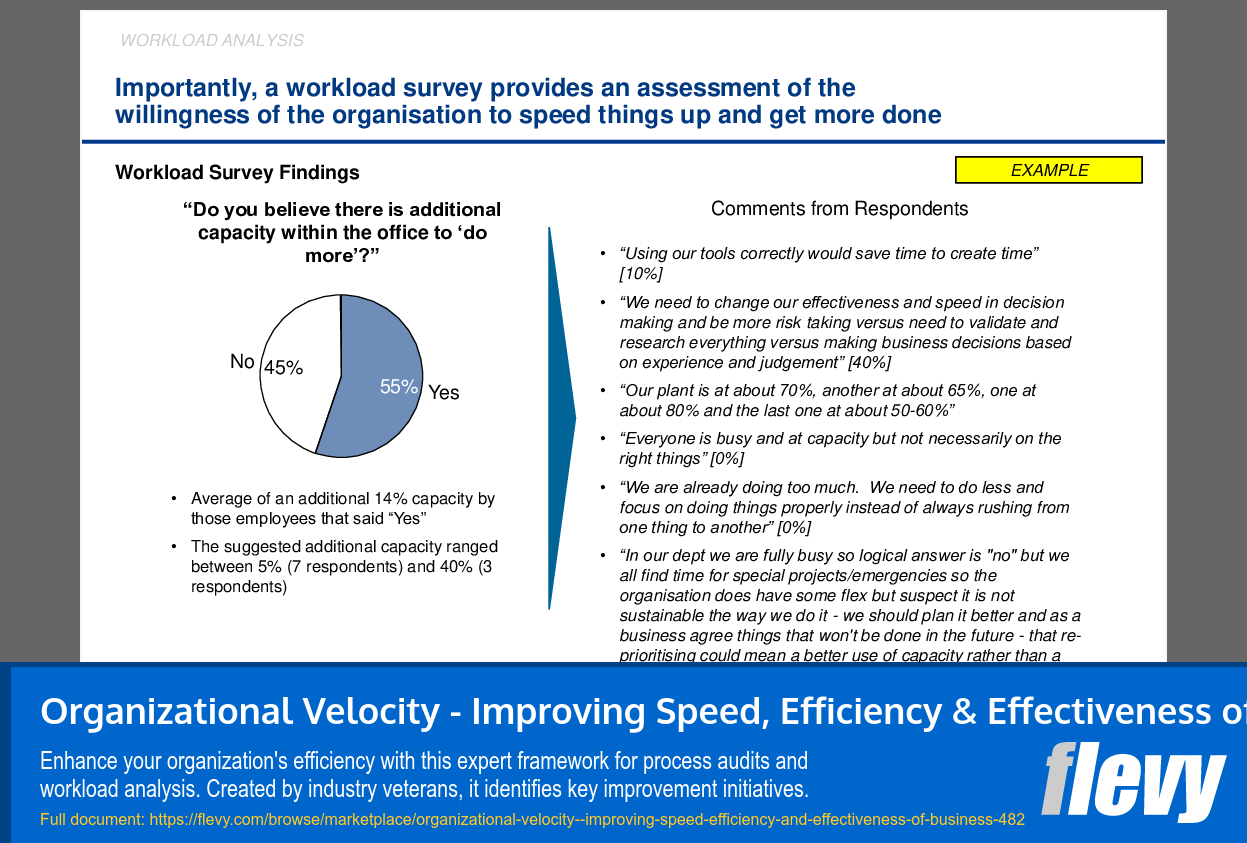
The workload analysis section offers a detailed assessment of how time is spent within the organization. It highlights inefficiencies in meetings and projects, providing insights into how to better allocate time and resources. This analysis is crucial for identifying areas where your organization can gain additional capacity and improve overall productivity.
Got a question about the product? Email us at support@flevy.com or ask the author directly by using the "Ask the Author a Question" form. If you cannot view the preview above this document description, go here to view the large preview instead.
Executive Summary
This presentation titled "Organizational Velocity - Improving Speed, Efficiency & Effectiveness of Business" is designed to help organizations enhance their operational capabilities through a structured approach to process audits and workload analysis. Created with a consulting-grade rigor akin to McKinsey, Bain, or BCG-quality frameworks (not affiliated), this deck empowers corporate executives and integration leaders to identify key improvement initiatives that drive efficiency and effectiveness. By leveraging actionable insights from process audits and workload assessments, organizations can prioritize opportunities for improvement, streamline operations, and ultimately achieve faster decision-making and execution.
Who This Is For and When to Use
• Corporate executives focused on operational efficiency and strategic alignment
• Integration leaders managing process improvements and organizational change
• Consultants advising on operational excellence and performance optimization
• Project managers overseeing workload distribution and resource allocation
Best-fit moments to use this deck:
• During strategic planning sessions to identify inefficiencies in current processes
• When conducting process audits to benchmark against best practices
• In workshops aimed at fostering a culture of continuous improvement
Learning Objectives
• Define organizational velocity and its impact on business performance
• Build a comprehensive process audit framework to identify inefficiencies
• Establish a workload analysis methodology to assess team capacity and effectiveness
• Identify key improvement opportunities through benchmarking against peers
• Develop actionable recommendations for enhancing operational speed
• Create a roadmap for implementing continuous process improvements
Table of Contents
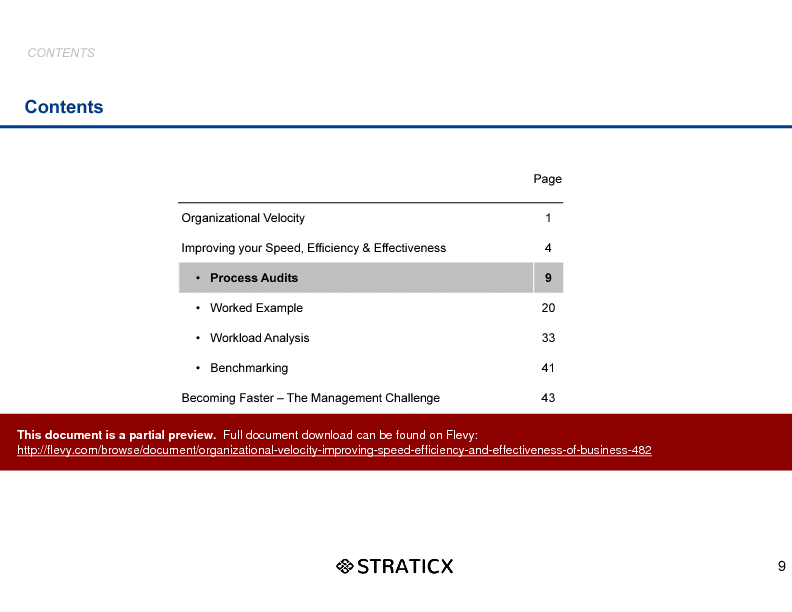
• Organizational Velocity (page 1)
• Improving Your Speed, Efficiency & Effectiveness (page 4)
• Process Audits (page 9)
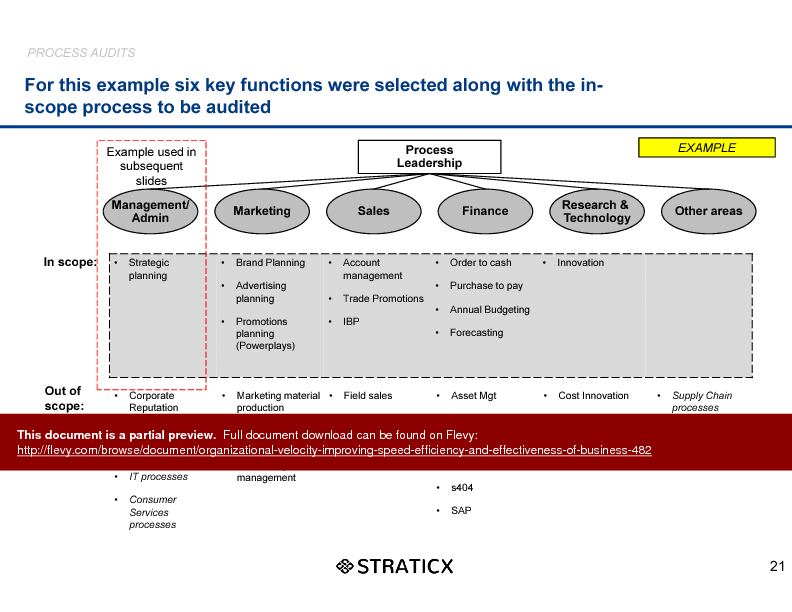
• Worked Example (page 20)
• Workload Analysis (page 33)
• Benchmarking (page 41)
• Becoming Faster – The Management Challenge (page 43)
Primary Topics Covered
• Process Audits - A systematic approach to evaluate the efficiency and effectiveness of priority processes, identifying gaps and improvement opportunities.
• Workload Analysis - A survey-based assessment to evaluate how team members allocate their time across various activities and processes.
• Benchmarking - A comparative analysis against local and international peers to identify performance gaps and improvement areas.
• Improvement Opportunities - Actionable insights derived from audits and analyses that prioritize initiatives for enhancing organizational speed.
• Organizational Will - The cultural and attitudinal factors that influence an organization's ability to implement changes and improve speed.
• Management Challenges - The leadership dynamics that impact organizational velocity and the strategies to overcome them.
Deliverables, Templates, and Tools
• Process audit framework template for evaluating efficiency and effectiveness
• Workload survey template for assessing team capacity and activity distribution
• Benchmarking report format for comparing performance metrics against peers
• Improvement opportunities dashboard for tracking prioritized initiatives
• Meeting quality assessment tool to evaluate the effectiveness of organizational meetings
• Continuous improvement roadmap template to guide implementation efforts
Slide Highlights
• Overview of the advantages and cautions associated with increasing organizational speed
• Key analyses and recommendations framework for improving efficiency and effectiveness
• Process audit steps summary detailing the methodology for conducting audits
• Workload analysis findings showcasing time allocation across key processes
• Benchmarking insights that highlight areas for potential improvement
Potential Workshop Agenda
Process Audit Workshop (90 minutes)
• Introduce the process audit framework and its significance
• Conduct a live audit of a selected process with participants
• Identify and prioritize improvement opportunities based on findings
Workload Analysis Session (60 minutes)
• Present findings from the workload survey
• Discuss implications for resource allocation and team effectiveness
• Develop action plans for addressing identified inefficiencies
Continuous Improvement Strategy (90 minutes)
• Define the principles of continuous improvement within the organization
• Collaboratively create a roadmap for implementing identified initiatives
• Establish governance structures to monitor progress and outcomes
Customization Guidance
• Tailor the process audit framework to align with specific organizational processes and priorities
• Adjust the workload survey questions to reflect unique team dynamics and roles
• Incorporate industry-specific benchmarks into the benchmarking analysis
• Modify the improvement opportunities dashboard to include relevant metrics and KPIs
• Adapt the continuous improvement roadmap to fit the organization’s strategic goals
Secondary Topics Covered
• Organizational culture and its impact on operational speed
• Strategies for enhancing meeting effectiveness and decision-making
• The role of leadership in driving organizational change
• Techniques for fostering a culture of continuous improvement
• Tools for tracking and measuring process performance
FAQ
What is organizational velocity?
Organizational velocity refers to the speed at which an organization can operate and respond to changes, impacting overall efficiency and effectiveness.
How can process audits improve efficiency?
Process audits identify inefficiencies and gaps in current operations, allowing organizations to implement targeted improvements that enhance performance.
What is the purpose of a workload analysis?
A workload analysis assesses how team members allocate their time across various activities, helping to identify areas where efficiency can be improved.
How does benchmarking contribute to organizational improvement?
Benchmarking provides insights into how an organization performs relative to peers, highlighting areas for potential enhancement and best practices to adopt.
What are 'BBFTB' opportunities?
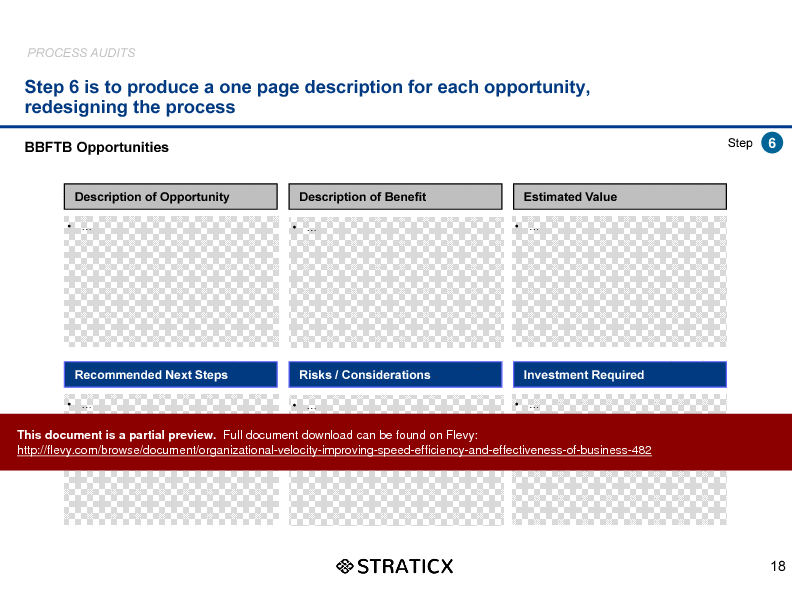
'BBFTB' stands for "Big Bang For The Buck" opportunities, which are high-impact, low-effort initiatives that can significantly improve efficiency and effectiveness.
How can leadership influence organizational speed?
Effective leadership can set clear priorities, foster a culture of accountability, and ensure that resources are aligned to support rapid decision-making and execution.
What are the key steps in conducting a process audit?
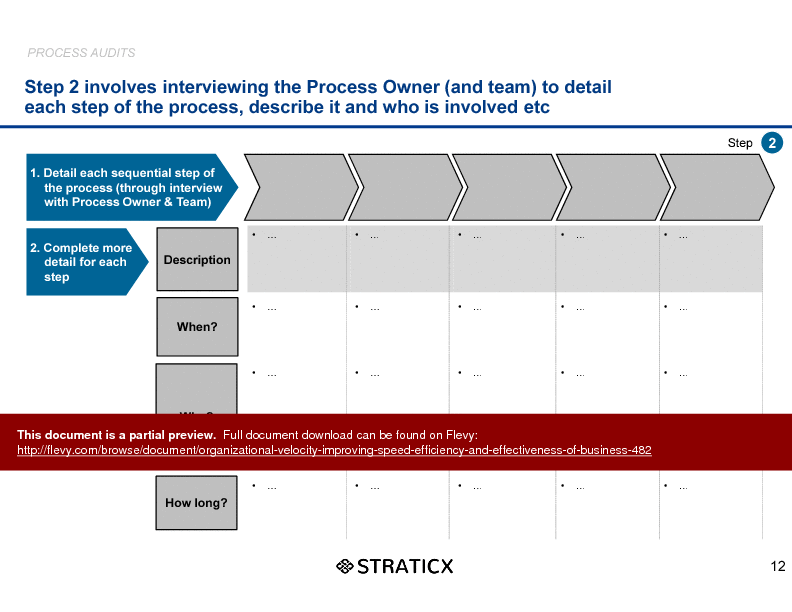
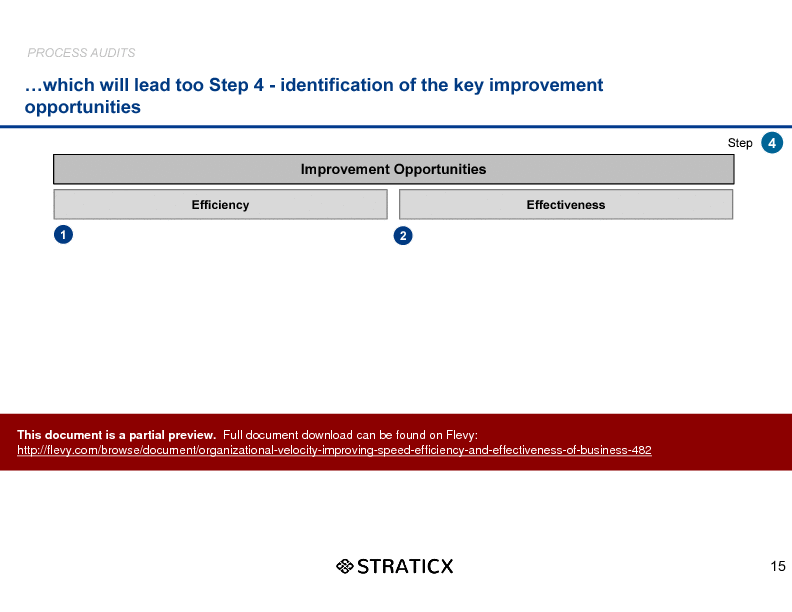
Key steps include detailing the process, interviewing stakeholders, assessing efficiency and effectiveness, identifying improvement opportunities, and prioritizing actions.
How can organizations sustain continuous improvement?
Organizations can sustain continuous improvement by embedding it into their culture, regularly reviewing processes, and engaging employees in identifying and implementing enhancements.
Glossary
• Organizational Velocity - The speed at which an organization operates and adapts to changes.
• Process Audit - A systematic evaluation of a process to identify inefficiencies and improvement opportunities.
• Workload Analysis - An assessment of how team members allocate their time across various activities.
• Benchmarking - A comparative analysis against peers to identify performance gaps.
• BBFTB Opportunities - High-impact initiatives that require minimal effort for significant gains.
• Continuous Improvement - An ongoing effort to enhance products, services, or processes.
• Organizational Will - The collective attitude and commitment of an organization to implement changes.
• Meeting Quality - An assessment of the effectiveness and efficiency of organizational meetings.
• Improvement Dashboard - A tool for tracking and prioritizing improvement initiatives.
• Governance Structure - The framework for overseeing and managing organizational processes and changes.
• KPI - Key Performance Indicator, a measurable value that demonstrates how effectively an organization is achieving its objectives.
• Efficiency - The ability to accomplish a task with minimal waste of resources.
• Effectiveness - The degree to which objectives are achieved and desired outcomes are produced.
• Stakeholder - Any individual or group that has an interest in the outcome of a project or process.
• Resource Allocation - The process of assigning and managing assets in a way that supports an organization's strategic goals.
• Strategic Planning - The process of defining an organization's direction and making decisions on allocating resources to pursue that direction.
• Culture of Continuous Improvement - An organizational mindset that encourages ongoing enhancements to processes and practices.
• Action Plan - A detailed plan outlining actions needed to reach one or more goals.
• Governance - The framework of rules and practices by which an organization is directed and controlled.
• Operational Efficiency - The capability of an organization to deliver products or services in the most cost-effective manner without compromising quality.
Source: Best Practices in Process Improvement PowerPoint Slides: Organizational Velocity - Improving Speed, Efficiency & Effectiveness of Business PowerPoint (PPTX) Presentation Slide Deck, STRATICX
This document is available as part of the following discounted bundle(s):
Save %!
Essential Kit
This bundle contains 5 total documents. See all the documents to the right.
Save %!
Complete Kit
This bundle contains 13 total documents. See all the documents to the right.
Save %!
Consultant Kit
This bundle contains 8 total documents. See all the documents to the right.
|
Receive our FREE presentation on Operational Excellence
This 50-slide presentation provides a high-level introduction to the 4 Building Blocks of Operational Excellence. Achieving OpEx requires the implementation of a Business Execution System that integrates these 4 building blocks. |