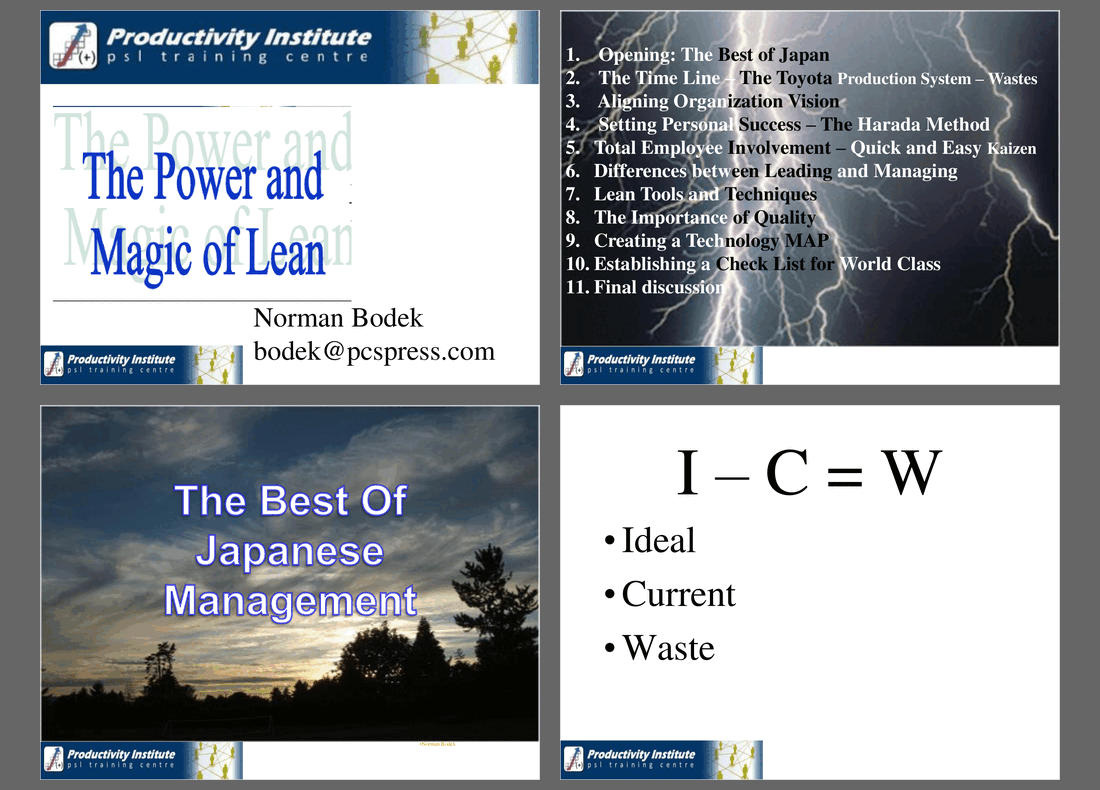
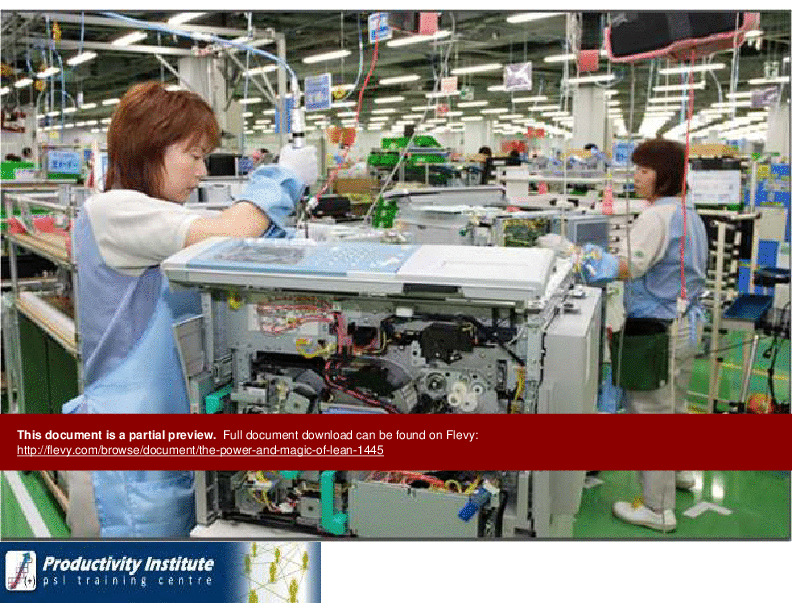

- Discover the best management practices from Japan
• Learn how to see opportunities for improvement
• Develop a checklist, a step-by-step approach to converting to a Lean organization, understand the Lean tools and techniques and how they apply – look more closely at the time line, from customer order to delivery, and take out the non-value adding wastes
• Study corporate visions, values, missions and philosophies of leading Japanese companies
• Look at the differences between leading and managing at Japanese and Western companies
• Look at Total Employee Involvement and giving your employees the opportunity to be self-directed autonomous people to be motivated and inspired at work
• Study how Japan improved quality and learn the quality tools
• Zenjidoka a new concept on how we can learn from Toyota's mistakes and avoid them in the future
Session 1: Setting Goals
Session 2: Review the Best of Japan
Session 3: Creating a vision and looking at the differences between leading and managing
Session 4: Total Employee Involvement
Session 5: Day-to-Day Management
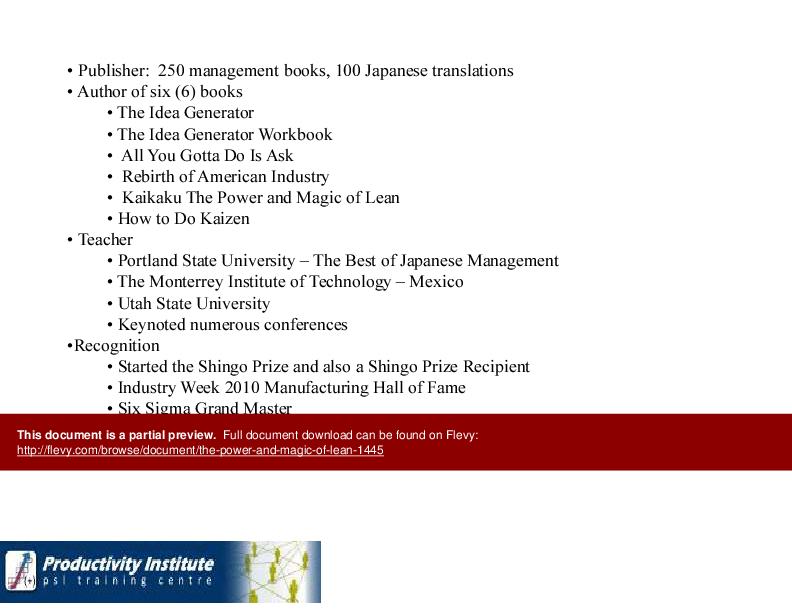
Session 6: Norman is a Six Sigma Grand Master
Session 7: Lean Tools and Techniques – Process Improvement
Session 8: Tools and Techniques
Session 9: Technology MAP
Session 10: Discussions
Total no. of slides = 269
Buy this presentation and you will also get all the supplementary materials in a zip file.
Disclaimer: Productivity Solutions Limited / Productivity Institute sponsored the visit of Norman Bodek, known as the godfather of Lean to New Zealand in Apr 2011 and Mr. Bodek delivered a 2 day workshop in Auckland under the PSL / PI banner.

Got a question about the product? Email us at support@flevy.com or ask the author directly by using the "Ask the Author a Question" form. If you cannot view the preview above this document description, go here to view the large preview instead.
Executive Summary
This presentation titled "The Power and Magic of Lean" is designed to provide a comprehensive understanding of Lean principles and practices, developed by Norman Bodek, a recognized authority in Lean management. With over 40 years of experience, Bodek has trained thousands globally, focusing on the Toyota Production System, waste elimination, and continuous improvement methodologies. This PowerPoint serves as a valuable resource for organizations aiming to enhance operational efficiency, foster employee involvement, and achieve world-class competitiveness through Lean practices.
Who This Is For and When to Use
• Corporate executives seeking to implement Lean methodologies within their organizations
• Operations managers responsible for process improvement and waste reduction
• Lean practitioners and consultants looking for structured training materials
• Teams involved in quality management and continuous improvement initiatives
Best-fit moments to use this deck:
• During Lean training sessions for new employees or stakeholders
• As a foundational resource for Lean transformation workshops
• In strategy meetings focused on operational excellence and efficiency
Learning Objectives
• Define Lean principles and the Toyota Production System
• Identify and eliminate the nine types of waste in operations
• Establish a culture of continuous improvement through Kaizen
• Implement the Harada Method for personal and organizational success
• Differentiate between leading and managing in a Lean context
• Create a technology MAP for process improvement
Table of Contents
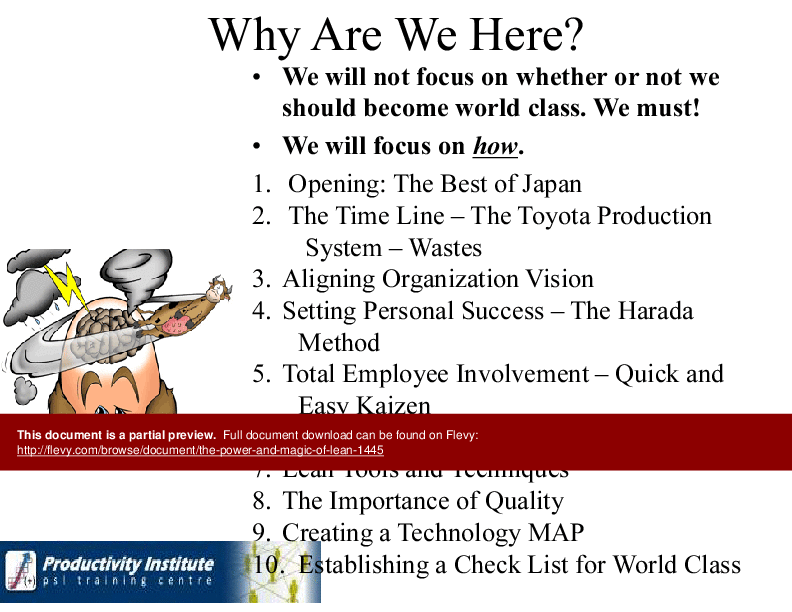
• Opening: The Best of Japan (page 1)
• The Time Line – The Toyota Production System – Wastes (page 2)
• Aligning Organization Vision (page 3)
• Setting Personal Success – The Harada Method (page 4)
• Total Employee Involvement – Quick and Easy Kaizen (page 5)
• Differences between Leading and Managing (page 6)
• Lean Tools and Techniques (page 7)
• The Importance of Quality (page 8)
• Creating a Technology MAP (page 9)
• Establishing a Check List for World Class (page 10)
• Final Discussion (page 11)
Primary Topics Covered
• Lean Principles - A systematic approach to identifying and eliminating waste through continuous improvement in pursuit of perfection.
• Toyota Production System (TPS) - The foundational framework for Lean, emphasizing Just-in-Time production and respect for people.
• Nine Types of Waste - Identification and elimination of overproduction, waiting, non-utilized talent, transportation, inventory, motion, defects, extra processing, and resistance to change.
• Kaizen - A philosophy of continuous improvement that involves all employees in identifying and solving problems.
• The Harada Method - A personal success framework that emphasizes goal setting and self-management.
• Quality Management - The importance of quality in Lean practices, including Poka-Yoke and Total Quality Control.
Deliverables, Templates, and Tools
• Lean transformation checklist for assessing current practices
• Kaizen event planning template for structured improvement initiatives
• Technology MAP template for visualizing process enhancements
• Employee engagement survey template to measure involvement in Lean practices
• Quality control tools such as check sheets and fishbone diagrams
• Training materials for Lean tools and techniques
Slide Highlights
• Overview of the Toyota Production System and its impact on operational efficiency
• Visual representation of the nine types of waste with real-world examples
• Case studies showcasing successful Lean implementations in various industries
• Interactive exercises for engaging participants in identifying waste and improvement opportunities
• Summary of the Harada Method and its application in personal and organizational success
Potential Workshop Agenda
Introduction to Lean Principles (60 minutes)
• Overview of Lean and its importance
• Discussion on the Toyota Production System
Waste Identification and Elimination (90 minutes)
• Group activity to identify the nine types of waste
• Strategies for waste reduction in daily operations
Kaizen and Continuous Improvement (60 minutes)
• Introduction to Kaizen principles
• Interactive session on implementing Kaizen in the workplace
Personal Success with the Harada Method (60 minutes)
• Goal-setting exercises using the Harada Method
• Discussion on aligning personal and organizational goals
Customization Guidance
• Adapt the presentation to include specific case studies relevant to your industry
• Modify the checklist and templates to reflect your organization's unique processes
• Incorporate local examples of Lean success stories to enhance relatability
Secondary Topics Covered
• The role of leadership in fostering a Lean culture
• Techniques for engaging employees in continuous improvement
• The significance of quality management in Lean practices
• Tools for measuring Lean success and sustainability
Topic FAQ
Document FAQ
These are questions addressed within this presentation.
What is Lean management?
Lean management is a systematic approach to identifying and eliminating waste in processes while maximizing value to the customer.
How can I implement Lean in my organization?
Start by assessing current processes, identifying waste, and engaging employees in continuous improvement initiatives using tools like Kaizen.
What are the benefits of Lean practices?
Benefits include increased efficiency, reduced costs, improved quality, and enhanced employee engagement.
What is the Harada Method?
The Harada Method is a personal success framework that emphasizes goal setting, self-management, and continuous improvement.
How do I measure the success of Lean initiatives?
Success can be measured through key performance indicators (KPIs) such as waste reduction, productivity improvements, and employee engagement levels.
What tools are essential for Lean implementation?
Essential tools include value stream mapping, 5S, Poka-Yoke, and root cause analysis techniques like the 5 Whys.
How can I engage employees in Lean practices?
Encourage participation in Kaizen events, provide training on Lean tools, and create a culture of continuous improvement where employee suggestions are valued.
What is the importance of quality in Lean?
Quality is critical in Lean as it ensures that products meet customer expectations and reduces the costs associated with defects and rework.
Glossary
• Lean - A methodology focused on minimizing waste while maximizing value.
• Kaizen - Continuous improvement involving all employees.
• Poka-Yoke - Error-proofing techniques to prevent defects.
• Value Stream Mapping - A visual tool for analyzing and improving processes.
• 5S - A workplace organization method (Sort, Set in order, Shine, Standardize, Sustain).
• Just-in-Time (JIT) - A production strategy that aligns inventory with demand.
• Total Quality Management (TQM) - An organization-wide approach to continuous improvement in quality.
• Toyota Production System (TPS) - The foundation of Lean, emphasizing waste reduction and efficiency.
• Harada Method - A personal success framework for goal setting and self-management.
• Root Cause Analysis - A problem-solving method used to identify the underlying causes of issues.
• Continuous Improvement - Ongoing efforts to improve products, services, or processes.
• Waste - Any activity that does not add value to the product or service.
• Employee Engagement - The level of commitment and involvement an employee has towards their organization.
• Quality Control Circles (QCC) - Small groups of employees who meet regularly to discuss workplace improvement.
• Standard Operating Procedures (SOPs) - Established procedures to ensure consistency and quality in operations.
• Key Performance Indicators (KPIs) - Metrics used to evaluate the success of an organization in achieving its objectives.
• Fishbone Diagram - A visual tool for identifying potential causes of a problem.
• DMAIC - A data-driven improvement cycle used for optimizing and stabilizing business processes.
• Overall Equipment Effectiveness (OEE) - A metric used to measure the efficiency of a manufacturing process.
• Visual Management - The use of visual signals to communicate information about processes and performance.
Source: Best Practices in Lean PowerPoint Slides: Power and Magic of Lean PowerPoint (PPTX) Presentation Slide Deck, OpEx Academy NZ
|
Receive our FREE presentation on Operational Excellence
This 50-slide presentation provides a high-level introduction to the 4 Building Blocks of Operational Excellence. Achieving OpEx requires the implementation of a Business Execution System that integrates these 4 building blocks. |