
Developing a Lean Culture   46-slide PPT PowerPoint presentation slide deck (PPTX)
$39.00

Developing a Lean Culture (46-slide PPT PowerPoint presentation slide deck (PPTX)) Preview Image
Log in to unlock full preview.
Developing a Lean Culture (46-slide PPT PowerPoint presentation slide deck (PPTX)) Preview Image
Arrow   Click main image to view in full screen.

Developing a Lean Culture (PowerPoint PPTX Slide Deck)

PowerPoint (PPTX) + Zip archive file (ZIP) 46 Slides

Top 1,000 Best Practice $39.00
This presentation is developed by a pioneer in Lean and certified LSS Master Black Belt who has trained over 5,000+ students globally, from Directors, CEOs, GMs, to shop floor staff. He's endorsed by CMI Consortium, NZTE, HERA, NZPICS, CBAFF.
Add to Cart


Immediate download
Fully editable PowerPoint
Free lifetime updates

LEAN PPT DESCRIPTION

Editor Summary Developing a Lean Culture is a 46-slide PowerPoint presentation (PPTX) with a supplemental ZIP of 41 Lean documents, created by OpEx Academy NZ and a certified Lean Six Sigma Master Black Belt who has trained over 5,000 people and is endorsed by CMI Consortium, NZTE, HERA, NZPICS, and CBAFF. Read more

This presentation has 46 slides and consists of:
•  What is culture and definitions
•  What is organisational culture?
•  How to develop OC
•  Leaders & Leadership
•  Great leaders strategies
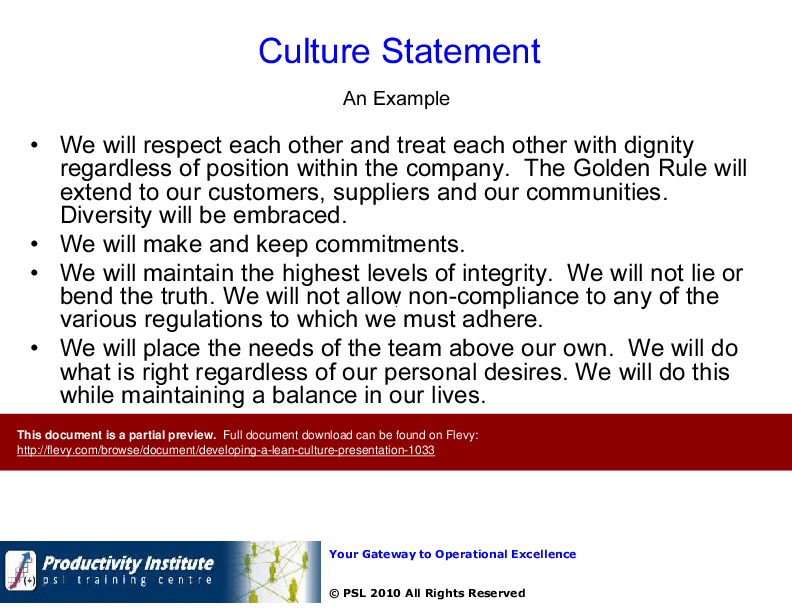
•  Developing a culture statement
•  Employee engagement
•  Organisational alignment

Also included with this document is a bonus zip of 41 Lean documents (includes templates, case studies, articles, posters, charts, and more).

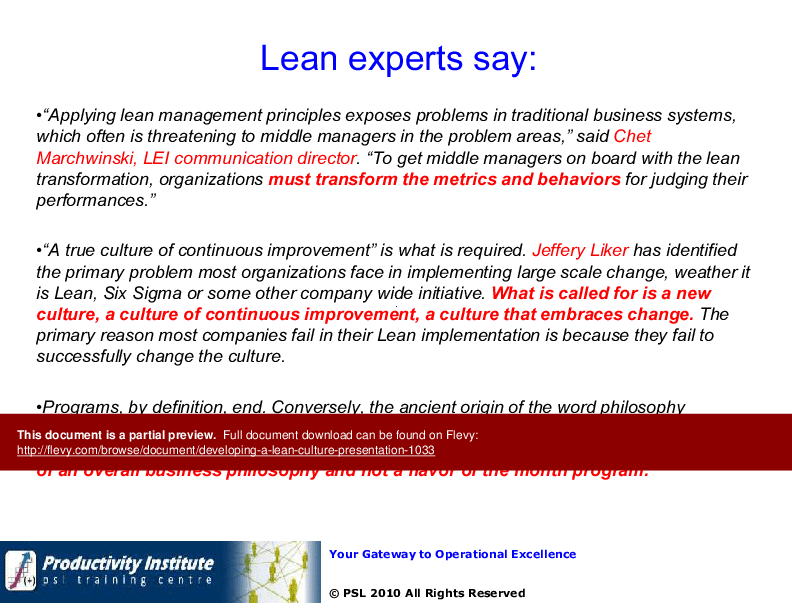
Lean experts emphasize the necessity of transforming metrics and behaviors to align with lean management principles. This shift is critical to exposing and addressing issues within traditional business systems. The document underscores the importance of fostering a culture of continuous improvement, as identified by Jeffrey Liker, to successfully implement large-scale changes such as Lean or Six Sigma. Without this cultural shift, most organizations struggle to sustain their lean initiatives.

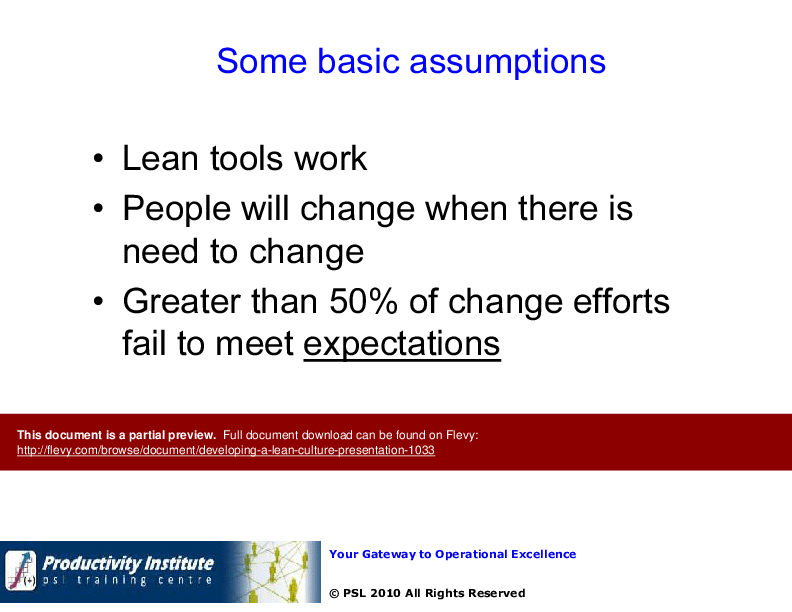
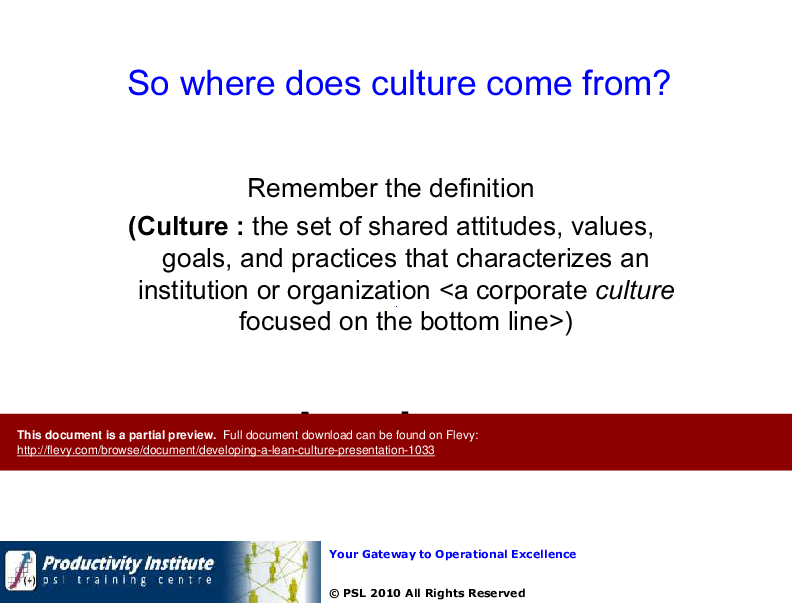
The presentation also highlights that over 50% of change efforts fail to meet expectations, reinforcing the need for a robust cultural foundation. Lean tools are effective,, but their success hinges on the willingness of people to change when necessary. The document provides a comprehensive definition of culture, emphasizing shared attitudes, values, and practices that characterize an organization. This foundational understanding is crucial for any organization aiming to develop a lean culture.

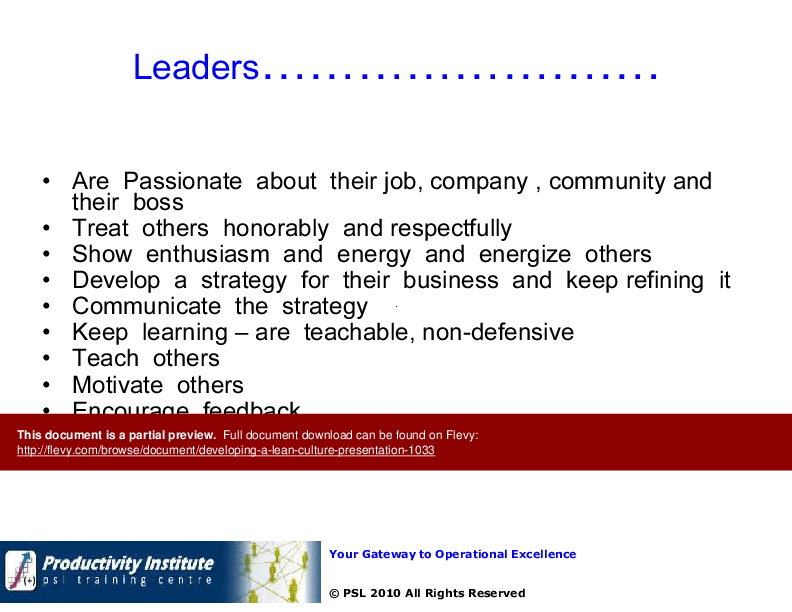
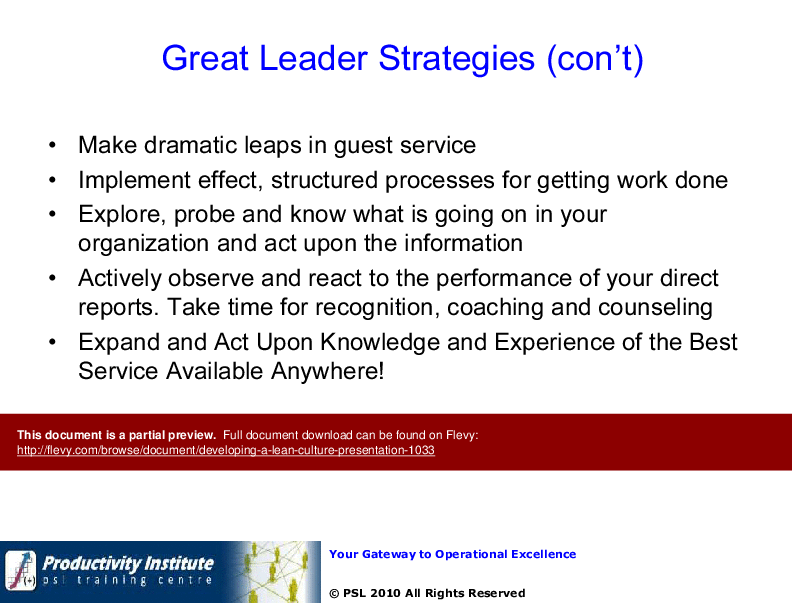
Leadership plays a pivotal role in this transformation. Effective leaders are passionate, respectful, and continuously learning. They develop and communicate strategies, motivate others, and encourage feedback. The document outlines strategies for great leaders, such as making dramatic improvements in service, implementing structured processes, and actively engaging with their teams. This focus on leadership ensures that the lean culture is not just a set of tools, but a deeply ingrained philosophy that drives the organization forward.

Got a question about the product? Email us at support@flevy.com or ask the author directly by using the "Ask the Author a Question" form. If you cannot view the preview above this document description, go here to view the large preview instead.

MARCUS OVERVIEW

This synopsis was written by Marcus [?] based on the analysis of the full 46-slide presentation.


Executive Summary
This presentation, titled "Developing a Lean Culture," is designed to guide organizations in fostering a culture of continuous improvement through engagement and metrics. Developed by a certified LSS Master Black Belt with extensive experience training over 5,000 individuals globally, this deck addresses the critical role of organizational culture in successful Lean implementation. It emphasizes that a strong culture, aligned with Lean principles, is essential for sustainable performance and operational excellence.

Who This Is For and When to Use
•  Corporate executives seeking to drive Lean transformation within their organizations
•  Change management leaders responsible for cultural shifts and employee engagement
•  Lean practitioners and consultants aiming to enhance Lean methodologies
•  HR professionals focused on aligning organizational culture with business goals

Best-fit moments to use this deck:
•  During initial Lean training sessions to establish cultural foundations
•  In workshops aimed at aligning leadership and employee engagement strategies
•  When assessing the effectiveness of current Lean initiatives and cultural alignment

Learning Objectives
•  Define the concept of organizational culture and its impact on Lean success
•  Identify key leadership behaviors that foster a Lean culture
•  Establish metrics for measuring employee engagement and cultural alignment
•  Develop strategies for overcoming resistance to Lean transformation
•  Create a culture statement that reflects organizational values and goals
•  Implement Lean tools effectively while ensuring cultural integration

Table of Contents
•  Introduction to Lean Culture (page 3)
•  Importance of Organizational Culture (page 5)
•  Leadership and Culture Change (page 10)
•  Employee Engagement Strategies (page 15)
•  Metrics for Measuring Success (page 20)
•  Developing a Culture Statement (page 25)
•  Overcoming Resistance to Change (page 30)
•  Conclusion and Next Steps (page 35)

Primary Topics Covered
•  Organizational Culture - The shared attitudes, values, and practices that define an organization, crucial for Lean success.
•  Leadership Impact - The role of leaders in shaping and driving cultural change, emphasizing accountability and engagement.
•  Employee Engagement - Strategies to enhance employee commitment and involvement, leading to improved performance.
•  Change Management - Approaches to facilitate culture change, addressing resistance and fostering a continuous improvement mindset.
•  Metrics and Measurement - Tools and techniques for assessing cultural alignment and employee engagement levels.
•  Lean Tools and Execution - The importance of integrating Lean methodologies with cultural practices for sustained success.

Deliverables, Templates, and Tools
•  Culture statement template to define organizational values and expectations
•  Engagement survey tools to assess employee commitment and satisfaction
•  Change management framework for guiding cultural transformation
•  Metrics dashboard for tracking progress in Lean implementation and cultural alignment
•  Leadership development program outline to enhance skills in fostering a Lean culture
•  Communication plan template to ensure transparency during cultural shifts

Slide Highlights
•  A compelling visual on the relationship between culture and Lean success
•  Key statistics illustrating the high failure rates of Lean initiatives due to cultural misalignment
•  Leadership strategies for fostering engagement and accountability among team members
•  Examples of effective culture statements from successful organizations
•  Case studies showcasing the impact of employee engagement on business outcomes

Potential Workshop Agenda
Understanding Lean Culture (90 minutes)
•  Define Lean culture and its significance in organizational success
•  Discuss the relationship between culture and employee engagement

Leadership Strategies for Change (60 minutes)
•  Identify key leadership behaviors that promote a Lean culture
•  Develop action plans for leaders to drive cultural transformation

Engagement and Metrics (90 minutes)
•  Explore tools for measuring employee engagement
•  Create a metrics dashboard to track cultural alignment and Lean success

Customization Guidance
•  Tailor the culture statement template to reflect your organization's unique values and goals
•  Adjust engagement survey questions to align with specific organizational contexts
•  Incorporate industry-specific examples in case studies to enhance relevance

Secondary Topics Covered
•  The role of communication in driving cultural change
•  Best practices for aligning Lean initiatives with organizational goals
•  Techniques for fostering a culture of continuous improvement
•  The significance of employee feedback in shaping organizational culture

Topic FAQ

What are the core elements that define a lean culture?

A lean culture is defined by shared attitudes, values, and practices that prioritize continuous improvement, employee engagement, and organizational alignment. Key elements include leadership behaviors that model Lean principles, structured processes for improvement, and mechanisms to collect feedback and measure progress, such as a culture statement template.

Which leadership behaviors most support Lean transformation?

Effective Lean leaders model desired behaviors by being passionate, respectful, continuously learning, communicating strategy, motivating staff, and encouraging feedback. These behaviors should be reinforced through leader development activities and formal programs; the presentation includes a leadership development program outline to support these actions.

How can we measure whether our culture is aligned with Lean objectives?

Cultural alignment can be measured using employee engagement surveys, performance metrics, and a metrics dashboard that tracks progress against stated values and Lean goals. Regular survey results and dashboard indicators provide quantifiable signals of alignment and areas for intervention via an engagement survey tool.

What features should I expect from a Lean culture training deck when evaluating purchases?

Look for definitional material on organizational culture, sections on leadership and engagement, practical templates (culture statement, communication plan), measurement tools (engagement survey, metrics dashboard), a change management framework, and supplemental practical documents; Developing a Lean Culture contains 46 slides and a bonus ZIP of 41 documents.

How much time should we allocate if we run workshops using these materials?

The presentation suggests a sample workshop agenda split into 3 sessions: Understanding Lean Culture (90 minutes), Leadership Strategies for Change (60 minutes), and Engagement and Metrics (90 minutes), totaling 240 minutes across these focused modules and supporting materials in the deck.

As an HR lead, what steps should I take to align HR processes with a Lean culture?

HR should create or adapt a culture statement reflecting values, tailor engagement survey questions to measure commitment, align performance metrics with Lean objectives, deploy leadership development activities, and use a communication plan to maintain transparency; the materials include a culture statement template to start this work.

Our previous Lean initiative stalled—how do we assess whether culture was the root cause?

Assess leadership behaviors, employee engagement levels, communication effectiveness, and measurement systems. Use engagement surveys and performance metrics to identify gaps, review alignment with stated values, and map findings to change-management actions; the presentation provides tools such as an engagement survey and metrics dashboard to support this assessment.

Should we buy a ready-made Lean culture template set or build materials internally given limited budget and time?

Consider timeline, internal expertise, and need for standardized templates: ready-made sets provide prebuilt culture statements, engagement surveys, change frameworks, and dashboards that can shorten preparation time, while internal builds may better reflect unique context; Developing a Lean Culture offers a 46-slide deck plus a ZIP of 41 supplemental documents to evaluate.

Document FAQ
These are questions addressed within this presentation.

What is the primary focus of this presentation?
The presentation focuses on developing a Lean culture that supports continuous improvement and operational excellence through engagement and metrics.

Who should use this deck?
This deck is ideal for corporate executives, change management leaders, Lean practitioners, and HR professionals involved in cultural transformation.

How can we measure the success of our Lean culture?
Success can be measured through employee engagement surveys, performance metrics, and alignment with organizational values.

What are the key components of a culture statement?
A culture statement should reflect organizational values, commitment to integrity, customer focus, and a dedication to continuous improvement.

What challenges might we face in changing our culture?
Common challenges include resistance to change, lack of leadership support, and insufficient communication throughout the organization.

How can leadership influence culture change?
Leaders can influence culture change by modeling desired behaviors, fostering open communication, and actively engaging employees in the transformation process.

What role does employee engagement play in Lean success?
High levels of employee engagement lead to increased commitment, productivity, and overall success in Lean initiatives.

What tools can we use to facilitate culture change?
Tools such as engagement surveys, change management frameworks, and performance metrics dashboards can facilitate culture change.

Glossary
•  Lean Culture - A culture that embraces continuous improvement and values employee engagement.
•  Employee Engagement - The level of commitment and involvement an employee has towards their organization.
•  Culture Statement - A formal declaration of an organization's values and expectations regarding behavior.
•  Change Management - The process of guiding individuals and organizations through transitions.
•  Metrics Dashboard - A visual representation of key performance indicators related to culture and engagement.
•  Leadership Development - Programs designed to enhance the skills and effectiveness of organizational leaders.
•  Continuous Improvement - An ongoing effort to improve products, services, or processes.
•  Organizational Alignment - The degree to which an organization's structure, culture, and strategy are in sync.
•  Engagement Survey - A tool used to assess employee satisfaction and commitment.
•  Communication Plan - A strategy for ensuring effective information sharing during change initiatives.
•  Performance Metrics - Quantifiable measures used to evaluate success in achieving organizational goals.
•  Cultural Transformation - The process of changing an organization's culture to align with new goals or strategies.

Source: Best Practices in Lean, Corporate Culture, Lean Culture PowerPoint Slides: Developing a Lean Culture PowerPoint (PPTX) Presentation Slide Deck, OpEx Academy NZ


$39.00
This presentation is developed by a pioneer in Lean and certified LSS Master Black Belt who has trained over 5,000+ students globally, from Directors, CEOs, GMs, to shop floor staff. He's endorsed by CMI Consortium, NZTE, HERA, NZPICS, CBAFF.
Add to Cart
  

ABOUT THE AUTHOR

Author image
Additional documents from author: 88

Vishnu Rayapeddi is an experienced management consultant and trainer specializing in implementing continuous process improvements. Vishnu is a pioneer in Lean Management which combines the power of Lean Thinking, TOC, Six Sigma, TQM, TWI, Balanced Scorecard, cGMP and other best-class methodologies such as, DMAIC, Value Stream Mapping, Root Cause Analysis, 5S, Quick Changeovers, Quality and ... [read more]

Ask the Author a Question

You must be logged in to contact the author.

Click here to log in Click here register

Did you know?
The average daily rate of a McKinsey consultant is $6,625 (not including expenses). The average price of a Flevy document is $65.



Trusted by over 10,000+ Client Organizations
Since 2012, we have provided business templates to over 10,000 businesses and organizations of all sizes, from startups and small businesses to the Fortune 100, in over 130 countries.
AT&T GE Cisco Intel IBM Coke Dell Toyota HP Nike Samsung Microsoft Astrazeneca JP Morgan KPMG Walgreens Walmart 3M Kaiser Oracle SAP Google E&Y Volvo Bosch Merck Fedex Shell Amgen Eli Lilly Roche AIG Abbott Amazon PwC T-Mobile Broadcom Bayer Pearson Titleist ConEd Pfizer NTT Data Schwab


Read Customer Testimonials

 
"I am extremely grateful for the proactiveness and eagerness to help and I would gladly recommend the Flevy team if you are looking for data and toolkits to help you work through business solutions."

– Trevor Booth, Partner, Fast Forward Consulting
 
"As a young consulting firm, requests for input from clients vary and it's sometimes impossible to provide expert solutions across a broad spectrum of requirements. That was before I discovered Flevy.com.

Through subscription to this invaluable site of a plethora of topics that are key and crucial to consulting, I "

– Nishi Singh, Strategist and MD at NSP Consultants
 
"As a consulting firm, we had been creating subject matter training materials for our people and found the excellent materials on Flevy, which saved us 100's of hours of re-creating what already exists on the Flevy materials we purchased."

– Michael Evans, Managing Director at Newport LLC
 
"Flevy is our 'go to' resource for management material, at an affordable cost. The Flevy library is comprehensive and the content deep, and typically provides a great foundation for us to further develop and tailor our own service offer."

– Chris McCann, Founder at Resilient.World
 
"[Flevy] produces some great work that has been/continues to be of immense help not only to myself, but as I seek to provide professional services to my clients, it gives me a large "tool box" of resources that are critical to provide them with the quality of service and outcomes they are expecting."

– Royston Knowles, Executive with 50+ Years of Board Level Experience
 
"The wide selection of frameworks is very useful to me as an independent consultant. In fact, it rivals what I had at my disposal at Big 4 Consulting firms in terms of efficacy and organization."

– Julia T., Consulting Firm Owner (Former Manager at Deloitte and Capgemini)
 
"FlevyPro provides business frameworks from many of the global giants in management consulting that allow you to provide best in class solutions for your clients."

– David Harris, Managing Director at Futures Strategy
 
"My FlevyPro subscription provides me with the most popular frameworks and decks in demand in today’s market. They not only augment my existing consulting and coaching offerings and delivery, but also keep me abreast of the latest trends, inspire new products and service offerings for my practice, and educate me "

– Bill Branson, Founder at Strategic Business Architects


Customers Also Bought These Documents


Customers Also Like These Documents

Explore Templates on Related Management Topics


Your Recently Viewed Documents
Receive our FREE presentation on Operational Excellence

This 50-slide presentation provides a high-level introduction to the 4 Building Blocks of Operational Excellence. Achieving OpEx requires the implementation of a Business Execution System that integrates these 4 building blocks.