
Six Steps of Kaizen   215-slide PPT PowerPoint presentation slide deck (PPTX)
$89.00

Six Steps of Kaizen (215-slide PPT PowerPoint presentation slide deck (PPTX)) Preview Image
Log in to unlock full preview.
Six Steps of Kaizen (215-slide PPT PowerPoint presentation slide deck (PPTX)) Preview Image
Arrow   Click main image to view in full screen.

Six Steps of Kaizen (PowerPoint PPTX Slide Deck)

PowerPoint (PPTX) + supplemental PDF 215 Slides

$89.00
Developed by a seasoned Certified Lean Six Sigma Black Belt with a proven track record at Microsoft, IBM and Panasonic, this comprehensive presentation is your pathway to achieving Operational Excellence through Lean Methodologies.
Add to Cart


Immediate download
Fully editable PowerPoint
Free lifetime updates

BENEFITS OF THIS POWERPOINT DOCUMENT

  1. Provides a broad framework for process and workplace improvement.
  2. Provides various approaches for identifying and discovering waste in your processes and work areas.
  3. Provides various creativity techniques to generate original ideas for improvement.

KAIZEN PPT DESCRIPTION

Editor Summary 215-slide PowerPoint training presentation (with supplemental Kaizen poster PDF) titled Six Steps of Kaizen, developed by Operational Excellence Consulting and authored by a Certified Lean Six Sigma Black Belt with experience at Microsoft, IBM and Panasonic. Read more

The Six Steps of Kaizen articulates the six improvement steps that are practiced by Toyota during the past few decades. It focuses on the skills, methods and analysis techniques. Please note that this process is not about running western-style five-day Kaizen "events" or "blitzs," selecting areas for Kaizen or detailing best practices for running such workshops. Five-day implementation workshops were in reality quite rare during the development of Toyota's production system and are virtually non-existent today inside Toyota.

In this presentation, the focus is to articulate the basic six-step Kaizen improvement skills pattern that was taught inside Toyota. The steps are similar to other improvement programs in the past as well as problem solving and the scientific method. It is hoped that this simple and powerful process will help practitioners of Kaizen to improve their own skill level and confidence with this topic.

The Kaizen skills concepts described in this presentation should be of value to you whether you choose to use a five-day workshop model for implementation or some other vehicle (e.g. 5S, standardization, waste elimination) for improvement.

Implementing the Six Steps of Kaizen will facilitate your company or organization to achieve a new standard or level of performance and enhance your competitiveness.

In this highly detailed Six Steps of Kaizen PPT training presentation, you will review the same methods and techniques that are harnessed by generations of Toyota supervisors, managers and engineers. They include techniques for uncovering waste, waste analysis and generating ideas for improvement. Mastery of these timeless techniques will improve your ability to conduct improvement in almost any setting and generate improvement results for your organization.

||||||||||||||||||||||||||||||||||||||||||||||||||||||||||||||||||||||||||||||||||||||||||||||||||||||||||||||||||||||||||||||||||||||||||||||||||||||
This training package includes:
1. Six Steps of Kaizen PPT training presentation (PowerPoint format)
2. Kaizen poster (PDF format, in color and monochrome, printable in A3 size)
||||||||||||||||||||||||||||||||||||||||||||||||||||||||||||||||||||||||||||||||||||||||||||||||||||||||||||||||||||||||||||||||||||||||||||||||||||||

LEARNING OBJECTIVES

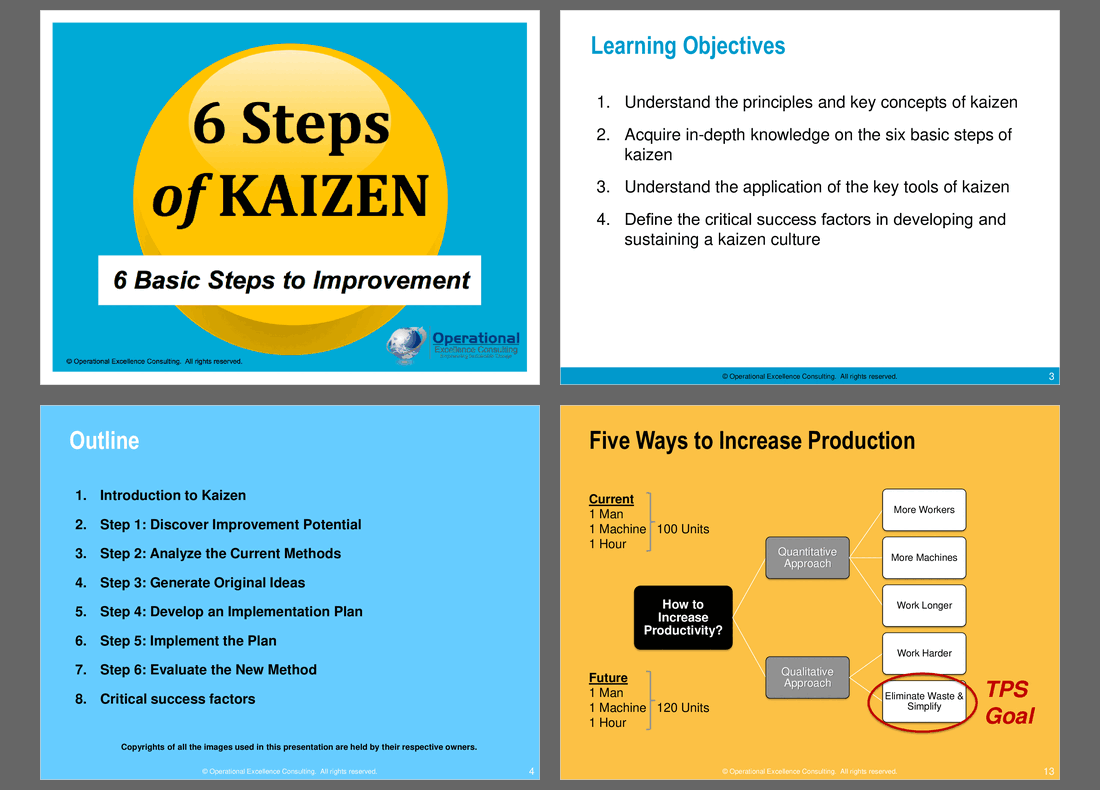
1. Understand the principles and key concepts of Kaizen.
2. Acquire in-depth knowledge on the six basic steps of Kaizen.
3. Understand the application of the key techniques and tools of Kaizen.
4. Define the critical success factors in developing and sustaining a Kaizen culture.

CONTENTS

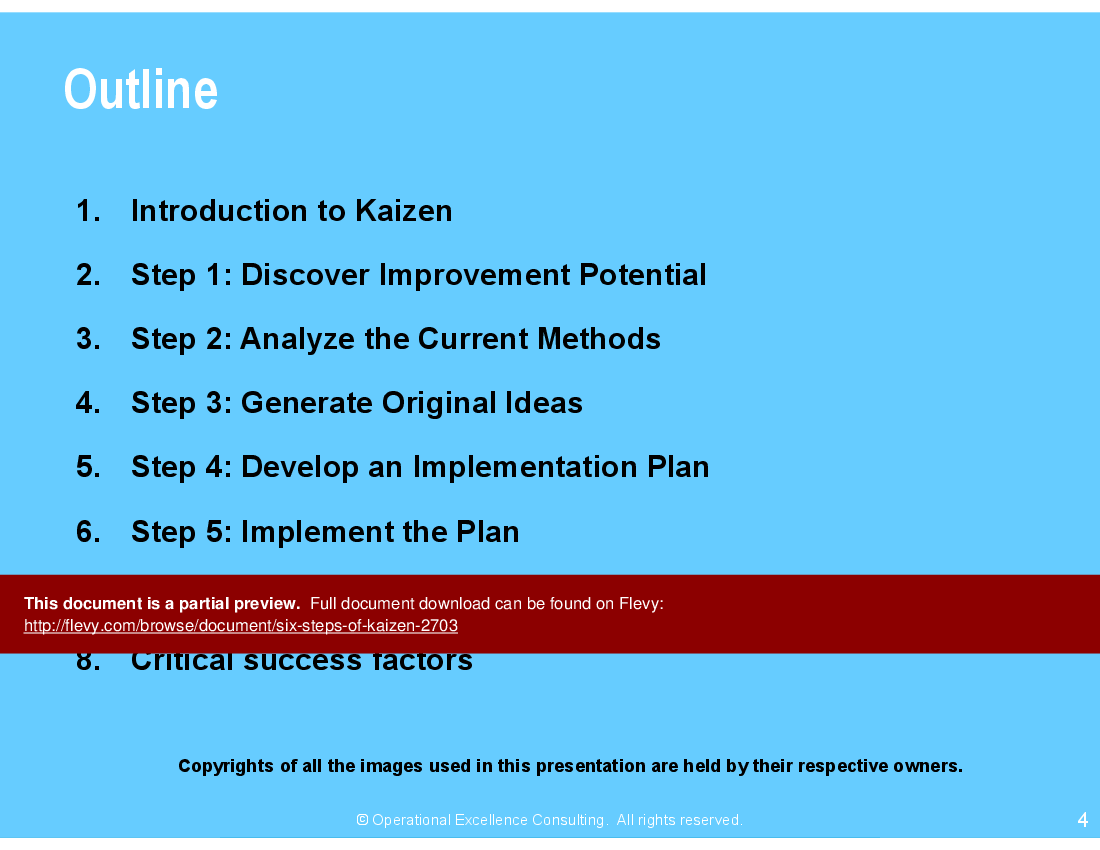
1. Introduction to Kaizen
•  What is Kaizen?
•  The Importance of Kaizen
•  Work vs. Waste
•  Eight Types of Waste
•  Cost Reduction Principle
•  Six Steps of Kaizen

2. Step 1: Discover Improvement Potential
•  Kaizen vs. Problem Solving
•  Kaizen Attitude
•  Analytical Skills for Kaizen
•  Compare Performance Standards
•  Production Analysis Board
•  Using the Back Door
•  Five S
•  The Eight Deadly Waste

3. Step 2: Analyze the Current Methods
•  Basic Analysis Methods
•  Work Analysis
•  TWI Job Methods Analysis
•  Standardized Work
•  Equipment Loss Analysis
•  Value-Added Flow Chart
•  Flow Analysis Chart

4. Step 3: Generate Original Ideas
•  Common Roadblocks to Creativity
•  Brainstorming
•  Listing Faults
•  Listing Wishes
•  Listing Characteristics
•  The Gordon Method
•  Osborn's Checklist
•  5W1H & ECRS
•  Brainwriting
•  Nyaka Method
•  NHK Method
•  SCAMPER
•  What If?
•  Rules of Motion Economy
•  Assessment of Ideas

5. Step 4: Develop an Implementation Plan
•  Key Points in Planning
•  Example of Implementation Plan with Status Update

6. Step 5: Implement the Plan
•  Communication
•  Training
•  Positive Attitude

7. Step 6: Evaluate the New Method
•  Evaluate the Method
•  Effect Confirmation
•  Follow Up
•  Kaizen Summary Sheet

8. Critical success factors
•  Keys to Success

The presentation delves into the analytical skills necessary for identifying and eliminating waste, ensuring a streamlined process. It also provides practical examples of how to apply these principles in real-world scenarios, enhancing operational efficiency.

Got a question about the product? Email us at support@flevy.com or ask the author directly by using the "Ask the Author a Question" form. If you cannot view the preview above this document description, go here to view the large preview instead.

MARCUS OVERVIEW

This synopsis was written by Marcus [?] based on the analysis of the full 215-slide presentation.


Executive Summary
The "Six Steps of Kaizen" presentation provides a structured approach to continuous improvement through the principles of Kaizen, a Japanese term meaning "change for the better." Developed by a Certified Lean Six Sigma Black Belt with extensive experience at leading companies, this presentation equips organizations with the knowledge to identify improvement opportunities, analyze current methods, generate innovative ideas, and implement effective solutions. The deck serves as a comprehensive guide for fostering a culture of ongoing improvement and operational excellence.

Who This Is For and When to Use
•  Operations Managers seeking to enhance process efficiency
•  Quality Assurance Teams focused on reducing defects and waste
•  Lean Practitioners aiming to implement Kaizen methodologies
•  Team Leaders responsible for driving continuous improvement initiatives

Best-fit moments to use this deck:
•  During team training sessions on Lean methodologies
•  When initiating a Kaizen event or workshop
•  As a reference for ongoing improvement projects

Learning Objectives
•  Understand the principles and key concepts of Kaizen
•  Acquire in-depth knowledge of the 6 basic steps of Kaizen
•  Apply key tools of Kaizen effectively
•  Define critical success factors for developing and sustaining a Kaizen culture

Table of Contents
•  Introduction to Kaizen (page 1)
•  Step 1: Discover Improvement Potential (page 2)
•  Step 2: Analyze the Current Methods (page 3)
•  Step 3: Generate Original Ideas (page 4)
•  Step 4: Develop an Implementation Plan (page 5)
•  Step 5: Implement the Plan (page 6)
•  Step 6: Evaluate the New Method (page 7)
•  Critical Success Factors (page 8)

Primary Topics Covered
•  Kaizen Principles - Kaizen emphasizes continuous improvement involving all employees, focusing on small, incremental changes rather than large-scale transformations.
•  Improvement Potential - Techniques for identifying areas of waste and opportunities for enhancement within work processes.
•  Current Methods Analysis - Analytical tools such as work analysis and value stream mapping to assess existing workflows.
•  Idea Generation Techniques - Creative methods for brainstorming and synthesizing innovative solutions to identified problems.
•  Implementation Planning - Strategies for developing actionable plans that include communication and training for effective execution.
•  Evaluation of Results - Metrics and standards for measuring the success of implemented changes and ensuring sustainability.

Deliverables, Templates, and Tools
•  Kaizen event planning template for organizing improvement workshops
•  Standard Work Chart for documenting and standardizing processes
•  Value Stream Mapping tool to visualize and analyze workflow
•  Brainstorming session guidelines for generating innovative ideas
•  Implementation plan template to track action items and responsible parties
•  Evaluation metrics for assessing the impact of Kaizen initiatives

Slide Highlights
•  Overview of the Six Steps of Kaizen, providing a visual roadmap for continuous improvement
•  Detailed breakdown of each step, including practical examples and methodologies
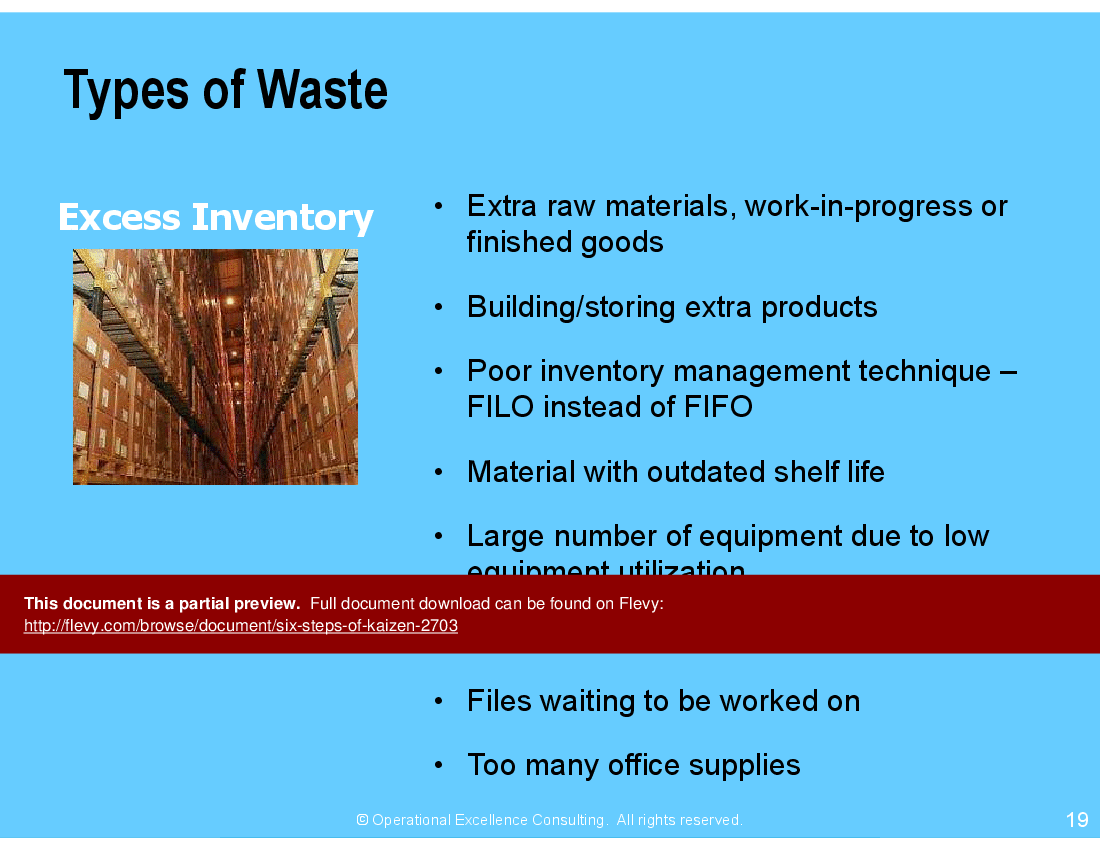
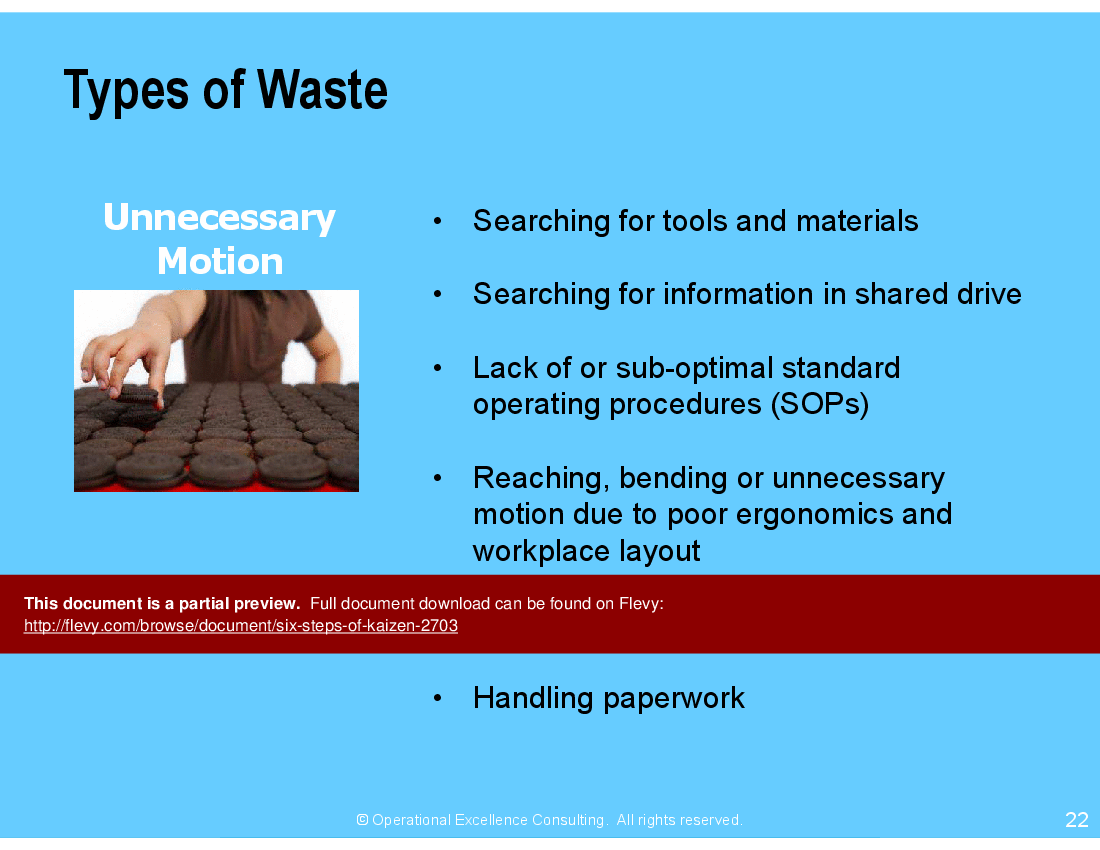
•  Charts illustrating the types of waste and how to identify them effectively
•  Case studies demonstrating successful Kaizen implementations in various industries

Potential Workshop Agenda
Kaizen Introduction Session (60 minutes)
•  Overview of Kaizen principles and importance
•  Discussion on the role of employees in continuous improvement

Step-by-Step Kaizen Workshop (120 minutes)
•  Hands-on activities for discovering improvement potential
•  Group analysis of current methods using provided tools

Idea Generation and Planning Session (90 minutes)
•  Brainstorming techniques to generate innovative solutions
•  Development of implementation plans for selected ideas

Customization Guidance
•  Tailor the presentation to reflect specific organizational goals and challenges
•  Adjust examples and case studies to align with industry-specific contexts
•  Incorporate company-specific metrics and standards for evaluation

Secondary Topics Covered
•  The role of leadership in fostering a Kaizen culture
•  Techniques for sustaining improvements over time
•  Challenges and common pitfalls in Kaizen implementation
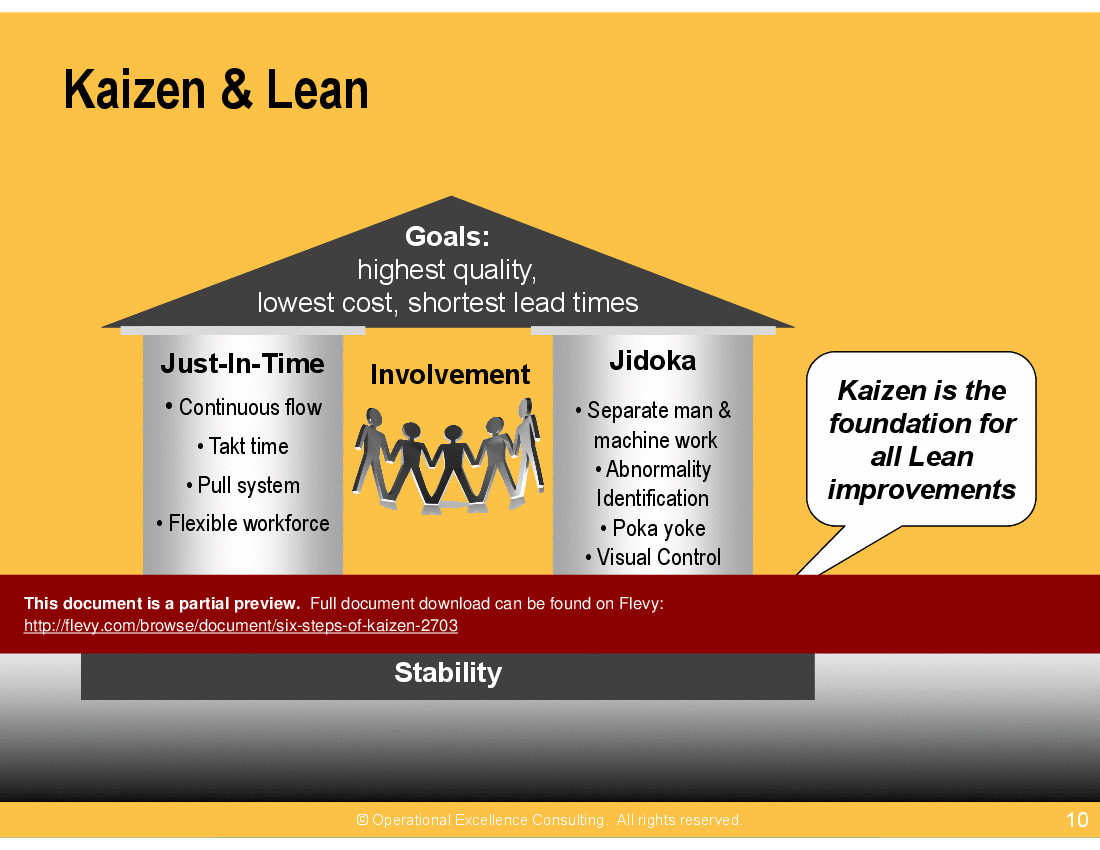
•  The relationship between Kaizen and Lean methodologies

Topic FAQ

What are the 6 steps of Kaizen?

The 6 steps are Discover Improvement Potential; Analyze the Current Methods; Generate Original Ideas; Develop an Implementation Plan; Implement the Plan; and Evaluate the New Method. These steps form the structured Kaizen pattern taught inside Toyota and documented in the Six Steps of Kaizen presentation as a six-step sequence.

How do I identify waste in a process using Kaizen techniques?

Identification relies on work analysis, value stream mapping, production analysis boards, and the Eight Types of Waste. Practical methods include observing Gemba, comparing performance standards, and using tools like the Value Stream Mapping tool and Standard Work Chart to visualize non-value activities, including the Eight Types of Waste.

Which tools are most useful for facilitating Kaizen improvements?

Core tools include Value Stream Mapping, Standard Work Charts, Work Analysis methods (e.g., TWI Job Methods), brainstorming and idea-assessment techniques, implementation plan templates, and evaluation metrics. These tools support diagnosing current methods, generating ideas, tracking actions, and measuring outcomes, with the Standard Work Chart cited as central.

How should I measure the success of a Kaizen initiative?

Measure using operational KPIs such as defect rates, cycle times, takt time, and employee engagement, combined with effect confirmation and follow-up reviews. The presentation recommends using evaluation metrics and confirmation checks tied to the implemented changes, for example monitoring defect rates and cycle time reductions.

What should I look for in a Kaizen training deck for in-house sessions?

Look for clear step-by-step coverage of Kaizen, practical templates (event planning, implementation plan), tools for analysis (Value Stream Mapping, Standard Work), case studies, and a suggested workshop agenda. Flevy’s Six Steps of Kaizen presentation includes these elements and totals 215 slides plus a printable Kaizen poster PDF.

How much workshop time should I plan when using a Kaizen PPT package?

The presentation provides a sample agenda with discrete sessions: a 60-minute Kaizen introduction, a 120-minute step-by-step workshop for discovery and analysis, and a 90-minute idea-generation and planning session. These sample durations provide a starting point for half-day to multi-session workshops using the supplied templates.

What Kaizen techniques help create consistent standardized work?

Use Standardized Work documentation, TWI Job Methods analysis, work analysis, flow analysis charts, and 5S to define and maintain consistent procedures. The toolkit emphasizes documenting best practices with Standard Work Charts and using follow-up evaluation and Kaizen Summary Sheets to sustain standards, with Standard Work Chart as a key deliverable.

Can Kaizen be applied outside manufacturing, and how would it adapt to service settings?

Yes; Kaizen principles apply to service, healthcare, and administrative processes by using flow analysis, value-added flow charts, and work analysis to map service workflows. The presentation explicitly notes applicability across sectors and recommends tools like Value Stream Mapping and flow analysis charts for non-manufacturing contexts.

Document FAQ
These are questions addressed within this presentation.

What is Kaizen?
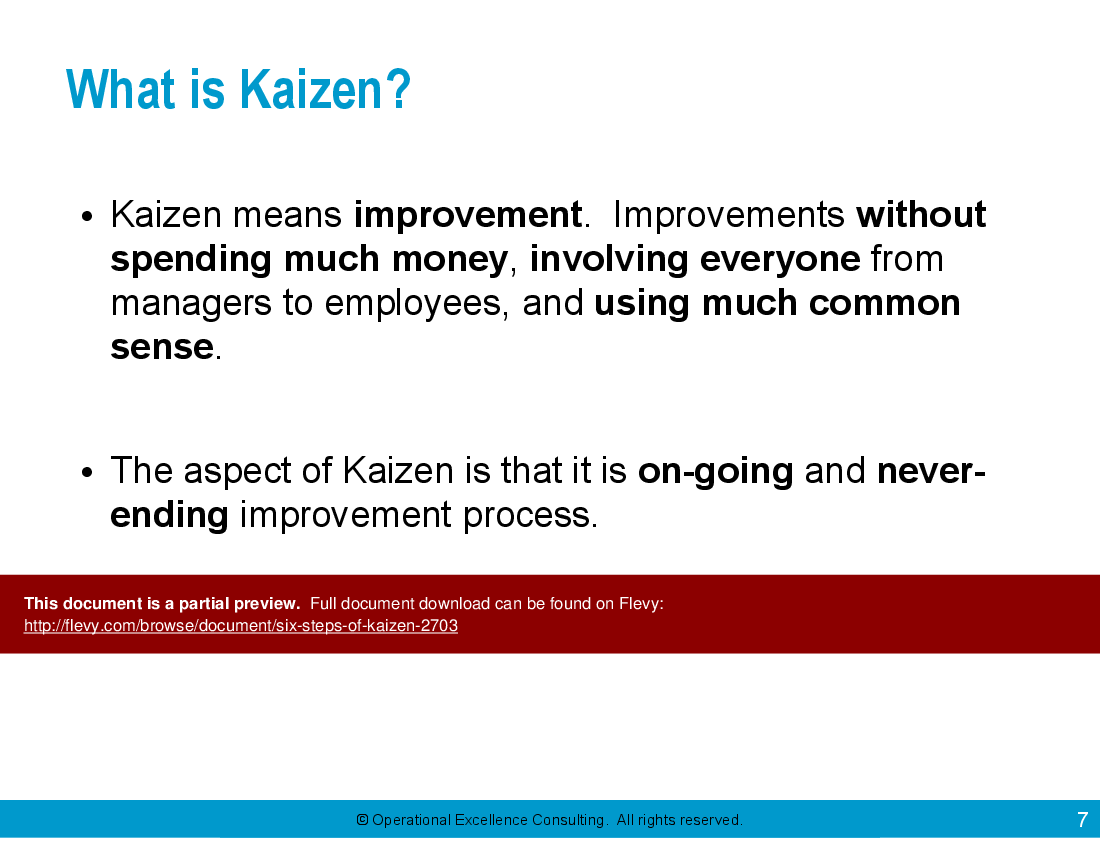
Kaizen is a Japanese term meaning "change for the better," focusing on continuous improvement in processes, products, and services through incremental changes.

How can I implement Kaizen in my organization?
Start by training your team on Kaizen principles, identify areas for improvement, and use the structured steps outlined in this presentation to guide your initiatives.

What tools are essential for Kaizen?
Key tools include Value Stream Mapping, Standard Work Charts, and brainstorming techniques for idea generation.

How do I measure the success of Kaizen initiatives?
Use established metrics such as defect rates, cycle times, and employee engagement levels to assess the impact of implemented changes.

Can Kaizen be applied in non-manufacturing settings?
Yes, Kaizen principles can be effectively applied in various sectors, including service industries, healthcare, and administrative processes.

What are the critical success factors for Kaizen?
Management commitment, employee involvement, clear communication, and a focus on measurable outcomes are essential for successful Kaizen implementation.

How often should we conduct Kaizen events?
Regularly scheduled Kaizen events, such as monthly or quarterly workshops, can help maintain momentum and continuous improvement.

What challenges might we face when implementing Kaizen?
Common challenges include resistance to change, lack of management support, and insufficient training for employees.

Glossary
•  Kaizen - Continuous improvement process involving all employees
•  Value Stream Mapping - Tool for visualizing and analyzing workflows
•  Standard Work - Documented best practices for performing tasks
•  5S - Methodology for organizing and maintaining a clean workspace
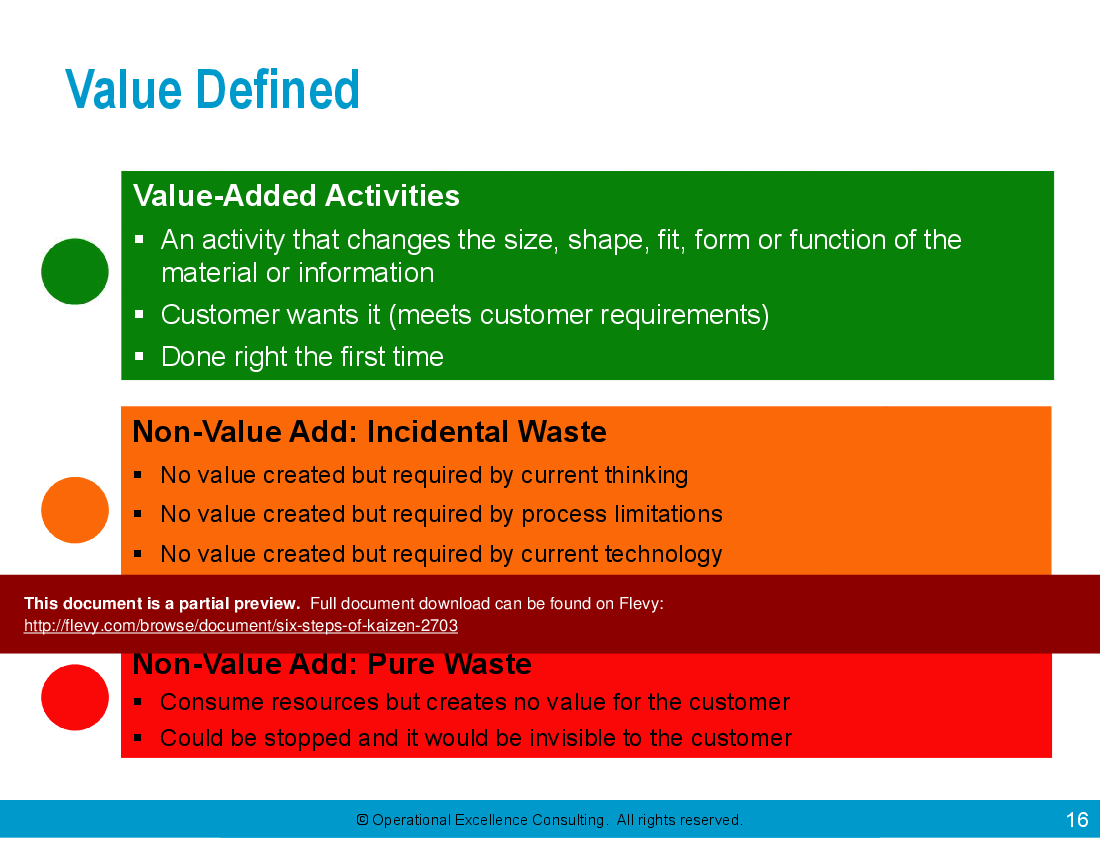
•  Waste - Any activity that does not add value to the customer
•  Lean - Methodology focused on minimizing waste while maximizing productivity
•  Continuous Improvement - Ongoing effort to enhance products, services, or processes
•  Defect Rate - Measure of the number of defective products produced
•  Cycle Time - Total time taken to complete a process from start to finish
•  Employee Engagement - Level of commitment and involvement of employees in their work
•  Takt Time - The maximum allowable time to produce a product to meet customer demand
•  Root Cause Analysis - Process for identifying the underlying causes of problems
•  Gemba - The place where work is done, emphasizing the importance of observing processes firsthand
•  A3 Report - A structured problem-solving tool used in Lean management
•  Brainstorming - Creative technique for generating a large number of ideas
•  Implementation Plan - Document outlining actions, responsibilities, and timelines for executing improvements
•  Evaluation Metrics - Standards used to measure the effectiveness of implemented changes
•  Employee Involvement - Engagement of staff in improvement initiatives to leverage their insights and expertise.

Source: Best Practices in Kaizen PowerPoint Slides: Six Steps of Kaizen PowerPoint (PPTX) Presentation Slide Deck, Operational Excellence Consulting


$89.00
Developed by a seasoned Certified Lean Six Sigma Black Belt with a proven track record at Microsoft, IBM and Panasonic, this comprehensive presentation is your pathway to achieving Operational Excellence through Lean Methodologies.
Add to Cart
  

ABOUT THE AUTHOR

Author image
Additional documents from author: 257
Terms of usage (for all documents from this author)

Operational Excellence Consulting, founded in 2009 by Allan Ung, draws from extensive experience at Microsoft, IBM, and Underwriters Laboratories (UL). We specialize in strategy deployment, customer experience design, and operational excellence, applying Design Thinking, Lean, and Systems Thinking to maximize customer value and minimize waste.

Our ... [read more]

Ask the Author a Question

You must be logged in to contact the author.

Click here to log in Click here register

Did you know?
The average daily rate of a McKinsey consultant is $6,625 (not including expenses). The average price of a Flevy document is $65.
Bundle and save! You can save up to % with bundles!

View bundle(s)


Trusted by over 10,000+ Client Organizations
Since 2012, we have provided business templates to over 10,000 businesses and organizations of all sizes, from startups and small businesses to the Fortune 100, in over 130 countries.
AT&T GE Cisco Intel IBM Coke Dell Toyota HP Nike Samsung Microsoft Astrazeneca JP Morgan KPMG Walgreens Walmart 3M Kaiser Oracle SAP Google E&Y Volvo Bosch Merck Fedex Shell Amgen Eli Lilly Roche AIG Abbott Amazon PwC T-Mobile Broadcom Bayer Pearson Titleist ConEd Pfizer NTT Data Schwab


Read Customer Testimonials

 
"As a small business owner, the resource material available from FlevyPro has proven to be invaluable. The ability to search for material on demand based our project events and client requirements was great for me and proved very beneficial to my clients. Importantly, being able to easily edit and tailor "

– Michael Duff, Managing Director at Change Strategy (UK)
 
"I have found Flevy to be an amazing resource and library of useful presentations for lean sigma, change management and so many other topics. This has reduced the time I need to spend on preparing for my performance consultation. The library is easily accessible and updates are regularly provided. A wealth of great information."

– Cynthia Howard RN, PhD, Executive Coach at Ei Leadership
 
"I have used FlevyPro for several business applications. It is a great complement to working with expensive consultants. The quality and effectiveness of the tools are of the highest standards."

– Moritz Bernhoerster, Global Sourcing Director at Fortune 500
 
"Flevy is our 'go to' resource for management material, at an affordable cost. The Flevy library is comprehensive and the content deep, and typically provides a great foundation for us to further develop and tailor our own service offer."

– Chris McCann, Founder at Resilient.World
 
"As an Independent Management Consultant, I find Flevy to add great value as a source of best practices, templates and information on new trends. Flevy has matured and the quality and quantity of the library is excellent. Lastly the price charged is reasonable, creating a win-win value for "

– Jim Schoen, Principal at FRC Group
 
"Flevy is now a part of my business routine. I visit Flevy at least 3 times each month.

Flevy has become my preferred learning source, because what it provides is practical, current, and useful in this era where the business world is being rewritten.

In today's environment where there are so "

– Omar Hernán Montes Parra, CEO at Quantum SFE
 
"As a niche strategic consulting firm, Flevy and FlevyPro frameworks and documents are an on-going reference to help us structure our findings and recommendations to our clients as well as improve their clarity, strength, and visual power. For us, it is an invaluable resource to increase our impact and value."

– David Coloma, Consulting Area Manager at Cynertia Consulting
 
"As a young consulting firm, requests for input from clients vary and it's sometimes impossible to provide expert solutions across a broad spectrum of requirements. That was before I discovered Flevy.com.

Through subscription to this invaluable site of a plethora of topics that are key and crucial to consulting, I "

– Nishi Singh, Strategist and MD at NSP Consultants


Save with Bundles

This document is available as part of the following discounted bundle(s):

Save %!
Kaizen Facilitator Toolkit

This bundle contains 3 total documents. See all the documents to the right.

$179.00


Add Bundle & Save

Save %!
Complete Kaizen Implementation Toolkit

This bundle contains 5 total documents. See all the documents to the right.

$299.00


Add Bundle & Save


Customers Also Bought These Documents


Customers Also Like These Documents

90-slide PowerPoint, Excel template
$95.00

Explore Templates on Related Management Topics


Your Recently Viewed Documents
Receive our FREE presentation on Operational Excellence

This 50-slide presentation provides a high-level introduction to the 4 Building Blocks of Operational Excellence. Achieving OpEx requires the implementation of a Business Execution System that integrates these 4 building blocks.