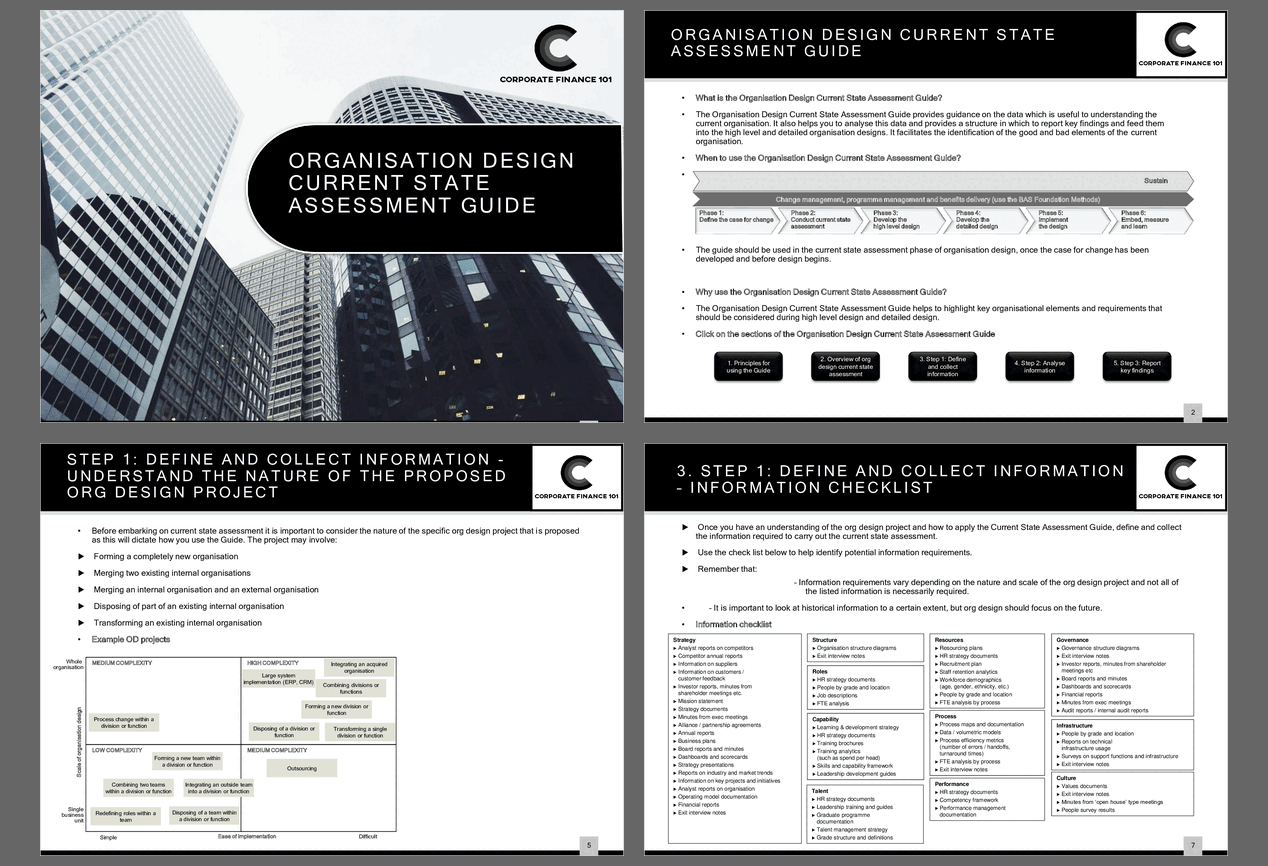
The Organisation Design Current State Assessment Guide provides guidance on the data which is useful to understanding the current organisation. It also helps you to analyse this data and provides a structure in which to report key findings and feed them into the high level and detailed organisation designs. It facilitates the identification of the good and bad elements of the current organisation.
The guide should be used in the current state assessment phase of organisation design, once the case for change has been developed and before design begins.
The Organisation Design Current State Assessment Guide helps to highlight key organisational elements and requirements that should be considered during high level design and detailed design.
This document is included as part of the Organisation Design Toolkit.
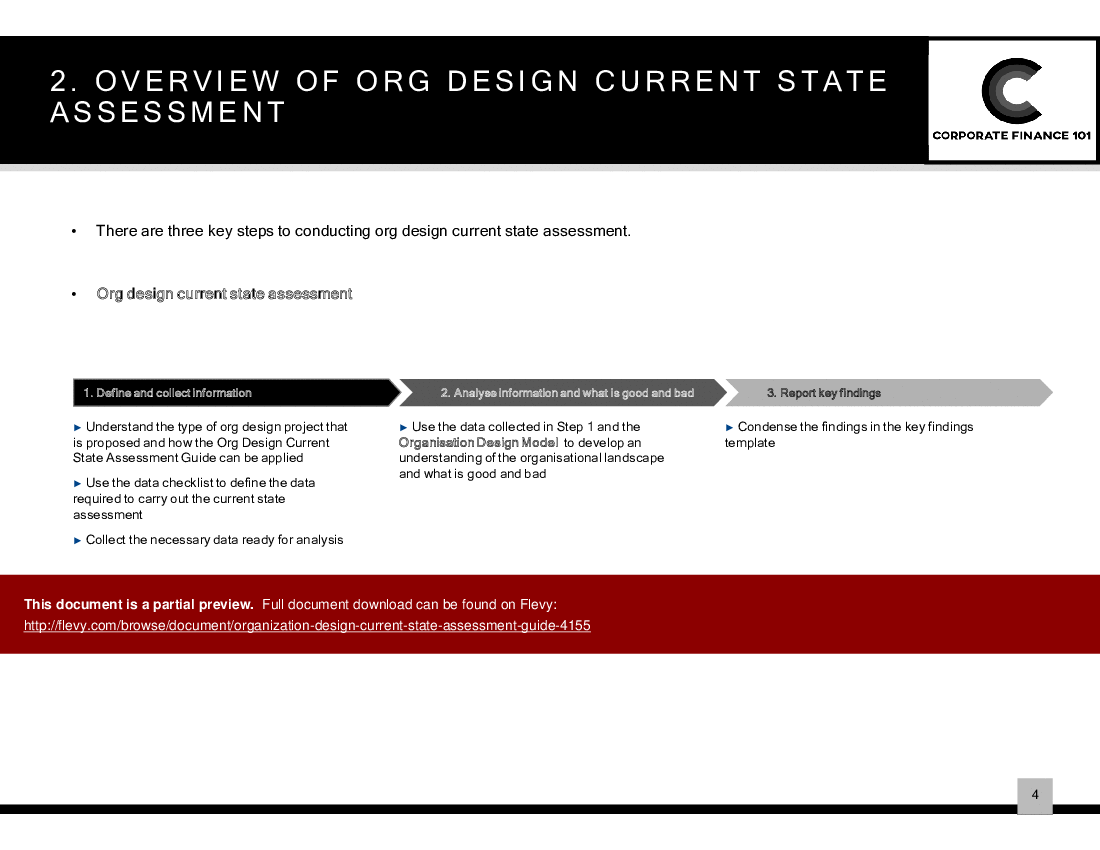
The Organisation Design Current State Assessment Guide is an essential tool for executives looking to rigorously evaluate their current organisational structure. It breaks down the assessment into three critical steps: defining and collecting information, analysing the data to identify strengths and weaknesses, and reporting key findings. This structured approach ensures that every aspect of the organisation is scrutinised, from strategy and structure to resources and talent.
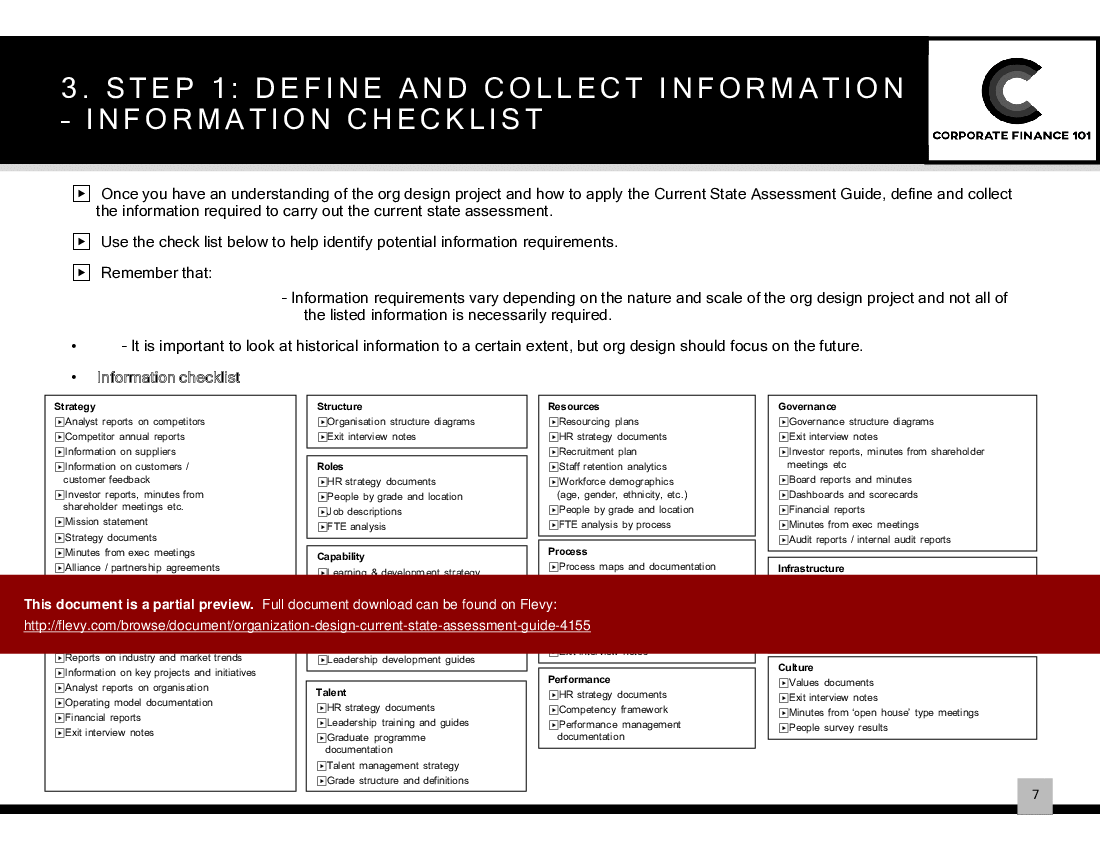
The guide includes a comprehensive checklist to identify necessary information, such as strategy documents, HR strategy, and performance management documentation. It emphasises the importance of historical data while focusing on future requirements. This ensures that the assessment is both thorough and forward-looking, providing a solid foundation for subsequent design phases.
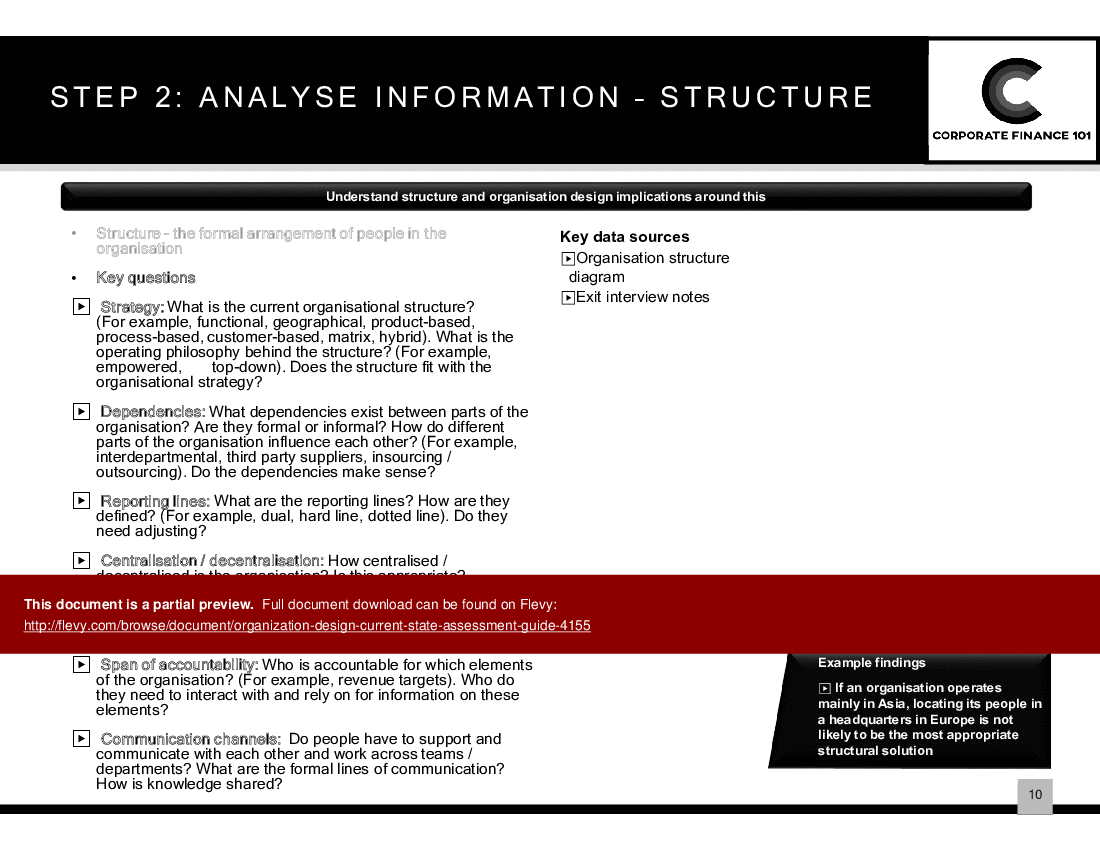
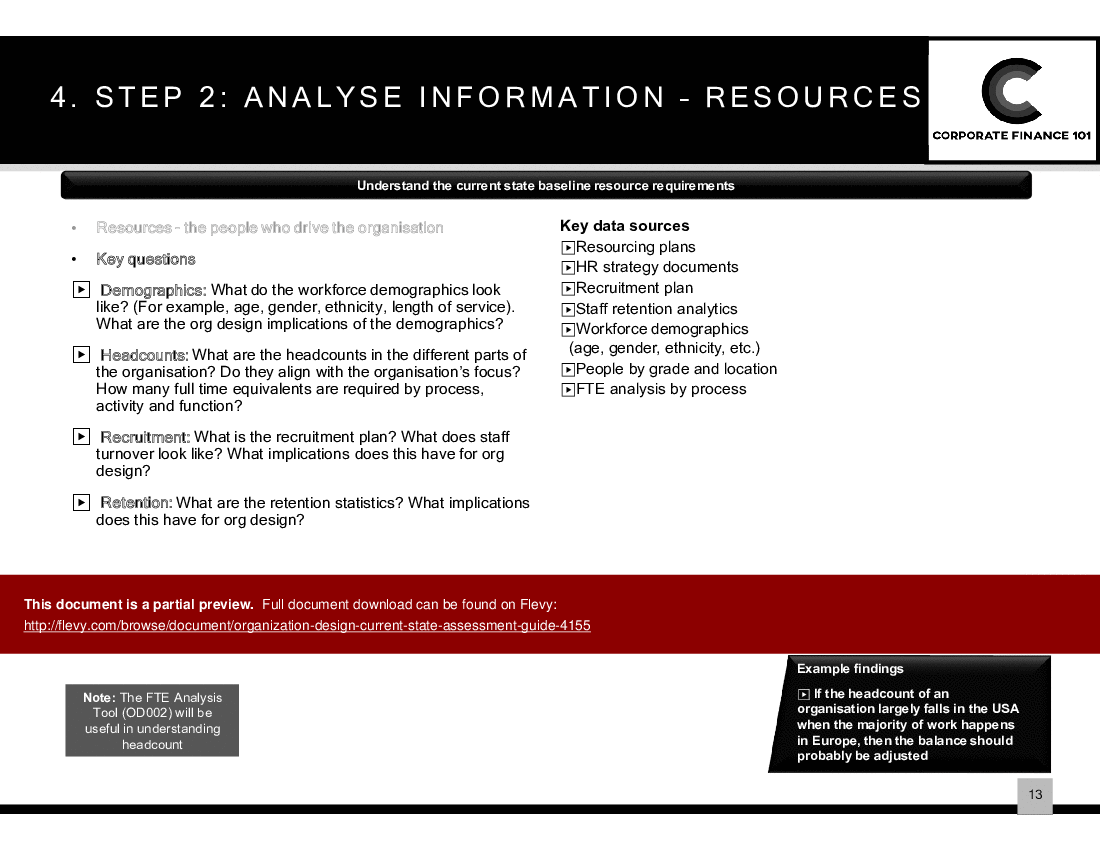
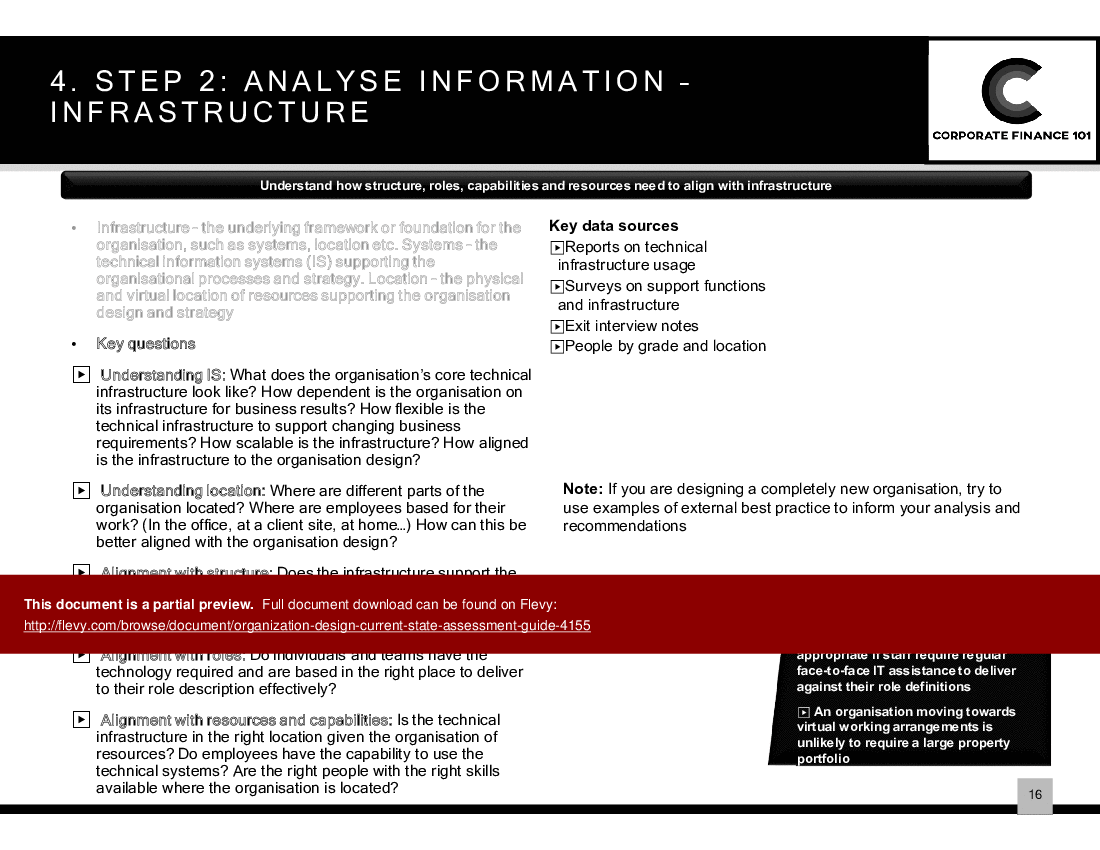
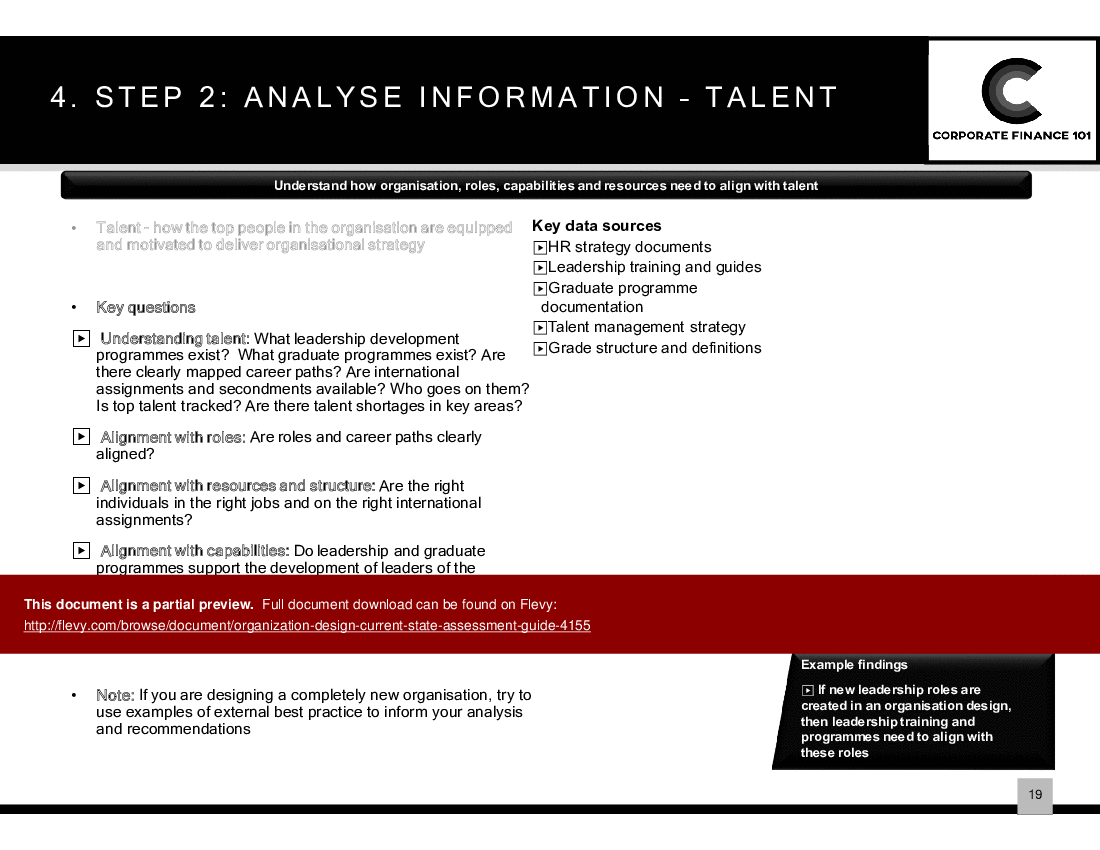
The analysis phase delves into various organisational dimensions, including structure, resources, infrastructure, and talent. Key questions guide the analysis, ensuring that all relevant factors are considered. For example, it examines workforce demographics, recruitment plans, and retention statistics to understand their implications for organisational design. This level of detail helps in identifying areas that need adjustment and aligning them with the overall strategy.
Got a question about the product? Email us at support@flevy.com or ask the author directly by using the "Ask the Author a Question" form. If you cannot view the preview above this document description, go here to view the large preview instead.
Executive Summary
The Organisation Design Current State Assessment Guide is a consulting-grade resource designed to facilitate a thorough analysis of an organization's current state. It provides a structured approach to collecting and interpreting data, identifying strengths and weaknesses, and reporting key findings. This guide empowers corporate executives and consultants to effectively assess organizational elements, ensuring that critical insights inform both high-level and detailed organizational designs. By utilizing this guide, users can streamline the assessment process and enhance the overall effectiveness of their organization design initiatives.
Who This Is For and When to Use
• Corporate executives leading organizational change initiatives
• Integration leaders managing mergers or acquisitions
• Consultants advising on organizational design and transformation
• HR professionals involved in workforce planning and development
• Project managers overseeing organizational assessments
Best-fit moments to use this deck:
• During the current state assessment phase of organization design
• After developing the case for change, but before initiating design
• When evaluating the effectiveness of existing organizational structures and processes
Learning Objectives
• Define the current state of the organization using structured assessment techniques
• Collect and analyze relevant data to identify organizational strengths and weaknesses
• Report key findings in a manner that informs future organizational design
• Understand the implications of organizational structure, roles, and capabilities
• Align organizational design with strategic objectives and desired business outcomes
• Facilitate stakeholder engagement through clear communication of assessment results
Table of Contents
• Principles for Using the Guide (page 3)
• Overview of Org Design Current State Assessment (page 4)
• Step 1: Define and Collect Information (page 5)
• Step 2: Analyse Information (page 8)
• Step 3: Report Key Findings (page 20)
Primary Topics Covered
• Principles for Using the Guide - The guide facilitates analysis of organizational strengths and weaknesses, focusing on current state rather than future design.
• Current State Assessment Overview - A structured approach to conducting assessments through defined steps: information collection, analysis, and reporting.
• Information Collection - Guidance on defining and gathering necessary data tailored to the specific organization design project.
• Data Analysis - Techniques for analyzing collected data to identify key organizational elements and their implications.
• Reporting Findings - A framework for condensing assessment results into actionable insights for future organizational design.
Deliverables, Templates, and Tools
• Data collection checklist to identify necessary information for assessment
• Key findings template for summarizing assessment results
• FTE analysis tool for evaluating role allocation and efficiency
• RACI tool for clarifying roles and responsibilities within the organization
• Governance structure diagrams to visualize decision-making frameworks
Slide Highlights
• Overview of the 3 key steps in conducting an organization design current state assessment
• Principles for using the guide to ensure effective application across various organizational contexts
• Information checklist detailing data requirements for a comprehensive assessment
• Key findings template that categorizes organizational elements for improvement or sustainment
Potential Workshop Agenda
Current State Assessment Overview (60 minutes)
• Introduce the purpose and structure of the assessment guide
• Discuss principles for effective application in various organizational contexts
• Review the data collection checklist and its importance
Data Analysis Techniques (90 minutes)
• Explore methods for analyzing collected data
• Engage participants in identifying strengths and weaknesses within their organizations
• Discuss how to align findings with strategic objectives
Reporting and Action Planning (60 minutes)
• Guide participants in summarizing key findings using the template
• Develop action plans based on assessment results
• Facilitate discussions on stakeholder engagement and communication strategies
Customization Guidance
• Tailor the data collection checklist to reflect the specific context and needs of the organization
• Adjust the key findings template to align with organizational terminology and reporting standards
• Incorporate relevant historical data to inform future design while focusing on forward-looking strategies
Secondary Topics Covered
• Change management principles relevant to organizational design
• Benefits delivery frameworks to ensure alignment with strategic goals
• Governance structures and their impact on organizational effectiveness
• Cultural considerations in organizational design and assessment
FAQ
What is the purpose of the Organisation Design Current State Assessment Guide?
The guide provides a structured approach to assess the current state of an organization, identifying strengths and weaknesses to inform future design.
When should this guide be used?
It is best used during the current state assessment phase, after the case for change has been established and before design initiatives begin.
What are the key steps in conducting a current state assessment?
The assessment involves defining and collecting information, analyzing that information, and reporting key findings.
How can the findings from the assessment be utilized?
Findings can inform the design of future organizational structures and processes, ensuring alignment with strategic objectives.
What types of data should be collected for the assessment?
Data may include organizational structure diagrams, HR strategy documents, performance metrics, and employee feedback.
How does this guide facilitate stakeholder engagement?
By providing clear, actionable insights, the guide helps communicate findings effectively, fostering buy-in from key stakeholders.
What tools are included in the guide?
The guide includes templates for data collection, key findings, FTE analysis, and RACI charts to clarify roles and responsibilities.
Can the guide be adapted for different organizational contexts?
Yes, the guide is designed to be flexible and can be tailored to suit various types and complexities of organization design projects.
What is the significance of analyzing both current and historical data?
Analyzing historical data provides context and lessons learned, which can inform future design while focusing on the organization's strategic direction.
How can organizations ensure the assessment aligns with their strategic goals?
By integrating strategic objectives into the assessment process and ensuring that findings are communicated in relation to these goals.
Glossary
• Current State Assessment - A systematic evaluation of an organization's existing structure, processes, and capabilities.
• FTE Analysis - A tool used to assess full-time equivalent staffing levels and their alignment with organizational needs.
• RACI - A responsibility assignment matrix that clarifies roles and responsibilities in project management.
• Governance Structure - The framework that defines decision-making processes and accountability within an organization.
• Organizational Design - The process of aligning an organization's structure and resources to achieve its strategic goals.
• Stakeholder Engagement - The process of involving individuals or groups who have an interest in the organization's outcomes.
• Data Collection Checklist - A tool used to identify and gather necessary information for conducting a current state assessment.
• Key Findings Template - A structured format for summarizing and categorizing insights from the assessment process.
• Change Management - The approach to transitioning individuals, teams, and organizations to a desired future state.
• Performance Metrics - Quantitative measures used to evaluate the effectiveness and efficiency of an organization.
• Cultural Assessment - An evaluation of the values, beliefs, and behaviors that shape an organization's culture.
• Capability Framework - A structured outline of the skills and competencies required to achieve organizational goals.
• Organizational Structure - The arrangement of roles, responsibilities, and communication within an organization.
• Strategy Alignment - The process of ensuring that organizational activities and resources are aligned with strategic objectives.
• Talent Management - The systematic attraction, identification, development, engagement, and retention of individuals with high potential.
• Process Mapping - A visual representation of the steps involved in a business process to identify inefficiencies and areas for improvement.
• Infrastructure - The underlying systems and structures that support an organization's operations and strategy.
• Resource Allocation - The distribution of resources among various projects or business units to optimize performance.
• Change Readiness - The extent to which an organization is prepared to implement change effectively.
• Business Outcomes - The measurable results that an organization aims to achieve through its strategies and operations.
• Organizational Landscape - The overall environment in which an organization operates, including its structure, culture, and processes.
Source: Best Practices in Organizational Design, Current State Assessment PowerPoint Slides: Organization Design Current State Assessment Guide PowerPoint (PPT) Presentation Slide Deck, Corporate Finance 101
|
Download our FREE Organization, Change, & Culture, Templates
Download our free compilation of 50+ slides and templates on Organizational Design, Change Management, and Corporate Culture. Methodologies include ADKAR, Burke-Litwin Change Model, McKinsey 7-S, Competing Values Framework, etc. |










