
TPM - Total Productive Maintenance & SMED - Single Minute Exchange of Dies Presentation 1 day course   103-slide PPT PowerPoint presentation slide deck (PPT)
$44.00

TPM - Total Productive Maintenance & SMED - Single Minute Exchange of Dies Presentation 1 day course (103-slide PPT PowerPoint presentation slide deck (PPT)) Preview Image
Log in to unlock full preview.
TPM - Total Productive Maintenance & SMED - Single Minute Exchange of Dies Presentation 1 day course (103-slide PPT PowerPoint presentation slide deck (PPT)) Preview Image
Arrow   Click main image to view in full screen.

TPM - Total Productive Maintenance & SMED - Single Minute Exchange of Dies Presentation 1 day course (PowerPoint PPT Slide Deck)

PowerPoint (PPT) + Zip archive file (ZIP) 103 Slides

#3 in Setup Reduction $44.00
This presentation is developed by a pioneer in Lean and certified LSS Master Black Belt who has trained over 5,000+ students globally, from Directors, CEOs, GMs, to shop floor staff. He's endorsed by CMI Consortium, NZTE, HERA, NZPICS, CBAFF.
Add to Cart


Immediate download
Fully editable PowerPoint
Free lifetime updates

BENEFITS OF THIS POWERPOINT DOCUMENT

  1. Understand OEE and the 6 big losses
  2. Understand how to improve machine efficiency
  3. Understand how to reduce set-up times

TPM PPT DESCRIPTION

Editor Summary 103-slide PowerPoint presentation (PPT) titled "TPM - Total Productive Maintenance & SMED - Single Minute Exchange of Dies Presentation 1 day course" by OpEx Academy NZ, developed by a Lean pioneer and certified LSS Master Black Belt who has trained 5,000+ students and is endorsed by CMI Consortium, NZTE, HERA, NZPICS, CBAFF. Read more

This 1 day course material has over 100 slides and introduces the concepts of TPM and SMED.
It comprises of the following topics:
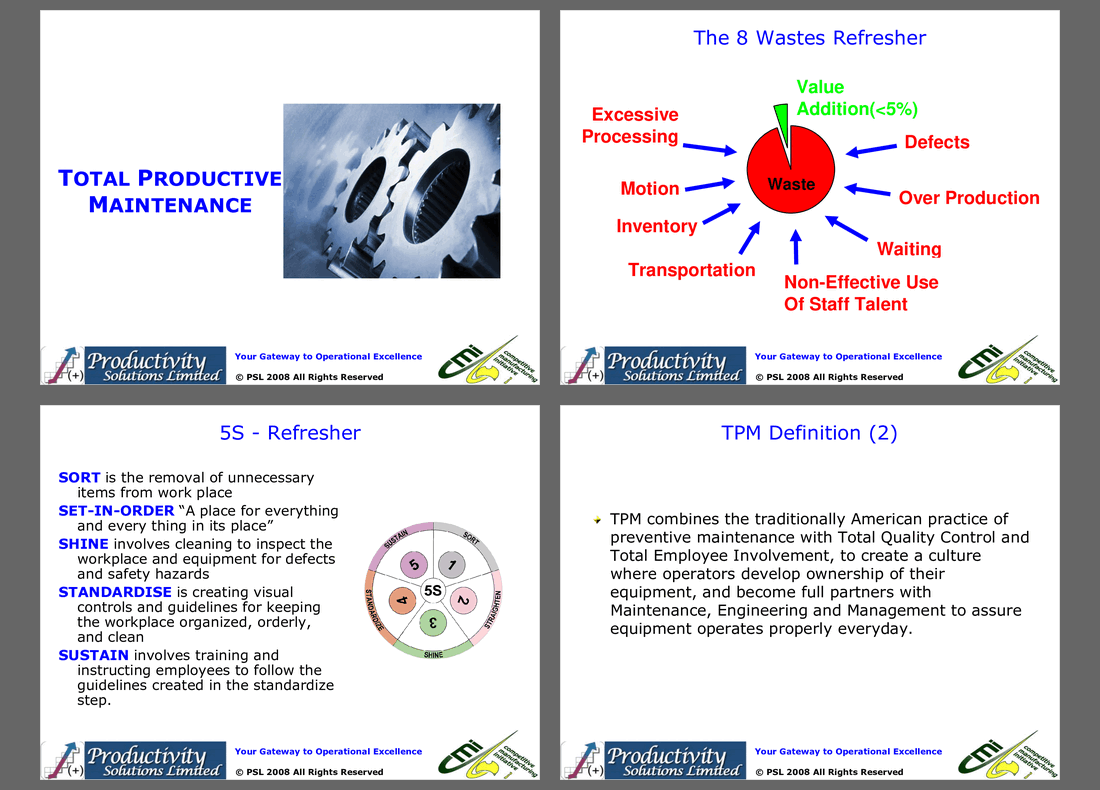
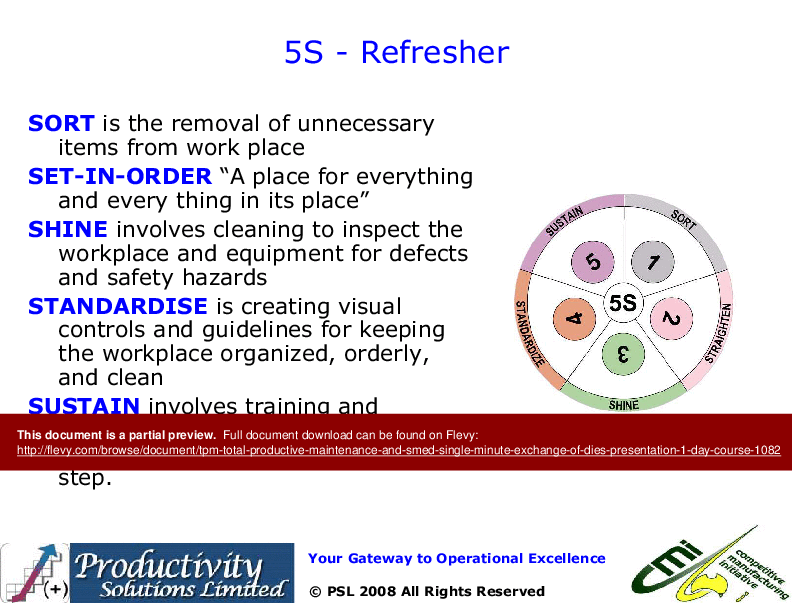
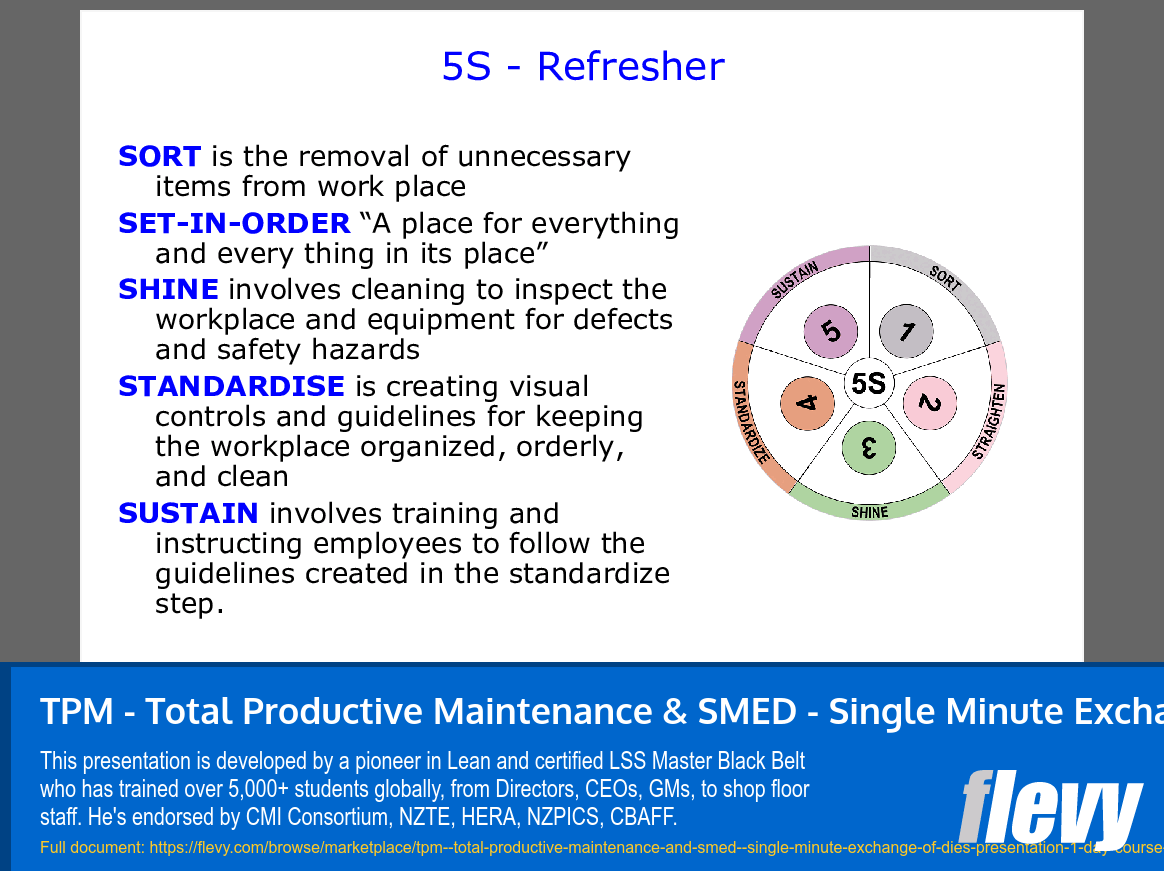
5S Refresher
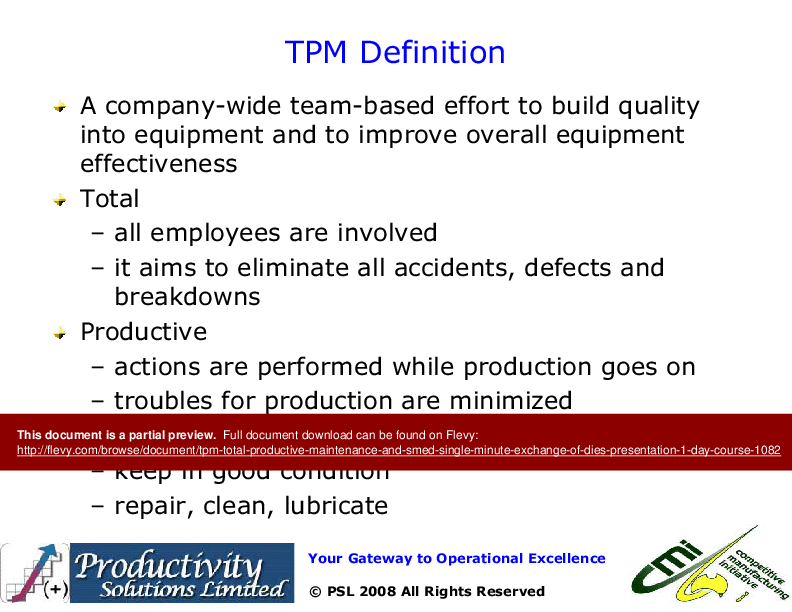
What & Why of TPM
8 Pillars of TPM
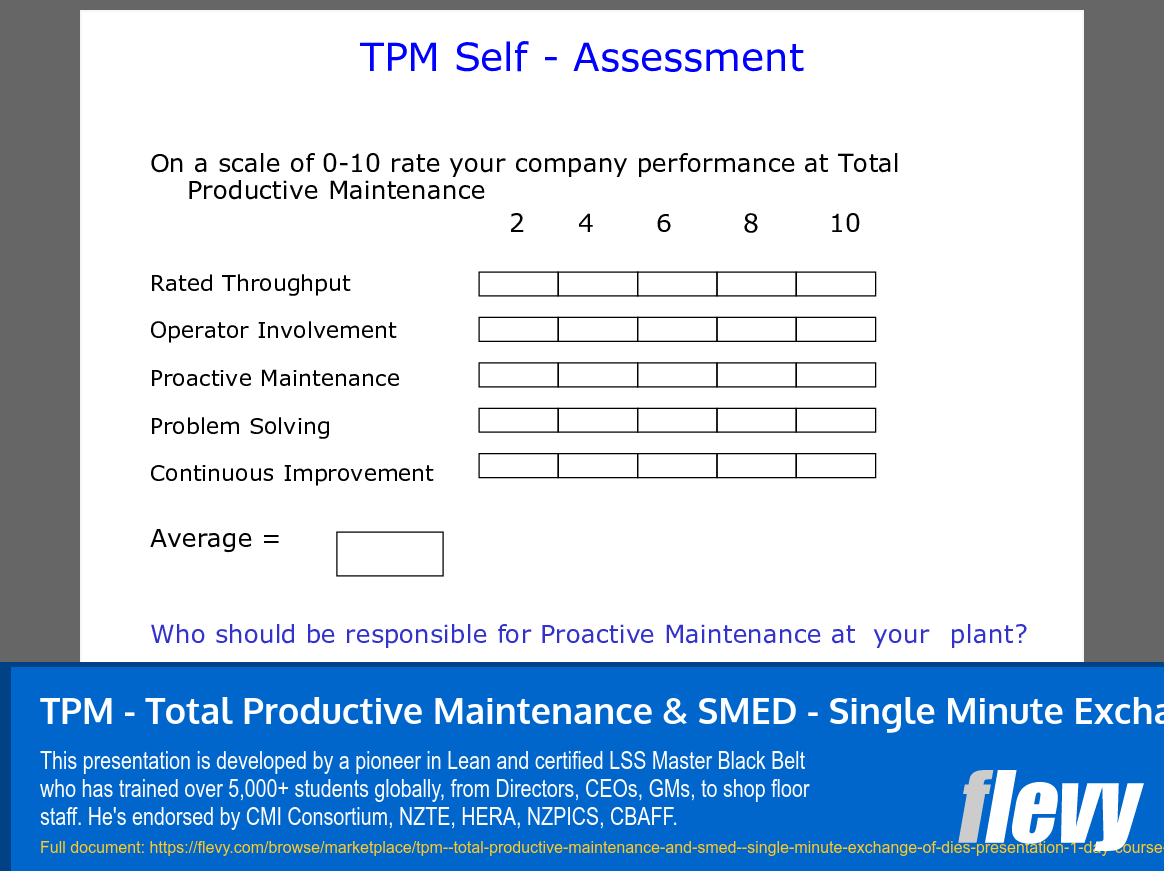
TPM Self Assessment
Details of 8 Pillars
OEE Calculations
Changeovers Defined
What & Why of SMED
How to achieve set-up reduction
Set-up reduction check-lists

Also included with this document is a bonus zip of 41 Lean documents (includes templates, case studies, articles, posters, charts, and more).

This comprehensive course material delves into the intricacies of both TPM and SMED, providing a robust framework for operational excellence. The 5S methodology is thoroughly covered, emphasizing the importance of workplace organization and cleanliness to enhance productivity and safety. The course also includes detailed explanations of TPM principles, focusing on increasing Overall Equipment Effectiveness (OEE) and minimizing production disruptions through proactive maintenance strategies.

The presentation includes practical tools such as TPM self-assessment checklists and OEE calculation methods, ensuring that participants can apply these concepts effectively within their organizations. Real-world case studies, like the Allied Tube example, illustrate the tangible benefits of SMED in reducing setup times and achieving significant cost savings. This hands-on approach ensures that the theoretical knowledge is reinforced with practical applications, making it highly relevant for industry professionals.

Participants will also gain insights into the implementation of TPM across various departments, including administrative and support functions. The course outlines a step-by-step approach to developing a master plan, forming cross-functional teams, and conducting training sessions to build competencies. This holistic view ensures that TPM and SMED principles are integrated into the organizational culture, driving continuous improvement and operational efficiency.

Got a question about the product? Email us at support@flevy.com or ask the author directly by using the "Ask the Author a Question" form. If you cannot view the preview above this document description, go here to view the large preview instead.

MARCUS OVERVIEW

This synopsis was written by Marcus [?] based on the analysis of the full 103-slide presentation.


Executive Summary
This presentation on Total Productive Maintenance (TPM) and Single Minute Exchange of Dies (SMED) is designed for organizations aiming to enhance operational efficiency and minimize downtime. Developed by a Lean expert with extensive training experience, this course equips participants with practical methodologies to achieve zero defects, zero accidents, and zero downtime. The content focuses on empowering all employees to take ownership of equipment maintenance and improve overall equipment effectiveness (OEE). By implementing the strategies outlined in this presentation, organizations can foster a culture of continuous improvement and operational excellence.

Who This Is For and When to Use
•  Operations Managers seeking to improve maintenance practices
•  Production Supervisors responsible for equipment uptime
•  Quality Assurance teams focused on reducing defects
•  Lean Practitioners aiming to implement TPM and SMED methodologies
•  All employees involved in equipment operation and maintenance

Best-fit moments to use this deck:
•  During TPM training sessions for staff at all levels
•  As part of a Lean transformation initiative
•  When launching new equipment or processes
•  For continuous improvement workshops focused on reducing downtime

Learning Objectives
•  Define Total Productive Maintenance and its core principles
•  Identify and categorize the eight types of waste in operations
•  Implement the 5S methodology to enhance workplace organization
•  Calculate Overall Equipment Effectiveness (OEE) and its components
•  Develop a proactive maintenance program that minimizes equipment failures
•  Execute Single Minute Exchange of Dies techniques to reduce setup times

Table of Contents
•  Introduction to TPM (page 5)
•  Understanding the 8 Wastes (page 10)
•  The 5S Methodology (page 15)
•  TPM Principles and Goals (page 20)
•  Overall Equipment Effectiveness (OEE) (page 25)
•  SMED Overview and Techniques (page 30)
•  Implementation Steps for TPM (page 35)
•  Benefits of TPM and SMED (page 40)

Primary Topics Covered
•  Total Productive Maintenance - A comprehensive approach involving all employees to enhance equipment effectiveness and minimize downtime.
•  Single Minute Exchange of Dies - Techniques aimed at reducing setup times to under ten minutes, enhancing production flexibility.
•  Overall Equipment Effectiveness (OEE) - A metric that combines availability, performance, and quality to assess equipment efficiency.
•  5S Methodology - A workplace organization method that includes Sort, Set in Order, Shine, Standardize, and Sustain to improve efficiency.
•  The 8 Wastes - Identification of waste types such as defects, overproduction, and waiting, which hinder productivity.
•  TPM Implementation Steps - A structured approach to introduce TPM in an organization, including training and policy establishment.

Deliverables, Templates, and Tools
•  OEE calculation templates for assessing equipment performance
•  5S implementation checklists for workplace organization
•  TPM self-assessment tools to evaluate current maintenance practices
•  SMED process mapping templates for setup reduction
•  Training materials for TPM and SMED workshops
•  Continuous improvement tracking sheets for ongoing assessment

Slide Highlights
•  Visual representation of the 8 Wastes and their impact on productivity
•  Flowcharts illustrating the SMED process and its benefits
•  Case studies demonstrating successful TPM implementations
•  Graphs showing OEE calculations and improvements over time
•  Step-by-step guides for implementing the 5S methodology

Potential Workshop Agenda
TPM Introduction and Overview (60 minutes)
•  Discuss the principles of TPM and its importance
•  Review the 8 Wastes and their implications

5S Methodology Workshop (90 minutes)
•  Conduct hands-on activities to implement 5S
•  Develop action plans for workplace organization

OEE and SMED Techniques (90 minutes)
•  Calculate OEE using real data
•  Explore SMED techniques through case studies

TPM Implementation Planning (60 minutes)
•  Create a roadmap for TPM implementation
•  Identify key stakeholders and responsibilities

Customization Guidance
•  Tailor the presentation to reflect specific organizational goals and challenges
•  Integrate company-specific examples and case studies for relevance
•  Adjust terminology and metrics to align with existing processes and systems
•  Include local regulations and safety standards in training materials

Secondary Topics Covered
•  Autonomous Maintenance practices
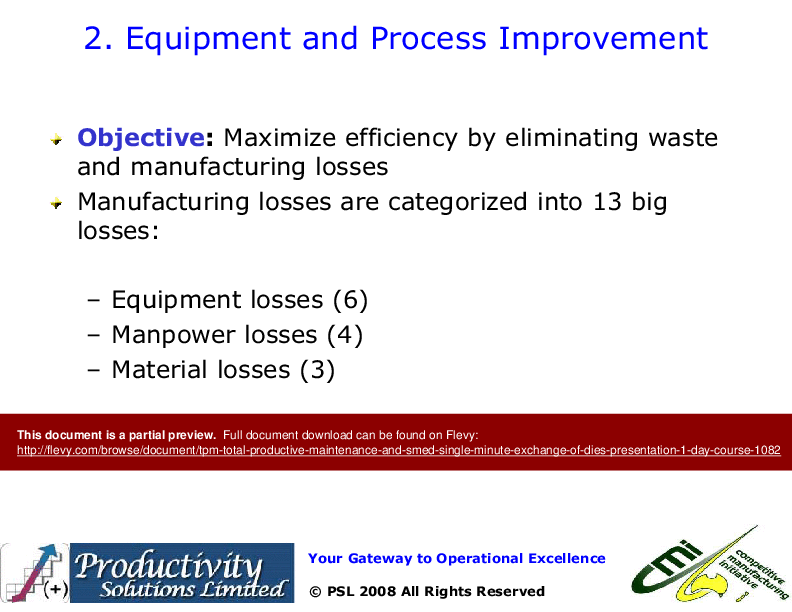
•  Equipment and process improvement strategies
•  Safety and environmental management in TPM
•  Education and training for continuous improvement

Topic FAQ

What are the core principles of Total Productive Maintenance (TPM)?

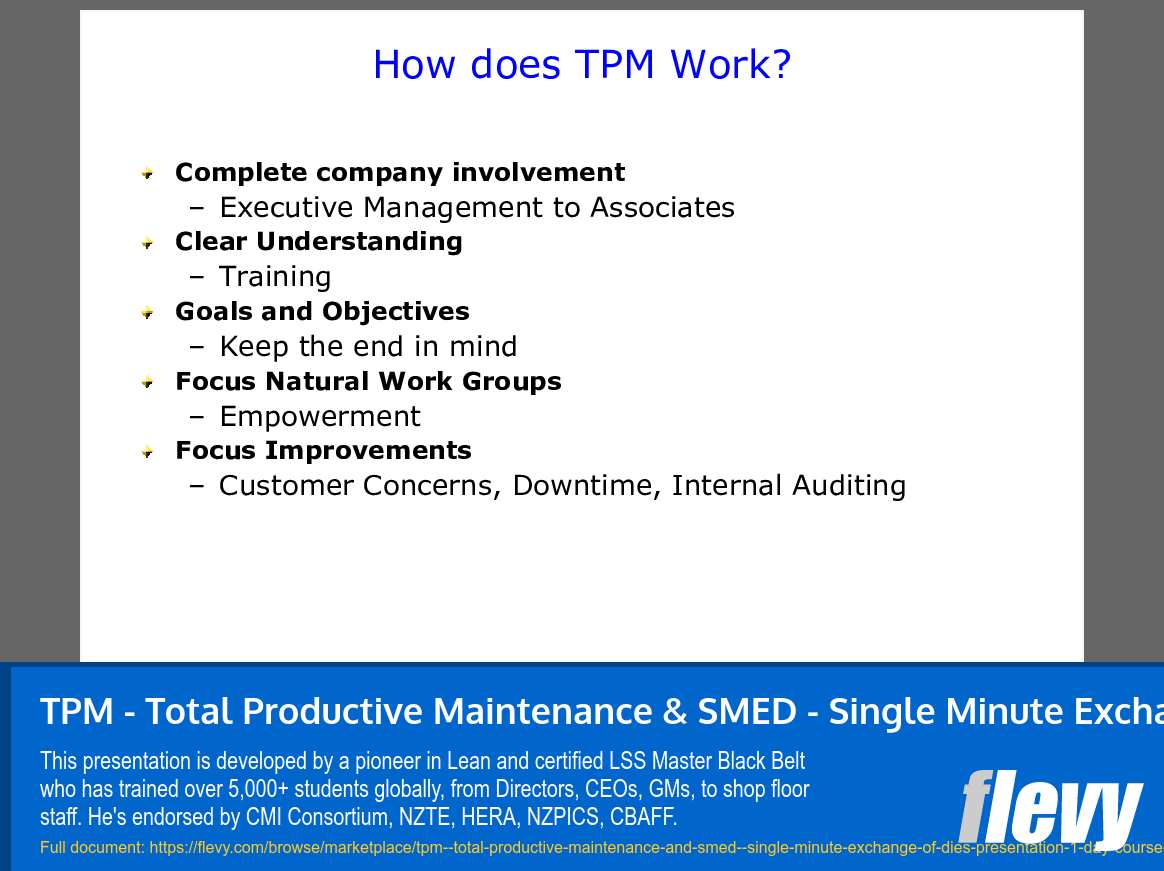
TPM is a holistic maintenance approach that engages all employees to maximize equipment effectiveness and minimize unplanned downtime. It emphasizes proactive and preventive maintenance, operator involvement through autonomous maintenance, workplace organization via 5S, and continuous improvement with the aim of achieving zero defects, zero accidents, and zero downtime.

How does SMED reduce setup times and why is it used in Lean manufacturing?

SMED separates internal and external setup tasks, streamlines procedures, and reduces time spent on changeovers to increase flexibility and enable smaller batch sizes. The methodology targets bringing setups below single-digit minutes where possible; the course cites examples and case studies showing reductions to under ten minutes.

What is Overall Equipment Effectiveness (OEE) and what does it measure?

OEE is a composite metric that quantifies equipment efficiency by combining 3 components: availability (uptime), performance (cycle speed), and quality yield (good output). Measuring these components helps identify loss categories and prioritize maintenance or process improvements, and the course includes OEE calculation templates to compute these 3 components.

What should be included when planning a TPM implementation in a plant?

Planning a TPM implementation should include a master plan, formation of cross-functional teams, training sessions, policy establishment, and tools for self-assessment and tracking. The course materials provide step-by-step implementation guidance and TPM self-assessment tools to support these planning activities and stakeholder assignments.

How can I deliver a one-day TPM and SMED training session for mixed audiences?

A one-day session can combine a TPM overview, a hands-on 5S workshop, OEE calculation exercises, SMED techniques and case studies, and implementation planning. The provided agenda, workshop activities, and training slides support mixed audiences from shop floor to management, and the product is packaged as a 1 day course with a 103-slide deck.

Which templates and tools are most useful to start TPM and SMED initiatives?

Practical starters include OEE calculation templates to baseline performance, 5S implementation checklists to organize workspaces, TPM self-assessment tools to gauge maturity, SMED process-mapping and setup-reduction checklists, and continuous improvement tracking sheets; these templates are included in the course and supplemental ZIP.

How should success of TPM initiatives be measured over time?

Success is measured by tracking improvements in OEE components, reductions in unplanned downtime and changeover duration, and changes in employee engagement for maintenance activities. The course recommends monitoring OEE trends, downtime metrics, and engagement indicators to quantify impact on equipment productivity and downtime reduction.

What common challenges occur during TPM rollout and how can they be addressed?

Typical challenges include resistance to change, insufficient management support, and inadequate training. Addressing these proactively through leadership engagement, structured training programs, cross-functional team formation, and use of assessment tools can mitigate barriers; common issues cited are resistance to change and lack of management support.

Document FAQ
These are questions addressed within this presentation.

What is Total Productive Maintenance?
TPM is a holistic approach that involves all employees in maintaining equipment to achieve zero defects, accidents, and downtime.

How does SMED contribute to Lean Manufacturing?
SMED reduces setup times, allowing for smaller batch sizes and increased production flexibility, which are essential for Lean practices.

What are the key components of OEE?
OEE is calculated using 3 components: availability, performance, and quality yield, providing a comprehensive view of equipment effectiveness.

How can we assess our current TPM practices?
Utilize the provided self-assessment tools to evaluate your organization's performance in various TPM areas.

What are the benefits of implementing TPM?
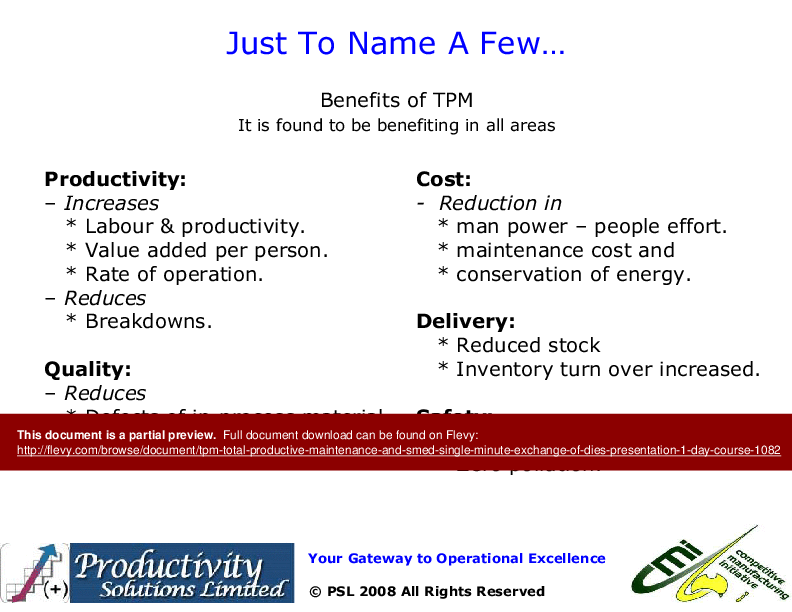
Benefits include increased equipment productivity, reduced downtime, lower maintenance costs, and enhanced employee satisfaction.

How do we train employees on TPM and SMED?
Conduct workshops and training sessions using the provided materials, focusing on practical applications and team involvement.

What challenges might we face during TPM implementation?
Common challenges include resistance to change, lack of management support, and insufficient training. Address these proactively.

How can we measure the success of our TPM initiatives?
Track improvements in OEE, reduction in downtime, and employee engagement levels to measure the effectiveness of TPM initiatives.

Glossary
•  Total Productive Maintenance (TPM) - A maintenance approach focusing on proactive and preventative maintenance to maximize equipment effectiveness.
•  Single Minute Exchange of Dies (SMED) - A methodology for reducing setup times to improve production efficiency.
•  Overall Equipment Effectiveness (OEE) - A key performance indicator that measures the efficiency of a manufacturing process.
•  5S - A workplace organization method that promotes efficiency through Sort, Set in Order, Shine, Standardize, and Sustain.
•  Lean Manufacturing - A production practice that considers the expenditure of resources in any aspect other than the direct creation of value for the end customer as wasteful.
•  Waste - Any activity that consumes resources, but does not add value to the product or service.
•  Autonomous Maintenance - A TPM practice where operators take responsibility for routine maintenance tasks.
•  Continuous Improvement - Ongoing efforts to improve products, services, or processes.
•  Proactive Maintenance - Maintenance activities performed to prevent equipment failures before they occur.
•  Kaizen - A Japanese term meaning "change for better," referring to activities that continuously improve all functions and involve all employees.
•  Failure Mode Effects Analysis (FMEA) - A systematic method for evaluating processes to identify where and how they might fail and assessing the relative impact of different failures.
•  Root Cause Analysis - A method of problem-solving used for identifying the root causes of faults or problems.
•  Visual Management - A method of using visual signals to communicate information about processes and performance.
•  Standard Operating Procedures (SOPs) - Established procedures to be followed in carrying out a given operation or process.
•  Workplace Organization - The practice of arranging the workplace to optimize efficiency and effectiveness.
•  Training Needs Analysis - A systematic process to determine what training is required to meet organizational goals.
•  Changeover - The process of switching from one product or task to another in manufacturing.
•  Lean Transformation - The process of implementing Lean principles and practices within an organization to improve efficiency and reduce waste.
•  Cross-Functional Teamwork - Collaboration among employees from different departments or areas of expertise to achieve common goals.
•  Empowerment - Granting employees the authority and responsibility to make decisions regarding their work.
•  Process Mapping - A visual representation of the steps involved in a process, used to identify inefficiencies and areas for improvement.

Source: Best Practices in TPM, Setup Reduction PowerPoint Slides: TPM - Total Productive Maintenance & SMED - Single Minute Exchange of Dies Presentation 1 day course PowerPoint (PPT) Presentation Slide Deck, OpEx Academy NZ


$44.00
This presentation is developed by a pioneer in Lean and certified LSS Master Black Belt who has trained over 5,000+ students globally, from Directors, CEOs, GMs, to shop floor staff. He's endorsed by CMI Consortium, NZTE, HERA, NZPICS, CBAFF.
Add to Cart
  

ABOUT THE AUTHOR

Author image
Additional documents from author: 88

Vishnu Rayapeddi is an experienced management consultant and trainer specializing in implementing continuous process improvements. Vishnu is a pioneer in Lean Management which combines the power of Lean Thinking, TOC, Six Sigma, TQM, TWI, Balanced Scorecard, cGMP and other best-class methodologies such as, DMAIC, Value Stream Mapping, Root Cause Analysis, 5S, Quick Changeovers, Quality and ... [read more]

Ask the Author a Question

You must be logged in to contact the author.

Click here to log in Click here register

Did you know?
The average daily rate of a McKinsey consultant is $6,625 (not including expenses). The average price of a Flevy document is $65.


Trusted by over 10,000+ Client Organizations
Since 2012, we have provided business templates to over 10,000 businesses and organizations of all sizes, from startups and small businesses to the Fortune 100, in over 130 countries.
AT&T GE Cisco Intel IBM Coke Dell Toyota HP Nike Samsung Microsoft Astrazeneca JP Morgan KPMG Walgreens Walmart 3M Kaiser Oracle SAP Google E&Y Volvo Bosch Merck Fedex Shell Amgen Eli Lilly Roche AIG Abbott Amazon PwC T-Mobile Broadcom Bayer Pearson Titleist ConEd Pfizer NTT Data Schwab


Read Customer Testimonials

 
"FlevyPro has been a brilliant resource for me, as an independent growth consultant, to access a vast knowledge bank of presentations to support my work with clients. In terms of RoI, the value I received from the very first presentation I downloaded paid for my subscription many times over! The "

– Roderick Cameron, Founding Partner at SGFE Ltd
 
"Last Sunday morning, I was diligently working on an important presentation for a client and found myself in need of additional content and suitable templates for various types of graphics. Flevy.com proved to be a treasure trove for both content and design at a reasonable price, considering the time I "

– M. E., Chief Commercial Officer, International Logistics Service Provider
 
"I have used Flevy services for a number of years and have never, ever been disappointed. As a matter of fact, David and his team continue, time after time, to impress me with their willingness to assist and in the real sense of the word. I have concluded in fact "

– Roberto Pelliccia, Senior Executive in International Hospitality
 
"I have found Flevy to be an amazing resource and library of useful presentations for lean sigma, change management and so many other topics. This has reduced the time I need to spend on preparing for my performance consultation. The library is easily accessible and updates are regularly provided. A wealth of great information."

– Cynthia Howard RN, PhD, Executive Coach at Ei Leadership
 
"I have used FlevyPro for several business applications. It is a great complement to working with expensive consultants. The quality and effectiveness of the tools are of the highest standards."

– Moritz Bernhoerster, Global Sourcing Director at Fortune 500
 
"As a young consulting firm, requests for input from clients vary and it's sometimes impossible to provide expert solutions across a broad spectrum of requirements. That was before I discovered Flevy.com.

Through subscription to this invaluable site of a plethora of topics that are key and crucial to consulting, I "

– Nishi Singh, Strategist and MD at NSP Consultants
 
"As a niche strategic consulting firm, Flevy and FlevyPro frameworks and documents are an on-going reference to help us structure our findings and recommendations to our clients as well as improve their clarity, strength, and visual power. For us, it is an invaluable resource to increase our impact and value."

– David Coloma, Consulting Area Manager at Cynertia Consulting
 
"Flevy is our 'go to' resource for management material, at an affordable cost. The Flevy library is comprehensive and the content deep, and typically provides a great foundation for us to further develop and tailor our own service offer."

– Chris McCann, Founder at Resilient.World


Customers Also Bought These Documents


Customers Also Like These Documents

Explore Related Management Topics

RCM


Your Recently Viewed Documents
Receive our FREE presentation on Operational Excellence

This 50-slide presentation provides a high-level introduction to the 4 Building Blocks of Operational Excellence. Achieving OpEx requires the implementation of a Business Execution System that integrates these 4 building blocks.