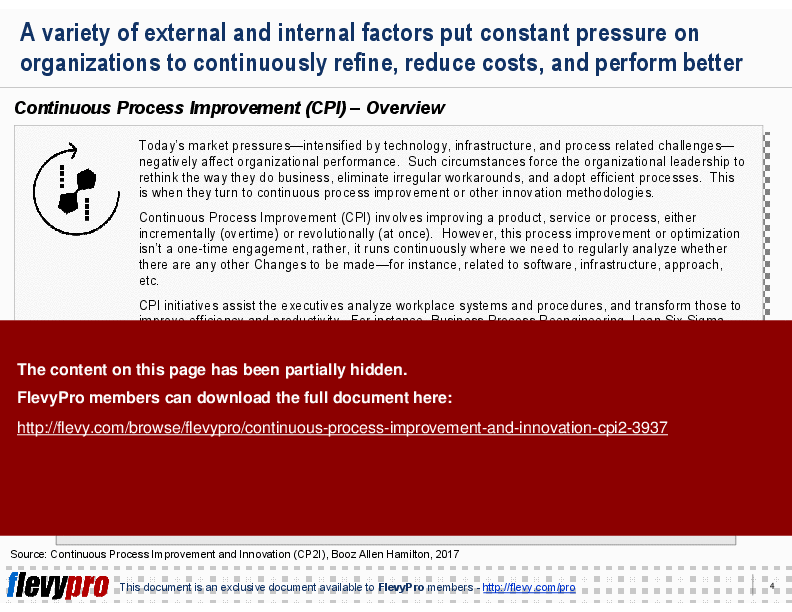

Market pressures, technological disruption, and process related challenges adversely affect organizational performance, and force the organizations to rethink the way they do business. They end up implementing continuous process improvement or other innovation methodologies.
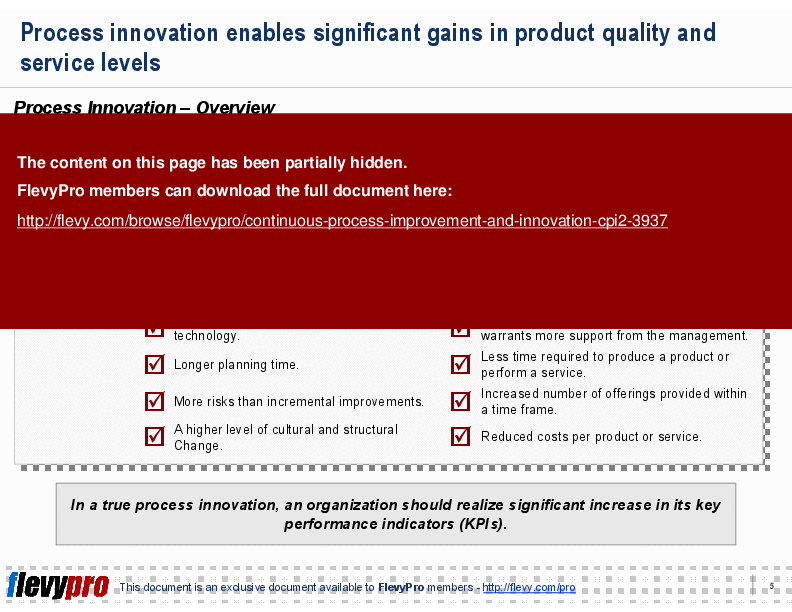
Continuous Process Improvement (CPI) involves improving a product, service or process, either incrementally or revolutionally. Similarly, Innovation-centric methodologies—e.g., Crowdsourcing, Design Thinking, and Innovation Metrics—are utilized by many organizations to nurture innovative thinking and ideas testing using prototyping and multiple rounds of validation. Process innovation is the implementation of a new technology or way of working that assists in staying competitive and meeting customer needs.
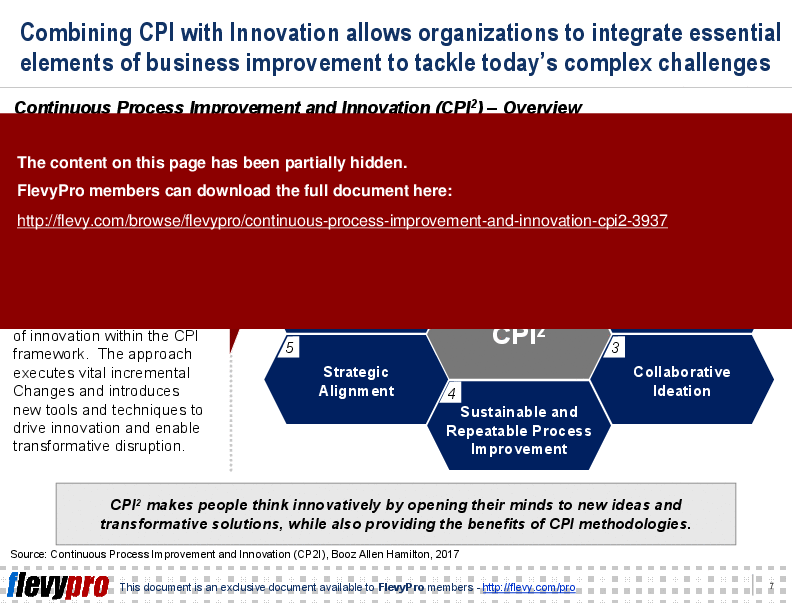
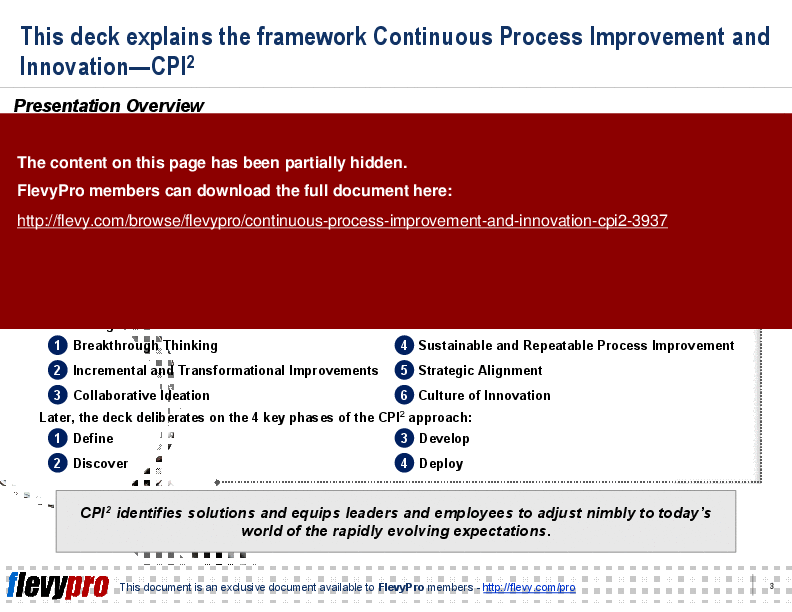
However, process improvement or innovation alone aren't enough to tackle today's challenges. This presentation provides a detailed account of the Continuous Process Improvement and Innovation (CPI2) framework—a more effective approach to drive transformational Change by combining CPI with Innovation methodologies. CPI2 identifies solutions and equips leaders and employees to adjust nimbly to today's world of the rapidly evolving expectations.
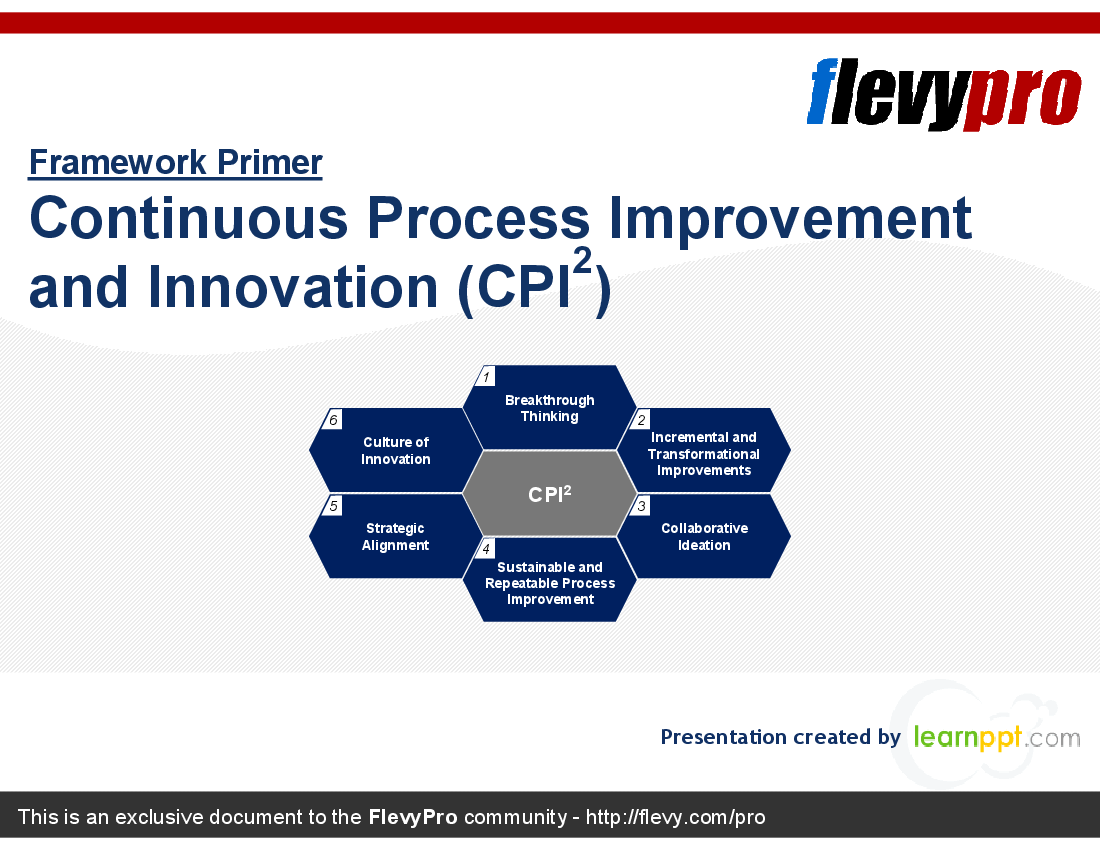
The slide deck first talks about the 6 core elements of the CPI2 framework:
1. Breakthrough Thinking
2. Incremental and Transformational Improvements
3. Collaborative Ideation
4. Sustainable and Repeatable Process Improvement
5. Strategic Alignment
6. Culture of Innovation
Later, the deck deliberates on the 4 key phases of the CPI2 approach.
This deck also includes slide templates to be use in your own business presentations.
CPI² is designed to help organizations navigate complex business environments by integrating breakthrough thinking and collaborative ideation. This framework emphasizes sustainable and repeatable process improvements, ensuring strategic alignment and fostering a culture of innovation. The PPT includes detailed templates and practical tools to facilitate the implementation of CPI², enabling teams to define, discover, develop, and deploy solutions effectively. By adopting CPI², organizations can achieve significant gains in efficiency and performance, addressing both incremental and transformational changes with precision.
Got a question about this document? Email us at flevypro@flevy.com.
Executive Summary
The Continuous Process Improvement and Innovation (CPI²) framework is designed to empower organizations to adapt to rapidly changing market conditions. Developed by former consultants from McKinsey and the Big 4, this presentation equips leaders and employees with the tools to implement both incremental and transformational changes. By integrating Continuous Process Improvement (CPI) with innovative methodologies, CPI² fosters a culture of innovation that enhances organizational performance and strategic alignment. This framework not only addresses immediate operational challenges, but also prepares organizations for sustainable growth and long-term success.
Who This Is For and When to Use
• Corporate executives seeking to drive transformational change within their organizations
• Integration leaders responsible for implementing process improvement initiatives
• Change management teams focused on fostering a culture of innovation
• Consultants advising organizations on operational efficiency and innovation strategies
Best-fit moments to use this deck:
• During strategic planning sessions to align innovation initiatives with business objectives
• In workshops aimed at fostering collaborative ideation among teams
• When assessing current processes and identifying opportunities for improvement
Learning Objectives
• Define the CPI² framework and its significance in driving organizational transformation
• Build a roadmap for implementing CPI² through its 4 key phases: Define, Discover, Develop, and Deploy
• Establish a culture of innovation that encourages creative problem-solving and collaboration
• Identify and utilize various tools and methodologies for effective process improvement
• Assess organizational readiness for implementing CPI² and address potential barriers
• Develop metrics to measure the success of CPI² initiatives and their impact on performance
Table of Contents
• Overview (page 2)
• Continuous Process Improvement and Innovation (CPI²) (page 3)
• Approach to CPI² (page 10)
• Templates (page 16)
Primary Topics Covered
• CPI² Framework Overview - The CPI² framework combines Continuous Process Improvement with innovative methodologies to drive transformational change.
• Core Elements of CPI² - The framework consists of 6 core elements: Breakthrough Thinking, Incremental and Transformational Improvements, Collaborative Ideation, Sustainable and Repeatable Process Improvement, Strategic Alignment, and Culture of Innovation.
• Four Phases of CPI² - The approach involves 4 phases: Define (identifying challenges), Discover (evaluating current practices), Develop (testing solutions), and Deploy (implementing changes).
• Innovation Methodologies - Techniques such as Crowdsourcing and Design Thinking are integrated into CPI² to enhance creativity and problem-solving.
• Organizational Culture - CPI² promotes a culture of continuous improvement and innovation, encouraging all employees to contribute ideas.
• Strategic Alignment - The framework ensures that process improvements align with overall business strategy and objectives.
Deliverables, Templates, and Tools
• CPI² Maturity Assessment template for evaluating organizational readiness
• Roadmap template for implementing the CPI² framework
• Innovation toolkit including methodologies like Design Thinking and Rapid Prototyping
• Metrics dashboard for tracking the success of CPI² initiatives
• Communication plan template for stakeholder engagement during implementation
• Workshop facilitation guide for collaborative ideation sessions
Slide Highlights
• Overview of the CPI² framework and its core elements
• Visual representation of the 4 phases of CPI²
• Case studies illustrating successful implementation of CPI² in organizations
• Tools and methodologies for fostering innovation within teams
• Metrics for assessing the impact of CPI² on organizational performance
Potential Workshop Agenda
CPI² Framework Introduction (60 minutes)
• Overview of CPI² and its significance
• Discussion on the core elements and phases of CPI²
Collaborative Ideation Session (90 minutes)
• Brainstorming potential improvements using CPI²
• Group activities to foster creative problem-solving
Implementation Planning (120 minutes)
• Developing a roadmap for CPI² implementation
• Identifying key stakeholders and roles
Customization Guidance
• Tailor the CPI² Maturity Assessment to reflect specific organizational goals and challenges
• Adjust the templates to align with internal terminology and processes
• Incorporate industry-specific examples and case studies to enhance relevance
• Modify the communication plan to suit the organizational structure and culture
Secondary Topics Covered
• Change management strategies for successful implementation
• Risk assessment and mitigation in CPI² initiatives
• Stakeholder engagement techniques for fostering buy-in
• Continuous improvement methodologies such as Lean and Six Sigma
• Evaluation of innovation metrics and their impact on performance
Topic FAQ
Document FAQ
These are questions addressed within this presentation.
What is the CPI² framework?
CPI² is a framework that combines Continuous Process Improvement with innovative methodologies to drive transformational change within organizations.
How does CPI² differ from traditional process improvement?
CPI² integrates innovative thinking and methodologies, fostering a culture of creativity and collaboration, while traditional process improvement focuses primarily on efficiency.
What are the 4 phases of the CPI² approach?
The 4 phases are Define, Discover, Develop, and Deploy, each focusing on specific tasks to implement effective change.
How can organizations measure the success of CPI² initiatives?
Success can be measured through established metrics that track performance improvements, stakeholder engagement, and the impact of implemented changes.
What tools are included in the CPI² framework?
The framework includes tools such as the CPI² Maturity Assessment, innovation toolkits, and templates for communication and implementation planning.
Can CPI² be customized for different industries?
Yes, CPI² can be tailored to fit the specific needs and challenges of various industries, ensuring relevance and effectiveness.
What role does leadership play in CPI² implementation?
Leadership is crucial for establishing a vision, securing buy-in, and providing ongoing support throughout the CPI² implementation process.
How does CPI² promote a culture of innovation?
CPI² encourages all employees to contribute ideas and solutions, fostering an environment where innovation is valued and supported.
Glossary
• CPI² - Continuous Process Improvement and Innovation framework for driving transformational change.
• Breakthrough Thinking - Innovative approaches that challenge existing norms and practices.
• Incremental Improvements - Small, gradual enhancements made to processes or products.
• Collaborative Ideation - Group brainstorming sessions aimed at generating creative solutions.
• Sustainable Improvement - Ongoing enhancements that can be maintained over time.
• Strategic Alignment - Ensuring that initiatives support overall business goals and objectives.
• Culture of Innovation - An organizational environment that encourages creativity and new ideas.
• Maturity Assessment - A tool for evaluating organizational readiness for change initiatives.
• Crowdsourcing - Gathering ideas and feedback from a large group of people, often via the internet.
• Design Thinking - A problem-solving approach that emphasizes user-centered design.
• Rapid Prototyping - Quickly creating a working model of a product or solution for testing and feedback.
• Stakeholder Engagement - Involving individuals or groups who have an interest in the outcome of a project.
• Change Management - Strategies for managing the transition from current to desired states within an organization.
• Lean Methodology - A systematic approach to minimizing waste within a manufacturing system.
• Six Sigma - A set of techniques and tools for process improvement.
• Performance Metrics - Measurements used to assess the efficiency and effectiveness of an organization.
• Innovation Metrics - Specific indicators used to measure the success of innovation initiatives.
• Implementation Plan - A detailed outline of how a project or initiative will be executed.
• Communication Plan - A strategy for informing stakeholders about project developments and changes.
• Risk Assessment - The process of identifying and evaluating potential risks to a project or initiative.
• Feedback Loop - A system for continuously gathering and analyzing feedback to improve processes.
Source: Best Practices in Innovation, Process Improvement, Continuous Improvement PowerPoint Slides: Continuous Process Improvement and Innovation (CPI2) PowerPoint (PPT) Presentation Slide Deck, LearnPPT Consulting
Did you need more documents?
Consider a FlevyPro subscription from $39/month. View plans here.
For $10.00 more, you can download this document plus 2 more FlevyPro documents. That's just $13 each.
|
Download our FREE Strategy & Transformation Framework Templates
Download our free compilation of 50+ Strategy & Transformation slides and templates. Frameworks include McKinsey 7-S, Balanced Scorecard, Disruptive Innovation, BCG Curve, and many more. |