This document provides a collection of 100+ Key Performance Indicators (KPIs) related to the Information Technology functions listed further below.
Keeping in mind that each organization is different, the enclosed KPIs are intended as a general reference and their relevance depends on the specific circumstances of the company. Some KPIs are relevant to more than one function.
The key to effective performance management is not just about choosing the right KPIs, but also about using them in the right way. The document starts off with brief points to keep in mind when applying any KPI.
Contents
1. Application Development and Maintenance
2. Data Management and Analytics
3. Enterprise Architecture
4. Information Security
5. IT Governance and Compliance
6. IT Service Management
7. Networking
8. Software Engineering and Quality Assurance
9. System Administration
10. User Support and Training
For each KPI listed, where relevant, the following elements are covered:
• The name of the function
• The name of the indicator, including common alternate names
• A brief description of the indicator and its importance
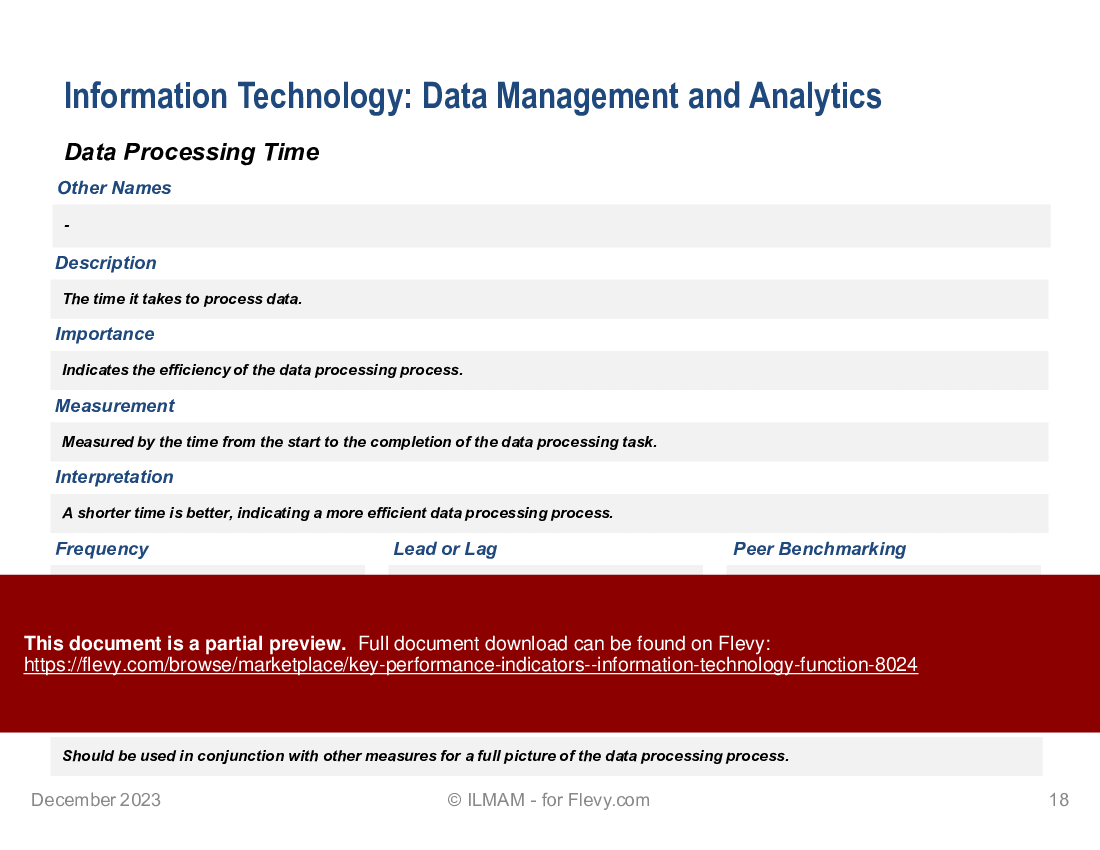
• Common measurement approach, interpretation, frequency, unit of measure and others
• Other information about the measure (e.g. suitability for peer bench marking, and others)
This comprehensive guide dives deep into the specifics of each KPI, providing clear definitions, measurement techniques, and interpretation guidelines. Each KPI is meticulously detailed to ensure you can implement and monitor them effectively within your IT functions. The PPT also highlights the importance of peer benchmarking, enabling you to compare your performance against industry standards.
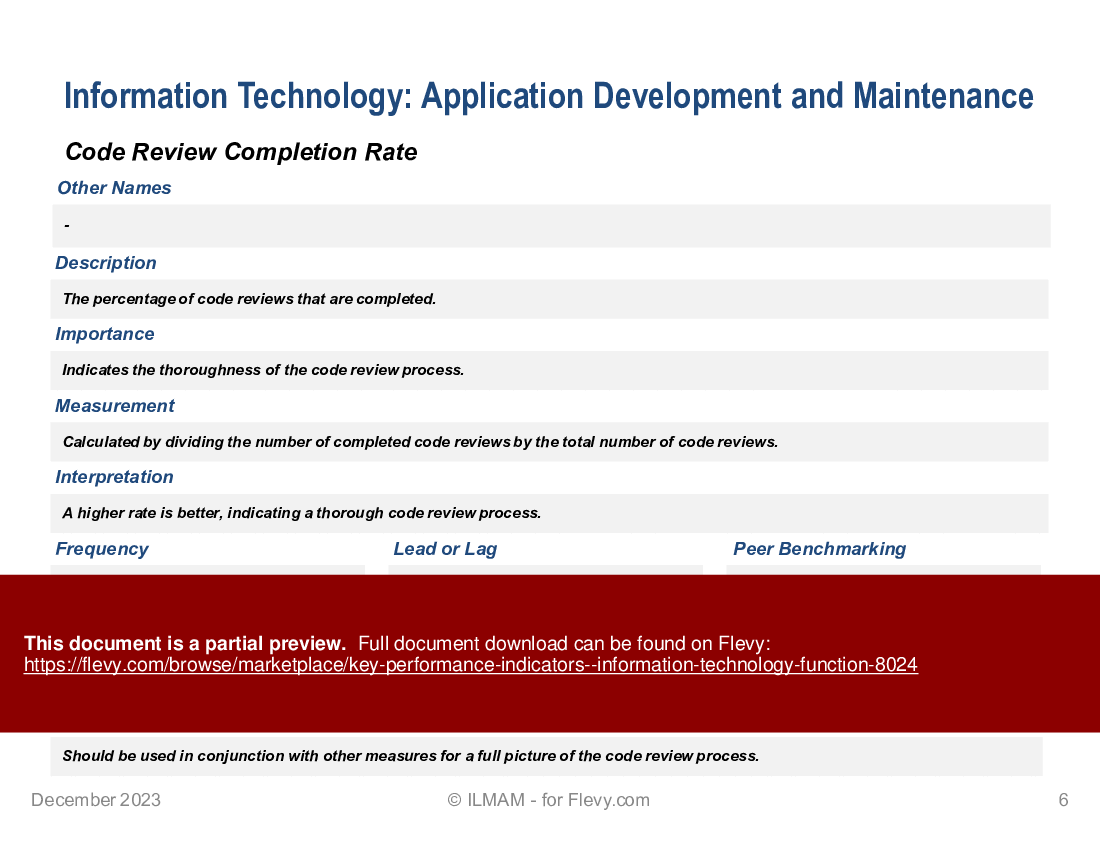
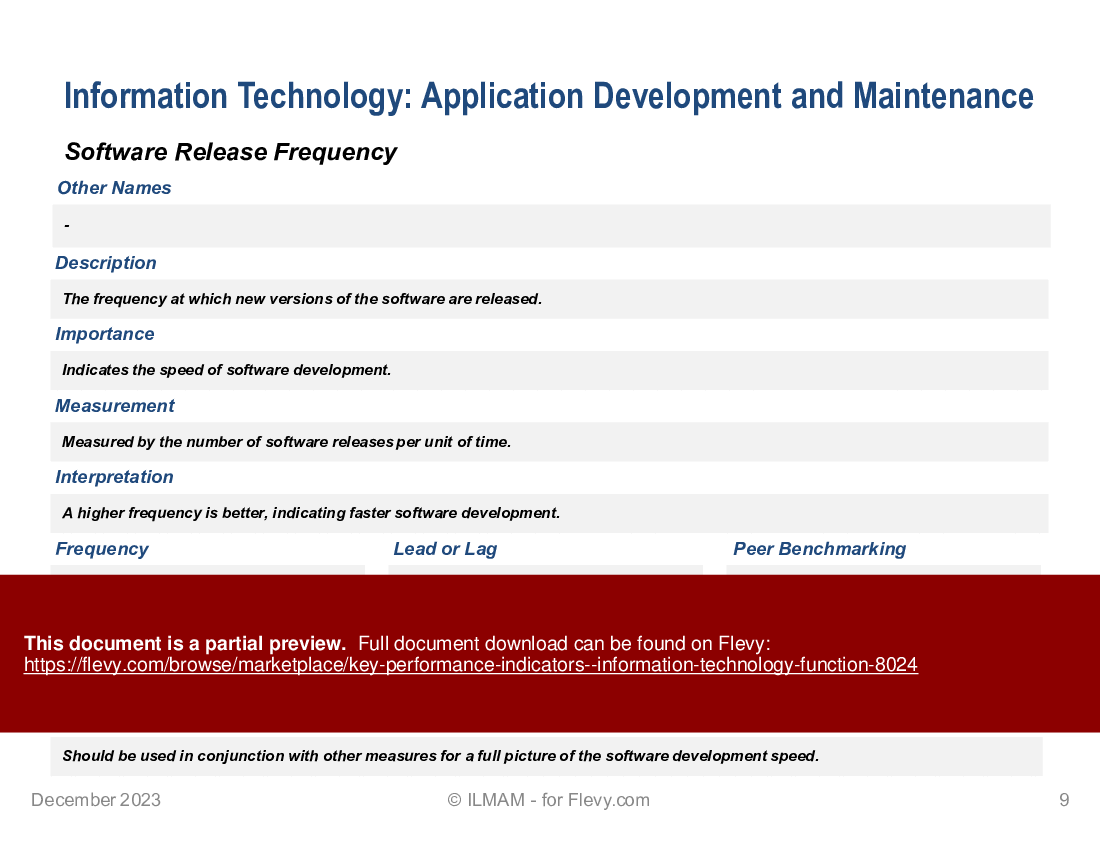
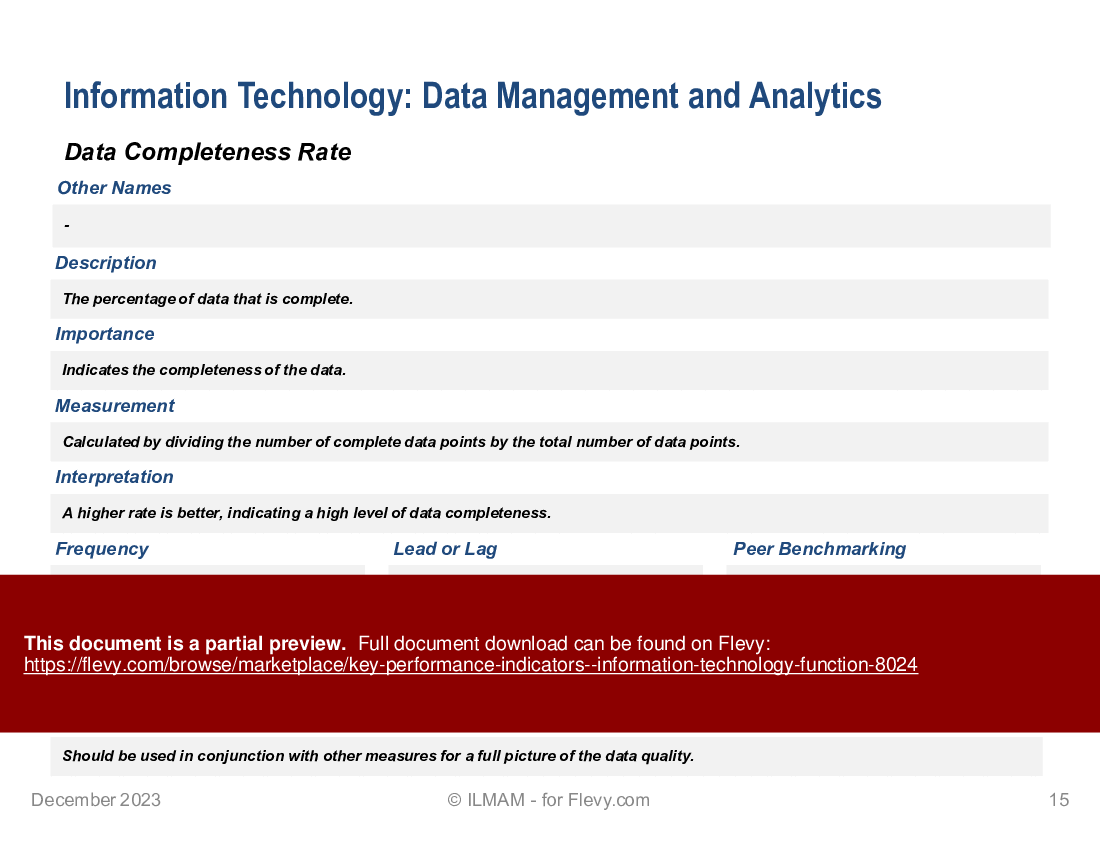
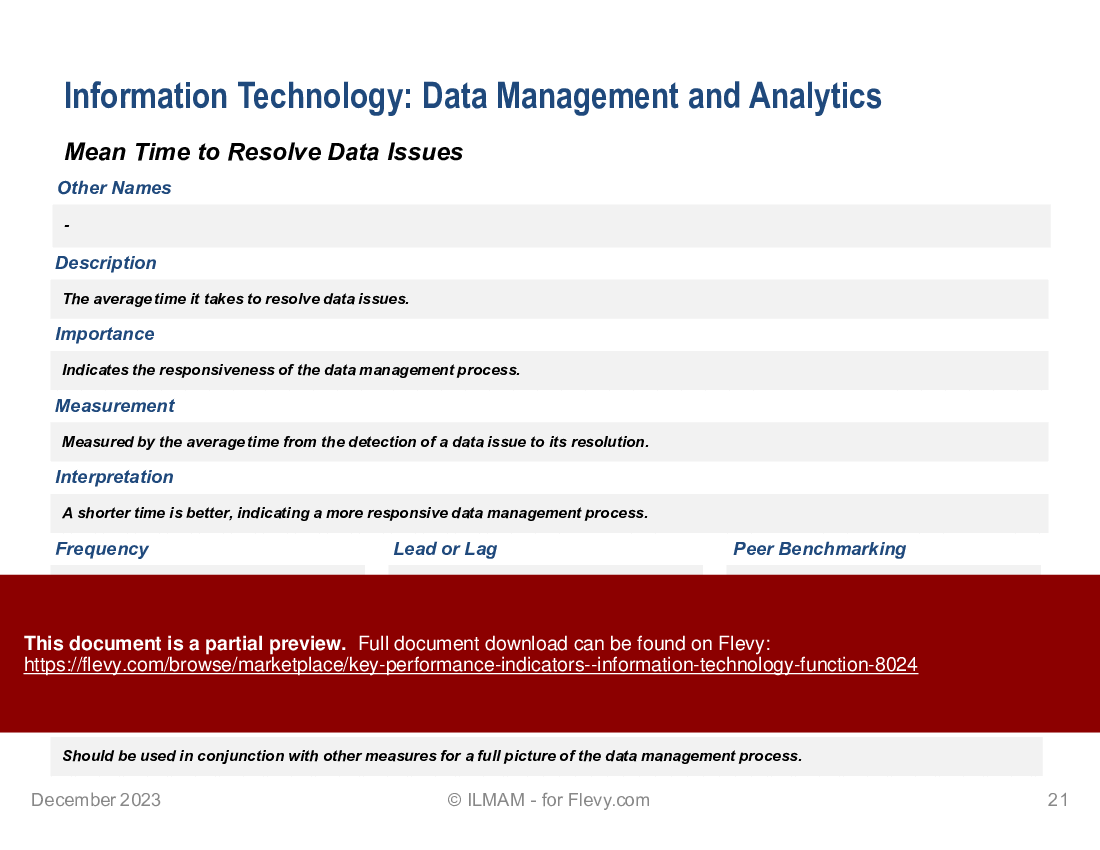
The KPIs covered span across critical IT areas such as Application Development, Data Management, and Information Security. For instance, the "Code Review Completion Rate" and "Software Release Frequency" KPIs are essential for assessing the efficiency and quality of your software development processes. Similarly, metrics like "Data Completeness Rate" and "Mean Time to Resolve Data Issues" are pivotal for maintaining high data quality and operational efficiency.
Got a question about the product? Email us at support@flevy.com or ask the author directly by using the "Ask the Author a Question" form. If you cannot view the preview above this document description, go here to view the large preview instead.
Executive Summary
This presentation, titled "Key Performance Indicators (KPIs) | IT Functions," is a meticulously crafted resource that offers over 100 KPIs specifically tailored for Information Technology functions. Designed in a style reminiscent of top consulting firms, this PPT serves as a valuable tool for IT leaders aiming to enhance performance management. Users will gain insights into actionable metrics that can drive strategic decision-making and operational efficiency across various IT domains, including application development, data management, information security, and more.
Who This Is For and When to Use
• IT executives and leaders responsible for performance management and strategic alignment.
• Data analysts and business intelligence teams focused on measuring IT effectiveness.
• Project managers overseeing IT initiatives and seeking to track progress and outcomes.
• Compliance officers ensuring adherence to IT governance and security standards.
• IT service managers aiming to enhance customer satisfaction and service quality.
Best-fit moments to use this deck:
• During strategic planning sessions to define performance metrics aligned with organizational goals.
• In quarterly reviews to assess IT performance and identify areas for improvement.
• For training sessions aimed at educating teams on KPI tracking and reporting methodologies.
Learning Objectives
• Define key performance indicators relevant to various IT functions.
• Build a framework for selecting and implementing KPIs tailored to organizational needs.
• Establish a routine for measuring and reporting on IT performance metrics.
• Analyze data quality and its impact on KPI accuracy and reliability.
• Create actionable insights from KPI data to inform strategic decision-making.
• Foster a culture of continuous improvement through regular KPI reviews and updates.
Table of Contents
• Introduction to KPIs (page 1)
• Application Development and Maintenance (page 4)
• Data Management and Analytics (page 13)
• Enterprise Architecture (page 27)
• Information Security (page 36)
• IT Governance and Compliance (page 51)
• IT Service Management (page 60)
• Networking (page 69)
• Software Engineering and Quality Assurance (page 84)
• System Administration (page 93)
• User Support and Training (page 108)
Primary Topics Covered
• Application Development and Maintenance - Metrics focused on the efficiency and reliability of software development processes, including application uptime and defect density.
• Data Management and Analytics - KPIs that assess data accuracy, completeness, and utilization, crucial for informed decision-making.
• Enterprise Architecture - Indicators measuring alignment of IT architecture with business strategy and compliance with standards.
• Information Security - Metrics evaluating the effectiveness of security measures, including incident detection time and data encryption coverage.
• IT Governance and Compliance - KPIs that track adherence to policies and regulations, ensuring operational integrity.
• IT Service Management - Metrics assessing customer satisfaction and service desk efficiency, vital for enhancing user experience.
• Networking - Indicators measuring network reliability, capacity utilization, and performance metrics.
• Software Engineering and Quality Assurance - KPIs that evaluate the quality and efficiency of software testing and development processes.
• System Administration - Metrics focusing on system reliability, backup success rates, and overall performance.
• User Support and Training - KPIs that assess the effectiveness of user support services and training programs.
Deliverables, Templates, and Tools
• KPI selection framework template for aligning metrics with business objectives.
• Performance dashboard example for visualizing KPI data and trends.
• Reporting templates for regular KPI updates and reviews.
• User satisfaction survey templates to gather feedback on IT services.
• Data quality assessment tools for ensuring accurate KPI reporting.
• Compliance checklists for IT governance and security standards.
Slide Highlights
• Overview of KPI importance in driving IT performance and strategic alignment.
• Visual representation of KPI categories and their relevance to IT functions.
• Case studies illustrating successful KPI implementation in various organizations.
• Graphs and charts depicting trends in IT performance metrics over time.
• Best practices for KPI selection and measurement to enhance operational efficiency.
Potential Workshop Agenda
KPI Selection Workshop (90 minutes)
• Discuss the importance of KPIs in IT performance management.
• Identify key metrics relevant to participants' specific IT functions.
• Create a draft KPI framework tailored to organizational goals.
KPI Review and Analysis Session (60 minutes)
• Present current KPI data and trends.
• Analyze areas for improvement based on KPI performance.
• Develop action plans for addressing performance gaps.
Customization Guidance
• Tailor KPI definitions to align with specific organizational goals and strategies.
• Adjust measurement frequencies based on the volatility of underlying data.
• Incorporate company-specific terminology and metrics into the presentation.
Secondary Topics Covered
• IT project success rates and their implications for resource allocation.
• The role of data governance in enhancing data quality and reliability.
• Strategies for improving user adoption rates of IT systems.
• Best practices for maintaining compliance with industry regulations.
• Techniques for fostering a culture of continuous improvement in IT operations.
Topic FAQ
Document FAQ
These are questions addressed within this presentation.
What are KPIs and why are they important?
KPIs, or Key Performance Indicators, are measurable values that demonstrate how effectively an organization is achieving key business objectives. They are crucial for tracking performance and making informed decisions.
How can I select the right KPIs for my IT function?
Choose KPIs that align with your organization's strategic goals, are relevant to your specific IT function, and provide actionable insights for performance improvement.
How often should KPIs be reviewed?
KPIs should be reviewed regularly, ideally on a quarterly basis, to ensure they remain aligned with organizational goals and reflect current operational realities.
What tools can help in tracking KPIs?
Consider using performance dashboards, data visualization tools, and reporting templates to effectively track and communicate KPI performance.
How can I ensure data quality for my KPIs?
Implement data governance practices, conduct regular data quality assessments, and utilize reliable data sources to enhance the accuracy of your KPIs.
What should I do if my KPIs indicate poor performance?
Analyze the underlying causes of poor performance, engage relevant stakeholders to develop action plans, and continuously monitor progress against these plans.
Can KPIs be customized for different departments?
Yes, KPIs can and should be customized to fit the specific needs and objectives of different departments within the organization.
How do I communicate KPI results to stakeholders?
Use clear and concise reports, visual dashboards, and presentations to effectively communicate KPI results and their implications for decision-making.
What is the role of KPIs in IT governance?
KPIs play a vital role in IT governance by providing measurable insights into compliance, risk management, and overall IT performance, ensuring alignment with organizational objectives.
How can KPIs drive continuous improvement in IT?
By regularly measuring and analyzing KPIs, organizations can identify areas for improvement, implement changes, and track the effectiveness of those changes over time.
Glossary
• KPI - Key Performance Indicator, a measurable value that demonstrates how effectively an organization is achieving key objectives.
• Data Governance - The management of data availability, usability, integrity, and security in an organization.
• Incident Response Time - The time taken to respond to an IT incident from detection to initiation of response.
• Service Desk - A resource intended to provide a single point of contact for users to receive assistance with IT services.
• Compliance - Adherence to laws, regulations, and policies governing IT operations.
• User Satisfaction Score - A measure of how satisfied users are with IT services, typically gathered through surveys.
• Data Quality - The condition of a dataset based on factors such as accuracy, completeness, and reliability.
• Performance Dashboard - A visual representation of an organization's KPIs, providing a quick overview of performance metrics.
• IT Governance - A framework that ensures that IT investments support business goals and deliver value.
• Service Availability - The percentage of time that a service is operational and accessible to users.
• Network Latency - The time it takes for a data packet to travel from one point to another in a network.
• Defect Density - The number of defects confirmed in software relative to the size of the software.
• First Call Resolution Rate - The percentage of support requests resolved on the first contact with the user.
• Cycle Time - The total time taken to complete a process from start to finish.
• Automated Test Coverage - The percentage of code that is covered by automated tests, indicating the thoroughness of testing.
• Mean Time Between Failures (MTBF) - The average time between failures of a system, indicating reliability.
• Cloud Storage Utilization - The percentage of cloud storage capacity that is currently in use.
• System Recovery Time - The time it takes for a system to recover from a failure.
• User Feedback Score - A score derived from user surveys indicating their satisfaction with IT services.
• Network Security - Measures taken to protect the network from threats and unauthorized access.
Source: Best Practices in MIS, Key Performance Indicators PowerPoint Slides: Key Performance Indicators (KPIs) | IT Functions PowerPoint (PPTX) Presentation Slide Deck, ILMAM - Strategy & Management Consulting
This document is available as part of the following discounted bundle(s):

Save %!
Key Performance Indicators for Key Organizational Functions
This bundle contains 7 total documents. See all the documents to the right.
|
Download our FREE Digital Transformation Templates
Download our free compilation of 50+ Digital Transformation slides and templates. DX concepts covered include Digital Leadership, Digital Maturity, Digital Value Chain, Customer Experience, Customer Journey, RPA, etc. |









