
Blueprint and best practices for IT Management Process (IT Governance)
Overview of strategic KPI's for IT
MIS PPT DESCRIPTION
Editor Summary
The IT Operating Model Framework is a 41-slide PowerPoint deck that provides a consulting-grade visual toolset for organizing IT governance, processes, and performance metrics.
Read moreIncludes 6 templates/tools: reference IT operating model template, RACI matrix template, process descriptions, performance management framework, governance structure documentation, and supplier management strategy template. Target users include IT executives, business relationship managers, solution delivery teams, supplier managers, and IT service teams. Used for IT strategy reviews, governance assessments, project planning, and training; sold as a digital download on Flevy with immediate digital download.
Use this framework when an organization needs to review or modify how IT is organized, governed, and measured—common triggers include IT strategy reviews, governance gaps, upcoming large initiatives, or supplier performance issues.
IT executives designing an IT governance structure for faster decision-making and accountability, using governance model diagrams.
Business relationship managers mapping IT–business interactions and documenting process steps for stakeholder engagement.
Solution delivery leads decomposing delivery processes and assigning roles using RACI matrices.
Supplier managers assessing vendor processes and applying supplier management templates to track performance.
The framework’s slide-driven visual decomposition of processes, governance, and KPIs mirrors the structuring approach used in McKinsey-, Bain-, and BCG-style presentations.
A management consulting framework for establishing IT operating model in the organization (ITOM). The framework consist of blueprint documents and tools for the following dimensions; IT processes (including process descriptions), organizational setup of IT (including organizational structure and role descriptions), governance model (including relevant decision bodies) and performance matrix (relevant strategic and operational KPI's)
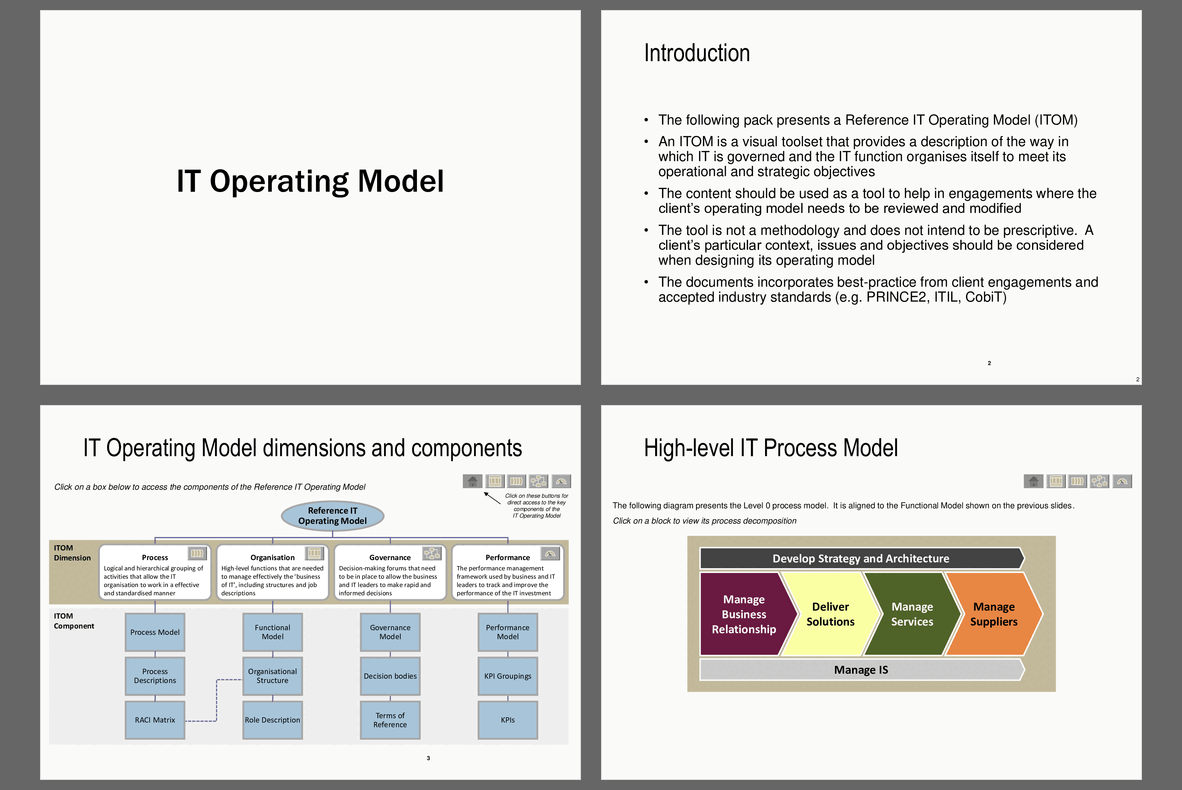
An ITOM is a visual toolset that provides a description of the way in which IT is governed and the IT function organises itself to meet its operational and strategic objectives
The content should be used as a tool to help in engagements where the client's operating model needs to be reviewed and modified
The tool is not a methodology and does not intend to be prescriptive. A client's particular context, issues and objectives should be considered when designing its operating model
The documents incorporates best-practice from client engagements and accepted industry standards (e.g. PRINCE2, ITIL, CobiT)
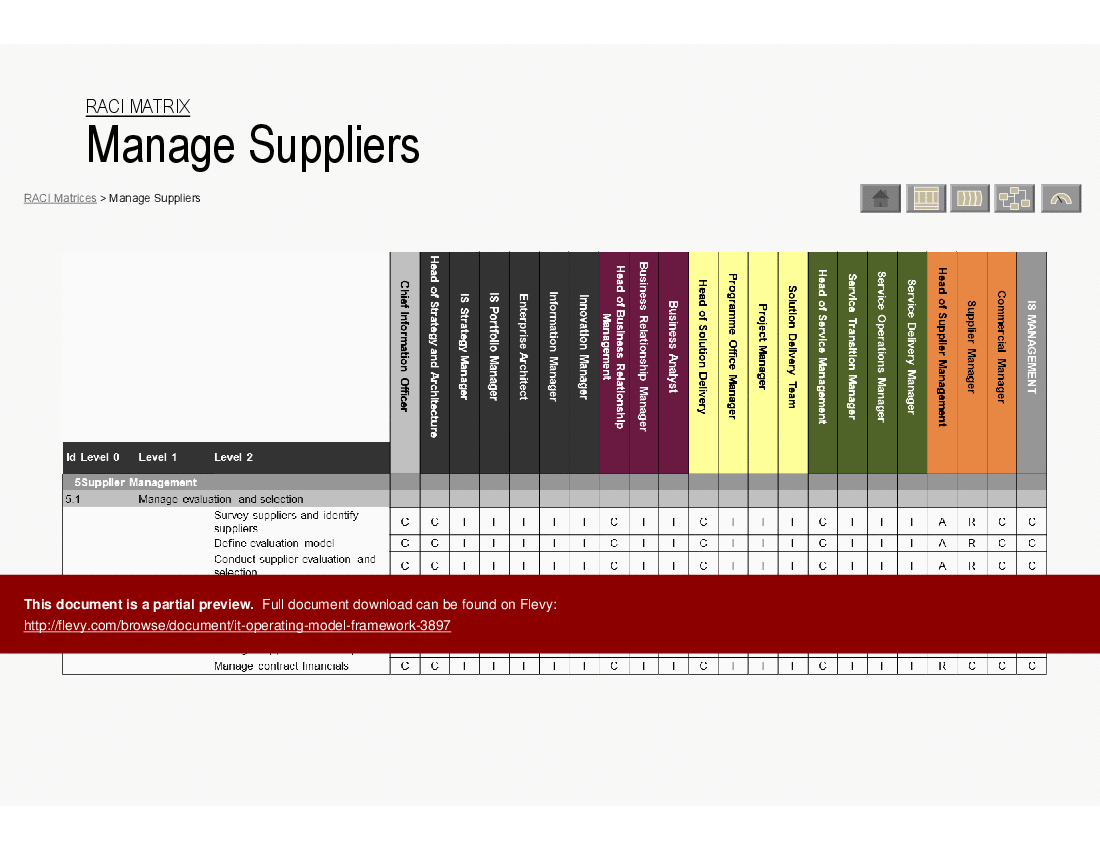
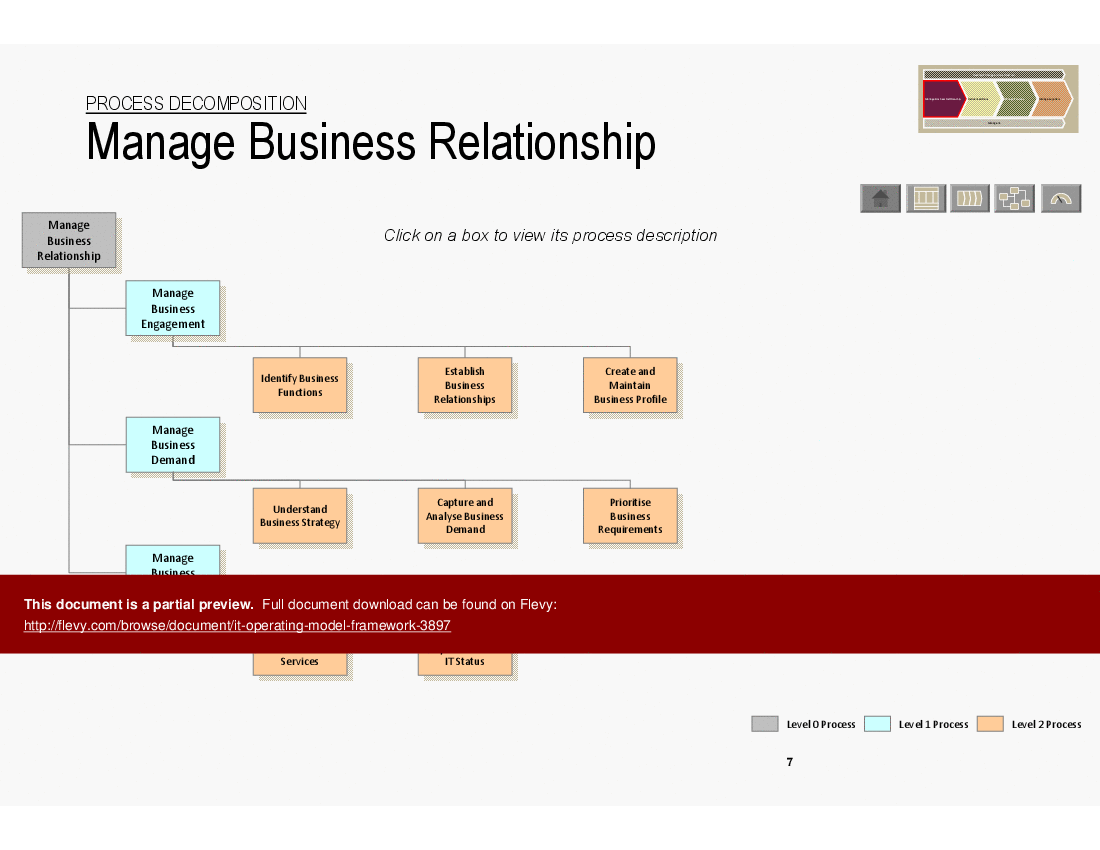
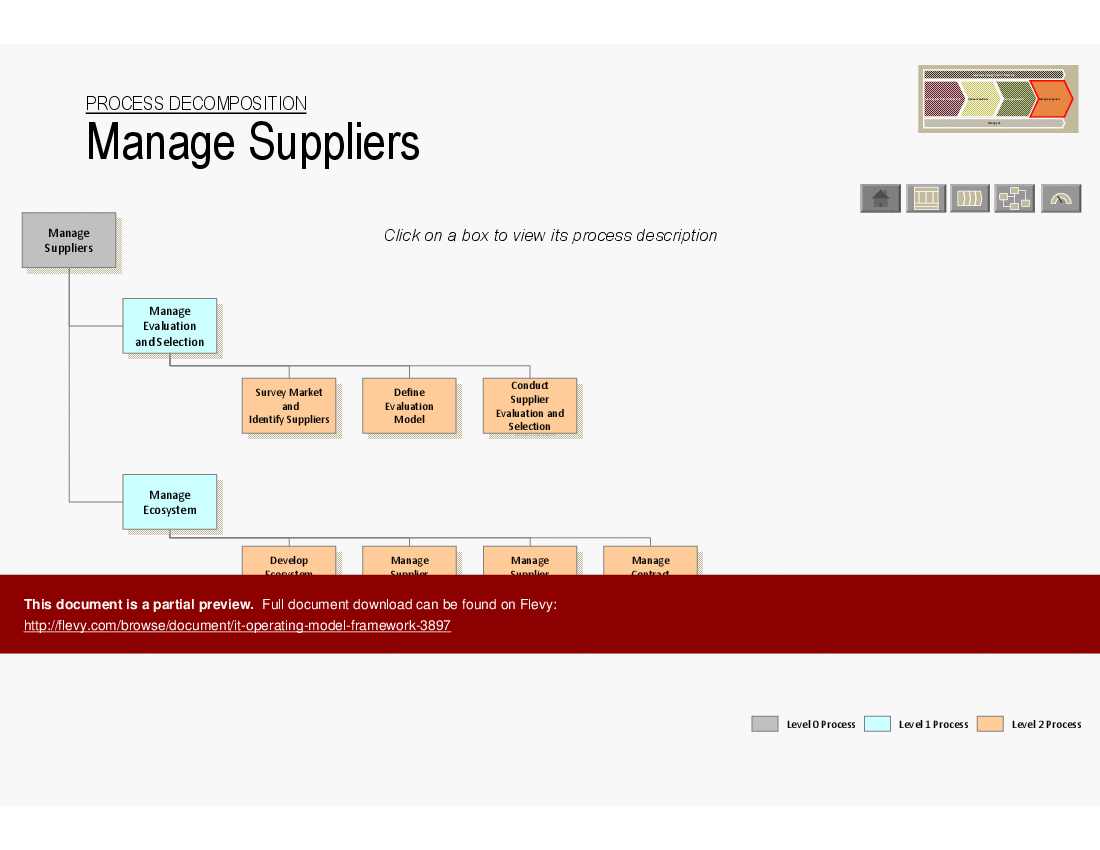
This PPT includes detailed process models for managing business relationships and suppliers, providing a clear visual representation of each process step. It breaks down complex interactions into manageable tasks, ensuring that all stakeholders understand their roles and responsibilities. The RACI matrices further clarify accountability, making it easier to assign and track tasks across different levels of the organization.
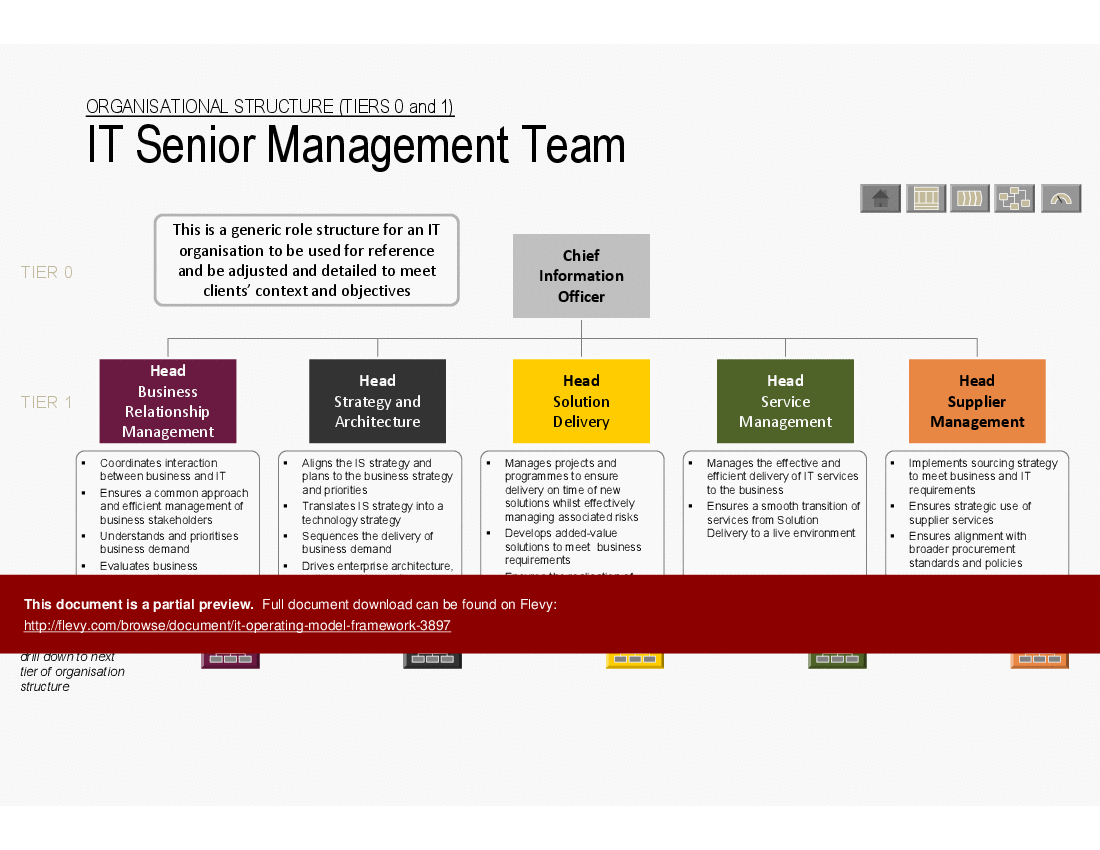
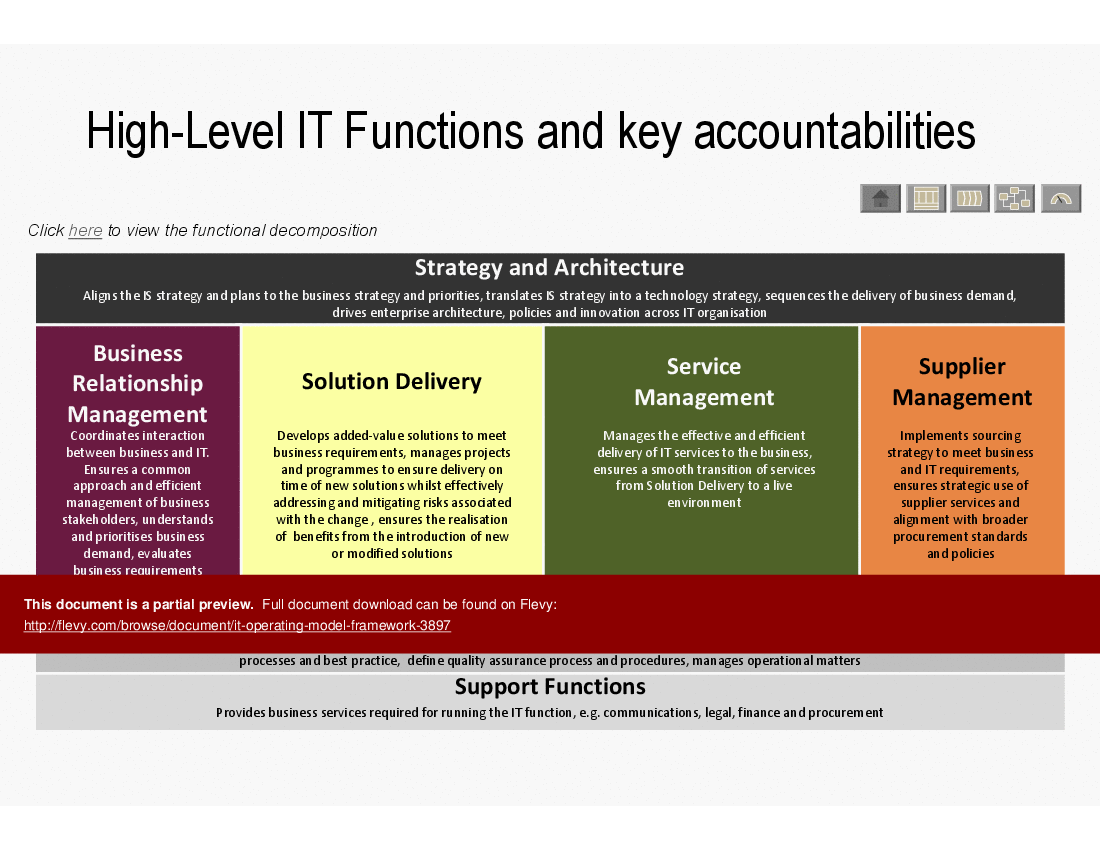
The framework also includes high-level IT functions and key accountabilities, ensuring alignment with business strategy and operational efficiency. The governance section showcases a real-world example of a governance structure, providing practical insights into effective decision-making bodies and processes. This comprehensive approach ensures that your IT operating model is both robust and adaptable to your organization's unique needs.
Got a question about the product? Email us at support@flevy.com or ask the author directly by using the "Ask the Author a Question" form. If you cannot view the preview above this document description, go here to view the large preview instead.
MARCUS OVERVIEW
This synopsis was written by Marcus [?] based on the analysis of the full 41-slide presentation.
Executive Summary
The IT Operating Model Framework (PPT) serves as a consulting-grade tool designed to optimize IT governance, processes, and performance metrics, ensuring strategic alignment with business objectives. This framework is structured in a manner consistent with McKinsey, Bain, or BCG-quality presentations (consulting-grade; not affiliated). It provides a comprehensive overview of how IT functions can be organized and governed to effectively meet operational needs while aligning with strategic goals. Users will be equipped to assess and modify their IT operating models, leveraging best practices from industry standards such as PRINCE2, ITIL, and CobiT.
Who This Is For and When to Use
• IT executives and senior management responsible for IT strategy and governance
• Business relationship managers coordinating between IT and business units
• Solution delivery teams tasked with project management and service delivery
• Supplier management professionals overseeing vendor relationships and performance
• IT service management teams ensuring operational efficiency and service quality
Best-fit moments to use this deck:
• During IT strategy reviews to align operational models with business objectives
• When assessing current IT governance structures and identifying areas for improvement
• In planning sessions for new IT initiatives or projects requiring stakeholder engagement
• For training sessions aimed at enhancing understanding of IT operating processes
Learning Objectives
• Define the components of an effective IT Operating Model and its relevance to business strategy
• Build a governance framework that supports rapid decision-making and accountability
• Establish a performance management system to track and improve IT investments
• Develop a comprehensive process model that outlines key IT functions and responsibilities
• Create a RACI matrix to clarify roles and responsibilities within IT processes
• Implement best practices in supplier management to enhance vendor performance
Table of Contents
• Introduction to IT Operating Model (page 2)
• IT Operating Model Dimensions and Components (page 3)
• High-Level IT Process Model (page 4)
• Process Decomposition: Develop Strategy and Architecture (page 5)
• Process Decomposition: Manage Business Relationship (page 6)
• Process Decomposition: Deliver Solutions (page 7)
• Process Decomposition: Manage Services (page 8)
• Process Decomposition: Manage Suppliers (page 9)
• Process Decomposition: Manage IS (page 10)
• RACI Matrix Overview (page 11)
• Governance Model (page 12)
• Decision Bodies (page 13)
Primary Topics Covered
• IT Operating Model Overview - A visual toolset that describes how IT is governed and organized to meet operational and strategic objectives.
• Process Model - A structured approach to define and standardize IT activities for effective operation.
• Governance Model - Framework for decision-making bodies that facilitate rapid and informed decisions.
• Performance Model - A management framework to track and enhance IT performance through KPIs.
• Functional Model - High-level functions necessary for managing IT operations, including organizational structures and job descriptions.
• RACI Matrix - A tool to clarify roles and responsibilities across various IT processes.
Deliverables, Templates, and Tools
• Reference IT Operating Model template for visualizing governance and processes
• RACI matrix template for defining roles and responsibilities in IT functions
• Process descriptions for key IT activities, including strategy development and service management
• Performance management framework to track KPIs and improve IT investments
• Governance structure documentation outlining decision-making bodies and their functions
• Supplier management strategy template for evaluating and selecting vendors
Slide Highlights
• Overview of the IT Operating Model dimensions and components, providing a clear framework for IT governance
• High-level IT Process Model diagram illustrating the interconnections between key IT functions
• Detailed process decomposition slides for developing strategy, managing relationships, and delivering solutions
• RACI matrix slides that clarify accountability across various IT processes
• Governance Model slide outlining decision bodies and their roles in IT strategy alignment
Potential Workshop Agenda
Introduction to IT Operating Model (30 minutes)
• Overview of the framework and its components
• Discussion on the importance of aligning IT with business strategy
Process Model Deep Dive (60 minutes)
• Review of the high-level IT process model
• Breakout sessions to discuss specific processes and their implications
Governance and Performance Management (45 minutes)
• Exploration of governance structures and decision-making bodies
• Strategies for implementing a performance management framework
Supplier Management Best Practices (30 minutes)
• Discussion on effective supplier evaluation and management strategies
• Case studies on successful supplier partnerships
Customization Guidance
• Tailor the IT Operating Model to reflect specific organizational structures and business needs
• Adjust the RACI matrix to align with existing roles and responsibilities within the IT team
• Incorporate industry-specific metrics and KPIs to enhance performance tracking
• Modify governance structures to fit the unique decision-making processes of the organization
Secondary Topics Covered
• Best practices in IT service management and operational efficiency
• Strategies for effective business relationship management
• Techniques for developing and communicating IT strategies
• Insights into continuous improvement and quality assurance processes
• Overview of emerging technologies and their impact on IT operations
Topic FAQ
What are the core components of an IT operating model that I should define?
Core components include a process model, governance model, performance model, functional model, and a RACI matrix. Together these define how IT is organized, how decisions are made, which KPIs are tracked, and who is accountable for key activities, such as the RACI matrix tool.
How does a RACI matrix help improve IT operations?
A RACI matrix clarifies roles and responsibilities by labeling who is Responsible, Accountable, Consulted, and Informed for each task or process. This makes it easier to assign, track, and audit activities across teams and supplier interactions, using a formal RACI matrix template.
What types of KPIs should be included in an IT performance model?
An IT performance model should include KPIs that track IT performance, service delivery, and alignment with business goals to enable continuous improvement and accountability. Examples focus on operational and strategic measures defined within a performance management framework.
How do PRINCE2, ITIL, and CobiT relate to designing an IT operating model?
PRINCE2, ITIL, and CobiT are industry standards referenced as best-practice inputs for structuring processes, service management, and governance within an IT operating model. The framework integrates concepts from these standards when defining process descriptions and governance elements, such as ITIL-based service processes.
What should I look for when buying an IT operating model template for a governance review?
Look for governance structure documentation, decision-body definitions, process descriptions, and a RACI matrix template that you can tailor to your organization. Flevy's IT Operating Model Framework explicitly includes governance structure documentation and a RACI matrix template to support governance reviews.
Can prebuilt IT operating model decks be used to run a one-day workshop, and what will they typically include?
Yes; prebuilt decks often include a suggested workshop agenda, slide decks for process and governance discussions, and customization guidance. Flevy's IT Operating Model Framework contains a potential workshop agenda and customization guidance to adapt materials for workshop use.
I need to align IT initiatives with business strategy—what operating model elements are most useful?
Useful elements include the governance model to align decision bodies with strategic priorities, the performance model to track strategic KPIs, and the functional/process models to ensure roles and activities map to business objectives, such as a performance management framework for KPIs.
How can an IT operating model support better supplier management?
An operating model supports supplier management through dedicated process decomposition for managing suppliers, supplier evaluation and management templates, and role clarity via RACI matrices, enabling consistent vendor oversight using a supplier management strategy template.
Document FAQ
These are questions addressed within this presentation.
What is an IT Operating Model?
An IT Operating Model is a framework that outlines how IT is governed and organized to achieve operational and strategic objectives, providing clarity on roles, processes, and governance structures.
How can this framework be customized?
The framework can be tailored to fit specific organizational contexts by adjusting roles, processes, and governance structures to align with business needs and objectives.
What are the key components of the IT Operating Model?
The key components include the process model, governance model, performance model, functional model, and RACI matrix, each serving a distinct purpose in IT governance and operations.
How does the RACI matrix work?
The RACI matrix clarifies roles and responsibilities by categorizing individuals as Responsible, Accountable, Consulted, or Informed for each task or process within the IT Operating Model.
What best practices are included in the framework?
The framework incorporates best practices from industry standards such as PRINCE2, ITIL, and CobiT, ensuring alignment with recognized methodologies for IT governance and management.
How does this framework support decision-making?
The governance model outlines decision-making bodies that facilitate rapid and informed decisions, ensuring alignment between IT initiatives and business objectives.
What performance metrics are suggested?
The framework recommends establishing KPIs that track IT performance, service delivery, and alignment with business goals, enabling continuous improvement and accountability.
How can this framework aid in supplier management?
The framework provides templates and strategies for evaluating and managing supplier relationships, ensuring that vendor performance aligns with organizational objectives and standards.
Glossary
• IT Operating Model - Framework describing IT governance and organization to meet strategic objectives.
• RACI Matrix - Tool for defining roles and responsibilities in processes.
• Governance Model - Structure for decision-making bodies in IT.
• Performance Model - Framework for tracking IT performance through KPIs.
• Process Model - Structured approach to define IT activities.
• Supplier Management - Strategies for evaluating and managing vendor relationships.
• Business Relationship Management - Coordination between IT and business units.
• Continuous Improvement - Ongoing efforts to enhance IT processes and services.
• Quality Assurance - Processes ensuring IT delivers value and meets standards.
• Enterprise Architecture - Framework linking business strategy to IT infrastructure.
• Service Management - Management of IT services to meet business needs.
• Innovation Management - Process of identifying and implementing new technologies.
• IS Strategy - Plan aligning IT services with business strategy.
• Stakeholder Engagement - Involvement of key individuals in IT decision-making.
• ITIL - IT Infrastructure Library, a set of practices for IT service management.
• CobiT - Control Objectives for Information and Related Technologies, a framework for governance and management of enterprise IT.
• PRINCE2 - A structured project management method and practitioner certification program.
• KPI - Key Performance Indicator, a measurable value demonstrating how effectively a company is achieving key business objectives.
• IS Portfolio Management - Process of managing an organization's information systems investments.
• Change Management - Approach to transitioning individuals, teams, and organizations to a desired future state.
This PPT slide outlines a governance model in IT structured into 3 bodies: Strategic, Managerial, and Operational. Strategic bodies set the overall direction of IT, ensuring alignment with business objectives. Managerial bodies establish standards and compliance, evaluating suppliers and overseeing adherence to maintain quality in IT operations. They bridge strategic intentions and operational execution. Operational bodies implement programs and services, managing transition activities to realize strategic plans. This model emphasizes structured decision-making and accountability, providing insights into effective IT governance that supports business objectives and optimizes IT practices.
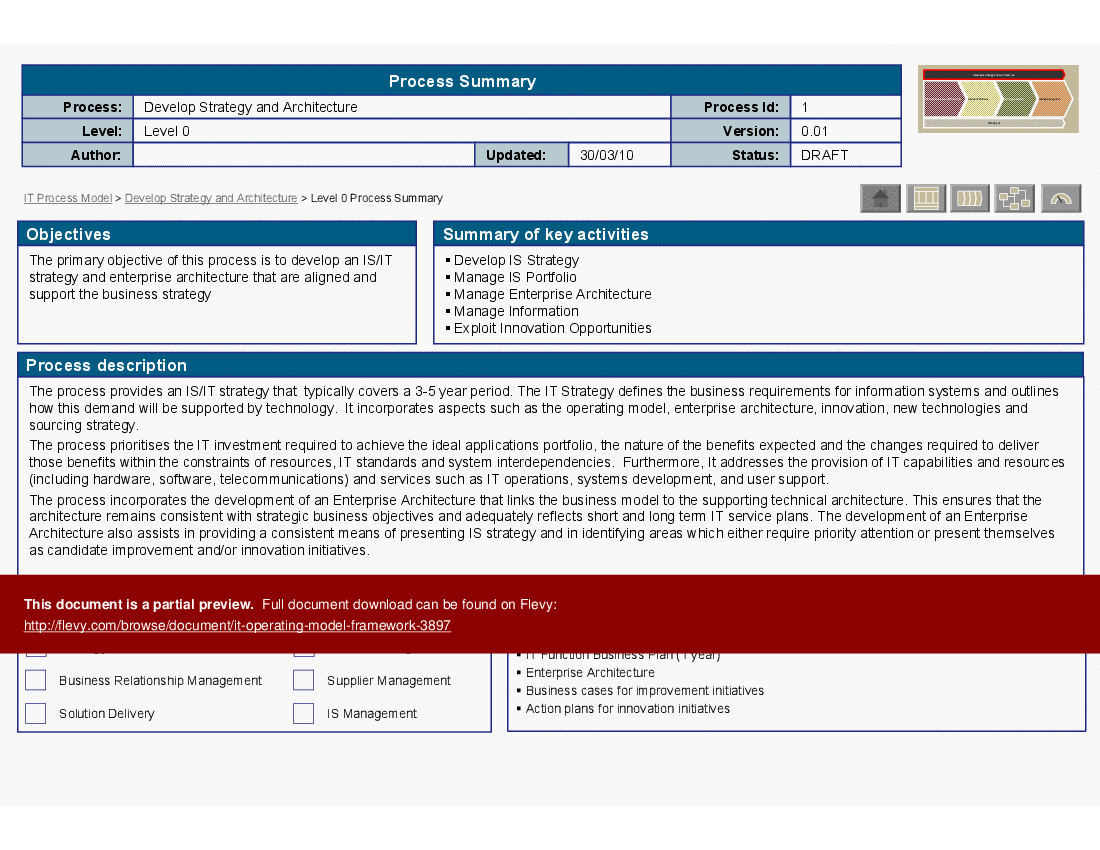
This PPT slide provides a high-level overview of an IT process model, specifically Level 0, aligned with a functional model for IT governance. The overarching goal is to "Develop Strategy and Architecture," emphasizing the alignment of IT initiatives with business objectives. Five main processes are identified: "Manage Business Relationship," focusing on stakeholder engagement; "Deliver Solutions," addressing specific business challenges through IT projects; "Manage Services," ensuring service quality; "Manage Suppliers," structuring vendor relationships; and "Manage IS," overseeing information systems governance. This model serves as a roadmap for enhancing IT capabilities and highlights the interconnectedness of IT functions within a strategic IT management framework.
The organizational structure for Service Management consists of a two-tier framework. At the top tier, the Head of Service Management ensures strategic alignment and operational efficiency across the function. In Tier 2, key roles include the Service Transition Manager, Service Operations Manager, and Service Delivery Manager. The Service Transition Manager integrates new services into the live environment, evaluates changes, assesses risks, and coordinates release activities to minimize disruption. The Service Operations Manager oversees day-to-day IT service operations, aligning them with service level targets and ensuring service recovery arrangements for business resilience. The Service Delivery Manager manages IT service provisions, monitors performance against service levels, and leads service improvement initiatives, impacting overall business performance.
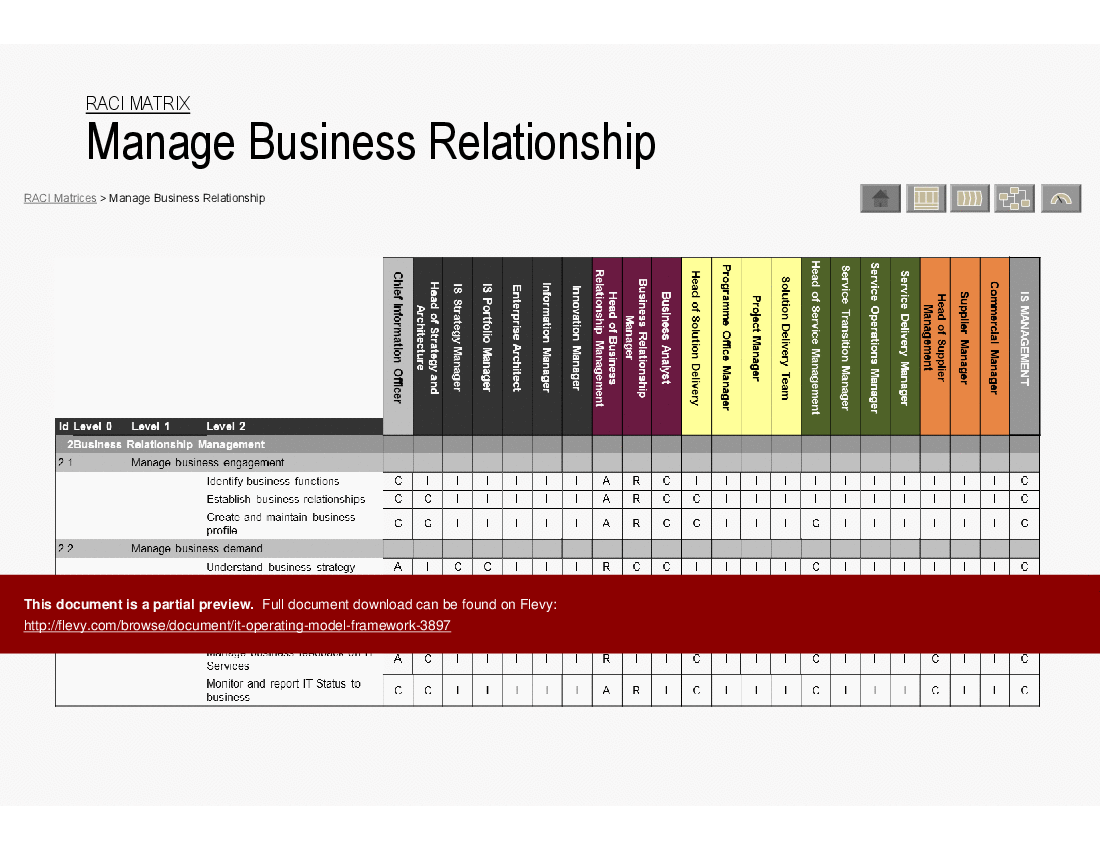
This PPT slide presents a RACI matrix for managing business relationships, structured into 2 sections: "Manage business engagement" and "Manage business demand." Key activities include identifying business functions, establishing relationships, and creating business profiles, with responsibilities assigned as 'C' for Consulted, 'I' for Informed, and 'A' for Accountable. The Chief Information Officer (CIO) is often marked as Accountable for aligning IT and business strategies. Other roles include IS Strategy Manager, Business Analysts, and Solution Delivery Team, fostering collaboration and accountability. This matrix enhances business relationship management processes, ensuring alignment between IT and business objectives for improved outcomes.
This PPT slide provides an overview of the IT Operating Model (ITOM), structured into 4 dimensions: Process, Organisation, Governance, and Performance. The Process dimension includes a detailed process model, process descriptions, and a RACI matrix to clarify roles and responsibilities. The Organisation dimension outlines a functional model, organizational structure, and role descriptions essential for aligning IT operations with business objectives. Governance details decision-making forums, including a governance model, decision bodies, and terms of reference for effective collaboration between business and IT leaders. The Performance dimension focuses on a management framework for evaluating IT investments, incorporating a performance model, KPI groupings, and specific KPIs to track performance and drive continuous improvement.
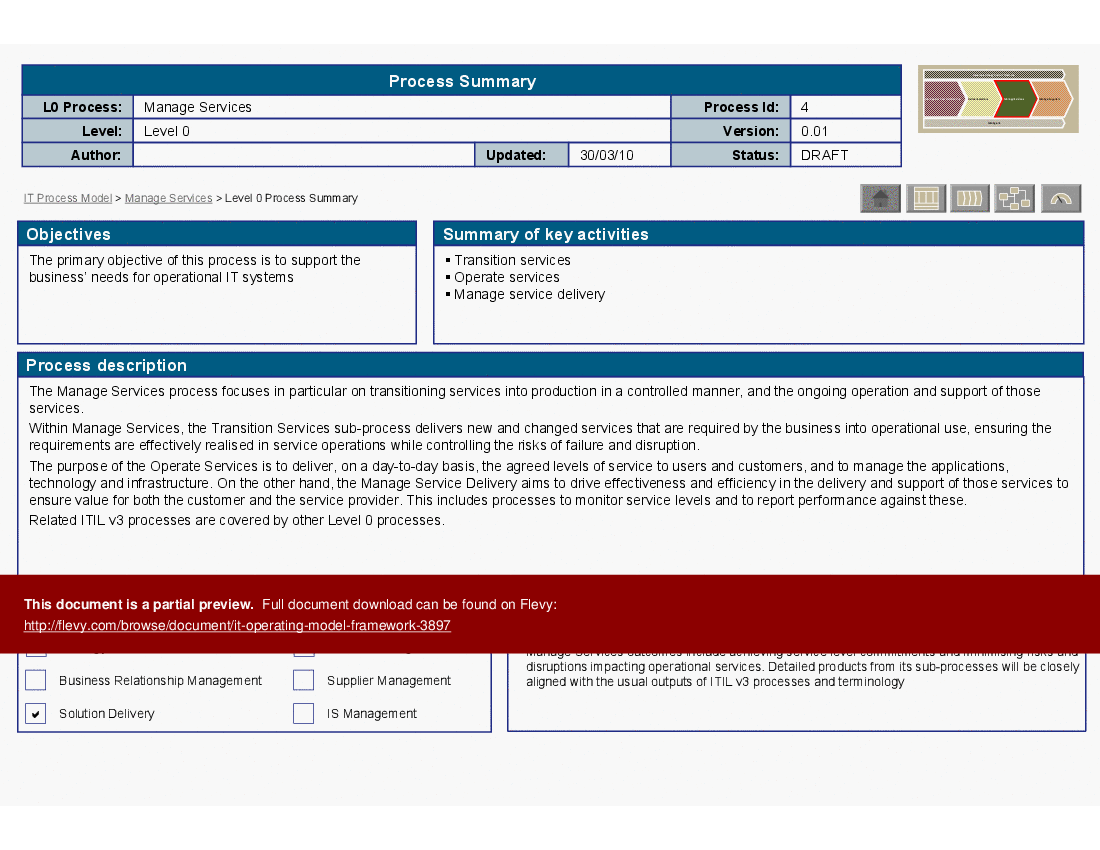
The "Manage Services" process within an IT operating model framework aims to align IT services with business requirements, ensuring effective support for ongoing operations. Key activities include transition services, operate services, and manage service delivery, which are essential for delivering, maintaining, and improving IT services. The process transitions new or modified services into operational use while managing risks associated with service delivery. The operate services component focuses on maintaining agreed service levels and managing technology and infrastructure. Key functions in execution include strategy and architecture, business relationship management, service management, and supplier management. The emphasis is on achieving tangible results over merely producing documentation.
This PPT slide outlines a structured framework for IT operations, emphasizing critical functional areas for organizational efficiency. Key components include Strategy and Architecture, IS Management, and Support Functions. Under Strategy and Architecture, elements such as IS Strategy, IS Portfolio Management, and Enterprise Architecture align IT initiatives with business goals. Information Management and Innovation focus on leveraging data for growth.
Specific functional areas include Business Relationship Management, which encompasses Business Engagement, Business Demand Management, and Business Service Management to address stakeholder needs. Solution Delivery details Programme and Project Management and Solution Development, highlighting structured methodologies for effective IT solutions. Service Management focuses on Service Operations and Service Delivery, emphasizing operational excellence and structured Service Transition for seamless delivery. Supplier Management covers Supplier Selection, Relationship Management, and Performance Management, optimizing external partnerships for quality service delivery.
The "Manage Services" slide outlines a structured approach to IT service management within an operating model framework, categorized into Transition Services, Operate Services, and Manage Service Delivery.
Transition Services include "Manage Service Acceptance" for ensuring services meet criteria, "Manage Changes" for systematic modifications, "Manage Configuration and Assets" for tracking IT assets, and "Manage Releases and Deployment" for introducing new services.
Operate Services focus on ongoing management, featuring "Manage Events" for monitoring, "Manage Incidents" for disruption resolution, "Manage Problems" for root cause identification, "Fulfill Requests" for user needs, and "Manage Access" for security. "Manage Infrastructure and Operations" provides a comprehensive view of service delivery systems.
Manage Service Delivery encompasses "Define Service Metrics" for key performance indicators, "Report Service Performance" for continuous improvement, "Manage Capacity" and "Manage Availability" for operational readiness, "Manage IT Service Continuity," and "Manage Security" for resilience and threat protection.
Source: Best Practices in MIS PowerPoint Slides: IT Operating Model Framework PowerPoint (PPT) Presentation Slide Deck, Eldiablo666
The average daily rate of a McKinsey consultant is $6,625 (not including expenses). The average price of a Flevy document is $65.
Trusted by over 10,000+ Client Organizations
Since 2012, we have provided business templates to over 10,000 businesses and organizations of all sizes, from startups and small businesses to the Fortune 100, in over 130 countries.
Read Customer Testimonials
"Flevy.com has proven to be an invaluable resource library to our Independent Management Consultancy, supporting and enabling us to better serve our enterprise clients.
The value derived from our [FlevyPro] subscription in terms of the business it has helped to gain far exceeds the investment made, making a subscription a no-brainer for any growing consultancy – or in-house strategy team."
– Dean Carlton, Chief Transformation Officer, Global Village Transformations Pty Ltd.
"I have found Flevy to be an amazing resource and library of useful presentations for lean sigma, change management and so many other topics. This has reduced the time I need to spend on preparing for my performance consultation. The library is easily accessible and updates are regularly provided. A wealth of great information."
– Cynthia Howard RN, PhD, Executive Coach at Ei Leadership
"Last Sunday morning, I was diligently working on an important presentation for a client and found myself in need of additional content and suitable templates for various types of graphics. Flevy.com proved to be a treasure trove for both content and design at a reasonable price, considering the time I
saved. I encountered a download issue during the ordering process. However, a quick email to Flevy's support team, even on a Sunday (!!!), resulted in assistance within less than an hour, allowing me to download the content I needed. Fantastic job, Flevy! I give 5 stars for both content/price and customer service. Thank you!
"
– M. E., Chief Commercial Officer, International Logistics Service Provider
"Flevy is now a part of my business routine. I visit Flevy at least 3 times each month.
Flevy has become my preferred learning source, because what it provides is practical, current, and useful in this era where the business world is being rewritten.
many challenges and there is the need to make the right decisions in a short time, with so much scattered information, we are fortunate to have Flevy. Flevy investigates, selects, and puts at our disposal the best of the best to help us be successful in our work.
"
– Omar Hernán Montes Parra, CEO at Quantum SFE
"As a consultant requiring up to date and professional material that will be of value and use to my clients, I find Flevy a very reliable resource.
The variety and quality of material available through Flevy offers a very useful and commanding source for information. Using Flevy saves me time, enhances my expertise and ends up being a good decision."
– Dennis Gershowitz, Principal at DG Associates
"I have used Flevy services for a number of years and have never, ever been disappointed. As a matter of fact, David and his team continue, time after time, to impress me with their willingness to assist and in the real sense of the word. I have concluded in fact
that it is not at all just a repository of documents/resources but, in the way that David and his team manage the firm, it is like dealing with consultants always ready to assist, advise and direct you to what you really need, and they always get it right.
I am an international hospitality accomplished senior executive who has worked and lived during the past 35 years in 23 countries in 5 continents and I can humbly say that I know what customer service is, trust me.
Aside from the great and professional service that Flevy's team provide, their wide variety of material is of utmost great quality, professionally put together and most current.
Well done Flevy, keep up the great work and I look forward to continue working with you in the future and to recommend you to a variety of colleagues around the world.
"
– Roberto Pelliccia, Senior Executive in International Hospitality
"My FlevyPro subscription provides me with the most popular frameworks and decks in demand in today’s market. They not only augment my existing consulting and coaching offerings and delivery, but also keep me abreast of the latest trends, inspire new products and service offerings for my practice, and educate me
in a fraction of the time and money of other solutions. I strongly recommend FlevyPro to any consultant serious about success.
"
– Bill Branson, Founder at Strategic Business Architects
"If you are looking for great resources to save time with your business presentations, Flevy is truly a value-added resource. Flevy has done all the work for you and we will continue to utilize Flevy as a source to extract up-to-date information and data for our virtual and onsite presentations!"
Download our FREE Digital Transformation Templates
Download our free compilation of 50+ Digital Transformation slides and templates. DX concepts covered include Digital Leadership, Digital Maturity, Digital Value Chain, Customer Experience, Customer Journey, RPA, etc.
Download our FREE Digital Transformation Templates
Get Our FREE Product.
Download our free compilation of 50+ Digital Transformation slides and templates. DX concepts covered include Digital Leadership, Digital Maturity, Digital Value Chain, Customer Experience, Customer Journey, RPA, etc.