 Click main image to view in full screen.
Cost Reduction Programme Toolkit - Indirect Spend – PowerPoint PPTX Template
PowerPoint (PPTX) + Zip archive file (ZIP) 17 Slides


BENEFITS OF THIS DOWNLOADABLE POWERPOINT DOCUMENT
- Size the prize twice - top-down for the mandate and bottom-up for the commitment - and never confuse the two in front of a board again.
- Name the mechanism that holds every saving before you claim it, so the run-rate is still there at twenty-four months.
- Run a weekly cadence built around six gates and six questions, including the one almost nobody asks: what went down in confidence this week?
COST REDUCTION ASSESSMENT PPT TEMPLATE DESCRIPTION
A complete programme structure for taking cost out of indirect spend and keeping it out.
Most cost reduction programmes deliver the number and lose it within eighteen months. The reduction was real; the control that held it was not. This toolkit is built around that distinction. Every lever is stated with its typical range, its time to cash, its reversal risk, and the mechanism that has to hold it – contract, system or behaviour.
THE PROGRAMME
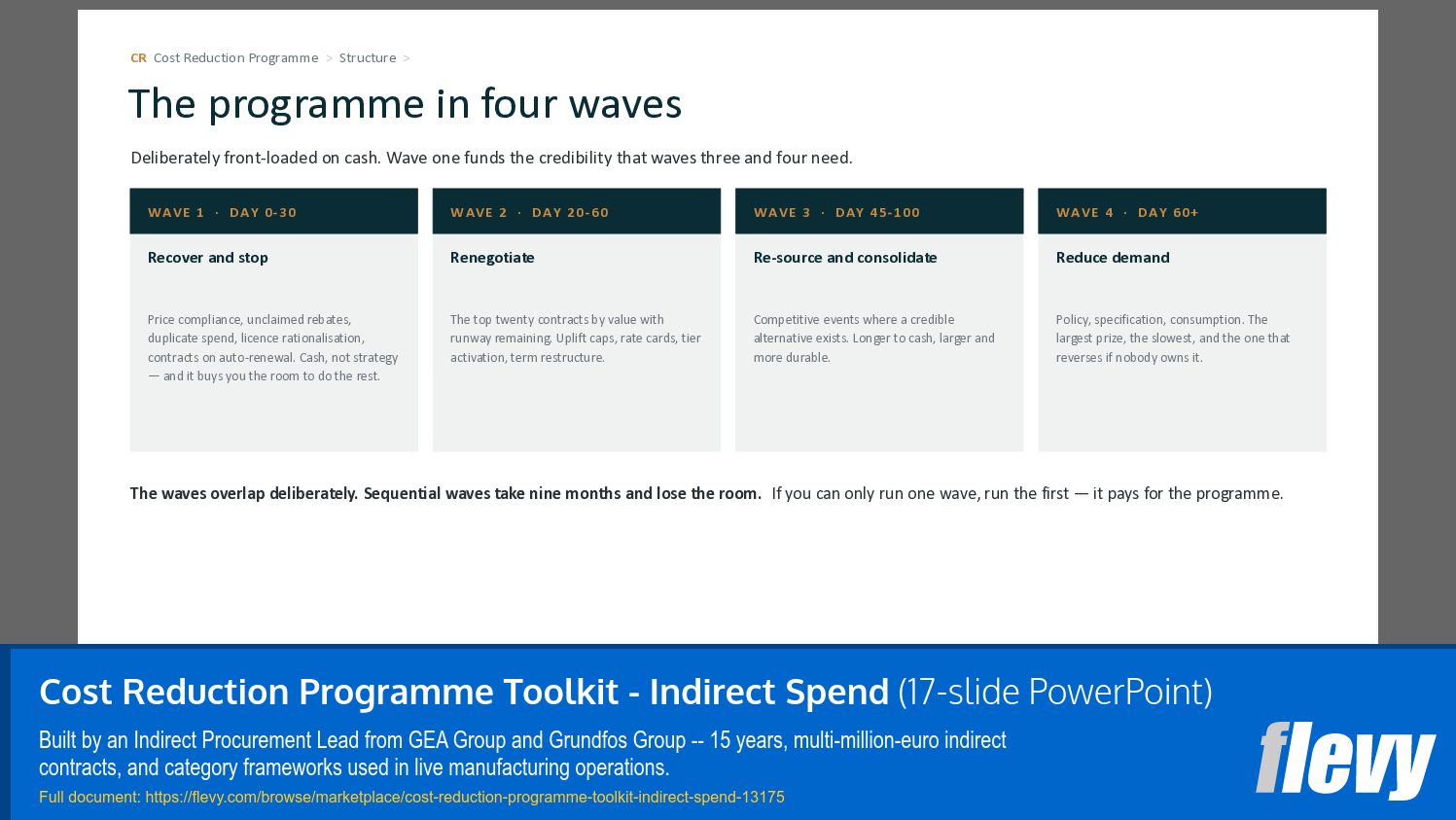
Four overlapping waves across roughly one hundred days, deliberately front-loaded on cash.
Wave one recovers and stops: price compliance, unclaimed rebates, auto-renewals inside the notice window, licence rationalisation, spend that has simply continued. Fifteen to twenty per cent of the total, and its real function is to produce a validated number inside thirty days – which is what buys the political room to attempt demand reduction later.
Wave two renegotiates the top twenty contracts with runway remaining. Wave three re-sources where a credible alternative genuinely exists. Wave four reduces demand, which is the largest prize in indirect spend, the slowest to land, and the only wave that reverses by default.
WHAT IS INCLUDED
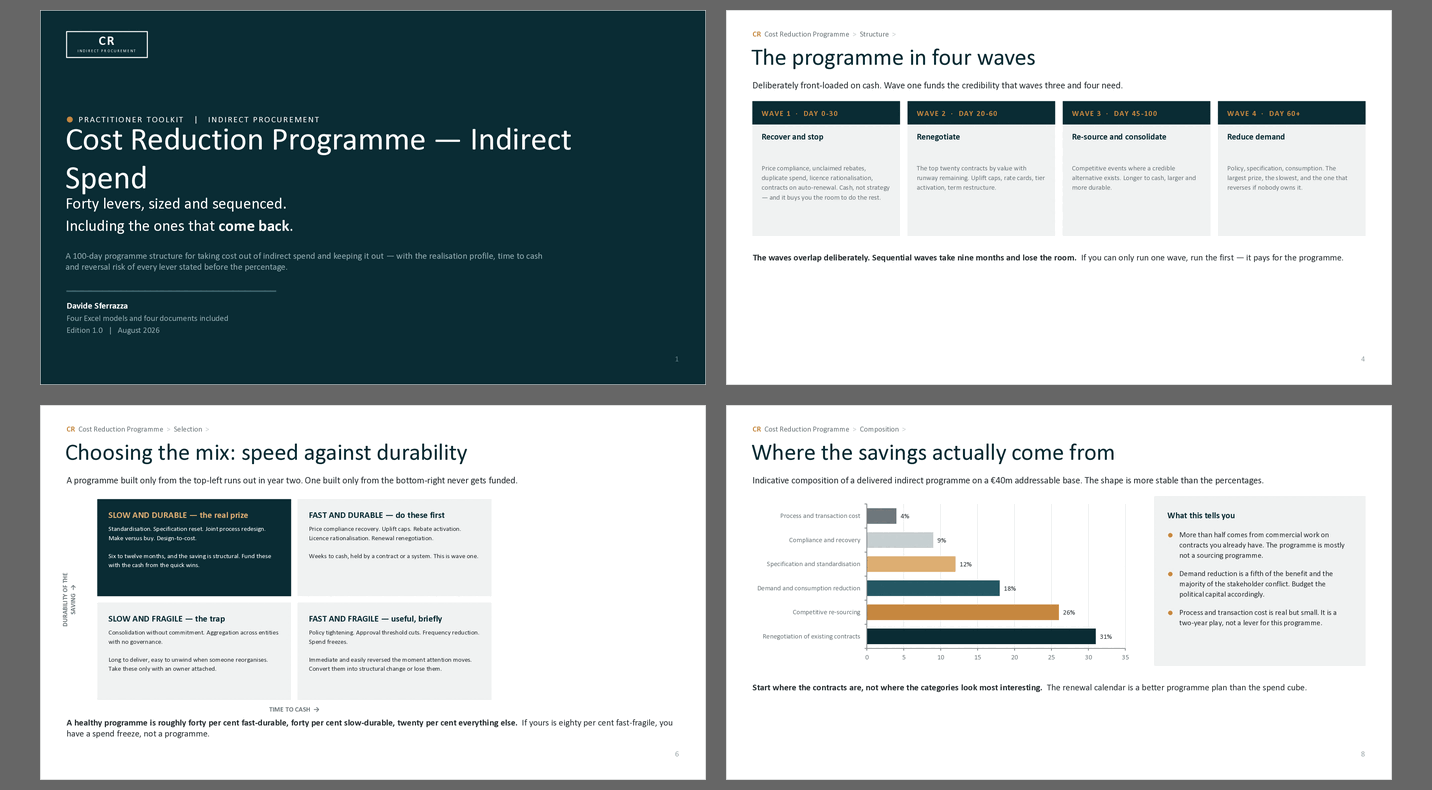
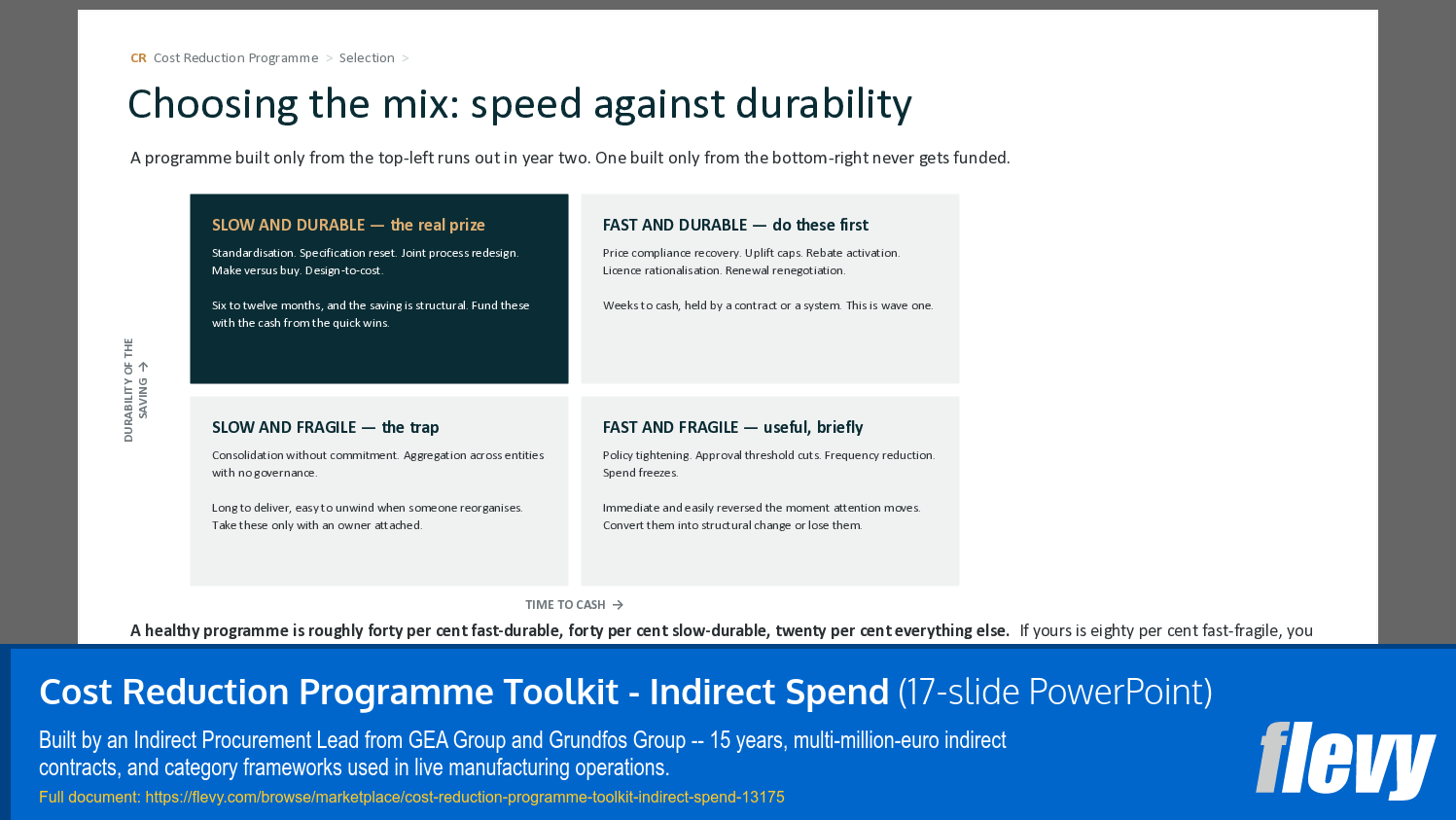
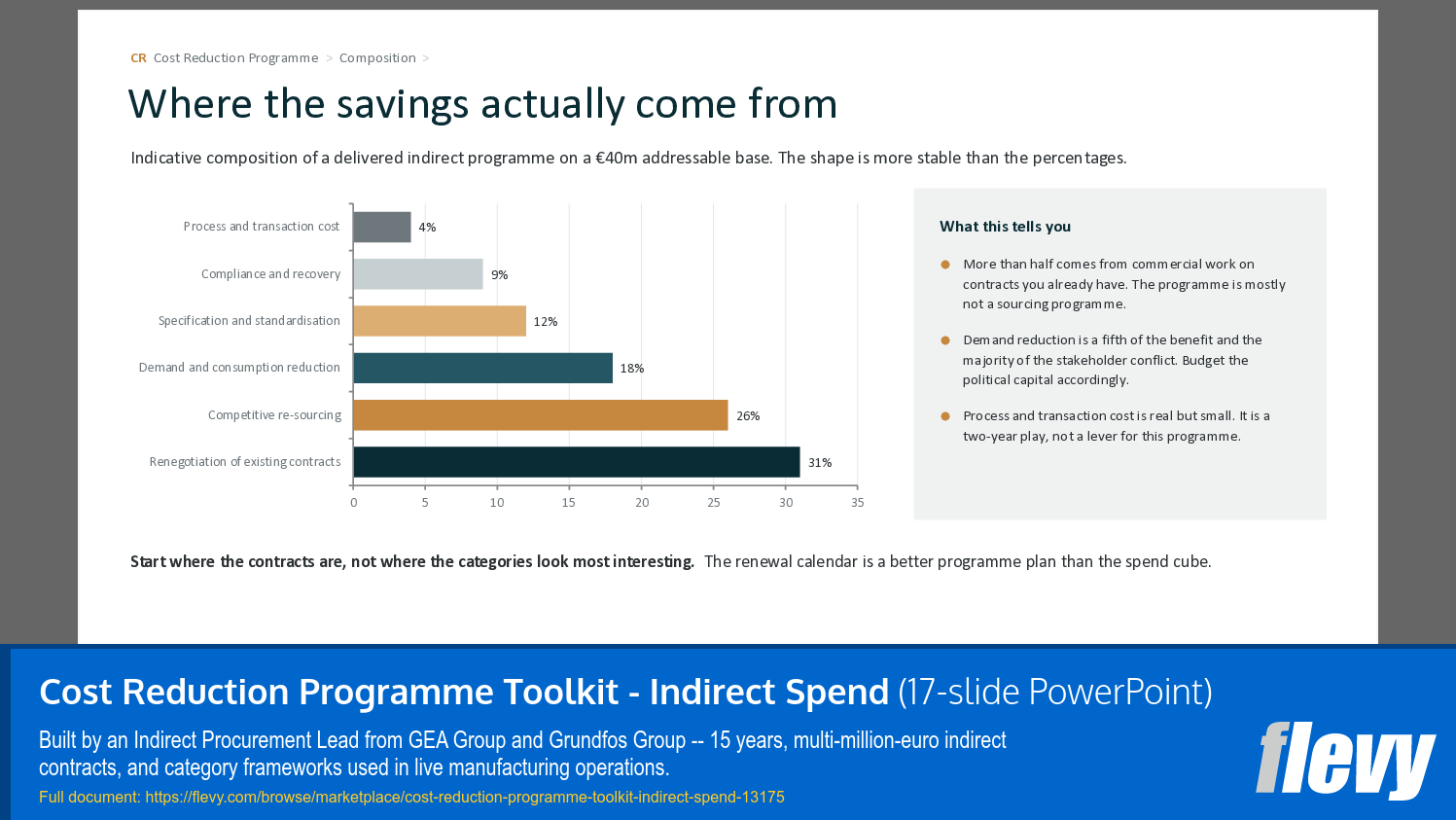
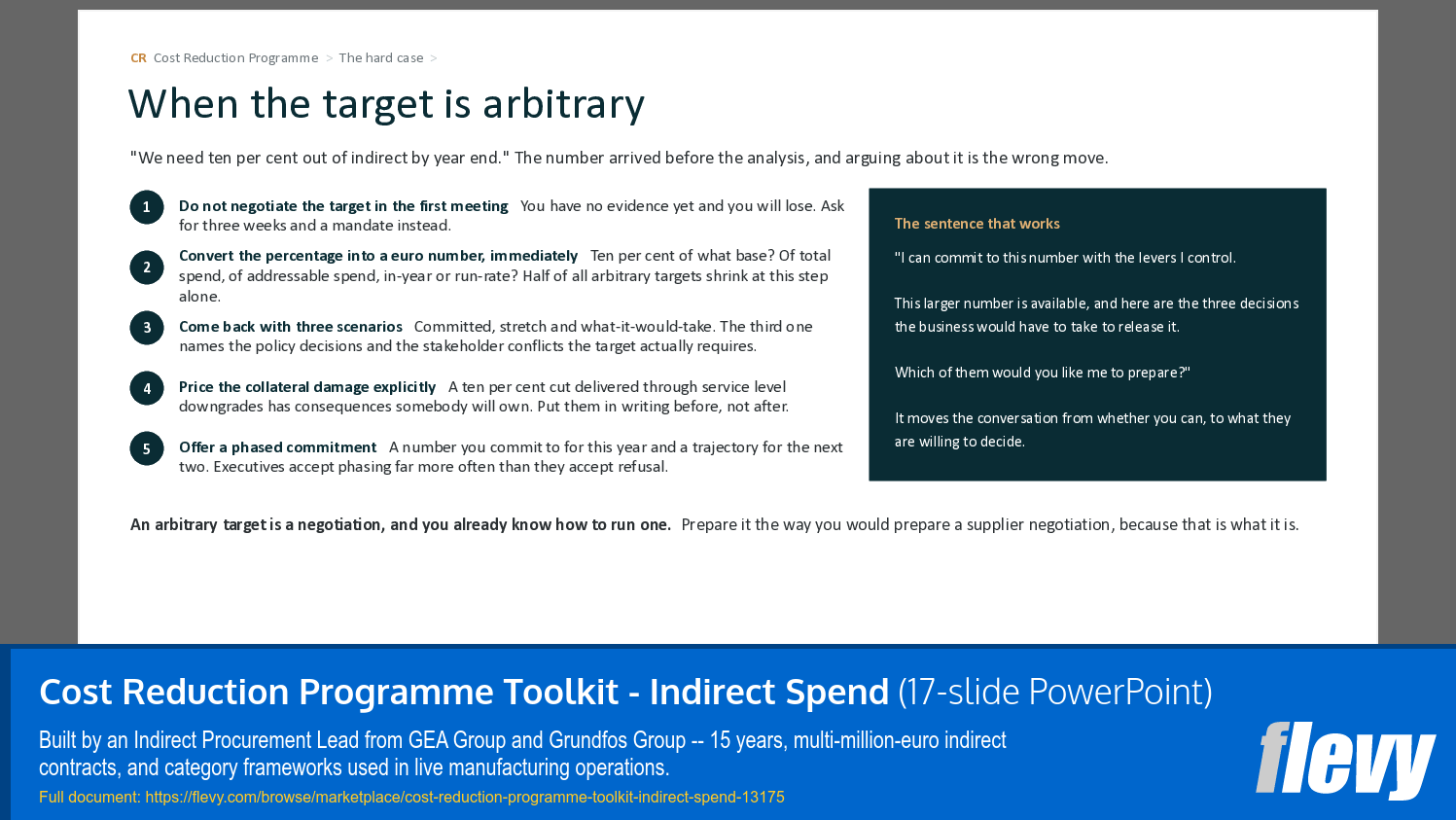
Primary document – a 17-slide guide covering the wave structure, the lever families with their realisation profiles, the speed-against-durability selection matrix, honest top-down and bottom-up sizing, the composition of a delivered programme, the six gates, the weekly cadence, and what to do when the target is arbitrary.
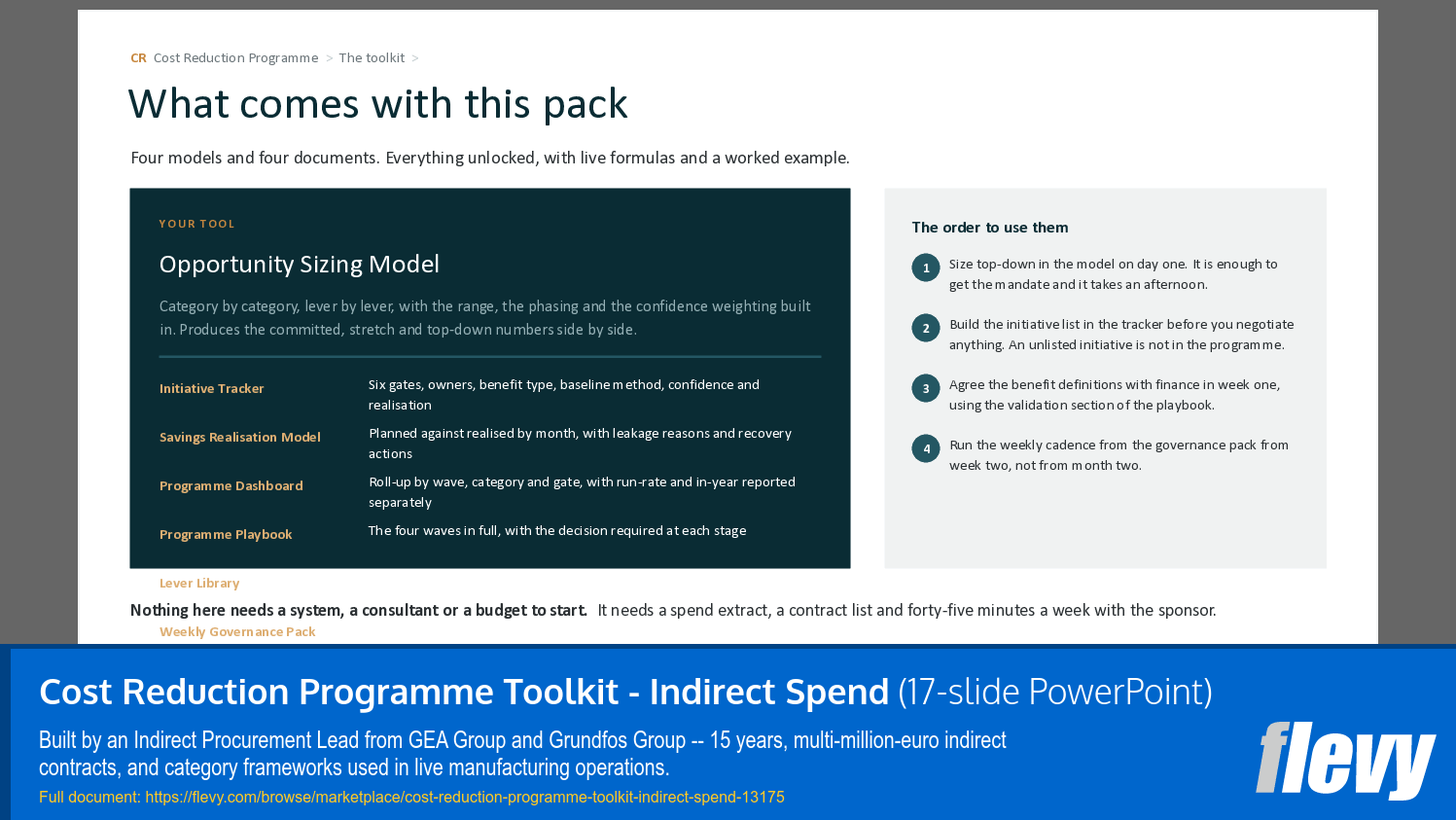
Working files, all unlocked with live formulas:
Opportunity Sizing Model (Excel) – category by category and lever by lever, with confidence weighting, monthly phasing and run-rate against in-year calculated separately. Produces the top-down ambition, the top-down after haircut and the bottom-up commitment side by side, so you can see the gap. Includes the full forty-lever reference on a second sheet.
Initiative Tracker (Excel) – six gates from identified to realised, with owner, benefit type, baseline method, confidence weighting and the holding mechanism recorded for every initiative. Automatic pipeline-by-gate roll-up and a risk check that isolates benefit held only by behaviour, benefit with no holding mechanism named, and cost avoidance being claimed as saving.
Savings Realisation and Leakage Model (Excel) – planned against realised month by month, with a defined leakage reason for every gap and a realisation rate that reads back what the number means.
Programme Dashboard (Excel) – one page for the steering committee. Six inputs, everything else calculated, including the pipeline coverage ratio against target.
Programme Playbook (Word) – the four waves in full, the mandate checklist, and the week-one finance conversation written out as six agreed points.
Lever Library (Word) – forty levers across commercial, demand, specification, process and relationship, each with range, months to cash, reversal risk and effort, plus the workable proportion of fast and slow levers in a programme that holds.
Weekly Governance Pack (Word) – agenda, the six questions, roles, escalation triggers and the one-slide initiative template.
The Five Reductions That Come Back (Word) – the spend freeze that becomes a spike, the headcount cut backfilled by contractors, the demand policy nobody enforces, the consolidation without a commitment mechanism, and the price traded quietly against a service level. For each: why it reverses, how to see it coming, and the control that prevents it. Plus the twelve and twenty-four month reversal review.
WHO IT IS FOR
Heads of procurement asked for a number with a deadline attached. Category managers running their part of a wider programme. Consultants who need a structure that survives contact with a finance function. CFOs and finance business partners who want to understand what they are being told.
WHAT THIS IS NOT
It is not a benchmark database and it makes no promise about what you will save. The ranges are what these levers typically deliver on the spend they touch, drawn from engagements, and they are labelled as such. It is not legal or financial advice.
Got a question about the product? Email us at support@flevy.com or ask the author directly by using the "Ask the Author a Question" form. If you cannot view the preview above this document description, go here to view the large preview instead.
Source: Best Practices in Cost Reduction Assessment, Procurement Strategy PowerPoint Slides: Cost Reduction Programme Toolkit - Indirect Spend PowerPoint (PPTX) Presentation Slide Deck, Davide Sferrazza
ABOUT THE AUTHOR

Indirect Procurement Lead, with 15 years spent in the categories most organisations manage least well: MRO, facilities, utilities and energy, marketing services, IT and software, professional services, logistics and CapEx.
That career has been inside manufacturing groups -- Pavan (GEA Group) and DAB Pumps (Grundfos Group) -- leading procurement transformation projects, negotiating
... [read more]
Ask the Author a Question
You must be logged in to contact the author.