
This product (Growth Strategy Report) is a 50-slide PPT PowerPoint presentation slide deck (PPT), which you can download immediately upon purchase.
This presentation is a growth strategy report of a major kitchen supplier in Australia. The deck has 49 slides. To achieve its growth objectives, the company has engaged a major consulting firm to:
• Define and articulate the business strategy that will deliver its growth and profit targets
• Identify the business model and capabilities the company will need to realise this strategy, and
• Assess what investment in time, effort and money will be called for to execute the strategy (including two alternative roll-out plans)
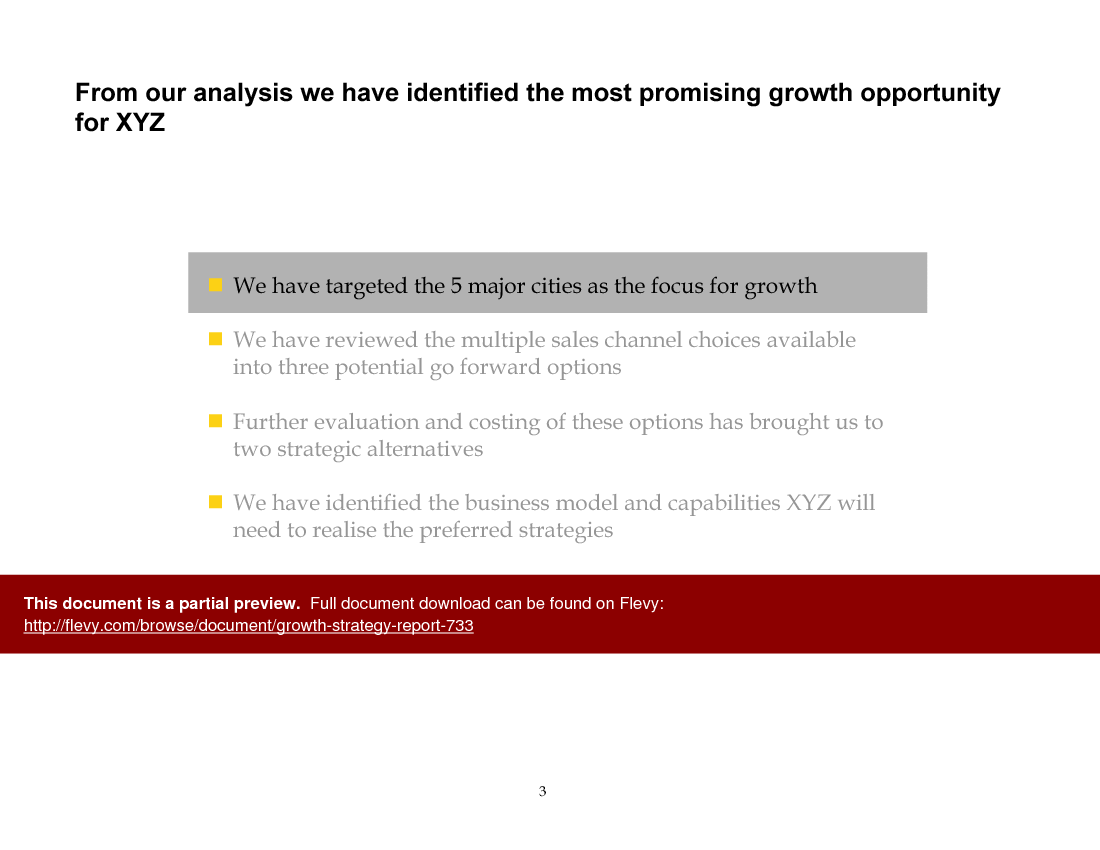
This comprehensive growth strategy report provides a detailed analysis of XYZ's ability to compete in Australia's five largest cities, with a particular focus on Sydney and Adelaide. The report includes a thorough assessment of market share, distribution networks, sales force effectiveness, and brand strength. It identifies key areas where XYZ can leverage its strengths and address gaps to enhance its market position.
The document also explores various strategic options, such as the "One-Stop-Shop" concept and the "Hardware Multiple Focus" approach, to expand XYZ's market reach. Each strategy is evaluated based on market segments, price points, and value-added services, providing a clear roadmap for implementation. The report highlights the importance of targeting different customer segments with tailored value propositions to maximize growth potential.
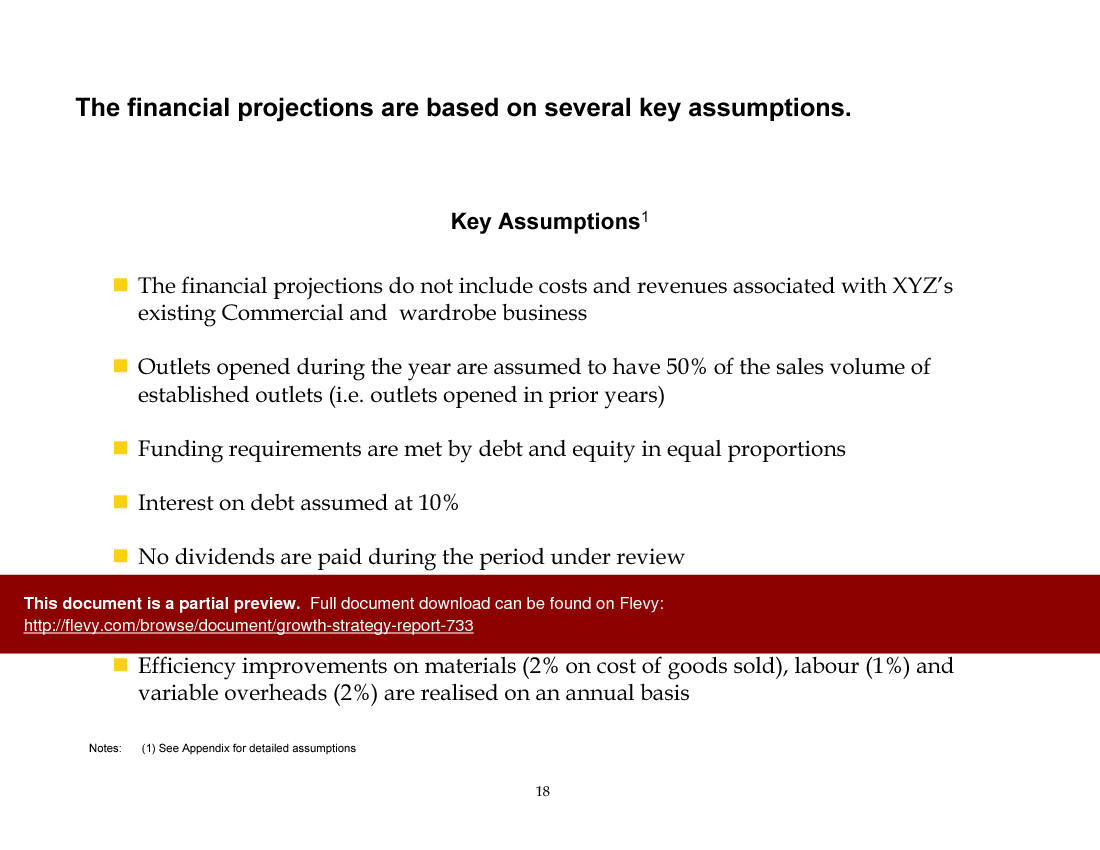
Financial projections and sensitivity analyses are included to provide a robust understanding of the investment required and the potential returns. The report outlines key assumptions and funding requirements, ensuring that executives have a clear picture of the financial landscape. The recommended program management structure is designed to align all projects with the overall growth objectives, ensuring seamless execution and integration across the organization.
Got a question about the product? Email us at support@flevy.com or ask the author directly by using the "Ask the Author a Question" form. If you cannot view the preview above this document description, go here to view the large preview instead.
This PPT slide outlines a strategic option focused on a retail showroom approach for a kitchen supplier. It categorizes various channels, market segments, price points, and associated products. The channels include Brand Stores, Kitchen Barns, eKitchens Direct, and Furniture Multiples, indicating a multi-faceted distribution strategy aimed at reaching diverse customer bases.
In the market segment section, 3 primary groups are identified: Home Owner/Builder/Renovator, Budget Home Renovator, and DIY Enthusiast. Each segment is aligned with specific price points, which range from low to high, catering to different customer needs and financial capabilities. For instance, the Home Owner/Builder/Renovator segment targets a medium to high price range of $4K to $10K, while the Budget Home Renovator segment is associated with lower price ranges, indicating a strategic focus on affordability for cost-conscious consumers.
The product offerings are tailored to each segment, with value-added services highlighted for each category. For the Home Owner/Builder/Renovator, services such as custom kitchen support, CAD design, and project coordination are emphasized. In contrast, the Budget Home Renovator segment focuses on standard kitchens and essential services like measurement and installation. This differentiation in product and service offerings suggests a well-thought-out approach to meet the varying demands of the market.
Overall, this slide presents a clear framework for a retail showroom strategy, showcasing how the company intends to leverage its multi-channel capabilities to cater to distinct customer segments while providing tailored products and services.
This PPT slide outlines 6 strategic configurations for financial consideration within a kitchen supply context. It categorizes these configurations based on various retail channels, including flagship stores, branded stores, kitchen barns, and hardware multiples. Each configuration is evaluated against the channels to determine which combinations are feasible.
The configurations are presented in a matrix format, where the rows represent different retail channels and the columns depict the various configurations considered. The checkmarks indicate which channels are included in each configuration. For instance, the first configuration, labeled "Flagship stores, Nobby's & Hardware multiples," includes flagship stores and hardware multiples, but excludes kitchen barns. This visual representation allows for quick assessment of which channels can be leveraged together.
Notably, the slide mentions eKitchens and factory direct options as channels that can be integrated later. This suggests a flexible approach, allowing for future adaptation based on market dynamics or consumer preferences. The inclusion of eKitchens indicates a recognition of digital trends in retail, emphasizing the importance of online presence in the kitchen supply market.
The overall structure of the slide conveys a strategic planning mindset, aiming to provide a clear overview of potential configurations. This is essential for decision-makers who need to evaluate the implications of each configuration on financial performance. The slide serves as a foundational tool for discussions on growth strategies, enabling stakeholders to visualize and analyze their options effectively.
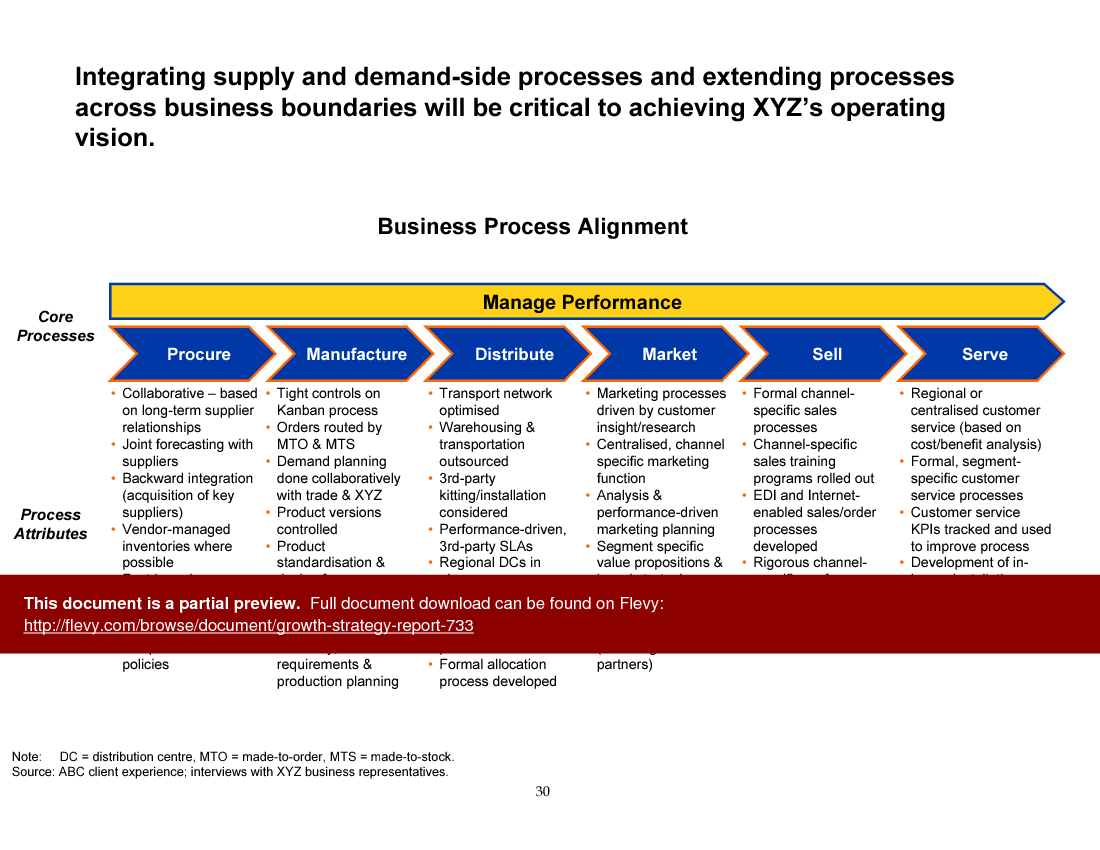
This PPT slide outlines a framework for aligning business processes across various functions, emphasizing the integration of supply and demand-side processes. It highlights core processes—Procure, Manufacture, Distribute, Market, Sell, and Serve—each with specific attributes that contribute to overall performance management.
Under the "Procure" section, the focus is on collaborative relationships with suppliers, emphasizing long-term partnerships and joint forecasting. The mention of backward integration suggests a strategy to enhance control over supply chains. The "Manufacture" section stresses the importance of tight controls and demand planning, indicating a structured approach to production that minimizes waste and optimizes resources.
In "Distribute," the slide points to the optimization of transport networks and the outsourcing of warehousing, which reflects a trend toward efficiency and flexibility in logistics. The "Market" segment highlights the need for marketing processes driven by customer insights, suggesting a data-centric approach to understanding market needs.
The "Sell" section outlines the importance of formal sales processes tailored to specific channels, indicating a strategic focus on targeted sales training and performance measures. Finally, "Serve" emphasizes customer service strategies that are either regional or centralized, with a focus on cost-benefit analysis to improve service delivery.
Overall, this slide presents a comprehensive view of how aligning these core processes can enhance operational effectiveness and support XYZ's strategic vision. The insights provided can guide decision-making for potential customers looking to optimize their business processes.
This PPT slide presents a strategic overview of the IT functionality and architecture necessary for enhancing supply and demand chain management across various regions. It emphasizes the need for an expanded network infrastructure to facilitate coordination among different operational units. The left side of the slide lists various technology components, including Scala, CAD, Office Applications, Email, and EDI, alongside their required functionalities across distinct operational areas such as Head Office, Manufacturing, Warehousing, Showrooms, and Regional Offices.
Each technology component is marked with dots indicating its applicability to specific functions, suggesting a comprehensive integration of IT systems across the organization. This visual representation highlights the interconnectedness of technology and operational efficiency, underscoring the importance of a robust IT framework in achieving seamless communication and data flow.
On the right side, the slide outlines the future IT architecture, detailing the components of the Sydney LAN, which includes servers for various applications, routers, and gateways. This architecture is designed to support the operational needs of the Head Office, Manufacturing, and Warehouse, while also connecting to regional offices in Adelaide, Brisbane, Melbourne, and Perth. The diagram illustrates how these components interact, showcasing the flow of information between different entities, including customers and suppliers.
The overall message is clear: investing in an advanced IT infrastructure is critical for optimizing supply chain management and ensuring that all operational units are aligned and efficient. This slide serves as a foundational piece for understanding the technological requirements and strategic direction necessary for future growth.
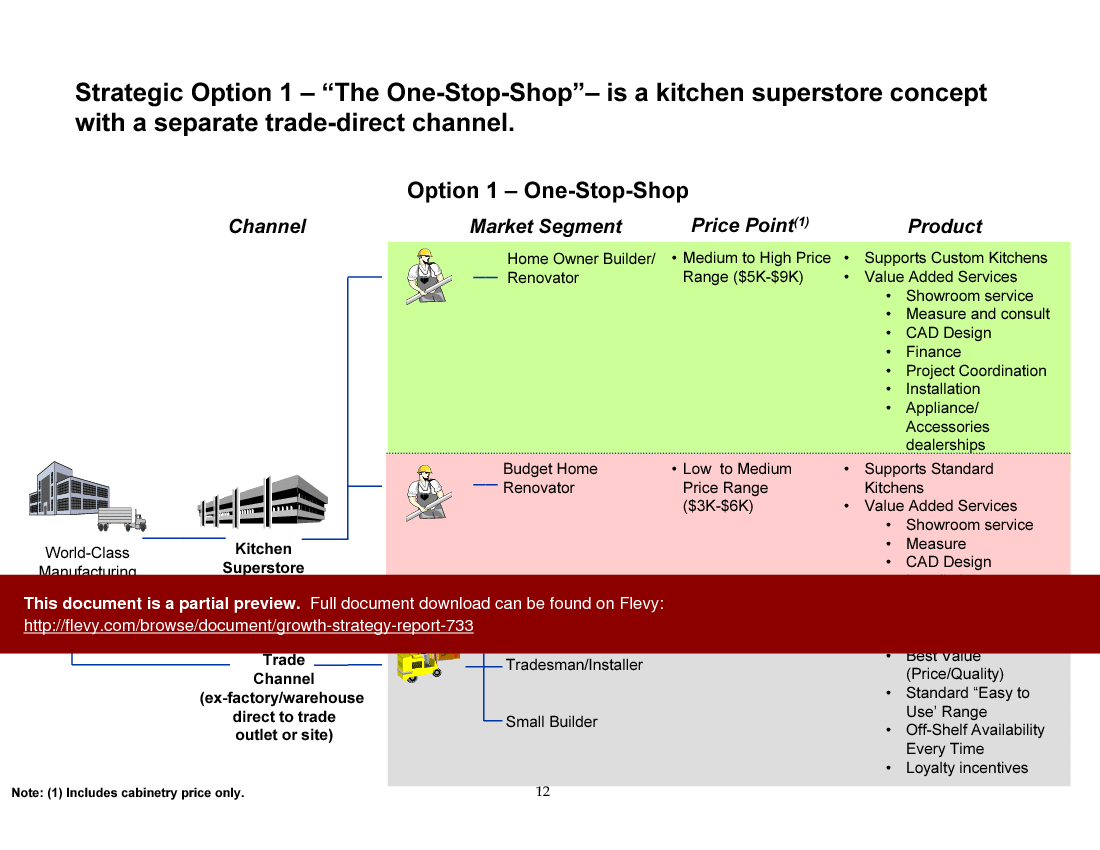
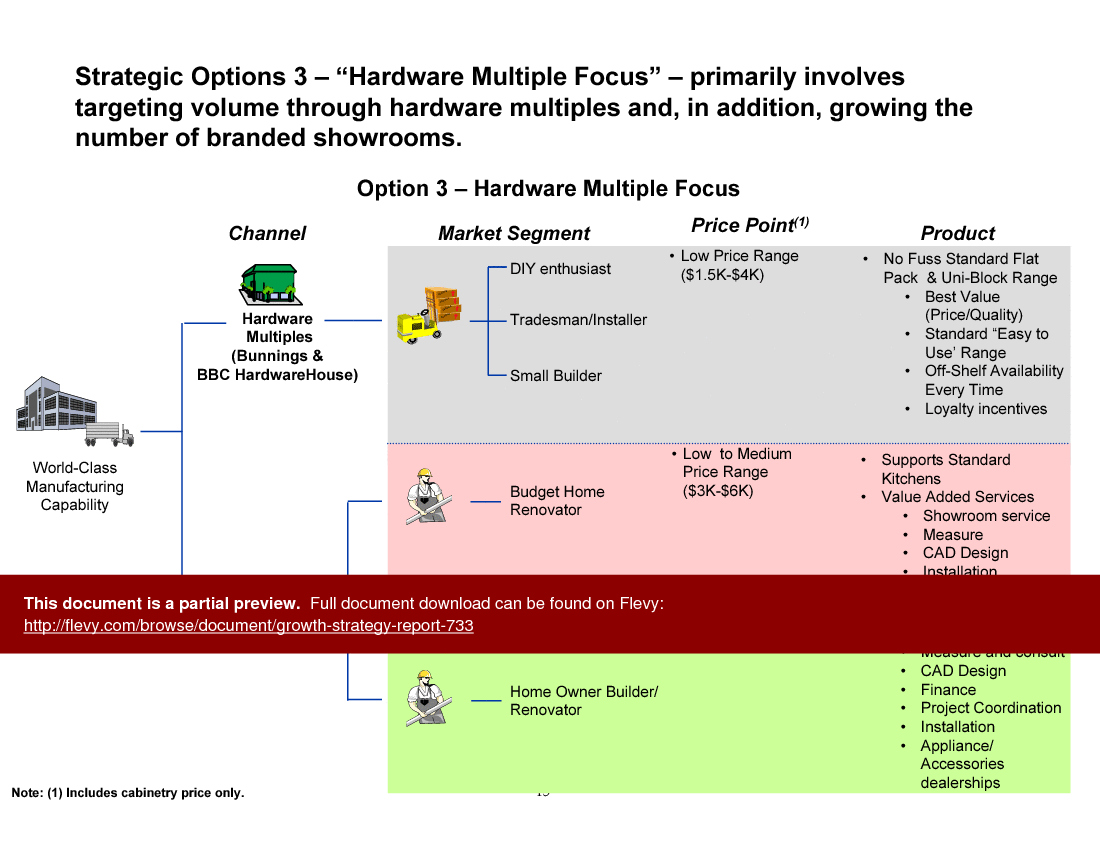
This PPT slide presents a structured overview of 3 strategic options distilled from an initial set of eleven concepts for a kitchen supplier. Each option is clearly delineated, providing a concise description of potential paths forward.
The first option, "The One-Stop-Shop," focuses on establishing a kitchen renovators superstore. This model emphasizes direct supply to trade channels, leveraging various ordering methods such as phone, fax, and the internet. Notably, it lacks any development of commercial channels, which may limit broader market engagement.
The second option, "Retail Showroom Focus," outlines a multi-channel approach that includes both online and physical retailing. It positions the supplier as a wholesale provider to trade and commercial entities. This strategy aims to enhance visibility and accessibility through partnerships with commercial property developers. The emphasis on being the supplier of choice within the kitchen industry suggests a focus on building strong relationships and brand loyalty.
The third option, "Hardware Multiple Focus," targets hardware multiples, such as Bunnings and BBC, indicating a strategy to align with larger retail outlets. This option also includes plans for selective expansion of branded showrooms, which could enhance brand presence and customer engagement.
The slide concludes with a note on backward and forward integration, suggesting these strategies could serve as core enablers across the options presented. This indicates a holistic approach to growth, integrating various aspects of the supply chain to maximize operational efficiency and market reach. Each option presents distinct pathways, enabling stakeholders to evaluate which aligns best with their strategic goals.
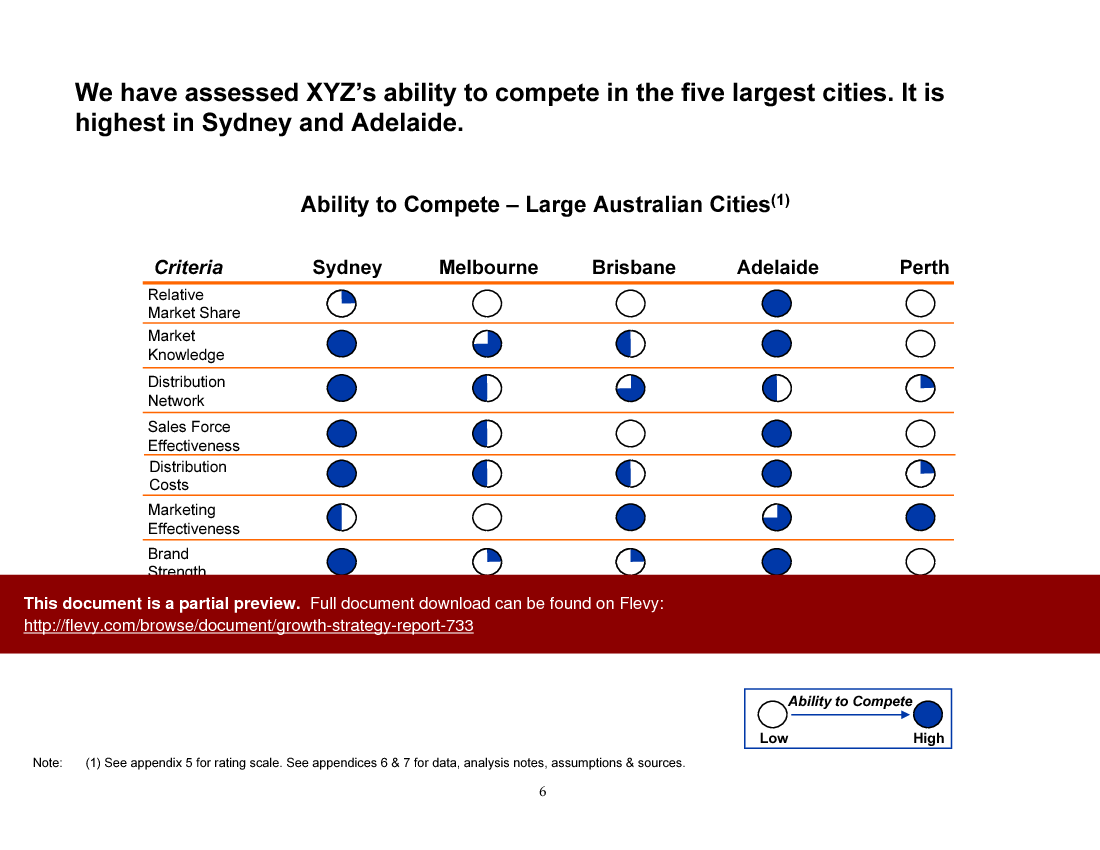
This PPT slide presents an assessment of XYZ's competitive positioning across 5 major Australian cities: Sydney, Melbourne, Brisbane, Adelaide, and Perth. The evaluation focuses on several key criteria that are critical for determining market viability.
Sydney and Adelaide emerge as the strongest markets for XYZ, indicated by the filled circles across multiple criteria. Relative market share shows a moderate presence in Sydney, while market knowledge and distribution network capabilities are robust. Sales force effectiveness is also rated highly, suggesting that XYZ has a competent team in place to drive sales in these regions.
Melbourne and Brisbane show a mixed performance. Melbourne has lower scores in market knowledge and distribution network, which could hinder XYZ's ability to penetrate this market effectively. Brisbane's scores are generally lower across the board, indicating potential challenges in establishing a foothold.
Perth ranks the lowest in overall attractiveness, with significant gaps in market knowledge and sales force effectiveness. This suggests that XYZ may face substantial hurdles in this city, requiring strategic adjustments to improve its standing.
The overall attractiveness metric consolidates these insights, providing a clear visual representation of where XYZ stands in each city. The filled circles indicate areas of strength while the empty ones highlight weaknesses. This analysis serves as a crucial tool for decision-making, guiding potential strategies for market entry or expansion. Understanding these dynamics will be vital for stakeholders considering investments or operational adjustments in these regions.
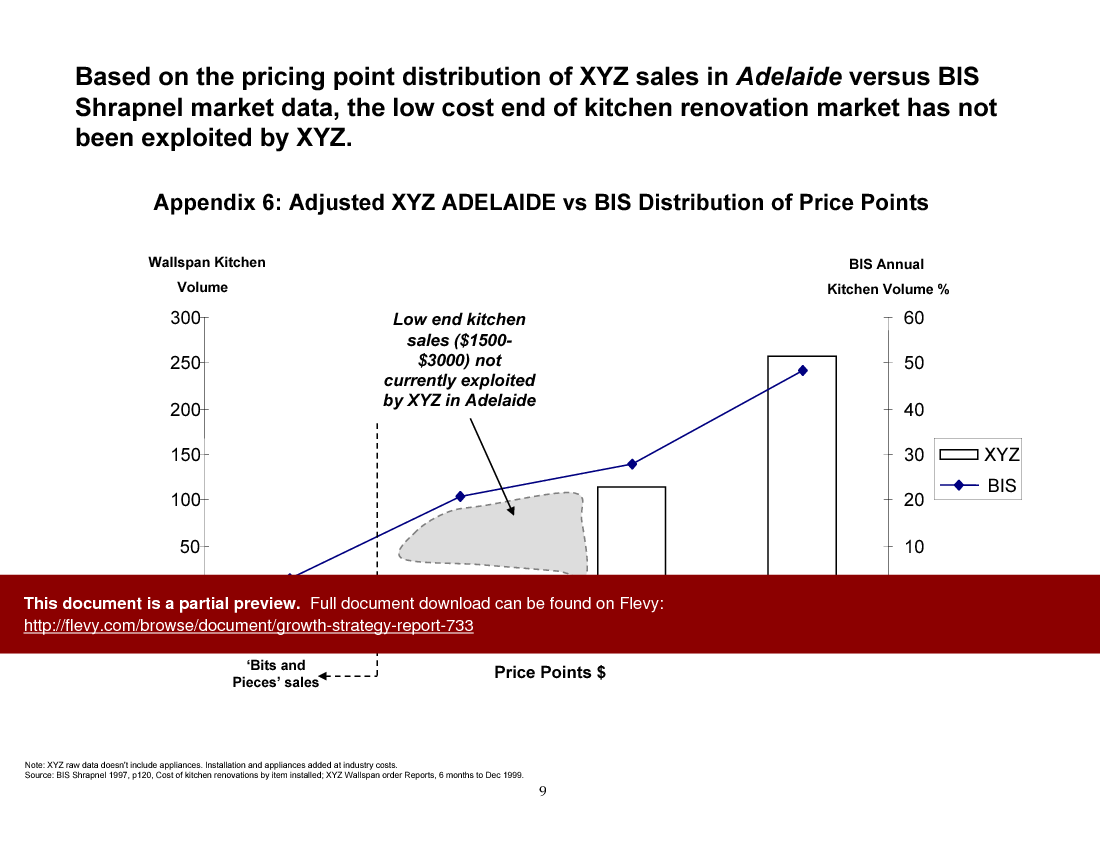
This PPT slide presents a comparative analysis of the pricing point distribution for kitchen renovation sales in Adelaide, focusing on the performance of XYZ against BIS Shrapnel market data. It highlights a significant gap in the low-cost segment of the market, specifically within the $1,500 to $3,000 price range, which is currently not being targeted by XYZ.
The graph illustrates 2 primary data sets: the volume of sales for XYZ and the annual kitchen volume percentage for BIS. The X-axis categorizes price points into distinct ranges, while the Y-axis measures sales volume. The data indicates that XYZ's sales are concentrated in higher price brackets, with a noticeable absence in the lower segment. This gap suggests an opportunity for XYZ to capture a portion of the market that remains unaddressed.
The visual representation shows a clear upward trend for both companies as price points increase,, but the disparity in the low-cost segment is particularly striking. The shaded area indicates potential sales volume that XYZ could tap into if they adjust their strategy to include lower-priced offerings.
This analysis underscores the importance of diversifying product offerings to meet various customer needs. By not addressing the low-end market, XYZ risks losing potential sales and market share to competitors like BIS, who appear to be capitalizing on this segment. The insights from this slide can guide strategic decisions aimed at expanding XYZ's market presence and optimizing their product portfolio to better align with consumer demand.
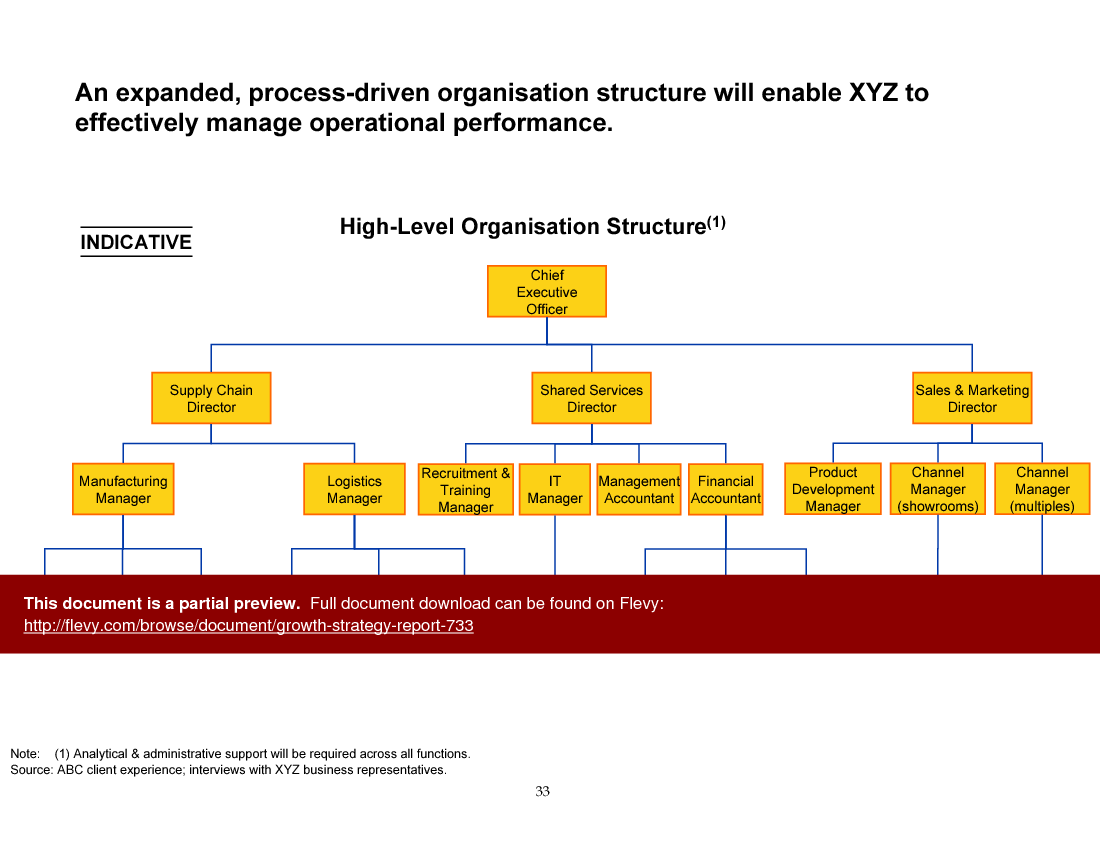
This PPT slide presents a high-level organizational structure designed to enhance operational performance for a company referred to as XYZ. At the top of the hierarchy is the Chief Executive Officer, who oversees various directors responsible for critical functions within the organization. The structure is notably expanded and process-driven, indicating a strategic shift towards more defined roles and responsibilities.
The Supply Chain Director leads a team that includes a Manufacturing Manager and a Logistics Manager. Under the Manufacturing Manager, there are specialized roles such as Production Engineer, Quality Assurance Engineer, and Production Supervisor, which suggest a focus on quality and efficiency in production processes. The Logistics Manager likely oversees the flow of goods and materials, ensuring timely delivery and inventory management.
The Shared Services Director manages several key functions, including IT, finance, and recruitment. This centralized approach to shared services can streamline operations and reduce redundancy. The presence of multiple accountants and payroll staff indicates a robust financial management system, essential for maintaining fiscal health.
On the sales and marketing side, a dedicated Sales & Marketing Director manages product development and various channel managers. This structure implies a strategic emphasis on market engagement and customer outreach, with regional managers supporting localized efforts.
Overall, this organizational framework is indicative of a company poised for growth, with a clear delineation of roles aimed at optimizing operational efficiency and enhancing service delivery. The focus on process-driven management suggests a commitment to continuous improvement and adaptability in a dynamic market environment.
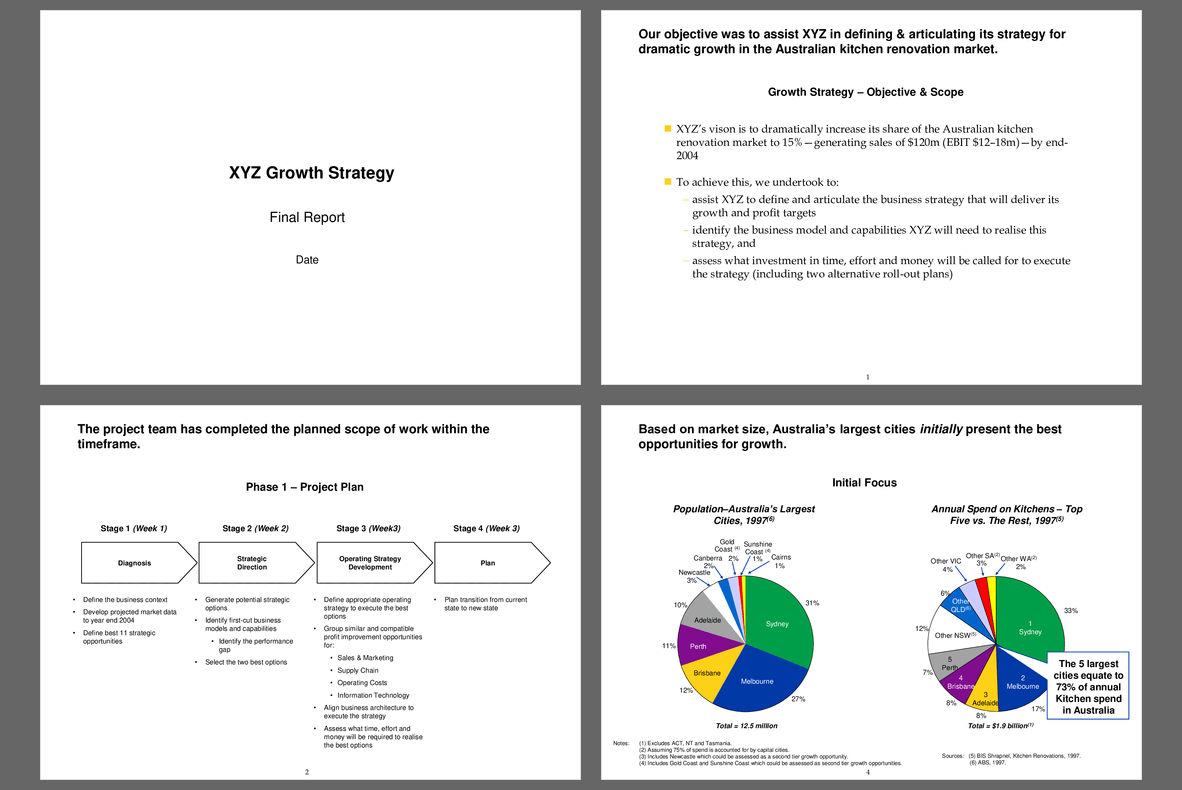
This PPT slide presents a clear analysis of market opportunities in Australia, focusing on the largest cities and their potential for growth, specifically in the kitchen sector. The left pie chart illustrates the population distribution among Australia's largest cities in 1997, highlighting Sydney and Melbourne as the most populous, with Sydney accounting for 31% and Melbourne for 27% of the total population of 12.5 million. Other cities like Brisbane, Perth, and Adelaide follow,, but with significantly smaller shares.
On the right, the second pie chart shifts the focus to annual spending on kitchens, comparing the top 5 cities against the rest of the country. Sydney again leads, representing 33% of the total kitchen spending of $1.9 billion, while Melbourne contributes 17%. The data indicates that the combined spending from the 5 largest cities constitutes a substantial 73% of the total kitchen expenditure in Australia.
This analysis underscores the importance of targeting major urban centers for business growth. The data suggests that initial efforts should concentrate on these populous areas, as they not only have larger populations, but also represent a significant share of consumer spending in the kitchen market. For stakeholders, this insight is crucial for strategic planning and resource allocation. The emphasis on these cities can drive focused marketing and sales strategies, ultimately enhancing market penetration and revenue generation.
This PPT slide outlines a structured project plan divided into 4 distinct stages, each with specific objectives and tasks. The project aims to complete a comprehensive analysis and strategy formulation within a defined timeframe.
In the first stage, labeled "Diagnosis," the focus is on understanding the business context. Key activities include defining the current market landscape and projecting relevant data through 2004. This foundational work is crucial as it sets the stage for identifying the top eleven strategic opportunities that the business can pursue.
The second stage, "Strategic Direction," involves generating potential strategic options. Here, the project team will identify initial business models and capabilities while also pinpointing any performance gaps. Selecting the 2 best options from this analysis is essential, as it narrows down the focus for subsequent stages.
Moving to the third stage, "Operating Strategy Development," the emphasis shifts to defining an operating strategy that aligns with the selected options. This includes grouping similar profit improvement opportunities across various functions such as Sales & Marketing, Supply Chain, Operating Costs, and Information Technology. Aligning the business architecture to execute the strategy is critical, as it ensures that all parts of the organization work towards common goals.
Finally, the fourth stage, simply titled "Plan," focuses on transitioning from the current state to the desired future state. This involves careful planning to ensure that all elements of the strategy are implemented effectively, addressing the necessary time, effort, and resources required for successful execution.
Overall, this slide provides a clear roadmap for a strategic initiative, emphasizing a systematic approach to diagnosis, direction, development, and planning.
MARCUS OVERVIEW
This synopsis was written by Marcus [?] based on the analysis of the full 50-slide presentation.
Executive Summary
This Growth Strategy Report outlines a detailed plan for XYZ, aiming to capture a 15% share of the Australian kitchen renovation market by the end of 2004, equating to $120 million in sales and an EBIT of $12–18 million. This consulting-grade document, reflecting McKinsey, Bain, or BCG-quality rigor (not affiliated), assists corporate executives in defining actionable strategies for significant growth. The report identifies critical business models, capabilities, and investment requirements necessary for successful execution, including 2 alternative rollout plans for strategic options.
Who This Is For and When to Use
• Corporate executives in the kitchen renovation industry
• Strategic planners and business development teams
• Marketing and sales leaders focusing on market expansion
• Financial analysts assessing investment opportunities
• Operations managers overseeing implementation of growth strategies
Best-fit moments to use this deck:
• During strategic planning sessions for market entry or expansion
• When assessing investment opportunities in the kitchen renovation sector
• For guiding operational teams in executing growth initiatives
• In stakeholder meetings to align on strategic direction and resource allocation
Learning Objectives
• Define the strategic growth objectives for XYZ in the Australian market
• Develop a comprehensive understanding of market dynamics and competitive landscape
• Identify and evaluate strategic options for market entry and expansion
• Assess the required business capabilities and investment needs for execution
• Create a detailed implementation plan with clear milestones and deliverables
• Establish performance metrics to track progress and success
Table of Contents
• Executive Summary (page 1)
• Market Analysis and Context (page 2)
• Strategic Opportunities Identification (page 3)
• Business Models and Capabilities (page 4)
• Financial Projections and Assumptions (page 18)
• Preferred Strategic Options (page 38)
• Implementation Plan Overview (page 47)
• Appendices (page 49)
Primary Topics Covered
• Market Dynamics - An analysis of the Australian kitchen renovation market, focusing on growth potential in major cities and consumer spending patterns.
• Strategic Opportunities - Identification of the top 11 strategic opportunities for XYZ, narrowed down to 2 primary options for growth.
• Business Model Assessment - Evaluation of necessary business models and capabilities required to support the selected strategies.
• Financial Projections - Detailed financial forecasts, including revenue, EBIT, and funding requirements for the proposed strategies.
• Implementation Strategy - A structured approach to executing the growth plan, including timelines, resource allocation, and performance management.
• Capability Gap Analysis - Assessment of current capabilities versus required capabilities to achieve strategic objectives.
Deliverables, Templates, and Tools
• Market analysis report template for evaluating growth opportunities
• Strategic options assessment framework for decision-making
• Financial projection model for estimating revenue and costs
• Implementation roadmap template outlining key milestones and actions
• Performance management framework for tracking progress against objectives
• Capability gap assessment tool for identifying areas for improvement
Slide Highlights
• Overview of market dynamics in the Australian kitchen renovation sector
• Strategic opportunities identified for growth, focusing on major cities
• Financial projections illustrating potential revenue and EBIT outcomes
• Detailed assessment of preferred strategic options and their implications
• Implementation plan outlining key phases and resource requirements
Potential Workshop Agenda
Market Dynamics Overview (60 minutes)
• Present findings on market size and growth potential
• Discuss consumer spending trends and competitive landscape
• Identify key strategic opportunities for XYZ
Strategic Options Evaluation (90 minutes)
• Review the top strategic options identified
• Analyze financial projections and investment requirements
• Facilitate discussion on preferred options and next steps
Implementation Planning Session (120 minutes)
• Develop a detailed implementation roadmap
• Assign responsibilities and establish timelines
• Define performance metrics for tracking success
Customization Guidance
• Tailor financial projections based on updated market data and assumptions
• Adjust strategic options based on internal capabilities and market feedback
• Modify implementation timelines to align with organizational capacity and readiness
• Incorporate specific branding and marketing strategies relevant to XYZ’s target segments
Secondary Topics Covered
• Consumer behavior trends in kitchen renovations
• Competitive analysis of key players in the market
• Risk assessment related to market entry strategies
• Supply chain considerations for operational efficiency
• Technology requirements for supporting business capabilities
FAQ
What is the primary goal of the growth strategy?
The primary goal is to achieve a 15% market share in the Australian kitchen renovation market by 2004, generating sales of $120 million.
What are the 2 preferred strategic options?
The 2 preferred options are a combination of branded showrooms with hardware multiples or kitchen barns, focusing on market expansion.
How will financial projections be developed?
Financial projections will be based on market data, historical performance, and assumptions regarding sales volume and pricing strategies.
What capabilities need to be developed for successful execution?
Capabilities in sales and marketing, supply chain management, and customer relationship management are critical for executing the growth strategy.
How will performance be measured?
Performance will be measured using key performance indicators (KPIs) aligned with strategic objectives, including sales growth, market share, and profitability.
What is the timeline for implementation?
The implementation timeline will be defined in the detailed roadmap, with key milestones established for each phase of the strategy.
What are the risks associated with the growth strategy?
Risks include market competition, changes in consumer preferences, and operational challenges in scaling the business.
How will the strategy be communicated to stakeholders?
A communication plan will be developed to ensure all stakeholders are informed and aligned with the strategic direction and implementation plan.
Glossary
• EBIT - Earnings Before Interest and Taxes, a measure of a firm's profitability.
• Market Share - The percentage of an industry's sales that a particular company controls.
• Strategic Opportunities - Potential avenues for growth identified through market analysis.
• Financial Projections - Estimates of future revenue and expenses based on current data and assumptions.
• Capability Gap - The difference between current capabilities and those required to achieve strategic objectives.
• Performance Metrics - Quantitative measures used to assess the success of a strategy.
• Implementation Roadmap - A detailed plan outlining the steps necessary to execute a strategy.
• Supply Chain Management - The management of the flow of goods and services from suppliers to customers.
• Customer Relationship Management - Strategies and technologies used to manage interactions with customers.
• Market Dynamics - The forces that impact the supply and demand of goods and services in a market.
• Business Model - The plan for how a company creates, delivers, and captures value.
• Revenue - The income generated from normal business operations.
• Investment Requirements - The amount of capital needed to execute a strategy.
• Risk Assessment - The identification and evaluation of potential risks that could impact the success of a strategy.
• Competitive Analysis - The assessment of competitors in the market to identify strengths and weaknesses.
• Consumer Behavior - The study of how individuals make decisions to spend their available resources.
• Operational Efficiency - The ability to deliver products or services in the most cost-effective manner.
• Brand Strategy - A long-term plan for the development of a successful brand to achieve specific goals.
• Market Entry Strategy - The planned method of delivering goods or services to a new target market.
• Performance Management Framework - A structured approach to managing and improving organizational performance.
• Organizational Change - The process of aligning an organization to meet new business challenges.
Source: Best Practices in Strategic Plan Example PowerPoint Slides: Growth Strategy Report PowerPoint (PPT) Presentation Slide Deck, Documents & Files
Since 2012, we have provided best practices to over 10,000 businesses and organizations of all sizes, from startups and small businesses to the Fortune 100, in over 130 countries.
"Flevy is our 'go to' resource for management material, at an affordable cost. The Flevy library is comprehensive and the content deep, and typically provides a great foundation for us to further develop and tailor our own service offer."
– Chris McCann, Founder at Resilient.World
"Flevy.com has proven to be an invaluable resource library to our Independent Management Consultancy, supporting and enabling us to better serve our enterprise clients.
The value derived from our [FlevyPro] subscription in terms of the business it has helped to gain far exceeds the investment made, making a subscription a no-brainer for any growing consultancy – or in-house strategy team."
– Dean Carlton, Chief Transformation Officer, Global Village Transformations Pty Ltd.
"I am extremely grateful for the proactiveness and eagerness to help and I would gladly recommend the Flevy team if you are looking for data and toolkits to help you work through business solutions."
– Trevor Booth, Partner, Fast Forward Consulting
"As a consulting firm, we had been creating subject matter training materials for our people and found the excellent materials on Flevy, which saved us 100's of hours of re-creating what already exists on the Flevy materials we purchased."
– Michael Evans, Managing Director at Newport LLC
"If you are looking for great resources to save time with your business presentations, Flevy is truly a value-added resource. Flevy has done all the work for you and we will continue to utilize Flevy as a source to extract up-to-date information and data for our virtual and onsite presentations!"
– Debbi Saffo, President at The NiKhar Group
"One of the great discoveries that I have made for my business is the Flevy library of training materials.
As a Lean Transformation Expert, I am always making presentations to clients on a variety of topics: Training, Transformation, Total Productive Maintenance, Culture, Coaching, Tools, Leadership Behavior, etc. Flevy
It is well worth the money to purchase these presentations. Sure, I have the knowledge and information to make my point. It is another thing to create a presentation that captures what I want to say. Flevy has saved me countless hours of preparation time that is much better spent with implementation that will actually save money for my clients.
"
– Ed Kemmerling, Senior Lean Transformation Expert at PMG
"My FlevyPro subscription provides me with the most popular frameworks and decks in demand in today’s market. They not only augment my existing consulting and coaching offerings and delivery, but also keep me abreast of the latest trends, inspire new products and service offerings for my practice, and educate me
in a fraction of the time and money of other solutions. I strongly recommend FlevyPro to any consultant serious about success.
"
– Bill Branson, Founder at Strategic Business Architects
"I have found Flevy to be an amazing resource and library of useful presentations for lean sigma, change management and so many other topics. This has reduced the time I need to spend on preparing for my performance consultation. The library is easily accessible and updates are regularly provided. A wealth of great information."
– Cynthia Howard RN, PhD, Executive Coach at Ei Leadership
Save with Bundles

This document is available as part of the following discounted bundle(s):
Download our free compilation of 50+ Strategy & Transformation slides and templates. Frameworks include McKinsey 7-S, Balanced Scorecard, Disruptive Innovation, BCG Curve, and many more.