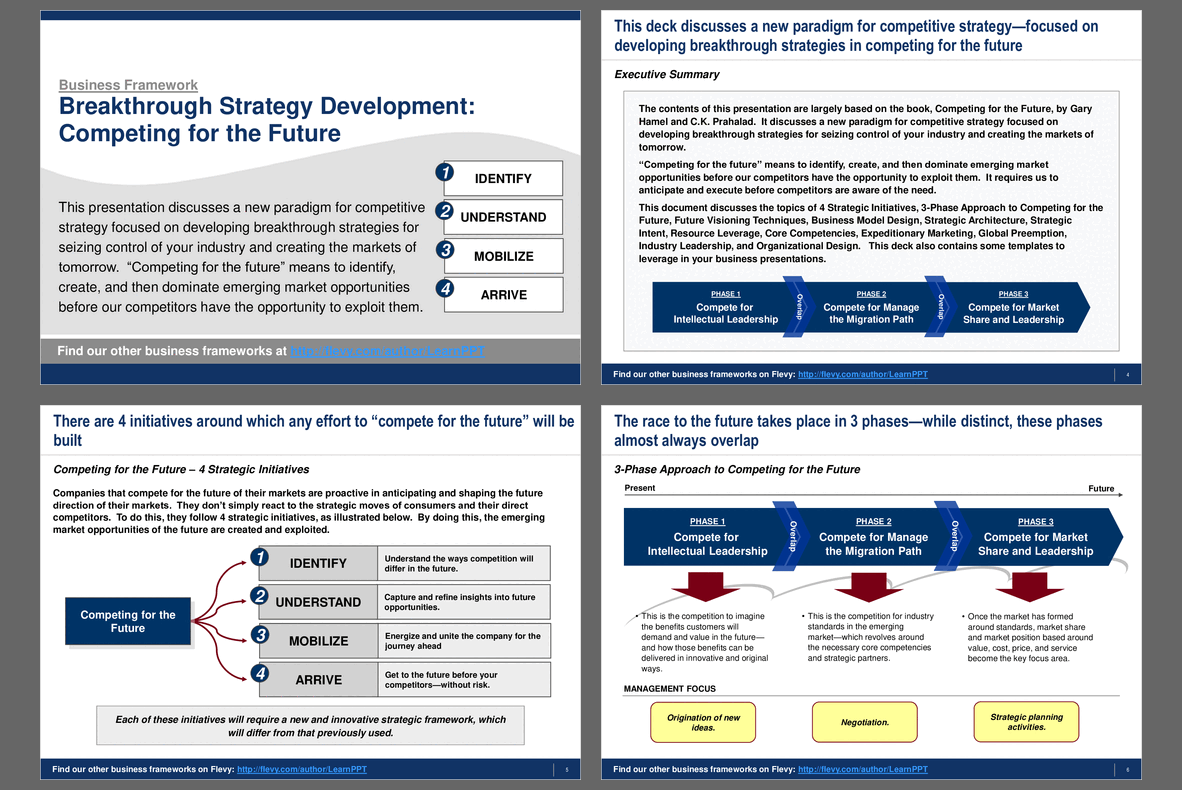
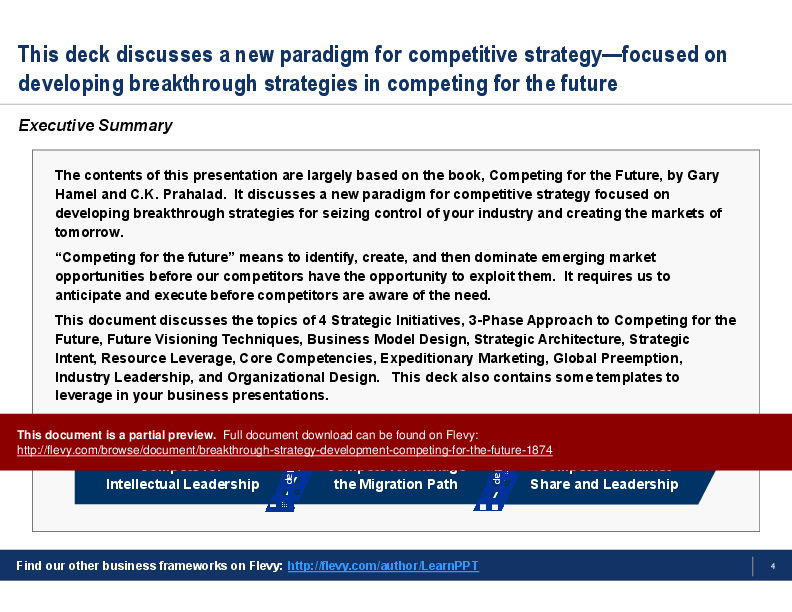

The contents of this presentation are largely based on the book, Competing for the Future, by Gary Hamel and C.K. Prahalad. It discusses a new paradigm for competitive strategy focused on developing breakthrough strategies for seizing control of your industry and creating the markets of tomorrow.

"Competing for the future" means to identify, create, and then dominate emerging market opportunities before our competitors have the opportunity to exploit them. It requires us to anticipate and execute before competitors are aware of the need.
Topics covered include: 4 Strategic Initiatives, 3-Phase Approach to Competing for the Future, Future Visioning Techniques, Business Model Design, Strategic Architecture, Strategic Intent, Resource Leverage, Core Competencies, Expeditionary Marketing, Global Preemption, Industry Leadership, and Organizational Design.
This deck also contains some templates to leverage in your business presentations.
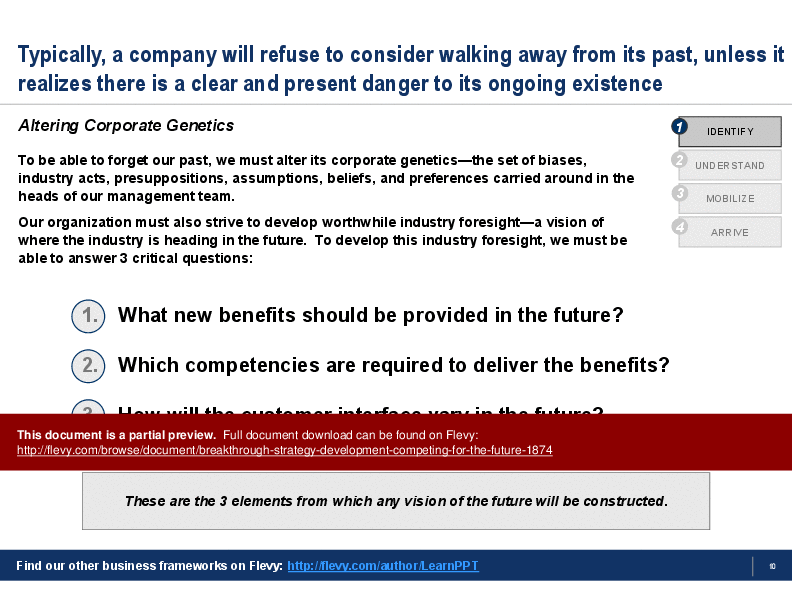
This presentation delves into altering corporate genetics to foster a forward-thinking mindset. It emphasizes the necessity of reshaping biases, assumptions, and preferences ingrained in the management team to align with future industry trends. By addressing three critical questions—future benefits, required competencies, and customer interface variations—organizations can construct a robust vision for the future.
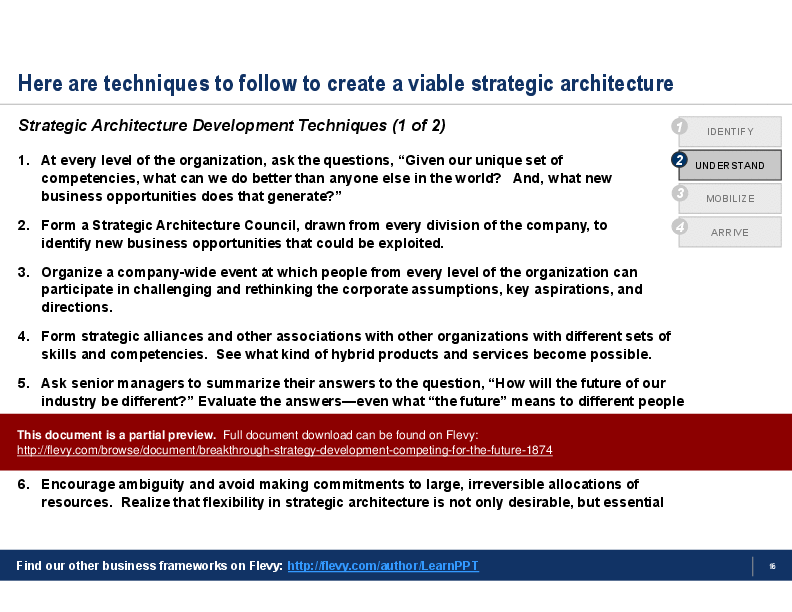
The PPT outlines a comprehensive approach to strategic architecture development. Techniques include forming a Strategic Architecture Council, organizing company-wide events, and encouraging strategic alliances. It also highlights the importance of flexibility in strategic commitments and leveraging senior management insights to anticipate industry evolution. These steps are crucial for identifying and exploiting new business opportunities.
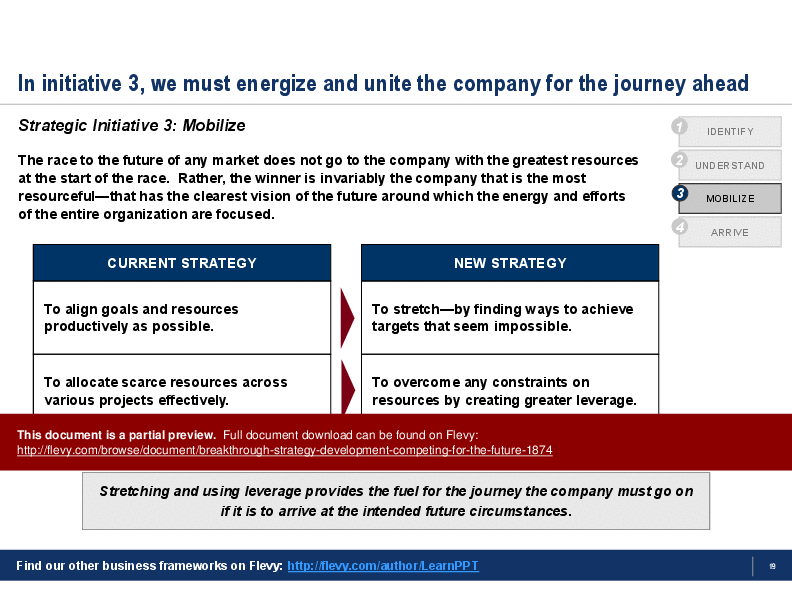
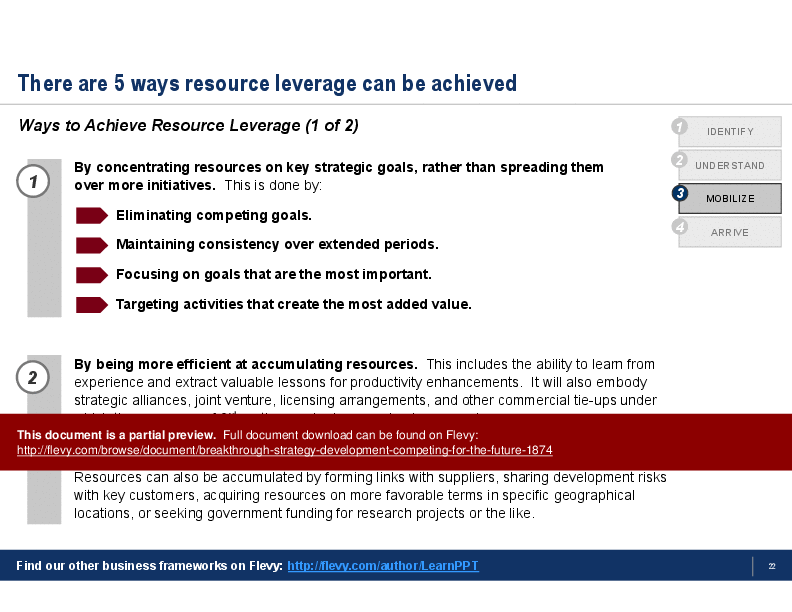
Resource leverage is another key focus, with strategies to concentrate resources on critical goals and accumulate them efficiently. This involves eliminating competing goals, maintaining consistency, and forming strategic alliances. The presentation also covers the importance of protecting core competencies by reallocating assets to high-benefit areas and appointing internal guardians. This ensures long-term competitiveness and market leadership.
Got a question about the product? Email us at support@flevy.com or ask the author directly by using the "Ask the Author a Question" form. If you cannot view the preview above this document description, go here to view the large preview instead.
Executive Summary
This presentation, titled "Breakthrough Strategy Development: Competing for the Future," introduces a transformative approach to competitive strategy, emphasizing the development of breakthrough strategies to seize control of industries and create future markets. Drawing from the foundational concepts in Gary Hamel and C.K. Prahalad's book, it provides a structured framework for identifying, creating, and dominating emerging market opportunities before competitors can act. The presentation covers 4 strategic initiatives, a three-phase approach to competition, and essential techniques for future visioning and organizational design, equipping executives and consultants with the tools to anticipate market shifts and execute strategic plans effectively.
Who This Is For and When to Use
• Corporate executives seeking to redefine competitive strategies
• Business consultants advising on market positioning and strategy development
• Strategic planning teams focused on innovation and future market trends
• Marketing leaders aiming to understand and leverage emerging opportunities
Best-fit moments to use this deck:
• During strategic planning sessions to align on future market positioning
• When initiating discussions on innovation and market leadership
• In workshops aimed at fostering organizational change and adaptability
• For training sessions on competitive strategy frameworks and methodologies
Learning Objectives
• Define the concept of "competing for the future" and its implications for strategy
• Build a strategic architecture that aligns with future market demands
• Identify and exploit emerging market opportunities proactively
• Mobilize organizational resources effectively to achieve strategic goals
• Develop core competencies that provide a competitive advantage
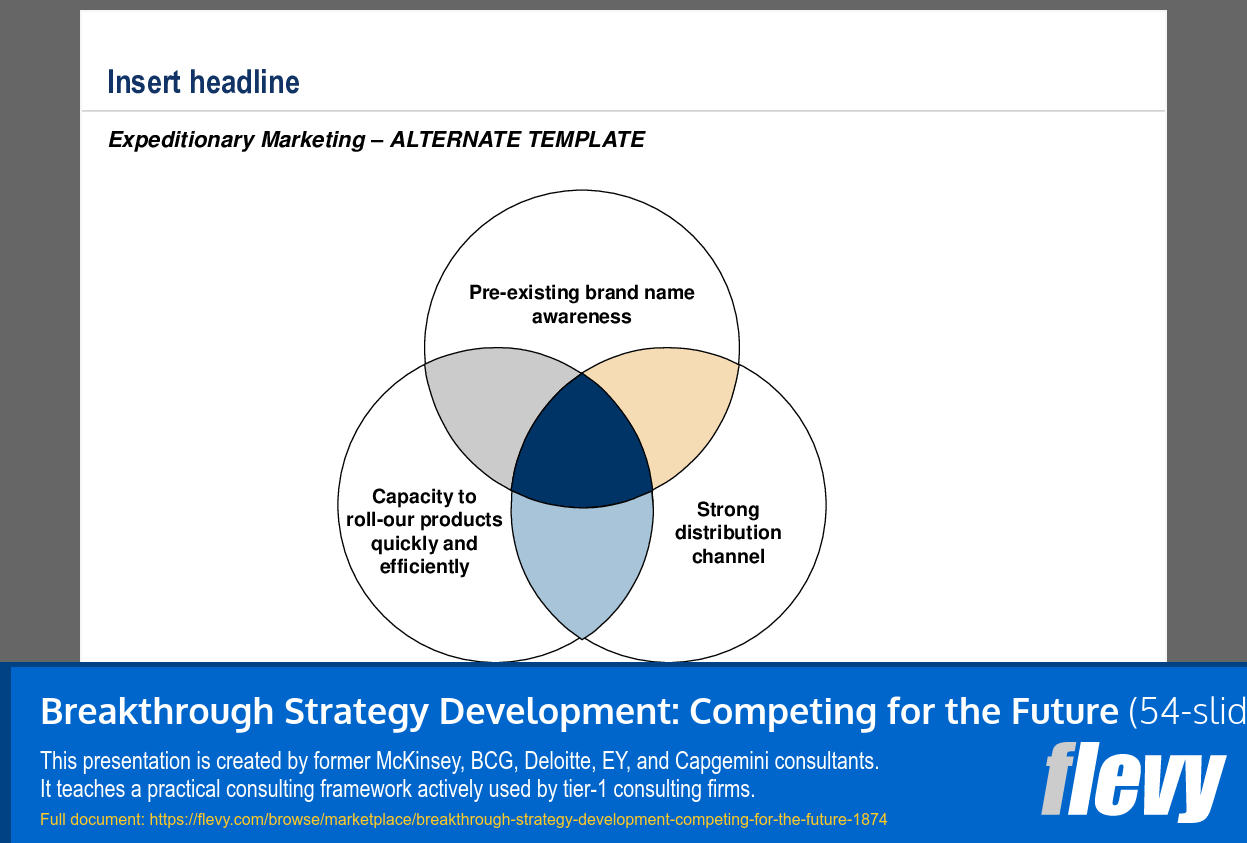
• Implement expeditionary marketing techniques to learn from market interactions
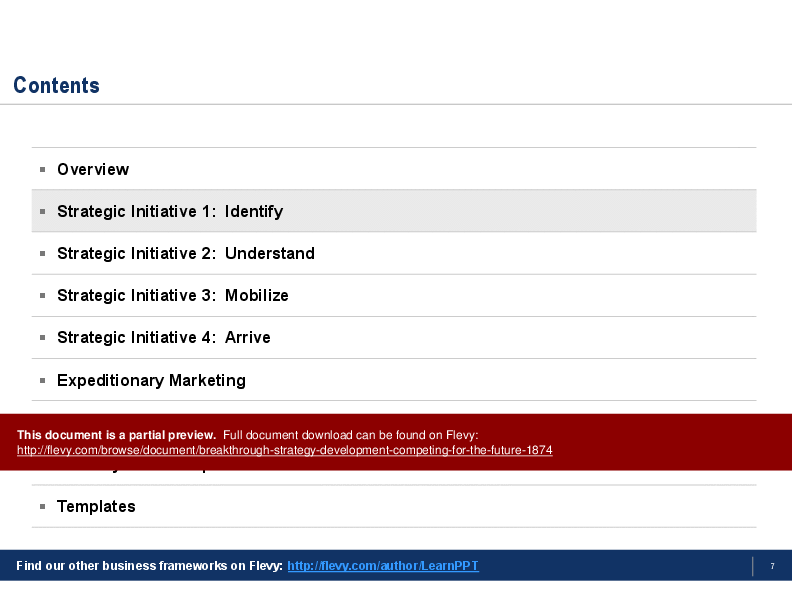
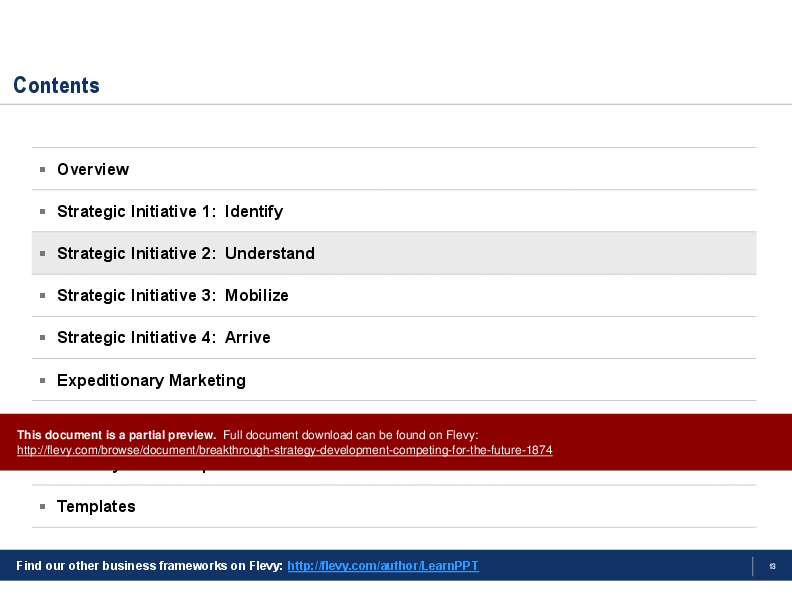
Table of Contents
• Overview (page 3)
• Strategic Initiative 1: Identify (page 7)
• Strategic Initiative 2: Understand (page 13)
• Strategic Initiative 3: Mobilize (page 18)
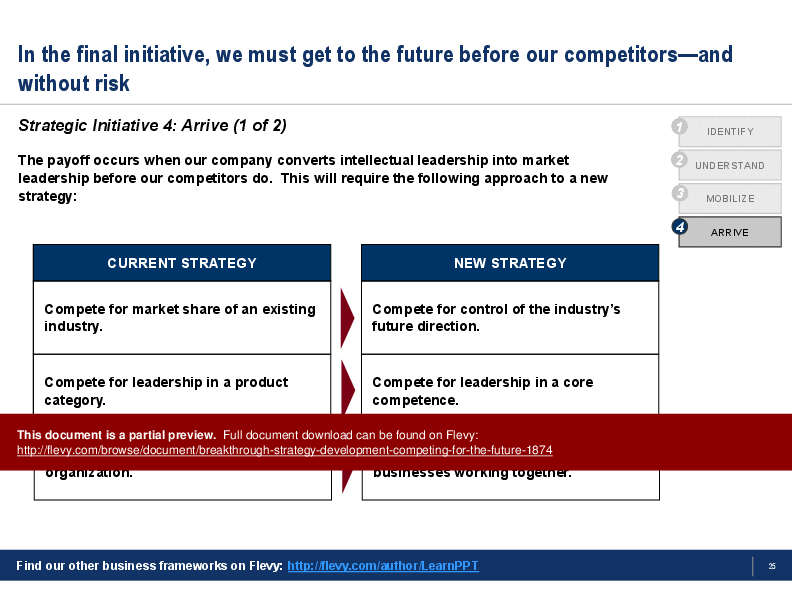
• Strategic Initiative 4: Arrive (page 24)
• Expeditionary Marketing (page 32)
• Global Preemption (page 35)
• Industry Leadership (page 39)
• Templates (page 45)
Primary Topics Covered
• Strategic Initiatives - Four key initiatives that guide efforts to compete for future market leadership.
• Three-Phase Approach - A structured method for competing across intellectual leadership, migration management, and market share.
• Future Visioning Techniques - Methods for anticipating market changes and shaping strategic direction.
• Core Competency Development - Framework for identifying and leveraging essential skills and technologies.
• Expeditionary Marketing - Strategies for rapid market entry and learning from customer feedback.
• Global Preemption - Tactics for establishing a market presence before competitors.
Deliverables, Templates, and Tools
• Strategic architecture framework template for aligning competencies with future needs
• Core competency assessment tool for evaluating organizational strengths
• Expeditionary marketing plan template for rapid product testing and iteration
• Global preemption strategy outline for securing market advantages
• Future visioning workshop guide for fostering organizational foresight
• Strategic initiative roadmap for tracking progress and alignment
Slide Highlights
• Overview of the 4 strategic initiatives and their importance in shaping future markets
• Detailed breakdown of the three-phase approach to competing effectively
• Visual representation of future visioning techniques and their application
• Core competency development framework illustrating competitive advantages
• Expeditionary marketing insights emphasizing the importance of market learning
Potential Workshop Agenda
Strategic Initiative Overview Session (90 minutes)
• Introduce the 4 strategic initiatives and their relevance
• Discuss case studies illustrating successful implementation
• Facilitate group discussions on organizational alignment
Future Visioning Workshop (120 minutes)
• Engage participants in identifying emerging market trends
• Utilize visioning techniques to develop future scenarios
• Create actionable insights for strategic planning
Core Competency Development Session (90 minutes)
• Assess current competencies and identify gaps
• Develop a roadmap for enhancing core capabilities
• Align competencies with future market demands
Customization Guidance
• Tailor the strategic architecture framework to reflect specific organizational goals
• Adjust the core competency assessment tool to align with industry standards
• Incorporate company-specific examples in the expeditionary marketing plan
• Modify the workshop agenda to focus on relevant market dynamics and challenges
Secondary Topics Covered
• Organizational design for future competitiveness
• The role of strategic intent in motivating teams
• Techniques for fostering a culture of innovation
• Navigating industry disruptions and market shifts
• Building strategic alliances for enhanced market positioning
FAQ
What does "competing for the future" mean?
It refers to the proactive identification and exploitation of emerging market opportunities before competitors can act, ensuring market leadership.
How can we develop core competencies?
By assessing current capabilities, identifying gaps, and systematically building new skills that align with future market demands.
What is expeditionary marketing?
A strategy focused on rapid market entry and learning from customer interactions to refine product offerings.
How do we implement the three-phase approach?
By systematically competing for intellectual leadership, managing migration paths, and focusing on market share through strategic initiatives.
What are the benefits of global preemption?
Establishing a market presence early allows companies to maximize innovation returns, lock up distribution channels, and build consumer mindshare.
How can we foster a culture of innovation?
By encouraging open dialogue about future trends and providing platforms for employees to share insights and ideas.
What techniques can help in future visioning?
Techniques include analyzing market trends, encouraging diverse perspectives, and using scenario planning to anticipate changes.
How do we measure the success of our strategic initiatives?
By tracking progress against defined milestones, assessing market response, and evaluating the alignment of competencies with strategic goals.
Glossary
• Breakthrough Strategy - An innovative approach to gaining market control and creating future opportunities.
• Core Competency - A unique capability that provides a competitive advantage.
• Expeditionary Marketing - A strategy focused on rapid market entry and learning from customer feedback.
• Global Preemption - The act of establishing a market presence before competitors.
• Strategic Architecture - A framework that outlines the competencies and resources needed for future success.
• Strategic Intent - A clear vision that guides organizational efforts toward future goals.
• Three-Phase Approach - A structured method for competing across intellectual leadership, migration management, and market share.
• Future Visioning - Techniques used to anticipate and shape future market conditions.
• Organizational Design - The structure and culture of an organization that supports strategic goals.
• Market Share - The portion of a market controlled by a particular company or product.
• Innovation - The process of creating new ideas, products, or methods that provide value.
• Strategic Initiative - A key focus area that drives organizational strategy and performance.
• Market Dynamics - The forces that impact the behavior and performance of a market.
• Customer Interface - The point of interaction between a company and its customers.
• Resource Leverage - The efficient use of resources to achieve strategic goals.
• Industry Leadership - The position of a company as a leader in its industry.
• Strategic Planning - The process of defining an organization's direction and making decisions on allocating resources.
• Business Model - The framework for how a company creates, delivers, and captures value.
• Competitive Advantage - A condition that allows a company to perform better than its competitors.
• Market Opportunities - Potential areas for growth and expansion in a market.
• Organizational Change - The process of transforming an organization to improve effectiveness and adapt to market conditions.
Source: Best Practices in Growth Strategy, Breakout Strategy PowerPoint Slides: Breakthrough Strategy Development: Competing for the Future PowerPoint (PPT) Presentation Slide Deck, LearnPPT Consulting
This document is available as part of the following discounted bundle(s):
Save %!
Strategy Development Frameworks
This bundle contains 7 total documents. See all the documents to the right.
|
Download our FREE Strategy & Transformation Framework Templates
Download our free compilation of 50+ Strategy & Transformation slides and templates. Frameworks include McKinsey 7-S, Balanced Scorecard, Disruptive Innovation, BCG Curve, and many more. |