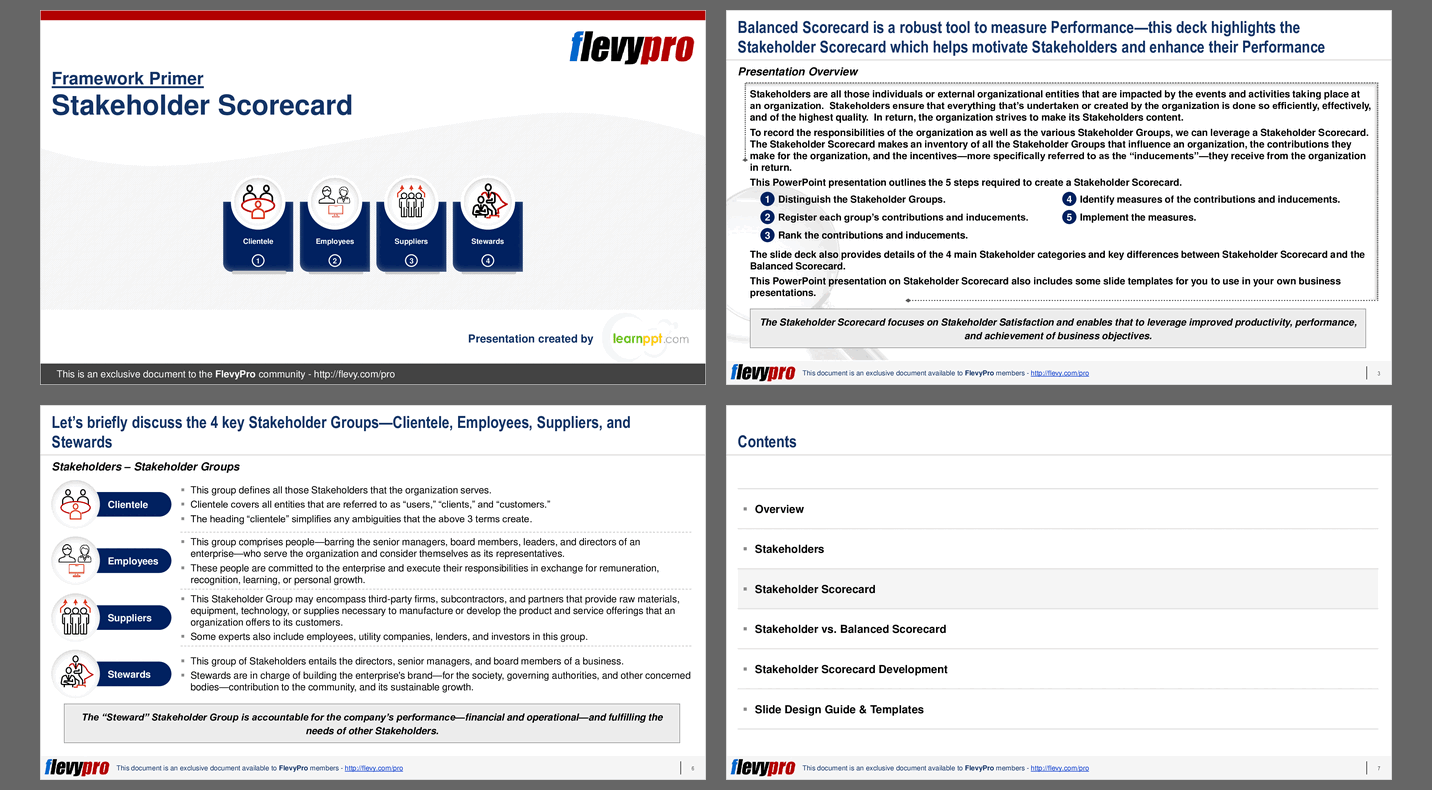
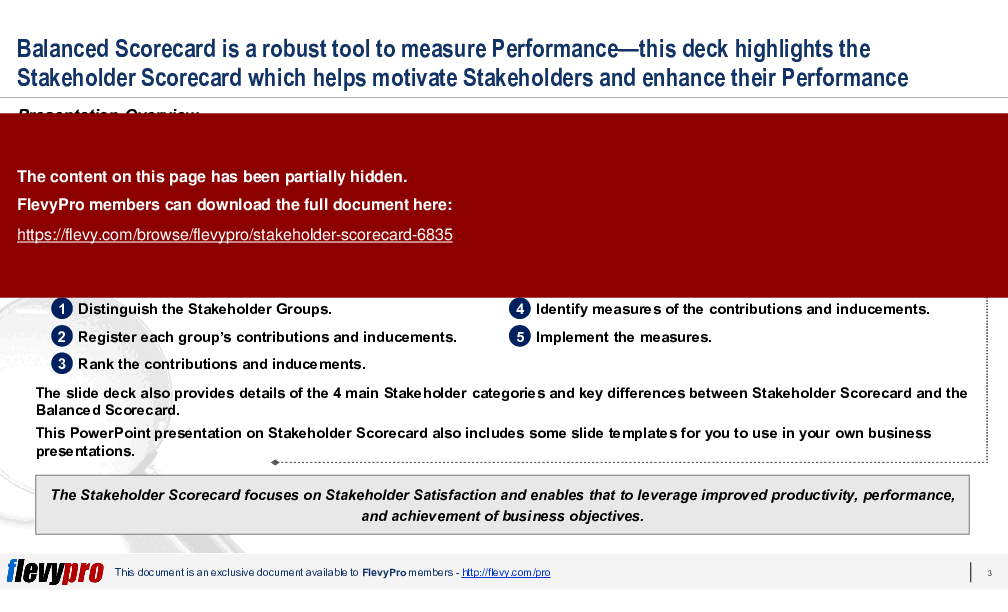
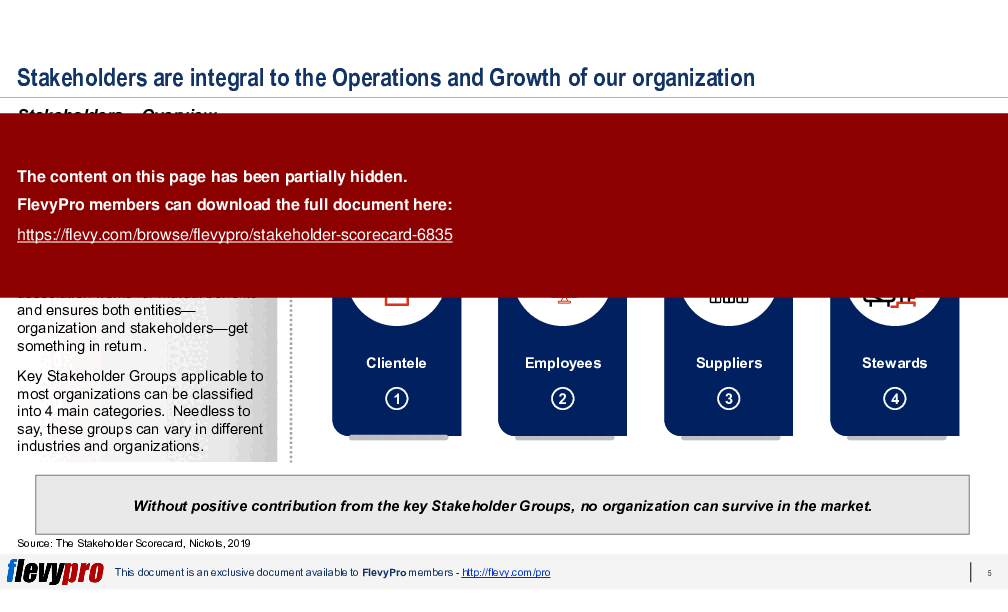
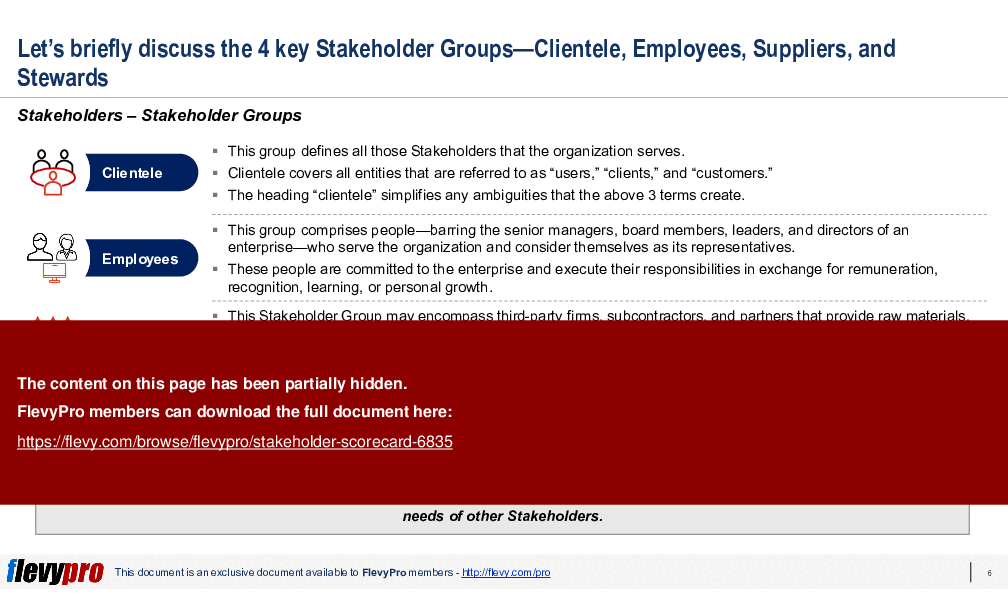

Stakeholders are all those individuals or external organizational entities that are impacted by the events and activities taking place at an organization. Stakeholders ensure that everything that's undertaken or created by the organization is done so efficiently, effectively, and of the highest quality. In return, the organization strives to make its Stakeholders content.
Stakeholders can be bucketed into 4 distinct categories:
1. Clientele
2. Employees
3. Suppliers
4. Stewards
Without positive contribution from the key Stakeholder Groups, no organization can survive in the market.
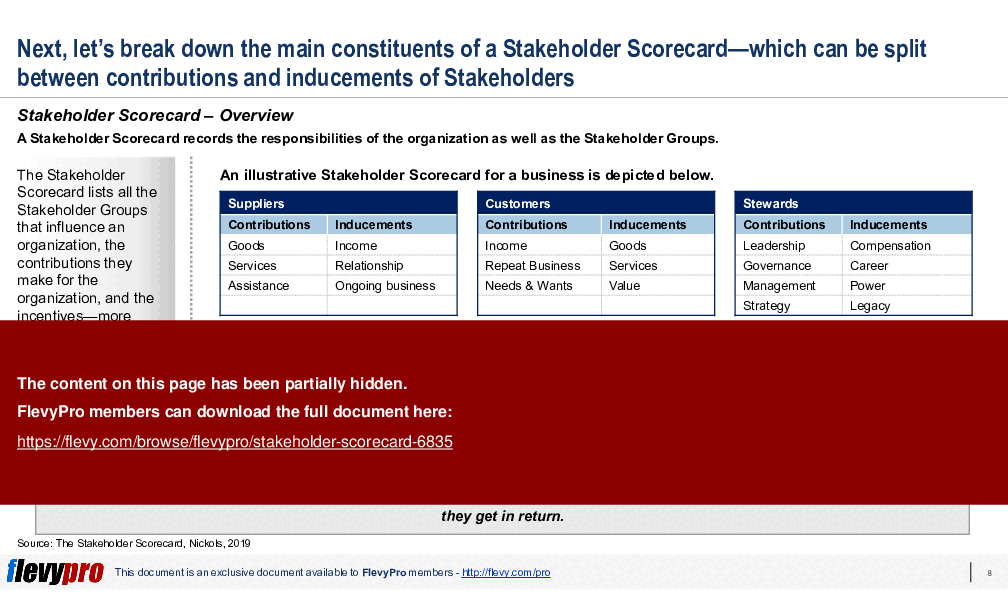
To record the responsibilities of the organization, as well as the various Stakeholder Groups, we can leverage a Stakeholder Scorecard. The Stakeholder Scorecard makes an inventory of all the Stakeholder Groups that influence an organization, the contributions they make for the organization, and the incentives—more specifically referred to as the "inducements"—they receive from the organization in return.
This PowerPoint presentation outlines the 5 steps required to create a Stakeholder Scorecard.
1. Distinguish the Stakeholder Groups.
2. Register each group's contributions and inducements.
3. Rank the contributions and inducements.
4. Identify measures of the contributions and inducements.
5. Implement the measures.
The Stakeholder Scorecard focuses on Stakeholder Satisfaction and enables that to leverage improved productivity, performance, and achievement of business objectives.
The slide deck also provides details of the 4 main Stakeholder categories and key differences between Stakeholder Scorecard and the Balanced Scorecard (BSC).
This PowerPoint presentation on Stakeholder Scorecard also includes some slide templates for you to use in your own business presentations.
This presentation also delves into the practical application of the Stakeholder Scorecard by illustrating how to categorize and manage stakeholder contributions and inducements using a traffic light model. This visual tool simplifies the assessment of stakeholder engagement levels, making it easier to identify areas requiring immediate attention. The PPT includes comprehensive templates and guidelines for structuring your own scorecard, ensuring you can seamlessly integrate this framework into your strategic planning process. This resource is essential for executives aiming to enhance stakeholder satisfaction and drive organizational performance.
Got a question about this document? Email us at flevypro@flevy.com.
Executive Summary
The Stakeholder Scorecard presentation is a strategic framework designed to enhance stakeholder satisfaction and improve organizational performance. Developed by former consultants from McKinsey and Big 4 firms, this PowerPoint deck outlines a structured approach to identifying and measuring the contributions and inducements of key stakeholder groups. It emphasizes the importance of stakeholder engagement in achieving business objectives and provides a clear methodology for creating a Stakeholder Scorecard. By leveraging this framework, organizations can foster better relationships with stakeholders, drive performance, and ensure mutual benefits.
Who This Is For and When to Use
• Corporate executives looking to enhance stakeholder engagement and satisfaction
• Integration leaders responsible for aligning stakeholder interests with organizational goals
• Consultants seeking a structured approach to stakeholder management
• Project managers aiming to measure stakeholder contributions and incentives
Best-fit moments to use this deck:
• During strategic planning sessions focused on stakeholder engagement
• When developing performance metrics that include stakeholder perspectives
• In workshops aimed at improving stakeholder relationships and satisfaction
Learning Objectives
• Define the concept of a Stakeholder Scorecard and its significance in performance management
• Identify key stakeholder groups and their respective contributions and inducements
• Develop a structured approach to measuring stakeholder satisfaction
• Implement metrics to track stakeholder performance and engagement
• Analyze gaps between stakeholder needs and organizational offerings
• Utilize templates for effective stakeholder communication and reporting
Table of Contents
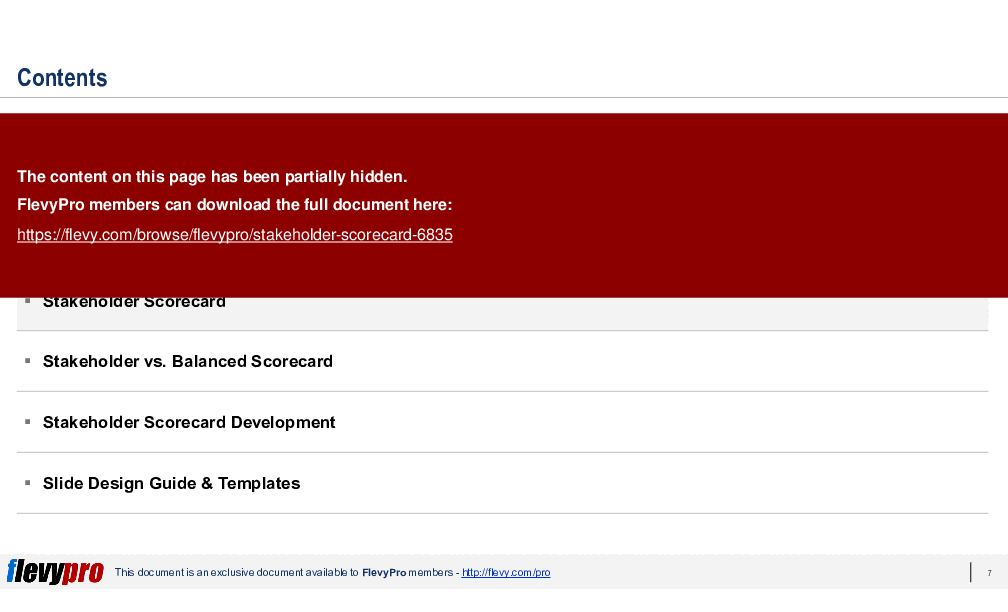
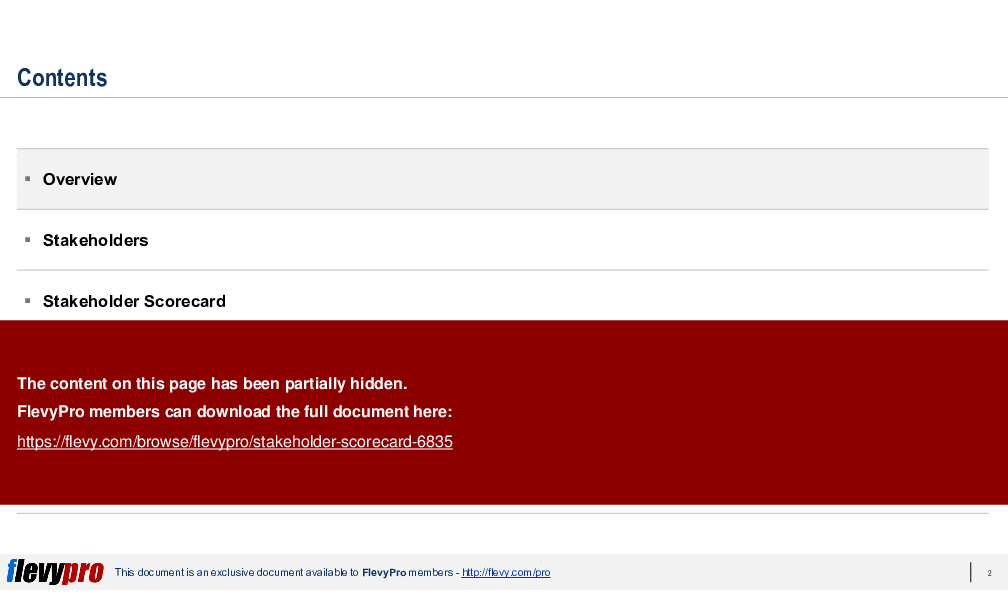
• Overview (page 3)
• Stakeholders (page 5)
• Stakeholder Scorecard (page 8)
• Stakeholder vs. Balanced Scorecard (page 9)
• Stakeholder Scorecard Development (page 10)
• Slide Design Guide & Templates (page 20)
Primary Topics Covered
• Stakeholder Identification - The process of distinguishing key stakeholder groups that influence organizational performance.
• Contributions and Inducements - Analyzing the contributions made by stakeholders and the inducements they receive in return.
• Stakeholder Scorecard Development - A five-step approach to creating a Stakeholder Scorecard, including identifying, registering, ranking, measuring, and implementing stakeholder metrics.
• Comparison with Balanced Scorecard - Distinctions between the Stakeholder Scorecard and Balanced Scorecard, focusing on stakeholder-centric performance measurement.
• Traffic Lights Model - A visual tool to assess stakeholder satisfaction and identify areas for improvement.
• Slide Design Guidelines - Best practices for structuring and designing presentation slides effectively.
Deliverables, Templates, and Tools
• Stakeholder Scorecard template for documenting stakeholder contributions and inducements
• Traffic Lights model for visualizing stakeholder satisfaction
• Slide templates for presenting stakeholder analysis and scorecard results
• Guidelines for measuring stakeholder contributions and performance metrics
• Framework for comparing Stakeholder Scorecard with Balanced Scorecard
• Design templates for effective stakeholder communication
Slide Highlights
• Overview slide detailing the importance of stakeholder satisfaction
• Stakeholder categories slide outlining Clientele, Employees, Suppliers, and Stewards
• Contributions and inducements matrix illustrating stakeholder relationships
• Comparison slide highlighting key differences between Stakeholder Scorecard and Balanced Scorecard
• Five-step development process slide for creating a Stakeholder Scorecard
• Traffic Lights model slide for assessing stakeholder satisfaction
Potential Workshop Agenda
Stakeholder Identification Session (60 minutes)
• Discuss key stakeholder groups and their roles
• Identify contributions and inducements for each group
• Document findings in a Stakeholder Scorecard
Scorecard Development Workshop (90 minutes)
• Review the five-step process for developing a Stakeholder Scorecard
• Create metrics for measuring stakeholder contributions and satisfaction
• Develop action plans for implementing the scorecard
Customization Guidance
• Tailor stakeholder categories to fit specific organizational contexts
• Adjust contributions and inducements based on industry-specific factors
• Modify metrics to align with organizational goals and stakeholder expectations
• Incorporate organizational branding into slide templates for consistency
• Adapt the Traffic Lights model to reflect unique stakeholder relationships
Secondary Topics Covered
• Stakeholder engagement strategies for enhancing satisfaction
• Methods for tracking stakeholder performance over time
• Best practices for communicating stakeholder insights to leadership
• Techniques for aligning stakeholder interests with business objectives
• Case studies on successful stakeholder management implementations
Topic FAQ
Document FAQ
These are questions addressed within this presentation.
What is a Stakeholder Scorecard?
A Stakeholder Scorecard is a framework used to measure and manage the contributions and satisfaction of key stakeholder groups within an organization.
How do I identify key stakeholders?
Key stakeholders can be identified through a structured process that includes analyzing their roles, contributions, and the inducements they receive from the organization.
What are the main differences between the Stakeholder Scorecard and the Balanced Scorecard?
The Stakeholder Scorecard focuses on stakeholder satisfaction and contributions, while the Balanced Scorecard emphasizes a broader range of performance metrics, including financial and operational aspects.
How can I measure stakeholder satisfaction?
Stakeholder satisfaction can be measured through various metrics that assess their contributions, feedback, and the effectiveness of the inducements provided by the organization.
What is the Traffic Lights model?
The Traffic Lights model is a visual tool used to assess the status of stakeholder satisfaction, indicating areas that require attention or improvement.
Can this framework be customized for different industries?
Yes, the Stakeholder Scorecard framework can be tailored to fit the specific needs and contexts of various industries and organizations.
How do I implement the Stakeholder Scorecard?
Implementation involves following the five-step development process, which includes identifying stakeholders, registering contributions, ranking them, identifying measures, and implementing those measures.
What templates are included in the presentation?
The presentation includes templates for the Stakeholder Scorecard, Traffic Lights model, and slide design guidelines for effective stakeholder communication.
Glossary
• Stakeholder - Individuals or entities impacted by an organization's activities.
• Inducement - Benefits received by stakeholders in exchange for their contributions.
• Contributions - Inputs or efforts provided by stakeholders to the organization.
• Stakeholder Scorecard - A framework for measuring stakeholder contributions and satisfaction.
• Balanced Scorecard - A performance management tool that includes financial and operational metrics.
• Traffic Lights Model - A visual assessment tool for stakeholder satisfaction.
• Performance Metrics - Quantitative measures used to evaluate stakeholder contributions.
• Stakeholder Engagement - The process of involving stakeholders in organizational decision-making.
• Customization - Tailoring frameworks or templates to fit specific organizational needs.
• Workshop Agenda - A structured plan for conducting stakeholder-related sessions.
• Template - A pre-designed format for documenting stakeholder information.
• Feedback - Information provided by stakeholders regarding their satisfaction and contributions.
• Analysis - The process of examining stakeholder data to identify trends and gaps.
Source: Best Practices in Performance Management, Balanced Scorecard, Stakeholder Management PowerPoint Slides: Stakeholder Scorecard PowerPoint (PPTX) Presentation Slide Deck, LearnPPT Consulting
Did you need more documents?
Consider a FlevyPro subscription from $39/month. View plans here.
For $10.00 more, you can download this document plus 2 more FlevyPro documents. That's just $13 each.
|
Download our FREE Organization, Change, & Culture, Templates
Download our free compilation of 50+ slides and templates on Organizational Design, Change Management, and Corporate Culture. Methodologies include ADKAR, Burke-Litwin Change Model, McKinsey 7-S, Competing Values Framework, etc. |