
This framework is developed by a team of former McKinsey and Big 4 consultants. The presentation follows the headline-body-bumper slide format used by global consulting firms.
Editor Summary
Personal Balanced Scorecard (PBSC) is a 35-slide PowerPoint presentation introducing a metrics-driven personal strategy framework adapted from the Balanced Scorecard model.
Read morePBSC defines 4 integrated perspectives—Personal Growth & Learning, Internal Process, Financial/Resource Stewardship, and Relationship & Contribution—and includes an implementation roadmap, common pitfalls to avoid, and slide templates for integration into presentations. Targeted at professionals, especially those in leadership roles, for aligning personal values, strategic goals, and daily execution; sold as a digital download on Flevy.
Use this framework when individuals or leaders must reconcile day-to-day workload with longer-term personal or career priorities, creating measurable links between values, routines, resources, and relationships.
Senior managers translating strategic career goals into daily routines and measurable habits using the Internal Process perspective for time management.
Leadership coaches structuring client development plans that track skills and mindset growth via the Personal Growth & Learning perspective.
Professionals planning financial and time allocation for career transitions or project commitments using the Financial/Resource Stewardship perspective.
Team leads mapping stakeholder contributions and networking objectives in the Relationship & Contribution perspective.
The PBSC applies the Balanced Scorecard’s strategy-to-execution logic to personal planning via its four-perspective, metrics-driven roadmap.
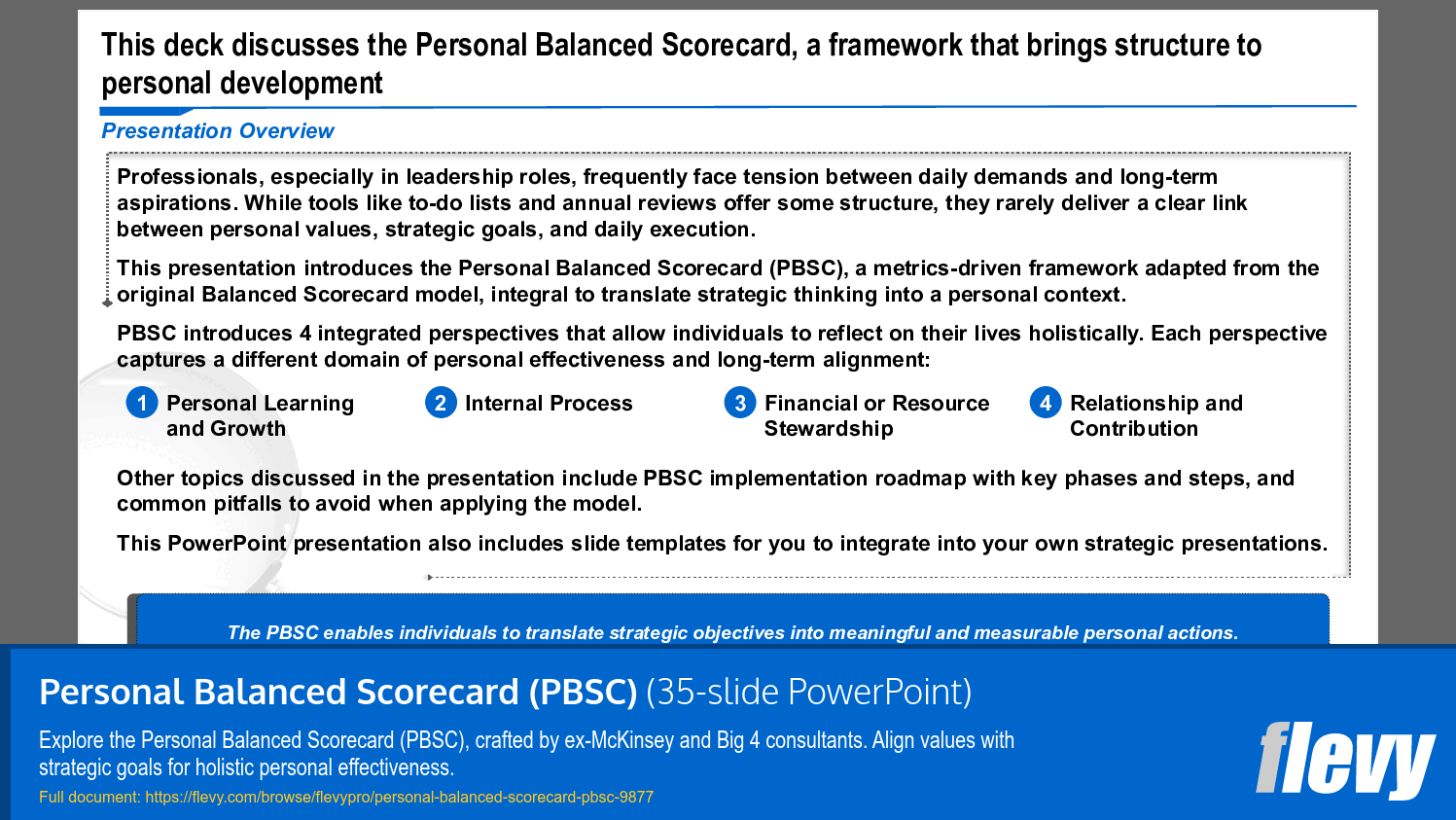
Professionals, especially in leadership roles, frequently face tension between daily demands and long-term aspirations. While tools like to-do lists and annual reviews offer some structure, they rarely deliver a clear link between personal values, strategic goals, and daily execution.
This presentation introduces the Personal Balanced Scorecard (PBSC), a metrics-driven framework adapted from the original Balanced Scorecard model, integral to translate strategic thinking into a personal context.
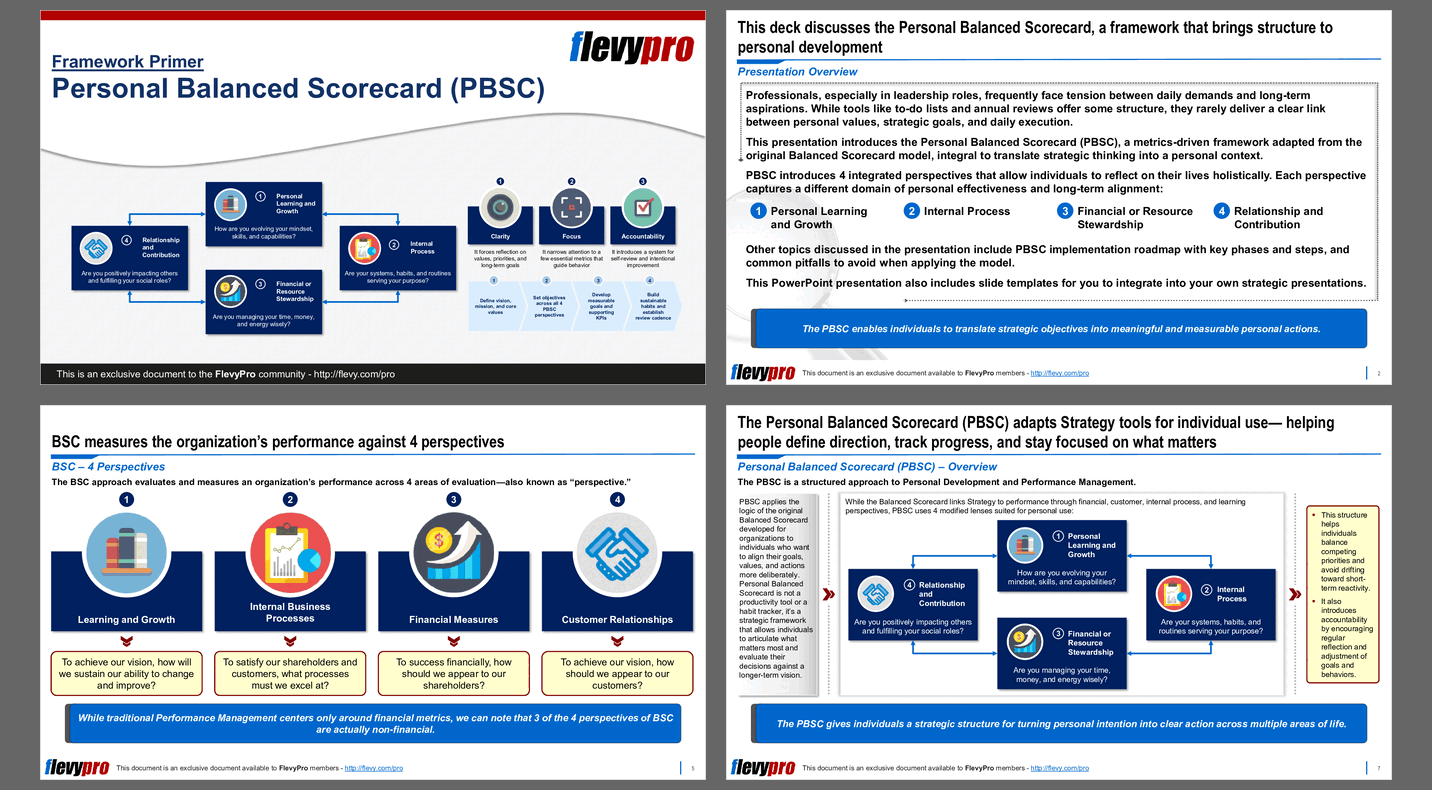
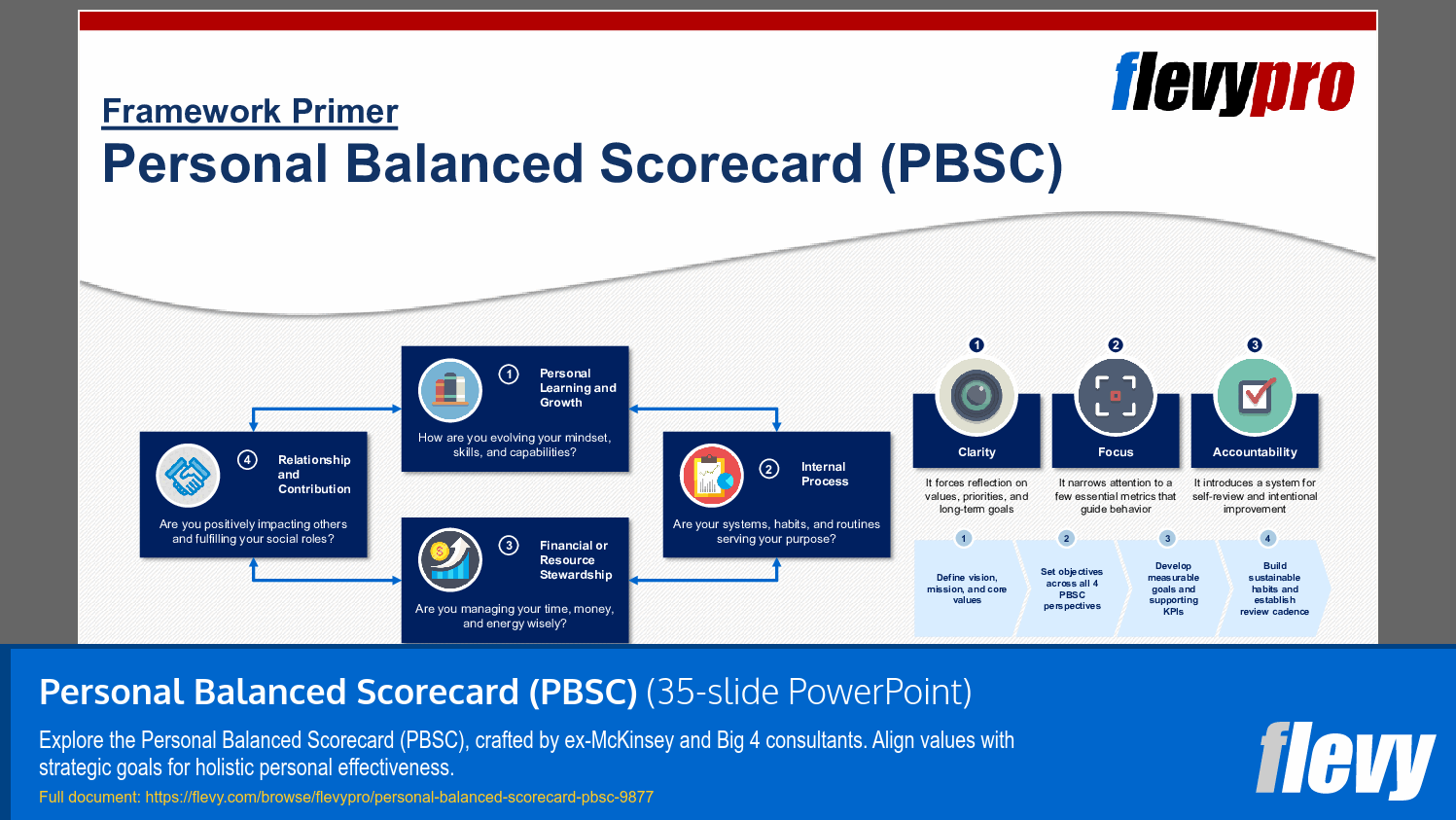
PBSC introduces 4 integrated perspectives that allow individuals to reflect on their lives holistically. Each perspective captures a different domain of personal effectiveness and long-term alignment:
1. Personal Growth & Learning – Focuses on developing skills, mindset, emotional intelligence, and resilience. It ensures continual improvement and future readiness.
2. Internal Process – Refers to the systems, routines, and behaviors that drive daily execution. It's where habits, workflows, and Time Management reside.
3. Financial or Resource Stewardship – Involves managing tangible and intangible assets—e.g., time, money, energy, and commitments. The goal is to allocate resources in line with personal priorities.
4. Relationship and Contribution – Captures one's role in personal and professional networks. It reflects how individuals create value for others, maintain trust, and fulfill social responsibilities.
Other topics discussed in the presentation include PBSC implementation roadmap with key phases and steps, and common pitfalls to avoid when applying the model.
This PowerPoint presentation also includes slide templates for you to integrate into your own strategic presentations.
What is a Personal Balanced Scorecard and how does it relate to the traditional Balanced Scorecard?
The Personal Balanced Scorecard adapts the original Balanced Scorecard’s strategy-to-metrics logic to an individual context, turning strategic thinking into measurable personal actions. It reframes organizational perspectives into 4 personal domains—Personal Growth & Learning, Internal Process, Financial/Resource Stewardship, and Relationship & Contribution—and uses metrics across those 4 perspectives.
What are the 4 PBSC perspectives and what does each measure?
The PBSC’s 4 perspectives measure distinct domains: Personal Growth & Learning (skills, mindset, resilience), Internal Process (habits, workflows, time management), Financial/Resource Stewardship (time, money, energy allocation), and Relationship & Contribution (value created in networks and social responsibilities). Each perspective targets a specific area of personal effectiveness and alignment, totaling 4 perspectives.
How can I track progress using a personal balanced scorecard?
Progress is tracked by defining measurable goals for each of the 4 perspectives, selecting relevant metrics, and reviewing them against routines and outcomes. The approach pairs metrics with an implementation roadmap and slide templates to document targets, monitoring cadence, and results, supported by the implementation roadmap and slide templates.
What should I look for when choosing a personal strategy toolkit or template?
Choose a toolkit that maps personal domains to measurable outcomes, offers a clear implementation roadmap, and provides reusable presentation templates for reporting. For professionals, a PowerPoint-based set that explicitly covers growth, processes, resources, and relationships helps operationalize plans, for example slide templates in PPTX format.
Are slide templates useful for personal strategic planning or self-coaching?
Slide templates help translate reflective goals into repeatable reporting and stakeholder-facing summaries. A presentation that includes ready-to-edit slides and an implementation roadmap can streamline tracking and communication. The Personal Balanced Scorecard presentation explicitly includes slide templates across its 35 slides.
I’m juggling daily tasks and long-term goals—how does a PBSC help prioritize time?
The PBSC connects long-term goals to daily behaviors by assigning metrics and routines within the Internal Process perspective, which covers habits, workflows, and Time Management. This framing makes it easier to reallocate time and energy toward higher-priority objectives using the Internal Process perspective.
How can a leadership coach use the PBSC with clients?
A coach can use the PBSC to structure discovery across the 4 perspectives, set measurable development objectives, and co-design routines and accountability checkpoints. The included implementation roadmap and slide templates support client sessions and progress reviews, relying on the implementation roadmap.
What common pitfalls should I avoid when applying a personal balanced scorecard?
Common pitfalls include creating disconnected goals across perspectives, using vague measures, and neglecting routine integration. Avoid these by ensuring alignment between values, goals, and daily execution, selecting clear metrics, and following a documented implementation roadmap and the presentation’s common pitfalls section.
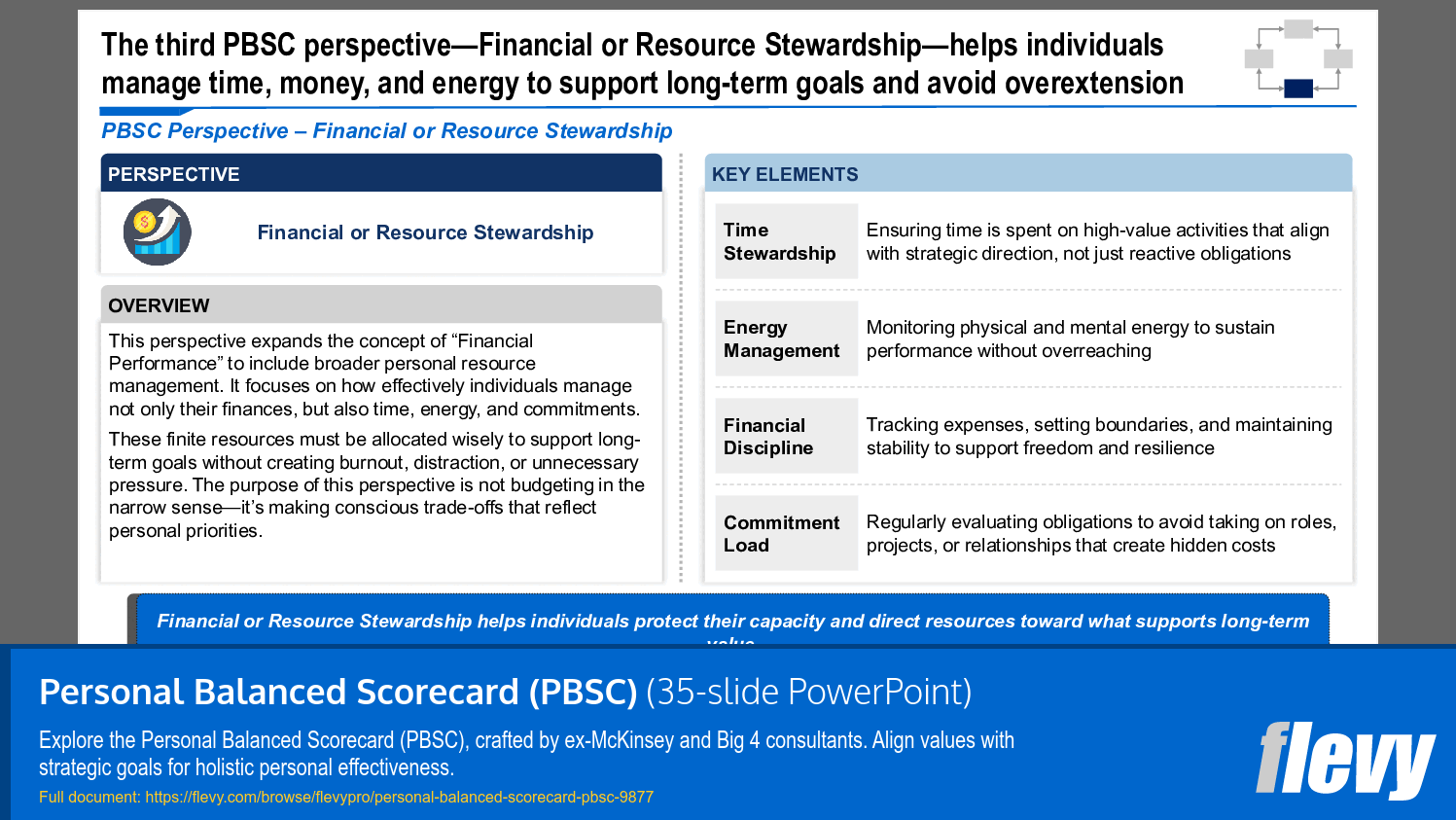
This PPT slide template introduces the third perspective of the Personal Balanced Scorecard (PBSC), focusing on financial stewardship in managing personal and professional priorities. It emphasizes resource management beyond traditional financial metrics, highlighting effective allocation of time, energy, and commitments to avoid burnout and distraction. Key elements include Time Stewardship, Energy Management, Financial Discipline, and Commitment Load, each promoting behaviors like prioritizing high-value activities, monitoring energy levels, tracking expenses, and evaluating obligations. This disciplined approach to resource stewardship is essential for maintaining resilience and achieving long-term goals, particularly for executives and high performers seeking a holistic strategy for personal effectiveness.
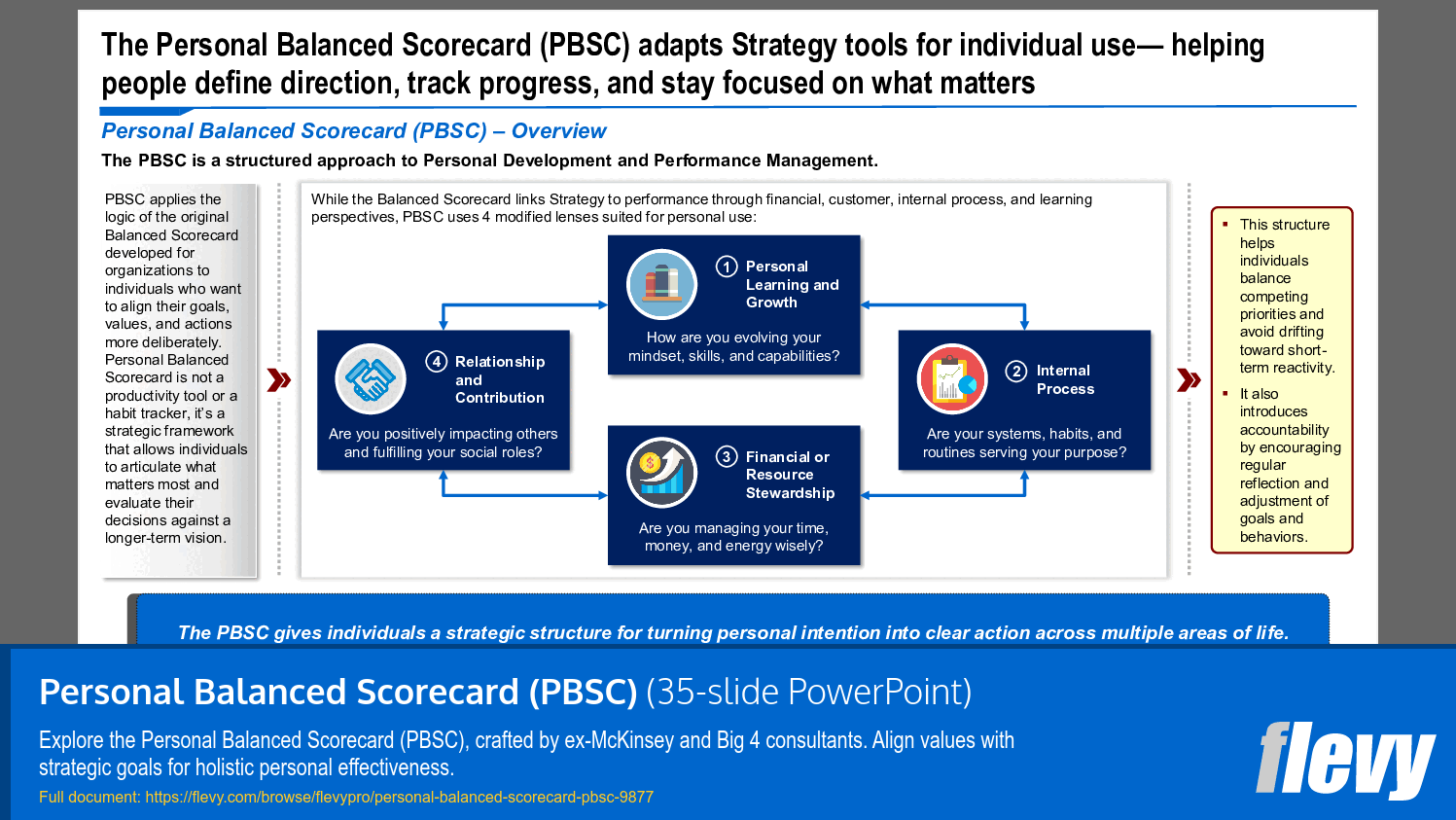
This PPT slide template introduces the Personal Balanced Scorecard (PBSC), a strategic tool for personal development and performance management. PBSC adapts an organizational framework for individual use, enabling users to define goals, monitor progress, and align with their values. It links strategy to performance through 4 lenses: personal learning and growth, internal processes, financial stewardship, and relationships. Each lens encourages reflection on mindset, habits, resource management, and social impact. Benefits include balancing competing priorities, avoiding reactive behaviors, and fostering accountability through regular reflection. PBSC serves as a strategic framework for actionable outcomes across life domains, appealing to professionals seeking structured personal growth. A 35-slide PowerPoint resource offers detailed implementation guidance from ex-McKinsey and Big 4 consultants.
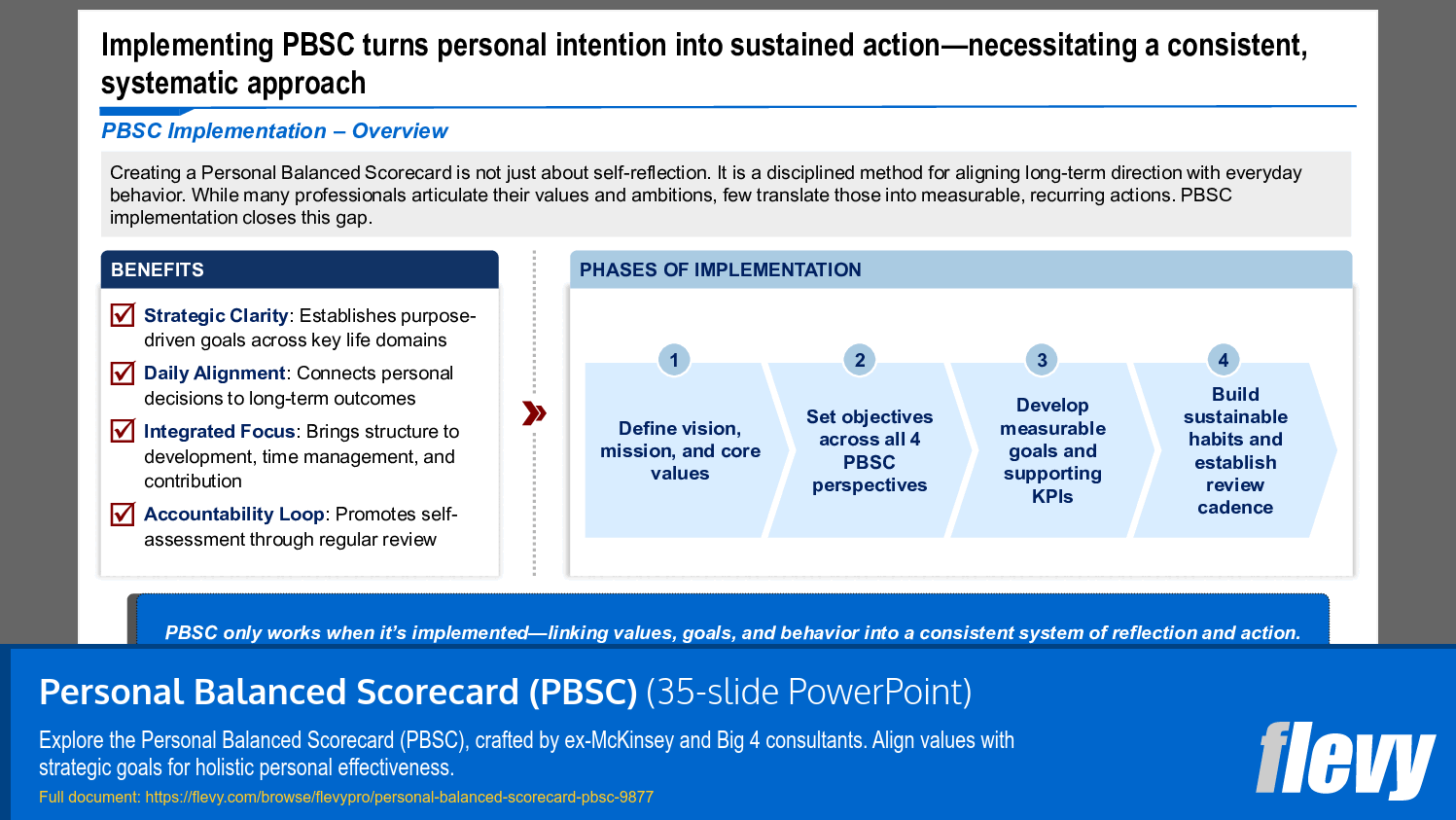
This PPT slide template outlines a systematic approach to embedding the Personal Balanced Scorecard (PBSC) into organizational behavior. Creating a PBSC aligns long-term strategic intent with daily actions, addressing the challenge of translating articulated values into measurable behaviors. The implementation process includes defining vision, mission, and core values; setting objectives aligned with the 4 PBSC perspectives; developing measurable goals and KPIs; and building sustainable habits with regular review cadences. Key outcomes include strategic clarity through purpose-driven goals, daily alignment of individual decisions with overarching objectives, integrated focus on structure and time management, and accountability via ongoing self-assessment. This approach fosters long-term discipline and alignment, supporting strategic effectiveness at both individual and organizational levels.
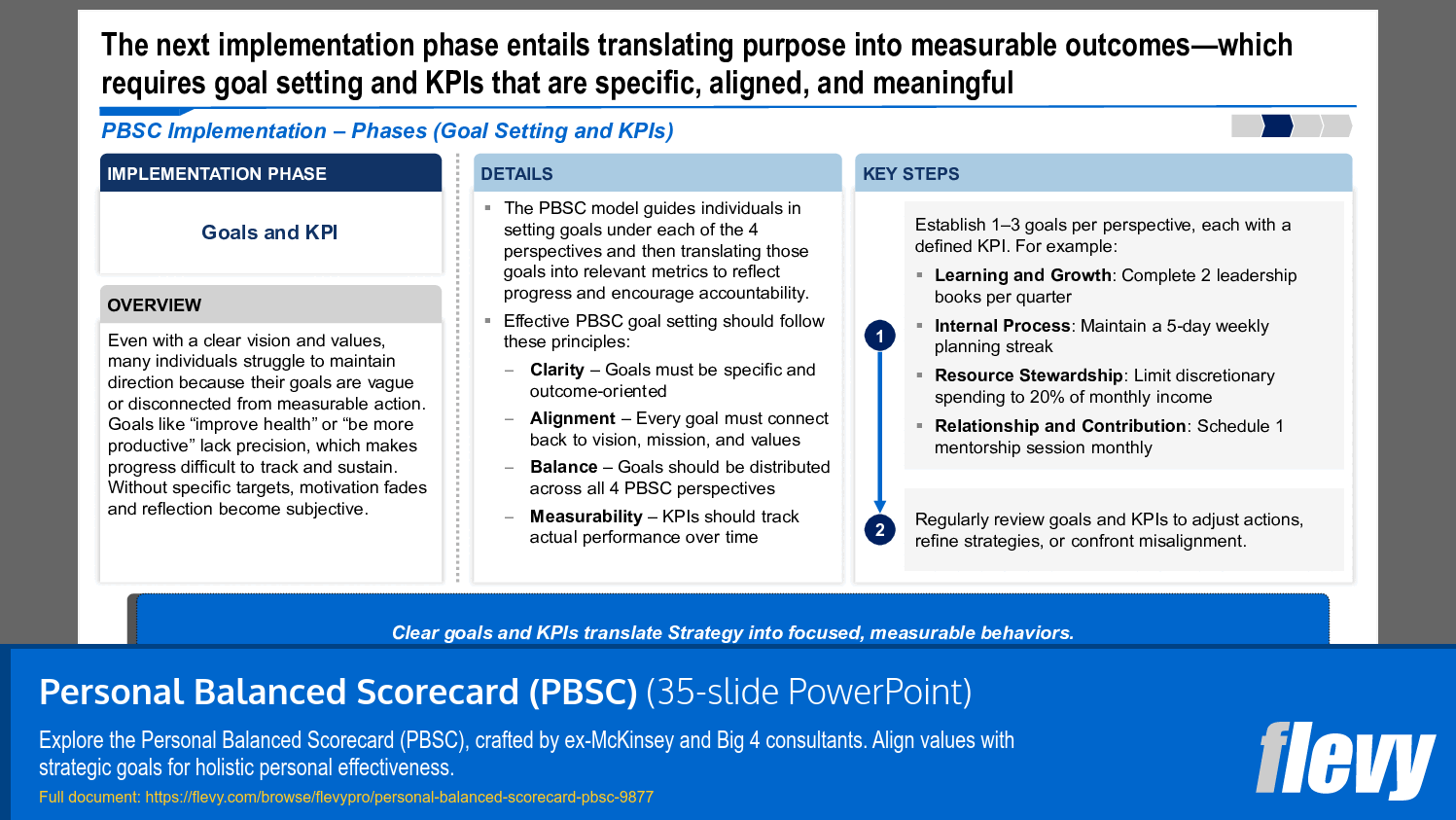
This PPT slide template outlines the Personal Balanced Scorecard (PBSC) framework for translating strategic goals into measurable outcomes. The implementation phase focuses on establishing specific, aligned, and measurable KPIs based on clearly defined goals. Effective goal setting should ensure goals are specific, connected to the organization’s core mission, balanced across perspectives, and tracked over time. The PBSC model guides goal setting across 4 perspectives, emphasizing clarity, alignment, balance, and measurability. Key steps include establishing 1-3 goals per perspective with clear KPIs and specific actions, such as completing leadership books or maintaining weekly planning. Regular review of goals and KPIs is essential for adjusting actions and refining strategies to ensure successful implementation.
This PPT slide template introduces the third perspective of the Personal Balanced Scorecard (PBSC), focusing on financial stewardship in managing personal and professional priorities. It emphasizes resource management beyond traditional financial metrics, highlighting effective allocation of time, energy, and commitments to avoid burnout and distraction. Key elements include Time Stewardship, Energy Management, Financial Discipline, and Commitment Load, each promoting behaviors like prioritizing high-value activities, monitoring energy levels, tracking expenses, and evaluating obligations. This disciplined approach to resource stewardship is essential for maintaining resilience and achieving long-term goals, particularly for executives and high performers seeking a holistic strategy for personal effectiveness.
This PPT slide template introduces the Personal Balanced Scorecard (PBSC), a strategic tool for personal development and performance management. PBSC adapts an organizational framework for individual use, enabling users to define goals, monitor progress, and align with their values. It links strategy to performance through 4 lenses: personal learning and growth, internal processes, financial stewardship, and relationships. Each lens encourages reflection on mindset, habits, resource management, and social impact. Benefits include balancing competing priorities, avoiding reactive behaviors, and fostering accountability through regular reflection. PBSC serves as a strategic framework for actionable outcomes across life domains, appealing to professionals seeking structured personal growth. A 35-slide PowerPoint resource offers detailed implementation guidance from ex-McKinsey and Big 4 consultants.
This PPT slide template outlines a systematic approach to embedding the Personal Balanced Scorecard (PBSC) into organizational behavior. Creating a PBSC aligns long-term strategic intent with daily actions, addressing the challenge of translating articulated values into measurable behaviors. The implementation process includes defining vision, mission, and core values; setting objectives aligned with the 4 PBSC perspectives; developing measurable goals and KPIs; and building sustainable habits with regular review cadences. Key outcomes include strategic clarity through purpose-driven goals, daily alignment of individual decisions with overarching objectives, integrated focus on structure and time management, and accountability via ongoing self-assessment. This approach fosters long-term discipline and alignment, supporting strategic effectiveness at both individual and organizational levels.
This PPT slide template outlines the Personal Balanced Scorecard (PBSC) framework for translating strategic goals into measurable outcomes. The implementation phase focuses on establishing specific, aligned, and measurable KPIs based on clearly defined goals. Effective goal setting should ensure goals are specific, connected to the organization’s core mission, balanced across perspectives, and tracked over time. The PBSC model guides goal setting across 4 perspectives, emphasizing clarity, alignment, balance, and measurability. Key steps include establishing 1-3 goals per perspective with clear KPIs and specific actions, such as completing leadership books or maintaining weekly planning. Regular review of goals and KPIs is essential for adjusting actions and refining strategies to ensure successful implementation.
Source: Best Practices in Performance Management, Balanced Scorecard, Soft Skills, Self Improvement PowerPoint Slides: Personal Balanced Scorecard (PBSC) PowerPoint (PPTX) Presentation Slide Deck, LearnPPT Consulting
This framework is developed by a team of former McKinsey and Big 4 consultants. The presentation follows the headline-body-bumper slide format used by global consulting firms.
For $10.00 more, you can download this document plus 2 more FlevyPro documents. That's just $13 each.
ABOUT FLEVYPRO
This document is part of the FlevyPro Library, a curated knowledge base of documents for our FlevyPro subscribers.
FlevyPro is a subscription service for on-demand business frameworks and analysis tools. FlevyPro subscribers receive access to an exclusive library of curated business documents—business framework primers, presentation templates, Lean Six Sigma tools, and more—among other exclusive benefits.
The average daily rate of a McKinsey consultant is $6,625 (not including expenses). The average price of a Flevy document is $65.
Trusted by over 10,000+ Client Organizations
Since 2012, we have provided business templates to over 10,000 businesses and organizations of all sizes, from startups and small businesses to the Fortune 100, in over 130 countries.
"Flevy is now a part of my business routine. I visit Flevy at least 3 times each month.
Flevy has become my preferred learning source, because what it provides is practical, current, and useful in this era where the business world is being rewritten.

many challenges and there is the need to make the right decisions in a short time, with so much scattered information, we are fortunate to have Flevy. Flevy investigates, selects, and puts at our disposal the best of the best to help us be successful in our work.
"
– Omar Hernán Montes Parra, CEO at Quantum SFE
"My FlevyPro subscription provides me with the most popular frameworks and decks in demand in today’s market. They not only augment my existing consulting and coaching offerings and delivery, but also keep me abreast of the latest trends, inspire new products and service offerings for my practice, and educate me
in a fraction of the time and money of other solutions. I strongly recommend FlevyPro to any consultant serious about success.
"
– Bill Branson, Founder at Strategic Business Architects
"As an Independent Management Consultant, I find Flevy to add great value as a source of best practices, templates and information on new trends. Flevy has matured and the quality and quantity of the library is excellent. Lastly the price charged is reasonable, creating a win-win value for
the customer, Flevy and the various authors. This is truly a service that benefits the consulting industry and associated clients. Thanks for providing this service.
"
– Jim Schoen, Principal at FRC Group
"I am extremely grateful for the proactiveness and eagerness to help and I would gladly recommend the Flevy team if you are looking for data and toolkits to help you work through business solutions."
– Trevor Booth, Partner, Fast Forward Consulting
"Flevy.com has proven to be an invaluable resource library to our Independent Management Consultancy, supporting and enabling us to better serve our enterprise clients.
The value derived from our [FlevyPro] subscription in terms of the business it has helped to gain far exceeds the investment made, making a subscription a no-brainer for any growing consultancy – or in-house strategy team."
– Dean Carlton, Chief Transformation Officer, Global Village Transformations Pty Ltd.
"As a consulting firm, we had been creating subject matter training materials for our people and found the excellent materials on Flevy, which saved us 100's of hours of re-creating what already exists on the Flevy materials we purchased."
– Michael Evans, Managing Director at Newport LLC
"One of the great discoveries that I have made for my business is the Flevy library of training materials.
As a Lean Transformation Expert, I am always making presentations to clients on a variety of topics: Training, Transformation, Total Productive Maintenance, Culture, Coaching, Tools, Leadership Behavior, etc. Flevy
It is well worth the money to purchase these presentations. Sure, I have the knowledge and information to make my point. It is another thing to create a presentation that captures what I want to say. Flevy has saved me countless hours of preparation time that is much better spent with implementation that will actually save money for my clients.
"
– Ed Kemmerling, Senior Lean Transformation Expert at PMG
"I have used FlevyPro for several business applications. It is a great complement to working with expensive consultants. The quality and effectiveness of the tools are of the highest standards."
– Moritz Bernhoerster, Global Sourcing Director at Fortune 500
Download our free compilation of 50+ Strategy & Transformation slides and templates. Frameworks include McKinsey 7-S, Balanced Scorecard, Disruptive Innovation, BCG Curve, and many more.