
This framework is developed by a team of former McKinsey and Big 4 consultants. The presentation follows the headline-body-bumper slide format used by global consulting firms.
Explore the Stages of Team Development framework by ex-McKinsey consultants. Enhance team performance with insights on Tuckman's Model and strategic leadership. Stages of Team Development is a 24-slide PPT PowerPoint presentation slide deck (PPT) available for immediate download upon purchase.
Forming a team takes time. Companies cannot expect a new team to perform well when it first comes together. Members often go through stages as they change from being a collection of strangers to a united group with common goals.
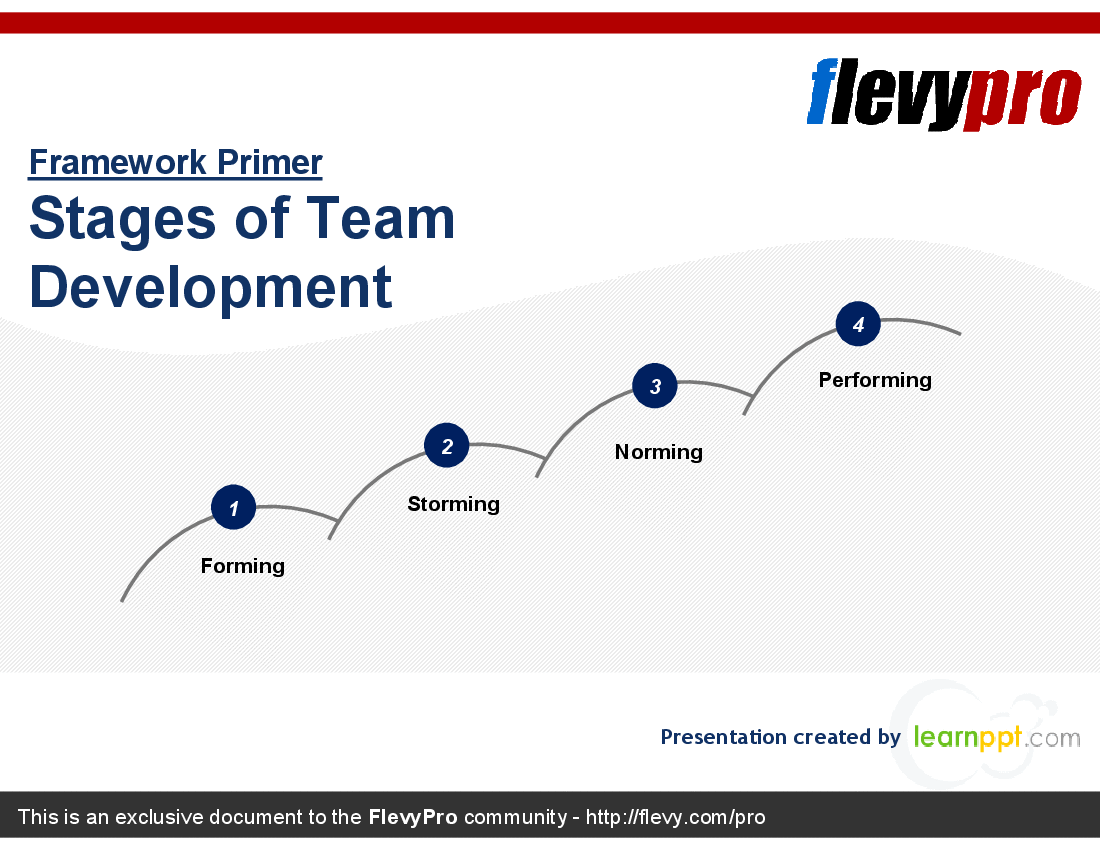
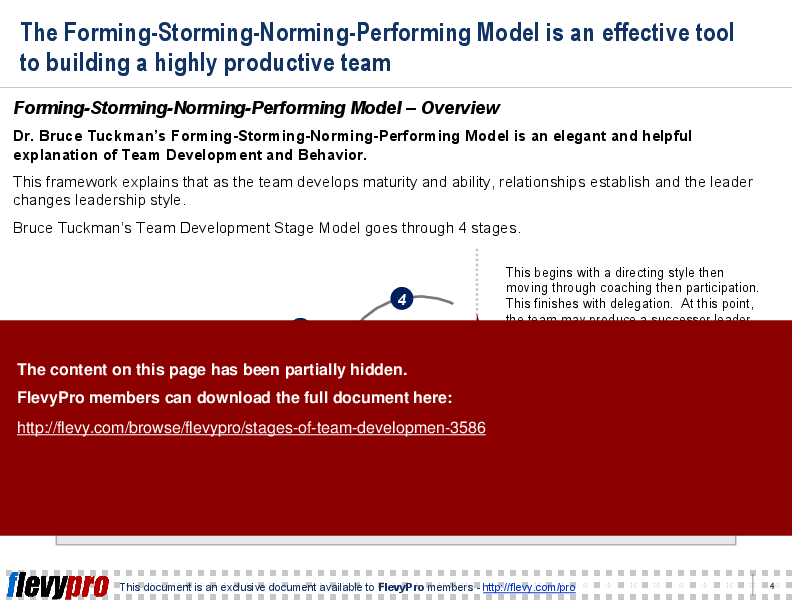
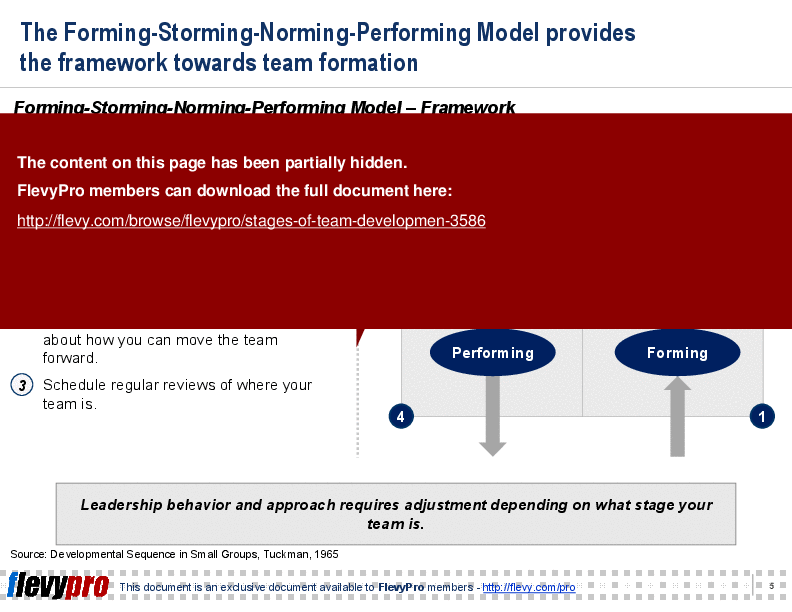
Team formation usually follows recognizable stages, known as "Forming-Storming-Norming-Performing." Dr. Bruck Tuckman, who created the memorable phrase, later added a 5th stage, "Adjourning (or Mourning)."
Using the Tuckman's Model will help teams reach their Performing stage as quickly as possible. In this stage, teams are now achieving their team's goals through hard work without friction.
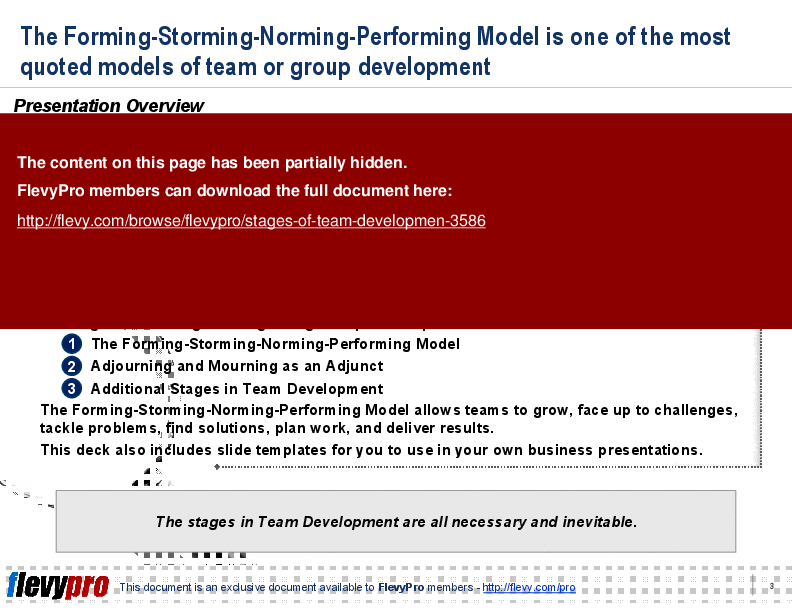
The Stages of Team Development is the focus of this Presentation. This provides the tools in building teams through strategic stages. Specific topics discussed include:
• The Forming-Storming-Norming-Performing Model
• Adjourning and Mourning as an Adjunct
• Additional Stages in Team Development
The Forming-Storming-Norming-Performing Model allows teams to grow, face up to challenges, tackle problems, find solutions, plan work, and deliver results.
This deck also includes slide templates for you to use in your own business presentations.
This presentation delves into the intricacies of each stage, providing actionable insights and practical activities for leaders to guide their teams effectively. The Forming stage emphasizes the leader's dominant role in setting the tone and direction, while the Storming stage addresses common pitfalls and strategies to overcome conflicts and power struggles. The Norming stage highlights the importance of fostering mutual respect and shared leadership within the team.
The Performing stage showcases how teams can achieve high levels of autonomy and strategic awareness. The deck also covers additional stages like Adjourning and Mourning, which focus on the emotional aspects of team dissolution, and the TPR Model, which simplifies the traditional stages into three key phases. This comprehensive guide is essential for any executive looking to optimize team performance and navigate the complexities of team dynamics.
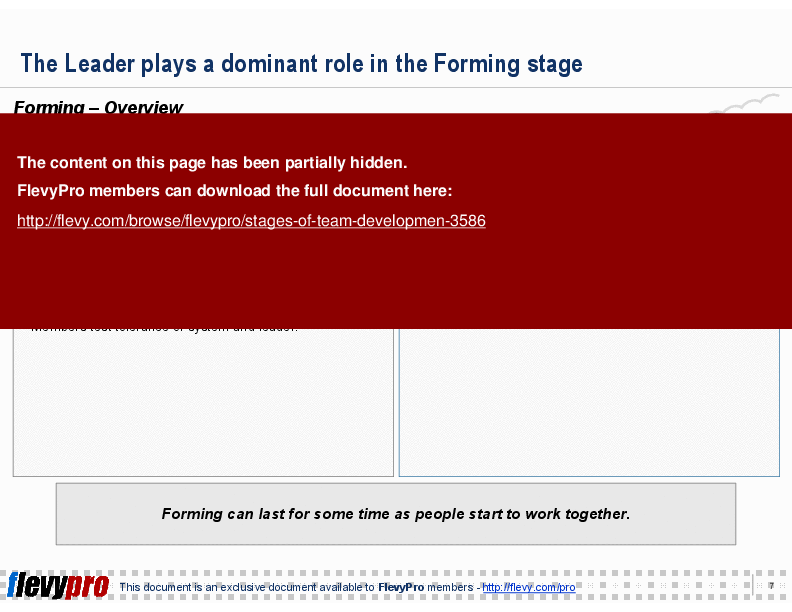
This PPT slide outlines the "Forming" stage in team development, highlighting the leader's critical role. Key features include a reliance on the leader for guidance, as team members seek clarity on objectives and roles, which may lead to confusion due to undefined responsibilities. Team members often lack agreement on aims, hindering progress. Leaders must address questions about the team's purpose and external relationships, emphasizing the importance of communication. Essential activities for leaders include directing the team and establishing clear objectives for collaboration and productivity. Strong leadership and effective communication are vital for fostering a cohesive team environment during this foundational stage.
This PPT slide provides an overview of the TPR Model, detailing the stages of team development: Transforming, Performing, and Reforming. In the Transforming phase, teams face challenges marked by defensiveness and fear, requiring a commanding management style focused on clear goals. The Performing phase sees teams normalizing interactions, characterized by increased willingness and independence, with a motivational management style that fosters participation and confidence. Finally, in the Reforming stage, teams reassess goals, experiencing disengagement and the need for new objectives, leading to a collaborative management style that emphasizes goal setting and risk management. This framework aids organizations in enhancing team collaboration and adaptability.
The Norming stage of team development is characterized by team members establishing agreement and consensus. Leadership is crucial, facilitating discussions and clarifying roles and responsibilities, which enhances decision-making through group agreement. Delegating smaller decisions to individuals or subgroups promotes engagement and ownership. Strong commitment and unity lead to increased participation in social activities, improving interpersonal relationships. Respect for the leader fosters a shared leadership dynamic, empowering team members. Practical activities for leaders include stepping back to allow team members to take responsibility, enhancing accountability, and organizing team-building events to strengthen bonds and improve collaboration. This stage promotes a cohesive and productive team environment, optimizing team performance and fostering a collaborative culture.
The "Storming" stage of team development presents challenges such as difficult decision-making, power struggles, and the formation of cliques, leading to uncertainty. Teams must remain goal-oriented and navigate interpersonal conflicts through compromise. Key activities include establishing clear processes and structures, building trust, and ensuring swift conflict resolution, especially for insecure members. Maintaining a positive outlook and strong leadership is essential. The Forming-Storming-Norming-Performing model helps team members understand dynamics, while psychometric indicators facilitate recognition of diverse work styles and strengths. This comprehensive approach equips leaders to effectively coach teams through the complexities of the Storming stage.
Source: Best Practices in Leadership, Team Building PowerPoint Slides: Stages of Team Development PowerPoint (PPT) Presentation Slide Deck, LearnPPT Consulting
This framework is developed by a team of former McKinsey and Big 4 consultants. The presentation follows the headline-body-bumper slide format used by global consulting firms.
For $10.00 more, you can download this document plus 2 more FlevyPro documents. That's just $13 each.
ABOUT FLEVYPRO
This document is part of the FlevyPro Library, a curated knowledge base of documents for our FlevyPro subscribers.

FlevyPro is a subscription service for on-demand business frameworks and analysis tools. FlevyPro subscribers receive access to an exclusive library of curated business documents—business framework primers, presentation templates, Lean Six Sigma tools, and more—among other exclusive benefits.
The average daily rate of a McKinsey consultant is $6,625 (not including expenses). The average price of a Flevy document is $65.
Trusted by over 10,000+ Client Organizations
Since 2012, we have provided business templates to over 10,000 businesses and organizations of all sizes, from startups and small businesses to the Fortune 100, in over 130 countries.
"Flevy is our 'go to' resource for management material, at an affordable cost. The Flevy library is comprehensive and the content deep, and typically provides a great foundation for us to further develop and tailor our own service offer."
– Chris McCann, Founder at Resilient.World
"I have found Flevy to be an amazing resource and library of useful presentations for lean sigma, change management and so many other topics. This has reduced the time I need to spend on preparing for my performance consultation. The library is easily accessible and updates are regularly provided. A wealth of great information."
– Cynthia Howard RN, PhD, Executive Coach at Ei Leadership
"As a consulting firm, we had been creating subject matter training materials for our people and found the excellent materials on Flevy, which saved us 100's of hours of re-creating what already exists on the Flevy materials we purchased."
– Michael Evans, Managing Director at Newport LLC
"The wide selection of frameworks is very useful to me as an independent consultant. In fact, it rivals what I had at my disposal at Big 4 Consulting firms in terms of efficacy and organization."
– Julia T., Consulting Firm Owner (Former Manager at Deloitte and Capgemini)
"Flevy.com has proven to be an invaluable resource library to our Independent Management Consultancy, supporting and enabling us to better serve our enterprise clients.
The value derived from our [FlevyPro] subscription in terms of the business it has helped to gain far exceeds the investment made, making a subscription a no-brainer for any growing consultancy – or in-house strategy team."
– Dean Carlton, Chief Transformation Officer, Global Village Transformations Pty Ltd.
"One of the great discoveries that I have made for my business is the Flevy library of training materials.
As a Lean Transformation Expert, I am always making presentations to clients on a variety of topics: Training, Transformation, Total Productive Maintenance, Culture, Coaching, Tools, Leadership Behavior, etc. Flevy
It is well worth the money to purchase these presentations. Sure, I have the knowledge and information to make my point. It is another thing to create a presentation that captures what I want to say. Flevy has saved me countless hours of preparation time that is much better spent with implementation that will actually save money for my clients.
"
– Ed Kemmerling, Senior Lean Transformation Expert at PMG
"I am extremely grateful for the proactiveness and eagerness to help and I would gladly recommend the Flevy team if you are looking for data and toolkits to help you work through business solutions."
– Trevor Booth, Partner, Fast Forward Consulting
"As a small business owner, the resource material available from FlevyPro has proven to be invaluable. The ability to search for material on demand based our project events and client requirements was great for me and proved very beneficial to my clients. Importantly, being able to easily edit and tailor
the material for specific purposes helped us to make presentations, knowledge sharing, and toolkit development, which formed part of the overall program collateral. While FlevyPro contains resource material that any consultancy, project or delivery firm must have, it is an essential part of a small firm or independent consultant's toolbox.
"
– Michael Duff, Managing Director at Change Strategy (UK)
Download our free compilation of 50+ slides and templates on Organizational Design, Change Management, and Corporate Culture. Methodologies include ADKAR, Burke-Litwin Change Model, McKinsey 7-S, Competing Values Framework, etc.