
This framework is developed by a team of former McKinsey and Big 4 consultants. The presentation follows the headline-body-bumper slide format used by global consulting firms.
Editor Summary
GRPI Model for Team Development is a 24-slide PowerPoint by LearnPPT Consulting presenting the GRPI (Goals, Roles, Processes, Interpersonal Relationships) framework and an Extended GRPI Model that adds Brand and Communication, covering a 4-component model and a 6-area extended view.
Read moreIncludes multiple templates (GRPI assessment template, Extended GRPI template, communication assessment, role-clarity diagnostics, goal-alignment questions, process-evaluation templates). Targeted at C-level executives, team leaders, HR professionals, and organizational consultants. Used for team assessments, leadership onboarding, and alignment workshops. Sold as a digital download on Flevy.
Use this deck when a leader needs to assess or rebuild team functioning—common triggers include leadership transitions, inherited leadership groups, or workshops focused on alignment and role clarity.
C-level executives assessing an inherited leadership group and deciding whether to establish a shared team purpose and brand by evaluating goals and roles.
Team leaders running a diagnostic session to identify role conflicts, process gaps, and action steps for improving performance.
HR professionals facilitating workshops that test goal alignment and interpersonal dynamics using diagnostic templates.
Organizational development consultants structuring assessments and follow-up action plans for leadership teams.
The model’s structured diagnostic sequence—assessing Goals, Roles, Processes, and Interpersonal Relationships—follows typical consulting practice of decomposing team problems into discrete, testable areas.
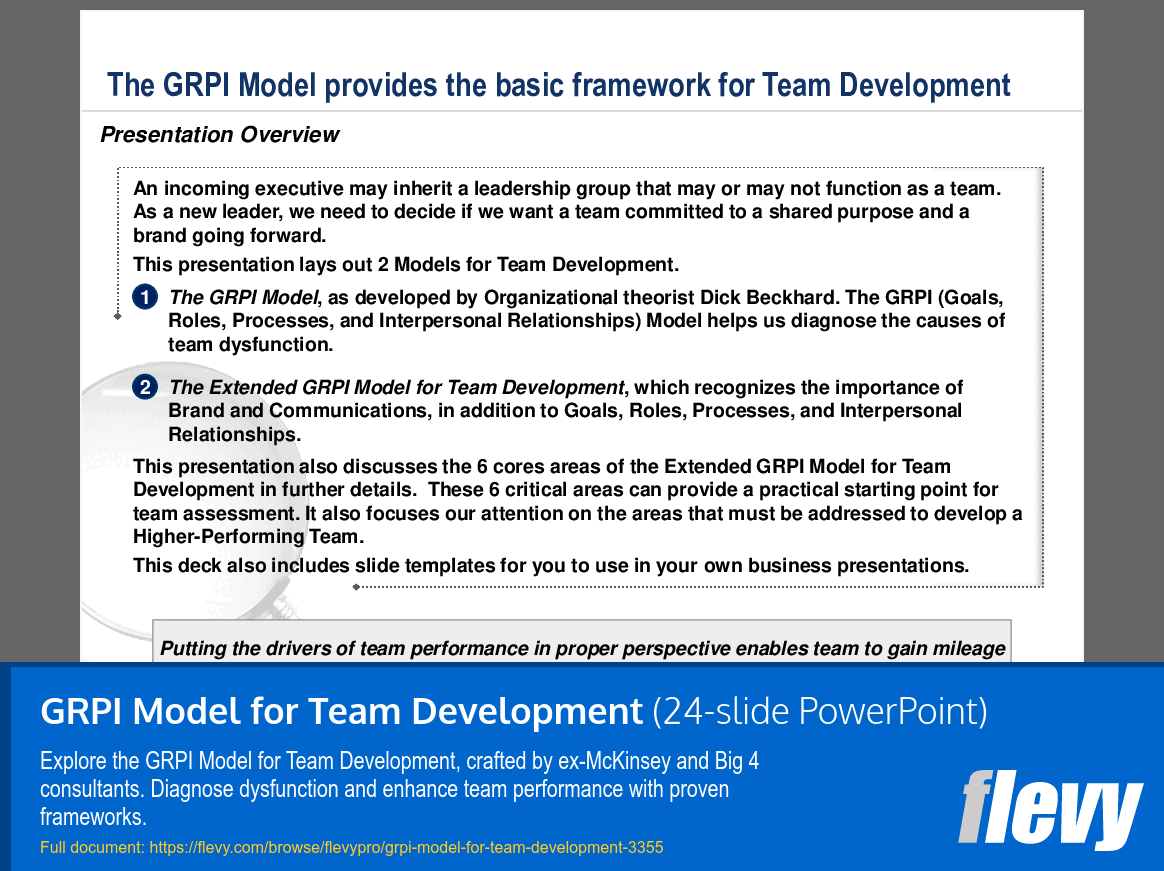
An incoming executive may inherit a leadership group that may or may not function as a team. As a new leader, we need to decide if we want a team committed to a shared purpose and a brand going forward.
This presentation lays out 2 Models for Team Development.
1. The GRPI Model, as developed by Organizational theorist Dick Beckhard. The GRPI (Goals, Roles, Processes, and Interpersonal Relationships) Model helps us diagnose the causes of team dysfunction.
2. The Extended GRPI Model for Team Development, which recognizes the importance of Brand and Communications, in addition to Goals, Roles, Processes, and Interpersonal Relationships.
This presentation also discusses the 6 cores areas of the Extended GRPI Model for Team Development in further details. These 6 critical areas can provide a practical starting point for team assessment. It also focuses our attention on the areas that must be addressed to develop a Higher-Performing Team.
This deck also includes slide templates for you to use in your own business presentations.
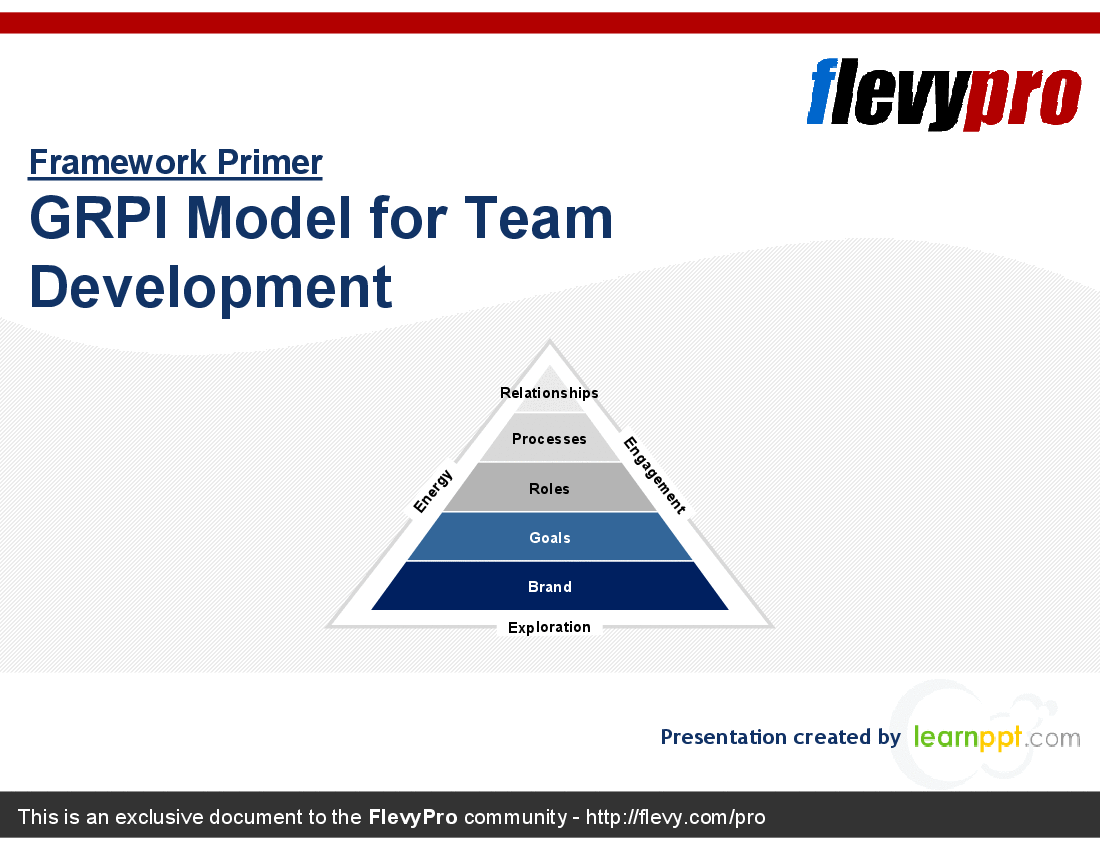
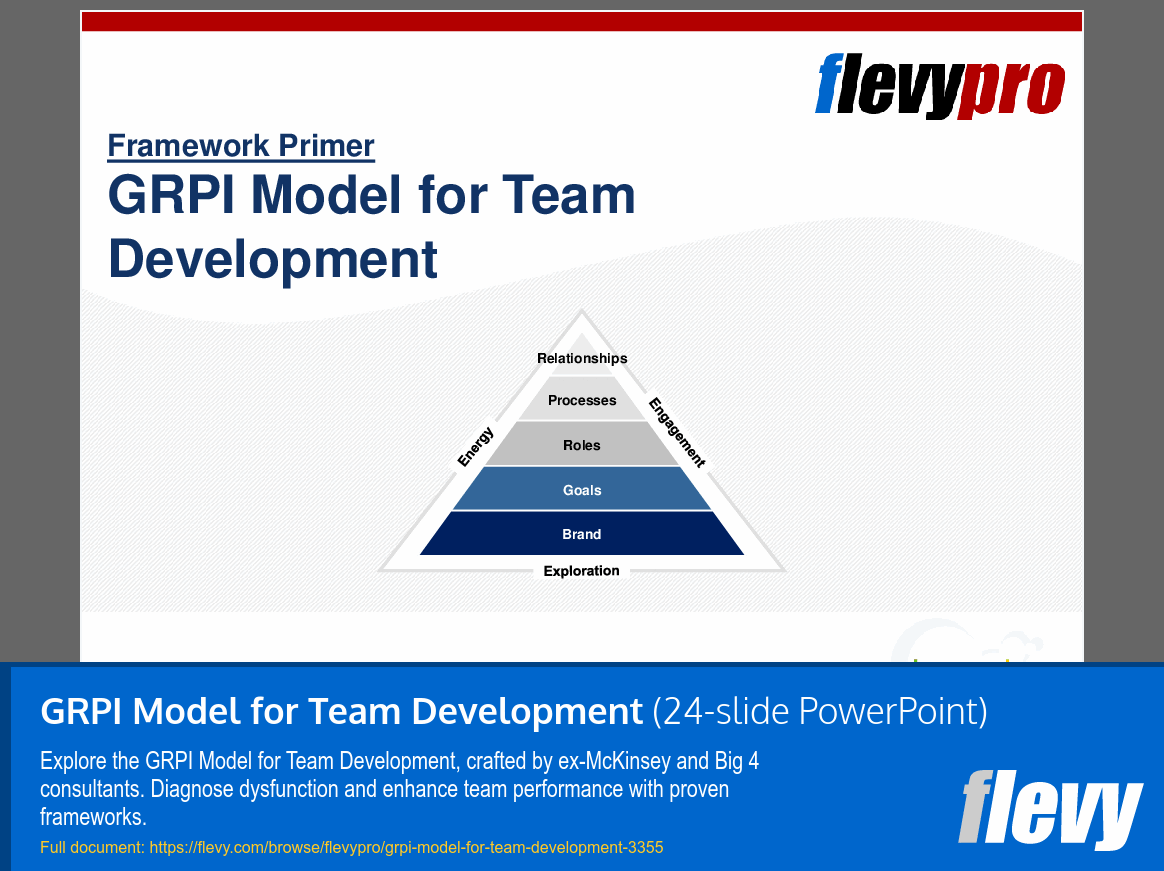
The GRPI Model is depicted as a pyramid, emphasizing the influence of Interpersonal Relationships on Processes, Roles, and Goals. This model looks at teams as rational and structured entities, rather than recognizing their shared emotional life. By putting the drivers of team performance in proper perspective, teams can gain mileage in terms of achieving results.
Taking a systematic review of teams using the GRPI Model enables companies to effectively diagnose performance issues. Clear and conflict-free roles enable team members to fulfill their responsibilities, while overlapping responsibilities cause role conflict, leading to increased stress and poor performance. This presentation provides a practical framework for assessing and improving team dynamics.
This synopsis was written by Marcus [?] based on the analysis of the full 24-slide presentation.
Executive Summary
The GRPI Model for Team Development presentation provides a structured framework for diagnosing team dysfunction and enhancing performance. Developed by organizational theorist Dick Beckhard, the GRPI (Goals, Roles, Processes, Interpersonal Relationships) Model serves as a foundational tool for leaders seeking to improve team dynamics. This presentation not only covers the GRPI Model, but also introduces the Extended GRPI Model, which incorporates Brand and Communication as critical elements for team success. Executives and team leaders will find actionable insights and templates to assess and elevate their teams' effectiveness.
Who This Is For and When to Use
• C-level executives transitioning into new roles
• Team leaders aiming to enhance team performance
• HR professionals focused on team dynamics
• Consultants specializing in organizational development
Best-fit moments to use this deck:
• During team assessments to identify dysfunctions
• In leadership workshops aimed at team alignment
• When onboarding new executives to establish team goals
Learning Objectives
• Define the GRPI Model and its components for team assessment
• Diagnose team dysfunctions using the GRPI framework
• Develop strategies to enhance team performance through clear goals and roles
• Establish effective processes and interpersonal relationships within teams
• Utilize templates for practical application in team settings
• Assess the impact of brand and communication on team dynamics
Table of Contents
• Overview (page 3)
• GRPI Model (page 5)
• Extended GRPI Model (page 8)
• Key Areas of GRPI Model (page 10)
• Templates (page 17)
Primary Topics Covered
• GRPI Model - A framework that helps diagnose team dysfunction by focusing on Goals, Roles, Processes, and Interpersonal Relationships.
• Extended GRPI Model - An enhancement of the GRPI Model that includes Brand and Communication as essential components for team development.
• Team Diagnostics - A systematic approach to identifying performance issues within teams using the GRPI framework.
• Goals - The importance of clear, shared goals for team alignment and performance.
• Roles and Responsibilities - Clarity in roles facilitates teamwork and reduces conflict.
• Team Processes - Effective processes are crucial for communication, problem-solving, and decision-making within teams.
Deliverables, Templates, and Tools
• GRPI Model assessment template for diagnosing team issues
• Extended GRPI Model template for evaluating inherited teams
• Communication assessment tools to gauge team interactions
• Role clarity diagnostic statements for team members
• Goal alignment questions to test shared objectives
• Process evaluation templates for assessing team effectiveness
Slide Highlights
• Overview of the GRPI Model and its significance in team development
• Visual representation of the Extended GRPI Model, emphasizing Brand and Communication
• Diagnostic questions for assessing team goals, roles, and processes
• Templates for practical application in team assessments and workshops
Potential Workshop Agenda
Introduction to GRPI Model (30 minutes)
• Overview of the GRPI framework and its components
• Discussion on the importance of diagnosing team dysfunction
Team Assessment Session (60 minutes)
• Breakout groups to evaluate team dynamics using the GRPI Model
• Sharing insights and identifying areas for improvement
Action Planning (30 minutes)
• Develop actionable steps based on assessment findings
• Assign responsibilities for implementing changes
Customization Guidance
• Adapt the GRPI assessment template to reflect specific team contexts and goals
• Tailor diagnostic questions to align with organizational culture and values
• Incorporate brand-related metrics into team evaluations
Secondary Topics Covered
• The role of leadership in fostering effective team dynamics
• Strategies for improving communication within teams
• Best practices for establishing clear roles and responsibilities
• Techniques for enhancing interpersonal relationships among team members
Topic FAQ
What are the components of the GRPI Model for team development?
The GRPI Model breaks team performance into 4 diagnostic components: Goals (shared objectives), Roles (clarity of responsibilities), Processes (methods for communication and decision-making), and Interpersonal Relationships (how team members interact). The framework is explicitly organized around Goals, Roles, Processes, and Interpersonal Relationships.
How does the Extended GRPI Model change the original framework?
The Extended GRPI Model retains the original GRPI components and adds Brand and Communication as explicit factors that influence team effectiveness, helping leaders assess external perception and internal information flows. Flevy's GRPI Model for Team Development presents this extension that includes Brand and Communication.
How can the GRPI Model diagnose team dysfunction in practice?
The model prompts a systematic review of each component—testing goal clarity, role overlaps, process breakdowns, and relationship issues—and uses diagnostic questions and templates to surface root causes. The presentation depicts the model as a pyramid with Interpersonal Relationships influencing Processes, Roles, and Goals.
What assessment tools and templates support a GRPI-based review?
Common tools include a GRPI Model assessment template, Extended GRPI template for inherited teams, communication assessment tools, role-clarity diagnostic statements, goal-alignment questions, and process-evaluation templates. Flevy's GRPI Model for Team Development explicitly lists these templates, including the GRPI Model assessment template.
What should I prioritize when choosing a team diagnostic deck for workshops?
Prioritize clear explanation of the diagnostic model, ready-to-use templates for assessment and action planning, guided diagnostic questions, and a suggested workshop agenda for facilitation. Also check slide-level readiness such as included slide templates and total slide count; this deck contains 24 slides.
How long does a typical GRPI workshop take to run using this approach?
The suggested workshop agenda in the presentation allocates about 30 minutes for model introduction, 60 minutes for team assessment activities in breakout groups, and 30 minutes for action planning, totaling roughly 120 minutes as a baseline workshop length.
I’ve inherited a leadership group—how can I use GRPI to decide if they should operate as a team?
Run a GRPI assessment to evaluate whether the group shares clear goals, has distinct roles, operates with effective processes, and maintains working interpersonal relationships; use the Extended GRPI to assess brand and communication impacts on team intent. The deck includes an Extended GRPI Model template for inherited teams.
What are the next steps after completing a GRPI diagnostic?
Translate assessment findings into an action plan that assigns responsibilities, timelines, and measurable process changes; use provided templates to design interventions for role clarity, process fixes, communication improvements, and follow-up measurement. The recommended output is an action plan with assigned responsibilities and timelines.
Document FAQ
These are questions addressed within this presentation.
What is the GRPI Model?
The GRPI Model is a framework for diagnosing team dysfunction, focusing on Goals, Roles, Processes, and Interpersonal Relationships.
How can the GRPI Model help my team?
It provides a structured approach to identify and address performance issues, leading to improved team dynamics and effectiveness.
What is the Extended GRPI Model?
The Extended GRPI Model incorporates Brand and Communication as additional critical areas for team development.
How do I assess my team's performance using this model?
Utilize the provided templates and diagnostic questions to evaluate each component of the GRPI framework.
Can this model be applied to inherited teams?
Yes, the Extended GRPI Model is particularly useful for assessing and improving inherited teams during leadership transitions.
What are the key areas to focus on for team improvement?
Focus on establishing clear goals, defining roles, enhancing processes, and fostering strong interpersonal relationships.
Are there templates included in the presentation?
Yes, the presentation includes several templates for practical application in team assessments and workshops.
How do I implement the findings from the GRPI assessment?
Develop an action plan based on assessment results, assigning responsibilities and timelines for improvement initiatives.
Glossary
• GRPI Model - A framework for diagnosing team dysfunction through Goals, Roles, Processes, and Interpersonal Relationships.
• Extended GRPI Model - An enhanced version of the GRPI Model that includes Brand and Communication.
• Team Dynamics - The behavioral relationships between members of a team.
• Interpersonal Relationships - The connections and interactions among team members that influence performance.
• Goals - Shared objectives that guide team efforts.
• Roles - Defined responsibilities that each team member holds within the team.
• Processes - Established methods for communication, decision-making, and problem-solving.
• Brand - The perception of the team within the organization and its external environment.
• Communication - The exchange of information among team members, crucial for performance.
• Team Assessment - The evaluation of team dynamics and performance using structured frameworks.
• Diagnostic Questions - Questions designed to uncover issues within team dynamics.
• Action Plan - A strategic outline of steps to address identified team issues.
The GRPI Model is a framework for diagnosing team performance issues, structured around 4 components: Goals, Roles, Processes, and Interpersonal Relationships. Goals provide the foundation for team alignment; unclear goals can lead to discord among members, often misidentified as interpersonal conflicts, highlighting the need for clarity in objectives. Roles focus on responsibility distribution; overlapping roles create stress, necessitating clear delineation for effective teamwork. Processes examine task execution and decision-making; inefficiencies can cause frustration, indicating the need for regular evaluation of operational methods. Interpersonal Relationships influence the other components; strong relationships enhance collaboration, while weak ones exacerbate issues in goals, roles, and processes. High-performing teams achieve success through balanced integration of all 4 components, offering a structured approach to enhance performance and resolve dysfunctions.
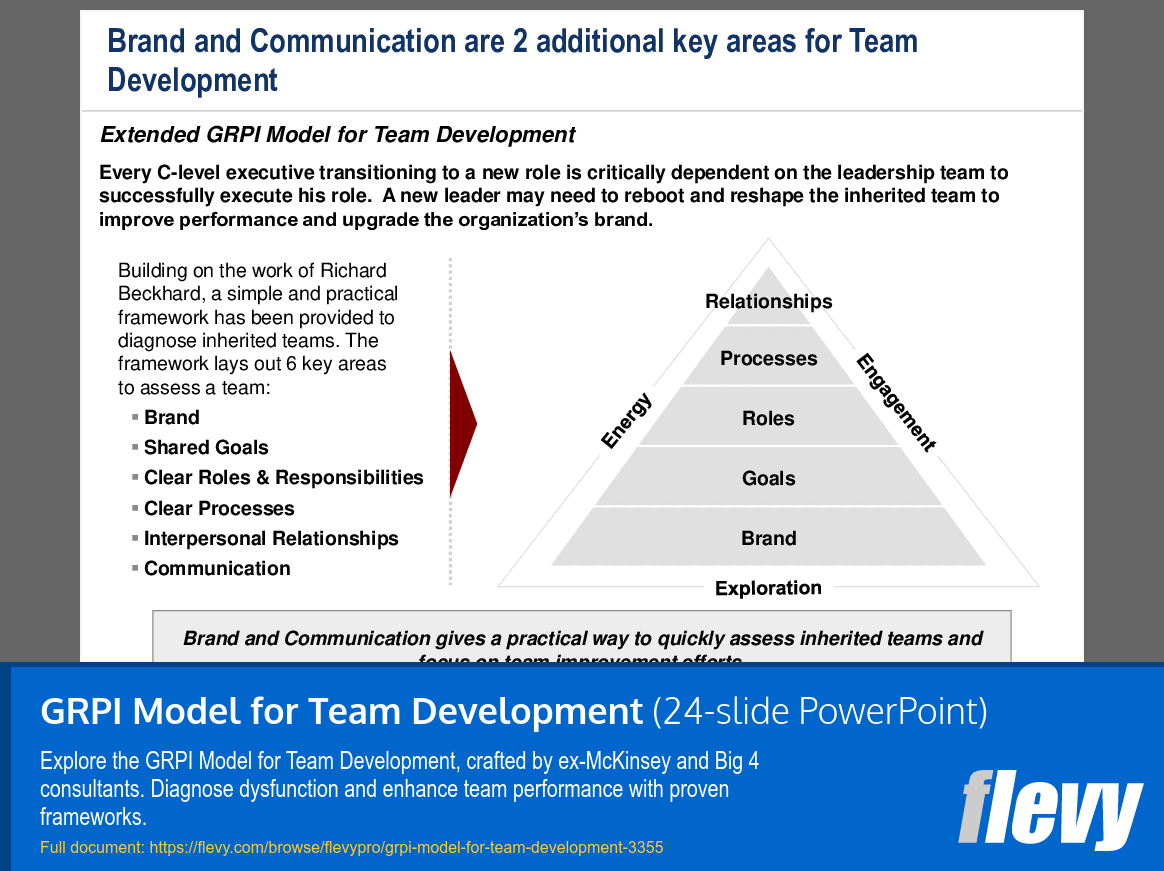
The Extended GRPI Model for Team Development, based on Richard Beckhard's work, outlines 6 key areas for assessing team dynamics: Brand, Shared Goals, Clear Roles & Responsibilities, Clear Processes, Interpersonal Relationships, and Communication. The model features a pyramid structure where foundational elements—Brand and Exploration—support higher levels of Goals, Roles, Processes, and ultimately Relationships and Engagement. Strong brand identity and clear exploration of team dynamics are prerequisites for effective relationships and engagement. Brand and Communication are integral to team improvement, allowing leaders to diagnose issues and implement targeted strategies. This framework provides a structured approach for executives to assess and revitalize teams, aligning them with strategic objectives and fostering a high-performing team environment.
This PPT slide outlines critical dimensions of team communication as predictors of team performance, focusing on 3 components: Energy, Engagement, and Exploration. Energy measures the frequency of communication exchanges, indicating active interaction essential for collaboration. Engagement assesses the distribution of communication, emphasizing quality connections among team members. Exploration involves external communication, crucial for gathering information and sharing solutions. A robust communication framework can be evaluated through specific questions that prompt reflection on internal and external interactions. Insights from this evaluation identify areas for improvement in team dynamics. High communication levels correlate strongly with enhanced team performance, promoting efficiency and goal achievement.
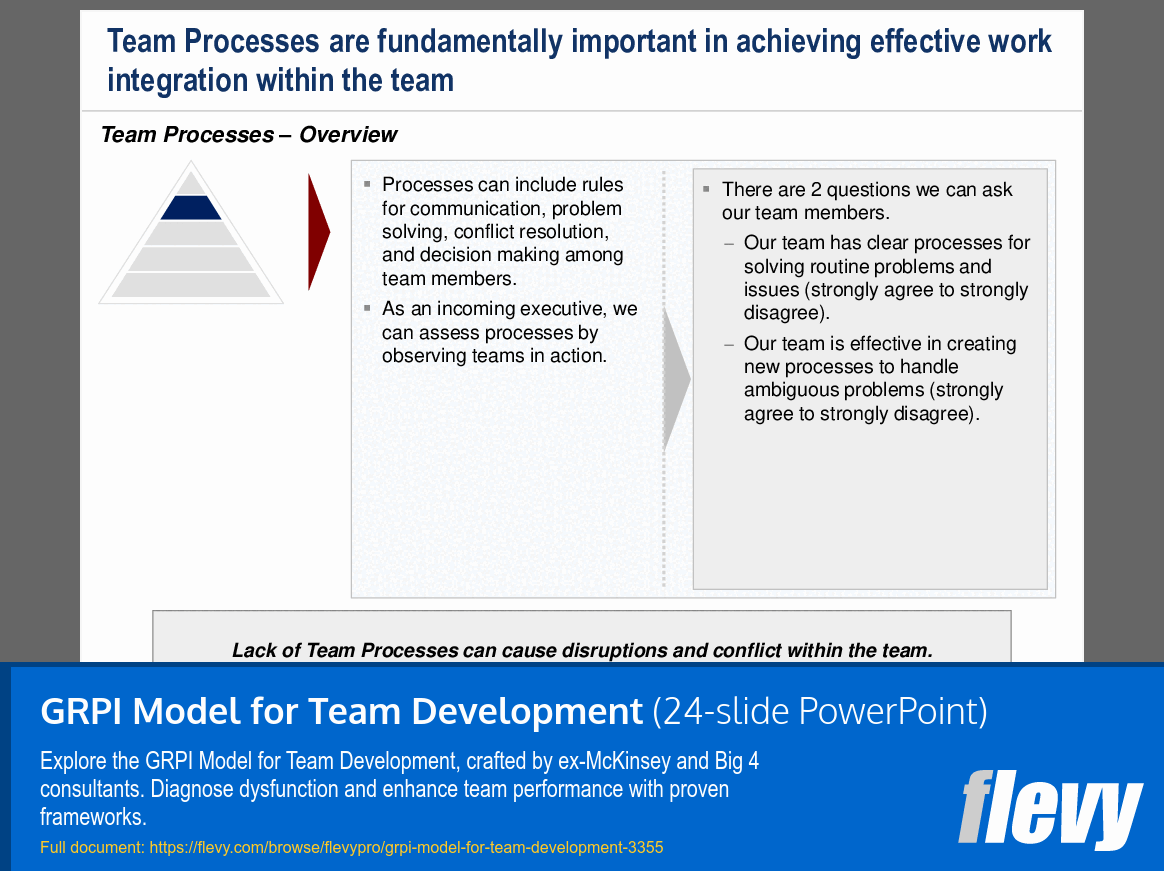
This PPT slide outlines team processes essential for effective integration, covering rules for communication, problem-solving, conflict resolution, and decision-making. An incoming executive can assess existing processes by observing team interactions, identifying strengths and weaknesses in team functioning. Evaluating how teams manage routine and ambiguous problems reveals insights into operational effectiveness. Two key questions gauge team perceptions: whether clear processes exist for resolving routine issues and the team's capability to create new processes for ambiguous challenges. Responses range from strong agreement to strong disagreement, offering a spectrum of insights into team performance. A lack of defined processes can lead to disruptions and conflicts, highlighting the need for clear guidelines to enhance collaboration and minimize misunderstandings. Well-defined processes are foundational to effective teamwork and organizational success.
Source: Best Practices in Team Building, GRPI PowerPoint Slides: GRPI Model for Team Development PowerPoint (PPT) Presentation Slide Deck, LearnPPT Consulting
This framework is developed by a team of former McKinsey and Big 4 consultants. The presentation follows the headline-body-bumper slide format used by global consulting firms.
For $10.00 more, you can download this document plus 2 more FlevyPro documents. That's just $13 each.
ABOUT FLEVYPRO
This document is part of the FlevyPro Library, a curated knowledge base of documents for our FlevyPro subscribers.
FlevyPro is a subscription service for on-demand business frameworks and analysis tools. FlevyPro subscribers receive access to an exclusive library of curated business documents—business framework primers, presentation templates, Lean Six Sigma tools, and more—among other exclusive benefits.
The average daily rate of a McKinsey consultant is $6,625 (not including expenses). The average price of a Flevy document is $65.
Trusted by over 10,000+ Client Organizations
Since 2012, we have provided business templates to over 10,000 businesses and organizations of all sizes, from startups and small businesses to the Fortune 100, in over 130 countries.
"As a consulting firm, we had been creating subject matter training materials for our people and found the excellent materials on Flevy, which saved us 100's of hours of re-creating what already exists on the Flevy materials we purchased."
– Michael Evans, Managing Director at Newport LLC
"I am extremely grateful for the proactiveness and eagerness to help and I would gladly recommend the Flevy team if you are looking for data and toolkits to help you work through business solutions."
– Trevor Booth, Partner, Fast Forward Consulting
"If you are looking for great resources to save time with your business presentations, Flevy is truly a value-added resource. Flevy has done all the work for you and we will continue to utilize Flevy as a source to extract up-to-date information and data for our virtual and onsite presentations!"
– Debbi Saffo, President at The NiKhar Group
"Last Sunday morning, I was diligently working on an important presentation for a client and found myself in need of additional content and suitable templates for various types of graphics. Flevy.com proved to be a treasure trove for both content and design at a reasonable price, considering the time I
saved. I encountered a download issue during the ordering process. However, a quick email to Flevy's support team, even on a Sunday (!!!), resulted in assistance within less than an hour, allowing me to download the content I needed. Fantastic job, Flevy! I give 5 stars for both content/price and customer service. Thank you!
"
– M. E., Chief Commercial Officer, International Logistics Service Provider
"[Flevy] produces some great work that has been/continues to be of immense help not only to myself, but as I seek to provide professional services to my clients, it gives me a large "tool box" of resources that are critical to provide them with the quality of service and outcomes they are expecting."
– Royston Knowles, Executive with 50+ Years of Board Level Experience
"As a young consulting firm, requests for input from clients vary and it's sometimes impossible to provide expert solutions across a broad spectrum of requirements. That was before I discovered Flevy.com.
Through subscription to this invaluable site of a plethora of topics that are key and crucial to consulting, I
have been able to exceed expectations and deliver quality advice and solutions to my clients. The quality and expertise of the authors are exemplary and gives me great confidence to use as part of my service offerings.
I highly recommend this company for any consultant wanting to apply international best practice standards in their service offerings.
"
– Nishi Singh, Strategist and MD at NSP Consultants
"Flevy is now a part of my business routine. I visit Flevy at least 3 times each month.
Flevy has become my preferred learning source, because what it provides is practical, current, and useful in this era where the business world is being rewritten.

many challenges and there is the need to make the right decisions in a short time, with so much scattered information, we are fortunate to have Flevy. Flevy investigates, selects, and puts at our disposal the best of the best to help us be successful in our work.
"
– Omar Hernán Montes Parra, CEO at Quantum SFE
"One of the great discoveries that I have made for my business is the Flevy library of training materials.
As a Lean Transformation Expert, I am always making presentations to clients on a variety of topics: Training, Transformation, Total Productive Maintenance, Culture, Coaching, Tools, Leadership Behavior, etc. Flevy
It is well worth the money to purchase these presentations. Sure, I have the knowledge and information to make my point. It is another thing to create a presentation that captures what I want to say. Flevy has saved me countless hours of preparation time that is much better spent with implementation that will actually save money for my clients.
"
– Ed Kemmerling, Senior Lean Transformation Expert at PMG
Download our free compilation of 50+ slides and templates on Organizational Design, Change Management, and Corporate Culture. Methodologies include ADKAR, Burke-Litwin Change Model, McKinsey 7-S, Competing Values Framework, etc.